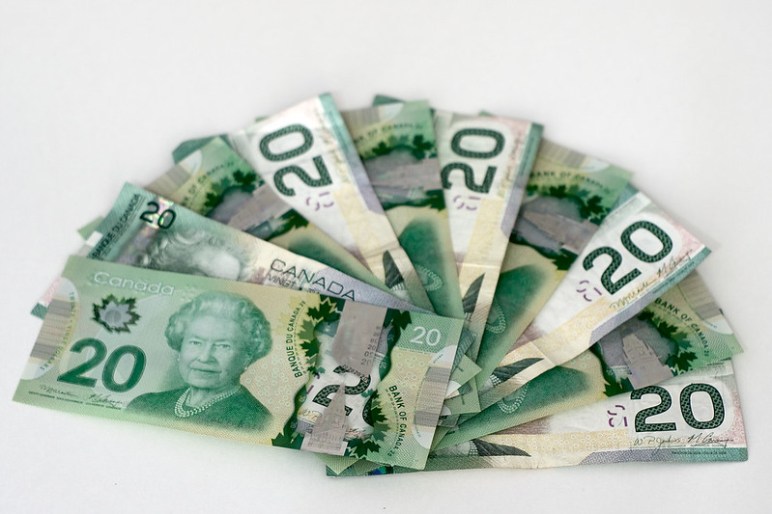
I will admit from the beginning that there is a jealous undercurrent to this story, although I am sure it is misplaced. Jealous of the current cop world is normally not where I usually find myself. I am talking about the pot of gold which can be found at the end of the Vancouver police departments rainbow. And more monies in a general sense are now being thrown into the policing circle of life than has been seen for quite some time.
The rationale varies and the rationale is wholly dependent on what side of the equation you find yourself. For the Vancouver Police Department, all is good, while on the flip side, the taxpayers of Vancouver might not be quite as charmed. The search for greater monies in the form of police salaries can sometimes cause those on the outside looking in say that those numbers are becoming excessive; especially in terms of city budgetary needs and fiscal constraints. Some would even categorize it as greedy, that there is some over-reach going on, and the justifications for it are much more tenuous. It should be noted that Plato felt that greed was a part of human nature; while Darwin in his theory of evolution felt that greed was natural and good. However despite their distinguished and historic reputations, it is unlikely that their arguments would sway many in 2023– especially those living in Vancouver.
You may not remember those days when police salaries were only in the double digits. You may forget when police salaries were never headlines, mainly because they were mid-level, average Canadian salaries. The salaries seemed in the realm of normal expectations. The average family income in 1976 as an example was $19,000 per year. My first salary in the Mounties was $13,500 in 1978. Using basic math, a cop in 1978 was therefore making about 71% of the average “family” income.
Fast forward to today and the recent headlines in the Vancouver news. The Vancouver Police Department is about to ratify a 2 year agreement which will entitle a 1st class constable (someone with at least 5 years service) a salary of $122,000. ($63.41 per hr) The average family income in Canada in 2023 is $75,452 ($39.00 per hour). Therefore, a cop working today in Vancouver will be making 161% of that average family income. In terms of other “first responders” a firefighter in Canada on average makes $83,138, 110% of the average family income. A nurse in British Columbia is $91,732, 121% of average family income. These first responder salaries it would be argued would be in line when compared with other “first responders”. When the comparison is with anyone else in public view, they are indeed eyebrow raising numbers.
In case you think an RCMP officer is now under paid, lets not forget that they too just received a large pay and retroactive increase. An RCMP officer after only three years on the job is now making a salary of $106,576, roughly 141% of that average family income.
I recently received a copy of the wage rates for the new Surrey Police Service (you know those ones battling Brenda Locke). A first class constable salary is $121,989, only slightly less than that of the new VPD raise, and if you rise to the level of Inspector with the Surrey Police Service you will be at $207,381.00. This would put one well ensconced in the top 10% of Canadian wage earners which requires a salary of at least $174,000. The median doctors salary in British Columbia is $178,810 per year.
So now you get the picture, it is in effect raining gold in the world of “first responders”. And we are not even mentioning the often gracious benefits that are also attached to some of these jobs.
The rationale provided by police spokespersons normally is two fold, that it is a thankless and dangerous job, and there is a need to sweeten the pot to attract people to the job, especially in this age of heightened public scrutiny. Ralph Kaisers of the Vancouver Police Union said that police “are finally being shown the value and support from city council…they need to be properly compensated for the work they do”. He predictably cites the “dangers of the job” and the need “to retain members” as the true drivers of this pay raise.
Let us deal with the first proposition.
There is a danger to the job, that can not be disputed. That is the primary factor when police salaries are being negotiated and has been for decades. But has that danger increased? At first blush that seems to be true. New data coming from the University of Ottawa shows that the recent 10 deaths of police officers in 8 months has not been seen since the 1960’s. But as the authors note, there are twice as many police officers working now, compared to then, therefore the overall death rate is actually lower than in the past decades. The data also shows that the leading cause of police deaths, contrary to the movies and the television, are car accidents. Justin Piche the University of Ottawa professor balks at the current claims of police officers that it is more dangerous now then in the past, and says that “…it doesn’t mean they (the Police) get to make any claims they want”. The deadliest years were 1962 and 1968 when 16 officers died in those years. Since 1962 on average there have been six and seven deaths per year while on duty. All those are tragic, and this appears insensitive when you look at cold hard figures like an actuary, but we can not dispute the numbers. From a statistical perspective, there are 70,566 police officers in Canada currently, which means as a percentage that 0.009 % of police officers are killed in the line of duty.
In Canada, union and non-union construction workers are fourth in workplace fatalities in Canada and average 20.2 deaths per 100,000 population. The top three are fishing and trapping; mining quarrying and oil wells, and logging and forestry. Policing is not even in the top 10, not even above tenth place trash and recycling collectors. Nor of course are fire personnel or ambulance attendants or nurses.
A corollary to the danger question maybe are the police busier now than then? The violent crime rate in this country according to Statistics Canada dropped dramatically from the year 2000 to 2014– then there was an upswing, from 2014 to 2021 and where it stands now is about 1/2 of what it was in 2000. Is it on the upswing, yes, is it higher than in the year 2000, no. During this time period the number of police officers in Canada have gone from 55,954 in 2000 to 70,556 in 2022, giving them a 26% increase in manpower.
It is a thankless job, but that has also been true for many many years, and in previous years there was never a need to attract people to the job so other things must have changed.
Will it help to retain members? Maybe, but that is difficult to measure. Will it attract the “cream of the crop” as described by Kash Heed, the go to analyst for CKNW and Global News? Possibly, but what makes a police officer the “cream of the crop”? There are no other jobs like it, so the prior police experience factor is the only one at play here. My guess is that you will get more officers trying to transfer from the lesser paying entities to the VPD, but whether they are the best of the best is highly debatable and definitely not a sure thing.
So what are the legitimate arguments for a pay raise for policing and in particular the VPD? It would seem that the only logical argument has been the increase in inflation. The last two years have seen 6-8% inflation rates; the VPD raise amounts to 4.5 per cent per year, for a total of 9%. Mr. Kaiser needlessly points out that “our members feel it when they go to the gas station or to the grocery store”. Hopefully he is not implying that other parts of our society don’t have that same feeling.
As an aside, of course, not everyone in society gets an inflation levelling pay raise in Canada, so the police unions with their greater societal levers can lead the way in any clawing back of earnings that have been lost to inflation. Statistically, inflation has a greater negative impact on lower income families– so the average family income which was mentioned previously, is going to be proportionally hurt by inflation much more than the higher income levels. Milton Friedman, the Nobel prize winning economist would say that inflation is ” a result of too much money…a more rapid increase in the quantity of money than an output”.
Of course the biggest immediate problem with this raise is that for the people of Vancouver it will add $30 million to the annual cost of policing in the City. Which in turn means a 2.5% increase in property taxes to cover the extra policing costs. The VPD’s 2024 budget is a net $415.9 million, $6million more than the finance team was “comfortable” with; and $42 million more than the department began operating with in 2023. The VPD is also expecting to run a $3.6 million deficit this year (They also had to throw in an extra $3.3 million for the Vancouver Fire Department). As an aside you should remember that the VPD union endorsed the current Mayor Ken Sim in his election in 2022. For his part, Sim recently put in place a “budget task force” to look into areas where savings could be found–the VPD budget is not part of that review. It is estimated that by 2028 the policing budget will be approaching $500 million.
Chief Palmer in speaking about the budget is sees it as somewhat as a fait accompli; he says “so if you go back to 1990 and you look at the trajectory its always been 20-21% (increase) which is what it is today, and what it will be in 2024, and I am sure in 2028”. In others words, there is nothing you can do about it. He says, “It costs a lot to keep Vancouver safe. Thats what it costs and people get great value for their money”.
Mr. Palmers salary by the way in 2022 was $493,932 with an additional $48,282 in allowable expenses. He is overseeing 1400 police officers. In terms of responsibility, the Prime Minister of Canada annual salary is $357,800. He is overseeing the Federal public service which now has 335,957 employees, and revenues of $457 billion. Clearly Mr. Palmer is doing very well personally and is a long way from the average worker.
The million dollar question (in keeping with the money theme), is whether or not there any saturation point? Is there some point where people begin to ask or question the ever constant growth in policing costs, which will in turn at some point force us to talk about layoffs rather than hiring? Some tough questions, despite Mr. Palmers nonchalance on the issue, are clearly just around the corner.
Photo courtesy of Bruce.Guenter via Flickr Commons – Some Rights Reserved
 Behind the Yellow Tape