The Harm of the Online Harms Act

First there was Bill C-11, an Act to amend the Broadcasting Act in 2023, which gave the government the ability to regulate internet content, or at least some more direct oversight. It’s stated purpose was to give “Canadian broadcasting a framework to ensure online streaming services make meaningful contributions to Canadian and Indigenous content”.

Then along came Bill C-36 which offered up in a long-winded explanation of their mandated need to amend the Human Rights Act. It stated that it would be an offence to engage in “… a discriminatory practise to communicate or cause to be communicated hate speech by the means of the internet or other means of Telecommunication in a context in which the hate speech is likely to foment detestation or vilification of an individual or a group of individuals on the basis of a prohibited ground of discrimination”. One needs to remember the words detestation and vilification as they re-surface in this latest legislative manifestation which is Bill C-63. An Act to Amend the Online Harms Act.

For the purposes of this blog, we will only speak to this latest bill which has now drawn the ire and prompted warnings from many fronts, even esteemed author Margaret Atwood, who has called it “Orwellian”. She warns us that “the definitions or lack of them in the law as to what constitutes punishable speech and or thought are so vague as to invite abuse”. Michael Geist, a law professor at the University of Ottawa points to the fact that the commission which is to enforce these latest proposed rules is not “bound by any legal or technical rules of evidence”.

To understand these growing concerns you have to sort through the interminable language and legal nuances that typically run through every piece and form of government legislation and explanation. Bill C-63 is what is called an Omnibus bill, a grouping of various Act changes all rolled into one. This type of packaging should come with a warning, as it is often used as a tactic to obfuscate some of the more controversial proposals by wrapping them around other changes.

It is clear that Bill C-63 is first and foremost an online harm bill, aimed to “reduce harms caused to persons…as a result of harmful content” that comes primarily by way of social media. It is hoping to put a stop to the online bullying and harassing, often using sexual innuendo in words and pictures as a damaging weapon. The government wish to transfer responsibility to moderate or eliminate this activity, on to the purveyors of social media and to hold them “accountable with respect to their duties under the Act”. In terms of purpose, few would argue with the intent. Whether it can be accomplished through legislation is a second real question. In any event, they are going to require that social media services submit “digital safety plans to a Digital Safety Commission”, which sounds about as “Orwellian” as George Orwell imagined.

Of course, whenever government undertakes anything, it also means the growth of more bureaucracy. In this case they want a Digital Safety Commission consisting of 3-5 appointed persons on five year terms, and a Digital Ombudsman who will advocate for the “public interest”. Those working for the Commission (they are allowed to hire “any employees are necessary” )will have authorized and unrequited access to “inventories of electronic data of the operators of the social media services”.

This legislation is also bundled with some amendments to both the Criminal Code and to the Canadian Human Rights Act (CHRA). The Criminal Code will be amended to first and foremost define “hatred”. They will also “create a hate crime offence…” when that offence is “motivated by hatred based on certain factors”.

The CHRA amendments go further and make it an offence for any instance “in which the hate speech is likely to foment detestation or vilification of an individual or group of individuals on the basis of a prohibited ground of discrimination” and “content that foments hatred..” or “incites violence”. Also, alarmingly, “the Commission is not bound by any legal or technical rules of evidence, which includes the right to get a warrant to enter a dwelling house”.

Clearly, as stated previously, the nexus of this series of amendments intent is aimed at “intimate content online” and the “victimization of children”. But the problem is that it strays and has an amoeba like ability to stray into a broader definition of any “content that incites violence, extremism, or terrorism, or content that foments hatred”. So how does one define “foment” or for that matter “hatred”. The definitions are subjective and can take on different levels of seriousness. Foment can mean; to instigate, to provoke, inspire, encourage, generate, kindle, or fan the flames. Hate can also be described according to the dictionary as; loathing, dislike, resentment, aversion, or animosity.

It is the reason why most online law experts say that the Act as written due to these broad definitions, violates constitutional and privacy rights. That the social media groups if forced to comply would by necessity have to rely on artificial intelligence and algorithms to mediate their platforms, and this will by its very nature cause a “disproportionate use of censorship”. The Canadian Civil Liberties Association point to the sections which allow searches of electronic data without warrant, which would grant sweeping powers to a single government un-elected agency and could be in a position to censor strong opposition to political authorities. The Canadian Constitution Foundation focuses on the words “detestation” and “vilification” as being too broad and they believe it would widen the various grounds of discrimination. The punishment by the way for a contravention of the hate laws should one be convicted of a “hate crime” can be as much as a “life sentence” –under these Criminal Code amendments.

Interestingly, there is even a provision which allows for a peace bond to be obtained– if someone or some group were “likely to create a hate crime”. In other words there will be an ability to exercise what they call “prior restraint” under this Act. If a Judge believes that there are “reasonable grounds” to fear some “future” hate crime, that person can be sentenced to house arrest and electronic tagging. Keep in mind a peace bond needs only one person to proceed if they can convince a Judge of their concern.

When you look at the continuum of government legislative moves, including Bill C-11 and Bill C-36 you can clearly see a rather ominous pattern. They are models of government trying to grasp greater control of what we see, read, and listen to. Also troubling is that these most recent legislative attempts are well hidden, disguised in the world of good intentions, covered with the cloak of big brother. In trying to get to the motivation one wonders if this progressive Liberal government is simply overwhelmed by the need to react. To see any evidence of public outrage as a time for them to act. In this case, online harassment and the tragic cases like Amanda Todd have been receiving constant and continued attention and the government feels the need to protect us and thus gain our continuing support.

A further question is whether it is possible that in order to be seen to be proactive and in their knee jerk reactions they produce a piece of legislation without enough scrutiny as to the side effects or results of their activism? If one considers the levels of bureaucracy and the layers of legal scrutiny that act as filters before something becomes legislation it would seem unlikely that the government has just not thought it, so if government ineptitude is not the case, then the explanation becomes a lot more sinister.

John Stuart Mill, considered one of the most influential philosophers of the 19th century who wrote extensively on the history of liberalism, described the need for protection from the “tyranny of the magistrate” and the need for protection from the “tendency of society to impose its own ideas and practices as rules of conduct on those that dissent from them…” He referenced it as the “tyranny of prevailing opinion”.

It does seem clear that this Federal government has a fundamental precept that they know better, that they in their elected duty, have been entrusted to look after us; the flip side being that we can not be trusted to look after ourselves. This, they constantly argue is all for the betterment of a progressive society and therefore self-justification to extend into every aspect of our lives. This philosophy is not new, it has been going on for some time. Rules and regulations now already saturate our work places, our private lives, where we live and how we live. We can not be responsible therefore they will be responsible for us.

This most recent legislation will protect all of us from “harm”. It is a laudable goal to be sure when it comes to the targeting of children and teens by those wanting to exploit them. However, this government whether through lackadaisical legal drafting or in a conspiratorial way is trying to gain the upper hand in what is written or spoken against their agenda. Maybe this government has been emboldened by the use of the Emergencies Act, and Covid 19, where they proved that Canadians will go along with even some of the most draconian measures –if they can be convinced that it is merely to protect them, to keep them out of harms way.

And if you think it may be far fetched to think that persons could try and control speech through this particular piece of legislation, consider this; currently, there is a lawyer in Saskatchewan, Eleanore Sunchild, claiming that residential school “denialism” should be included in the Criminal Code as a criminal offence and is equivalent to Holocaust denialism and therefore a “hate crime”.

Bill C-63 for all these reasons should be considered completely unacceptable. This Federal government unwillingly or intentionally is leading us into very dangerous territory. It is hard to believe that most Canadians continue to not pay attention.

Photo courtesy of Flickr Commons by Apionid – Some Rights Reserved
Slavery and the Jane Finch corridor

The Federal Liberal government is going to come out shortly with their “Black justice Strategy”. It is a policy proposal very much in keeping with the justice according to race theme, that has taken root in the learned halls of Parliament and adopted by all of the various sociology policy wonks who rule from within. This particular new policy will sound very familiar, as it mirrors the ongoing policies which have been created around Indigenous preferential treatment under the law and now being incorporated into the institutions of Canada and the clubby genuflecting corporate world. Whether one agrees or disagrees, with this theory and approach, no one can deny the pattern and the thought process behind it.

In June of 2024 the Justice Steering Committee released 114 recommendations, which were designed to lay the ground work for the Liberal strategy and is a harbinger of what lays in store. The Steering Committee’s thought processes started with a review of the bare prison statistics. They learned or were apparently startled to learn, that blacks makeup 9% of Federal inmates– but represent 4% of the population. (I warned you that this was going to seem all too familiar) In other words there is an (wait for it) “over representation of black people in the criminal justice system”. They screwed up their faces and scratched their heads and pondered as to what could have possibly caused this skewing of the statistics? As they ponderously stirred their collective group think tank, spurred by coffee and tax payer finger foods, they debated and reasoned and nodded in mutual agreement then concluded that it had to be the fault of outside forces. Clearly they had been victimized. And since the Liberals have been the dominant force in Canadian Federal politics for the last few decades, the explanation had to be back-dated, to before their time in office. There had to be a historic explanation to be presented to the Black community and to the general voting public. What they came up with was admittedly a bit of a reach, something that would be hard for the public to rationalize, but the committee decided that the difficulties now being lived in the Black communities of Canada– could be attributed to “slavery and the discriminatory laws of the past”.

If you are confused, that is understandable. For the record, slavery was abolished in terms of Canada, prior to Canada’s actual inception; about 234 years ago, in and around the 1790’s. In terms of discrimination policies, the Canadian Human Rights Act outlawed discrimination in 1977 in Canada and some Provinces such as Ontario had similar legislation in 1944, as did Saskatchewan in 1947. In other words there were anti-discrimination laws in this country over five decades ago. This is not to say there never was discrimination, just that the laws of the country were purged of anything that would resemble discrimination in their application. In terms of the slavery allegation, one has to note that 60% of immigrants to this country came from other parts of the world making it very difficult to argue that there was inter-generational trauma under those types of circumstances.

There is no point in going over all of the recommendations of the Steering committee, they are as predictable as tomorrow’s sunrise, or, if one follows any of the policy and funding initiatives of this particular Liberal government. (It is estimated that since 2015 the Liberal government has already given $760 million to various Black groups and initiatives.)

Nevertheless, here is the broad outline of what they are proposing. They see two major initiatives that need to be undertaken; the forming of “decarceration targets” and secondly that there be “reparations” for “slavery”; in other words direct payments to make up for the wrong doing. To achieve these broad targets they declared that there is a need for dedicated Black courts and Black Federal departments and that there should be a Federal agency for the purpose of “championing and co-ordinating effects to advance the interests of Black people”. There should also be a a Black dedicated branch inside the Department of Justice– along with Blacks given prioritization for housing, specialized Black courts, funding for Black businesses, more Black court workers, and “early-career” lawyers. There should be “race reserved seats” for Judicial selection groups and that the courts should be made to consider race in bail decisions and in sentencing.

This steering committee also weighs in on the other crime related issues. They recommend a safe supply of drugs, the ability to revoke bail down to 2 instead of 3 reasons, and that the Youth Criminal Justice age be increased to 24 years old from 17. They even say that the victim fine surcharges that had been imposed and given to victims should be refunded; those charges having been in place since 1989. (In 2015 alone this amounted to $10 million).

Whether you feel this is a rational or an irrational policy, this government is noticeably out of step with the will of the “general public”. According to recent polls, roughly 70% of Canadians believe that the government should be run on a “colour blind” system. 80% of Canadians say offenders are getting off to easy, and 70% want more policing and tougher laws on drugs. However, it has been clear for many years now that this present government has become immune to the rising sentiments of its citizens? They believe they know better. The Prime Minister has always accepted the foundational belief of discrimination and institutional racism against Blacks in Canada, which he demonstrated as he dramatically took a knee at the radical Black Lives Matter protest on Parliament Hill. One has to wonder and question if this is true sentiment, or whether it is just reflective of their hope that by winning over the various ethnic and cultural groups, one by one, with favours and monies, that it is somehow going to keep them elected. Or is it based on a steadfast ideology of progressive statism, where they imagine a country and its systems, in what author Jamie Sarkonak of the National Post sums up as “a confederacy of racial groups”.

There is an obvious philosophical and ethical dilemma that supports these policies. If you are in favour of the creating and channeling of passages through the justice system based on ones colour of skin, one also has to recognize at a minimum, that the policy, in and of itself, is clearly a discriminatory act. The proponents argue that this is purposeful discrimination and designed merely to right the agreed wrongs of the past. We would also have to accept that slavery and past discriminatory laws are what put Blacks in often untenable circumstances. It is the same argument in the Indigenous movement; that the ripple effect of residential schools and colonialism has placed them in a position of precarious poverty, caused the continuing lack of education, the staggering birth rates, and the generations of alcohol and drug abuse.

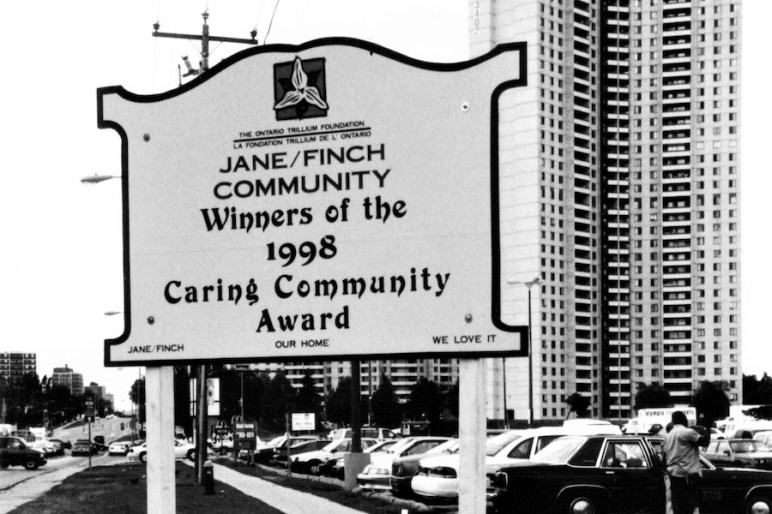
The Jane and Finch neighbourhood in Toronto has always been held up as an example of the perils facing Blacks in the city. It was the poster child for insufficient housing, rampant poverty, drugs and crime and it has gone on for years with the politicians often throwing up their hands in frustration. But ask people working or living in the hardened corridors of the Jane and Finch area in Toronto whether slavery was the root cause, their first reaction is to laugh. But, we need to accept that is exactly what the powers in government believe. It is a self-righteous and pious position, based on an academic arrogance that is being wielded and promoted by a group who feel that they just know better. To disagree or offer up an alternate explanation we are accused of being uninformed, or we are racists and insensitive to the plight of immigrants. All this while the majority of people in Canada believe and are suggesting that all Canadians should be treated equally under the law. One could safely assume that this shared belief is part of the reason that immigrants even try to come to this country.

Every immigrant group who came to this country came here or grew up here over the centuries; the Italians, the Irish, the Poles, Haitians, and the Ukrainians, all settled in their respective communities, often under very trying and impoverished circumstances. Their support came from the others that were familiar to them and had come from the same place. The evolution of their life and prosperity in Canada was brought about by a chance to further their education, to reach for jobs, to be free and have the unencumbered ability to go forward. It was not brought about by shotgunning apologies or dispensing reparation money, or brought about by demands to be treated differently then everyone else. In fact they wanted to be treated like everyone else.

The laws in this country are already there against discrimination, so if needed, enforce them. Don’t change to feed a political need or to affirm the current sociological dogma that we are all victims and that there is an ongoing and persistent institutional discrimination based on the colour of your skin. My family history in this country only goes back to the 1920’s, so I can not draw a straight line between the days of slavery three hundred years ago to my ancestry, and I suspect very few Blacks in this country, or many other Immigrant groups, can draw that straight line either.

The authors of “Struggling Well” when asked why do so many people want to be seen as victims say that it is merely a symptom of our current modern society. “It is hard to accomplish something significant, it takes years of work, dedication and sacrifice. In today’s age, a victim is recognized as being special, having achieved something. We all want that sense of achievement and being special. As a victim, you get that special attention” They sum up by saying “being a victim is an easy way out, being accomplished, despite your circumstances is tough”.

I don’t agree fully because there is in fact discrimination in the real world and some groups have different starting points than others about which they have no control, but there does seem to be a need for some hard to define toughness. A need to look inward rather than outward for the answers, as hard as that may be.