Slavery and the Jane Finch corridor

The Federal Liberal government is going to come out shortly with their “Black justice Strategy”. It is a policy proposal very much in keeping with the justice according to race theme, that has taken root in the learned halls of Parliament and adopted by all of the various sociology policy wonks who rule from within. This particular new policy will sound very familiar, as it mirrors the ongoing policies which have been created around Indigenous preferential treatment under the law and now being incorporated into the institutions of Canada and the clubby genuflecting corporate world. Whether one agrees or disagrees, with this theory and approach, no one can deny the pattern and the thought process behind it.

In June of 2024 the Justice Steering Committee released 114 recommendations, which were designed to lay the ground work for the Liberal strategy and is a harbinger of what lays in store. The Steering Committee’s thought processes started with a review of the bare prison statistics. They learned or were apparently startled to learn, that blacks makeup 9% of Federal inmates– but represent 4% of the population. (I warned you that this was going to seem all too familiar) In other words there is an (wait for it) “over representation of black people in the criminal justice system”. They screwed up their faces and scratched their heads and pondered as to what could have possibly caused this skewing of the statistics? As they ponderously stirred their collective group think tank, spurred by coffee and tax payer finger foods, they debated and reasoned and nodded in mutual agreement then concluded that it had to be the fault of outside forces. Clearly they had been victimized. And since the Liberals have been the dominant force in Canadian Federal politics for the last few decades, the explanation had to be back-dated, to before their time in office. There had to be a historic explanation to be presented to the Black community and to the general voting public. What they came up with was admittedly a bit of a reach, something that would be hard for the public to rationalize, but the committee decided that the difficulties now being lived in the Black communities of Canada– could be attributed to “slavery and the discriminatory laws of the past”.

If you are confused, that is understandable. For the record, slavery was abolished in terms of Canada, prior to Canada’s actual inception; about 234 years ago, in and around the 1790’s. In terms of discrimination policies, the Canadian Human Rights Act outlawed discrimination in 1977 in Canada and some Provinces such as Ontario had similar legislation in 1944, as did Saskatchewan in 1947. In other words there were anti-discrimination laws in this country over five decades ago. This is not to say there never was discrimination, just that the laws of the country were purged of anything that would resemble discrimination in their application. In terms of the slavery allegation, one has to note that 60% of immigrants to this country came from other parts of the world making it very difficult to argue that there was inter-generational trauma under those types of circumstances.

There is no point in going over all of the recommendations of the Steering committee, they are as predictable as tomorrow’s sunrise, or, if one follows any of the policy and funding initiatives of this particular Liberal government. (It is estimated that since 2015 the Liberal government has already given $760 million to various Black groups and initiatives.)

Nevertheless, here is the broad outline of what they are proposing. They see two major initiatives that need to be undertaken; the forming of “decarceration targets” and secondly that there be “reparations” for “slavery”; in other words direct payments to make up for the wrong doing. To achieve these broad targets they declared that there is a need for dedicated Black courts and Black Federal departments and that there should be a Federal agency for the purpose of “championing and co-ordinating effects to advance the interests of Black people”. There should also be a a Black dedicated branch inside the Department of Justice– along with Blacks given prioritization for housing, specialized Black courts, funding for Black businesses, more Black court workers, and “early-career” lawyers. There should be “race reserved seats” for Judicial selection groups and that the courts should be made to consider race in bail decisions and in sentencing.

This steering committee also weighs in on the other crime related issues. They recommend a safe supply of drugs, the ability to revoke bail down to 2 instead of 3 reasons, and that the Youth Criminal Justice age be increased to 24 years old from 17. They even say that the victim fine surcharges that had been imposed and given to victims should be refunded; those charges having been in place since 1989. (In 2015 alone this amounted to $10 million).

Whether you feel this is a rational or an irrational policy, this government is noticeably out of step with the will of the “general public”. According to recent polls, roughly 70% of Canadians believe that the government should be run on a “colour blind” system. 80% of Canadians say offenders are getting off to easy, and 70% want more policing and tougher laws on drugs. However, it has been clear for many years now that this present government has become immune to the rising sentiments of its citizens? They believe they know better. The Prime Minister has always accepted the foundational belief of discrimination and institutional racism against Blacks in Canada, which he demonstrated as he dramatically took a knee at the radical Black Lives Matter protest on Parliament Hill. One has to wonder and question if this is true sentiment, or whether it is just reflective of their hope that by winning over the various ethnic and cultural groups, one by one, with favours and monies, that it is somehow going to keep them elected. Or is it based on a steadfast ideology of progressive statism, where they imagine a country and its systems, in what author Jamie Sarkonak of the National Post sums up as “a confederacy of racial groups”.

There is an obvious philosophical and ethical dilemma that supports these policies. If you are in favour of the creating and channeling of passages through the justice system based on ones colour of skin, one also has to recognize at a minimum, that the policy, in and of itself, is clearly a discriminatory act. The proponents argue that this is purposeful discrimination and designed merely to right the agreed wrongs of the past. We would also have to accept that slavery and past discriminatory laws are what put Blacks in often untenable circumstances. It is the same argument in the Indigenous movement; that the ripple effect of residential schools and colonialism has placed them in a position of precarious poverty, caused the continuing lack of education, the staggering birth rates, and the generations of alcohol and drug abuse.

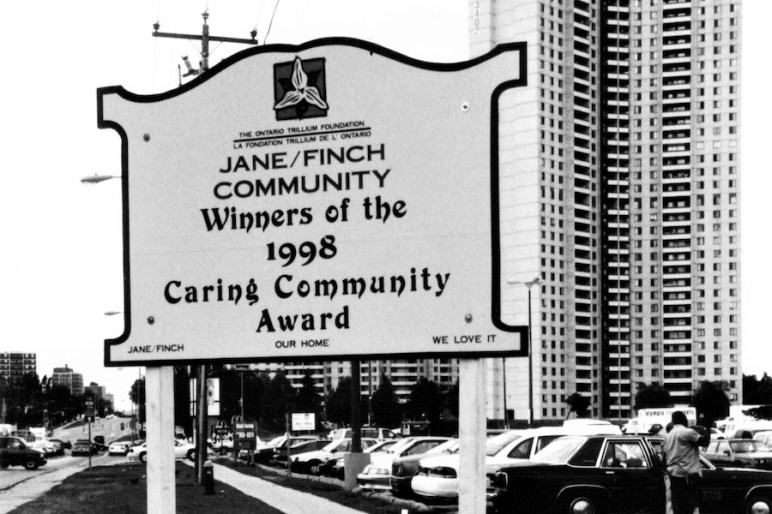
The Jane and Finch neighbourhood in Toronto has always been held up as an example of the perils facing Blacks in the city. It was the poster child for insufficient housing, rampant poverty, drugs and crime and it has gone on for years with the politicians often throwing up their hands in frustration. But ask people working or living in the hardened corridors of the Jane and Finch area in Toronto whether slavery was the root cause, their first reaction is to laugh. But, we need to accept that is exactly what the powers in government believe. It is a self-righteous and pious position, based on an academic arrogance that is being wielded and promoted by a group who feel that they just know better. To disagree or offer up an alternate explanation we are accused of being uninformed, or we are racists and insensitive to the plight of immigrants. All this while the majority of people in Canada believe and are suggesting that all Canadians should be treated equally under the law. One could safely assume that this shared belief is part of the reason that immigrants even try to come to this country.

Every immigrant group who came to this country came here or grew up here over the centuries; the Italians, the Irish, the Poles, Haitians, and the Ukrainians, all settled in their respective communities, often under very trying and impoverished circumstances. Their support came from the others that were familiar to them and had come from the same place. The evolution of their life and prosperity in Canada was brought about by a chance to further their education, to reach for jobs, to be free and have the unencumbered ability to go forward. It was not brought about by shotgunning apologies or dispensing reparation money, or brought about by demands to be treated differently then everyone else. In fact they wanted to be treated like everyone else.

The laws in this country are already there against discrimination, so if needed, enforce them. Don’t change to feed a political need or to affirm the current sociological dogma that we are all victims and that there is an ongoing and persistent institutional discrimination based on the colour of your skin. My family history in this country only goes back to the 1920’s, so I can not draw a straight line between the days of slavery three hundred years ago to my ancestry, and I suspect very few Blacks in this country, or many other Immigrant groups, can draw that straight line either.

The authors of “Struggling Well” when asked why do so many people want to be seen as victims say that it is merely a symptom of our current modern society. “It is hard to accomplish something significant, it takes years of work, dedication and sacrifice. In today’s age, a victim is recognized as being special, having achieved something. We all want that sense of achievement and being special. As a victim, you get that special attention” They sum up by saying “being a victim is an easy way out, being accomplished, despite your circumstances is tough”.

I don’t agree fully because there is in fact discrimination in the real world and some groups have different starting points than others about which they have no control, but there does seem to be a need for some hard to define toughness. A need to look inward rather than outward for the answers, as hard as that may be.

Diversity vs Merit…planned discrimination?

The term, affirmative action, in the 1960’s was a dictate given to the Government of the United States under then President John Kennedy to hire or give equal opportunity to the disadvantaged, to hire “without regard for race, religion and national origin”.  It was often designed to compensate for past discrimination, persecution, or exploitation by the ruling class.

A laudable goal to be sure, as the intention was to pull up those that were disadvantaged, to take away any roadblocks that kept some down and not able to compete in the economic world of the day. It was a typical liberal policy reflective of those times, it was  “Camelot” and the Kennedy era, where equality and fairness were the principle objectives and would be emblematic of the ensuing two decades of U.S. policy. It was the era in which I grew up and came to self-identify. It was the era when governmental change was an instrument of good and it was a time when people wanted to give back.

The goal of  affirmative action advocated a generational change, a lengthy process to be sure. Not to be accomplished overnight, or even over a single Presidential term. In almost all circumstances, a formative change actually requires patience, and it requires a cultural change.

If these goals outlined by Kennedy and to a smaller extent by Pearson in Canada in the 1960s were to reach fruition, then there needed to be education and time. Politicians being what they are in our democratic and fixed term systems are not patient, they want to see and boast about change in shorter windows of time. Long term planning or even projecting out for 10 years is difficult if not impossible, and there in lies the rub.

So “affirmative action” and what it came to mean began to evolve, mainly to suit political need for instant gratification.  They needed to force the issue, to put persons into roles or jobs, or education, earlier than generational change would allow.  Qualifications, or deservedness would have to take a back seat. That some tolerance be built into the selection process, that qualifications be bent and sometimes lowered so that these persons could immediately or quickly fill these roles.

In other words instead of all boats rising with the tide, it became necessary to “favour” certain groups. This re-interpretation of the meaning of affirmative action was not a subtle change, it was one which has had a massive ripple effect.

The world began to follow suit.  Some countries, including the U.S. even began to use a quota system, where a certain percentage of government jobs, political positions, and school vacancies were reserved for specific  members of certain politically chosen groups. And this continues to this day.

Of course this by definition means that not everyone is treated equally and it would be only a matter of time, before some took umbrage with a system, which by its very nature excludes certain individuals, albeit usually the more advantaged groups.

So in most recent years, it has been generally true that countries where there are laws dictating racial and gender “equality”, many of these affirmative action programs which had dictated quotas were now declared illegal. The U.S. courts in particular saying that affirmative action programs  dictate that not all persons are treated equally, and therefore should not be allowed.

However there are countries in the world where quotas are still allowed, and have been used, and continue to be used extensively.

Nathan Glazer in the Harvard Crimson argues that the quota system divides people into categories, into racial, ethnic, and gender profiles. And benefits, and penalties would now adhere to these various compartments. “People would try to advance on the basis of group membership rather than individual capacity”.

In Canada, the politicos sensing some possible rejection of affirmative action and quotas,  began to use a new term, something they believed to be less offensive.  So we now have been programmed to accept the new “diversity”. Diversity, is defined as “the condition of having or being composed of different elements”. The Miriam dictionary then goes on to say that it can mean”the inclusion of different types of people, (such as people of different races or culture)”.

It is government speak for affirmative action in general, and they have replaced the likely illegal “quotas”, with “goals” or “targets”. They play to the “disadvantaged” groups, to try and counter balance a legally tenuous position. There is little argument to the fact that affirmative action is in fact discriminatory. Discrimination defined as “treatment or consideration of, or making a distinction in favour of or against, a person or thing based on the group, class, or category to which that person or thing belongs rather on individual merit”.

But whether one agrees or not, we have a government who has become fixated with the need for “diversification.”

Of course the real balancing act is how far does one swing the pendulum, how far and to what level  is for instance, is one prepared to ignore merit in favour of ethnicity, or gender, or a visible minority.  Practically, in terms of hiring or university admissions, it is difficult to give specific policy or guidance as to how one needs to approach the problem without stepping over the line. How does one apply goals or targets without imposing quotas? Very few politicians and bureaucrats seem capable of reflection, they approach it like a quota, easier to apply, and easier to boast about their numbers.

In 2016, the Federal government announced a new appointment process for boards, agencies, tribunals, officers of Parliament and Crown Corporations. It specified that “diversity” was the goal, while it opened up the applications to the public. In other words, it did not set or say the word “quota”  per se but encouraged the government mandarins, and put them on notice that they would be measured by their attempts and delivery of “diversity”.

According to this same article, the Privy Counsel office has now released its numbers so that of the 429 appointments that have been made to date since 2016; 56.6 per cent women, 11.2 per cent were visible minorities, and 9.6 per cent were indigenous.

It then goes on to prove its point by counting the numbers:  48.3 % women, 16.1 per cent minorities, and 6.5 per cent indigenous. In Canada it points out, there is actually 50.9 per cent women, 22.3 per cent visible minorities, and 4.9 per cent indigenous. They are not arguing a generational change, they are pointing to their targeted “goals”, their “quotas” having been met. There is no other way of explaining it. Are we to believe that in one year, more indigenous people, or more visible minorities have been in a position to apply for more governmental posts because of improvements in their education or in their qualifications. That would be difficult to believe. It is far more likely they have been pulled up to fulfill a quota.

Justin Trudeau often brags about his “diverse cabinet”.  What he actually means is that his cabinet has been chosen in a quota system. Today in the news, the CBC headlines the fact that the Canadian government is now beginning to be as “diverse as Canada”.

Wendy Cukier, who is the director of Ryerson University “Diversity Institute” is happy with the numbers and lauds PM Trudeau for having made “great strides on gender”. She would like us to believe that in a year period, more females became more qualified for various jobs because there was “equal opportunity” got those jobs. Or is it possible that they were told to fill more positions with women regardless of merit?

This is playing out in every walk of governmental life. In policing we went through the quota hiring of women, and various visible minorities over the years. Every government department Provincially and Federally has fallen in line with this type of quota hiring.

Persons are gaining management positions, or being accepted into specialized jobs, not because they are the best person for the job, but by the fact there application is being skewed in their favour, sometimes to a large degree; skewed by their colour of their skin or their gender. It is troubling, for example, if a hospital is hiring a doctor, should merit not be the only single factor?

There are those that would put a strong argument in favour of “quota” hiring as a way of righting the wrongs of the past. If one accepts this principle, one is in effect accepting and proposing one level of discrimination, to right the wrongs of a historical discrimination. But be it as it may, my argument is that if the government of the day feels that this is acceptable, then at the very least they should be honest in their intentions.  It should not be allowed to be portrayed as an equal playing field to the general public. It is not.

Where “diversity” is a stated goal and gender or sex is part of the selection criteria it should be stated clearly. People should know that if you are applying for a police force as an example, other factors are coming into play, including the colour of your skin and your gender, and they should be told what is the given priority, and how it would affect their application.

An issue that also naturally evolves from this process is the growing need to determine if there are some significant after effects to this practise. If one continues to hire under qualified people, does the job suffer, does the output suffer? If they are not the best people for the job, is the job being done in the proper manner? If one throws out merit, or lessens merit in a bureaucratic system, does advancement and morale suffer?

We are now in a position where we have to question both the deserved and the undeserved. When you know the hiring process, and the priorities of government, it makes one question, why or how someone was chosen for this job. It may reflect badly on the person holding the job, tainted by this quota policy, even in cases where in fact it was deserved.

Were members of Trudeau’s cabinet chosen because they were the best for the job, or because they met his mandated quotas and play to his constituencies for whom he wants to be seen as the saviour. Women voters, non-visible minorities, and the up and coming indigenous groups are the stronghold of the Liberals, the bastion they hope to win over in future elections. The answer seems obvious.  Trudeau and the Liberals are engaging in obvious vote buying, and the Conservatives and the NDP are trying to do the same and get in on the action.

They are all playing politics to a high level, and it is costing this country. Merit has been given a back seat, “diversity” is the mantra being extolled by every politician from every pulpit. Do not challenge or you will be portrayed as a racist.

One could point out that the apartheid government in South Africa, as a matter of state policy favoured white-owned, especially Afrikaner owned companies.  It was clearly in place  to prolong white rule and power, and this quota system was discriminatory and the world celebrated its eventual downfall. But any quota system is discriminatory, the only thing that changes is the target of that discrimination.

I believe that when merit is given such short shrift, when merit becomes secondary to optics, everyone loses. We become compartmentalized. My stand is the one echoed by Nathan Glazer in that affirmative action, as it was originally intended is still a worthwhile intention. However,  quotas, thinly disguised as “targets” or “goals” should not be acceptable at any level, whether being practised by your government or your workplace.

And if you think some level of discrimination is o.k., then at least have the backbone to articulate and specify who in society you wish to treat as more equal than others. And then let the public decide.


Photo Courtesy of Creative Commons via Flckr by Edyta Mazur – Some Rights Reserved