Here’s to the Women

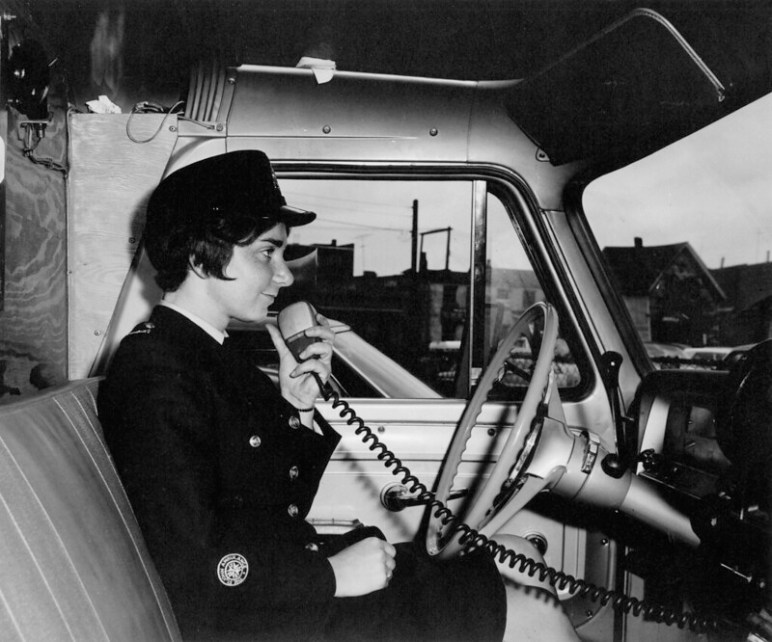
There was a small parade and ceremony in St. John’s Newfoundland the other day. An auspicious occasion as it was to mark the fiftieth anniversary of women entering the Royal Canadian Mounted Police. It was back in May 1974 when Commissioner Nadon had opened up the recruitment and application process to the women of Canada. By September 18th of that same year, Troop 17 was born, graduating on March 3rd 1975, and thus shoved themselves through the door and entered into the looming chasm which was the male policing world.

In training there were 32 of them, surrounded by 800 men recruits. The female recruits were all 19-29 years old, embarking on a novel career, but not likely thinking of any “glass ceiling”; in most cases seeing it as an adventure. In fact the term “glass ceiling” wasn’t even coined until 1978. As one of the officers said in a recent interview “they weren’t ready for us” and it is just as likely these female recruits were not ready for what they were about to encounter– both on the street, and just as importantly amongst the ranks of the male officers. They went in blind, but I am sure it did not take long for their eyes to be quickly opened.

Nowadays, the RCMP sees themselves as enlightened in these matters of discrimination and the power of women; however, in 1974 the move by the RCMP came about after having being pushed to do so by the Royal Commission on the Status of Women. They did not relent willingly. The Commission had been formed in 1967, but it still took the government a number of years to be pulled and cajoled into the age of women empowerment. They weren’t the first, the Vancouver and Toronto Police Departments had already brought women into the fold by the time Ottawa and the RCMP moved into the late 20th century.

In 1975 Captain and Tenille were singing about love keeping us together, and Jaws and One Flew Over the Cuckoo Nest were storming the box office. Prime Minister Pierre Trudeau was leading the Liberals, and Joe Clark was about to succeed Robert Stanfied for the Conservatives. Some would say it was a much simpler time, more black and white than grey. And to be totally accurate, there were female “employees” in the RCMP long before this, as they had employed “matrons” in the 1890’s for the processing of prisoners. The woman first believed to be the “first female member” of the RCMP was Dr. Francis McGill, who headed and help to establish the Forensic medicine department in Saskatchewan in 1946.

However, this group in 1975 after graduation were the front line officers and they were about to be dispersed throughout the country. It was not going to be an easy task and one could easily make the argument that the roughest part of their journey and their eventual indoctrination did not come from the street– but from their fellow officers. I was around in those early years, in 1978 I was a recruit assigned to the Newcastle New Brunswick Detachment (an area now called Miramichi City) and shortly after I arrived, the first female the detachment had ever seen, arrived as well. Newcastle was the epitome of the term rough and tumble; high unemployment and rampant poverty. It was a conservative blue collar place where a police officer could easily in the normal course of their daily duties be involved in a knock you down drag it out fight. The people who lived there were either miners, loggers or fishermen and they lived hard and played hard. It was a 23 person RCMP detachment, relatively small, but deemed large in terms of this “have-not” New Brunswick Province. The Mountie administration were initially reluctant even to send female officers to this area because of the constant environment of simmering violence. A few years later, the area would become infamous for being the home of serial killer Alan Legere .

I often have maintained and have stated categorically many times, that the toughest job in policing is to simply be a female officer. And it was in Newcastle in 1978 that I worked with “Sheila”, the first female Mountie ever to be stationed in this robust village; an above average height, slim, a quick to smile 25 year old, who immediately found herself now working with big strapping Mounties, who with little doubt, were to the right of centre socially and politically. The male officers there were quick to jump into a fight and quick to say what they meant loudly and in a clear voice. There were no niceties and they all became my friends. However, in terms of personal viewpoints, if they had done a survey in those times– almost all would have felt that women had no place in policing– and some would profess that between women being “let in” and the arriving of the Charter of Rights in 1982 it was the end of the golden age of policing. “Sheila” was from the start under an intense microscope, the subject of continual stares, in public, and even at social police functions, most pointedly by the female spouses of the other officers. She was seen as an obvious threat to domestic bliss, and she had the added burden of being attractive. Some of the spouses demanded that their husbands not be seen riding in the same patrol car with Sheila or meeting up for a work coffee break. She was assigned to the Traffic Section, because it was seen as being “safer” there. I never saw her show weakness or express exasperation; she never complained, she just kept doing her job and hoped for eventual acceptance.

When I try to analyze the root cause of the growing pains for females in those early years, it probably comes down to two simple elements. First and foremost, at that age and time, there was a clear delineation between what was the role of the male and what was the role of the female. Simply put it was a boy’s club and their treehouse and they were girls trying to climb the shaky wooden ladder to become a member of the group. In their dress Red Serge uniform, the females wore red blazers and black knee length skirts and in 1983 they gave them purses to carry their guns and handcuffs. They wore form fitting polyester blouses, with no pockets to avoid any unnecessary protuberances. They were being seen as female first, police officers second.

The second element, that flows from the first, is that policing was seen as a laborious lower level middle class job; a physical occupation, where size and weight were the primary measurements in your ability to do the job. The job back then was often simply defined as chasing “bad guys” and physically tossing them into jail. This is not to say that there isn’t a physical element to this job, there was then and there is still now. Women then and now are expected to be just as tough and willing to wander into a scrap, against someone usually bigger and stronger than them on a regular basis. But in those early years one should be reminded that there were no alternate weapons such as pepper spray, or batons, or tasers, or which came about specifically as a way to level the playing field. In those days the female officers were told to be tougher; they were punched, kicked and spit upon, and they were expected to go down fighting. They were continually being watched for signs of acquiescence or for showing female qualities. That was unfair but there are still some elements of this scrutiny even today.

There is also a female proscribed role in terms of familial and personal relationships which lingers to this day. Starting and maintaining families and households is still very much predominantly the role of the female, this while balancing a policing career in particular is a significant challenge. Throw in the sometimes still present misogynist male and night time shift work and you get some idea of how tricky it can be. Sometimes for some it has proven to be overwhelming. Female officers traditionally have not stayed in policing as long as their male counterparts, but there are few studies as to why this is happening, but clearly there are reasons for it.

For those that did manage to walk the fine line and especially to those that endured in those early years one can only show respect. Since those early days, I personally have worked with some extraordinary female officers through three decades of policing. They were hard working intuitive good investigators long before they were seen as female. Their gender was inconsequential. Many of them displayed different insights that being who they were provided them. I can’t explain it, I just saw it working.

All of this is a common saw. Since the early 20th century, women have been fighting to define their role in a male dominated society. Policing was one of the last of the true male vestiges of this 20th century. It was difficult to run at and break through those traditions. It was often an individual fight on an individual level. Those that put up that fight in those early years started that final pendulum. Today, females possibly enjoy an even greater chance of promotion and have the benefits and support networks to confront the duality of their roles. It is still hard, but all the female officers of today should be bowing in respect to the many that came before them, a time before many of the current officers were born.

I watched it from the sidelines, but I am also tipping my cap to “Sheila”.

I am sure she will smile back.

Picture courtesy of Flickr commons from the Vancouver Archives – Some Rights Reserved

“20th century vs 21st century”

Sit and eavesdrop in any worn, linoleum floored coffee shop, anywhere in the grey haired parts of this Province, anywhere where you can find the blue wall retirees, and you will hear 20th century retired cop bitching about the present state of policing. The “good old days” is a tried and true theme with this coffee klatch audience, sagely nodding in agreement, or shaking their heads about the latest RCMP news tale. They lament the old times, when “men were men” or any other tired aphorism– in between the normal senior comparisons, about ill-health, urination, and the kids.

Was it all good then? No, it wasn’t. Was it fun? Yup, for the most part. But time heals and memories often become selective, making it easier to forget the alcoholism, the suicides, the divorces, and the inevitable creeping cynicism.

But as we march forward through 2019, it is clearly time to give over to the 21st century cop, to pass the baton or torch which was long held high. It is time for this generation of police to start ignoring the allegedly wise and learned 20th century cop. They are irrelevant, their stories are clearly of a different time, a time that will never be re-captured. It is time for the 20th century cop to let go, time to stay quiet. Nothing is being gained by bemoaning the passage of time.

Let’s consider some of the subtle and not so subtle differences.

The recruits of yester-year came from the Prairies, the Maritimes and the rural areas in between. They were often escaping life on a farm or on a fishing boat. The pay was irrelevant, the 19 year old wanted to get away. It was a steady job with a pension, yes, but more importantly it looked exciting and often a path out.

No real qualifications were needed. Strong backs more important than advanced matriculation. Ability to fight, withstand abuse and go through the door without questioning, were the valuable and lauded attributes.

The 21st century individual needs to question, in fact doesn’t understand why anything would go unchallenged. Their better educations tend to lead one to question and a greater appreciation for the grey area; no more the black and white of the 20th century where there was only right or wrong. It did seem simpler then.

The 20th century cops were physical specimens. As one neared graduation local Regina club goers knew not to take on the 5th and 6th month recruit. They were in the best shape of their lives but it was all down hill from there. In the 20th century the ability to fight was more valued than the 21st century Queens Silver Jubilee medal.

The 21st century cop is less physical, less the body builder, more the marathoner. The latest individuals leaving Depot or the Training Academy try to eat well, they “maintain”, drink tea rather than copious amounts of black coffee, go to yoga and are usually fitted in Nike or Adidas from head to toe. Their ball cap is always backwards. They pack their own lunches in neat compartmentalized lunch bags– no longer are they caught wolfing down the lasagna special at the Knight and Day at two in the morning.

Salaries were almost irrelevant to the 20th century cop, the government was presumed to be looking after them, so they rarely checked their pay cheques. They were never going to get rich, but they would always have a roof over their heads. Their economic goals were firmly middle working class.

The 21st century Mountie has greater expectations, they expect to live well, and often marry accordingly. Two vacations a year, two good vehicles, and eating out are regular activities, and with a little overtime can reach the upper echelons of society.

They are considering unionization, a possibility unheard of and demonized by the 20th century cop. The 20th century cop was more likely to be wearing a gas mask and holding plexiglass shields, breaking up union demonstrations, not organizing them.

Until the 1970’s police officers were only men. Think about that and one will begin to understand the uncomprehending looks, when trying to explain harassment, bullying and life in the blue bubble during the 20th century.

The 20th century female cop who appeared in the 1970’s had the most difficult job in policing, there should be no doubt. They were harassed and subject to intense bullying.

In the 21st century women have become hiring priorities and are now running the organizations that once could not comprehend them. They are now controlling the dialogue. “Inclusion” can be heard around the water cooler.

By the same measure the 20th century male cop was also abused; harassed as a matter of course, starting in Depot where the training syllabus depended on a strict regimen. The theory being that it could only make you tougher, it was just discipline. Trainers went to the Depot Pub to celebrate when one of the recruits “couldn’t take it” and had dropped out as a result of their abuse. A troop of 32 rarely graduated with all 32, at least two or three failed or quit, usually because the abuse and ridiculous punishments was not what they anticipated. It was part of the curriculum. No complaints were heard, but graduation meant that you beat them at their own game. You were now a “member”.

The 20th century cop who grew in this world does not understand the problem with harassment, doesn’t understand the definition of bullying growing up in this atmosphere of survival of the fittest. The 20th century cop admired the female officer who was “one of the boys”. The 20th century cop often did not abide or recognize the line where that behaviour became sexual, often based more out of ignorance than evil intent. When measured in the 21st century it was all wrong. When measured in the 20th century it was also wrong, but the perpetrators did not recognize it, abuse of their power and position, somehow an extension of a man’s right in a man’s world.

The 20th century cop talked to people. They didn’t like being in the office, where they could be encumbered by bosses and extra duties. The placement of computers in police cars was the key to bliss and the avoidance of the bosses. The 21 st century cop seems to enjoy the office, more socializing possible, the loneliness of a single person patrol car an anathema to this forever socially integrated group.

The 20th century cop avoided the press, the media were the enemy. Say nothing was the dogma. The 21st century cop has a full corps of media relations officers and knows to include media considerations in the investigational process. Twitter launches before police have even got to the crime in many cases. All 21st century cops are aware of cameras.

The 20th century cop had no awareness of “career”. They depended on assessments by their peers and the passage of time to lead to promotion. All in due time and they expected to ride a police car for many years. The 21st century cop who has been exposed to early promotions plans on only a few years in the “harness” and have preconceived notions as to what rung of the ladder they should have reached. The first promotion to Corporal for the 20th century copy was often fifteen to twenty years, they were part of the baby boomer bubble. Coming behind the bubble the 21st century cop is promoted much earlier, sometimes as early as five years.

The 20 century road cop was surrounded by experienced officers, it was not uncommon to have many officers holding twelve or fifteen years of service. The 21st century road cop averages about eighteen months service. Guidance for them is almost non-existent. Even the newly minted bosses sometimes have less seven or eight years service.

The 20th century cop started off with a Sam Browne holster, a .38 revolver constantly swivelling about on his hip, a couple of plastic holders for a trusted yellow plastic flashlight, and maybe a baton. When they got pepper spray issued, they used it more on themselves while horsing around then they did on any contrite suspects.

The 21st century cop carries the 9mm, extra handcuffs, pepper spray, gloves, a taser, a collapsible baton, a radio hearing bud, mechanical tools, and a carbine rifle. There are no more foot chases, nor any such thing as a roomy police car.

That .38 revolver rarely came out of its holster. Most 20th century cops were not going to shoot anyone for erratic behaviour, or disobeying their commands to comply. If there were no other options, it was going to get physical. The 21st century cop believes in a circle of safety surrounding them that can not be breached.

When confronted with violence, the 21st century cop turns to escalating levels of tools while the 20th century cop takes off his watch, not wanting to cause any damage to the watch his or her kids gave them. They anticipated violence, but first try to figure out how to try and talk to the individual. The bad guy was allowed the first swing. Rarely were there charges for assault of a police officer if there was a fight and just as rarely would there be a complaint about assaultive behaviour.

The 20th century cop has no conception of the approach undertaken by four officers at the Vancouver airport, where a single male threatened them with a stapler. The 21st century members in this case did not hesitate to go to their tool belt to avoid a physical confrontation. If they had wrestled the man to the ground the 20th century cop may also have inadvertently caused the man to have a heart attack– but there would not have been the same toll. Nobody would have gone to jail.

The current spate of complaints against police is a glaring and often abusive example of the 20th century cop being held to 21st century management. The vast majority of the cases which are hitting the public eye and seem examples of brutality or ill-advised police decisions are often just the result of two completely different mind sets, 20th vs 21st.

The 20th century cop is continually being exposed by cell phone video technology, no matter the level of the confrontation. The 21st cop is always aware of being watched.

The 20th century cop wanted to be able to type, and often wrestled with carbon copies and with a ham fist pounded the typewriter keys. The 21st century cop knows “apps”. “There is an app for that” may have become the mission statement.

The 20th century cop talks to the neighbours at the scene of a crime, the 21st century cop asks if there is any video. In this new age; if there is no DNA, or no video, there is no crime.

In the 20th century the Operational Manual was a “guideline”.

In the 20th century there was the Blue Wall. No more, as brick by brick it has been dismantled. There is no concept of a blue wall being acceptable in the 21st century.

In the 20th century cops were held in high public esteem, a positive element of society, a black and white answer in the non-political world of policing.

The 21st century cop is political, forced there by social media and the new 180 character journalism.

The old school guy or girl rising through the ranks replaced by the politically correct, where you are recognized for your identity and gender as much as your resume. It is no individual’s fault, it is just accepted as being a better way.

In public, the 20th century cop stands erect, Ray-Bans in place with a stern demeanour. The 21st century cop is often seen dancing or marching in the latest cause parade. They both still look ridiculous.

So where does this leave us?

In the Venn diagram of 20th and 21st century policing the area of congruence is becoming smaller and smaller. The commonalities are disappearing. Neither side is right or wrong, they are just different.

Policing has not changed, the police are still the medium between the interactions of people. You are still trying to discern right from wrong, Your principles should still be your guide. In the end, it is no more complicated than that.

So here is to the 21st century cops, assiduously working to “maintens le droit”.

It is indeed a new world, full of both the same and different problems.

Learn from history, but ignore the old silver backs chirping on the sidelines like Statler and Waldorf, as they wander in search of the early-bird special.

Listen to their stories out of respect, but make your own stories, and enjoy the ride. We did.

Photo courtesy of Dennis Sylvester Hurd via Flickr Commons – Some rights reserved