The Federal Liberal government is going to come out shortly with their “Black justice Strategy”. It is a policy proposal very much in keeping with the justice according to race theme, that has taken root in the learned halls of Parliament and adopted by all of the various sociology policy wonks who rule from within. This particular new policy will sound very familiar, as it mirrors the ongoing policies which have been created around Indigenous preferential treatment under the law and now being incorporated into the institutions of Canada and the clubby genuflecting corporate world. Whether one agrees or disagrees, with this theory and approach, no one can deny the pattern and the thought process behind it.
In June of 2024 the Justice Steering Committee released 114 recommendations, which were designed to lay the ground work for the Liberal strategy and is a harbinger of what lays in store. The Steering Committee’s thought processes started with a review of the bare prison statistics. They learned or were apparently startled to learn, that blacks makeup 9% of Federal inmates– but represent 4% of the population. (I warned you that this was going to seem all too familiar) In other words there is an (wait for it) “over representation of black people in the criminal justice system”. They screwed up their faces and scratched their heads and pondered as to what could have possibly caused this skewing of the statistics? As they ponderously stirred their collective group think tank, spurred by coffee and tax payer finger foods, they debated and reasoned and nodded in mutual agreement then concluded that it had to be the fault of outside forces. Clearly they had been victimized. And since the Liberals have been the dominant force in Canadian Federal politics for the last few decades, the explanation had to be back-dated, to before their time in office. There had to be a historic explanation to be presented to the Black community and to the general voting public. What they came up with was admittedly a bit of a reach, something that would be hard for the public to rationalize, but the committee decided that the difficulties now being lived in the Black communities of Canada– could be attributed to “slavery and the discriminatory laws of the past”.
If you are confused, that is understandable. For the record, slavery was abolished in terms of Canada, prior to Canada’s actual inception; about 234 years ago, in and around the 1790’s. In terms of discrimination policies, the Canadian Human Rights Act outlawed discrimination in 1977 in Canada and some Provinces such as Ontario had similar legislation in 1944, as did Saskatchewan in 1947. In other words there were anti-discrimination laws in this country over five decades ago. This is not to say there never was discrimination, just that the laws of the country were purged of anything that would resemble discrimination in their application. In terms of the slavery allegation, one has to note that 60% of immigrants to this country came from other parts of the world making it very difficult to argue that there was inter-generational trauma under those types of circumstances.
There is no point in going over all of the recommendations of the Steering committee, they are as predictable as tomorrow’s sunrise, or, if one follows any of the policy and funding initiatives of this particular Liberal government. (It is estimated that since 2015 the Liberal government has already given $760 million to various Black groups and initiatives.)
Nevertheless, here is the broad outline of what they are proposing. They see two major initiatives that need to be undertaken; the forming of “decarceration targets” and secondly that there be “reparations” for “slavery”; in other words direct payments to make up for the wrong doing. To achieve these broad targets they declared that there is a need for dedicated Black courts and Black Federal departments and that there should be a Federal agency for the purpose of “championing and co-ordinating effects to advance the interests of Black people”. There should also be a a Black dedicated branch inside the Department of Justice– along with Blacks given prioritization for housing, specialized Black courts, funding for Black businesses, more Black court workers, and “early-career” lawyers. There should be “race reserved seats” for Judicial selection groups and that the courts should be made to consider race in bail decisions and in sentencing.
This steering committee also weighs in on the other crime related issues. They recommend a safe supply of drugs, the ability to revoke bail down to 2 instead of 3 reasons, and that the Youth Criminal Justice age be increased to 24 years old from 17. They even say that the victim fine surcharges that had been imposed and given to victims should be refunded; those charges having been in place since 1989. (In 2015 alone this amounted to $10 million).
Whether you feel this is a rational or an irrational policy, this government is noticeably out of step with the will of the “general public”. According to recent polls, roughly 70% of Canadians believe that the government should be run on a “colour blind” system. 80% of Canadians say offenders are getting off to easy, and 70% want more policing and tougher laws on drugs. However, it has been clear for many years now that this present government has become immune to the rising sentiments of its citizens? They believe they know better. The Prime Minister has always accepted the foundational belief of discrimination and institutional racism against Blacks in Canada, which he demonstrated as he dramatically took a knee at the radical Black Lives Matter protest on Parliament Hill. One has to wonder and question if this is true sentiment, or whether it is just reflective of their hope that by winning over the various ethnic and cultural groups, one by one, with favours and monies, that it is somehow going to keep them elected. Or is it based on a steadfast ideology of progressive statism, where they imagine a country and its systems, in what author Jamie Sarkonak of the National Post sums up as “a confederacy of racial groups”.
There is an obvious philosophical and ethical dilemma that supports these policies. If you are in favour of the creating and channeling of passages through the justice system based on ones colour of skin, one also has to recognize at a minimum, that the policy, in and of itself, is clearly a discriminatory act. The proponents argue that this is purposeful discrimination and designed merely to right the agreed wrongs of the past. We would also have to accept that slavery and past discriminatory laws are what put Blacks in often untenable circumstances. It is the same argument in the Indigenous movement; that the ripple effect of residential schools and colonialism has placed them in a position of precarious poverty, caused the continuing lack of education, the staggering birth rates, and the generations of alcohol and drug abuse.
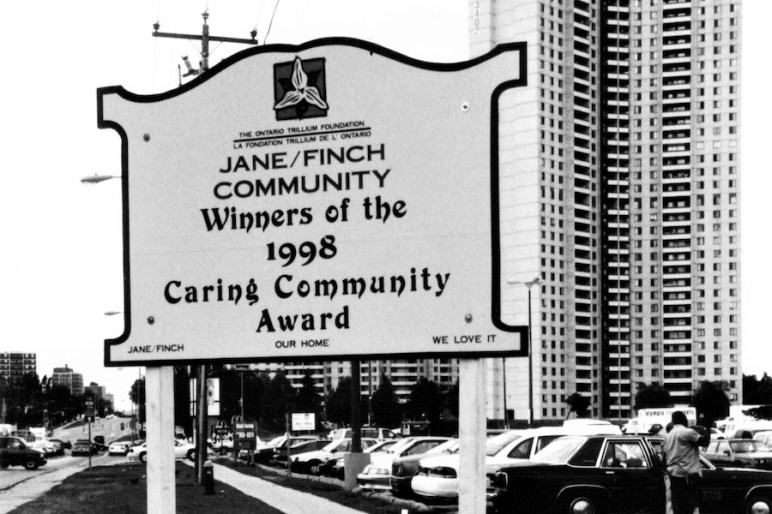
The Jane and Finch neighbourhood in Toronto has always been held up as an example of the perils facing Blacks in the city. It was the poster child for insufficient housing, rampant poverty, drugs and crime and it has gone on for years with the politicians often throwing up their hands in frustration. But ask people working or living in the hardened corridors of the Jane and Finch area in Toronto whether slavery was the root cause, their first reaction is to laugh. But, we need to accept that is exactly what the powers in government believe. It is a self-righteous and pious position, based on an academic arrogance that is being wielded and promoted by a group who feel that they just know better. To disagree or offer up an alternate explanation we are accused of being uninformed, or we are racists and insensitive to the plight of immigrants. All this while the majority of people in Canada believe and are suggesting that all Canadians should be treated equally under the law. One could safely assume that this shared belief is part of the reason that immigrants even try to come to this country.
Every immigrant group who came to this country came here or grew up here over the centuries; the Italians, the Irish, the Poles, Haitians, and the Ukrainians, all settled in their respective communities, often under very trying and impoverished circumstances. Their support came from the others that were familiar to them and had come from the same place. The evolution of their life and prosperity in Canada was brought about by a chance to further their education, to reach for jobs, to be free and have the unencumbered ability to go forward. It was not brought about by shotgunning apologies or dispensing reparation money, or brought about by demands to be treated differently then everyone else. In fact they wanted to be treated like everyone else.
The laws in this country are already there against discrimination, so if needed, enforce them. Don’t change to feed a political need or to affirm the current sociological dogma that we are all victims and that there is an ongoing and persistent institutional discrimination based on the colour of your skin. My family history in this country only goes back to the 1920’s, so I can not draw a straight line between the days of slavery three hundred years ago to my ancestry, and I suspect very few Blacks in this country, or many other Immigrant groups, can draw that straight line either.
The authors of “Struggling Well” when asked why do so many people want to be seen as victims say that it is merely a symptom of our current modern society. “It is hard to accomplish something significant, it takes years of work, dedication and sacrifice. In today’s age, a victim is recognized as being special, having achieved something. We all want that sense of achievement and being special. As a victim, you get that special attention” They sum up by saying “being a victim is an easy way out, being accomplished, despite your circumstances is tough”.
I don’t agree fully because there is in fact discrimination in the real world and some groups have different starting points than others about which they have no control, but there does seem to be a need for some hard to define toughness. A need to look inward rather than outward for the answers, as hard as that may be.
 Behind the Yellow Tape