Another change in Seasons…

As we head into Fall and wind down from summer, it inevitably seems to be a time of imposed reflection. Fall traditionally signals an ending, a time of maturity and incipient decline. This Fall though there are some unusual stirrings in the political winds of Canada and to a certain extent around the world. It could prove to be a welcome breeze, especially for any person involved in policing or involved in the legal system.

Some pundits including Time magazine have called 2024 the “year of elections” . The results in many countries seem to reflect a growing conservatism amongst the democratic countries, a swing away from the socialist progressive agenda. This is fuelled in large part by the realization that there is in fact a defined need for the police, that there is room in a democratic society for enforcement of the existing laws. There is also a desire to remove the politics out of the governmental system and oversight of the legal arms of society. Unlike years past, this time, especially in Canada, the move to a more conservative ideology may be more long lasting.

Now, before those positioned on the far right of the spectrum get too excited, a possible swing to the right is in essence, in Canada, merely a move to the centre. It only seems drastic and is being portrayed as momentous merely because of the fact that the pendulum was so far left for so many years. That being said I do believe that the vast majority of Canadians would like to return to some sort of common sense middle ground. This shifting in sentiment is often hard to discern or measure, often disguised by the fact that they are such small incremental steps. However, it is becoming much clearer that the issue of law and order has once again risen to the top.

I live in Vancouver British Columbia, the wellspring of inanity, where we learn of another grotesque criminal act on a daily basis, for the most part being instigated by the homeless, the mentally disturbed and the drug addicted. The latest was another stabbing, in broad daylight and with no motive. One male stabbed to death, another male knifed and actually had his hand severed from his body. It was perpetrated by an individual who could be the poster child of the wrong headedness of our court system, another too familiar example of where the combination of mental health and criminality collides forcefully and is played out on public streets in broad daylight. All while citizens look on or stop to record it on their phones. This latest suspect male had over 60 encounters with the police, was on probation, and had a history of assault and assault causing bodily harm. His current probation conditions was termed as being “soft”.

The story fomented the usual media hype, the Mayor coming out quickly to assure everyone that this is a “safe city” –when those of us that live amongst the daily visions of unbridled mental illness and drug abuse clearly know better. The Vancouver City Police Chief Adam Palmer when sharing the podium, seemed exasperated and in his statement gave a not so subtle hint that the suspect should not have been out on the streets. The media as usual called for instant solutions to undo the years of policy mistakes, the biggest mistake being the closing of the local psychiatric hospital “Riverview” in 2012.

In the Vancouver and British Columbia political establishment the leaders are clearly taking note of the growing public discontent and it is now looming as the single most important political election issue. Along with this is that in British Columbia there has been a dramatic up-ending of the three political parties in the Province. The Liberal Party (who re-branded themselves the B.C United), they, who were the power brokers for many years in this Province, have simply given up; they have literally withdrawn from the next Provincial election scheduled for November 2024. They have surrendered the proverbial ghost and have freed their candidates to wander away into obscurity or go join the Conservative party. This leaves it a two party race, which is polling now as a neck and neck battle between the governing NDP and the Conservatives.

The upcoming election, if nothing else, will allow the voters to distinguish between two distinct policy groups, the socialists or the conservatives, and should therefore provide a more accurate glimpse of the mood of the people. The Conservatives are predictably running on a platform of law and order and a greater move to private enterprise. They are in essence saying that they want the government to get out of the way. The NDP whose party base are traditionally the victimized and marginalized groups (you pick the group), the unions, and any and all members of the “learned” left. These “progressives” have the added advantage of massive support from the current media establishment, the Indigenous, government workers and the academic institutions. The NDP are remaining true to their ideology and are sticking with policies of all people being part of, by necessity, a fulsome government oversight apparatus. It has been a long time since there has been such a clear choice for the people going to the ballot box and currently it seems be an even battle.

It is always fun at election time to watch all the candidates feel bolstered and sharing their insights on all of the evident problems and the clear solutions that lay ahead. Solutions which they did not see while in power but have now attained a greater vision when in sight of a ballot box. What is equally clear is that it is always someone else’s fault.

When talking about crime and rampant lawless behaviour, the Provincial NDP who have been in power for the last five years in British Columbia (the California of Canada for all you Canadians who live in the east) quickly point to the Federal Liberals as the problem. And to be fair, the Feds are the governing body when it comes to the Criminal Code. The offended Feds in turn point back at the Provinces because they are in charge of Health Care and the current sitting Judiciary. The Provincial leaders then rebound and point the accusing finger downward to the cities as they are responsible for enforcement. Three levels of government, all with no defined action plan in terms of the daily carnage on the streets and apparently unable to find any solutions while in power, now telling everyone they now know the way.

As we in the West look eastward, Alberta has always been Conservative and the Prairies are very similar. Doug Ford in Ontario is now trying to get a Conservative election victory prior to any Federal Election. Newfoundland is the only true vestige left of Federal Liberal supporters.

The Federal NDP and their illustrious shrill leader Jagmeet Singh dramatically announced that he is “ripping up” his prop-up agreement with the Federal Liberals; while at the same time vowing not to be rushed into any confidence vote. It would seem that he has finally realized that the Liberals are circling the drain and he either goes down with them, or finally leaves the safety of the Liberal cocoon for the less than safe seats of his own party. His ratings are below Trudeau but he is hoping his chances will improve with a continuous socialist rhetoric of corporate greed. He is hoping that someone out there actually agrees with him, but his chances of disappearing altogether is growing. The policing fraternity are hoping that the NDP policies disappear with him.

Now Trudeau himself is another story. His actions to date only raise questions for me. As he reads the latest polls and gathers his troops in Nanaimo this week, is he being driven by pure ego? Does he think he can spend his way to a rise in the polls and another minority government? His strategy for a possible re-election is singular. He will continue to try and and will have to make Polievre turn into Trump.

Polievre for his part, will continue to try and avoid any major guffaws and keep his newly coiffed hair and refined look in place. He has to walk a fine line, because he certainly is not going to get any votes from the public service or those that depend on government contracts. The same foes of the BC Conservatives are the same foes for the Federal Conservatives. Let’s face it, what are the chances that members of the CBC vote for him?

Of course there is not a strong enough wind to blow all the usual problems off the headlines and the teleprompters of our television talking heads. In terms of specific policing issues, in the next few months the Surrey RCMP and the Surrey Police Service will continue to dominate the local BC headlines with the snail like place of getting officers on the ground and the equally slow moving RCMP in getting their officers out. The Indigenous will continue to dominate headlines with further demands and true to form, just recently tore up their latest signed agreements for a natural gas pipeline with TC Energy. There is little doubt that the RCMP will once again be manning the barricades in northern B.C.

Back east I have a growing interest in the Bill Majcher case, charged as he is with foreign interference and there are some interesting parallels to the Cameron Ortis case. There is a good chance that CSIS and the RCMP INSET (Integrated National Security Teams) may look bad on this one as they continue to struggle to be a meaningful service amongst the Five Eyes. So we need to keep our own eyes on that one. Their is evidence now coming forward that Majcher was throughout several periods of time , actually working for CSIS.

In a more general sense, the Mounties in Ottawa will continue to find themselves in an environment of increasing public suspicion. They seem to be floundering in terms of leadership and in finding their true reason(s) for being. The larger overall problems have been years in the making and it will be years in the undoing. They will however, continue to do what they still do best. They will apologize somewhere. The most recent was in Nova Scotia where they apologized to the African Nova Scotians for “historic” use of street checks.

There will be the usual public government pronouncements, the Federal government employees will continue to protest having to go back to work 3 days a week and will come up with any inane excuse they can find. Housing prices will stay the same, inflation will continue to hover around 3% and mortgage rates will have little effect on the supplies of housing. The media will continue to pump us full of doomsday proclamations; headlines about droughts, floods, fires, heat, cold, or anything they decide is “record breaking”. Our traditional news sources will continue to be decimated and their managers will continue to replace long time journalists with persons who are quick on the keys to Instagram, and Substack. Ukraine seems to be in military limbo and Israel seems to heading into the same horrendous stalemate in Gaza.

However, life will go on. Get ready, get your thoughts in order and be a little hopeful, as it is never as bad as it seems. Its only an ill wind that blows nobody any good.

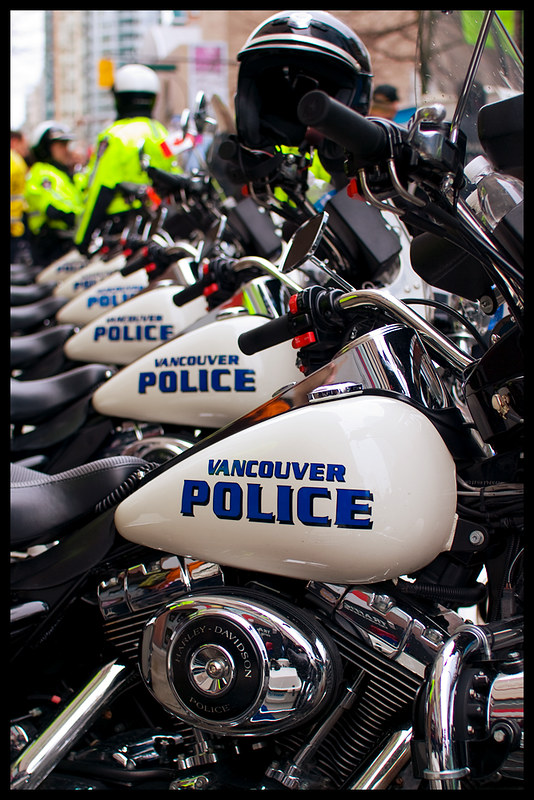
Photo courtesy of Jeannine St- Amour via Flickr Commons – Some Rights reserved
Money, Money, Money… Money everywhere

I will admit from the beginning that there is a jealous undercurrent to this story, although I am sure it is misplaced. Jealous of the current cop world is normally not where I usually find myself. I am talking about the pot of gold which can be found at the end of the Vancouver police departments rainbow. And more monies in a general sense are now being thrown into the policing circle of life than has been seen for quite some time.

The rationale varies and the rationale is wholly dependent on what side of the equation you find yourself. For the Vancouver Police Department, all is good, while on the flip side, the taxpayers of Vancouver might not be quite as charmed. The search for greater monies in the form of police salaries can sometimes cause those on the outside looking in say that those numbers are becoming excessive; especially in terms of city budgetary needs and fiscal constraints. Some would even categorize it as greedy, that there is some over-reach going on, and the justifications for it are much more tenuous. It should be noted that Plato felt that greed was a part of human nature; while Darwin in his theory of evolution felt that greed was natural and good. However despite their distinguished and historic reputations, it is unlikely that their arguments would sway many in 2023– especially those living in Vancouver.

You may not remember those days when police salaries were only in the double digits. You may forget when police salaries were never headlines, mainly because they were mid-level, average Canadian salaries. The salaries seemed in the realm of normal expectations. The average family income in 1976 as an example was $19,000 per year. My first salary in the Mounties was $13,500 in 1978. Using basic math, a cop in 1978 was therefore making about 71% of the average “family” income.

Fast forward to today and the recent headlines in the Vancouver news. The Vancouver Police Department is about to ratify a 2 year agreement which will entitle a 1st class constable (someone with at least 5 years service) a salary of $122,000. ($63.41 per hr) The average family income in Canada in 2023 is $75,452 ($39.00 per hour). Therefore, a cop working today in Vancouver will be making 161% of that average family income. In terms of other “first responders” a firefighter in Canada on average makes $83,138, 110% of the average family income. A nurse in British Columbia is $91,732, 121% of average family income. These first responder salaries it would be argued would be in line when compared with other “first responders”. When the comparison is with anyone else in public view, they are indeed eyebrow raising numbers.

In case you think an RCMP officer is now under paid, lets not forget that they too just received a large pay and retroactive increase. An RCMP officer after only three years on the job is now making a salary of $106,576, roughly 141% of that average family income.

I recently received a copy of the wage rates for the new Surrey Police Service (you know those ones battling Brenda Locke). A first class constable salary is $121,989, only slightly less than that of the new VPD raise, and if you rise to the level of Inspector with the Surrey Police Service you will be at $207,381.00. This would put one well ensconced in the top 10% of Canadian wage earners which requires a salary of at least $174,000. The median doctors salary in British Columbia is $178,810 per year.

So now you get the picture, it is in effect raining gold in the world of “first responders”. And we are not even mentioning the often gracious benefits that are also attached to some of these jobs.

The rationale provided by police spokespersons normally is two fold, that it is a thankless and dangerous job, and there is a need to sweeten the pot to attract people to the job, especially in this age of heightened public scrutiny. Ralph Kaisers of the Vancouver Police Union said that police “are finally being shown the value and support from city council…they need to be properly compensated for the work they do”. He predictably cites the “dangers of the job” and the need “to retain members” as the true drivers of this pay raise.

Let us deal with the first proposition.

There is a danger to the job, that can not be disputed. That is the primary factor when police salaries are being negotiated and has been for decades. But has that danger increased? At first blush that seems to be true. New data coming from the University of Ottawa shows that the recent 10 deaths of police officers in 8 months has not been seen since the 1960’s. But as the authors note, there are twice as many police officers working now, compared to then, therefore the overall death rate is actually lower than in the past decades. The data also shows that the leading cause of police deaths, contrary to the movies and the television, are car accidents. Justin Piche the University of Ottawa professor balks at the current claims of police officers that it is more dangerous now then in the past, and says that “…it doesn’t mean they (the Police) get to make any claims they want”. The deadliest years were 1962 and 1968 when 16 officers died in those years. Since 1962 on average there have been six and seven deaths per year while on duty. All those are tragic, and this appears insensitive when you look at cold hard figures like an actuary, but we can not dispute the numbers. From a statistical perspective, there are 70,566 police officers in Canada currently, which means as a percentage that 0.009 % of police officers are killed in the line of duty.

In Canada, union and non-union construction workers are fourth in workplace fatalities in Canada and average 20.2 deaths per 100,000 population. The top three are fishing and trapping; mining quarrying and oil wells, and logging and forestry. Policing is not even in the top 10, not even above tenth place trash and recycling collectors. Nor of course are fire personnel or ambulance attendants or nurses.

A corollary to the danger question maybe are the police busier now than then? The violent crime rate in this country according to Statistics Canada dropped dramatically from the year 2000 to 2014– then there was an upswing, from 2014 to 2021 and where it stands now is about 1/2 of what it was in 2000. Is it on the upswing, yes, is it higher than in the year 2000, no. During this time period the number of police officers in Canada have gone from 55,954 in 2000 to 70,556 in 2022, giving them a 26% increase in manpower.

It is a thankless job, but that has also been true for many many years, and in previous years there was never a need to attract people to the job so other things must have changed.

Will it help to retain members? Maybe, but that is difficult to measure. Will it attract the “cream of the crop” as described by Kash Heed, the go to analyst for CKNW and Global News? Possibly, but what makes a police officer the “cream of the crop”? There are no other jobs like it, so the prior police experience factor is the only one at play here. My guess is that you will get more officers trying to transfer from the lesser paying entities to the VPD, but whether they are the best of the best is highly debatable and definitely not a sure thing.

So what are the legitimate arguments for a pay raise for policing and in particular the VPD? It would seem that the only logical argument has been the increase in inflation. The last two years have seen 6-8% inflation rates; the VPD raise amounts to 4.5 per cent per year, for a total of 9%. Mr. Kaiser needlessly points out that “our members feel it when they go to the gas station or to the grocery store”. Hopefully he is not implying that other parts of our society don’t have that same feeling.

As an aside, of course, not everyone in society gets an inflation levelling pay raise in Canada, so the police unions with their greater societal levers can lead the way in any clawing back of earnings that have been lost to inflation. Statistically, inflation has a greater negative impact on lower income families– so the average family income which was mentioned previously, is going to be proportionally hurt by inflation much more than the higher income levels. Milton Friedman, the Nobel prize winning economist would say that inflation is ” a result of too much money…a more rapid increase in the quantity of money than an output”.

Of course the biggest immediate problem with this raise is that for the people of Vancouver it will add $30 million to the annual cost of policing in the City. Which in turn means a 2.5% increase in property taxes to cover the extra policing costs. The VPD’s 2024 budget is a net $415.9 million, $6million more than the finance team was “comfortable” with; and $42 million more than the department began operating with in 2023. The VPD is also expecting to run a $3.6 million deficit this year (They also had to throw in an extra $3.3 million for the Vancouver Fire Department). As an aside you should remember that the VPD union endorsed the current Mayor Ken Sim in his election in 2022. For his part, Sim recently put in place a “budget task force” to look into areas where savings could be found–the VPD budget is not part of that review. It is estimated that by 2028 the policing budget will be approaching $500 million.

Chief Palmer in speaking about the budget is sees it as somewhat as a fait accompli; he says “so if you go back to 1990 and you look at the trajectory its always been 20-21% (increase) which is what it is today, and what it will be in 2024, and I am sure in 2028”. In others words, there is nothing you can do about it. He says, “It costs a lot to keep Vancouver safe. Thats what it costs and people get great value for their money”.

Mr. Palmers salary by the way in 2022 was $493,932 with an additional $48,282 in allowable expenses. He is overseeing 1400 police officers. In terms of responsibility, the Prime Minister of Canada annual salary is $357,800. He is overseeing the Federal public service which now has 335,957 employees, and revenues of $457 billion. Clearly Mr. Palmer is doing very well personally and is a long way from the average worker.

The million dollar question (in keeping with the money theme), is whether or not there any saturation point? Is there some point where people begin to ask or question the ever constant growth in policing costs, which will in turn at some point force us to talk about layoffs rather than hiring? Some tough questions, despite Mr. Palmers nonchalance on the issue, are clearly just around the corner.

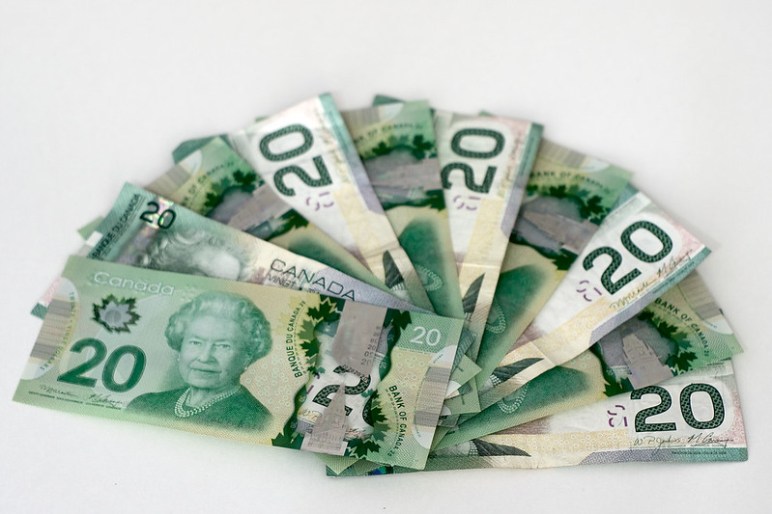
Photo courtesy of Bruce.Guenter via Flickr Commons – Some Rights Reserved

The Pay Raise Gamble

Police officers and their managers have always had a comfy, cocoon like existence —somewhat removed from the economic up and down and cycles of the “real” world. Profit, loss and the measurement of productivity is an anathema to the world of policing.

They have often been able to “social distance” itself from the the pettiness and give and take of pesty budget concerns. “Cutbacks” during the last few decades, and especially in the RCMP has never really been in the policing lexicon.

To be sure there were years where in the “police universe” the Mounties received the short end of the stick, falling behind some of the bigger municipalities, at least for short periods of time. In the end, the Mounties were almost always dragged up the wage ladder by the other unionized forces across Canada. 

There was a time when the Federal government “froze” the wages of government workers, but that time is lost to the institutional memory of this group of officers. But for the most part, time was always on their side and the Mounties were able to live off the others. Their “universe” was a close orbit, made up of only other police agencies. When given to complain, the RCMP officers were only forced to an easy comparison. Any higher wage was justified by pointing to those other cops on the other side of the street. If they got a raise, you got a raise.

Quite naturally, there was no comparison to the economic worlds around them—those who were paying the freight. To be fair, the lack of caring or understanding of the general population mood is a characteristic of all government. Mounties policing in small towns were unfazed and unconcerned about the local budgets in terms of wages and salaries, their vision solely focused on the universal wage for police that was being determined in Ottawa. There was a constant and repetitious cry for new officers whenever a a detachment commander appeared before city counsel and never would it be couched in terms of concern for an overall budget. 

This all may be about to change.

Bankruptcy is now facing various governments on all three levels. The blame for these financial circumstances which have been thrust upon them, points directly at the “fight” against the “virus”.

Albeit, these same governments have cheered on the Federal government and their daily largesse. Every level of politician during this time had only one concern when pressed and that was to keep the electorate consoled. Only the truly brave offered up any question as to the need to be fiscally responsible.

So as the CERB cheques and business loans were shotgunned out to those in need, the deficit balloon rose to unrecognizable levels. The fiscal hammer above the political heads across the country got raised up further every day. And as gravity tells us, that hammer will eventually come down. The economic light will be shining very brightly on the unbridled spending in the next few months, and the glow from the economic fallout may be lasting for many years. 

Even before the “virus”, this blogger wrote several months ago, about the revelation that the Ontario government and various Ontario municipalities were trying to come to grips with budget shortfall issues and in particular with the growth of police budgets. The “ratcheting” of police and fire budgets was finally reaching levels where they began to get noticed. 

Defending the spending, fell to the age old axiom of the need for “public safety”. This tired and repetitious explication is now being seriously questioned for the first time in many years.

A number of police departments have three year Constable pay levels which have breached that psychological barrier of $100,000 and Police and fire services continue to grow at levels beyond the reach of the general population where salaries have stagnated for the last number of years. Police and fire budgets as a portion of municipal and provincial budgets is now the elephant in the hearing room.  

Tremors of anxiety are beginning to vibrate through the policing world as the word “cutback” is seeping in, gradually, but now discussed as an imaginable option.

This nervousness and angst finally touched down in the lotus land capital of Vancouver. This is happening in a city where government decidedly leans to the left and spends money on the services of the downtown Eastside like drunken sailors on shore leave. Although, it should not be totally surprising or unexpected when this is the same government which views whale-watching and the dispensing of cannabis edibles as suitable economic replacements for lumber or the building of gas pipelines. 

That aside, the City of Vancouver now finds itself facing a $152 million shortfall (Surrey is facing a $42 million shortfall as a comparison). The loss of jobs and shuttered businesses drying up revenues. Many argue that the full economic destruction has yet to be felt in this City of the Dispossessed.  

The other cognizant point which needs to be included in this discussion– the City of Vancouver has a legally dictated obligation to balance the budget. 

Canada’s third largest city has an overall budget of $1.6 billion. The Vancouver City Police now make up 21% of that overall budget with an annual expenditure of $340.4 million. And the greatest portion of the Vancouver city police budget is for salaries. 

To meet this $150 million shortfall the City of Vancouver has already proposed a very substantial increase of 8.2% in property taxes.

During this time they had also written to the Vancouver City police board to ask that they come up with proposals for  possible budget cuts. That was on April 14, 2020. OnApril 27th, the Police Board responded but didn’t offer any spending cuts. So City counsel imposed a 1% pay cut in the police budget, which amounted to a $3.5 million cut out of the $340 million pie for the remainder of 2020. 

They also directed, maybe more significantly, that the Vancouver Police Board in their pursuit of collective agreements with all of the three involved unions at the Police Department— that there will be  a stipulated 0% increase in 2020.  

Now, it would seem to most observers’ and probably the taxpayers of Vancouver that the proposed cuts and their proportion to the overall budget are in fact quite reasonable under these financial circumstances. But predictably, Chief Adam Palmer felt that the cuts were disastrous and went to the media with his complaint. 

What did he offer up as his major concern? 

Well “public safety” of course.

“Public safety”according to Chief Palmer was now once again in jeopardy due in part to the increase in “anti Asian racism complaints” that the Vancouver City Police were needing to now handle in the age of the virus. 

Well, it least it shows some politically correct astute thinking on behalf of the Chief, but no one is going to believe that the few cases  or a rise in commercial break-ins which have emerged have pushed this City department to the precipice. 

He also argued that City counsel did this without further conferences with him; he did not mention that he had been given opportunities to get involved in the cutbacks— but maybe being in that police cocoon may have thwarted his belief that someone would dare to cut his employees. (It should be pointed out that the Fire Department, which is always aware of its political surroundings, voluntarily made their own cutbacks.)

The Vancouver City Police union predictably also chimed in. They said that with the cutbacks and the disintegrating morale, many officers may choose to leave for the upcoming new police force in Surrey. The fact that Vancouver City could lose a number of officers to the proposed new Force is a bit of a red herring, as it is already being planned in the VPD that even outside of any budget complaints– they are going to lose a number of officers to Surrey. 

Some sources tell me that the management of the VPD are planning on the possibility that they could lose up to 200 officers to the new agency.

The ripple effect of this Surrey agency is also going to impact dramatically with the Cities of West Vancouver, Delta, and New Westminster PD’s, but that is for another blog.  

So where does this place the new union of the RCMP as they start building their case with Treasury Board for a 17% pay increase nationally. They are normally not encumbered by any sense of fiscal fallout, but along comes the damned Corona virus. The monkey wrench has now clearly been thrown into the cozy often egocentric policing world. 

It is one thing for the Federal government to feel that the Mounties need or should get a pay raise. Clearly the Liberal government is in a spending mood, so maybe Mr Trudeau will extend his daily giveaways. A 17% increase seems like a stretch at the best of times but under these depression/recession times it may be a little much to swallow all in one gulp for any government. 

But the biggest flaw in this large increase is not the willingness of the Federal government, it is that almost all of the raise would be simply pushed on to the municipalities and Provinces. At most the Feds would only have to pay 30% of that raise for those involved in contract policing. The rest, up to 90% in the case of Burnaby, or Coquitlam, has to be paid by the municipalities. As the municipal agencies are already crying to the Federal government for further financial support because of the virus burden, they would be incensed to have another huge expenditure thrust on them. 

So this leaves the Feds in a rather difficult and untenable position. Nor is it an easy one for the new leadership of the Mountie union. Now no longer needing to prostrate themselves before Treasury Board, but now facing some extraordinary budget considerations.

In terms of the policing structure in the Lower Mainland, and in the rural Provincial contracts, managers may be looking over the precipice of a significant re-structuring of the policing dynamics throughout this country. It’s possible that the virus will also be the catalyst that will re-awaken talks of Provincial forces, a Federal government RCMP/FBI, and regional police forces. 

 It could also mean– dare it be said,  “cutbacks”. 

For the younger RCMP officers, just like their Vancouver counterparts, their future may be the new Surrey PD, the same group recently lampooned by the Mountie union.

The next 12 months will be telling. The Mounties will build their case, no doubt continually underlining their current standing in the police universe and equally predictable, will be arguing “public safety”; striving for that instant 17% increase.

But, if you were gambling on the bet of a substantial RCMP raise, an odds maker may be telling you to now to “take the under”.

Photo Courtesy of Eric Flexyourhead via Flickr Commons – Some Rights Reserved