“Double dipping” for China?

There has been a new case surface in the last week or two, which caught the attention of these tired old eyes. It was when the RCMP made a grand national pronouncement that they had arrested and charged an ex-Mountie; William “Bill” Majcher , with two counts under Sections 22 and 23 of the little used Security of Information Act.

The story caught my attention on a number of fronts. First, I knew of Mr. Majcher, but only in passing; secondly, the investigation was done by the Integrated National Security Enforcement Team (INSET), and it was the INSET unit in Quebec, even though it very much sounded like the offences occurred in British Columbia. That seemed a little unusual and could only mean that there were others involved and there was a trust issue. For those that needed to be reminded, INSET is the RCMP agency which is the direct liaison with CSIS (Canada’s spy agency). Therefore one must always be aware that CSIS and thus INSET often work on “political targets”, and therefore their mandate is often at the direction of the government or with the approval of government. There is little to no police independence when talking about either of those entities. So we should also keep in mind that old adage that “one mans terrorist is another mans freedom fighter.”

With this in mind, China and its alleged political interference in recent Canadian elections has been a dominant story and pre-occupation for the last few months in Canada’s mainstream media. The Liberals have been under a great deal of political fire for their handling of the information surrounding the election interference, and their lack of investigation of it. So it seemed slightly more than coincidental that this case against Majcher was brought to the forefront in terms of its timing, and the obvious question as to whether it was being done to ease the pressure on the Liberals. Adding to the suspicion, is that these cases were historical, in that they occurred sometime during the years from 2014-2019. They also had said that this particular investigation had nothing to do with the alleged election interference. INSET says that their investigation surfaced as a result of a “complaint” in 2021, and now in 2023 they were bringing forth charges.

The accused, Mr. Majcher, was a Mountie from 1985 to 2007, some twenty-two years, and “retired” from the Inspector rank from the now defunct Integrated Market and Enforcement Team (IMET); an investigative group which had been mandated to investigate criminal activity in the Vancouver stock exchange and other financial markets. I met Mr. Majcher when he was the Inspector in charge, and we met out of necessity as he was the overseeing officer for an internal investigation that I completed on a Vancouver Police Department matter. He didn’t really pay much attention to the details of my report and signed off the investigation with little to no question. My first impressions of Mr. Majcher stand out now– and have been echoed by many people who knew him during his career. He began by showing me around his rather sumptuous office down on the Vancouver harbour front, and it was impressive from any government employee perspective, with its two storey high windows and its unhindered view of the moneyed yachts. It all turned out to be part of his pitch to me to come to their section, as they were looking for an experienced team leader/primary file investigator at the time.

He was a pretty impressive salesman about the job, but he was an obvious salesman, in that stock broker, car salesman kind of way. I later found out that before joining the RCMP he had in fact been a Eurobond trader. (Eurobonds by the way were one of the first tools developed and marketed to aid in the hiding of funds offshore) He was also clearly intelligent, but his flaw may have been in believing that he was always the smartest person in the room. He was always talking, but not overly concerned with listening. I considered the job at the time because of my interest in economic crime (much cleaner than homicide), but then turned it down after researching it a bit, and learning that the section was having trouble getting their feet off the ground, due to a variety of reasons and legal complications.

As it turned out, Mr. Majcher later got himself in some hot water while with IMET, and he became the subject of an internal investigation in 2005. I was told at the time, that it had something to do with his continuing involvement in the stock market, but I never heard the full story. In the end, presumably rather than face further investigation he “retired”– the always tried and true option the Mounties go to when handling troublesome employees. The public material says that Mr. Majcher in 2006, had already moved to Hong Kong– clearly never one to let the grass grow under his feet.

Like every ex-Mountie who is looking for a double-dipping job, and populate LinkedIn, Mr. Majcher talked up his previous investigational work experience and touted himself as an extraordinary undercover officer who continually risked life and limb in pursuit of the bad guy. His resumé was clearly bloated, but Mr. Majcher in fact did do a good job as an undercover operator on a couple of investigations. In the roles he played he was always portraying “the money guy” — always the salesman. His most famous case was that of the case against Vancouver lawyer Martin Chambers in the late 1990’s. Mr. Chambers during his hey-day was a prominent Vancouver lawyer who was suspected of large scale money laundering for the Russians and the Hells Angels. During a staged video-taped meeting in Florida with Mr. Majcher playing his role of financial underworld figure, Mr. Chambers took possession of $700,000 cash, and provided offers to handle millions of dollars. Mr. Majcher was the primary undercover officer and had led Chambers to believe that he monies were coming from the Columbian cartels at the time. It was a joint FBI-RCMP sting, and it was successful, and Mr. Chambers was sentenced to 15 years and 8 months which he served in an Arkansas jail.

The Chambers case would be the case that Mr. Majcher seems to have used as his plank to build a spring-board into a position in Hong Kong. He described himself as a “risk assessment officer” for the investment banking community, and that he had moved there to “establish an international banking platform on behalf of Hong Kong merchant bank, representing a number of Chinese state owned and non-state owned enterprise clients engaged in overseas capital world activities”. Not only would he bring to the table his extensive investigational expertise, but they would be able to employ “military grade cyber technology” in the pursuit for their clients.

He later formed the company EMIDR in 2016, a “Hong Kong based cyber-security company”. In a video he described himself as “a hired gun to help either large corporations or governments to get back what is rightfully theirs”.

Now most of us can see the salesman oozing out of these marketing pronouncements. But, despite the clear aggrandizement of his capabilities and the obvious exaggeration as to what they could bring to the world of money laundering, nevertheless, Mr. Majcher was indeed tapping into or at the very least trying to tap into a potential gold mine.

And this is where it all gets rather complicated.

It gets complicated in terms of the story line, and it gets complicated in the list of characters who may be playing in the game. First and foremost, this story is about money laundering, at least on the surface. But it is also about the many layers and degrees of inherent corruption. It is a fact that mainland China has had numerous individuals remove monies from their country, contrary to their own laws, as well as ill gotten gains that were taken out of the country from illegal activities. By any measure it is estimated that they have lost billions of dollars over the last number of years. And as you guessed, there have been a few select countries which these suspect individuals have turned to in order to facilitate the laundering of those funds. One of course, high on the list, is Canada, and specifically Vancouver. (do you remember the Cullen Commission?) Another area was along the “Gold coast” of Australia and the city of Melbourne. Their were other locations of interest to these monies seeking a home and the luxury of anonymity such as New York and Chicago. Hong Kong which was a city designated as a special administrative region of China, was heavily involved in the movement of those monies wanting to escape from China, due to its geographic proximity and the lack of foreign exchange controls.

The people who have orchestrated these money movements are now considered by the Chinese government to be criminals. As a result China started two projects; Sky Net in 2015 and Project Dragon in 2019, to track down and try and get back those monies. The latter project focused on the gold coast of Australia and those funds that were being used to purchase real estate. China of course, as Majcher himself stated in an interview, needs to “walk a very fine line”, as to the perception of anyone working for a foreign government. So China smartly formed public/ private partnerships with various firms, who would assist them in tracking down individuals and finding the monies. As expected they went to those with knowledge of the host countries who advertised themselves as having “expertise” in that country along with their “investigative resources”. Enter Majcher and other similar firms, especially those firms staffed by ex-police officers. Mr. Majcher openly said during a television interview that “I have a commercial relationship with entities that are in themselves associated in some form or another with policing authorities in China”.

Of course, most of these ex police officers who have entered this private field, have little or minimal hands on experience, they are primarily being hired because of their “contacts” in policing. Mr. Majcher is not a cyber expert, smashing the keyboard, hacking the demographic data sites to find someone; he is likely just picking up the phone and calling persons in the policing world who do have that information at their finger tips, and are willing to assist them in finding people. Mr. Majcher worked for the most part in British Columbia, ergo his contacts will be in British Columbia and in particular Vancouver, this hot bed for Chinese money laundering in Canada.

Two ex-Aussi police officers, Jason McFetridge and Austin Whittaker, in the Melbourne Australia area who had a similar firm to Mr. Majcher were interviewed about how the plan to recover the funds would come about and how it would be executed. Both maintain that it was a completely legitimate pursuit to get their client’s money back. It was a simple plan, but one that bordered on extortion. They would identify the people with the apparent illicit funds, confront them, tell them they are on to them, and that they needed to sign over their properties to the ex-police officer company. They in turn would then sell the company and send the monies back to China for a fat commission. The obvious inference, should the accused not “voluntarily” sign over the money, was that there would be repercussions for their families back in China, or telling them they face jail time if they ever return to China etc.

Does China have a right to pursue criminals and money launderers? It would seem legally justifiable, but what becomes questionable is of course how they go about it. Do they have the right to have hired personnel threaten people and insinuate sinister repercussions–that strains legality. It would have to be at the very least an inference and not a direct threat. The Skynet project apparently identified over 3,000 people that the Chinese government felt had broken their laws.

It would be easy to say the Chinese are wrong, and this is a step gone too far. And of course, what if the people they are pursuing are not criminals?

Historically Canada, and in particular Vancouver, has a very murky bordering on sinister relationship with communist China.

In 2015 China tried to sign agreements with the CBSA and the RCMP to assist them in pursuing their people of interest. In the late 1990’s Lai Changxing was considered “China’s most wanted fugitive”, a man who had been implicated in several corruption scandals in China involving a large smuggling ring. He evaded arrest and settled in Vancouver, where he was arrested by Canadian authorities, went through a long extradition battle but eventually was sent back to China in 2011, where he was given a life sentence. So at one time, the Canadian government was participating in the very same thing.

There is the Meng Wanzhou matter where a high ranking member of the Chinese establishment and the Chief Financial officer for Huawei was arrested in Vancouver, on behalf of the Americans and was facing extradition. China retaliated by arresting two innocent Canadians as “spies”, Michael Spavor and Michael Kovrig. Meng eventually reached a “deferred prosecution agreement” with the Americans, the charges were dropped, and she was returned to China after having been under house arrest for close to three years. During this time she was given VIP protection to and from court by the Lions Gate Risk Management group, a group also filled with many ex-police officers who also advertise their specialities in “Money laundering and Asset tracing”. Mr. Majcher during this time admits to also being contacted by China looking for some help and monitoring of the case against Meng.

And let us not forget the matter of the ex-Mountie, Ben Chang, who during the Wanzhou hearings refused to testify about his role in the arrest of Meng Wanzhou while an RCMP officer. Since the arrest time, Mr. Chang had turned his old foreign liaison posting with the RCMP in Hong Kong into a retirement job as a senior security officer in the resort casino Galaxy Macau. His last minute refusal cast doubt on the credibility of the government lawyers who maintained that the RCMP did not share any information on Ms. Weng’s computers and mobile phones. Somewhat mysteriously, the prosecutors did not subpoena Mr. Chang. The Galaxy group as it turned out is owned by Lui Che Woo, a Hong Kong businessman who served on the standing committee of an advisory group to Bejing. Mr. Majcher it has been reported to have been at one time Mr. Chang’s supervisor.

INSET has hinted that they are looking at other officers involved in Mr. Majcher’s case. One of the names surfacing is Ken “Kim” Marsh, another ex-RCMP officer, who has written a book about his exploits entitled “Cunning Edge”. Mr. Marsh who has been named as a co-conspirator with Mr. Majcher, but not yet charged, once cooperated with Majcher on cases; and Marsh identifies himself as his “Mountie friend”. In his book Marsh talks about being “hooked up” with Russian millionaire Vladimir Antonov for a “due diligence report” that he charged Antonov $500,000 to prepare. Antonov would later be charged with embezzling “hundreds of millions of dollars from a bank in Lithuania”. Marsh is now seemingly perplexed by his naming in this most recent Majcher investigation. As he says in the introduction to his book, “he gave decades of his life to his work, all in the pursuit of bringing bad guys to justice…for his clients…and society at large”. He doesn’t mention that it was also primarily to make money.

So what are the charges specifically? Section 22 is labelled “preparatory acts” and states in essence that anyone who enters Canada,… or retains or gains access to any information… for the benefit of a foreign entity, a terrorist group, or an economic entity… and then communicates that information to them is guilty of an offence. This section refers back to Section 16, 17, 19 and 20 which get more specific as to whether the information is designed to “harm Canadian interests…or is reckless with that information”. Section 20 deals with using the information in association with a “foreign entity” to “induce, by threat, accusation, menace or violence, any person to do anything or cause anything to be done”. Section 23 is just the “conspiracy” section saying that one can not conspire to do any of the above.

So there is three elements to these offences that need to be proven. Was Majcher working for a foreign entity? Did they obtain information that was being guarded by the government, and finally did they threaten anybody or coerce anybody to take some action on behalf of the foreign entity? In terms of the press briefing by Inspector David Beaudoin they say that the charges surround “preparatory acts for the benefit of a foreign entity and conspiracy”. As stated previously, they began their investigation in the fall of 2021, and it was for the time period of 2014-2019. There are going to be some significant legal hurdles. Does the government of China have the right to pursue persons they consider thieves and money launderers? Are private investigators, indirectly working for the foreign government allowed to make inquiries as to money laundering and attempt to find those persons? America, Britain, Australia and even Canada using various investigational instruments make inquiries constantly for this same purpose. The RCMP and Canada have directly participated in doing the very same thing, but of course they will argue that they and only they are the safe-guarders of that information.

If one is interested in this kind of thing and would like a full view of the extent of the problem, I recommend the book “Moneyland” which the Economist magazine called the “book of the year”, written by British journalist Oliver Bullough. It is a deep dive into money laundering and the people behind it, including the lawyers, bankers and governments that both front face the problem and are part of the problem. The city of Vancouver is featured as a sought after refuge for the kleptocrats from China, Russia, and south Asia and he outlines the number of groups trying to track them down, often frustrated by the lack of government action on the issue. It is such a broad and expansive problem that he argues that it is under cutting the pillars of western democracy.

There is one other aspect of this story that is intriguing. That is the media coverage of this story led by journalists like Sam Cooper changes the motivation behind China. Cooper who is never shy in trumpeting his investigative journalism skills on the subject of money laundering in Vancouver. As it turns out he has admittedly conferred in the past with Kim Marsh on stories such as the Cameron Ortis story; and it would be a pretty easy assumption that he has RCMP sources feeding him information. The interesting part is that his take, and therefore the apparent take of the RCMP is that China is “not interested in getting back their money…only interested in controlling the people in the country”. In other words it is all part of a conspiracy to control the Canadian government through spies and agents.

It is an interesting postulation, but there is little to no evidence to support it. There is no doubt that China has for decades searched out persons and politicians who would speak positively about China and possibly try to influence legislation. While in Security Service in the 1980’s and early 1990’s we were already watching the Chinese operatives in Canada trying to influence politicians. The problem is one of definition. In the U.S. for example, they simply call them “lobbyists”. Here, in this country there is not even a foreign registry set up, so how concerned or worried about it is the Canadian government? In Mr. Majcher’s case, there is much more evidence that China is going after the money, they have always been aggressive industrialists, and there is an abundance of evidence that there that there is a treasure trove of ex- Mounties who are willing to set their flexible ethics aside and give them a hand.

There is politics wrapped around politics in this investigation, and the timing is highly suspicious and of major interest will be who initiated the original complaint. In this new age of ingrained disinformation and when our media seems to have an agenda, it is increasingly necessary to question sources. But, when it comes to unravelling the mysteries of China and its cultural layers, one needs to be very careful indeed. The only aspect of this story that seems to bear out consistently, is that there are apparently plenty of of ex-cops willing to help– for a fee of course.

Photo courtesy of Images Money via Flickr Commons – Some rights reserved

A Surrey post-mortem…

We have been following this issue for a long time, so when it finally reaches a possible conclusion, I find myself obligated, with some reluctance, to write about it once again. As those of you know who have been following the story, the RCMP is now effectively losing jurisdiction, in its biggest detachment in Canada. So it is news, but it has been truly tiring to watch this fiasco unfold, led by a couple of politicians in Surrey, like MacCallum and Locke, both of whom would be perfect characters for covers on Mad Magazine.

When asked recently on a local radio show in Vancouver how I felt about the NDP and Mike Farnworth’s decision as to who was going to police Surrey, and have now decided to go forward with the new Surrey Police Service, my only answer was that I felt “relieved”. It was in my opinion, a logical, fair and proper decision, when one considers all of the circumstances and disregard those speaking who clearly had an agenda. The problem was that it took too long to make that decision, and the delays affected hundreds of police officers on both sides of the argument. We won’t mention the monetary costs of these delays. Ms. Locke should have been told from the outset to go to hell, that the process to move forward with a City force was already in motion, and she with the short term memory affliction, was in the beginning part of it ,and in favour of a city police force. Since then she has been playing revenge politics for several months, in a campaign that was both misguided and misinformed, propped up no doubt by the senior management of the RCMP, who seemed to be continually willing to feed her disinformation.

So lets do a bit of an autopsy on what happened.

The biggest issue, the Y cut at an autopsy if you will, was the ability of the RCMP to actually fulfill their policing contract in terms of staffing and resourcing. Everyone who has been a Mountie in the last thirty years, if not longer, could tell you that the Mounties have been robbing Peter to pay Paul for years. There mandate and their abilities could not meet their stated goals. They are still doing it, and they can not keep up, whether in a city, in a Province or Nationally. The numbers simply don’t add up. Everyone knew this, except apparently Ms. Locke.

Ms. Locke in a statement after the announcement said that the Province decision was “disappointing, misguided and based on inaccurate assumptions”. There are currently 1500 vacancies in the Province of British Columbia, 500 are simply un-filled positions, and there are 1000 on some form of leave. Nationally the RCMP will put about 600 officers through Depot, and E Division would get a portion of them; and there were over 800 departures from the RCMP during that same time period. Please Ms. Locke, I beg you, what don’t you understand? In their response to the Province as to how the RCMP were going to fulfill their promises, I am told that their ingenious plan was to disembowel the plainclothes sections (temporarily no doubt) and put them back in uniform and on the road. I ask you Ms. Locke, how is that not the work of the little Dutch boy putting his finger in the dyke? Did you simply accept the RCMP senior management explanation without hesitation or examination?

As we continue our pathology, we get to the vital organs, the root cause of the RCMP conundrum falls to the single fundamental justification and reason that they have managed to survive in this Province. They have always had one go-to argument. They are “cheaper”. As mentioned numerous times in previous blogs, the RCMP portrayed themselves right to the end as the Walmart, not the Gucci police department. Of course, once unionization took place that became a much harder argument, and it got even harder when the union signed the recent new contract. Now, just the negotiated back pay is killing most small town policing budgets. The other counter-argument is, you always get what you pay for.

Lets delve a little deeper. The promotion and transfer policy of the RCMP does not allow for the development of its own officers, nor provide the continuity necessary for effective and expert investigations. The RCMP has a system where if you want to advance, usually you have to move to a different section, or a different detachment. Gone is any knowledge of the particular field, and the Mounties are famous for promoting in bosses who have no idea or experience in that particular field. So the Drug corporal, goes to the Fraud Section as a Sargent, the Community Policing Sargent goes to Major Crime as a Staff Sargent, now in charge of homicide investigations. The officer who has been policing Terrace, or Anahim Lake BC for the last number of years, now finds himself standing in the atrium of Surrey detachment wondering how to get to the washrooms. This is even more true in the executive ranks, Inspector and above, who flit from station to station about every two years, all because the Federal RCMP priorities are managing “people”, “diversity” and “inclusion”, not on whether or not someone knows the job. All investigations, whether it be a break-in or a homicide depend on that in-house homegrown expertise. One simply can not seed and grow expertise in the current Mountie system.

There is a single reason why the RCMP Surrey body is laying on this theoretical stainless steel gurney. The managers and executive officers of the RCMP are the root cause of their now unceremonious departure from Surrey. The uniform contingents of the RCMP, who make up the majority presence of the RCMP in Canada, have been at the very lowest priority in terms of management attention for decades. Ottawa, Ontario and Quebec may be the central head of the organization, but the head is not attached to the body. The current and past executives have been consumed and hypnotized by such things as writing “Mission statements”, self-advancement, and thus the advancing the size of the bureaucracy. The rank structure is completely determined on the number of bodies one is supervising. So if I have 25 officers under supervision, but I can grow it to 32, I will go from a Staff Sargent to an Inspector. The exams for that promotion have nothing to do with direct knowledge of the job, but claim to be testing how you “manage people.” There are no questions as to knowledge of any given job or ones that test the level of any given expertise. If one were able to examine the internal growth of rank and structure in the RCMP, Surrey Detachment with its current bloated rank structure, would be the perfect case study. When that is the driving force in any organization, suffice to say that the Peter Principle can and will be found in the nooks and crannies of every RCMP office.

Finally, there is one issue which rarely gets talked about. The RCMP has since I have been around displayed an arrogance as to their capabilities and expertise. It seems to permeate their dealings with other organizations and it often carries over into the investigational and administrative fields. Where it started, or how it originated has never been clear to me. You were not on the “job”, as the City cops used to say, in the Mounties you were a “member” implying some elite club. They seemed to interpret the Red Serge as a symbol of some level of implied superiority –and they would continuously point out they are the “national” police force, and got to hang with the Queen and hold the door for the Prime Minister. They were the self-appointed experts in all manner of policing, whether it was in the middle of Alberta, or Quebec, or Prince Edward Island, in a small northern outpost or in the city.

There is a significant push in the Ottawa cognoscenti to make the RCMP like an FBI, this too implies some level of arrogance. (the FBI has many issues as well by the way). All of this is to suggest that maybe the de-throning from Surrey will help in some ways to bring the Mounties down to earth, to re-discover that in policing it is how you perform the job, which is and should always be the measurement, not who you are or who you represent. The arrogance needs to go away.

One has to conclude by saying that I personally enjoyed a very good career in the RCMP, they treated me well. I have no complaints. I made great and continuing friendships, got to do what I wanted to do, and worked on some interesting and challenging investigations. It wasn’t the colour of the uniform that I remember the most.

But during my service, the cracks were beginning to show, we were seeing some poor results with the often ridiculous policy and administrative decisions, most times originating in a reaction to some political thrust. When faced with legitimate push back the managers and the executives did not wish to listen to the troops on the ground, in fact they would ignore them. To voice an opinion was often met with retribution, and that arrogance would creep into administrative and investigational discussions, the newly promoted Inspector knowing better than all those that had gone before them.

Change is they say the only inevitable constant, but the RCMP are one of the worst at adapting to change. The ominous and imposing multiple levels of bureaucratic nonsense stymies all attempts to reform or simplify. Quite frankly the current executives of the RCMP should now retire or resign, they have failed, and they have gloriously failed the uniform contingents which even they referred to as the “backbone” of the organization. They talked the talk, they just couldn’t bring themselves to walk the walk. They bought into and espoused a system of aggrandizement and self-promotion leaving the true core of the organization to drift in the wind. They also became political when they should have stayed neutral and silent. They spoke of polices and agreed to policies, in which they personally did not believe, such as “systemic racism”, in order to be political and continue their chance to advance. Every press conference if called to speak to a job well done, was flooded by the executives, all rushing the stage, and squeezing in to be part of the press photo. The junior officers who solved the file, or worked the file, always pushed to the background and out of sight. They long ago decided to “spin” the press rather than be informative. They even began to lie.

I believe that you are now witnessing a ground swell in the country which in a number of years most of what we now recognize in policing will be transformed, altered– some for the good, some for the bad. The golden age of the RCMP in British Columbia seems over, they are facing inevitable change. One can not celebrate, in fact it is sad to some degree, but one can only be “relieved” that the individual officers involved can now get on with it.

The autopsy of the Surrey RCMP is complete, my alma mater has met the end, the conclusion as to cause of death– is that the patient died of internal bleeding and constant executive mal-practice.

Photo provided by finalwitness courtesy of Flickr Commons – Some Rights Reserved


Tortured children, a murdered child and an apology…

A few have accused this author, on more than a few occasions, of being somewhat cynical, hard, lacking in empathy, and for the most part, I plead guilty. It would be convenient to blame one’s past work history, where one spent many years examining and rolling around in man’s inhumanity to man. Or maybe it is a product of my British-styled stiff upper lip up-bringing, no one will really know for sure. On the other hand, I am not the most ardent supporter of lengthy prison sentences or the death penalty as a solution to crime, for the primary reason is that I do believe that often the root cause of the people filling our jails are due to their circumstances at birth and/or their dysfunctional up-bringing. In other words they are victims of circumstance rather than genetic evil.

That all being said, a recent case in Chilliwack British Columbia has raised the bile in my throat and jangled my remaining faith with the sentencing and judicial system in this country, which is now being continually smeared by the politics of virtue signalling– no matter the human cost.

This particular recent case surrounds two foster parents and two foster children; an 11 year old and an 8 year old that were technically in the custody of the BC Ministry, but being housed and looked after by as it turns out, two sadistic adults. These foster parents were being paid $2000 a month, and had their own biological children in the house as well. The case details themselves are gruesome and have been played out by the media in many forums, always with the warning that we may not want to hear or see the evidence. Suffice to say, the children were tortured, beaten, restrained, forced to eat dog food, drink their urine and made to wear diapers–and it was all captured on 400 hours of video from in-house security cameras.

These parents (and I use the term very loosely) beat the children, with broom handles, a butt of an axe, and used zip ties and duct tape to bind and restrain them over many months. They even taught and encouraged the members of their biological family to do the same to the clearly un-wanted guests. The video often captures the foster parents laughing and joking while many of these elements of torture were going on, including the beatings and the kickings. The “mother” and the “father” were equally guilty, in fact it was the “mother” who for the last time slammed the child’s head into the floor, then waited an hour before she called 911 to get medical attention for the un-responsive child. The child died a short time later, weighing 63 lbs. at death, when a normal weight would have been 110 lbs.

Both parents have now pled guilty to manslaughter and aggravated assault. In a joint submission, which mean both Crown and the defence side agree with the proposed sentence; they have asked for a 10 year sentence for manslaughter, and 6 years for aggravated assault, to be served “concurrently”. In other words, technically the pair will be eligible for parole in about 3 years.

So in this case that presiding Judge Peter R. Laprairie called an example of “severe physical and psychological abuse that was deliberate and protracted”; one where he called the parents “evil and inhumane”, and a case where the violence perpetrated on the child, eventually killed one of the foster children–all of the official courtroom participants feel that this is a judicial sentence. I was reminded of my own ugly case where two individuals tortured and killed a street sex worker over a period of 12 hours before throwing her in the Fraser River still alive. The case got dubbed in Surrey “The House of Horrors”. Both of the accused in that case in 2001 were convicted of manslaughter and given 18 years– and I was upset that considering the level of torture, that was not enough time in jail. The length of the sentence in this Chilliwack case in light of the similar but different circumstances, where the torture lasted for months and an 11 year old child was the victim, is absurd, disturbing and insulting. What level of Crown Counsel, the group who is representing the life of the child, felt that this was indeed a reasonable sentence?

To me there is nothing excusable or more horrific than the harm done to children. As author David Pelzer once wrote, “Childhood should be carefree, playing in the sun; not living a nightmare in the darkness of the soul”. How could anyone watch 16,000 video clips of abuse and nightmarish torture in this Chilliwack case and feel that 10 years was sufficient? These adult sociopaths also have their own children, and god knows what has happened to them over the years, and what kind of psychological trauma will follow them into adulthood. One can only hope that the violence they watched and participated in would not carry into their adulthood, but that would almost seem impossible.

Did I mention that the two foster kids are Indigenous and the foster parents are also Indigenous? Why would I mention that? It should not matter right? How could it be possible that this was about anything but the murder of a child? But wait, as it turns out this “progressive” NDP government never fails to stoop to the woke. In watching the media report and the subsequent statement by the Ministry I noticed that there was something amiss, something which seemed out of context. As I continued to watch the press conference, there standing behind the Minister, who was busy tap dancing around the clear and obvious negligence by her department, were several Indigenous leaders. Why were they there I wondered? Is it possible that the government was trying to turn this case of government neglect and a humans tragic gruesome death, into an Indigenous issue, one where they could score some political points? It seemed hard to believe.

This led to other thoughts. Has this had something with a publication ban being imposed? Has this had any bearing on the sentencing of these two?

That concern was answered early on, yes, the government was going to make this about the indigenous cause, and rather bizarrely link it to a death, where everyone involved was Indigenous. (The link to that conference is attached.)

Minister Mitzi Dean early in at the beginning of the conference, surrounded by Indigenous leaders who seem constantly available, started with the statement that the BC government is “committed to reconciliation…” . She spoke of the need to ameliorate the “harmful colonial practises” and to “end the epidemic” of mental health issues amongst the Indigenous, which of course were brought on by these “harmful colonial practises”.

So in this case of nightmarish horror, in this case of negligence on the part of the Ministry bordering on criminal, she feels that she should start her press conference talking about the need for “reconciliation”. Here was the BC Minister of Children and Family Development in a public forum, designed to answer to the fact that the Ministry never checked on these children for seven months, a completely inexcusable amount of time, and she was trying to cloud Ministerial neglect by the Indigenous reconciliation issue.

Predictably, she then went on to add how corrective “changes have been fully implemented” to make sure that this “tragedy” never happens again. Ms Dean, pointed out that she was a former social worker, and now admits that the “policies and procedures weren’t followed” in this case. Of course, she continually assured everyone in the audience that better practices are already being followed. Nobody was fired, and Ms. Dean clearly does not believe in that old school principal that the Minister is ultimately responsible for her department. People should have been fired. The Minister should step down, and there should be an inquest into the processes of this Chilliwack office and the government Ministry in general in dealing with child welfare issues.

When pressed on why the proper practises were not followed, Ms Dean adding insult to injury, chose to answer with a government non-response, repeatedly answering, “Well, this is a real tragedy and my deepest sympathies go out to the family and the community”.

You know as well as I that the liberal and left-leaning governments of this country are trying to promote and encourage and have financed the Indigenous taking control of, and having responsibility for their own child welfare system. By not identifying the victims or the suspected and now convicted parents, who are they protecting? Did the Indigenous heritage of the guilty parties play in the lenient sentencing? Was the lack of checking partly the result of this being an Indigenous foster family because it treads dangerously close to the political ground of Indigenous governance? In this file of massive incompetence, the governments clear intention was to bury it in the bureaucratic black hole that surrounds all family matters in this Province, and then blanket themselves with the need for reconciliation.

Since the 1980’s in this country the government has been granting greater autonomy to the Indigenous nations in terms of running their own child welfare systems. This also includes when there is a need to adopt, and all based on the necessity to ameliorate the “cultural genocide” that has been perpetrated by those “colonialists”. Currently, when a child is removed, and this is no insignificant step, the social workers must try and place the child with an extended family member, second choice being another Indigenous family, or foster parents that are Indigenous. The removal of a child is first and foremost to then insure that they are placed out of harms way. Logistically this is proving difficult considering the relative small size of some communities. The 60’s scoop and the removal of endangered children from the community was based on this primary reason, the care of the child, whether it was always applied equally or fairly can be argued. Logistically, in terms of adequate foster home placement, there may have been no other way. The fact that still over 50% of children in foster care are Indigenous shows that correcting this process or system is not going to be easy. There is also a right to ask the question. Is a child’s actual physical survival and well-being being placed after the need to fix those real or perceived colonial wrongs? Is the preservation of the culture and language now seen as a bigger priority than saving a child from abuse?

In this Chilliwack case, the politics of the Indigenous is being layered over the need to protect the welfare of the child. Everyone should be ashamed. People should lose their jobs over this, and the two psychopathic foster parents should be locked up for a considerable greater period of time to insure they are never around children again. As for the Minister of this NDP government who felt that scoring political points with the Indigenous is a greater talking point than a child’s life– you have blood on your hands. You probably weren’t a good social worker either. Stick your apologies.

As that child’s head hit the floor, as it had many times before, and his malnourished body remained lifeless, it is highly doubtful that at that time and moment this child’s last concern was about righting the colonial wrongs. He was not worried about “cultural genocide” he was in a losing battle for his life.

He therefore should be given a name, and a memorial to him should be erected in his honour, so that we remember how he died, and hopefully remind everyone what the true goal in child care is as always –to take care of the child.

An update: https://apple.news/AZ7mY7JNwQ1CVg2Z1Qmvupw

Photo courtesy of Pawsitive Comdir _N via Flickr Commons – Some Rights Reserved.

Shooting down Balloons, Lucki and a ridiculous Judgement

We were all entertained for many days by the strutting six-gun packing Trudeau “ordering” the shooting down of some “spy” balloons over North America. Slow Joe Biden and young gun Trudeau, the 21st century edition of Butch Cassidy and the Sundance kid, the resolute defenders of North America, how can it not be met with a grin and chuckle. The humorists of Instagram, Tik Tok and all the rest had a great deal of fodder to feed the madcap story of these two leaders trying to be the toughest kids on the block.

Newly discovered surveillance weapons flying at 36,000 feet could and maybe should be alarming if it wasn’t so well known that all countries are continually spying on each other. But, it was Trudeaus perceived threat to commercial airspace which has now become Trudeau’s primary reason for his war footing. We also have now found out that these balloons are probably not new, it was simply a matter of someone finally looking for them.

By the way it was an Air Canada pilot who first spotted one of the balloons over Canadian airspace, not the 1980’s NORAD system. The leaders of North America who set their policies according to the pulse of social media, at the time did not know for sure where these cylindrical objects originated from but it was safe to say that the usual black hats Russia and China were behind it. It was a chance for the leaders, both of whom are sagging in the polls to counter their characterizations of being incompetent, or in Joe’s case proving that he was awake. Sometime in the future we will know once all the facts slowly leak out because right now the Americans and the Canadians are saying very little, and right now they can’t find a couple of them.

In any event I was interrupted from this reverie on problems in the stratosphere by the news that Commissioner Lucki, who, like the balloons, was often filled with hot air herself, had in fact finally “resigned”. Bill Blair and Mendocino will no doubt help her pack, so there is no need for calling “Frog Boxes” as they have been waiting outside her office for the last few months. She did last as a Mountie, long after her best before date, but her leaving was clearly predictable and inevitable. The Liberals despite all their grooming of her could she could never make her into the black belt of woke; she tried and tried, but always disappointed them, always apologizing of never being able to deliver.

Many wrote to me asking if I was happy to see her go. To be truthful it was not personal, and I found it to be a bit of a non-event. She was clearly going to be replaced, the bigger and more crucial question is to who comes next?

There were some interesting comments by Brian Sauve as head of the National Police Federation, the union representing the Mounties. He felt that poor Ms. Lucki was going from “crisis to crisis to crisis” and that she was probably hampered by the Covid 19 lockdowns. Yup, Mr. Sauve feels that the lockdowns prevented her from showing off her strongest trait, the ability to speak “face to face”. I am truly beginning to wonder about Mr. Sauve. The blame it on Covid mantra is beginning to wear a little thin out here in the hinterland.

To be fair, he did admit that the Commissioner had trouble distinguishing the political side from the operational side, but the crisis to crisis quote should have more aptly named it the “lie to lie to lie”.

In terms of who next to fill the Liberal dance card, I have no idea. However they will have zero credibility unless they publicly acknowledge that the RCMP, structurally, is in fact badly broken. The person will need to admit that the RCMP needs to be drastically reorganized from the ground up– and they need to declare their vision for the future. Otherwise, get ready for another “crisis to crisis to crisis” over the next few years, which will result in further disintegration of a once proud organization.

There will be a few clues in where the RCMP may be heading once a new head is anointed. Once chosen, if the candidate in their inaugural speech rattle on about “inclusion” and “diversity”; or mention anything being “systemic”; or even the words “going forward” and “working together”– turn off the channel or stop reading. You will only be torturing yourself as you will likely be facing another five years of mind numbing frustration. It has to be admitted that the RCMP is damaged on almost every level and the ship currently is being steered down a path where operational policing has become too far out of view.

While on the topic of being frustrated, the other news that came out in the last 48 hours was the report by Commissioner Judge Rouleau on the institution of the Emergencies Act. His findings were accurately predicted in a previous blog, and he was true to form. The Ottawa born liberal condoned Rouleau, would not go against the government –who were fighting “lawlessness” and “insurrection” by those dastardly Convoy protestors. The Judge took his moment in the sun, to blow some hot air of his own. It took him 2,000 pages in five volumes, including a 273 page “summary” to conclude that “the very high threshold for invocation was met”, and then curiously added about his finding that: “I have done so with reluctance”.

He chose instead to blame the police. Convenient in this era to be sure. All of it could have been avoided he says if it wasn’t for a “series of policing failures” he maintains. In the same breath, he did note that there was a failure of all levels of government for their “failing to rise above politics”. But one never blames the government if you can blame someone else. Like all the residents of Ottawa, Rouleau felt that the situation had become “unsafe and chaotic” –despite all of the government employees working from home and the food delivery services being in full operation. Clearly a government ensconced worker in Ottawa has a different definition of chaos compared to say a person living in and around the downtown east side of Vancouver.

Judge Rouleau admitted that “the factual basis underlying his conclusions was not overwhelming”. Underwhelming in other words, not convincing, yet he apparently remained confident in his findings. He also believed that the institution of the Emergencies Act had a “deterrent effect” for the grand total of seven days that it was in effect. It was ok that bank accounts were frozen by the government in response to what he had also termed “a lawful protest…” .

(There has been an interesting development in the Federal Courts which has ruled that the emails between members of the government during the Emergencies Act imposition should be released to the public. Too late for the Rouleau commission, but it could cause some ruffling of feathers.)

We must also keep in mind that this commission of inquiry was powerless in terms of what it was supposed to judge and to any follow up of his findings. It was a paper exercise, that was necessary because it was dictated by the Act itself.

His conclusion was not accepted by the Canadian Civil Liberties Association and others as they said that they disagreed, that the “threshold was not met”. I agree with them. I sat through many hours of testimony and I saw no evidence whatsoever that the threshold for the suspension of civil liberties had in fact been met at any level. The Liberal justification for the imposition boiled down to Minister David Lametti saying that they had a legal opinion, as the Justice Minister, which said that the threshold had been met. Unfortunately he could not tell us what that was, as it was protected by “solicitor client privilege”. This audacious explanation was convincing to Justice Rouleau apparently. The Justice Minister working for Mr Trudeau, in Mr. Trudeau’s cabinet, provided to Mr. Trudeau a legal opinion to back up his decision and you the public are not allowed to know on what that opinion was based. That and a civil servant in the Prime Ministers Office who also wrote a cabinet memo how hellfire and brimstone had descended on Wellington street. Ignore the fact that the various police authorities who were on the ground with the protestors, testified that the situation did not meet that threshold.

Justice Rouleau also made 56 recommendations. He wants the CSIS definition inside the Emergencies Act removed. That was the part that the government in power had difficulty explaining away during testimony. According to the CSIS definition which was purposely included in the legislation at the time, it was clear that the definitive threshold was not met. The Judge’s recommendation therefore–get rid of it.

He also recommended, like a true government aficionado, that there was a need to establish another level of government in situations like these, another command centre, and we will call this one the Major Event Management Unit. In watching the proceedings one would not come to the conclusion that what the police agencies needed was another layer of management. Oh, and he also recommended that someone in government should be assigned to the “monitoring and reporting on social media”.

Unfortunately, the Liberals will spin this –that this egregious suspension of human rights in those days of the bouncy castle was justified. Putting a ball cap on the statue of Terry Fox amounted to treason and pointed to insurrection. These same Liberals have now introduced bills to control and moderate the internet. They believe that there is a need to control all of the information that is being fed to the public if they deem it to be “misinformation.” These are indeed dark days for freedom of thought in this country.

By the way if you want to make me Commissioner, I would only want a sole source contract like McKinsey. My first order of business would be to move RCMP HQ and all its inhabitants to Moose Jaw Saskatchewan. The first priority is that we need to stop, at all costs, the enlightened upper class Mounties from breathing that Ottawa air. If the workers don’t want to leave and are clinging to their desks in defiance, then will simply declare the Emergencies Act once again.

Daily briefings by the way, will be held at the local Tim Hortons, where common sense will ultimately be restored, and a sense of the real world will be re-established.

Photo courtesy of Hailey Sani via Flickr and Creative Commons – Some Rights Reserved

Do lawyers need to be accountable?

The usual targets for when things go wrong in the world of crime and violence is to go after the practitioners–the police. They are the easiest targets and let’s face it, some of the criticism is well-earned, but is primarily because it is easier to hit a target you can actually see, one that doesn’t move or speak out.

The police are just part of the triumvirate that make up the legal system. The other two-thirds is filled to the brim with game players who rather adroitly keep themselves out of the spotlight. They hide behind a wall of prosaic language, in the proverbial ivory tower, seemingly immunized from those in the lower echelons of our democratic society. They are thought to be and continuously portray and market themselves to be the rationale ones, able to see beyond the emotional. Their years of schooling place them in the realm of the learned, the all-seeing, and therefore by definition, they are indispensable. The law is their master, they answer to no other. They are of course our lawyers and Judges.

Despite the fact that the employment opportunities are dismal, we continue to churn them out of our schools in great numbers. It is a group so apparently cherished and beyond reproach that we even allow them to govern themselves, despite the fact that the rest of society ranks lawyers in the bottom rungs of ethical and needed professions.

Jeremy Bentham, a philosopher and English jurist said that the “power of the lawyer is in the uncertainty of the law”. Over the years I have grown to appreciate a great many of the lawyers who were part of my criminal investigative work world. They often guided me, sure they frustrated me, but in the end they were indispensable for their ability to interpret some of the rulings and case law that emanated from the various levels of courts. Jean Giradoux a french novelist (if I can be forgiven for including another quote), said that “no poet ever interpreted nature as freely as a lawyer interprets the truth”. They were my interpreters, the translators of those words that spewed forth in those often endless rulings, which at times seemed to be unbound to common sense.

Most lawyers also have a goal of becoming a Judge thus enshrining their wisdom and status and allowing them to bask in lucrative salaries and pensions, with limited hours, and often their own dining room. Have we reached a time though where these Judges should be held to account? Should they not be made to explain some of their judgements in some form of public forum? In the U.S. they are often elected, which forces them to confront the public sentiment, but that can be a little overdone and creates some of its own problems. We may not want to go that far. However, in Canada we have the other end of that spectrum where decisions are made and the Judges and lawyers are placed above the fray. Their perceived wisdom over-riding any need to demonstrate their reasoning.

There also seems to be a growing trend over the last number of years, maybe decades, where there have been some decisions where the lawyers and judges seem to be playing a little outside the sandbox. The laws, or more accurately the interpretations of laws, are sometimes getting warped, pushed or pulled by some outside reasoning or personal belief. This allows them to go where no one has gone before and outside the articulated lines. No longer the interpreter of the laws, they are becoming the guides.

Does any one doubt the left leaning nature of Canada’s Supreme Court? Do you think that is just a coincidence, or do you think that a left progressive agenda is part of their current individual make-up. It is human nature to a certain extent, although they will go to their death beds denying it. Watch the televised question periods of the Supreme Court before you come to a conclusion. You will see a hallowed chamber, solely filled with nothing but lawyers and judges. It is convivial with constant allusions to “my honoured friends”. There is no one else there. It is a politically correct forum, and you quickly become aware that only a “progressive” agenda will get a receptive audience from this particular panel of Judges.

So what has incited my semi-rant? Two cases in the last few weeks have caught both my eye and my ire. Neither case would be considered earth-moving, however they are examples of what I believe to be Judges trying to lead rather than follow.

The first is a case that came in front of Judge Michael Valente, who presides in the courts of the Kitchener-Waterloo area of Ontario. This case concerned the city trying to remove a homeless encampment of about fifty persons from city property. The Judge made many references to the “Adams Rule” that was from the BC Court of Appeal (BC- the homeless shelter capital of Canada). Justice Ross in the previous Adams decision said that “the government cannot prohibit certain activities on public property based on its ownership of the property if doing so involves a deprivation of the fundamental human right not to be deprived of the ability to protect ones own bodily integrity”. I am sure you have had to re-read that a couple of times, but it would seem that the Judge believes that the government can’t deprive you of a right to be deprived of an ability.

In Kitchener this homeless encampment is costing the city about $80K per month to police and the necessary continuous clean up. 95 % of the homeless in this case are drug users and is often the case, do not want to go into a shelter where they can not freely use. One user in the Kitchener case was quoted as saying that he “found it difficult to be around other people in the shelter who were very judgemental”. As Colby Cash writing for the National Post said in hearing this comment: “the vibes must be right”. The Kitchener judge also drew from the Universal Declaration of Human Rights (source is the United Nations who have become the go-to agency for any go-to cause, including the Indigenous) that said that every person has “the right to a standard of living adequate for health and well-being of himself and his family…including…housing and medical care”.

Accepting this UN standard wholly, the Judge ruled that the bylaw in Kitchener violated Section 7 of the Charter of Rights in Canada. Section 7 states that everyone has the “right to life, liberty and security of person”. This is a stretch to say the least. Also, if anyone has been to a homeless encampment it would behoove you to leave believing that they were not better situations that would have been more adequate for “health and well-being”. Was the Judge giving the homeless property rights when he stated that they were “not to be ejected..from a particular space..that they have extensively demarcated for themselves”? It would seem so, although the Judge said he wasn’t but only placing a duty on government to provide shelters. Needless to say the ruling is being appealed by the Provinces, even B.C. who actually have to foot the bills and deal with the issues surrounding the homeless encampments.

The other case comes out of the top court in the land, the Supreme Court of Canada, on a ruling to do with mandatory minimum sentences. This case involved Mr. Jesse Dallas Hills, who intoxicated, on prescription meds and with a snoot full of alcohol, went on the street armed with a baseball bat and a rifle. He swung his bat at a passing vehicle, and then shot at it. He then smashed in the windows of a parked vehicle; and then having not done enough damage, decided to shoot multiple shots into and through a nearby house, where a father was with his two children. The family took shelter in the basement until the police arrived.

Lawyers for Mr Hills argued that a 4 year minimum sentence constituted “cruel and unusual punishment” under Section 12 of the Charter. The lawyers challenged and used as their hypothetic example that under the current laws that a young person firing a paint ball gun at a house could face the minimums. Of course their hypothetical was not at all a case that could be compared against Mr Hills case. The severity of Mr. Hills crimes did not come close to the mischief example they cited. They further argued that there was too much of a wide spectrum of conduct which could quality under the mandatory sentence guidelines. Therefore the sentence was “grossly disproportionate” to the circumstances.

The Court, seemed to accept the petitioner’s reasoning whole heartedly. They agreed and allowed the appeal. Thus, in one fell swoop, the Supreme Court have thus removed what police believe to be one of the greater deterrents in the fight against firearm offences and gang activity. That is the fear of going to jail for a proscribed period of time. Once again the private rights of an individual overwhelming the public right to living in a safe environment.

These rulings often have dramatic effects on the society we are a part of, they truly affect lives.

Should they be held accountable? It would seem logical. What and how that would happen is the bewitching problem.

Let’s consider the fact that 11 of the 37 cabinet ministers are lawyers? In Canada lawyers make up 0.85 % of the approximately 16,000,000 working people in this country. However, they represent 29.7% of the Cabinet. In the jargon of today they are clearly “over-represented”. Lawyers are running this country, whether it be sitting on regulatory bodies or advising the clients in government or corporations, or filing your agreements to buy a house. And we are not watching them and we lack insight.

As I publish this today the Supreme Court of Canada is sitting on a civilian case brought by an Indigenous member of the Vuntut Gwitchin band, who is challenging the need to be a resident on a Reserve before one could run for their local government. One of the secondary issues stemming from this case is whether or not the Charter of Rights is applicable to the Indigenous and their forms of “government.” In this case the First Nation is arguing, believe it or not, that it actually never consented to the Charter during its self-government negotiations with Canada, and therefore does not apply to them.

The Supreme Court is in a tough spot. They want to appease the Indigenous clearly, that is their liberalized pattern, but even they are stumbling with giving pseudo-governments the ability to deny those under their purview to live outside the Charter rights and freedoms which is guaranteed to all Canadians. One can expect a confusing and legal web of explanations to try and reach some middle ground. Again, it is lawyers, and more lawyers, appearing before Judges deciding a fundamental constitutional issue which could affect how this country is shaped and how it is governed.

We need to be watching them and we need less of them.

I rest my case.

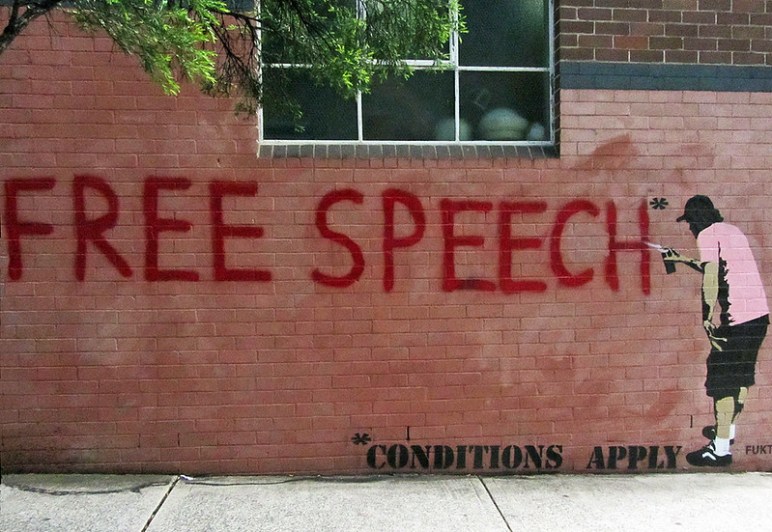
Free Speech, not quite as free in policing

As everyone knows, under Section 2 of the Charter of Rights, everyone in Canada has the right to freedom of conscience and religion, freedom of thought, belief, opinion and expression. The official document of the Canadian Charter of Rights has as a preamble: “Whereas Canada is founded upon principles that recognize the supremacy of God and the rule of Law”.

One would think then, at first glance, in consideration of that “supremacy of God” line that you as a person would be free to join the “Church of Trudeau”.

Of course I am not referring to a real church, it is in fact a Youtube site created by and starring one of the police community’s own Brent Lord. However there has been a problem developing inside this pew-less church outside of the fact that Brent is a member of the RCMP currently assigned to Trail detachment. The problem is that it is a satirical site which went after Trudeau, mocking the Liberal policies, concerning all those hot take issues such as the Indigenous, Immigration and the financial spending of the Federal Liberals. Policies which can not be questioned in polite company.

There are two issues at play here, issues which admittedly have surfaced in other forms previously in the policing world. One is the basic rights and freedoms for free speech guaranteed to all Canadians, and the other is the limits that is put on police officers under their Code of Conduct regulations.

When the outraged public complained (this may have been only one person) the Mounties said they did “a fulsome review of the highly unprofessional offending materials was completed and administrative options are being considered”. This statement does not disguise their clear presumptions and equally indicates that their final findings were not ever going to favour the Mountie. But, lets leave that aside. We should also note for the record that the Constable never appeared or represented himself as a police officer on the site. This was a personal site and it was silly, more a rant than a detailed examination of any policies. One would have to question whether the Constable really thought this entertaining, it was political for sure, but whether it met the artistic threshold would be the real debate.

The RCMP in addressing the media said “The website and videos were not representative of the views of the RCMP, nor its employees as a whole, rather they were the expressions of an individual”. True. “The content and the viewpoints on the web site fell far short of meeting the levels of professionalism expected of our officers”. Probably also true, but one has to remember that the “professionalism” expected of our officers is a wandering goal post, not easily defined in this 21st century policing model.

Was Commissioner Lucki being political during the Portapique incident when trying to score some political points with the Liberal hierarchy. Was that “political”, was it “un-professional”? One must ask whether or not if this Constable had put up a supportive site for the Liberal policies and trumpeted the good deeds the Liberals would it have been measured with the same stick. Would have it been considered “un-professional” if instead he had professed a liberal progressive stance? It clearly would have been political but my guess would be that it would not have been declared un-professional. In fact, they may never have addressed the issue at all if it was about diversity or inclusion.

It is truly ironic, that we have reached a stage in this country where the right to free speech is being severely limited by the social progressive or “woke” perspective–a group that would historically have been associated with the rights of individuals and the freedom of expression. The evidence of this censorship is everywhere and it is frightening to anyone who believes that free speech is a right worth protecting. Take a look at the cases of Dr. Mathew Strauss in Kingston, Ontario who proposed some very anti-covid restrictions, or Terry Glavin who wrote an article saying quite obviously that there was no evidence of genocide in the residential schools as none of the grave sites had been examined. Recently Dr Jordan Peterson, who has become a bit of a global phenomena is being pursued by the Ontario College of Psychologists for some tweets he put out. They are ordering that he, the global academic with millions of followers, should undergo “media training”. Laughable, but apparently they are serious and threatening to take away his licence if he does not comply. Of course, it is the fact that he expresses views contrary to the current liberal regimes that have taken over our governments and their institutions that is the real reason they are going after him.

The allegation in all these free speech cases and the people involved that always gets put in the headlines is that they are discriminatory, racist, or un-professional. That is the go-to argument in every case. One person is offended, the world is offended. Stanford University, a school of world renown, in the heart of the California woke culture recently issued their proposed “Elimination of Harmful language Initiative” to address “harmful language in IT”. They found 100 words or phrases that they deemed to be “harmful”. Included are such words as “American” because it was “imprecise it should be “U.S. citizen”. To use the phrase “you guys” was deemed harmful, because it “lumps a group of people using masculine language and/or into gender binary groups which don’t include everyone”. Needless to say, this policy group have drawn some highly critical reviews. All of it simply demonstrates that maybe the pendulum is still swinging to the extreme left.

Closer to home, just today the Vancouver City Police made an announcement concerning the wearing of the “thin blue line badges”. No you can’t they said. These badges, which consist basically of a thin blue line through the red maple leaf insignia has been around since 2016 and seems to have started in Calgary. At that time, the badge was said to “recognize officers length of service to frontline policing duties” and to remember “fallen officers”. Seems like a pretty harmless thing, but apparently some from the very vocal left said that the symbol was being “co-opted by hate organizations in both the U.S. and Canada”. The evidence to back this allegation is weak and historically it was in fact an adaptation of the “thin red line”; which was worn by the red coated members of the Scottish regiment in the British army for standing ground against the Russian “foes”.

When you enter the theatre of the absurd in woke politics, the usual spokespeople surface. Grand Chief Stuart Philip who heads the Union of BC Indian Chiefs says wearing the thin blue line patch was the “equivalent to wearing a swastika”. Also laughable, but he does represent the outer fringe of the progressives and is a media favourite.

Currently if you want to wear the patch as a police officer you would have to join the BC Transit police as they still allow them to be worn. But you know it is only a matter of time before someone makes a complaint on that side of the house as well. Remember, it takes only one person to complain about having been offended.

Taking into consideration the rights of every individual including a police officer I must admit to being still firmly against politics being entrenched in policing. It is difficult to argue against the politicization of the RCMP and other municipal and provincial police agencies at the upper levels of management, which I have done in other blog posts, and then turn around and argue for police officers at the working levels to be allowed to be personally politicized. Politics is politics.

Let us consider and admit that politics is firmly embedded in the current police management culture. Are not the political policies of “inclusion and diversity” being practised in every government venue, by their very definition discriminatory. As a blatant example the CBC recently offered up their “Anti-racism, diversity and Inclusion plan”, which in its affirmative action seeking goals is offering positions in their organization, or training opportunities, to only those deemed to be under-represented. Even the recruitment process of most policing agencies is now in fact one of discrimination. They are based on race or gender and that decision to implement this policy is a political decision at its heart.

Robert Reiner wrote a book in 1985 entitled “The Politics of the Police” which explores all the problems that are intertwined when the police get political. Jack Young, a British sociologist described the police and politics as being “terrible twins”. Politics and the principle of free speech is indeed a difficult issue, not easily defined in the policing world. We are living in an age when police officers are being offered up greater freedoms in terms of health, clothing, and even grooming, while at the same time they are trying to further limit the right to speech and opinion. The upper levels do not seem to have any problem with the RCMP management in Surrey celebrating and supporting the politics of Brenda Locke, who is trying to restore the Mounties in Surrey, but these same managers do not want you to wear a badge which many regard as simply supporting fallen officers.

Wendell Holmes a famous jurist while on the Massachusetts Supreme Court said in 1892 that “a cop has a constitutional right to talk politics but no constitutional right to be a cop”. The U.S. Supreme Court agreed stating that police officers right to free speech was a “narrower free speech right”. Police officers “should not be able to make statements in their personal capacity that undermine their ability to maintain the trust of the community they serve” according to the RCMP policy.

There are extreme viewpoints at both ends of the spectrum. There was a picture recently of a police officer in Miami wearing a support Trump mask while patrolling a polling booth. Clearly this should not be allowed as you can easily draw the straight line from support to intimidation. But if cops are participating as members of the general public and are speaking out on “matters of public concern” it gets a little stickier.

There have been 13 off duty cops who were protesting the recent U.S election and participated in the march on Capitol Hill. All have been suspended or charged. Put aside all the anti-Trump bias, should police officers be allowed to march in a political protest? Should an off-duty officer be allowed to march in a Black Lives Matter march? Or a march in support of the LGBTQ community? Make no mistake about it, they would be both political marches, both are political commentary. My guess is that there would be no action taken. In fact don’t the police try to get into every Gay Pride parade wearing their full uniform and it is applauded by every news site and mainstream politician. On the other hand, the RCMP is investigating officers who supported the Freedom Convoy protest in Ottawa. Clearly it depends on which side of the political spectrum one lands as to whether you are going to be in hot water with your bosses. The politically held views of the Convoy protestors were on the wrong side of the political spectrum not to mention on the wrong end of the Emergencies Act.

I’m not a betting man, but I firmly believe that most police officers are not in favour of Mr. Trudeau and his cohorts policy decisions and initiatives. However, they are not allowed to express those opinions publicly and they were smart enough not to join the “Church of Trudeau”. Do you remember when the Police Chiefs in the United States supported candidate Trump.

Clearly, everyone’s outrage or lack of outrage depends on the current and direction of the political winds. Clearly, police officers, in the course of their duties need to maintain some level of neutrality, their whole reason for being and the core of their support depends on the appearance of fairness and a balanced viewpoint. It is just hard for the ground level to understand this when their supervisors and heads of their organizations have become extensions of their political masters. Freedom of speech and the practise of it are the most fundamental of rights. We must preserve it, guard it, and use it wisely. And it needs to apply to everyone in policing.

Photo via Flickr Commons courtesy of Newtown grafitti – Some Rights Reserved.

Heroin, guns and a bullet proof vest –but not “morally blameworthy”

There are many cases that come before the courts, almost all receiving little attention or public mention, but once in awhile there are some that make you take note. From Provincial courts to Supreme Courts to Appeals courts one can almost always find a case or two that will make you scratch your head, or possibly get a little agitated.

The case that recently had me perk up and get a higher blood pressure reading is the case of Robert Mero.

He is a 34 year old male, whose father was Metis and his mother was non-indigenous; making him one fourth of Indigenous heritage. Why are we mentioning this, because it was this 25% of his heritage which was enough to keep Mr. Mero from going to jail.

In the eyes of the learned Justice Len Marchand of the BC Court of Appeal, his “moral blameworthiness” necessitated that the 40 month sentence to which he was originally sentenced (by the Supreme Court of Vancouver Judge Joel Groves )–be reduced, more accurately eliminated. Mr. Mero should not go to jail in the view of the Appeals Court as he should not be held accountable due to his Metis heritage. The sentencing was wrong according to Justice Marchand because “neither the Crown or Judge addressed his Indigenous background”.

The unwieldy terminology of “moral blameworthiness”, clearly something only lawyers could come up with, stems from the Supreme Court of Canada and what is now referenced as the Gladue decision.

Regina vs Gladue was a decision by the Supreme Court specifically dealt with sentencing principles that had been layed out in Section 718.2 (e) of the Criminal Code of Canada and had been enacted by Parliament in 1995. This section directed that the courts need to consider “all available sanctions, other than imprisonment” for all offenders. However, it needed to pay “particular attention to the circumstances of Aboriginal offenders”. (It should also be noted that these provisions were put into the Criminal Code under Prime Minister Jean Chretien and the Liberals who ironically have been recently criticized for not understanding the problems in the residential schools.)

Gladue was the first case where the Supreme Court considered these provisions and set out to try and define what factors should be taken into consideration under this newly defined law. In the Gladue case, a young Indigenous woman had appealed her manslaughter sentence of three years for stabbing her boyfriend to death (life was cheap even back then). The pitiful sentence of three years was upheld despite the appeal, but the Supreme court ruled that they should have at least considered her Indigenous background.

The changes to the Code were orchestrated and passed because of the “over representation” of the Indigenous in the Canadian judicial system. The term “over representation” is a bit of a misnomer, they were not going to jail in disproportionate numbers because they were being picked to “represent”, they were going to jail due to the massive criminal problems existing in the Indigenous populations.

This was an attempt by the Liberals of that time to solve the abnormally high criminal activity amongst the Indigenous– from the top down. Too many in jail, simple solution, just don’t send them to jail.

No need to address the actual criminal activity at its origin, which is a much more complicated set of social ills. The overall affect of course was the diminishment of personal responsibility, and broadly, it also had the affect of creating different laws or at least very different treatment before those laws according to race.

In the years since this has morphed into Judges now automatically asking for a pre-sentence report which formalize these considerations for Indigenous offenders. This sociological based report is termed a Gladue report. This report, or lack of a report was a central factor which played out in the case of Mr. Mero.

Mr. Mero’s crime in this case was not a minor crime and he would be unlikely to have received any nominations for citizen of the year in Prince George, where this matter began. A search warrant was conducted of Mr Mero’s residence by the police in Prince George in 2016. It led to the seizure of a .38 calibre pistol, ammunition, 23 grams of heroin, and a bullet proof vest. Clearly, Mr. Mero was exhibiting all the characteristics of a drug dealer.

Mr. Mero had previously served two other jail times, in 2005 and 2006. It was what the Appeals Court called a “dated criminal record”.

Mr. Mero and his defence council (he went through two defence counsels) went through all the motions that are tried in this day and age. A motion of too long to get to trial (Jordan decision) was first tried. The Judge ruled that the delays were due to defence counsel scheduling and the fact that his 1st defence lawyer had gotten suddenly sick. The court chastised the defence counsel: “Mr. Mero’s trial counsel has shown, effectively, since the beginning of the trial, an ability to delay matters on behalf of his client”.

Then the defence argued that Mr Mero who suffers from a lung disease should not go to jail because of the high rate of Covid in the jails which could prove to be detrimental to his health. Worth a try, considering the panic which has pervaded Canadian society over Covid, but this too didn’t work.

The defence counsel then argued that no Gladue report had been prepared. It turns out that they had six months to produce a pre-sentence report but failed to get one before the courts in time. So the sentencing went ahead without a Gladue report.

Justice Marchand of the BC Appeals Court felt that this was a massive oversight.

As a result he imposed a “conditional sentence” of 2 years less a day– the 1st year to be served under house arrest, to be followed by a curfew. He was placed under probation for the drug offences. This decision by Marchand was concurred with and signed off by two other Justices; Mary Saunders and Bruce Butler.

So what would have been in a Gladue report that could alter an outcome to such a degree? Usually, there is general information about the Metis “nation”, the intergenerational aspects of “colonialism” and “displacement”, racism and systemic discrimination, forced attendance at Residential schools and the “over representation” of the Indigenous in the jails of this country.

This is not to deny that Mr. Mero clearly had a troubled life. Most criminals can point to historic family issues. In his defence argument he pointed to the fact that he was “unable to complete school”, his “childhood was traumatic”, his “life was marred with addictions” and that he had “come into conflict with the law”. Mr. Mero’s father was not believed to have been at fault but he was often “away at work” and this left him with a mother who had significant mental health issues. He had runaway from home at 12 years old and got caught up in the street level drug trade, an all too common story.

However, it would be difficult for Mero to argue that these issues were directly related to his Indigenous upbringing. One need not worry because the courts have ruled that “it is not necessary to establish a direct causal link between systemic and background factors and the offence at issue”, as it may be “impossible to establish” a link. In other words you don’t have to prove a causal relationship.

The other aspect of this case which gave me pause was that this was a verdict by Justice Marchand. There are 26 Justices in the Appeals court, but in this instance Mr. Marchand was assigned the case.

Mr. Marchand is the son of Len Marchand Sr, the first Indigenous cabinet minister who once served under Pierre Trudeau. Len Marchand Jr. is a member of the Okanagan Indian Band having grown up in Kamloops, B.C. He articled and practised law in Kamloops with Fulton and Company. While there he spent a substantial part of his career working on “reconciliation for Indigenous people”, was pursuing historic civil claims of child abuse and represented residential school “survivors” and also served on the selection committee for the Truth and Reconciliation Committee.

There is no evidence here that Mr. Marchand had a clear bias in favour of Indigenous claims of “systemic racism”. Also, this is not to claim that all Indigenous cases need to be assigned based on their cultural background. But in this instance the appeal revolved around a Gladue application, central to which is the belief that there should be judicial favourable considerations granted to the Indigenous that are not available to others. That the application of the laws should be different because of their culture and background.

It is difficult to determine whether justice was served in Mr. Mero’s case, but I suspect he was merely a player of the system.Whether justice was served in this case we can leave to others, but does justice also need to be seen as having been done?

Should this case have been handled by someone who had spent the majority of his working life on Indigenous causes or is there a definite taint to this case.

Gladue is just one of the many pronouncements coming from the benches of the Supreme Court of Canada, the BC Supreme Court and in this case the Appeals Courts. They are germinated from the left leaning political dominance in British Columbia. It leads to favourable judicial appointments. Maybe well intentioned, but clearly with very pronounced political leanings. A left propensity to believe that government must protect all and everyone from the evils that society put upon us. Personal responsibility replaced by societal responsibility.

Maybe it is time for a return to the centre, where the vast majority of Canadians actually live. Not necessarily to the right or the left, but where common sense is the prevailing ethos.

The laws of this country are being diminished, watered down, leaving a large class of people now feeling disenfranchised. Many would not be o.k with rules and laws being applied differently depending on your cultural background. It is a difficult issue, but the current judicial climate seems destined to lead to trouble.

Photo Courtesy of Paul Sableman via Flickr Commons – Some Rights Reserved

A personal note

I apologize for the delay in the publication of this blog.

I have recently moved– swimming against the prevailing current and have moved back to the heart of the City of Vancouver leaving the quiet countryside. I have been surrounded by cardboard and the joys of re-connecting with life in the supposedly faster lane.

Thanks for your patience and your continuing support.

Pete

Casting a Blue Ballot

As the Provincial and Municipal politicians dutifully follow behind Mr. Trudeau, like gulls to a BC Ferry, their hands grasping at the dollar bills gracefully floating through the air behind the wake of the woken Prime Minister. With a spring in his step Mr.Trudeau bounces along, freshly shaven, oblivious to all but the CBC paparazzi. Ms. Freeland, scurries behind at a respectful distance trying to put the hose of monies spewing forth in some semblance of a thought out policy. Destined for at least another election to be the gal with the shovel behind the elephants in the political circus. 

Besides making the world go round, money of course is the best harbinger for a nearing election. Trudeau and his crew apparently now confident that they can keep it to a one issue election —the issue being how well they dispensed (no questions asked) monies during a time of “crisis.” There is the secondary issue of climate change nipping at the politico heels but that is more controversial, being that it is still difficult to sell an electric F-150 to the oil patch worker or convince many in the general public that paper straws at A & W is the most efficient way to attack our 1% world portion of greenhouse gases. 

Every election, police organizations and their card carrying officers have always been required to walk a fine political line. Police officers are dictated by political norms to be apolitical. They are told not to express their views or get involved politically, but it is a line which has been crossed many times. Active police officers have even tried to run for political office.  But for the most part they are supposed to stay uninvolved, enforcers of the law, not makers of the law. 

Where you do see officers taking off their officially issued blinders and actually get involved with that pesky public is when they retire or resign. Then they are then able to find their voice. Some have even risen to great heights; usually propelled by a puffed up policing career and resumes filled with Queen Silver Jubilee medals. There is the likes of the illustrious Bill Blair in this country, or the Democratic front runner for the mayor of New York, Eric Adams, who is a former police officer, who has no compunction against championing his relatively brief stint with the NYPD. 

The burning question now though– is who should a cop vote for if in fact Mr. Trudeau calls a Federal election? Should they vote with their head, heart, or wallet? Is the young cop of today a different voter than the more predictable officers of the past, those whose favourite colour has always been blue. 

Traditionally the old cops were the poster children for law and order, right over wrong, all answers black and white. No colours or shades of grey cluttering up a polar argument.  He or she did wrong — therefore he or she must pay goes the dictum.  

So when it comes to the current law and order issue, what is different between the parties? Can the police officer find a clue in who to support by examining the platforms of the political parties?  

Mr.Trudeau is clearly soft on most crime issues, well to be completely accurate, all crime issues. He takes a knee on Parliament Hill or apologizes to the Indigenous for one wrong after another on a continuous basis.

In fact, if you go to the official Liberal party platform, law and order as an issue is nowhere to be found. In their 72 plus page document, crime and the issues that flow from it do not even appear. You could interpret this two ways. Everything is perfect in the policing world or it simply doesn’t warrant attention from the myopic Liberals. 

Mr. O’Toole (who?) who leads that dynamic Conservative Party has only one issue that comes close enough to be called a law and order plank in his platform. That is priority #2 if you are following along. They want to pass an anti-corruption law for no other reason than they think they can then go after the Liberals in Ottawa. So, this historically and tradition law and order party have no promises or political planks to deal with such issues as the growing rural crime, cyber, white collar and organized crime or the insufficiencies in the courts. Nothing even warrants a “promise” or a policy change. 

Then there is Mr. Singh and the New Democratic Party. As this is being written if you go to their “platform” site you are greeted with the message “we are in the process of updating this page”.  It is truly hard to imagine the NDP running anything in this country with any level of success. 

If a cop would like to get financially comfortable, maybe one should be tempted to go towards the NDP. After all, they are the Victim party;  everyone suffers, everyone is misunderstood, each of us a victim of some form of discrimination. They believe that everyone is under “stress”and is wistfully dreaming of a fixed annual salary. Their reasoning is that the government is the best positioned to take care of us all and bring us all to a peaceful harmony.  If they obtained power, an admittedly unlikely prospect, then all officers could theoretically argue, with little effort, to be suffering from PTSD. A medical pension for life would not be far behind. Everyone would be calm in their self induced altered state. There would be no need for police or mood rings.  

The Green Party? Ya, you’re right, not a chance. They are even having trouble keeping their newly-elected leader Annamie Paul around. The former tree hugging leader Elizabeth May now doing her best impression of American Sniper, aiming directly at the new leader. Not enough medical marihuana on Vancouver Island to ease her discontent. 

So, even in this year of defunding the police slogans reverberating through the corridors of policing, none of the parties are interested in law and order issues. So where is the dedicated copper wrapped in concern for his country and the Canadian flag supposed to turn? 

Should the Mounties follow their leader Commissioner Lucki to the ballot box. Clearly, at least publicly, she is about as Liberal as you get. It served her career and it preserves her current job to be the doppelgänger of any preeminent Liberal politician. Maybe she is also aiming for a Senate seat too.  

Is it possible she is a closet conservative and in her fevered dreams she wishes for a rejuvenation of Stephen Harper? Possibly she is tired of spending her lunch hour wandering Sparks Street Mall looking for anyone of colour to pull into the recruiting office. We may never know, so in that sense, we can not let her be the guide as to how one should vote. 

What if the police were to vote with their wallets?  If that was the case there would be no contest. The Liberals would be the uncontested winners, hands down. They just gave the Mounties a 23% raise. Is this  enough to garner all those Red serge types to go “ahhh, he’s not that bad” and biting their tongue, cast that X for the Liberal candidate. These new young Mounties are more career focused than those of old, advancement is important, money is more important. Pension is still God. If the Conservatives got into power and come face to face with the actual debt and deficit would they not be looking for ways to cut back. Government pensions have been a traditional target and that would have the Mounties wringing their hands in worry. Would the Conservatives cut off the thousands of Veterans benefits now going to retired Mounties with poor hearing or a bum leg? 

Ramblings aside, as the election draws near, it is truly disturbing how little choice exists. The parties and their platforms are almost indistinguishable except for the size of their political wallets.  As a country we seem to be in desperate need of a new broom. But, who would dare to step forward in this era of examination, this era of Tik-Tok and Instagram tailored speeches. No one who has stood at the barricades or formed an opinion would make it through the electoral political filters now in place which regulates speech and action. 

To expect the largely publicly funded  5th  Estate  to establish some sort of fire break between what the politicians promise and what they deliver is apparently just wishful thinking. 

Thomas Jefferson famously said “the government you get is the government you deserve”. Really, what did we do to deserve this?  Have Canadians become sheep? Soft in the middle voters, all hoping for that government pension and lulled into a sense of mediocrity? Has our need to not offend given us a government we deserve? 

The cop out answer (pun intended) to not voting is often said —“they are all the same anyway”. That’s too easy.

We need to vote, cops and all Canadians need to find their voice. The police in this country, as in all countries, is a true reflection of the held values that can be found within their boundaries. We need to like what we see.

Photo courtesy of Flickr Commons by Liz West – Some Rights Reserved

Rolling the Dice in a Homicide

It was May 2011 when Samandeep Singh Gill, likely with a gangster strut, got involved in a “road rage”altercation and a “fender bender” quickly turned into a cold blooded killing. Gill (allegedly of course) shot the other driver Manbir Singh Kajla several times and Kajla died at the scene. For good measure Gill also shot at Kajla’s newly wed wife, Pavan, before disappearing.

Seven long years later, after IHIT had turned the file over to the Unsolved Homicide Unit in 2016, Gill was finally charged in 2018 with 2nd degree murder and attempted murder. Since the arrest and up to the time of the trial in 2021, Gill was simmering away in jail. The Court did not feel this gun toting Mr. Gill was safe to be allowed out to await his trial.  

However, in March 2021 it all went sideways for the police and the Crown when the presiding Justice of the Supreme Court ruled that the Integrated Homicide Team had engaged in a “systemic, flagrant disregard” for the law, and were “at best wilfully blind” to  this “egregious” behaviour,“. What had been exposed he stated was a long standing policy of “deliberate non-compliance” with the law. With these words Justice David Masuhara of the  Supreme Court then turned to the accused killer and told him he could go home; a free man. 

A good day for Mr. Gill and a horrendous day for the family of Kajla. A catch and release for IHIT and the Unsolved Homicide Team after many years of investigation. Furthermore, there was also the grim prospect that this ruling would ripple through to other cases —especially those which had been brought forward between 2007 and 2014.

The allegations of the Justice, applauded by defence counsel, were indeed troubling. However, as one read the blaring headlines, there was a tenor to the pronouncement which didn’t resonate with those of us that had worked in this field of death investigation. Really, a policy to break the law? Fracturing the law was possible, but how could one be so stupid as to make policy around it.The allegation seemed illogical. 

The answer on further review turns out to be much more understandable; albeit still wrong, but worthy of an explanation. 

The knee jerk furor of the media aside and ignoring the autonomic NDP political damage control that quickly ensued, what kick-started the panic was a low profile, somewhat innocuous section of the Criminal Code –Section 490. Twenty pages of fine print in Martin’s Criminal Code which deals with the subject matter of   “Detention of Things Seized”.  

For greater clarity, the portion in specific contention is section 490(2) which says that “Nothing shall be detained under the authority of paragraph 1 (b) for a period of more than three months after the day of seizure, or any longer period that ends when an application made… unless a justice, on the making of a summary application to him after three clear days…notice thereof to the person from whom the thing is seized, is satisfied…that its further detention is  warranted”.  

In laymen’s terms, when the police seize anything as evidence, usually under warrant, the police can hang on to the items for three months but if they wish to hold it longer they need to apply to the courts to do so. Sounds simple, but it is not. This is in fact a highly burdensome section. Arguably a largely administrative procedure which involves contacting all those from whom the items were seized,  notifying them individually of the future court proceedings where the police would be arguing to extend the exhibit(s) detention.  

But, imagine a case where there are 1200 seized exhibits (the Surrey 6 file as an example) , or a drug conspiracy case with hundreds of exhibits. Imagine an investigation taking a few years, where every 3 month period requires a court application and then you begin to see the problem. To continually comply with this section over forty cases (IHIT average) in one year alone, an army of additional officers would be needed on a full time basis.  Without doubt it is the law but it is equally largely unworkable. Remember that the law never caters or entertains an argument wherein the police or the Crown say something requires further manpower or resources.  It is a police resourcing problem they would rationalize, not a law problem. 

IHIT in this case, and apparently in several others, during the years 2007 to 2014  never complied with this Section. In fact, the Justice goes further and says that IHIT  had an actual  “policy” to contravene the Criminal Code. A written policy to intentionally break the law despite their having been legally counselled on many occasions not to do so.  

The explanation of this being “policy” is also a little more textured. 

To fully understand one must travel back in time to 2007; it was what was going on in 2007 that created the problem for the 2011 case, which was discovered in the trial of 2021.   

2007 was part of the golden era for homicide investigation. It was an atmosphere of smoke filled rooms, drinking, dark humour, and inappropriate jokes on a regular basis. It was the Mad Men years. The pace was often frenetic, demanding hours at the cost of family or relationships. But, it was good, a lifestyle choice rather than a career choice. For some reason, it also worked, with a  solvency rate that brushed against 78% in those early years, while only consisting of four teams of eight investigators.

It was also a time where the officers of early IHIT were experienced and were thus comfortable working on the high wire of the law. There was no principled argument against bending or stretching the law to meet some investigative need. Bending and not breaking was in fact the learned art. 

The Criminal Code was the only policy and guide. Crown prosecutors were trusted mentors. There were no homicide pamphlets, nor did anyone turn to an “operational manual” for any kind of guidance. Just a group of head scratching cops with a tendency to not believe anyone, trust no one, and often used a strong epithet to counter a learned argument, a disgruntled grunt serving as  a yes or no. 

Court was the stage, it was part of the game. Best player wins.  It was a small, compact and familiar group— there were the cops who investigated the murders, the Crown lawyers who prosecuted and the defence counsel who represented the “pieces of shit”.  A grudging but mutual respect built up over years.  

In 2007,  Sgt Al Ross headed one of the four IHIT investigational teams.  During a routine conversation with a  Justice of the Peace, it was pointed out to him that many officers were not complying with the provisions of Section 490, and they (the police)  needed to address the matter. Sgt Ross took it upon himself to try and find a solution to this problem; all while remaining fully aware of the logistical nightmare that this could represent. 

So he sought out and went to speak with Sr. Crown Counsel John Labossiere. Labossiere gave the correct legal answer, “there is no latitude for covert police operations” that the Criminal Code was clear in that regard. There was also discussion and recognition of the issue the police were facing —in trying to comply with this arduous section. 

Sgt Ross then goes to another Sr Crown, Terry Schultes (now a Supreme court Judge) who tells Sgt Ross that they can not ignore the law in this case. Again, there is no easy out., but informally again there was recognition that they “had to make it work”, just no solution as to how that could be done.

Sgt Ross, not known as one that gave in easily, then went to the RCMP legal counsel at the time, Les Rose, seeking yet another legal opinion. Mr. Rose one of the go-to individuals inside the RCMP had a reputation for being somewhat more pliable when it came to the policing efforts. In this case, Mr. Rose told Sgt Ross that he needed to comply, but he also opined that there was a need for “balanced risk management” and that he knew of no case where there had been an “exclusion of real evidence” based on a breach of Section 490.  

Sgt Ross met with the Officer in charge of IHIT, Wayne Rideout, and also Inspector Bill Fordy the latter being one who also leaned to the explanation of the need for a “balanced risk management”.  This was followed by “a memo” coming from the Officer in Charge telling officers not to seek extensions, if they felt that by requesting the extensions they would “attract attention to the non-compliance”.  They seemed to follow that old standard RCMP policy solution –ignore the problem, and in the meantime don’t tell anyone. 

In January 2008, Sgt Ross writes to Supt Wayne Rideout “warning of the circumstances” brought about by non-compliance however he does throw in that  “I anticipate the possibility of real evidence being excluded in a homicide is low”. He recommended that IHIT  try and obtain some further resources and manpower, absolutely needed he argued, if they were going to get some sort of ability to comply with the section.  

Fast forward now to 2011. 

S/Sgt Gorgichuk, who was then a Constable with the 2nd generation of IHIT investigators, was the file co-ordinator for the Gill attempted murder case. She appeared at the trial in 2021. Her testimony and explanation of Section 490 did not go well. 

In this case, search warrants were executed on the Gill residence. They seized nine cellphones because “they didn’t know which one was the accused”. They also seized a home security videotape (which was not included on the warrant), after getting access to the residence. Amongst the phones seized was a 60 second audio clip, captured apparently because of a “pocket dial” during the time of the shooting; which implicated Mr. Gill in the killing and therefore a central piece of evidence for the Crown. 

Unfortunately the Crown and their police witnesses ran into a very able and formidable criminal defence attorney Matt Nathanson. One could question Nathanson’s choice of high paying clients, but one could not question his experience and intelligence.  

Nathanson challenged the seizure of the video on the grounds that the home security camera was not on the warrant.  He also challenged the seizure of the phones on two primary grounds. The “over reach” of the warrant and the criminal “policy” of IHIT of not complying with Section 490 of the Criminal Code as testified to by S/Sgt Gorgichuk. Nathanson no doubt with his most theatrical voice pronounced that he had “never seen anything like this before”, this wanton disregard for the law.

Justice Masuhara agreed. The over reach or what the Justice calls “over-seizure”on the cellphone seizure and the fact that it was an unlawful search of the security camera system was what warranted exclusion of the evidence flowing from it. 

What pushed the Justice over the line seemingly was the “policy” which S/Sgt Gorgichuk “acknowledged her awareness” of —that  “direction” in 2007  not to comply with Section 490.  

Far be it for this outsider to question S/Sgt Gorgichuk, but it is difficult to believe that she did not comply with Section 490 in the Gill case— because of a remembrance of this “direction” that was issued in 2007. Gorgichuk was a Constable in 2011.

 The Justice wasn’t enamoured with her when describing her evidence: “I determined that S/Sgt Gorgichuk was not a credible witness and that she engaged in advocacy, though I did not find she intentionally misled the court…  As I have stated, I did not find S/Sgt Gorgichuk to be a credible or reliable witness …she refused to acknowledge errors in her testimony even when confronted with clear evidence..her testimony was nonetheless misleading, combative, and at times contradictory” 

S/Sgt Dwayne MacDonald (now the Officer in Charge of Federal Investigation Services and Organized Crime) was the Team Commander for the Gill case. The Justice speaks to his testimony and of his apparent cancelling of the “directive” in 2014 (worthy of noting that the Justices’ language went from calling it policy to a directive)when he says:  

“On XXXX 2011, S/Sgt Dwayne McDonald was a Team Commander at IHIT, responsible for the investigation of the murder of XXXX Kajla. Since 2007, the senior management at IHIT had provided direction with respect to applications for the extension of 5.2 Detention Orders. Specifically, that no extension of the 5.2 Extension Order would be sought upon the expiry after 3 months (I believe that the two XXXX references by A/Comm Dwayne McDonald in this email were a direct result of him not remembering the exact information);” In other words, he was guessing a bit. 

From a police perspective, is some of this understandable and even arguable? Maybe. 

This writer believes that non-compliance with this Section is rampant in every part of this country, in every police agency in the land. It is largely an unworkable Section of the Criminal Code that needs re-vamping, especially in times of limited resources and “defunding” of the police. 

It is obvious though that IHIT rolled the criminal trial game dice, and they lost, they busted.  In doing so have blemished the already burnished reputation of IHIT.  Only Mad Men would have taken the chance. 

For the record, this writer does not believe there was any “policy” of non-compliance. In fact the Acting Officer in charge Michelle Tansey of IHT recently said “this was not policy”.

David Eby the Attorney General for the Province of B.C. is “studying the viability of an appeal” even though the BC Prosecution Service has already stated that an appeal would “not likely” be successful.

To measure his chance at a successful appeal, Mr. Eby may want to go down the hall in Victoria and speak with his new hire—the Director of Police Services for the Province— Wayne Rideout– and ask him whether in fact he authored a  direct “policy” of non-compliance. Seems simple enough.

Or the NDP and the RCMP can just roll the dice again …and hope no one else goes free.

(Full disclosure: this writer was one of members of Integrated Homicide Investigation Team from its inception in 2003 to 2008. All the parties in this blog were not only known by me, but I worked and consulted with the cops and the lawyers mentioned in this blog on a relatively regular basis. In addition, as a team leader of one of the investigative teams would also have been privy to any policies within IHIT )

Photo Courtesy via Flickr Commons by PositiveCandie_N –Some Rights Reserved

Surrey RCMP – the Walmart for Law and Order

Surrey, home of the RCMP’ s biggest municipal detachment, is now a political plank in the current election platforms of the two major parties in the wacky world of British Columbia politics. Unusual to be sure for an RCMP organization which historically considered itself apolitical.  The old Mountie guard remained above the pettiness— the grimy dirt of politics— it needed to be objective, forever the humble and unbiased servant of the people.

The N.P.F. is now changing those mores.

Surrey has now become the site for the ongoing battle between the RCMP– more accurately the union representing its current 800 plus members— the National Police Federation (NPF) –and the duly and properly elected government of the Surrey Coalition Party led by Mayor MacCallum. 

The NPF has taken the position that they know what is best for an  electorate which only a short time ago dramatically voted in favour of a new municipal police force, a promise that was a central tenet proposed by Mayor MacCallum and his municipal party.  

The NPF along with their political cohorts now argue that Surrey needs to retain the RCMP—the primary reason– they are cheaper.

Why pay more they say, when Surrey is already the Walmart of policing.  Their argument in point of fact fits in nicely with the new Walmart slogan “Save Money, Live Better” (the old slogan was “Always Low Prices ” which would also have worked)

For a long time, the debate pro and con has been waged in small skirmishes for the most part confined to the boundaries of Surrey. However, the calling of a Provincial election and a new Liberal promise has now thrust the issue on to the electoral and media stages as much as they can elbow away Covid.

Struggling from a very distant second in the polls Liberal leader Wilkinson is sprinkling Liberal gold dust throughout the Province. Sprinkling may be an understatement, more a fire hose, offering to  spend billions of dollars in various parts of the Province. Like most parties who get a glimpse of some sort of electoral advantage, Mr. Wilkinson is now grasping for a possible political gain by supporting a referendum in Surrey. No concern apparently for the independence of municipal politics or the duly elected government. 

The Liberal party has three ridings in Surrey which are of interest and may be in trouble; Guildford, Panorama and Cloverdale. He and his party clearly believe that his newfound stance will play well in these areas of middle class rectitude. 

The NDP government for their part having climbed on to the shoulders of poor Dr Bonny Henry to scan the horizon, now feel that this is an opportune time to ride that Covid wave. They are in a difficult spot in Surrey as their government through the Police Services department has already approved the going forward of a new police department–at least in its initial stages. When previously approached about changing his mind, Horgan quite rightly stated that the city of Surrey has the right to go forward with their proposal. The Province has no legitimate right to intervene.  

With the Wilkinson announcement the usual rolodex of commentators have now been given some political fertilizer to spread on the idea of a referendum. They already disliked MacCallum.

The NPF is the wedge. Although political neophytes, this has not hampered their enthusiasm.

Their motivation seems simple enough—they do not want to lose the membership in their union. The Surrey detachment is a flagship in the overall contract policing environment.  It is representative of the “big city” RCMP policing model, one of only a handful throughout the entire country. To lose the biggest out of your group is not the best first step for any union. 

There are other chess pieces in this process; the NDP and their leader Mr. Horgan; the Liberals under Mr. Wilkinson. Then there are the very vocal Surrey City Counsil members Linda Annis and fellow Surrey Counsel member and former Mountie himself Jack Hundial.  The centre is held by the curmudgeonly Mayor MacCallum, the dastardly wizard pulling the levers.

The NPF using house money pouring in from their new found members have begun launching ads, enlisting supporters and putting out lawn signs (which apparently, legally, they were not allowed to do–I guess they forgot to check local bylaws) . They believe, rightly or wrongly, that they enjoy the support of all the officers of Surrey in putting up the show of a good fight. However, in speaking with officers in that detachment, one does not get a sense that all are enamoured with their new union bosses.

The NPF have enlisted local politicians to spout their platform, and are receiving encouragement from former Mounties writing in to the printed media. Including, the former head of Surrey detachment Al McIntyre and ex- Deputy Commissioner Peter German (who recently authored the report on money laundering for the Province.) With the exception of one local politician, all of these individuals are of course former RCMP officers. 

The centre piece of the NPF argument is the evidence they claim to have gained from a paid for survey that they conducted. This blogger has talked about it previously, suffice to say the veracity of the survey can be questioned. But emanating from this “survey” they are putting out narratives such as: only “14%” of the current RCMP officers would switch to a new agency. That the undertaking is “costly…unsafe…unpopular”.  

As previously eluded to, the enlisted municipal political arm for the NPF come from two clearly disgruntled politicians; Linda Annis, and to a somewhat lesser degree ex-Mountie Jack Hundial. 

Ms. Annis was a member of the Surrey First political group, finished 6th in the election for counsel and was the single survivor of the overwhelming majority won by Mayor MacCallum who won on two central issues, a separate police force and a skytrain extension. 

Annis was previously a cohort of Dianne Watts, a popular mayor who believed that this would translate into a run at the Provincial Liberal leadership. It didn’t work out for her.  Interestingly, Watts first won a seat with MacCallum’s group in 1996 but then had a falling out and went on to form her own party. 

Watts enjoyed a very bonded, some would say intimate relationship with the RCMP during her time. Annis as head of Crimestoppers B.C clearly believes she has that same connection.  

Annis currently runs an ad where she proclaims that the Surrey residents are facing “an unprecedented crisis”, that moving to a new local force would “risk public safety on an unknown, untested, and under-resourced force”.

She goes on to say that the plan will result in “chaos and significant risks to public safety around the region”. This latter argument is based on the theory that any new agency will draw out resources from other departments. The chaos and risk to public safety language is simply pandering to Twitter and the rest of the media.

So on the one hand, her argument goes—no new Mounties will want to go this agency, but on the other it will be too much of a draw on resources from all the other agencies surrounding Surrey?

Needless to say, Annis is not and has never been a supporter of MacCallum.

This fight, marching in step with the NPF reeks of being a very personal battle for her.

Councillor Jack Hundial on the other hand actually ran under MacCallum’s ticket with the Safe Surrey Coalition in the past election. He has now become a turncoat.

Clearly, no longer enamoured with the Mayor and just as clearly he has been pushed from the inner political power circle. He has now gone on to form his own group with Councillor Brenda Locke, now calling themselves Surrey Connect. The reason for this falling out is not clear. This writer has known Mr. Hundial for some time and have had many personal discussions working together–usually about the failings of the RCMP. So this sea change to retain the RCMP on a personal level seems somewhat out of sync.

The talk media, especially CKNW has a very historical connection to the Liberal party. Remember Christy Clark’s radio show? They are equally motivated by the fact that they do not like MacCallum, never have. He won’t go on their shows.

Linda Annis on the other hand answers on the first ring and appears almost daily.

At the other end of the spectrum, the Indo Canadian Voice newspaper says Annis politicking “hysteria knows no bounds” and says that the enlisting of Peter German “is an utter disgrace”.

So what should we take from all this? 

First and foremost, the call for a referendum may be legally flawed.  

Furthermore, all of this debate  has little to do with the facts or the actual possible transition to another police force. The debate and the call for a referendum has descended into parochial politics. 

There is one guarantee. The cost of policing in Surrey is going to increase dramatically regardless of who wins this debate and the political tug of war. 

What the anti-MacCallum forces don’t mention is that the RCMP is currently in negotiation with the Treasury Board for a pay raise. A pay raise that will be retroactive to 2017. The RCMP has already warned the municipalities that they are currently projecting a 2.5% increase per year. 

This 2.5% increase would mean a $3600 per year per officer— or roughly $2.8 million per year. Over three years $8.6 million just to catch up. Let’s not forget that the RCMP, the very same NPF who argues about the Mounties being cheaper is arguing for a 17% increase, not a 7 or 8% increase. 

On the other side the transition to a new Force is currently projected to increase policing costs by 10 or 11%. Many argue that this figure is too low and there is not enough transparency to make a full determination. They could be right, but any transition costs money. For the opposition to now argue that the electorate did not think  it would cost any money to commit to a transfer is a bit specious. 

The voters of Surrey were and seem to have been asking for a transition for greater accountability and an ability to set local policing priorities in terms of resourcing and policing initiatives. How much are they willing to pay for that extra accountability and local input would be very difficult to measure. 

The referendum advocates clearly want to couch any future question to the electorate as a question of whether people want to see their taxes go up.  Do you know any group of taxpayers who would answer in the positive? (By the way it also costs money to run a referendum.)

Walmart is the largest private employer in the world, and the RCMP is the largest police force in Canada. Maybe, there are some similarities.

But remember, Walmart keeps prices down –partly because they proudly state that they don’t believe in unions — the Mounties now have the NPF. 

The NPF is arguing that they must keep the Mounties, they are cheaper, while also stating that they need to hire more RCMP officers. But, to the Federal Treasury Board they are saying the Mounties are worth much, much more. 

Conundrums, Aisle 5.