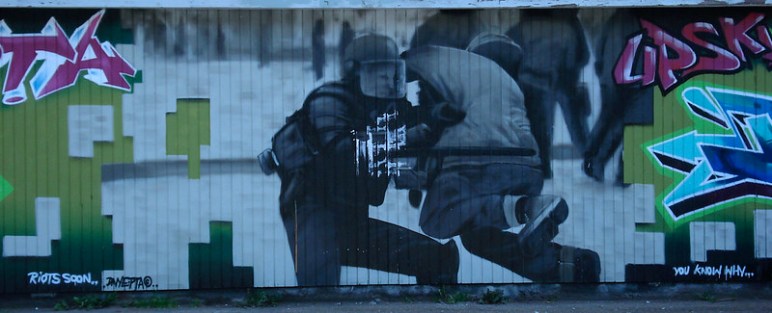
Fires burning…

One wondered what would break the journalistic overkill on the Covid virus story. What could possibly interfere with that  endless diatribe of  stories?  The litany of accounts, after a few months were admittedly beginning to weaken slightly, as the practitioners of journalism began to pen items on how to wear a mask, the lack of yeast in the grocery stores, or the various coping skills of young and old when constrained in your individual hovels. The illogical and outright stupid began to blend with fragments of intelligent commentary but in the end it all became a stew of righteous and contradictory dialogues. The science on the virus was not clear then and it is not clear now. 

But fear sells and as such was the underlying theme running throughout the 24 hour news cycle—fear of dying— fear of others—fear of travel—fear of hugging—fear of having to wear masks which turned into fear of not wearing masks. 

The press finally tasting greater ratings after being in decline for the last number of years, fully gave over to the theory that the greater the pronouncement, the greater the fear generated, the more that people would be paying attention to those newscasts. They have always known that a multi-car crash always draws better than a two car fender bender, but this had the greatest potential—the ability to turn the daily infection numbers into a catastrophe of “never been seen before” dimensions.

Television news clearly told the banner producer on “Breaking news”, to just leave it running. Death was everywhere as if posing for the 5th Estate that pursued the glimmers of devestation .  The media became addicted. Pictures of bodies, pictures of people laying in the street, or pictures of gowned and masked fatigued hospital workers, sweat stains outlining their newly lined worried faces. 

In the early simpler days, the press always waited around for the picture or video of the body bagged victim, being rolled from the residence on a gurney. This virus was a new heaven to the throng of journalists who dutifully culled and edited videos from around the world, while sitting safely behind their laptops. Tents full of body bags or mass burial grounds were portrayed every night, over and over again, helping to keep the grim and ominous dark clouds hanging over the future. 

The media generated fear with single minded attention on a scale never seen before. The level of their deceit knew no bounds. Shallow unsubstantiated subjective reporting has now put the mainstream media in Canada in the category of grocery store tabloids. 

So as we entered the fourth month we braced for more covid stories while the death lottery numbers droned on. 

Then out of the blue, with head-snapping alacrity, that same intense media attention all swung south of the border. 

A new crisis was born and this new “crisis “contained all the elements of headline seeking editors and broadcasters; violence, crowds, tear gas, endless videos of police pushing the “innocent”, journalists being “targeted” with pepper bullets. A veritable smorgasbord of tweets, photos and videos were uploaded.  Unverified raw video, no background reporting, just a torrent of information from which to feed this new appetite for fear and consternation.  

Predictably, social media exploded, as did any pretence on the part of the Canadian media establishment of being “journalists”. Subjective, point of view, opinionated journalists have now replaced the old guard that had once prided themselves on being objective, who felt that they had a duty to report the news, not create the news. 

Damn the ethics and standards espoused for the last 100 years. Objective, fact checked and dual sourced reporting was now officially extinct. 

It has been replaced by the simple emphatic declaration stated and then presented as fact.  Black and white prognosis only, no longer room for the grey areas where most problems actually live. They have become accumulators of cellphone clips. Thirty seconds or stories of two hundred characters are now being encouraged, followed, repeated, and disseminated with alarming speed. The new short attention span generation, the selfie generation apparently needs to be satiated. 

Fear for your safety and those out of control police it has been decided now going to replace fear for your health. The death of a middle-aged black man has now been declared more dramatic than an eighty-four year old with “underlying” health’s issues. The fact that in Minneapolis that a man died at the hands of the police was the bonus, the fact that he was black was the ignitor to the combustible fuel of racism. The police were the obvious and easy targets.  

Thus, 21st century social outrage has once again been released. 

The Canadian media was not deterred in their presentations, even though it was hundreds of miles and a country away. They played the outrage at full volume and were then rewarded with Canadians now taking to the streets to protest racial inequality in the United States. Canada was pulled in by its proximity, and the internet pulled in the rest of the world. 

Videos began surfacing in Canada of various incidents throughout the country which the media now deemed as racist or intolerant. No details, no examination, just outright speculation and proclamations. 

The usual liberal fringe interest groups then began to emerge, excited by the prospect of a new fire to flame. The more vocal, outlandish, and hopefully photogenic, the more media attention they would receive. 

The Indigenous in Canada always willing to claim racism no matter the context, climb aboard the racist allegation train, a fresh spotlight pointed at them in which to air their complaints. There was no room or time for a counter narrative. Cameras immediately flashed to an Indigenous chief claiming assault at the hands of the police, which even in its subjective telling seemed dubious. A female is killed by police in Edmonston New Brunswick, which the media immediately imply is suspicious, hints of racism because she is “indigenous”.

Canadian media and much of the American media lives on the left of the political spectrum, so they spin victimization, and excoriate anyone with a counter view. They are thoroughly smitten by the  liberal democratic and “progressive” viewpoint. Everyone must comply with their viewpoint, to do otherwise is to pronounce you an “ist”…racist, chauvinist, misogynist— take your pick. 

Equally disturbing is that the new age politicians aren’t very far behind the media and what is “trending”.  They now always follow the herd. Where and when social media declares a story or video snippet to be of grave significance and it enjoys any kind of momentum, that is where you will now find the politicians. Politicos must be seen as on the leading edge, at the forefront of what is all good and righteous. As the Facebook or Instagram twirl begins to spin out of control a politician can not countenance disagreeing with the mob. Lead the mob, don’t be left behind or you court political insignificance or ostracization. 

So fully armed with a 30 second video clip as full and damning evidence they mount their pulpits; our Prime Minister and Opposition Leaders in full throat bemoaning the new “crisis”.  There is no time for debate or opposition. Trudeau is “deeply alarmed” over the incident involving the Indigenous Chief; Bill Blair comes out form behind the coat tails of Trudeau to chime in that “people across the country deserve answers” (on Twitter of course). The Indigenous Service Minister Marc Miller, on seeing only the initial report, despite any evidence “strongly condemned recent acts of violence by police against Indigenous people.” “I’m pissed, I’m outraged” said this Minister of the Crown using clearly his best Parliamentary language and putting his ignorance on full display.  

Is there anything wrong with this new age of media? Is there anything wrong with this semi-spontaneous “outrage”? The President of the United States is a great player of this game. Is there anything wrong with him standing in front of the White house with his bible, posing for his alt-right followers? Of course. Is there anything wrong with our Prime Minister, on the other side of the political spectrum, dressed in his current costume of long hair and a mask, kneeling amongst those protesting police brutality and systemic racism? Of course. These two individuals are very similar in their hypocrisy and deceit,  just opposite ends of the political stick. 

 It is this disturbing dumbing down of the facts that is the most concerning.  It is sapping intelligence and the need to think. It is crowd think. It is follow the herd and it is also fleeting. The need to react and deal with an issue and explore possible options to resolution is lost as quickly as it developed. The herd always moves on. 

Social media is spontaneous and therefore often leaderless. Its only mantra is that “everyone’s voice matters”, no matter how misinformed or irresolute that voice may be. Slogans and jingos are passing as possible policy. Apparently they want the disassembling of the Minneapolis police department, they just don’t know why or how to do it.

Make no mistake about it there is racism in all parts of the world, including our world. There is no denying of that fact. There are also bad cops, sometimes really bad cops. Why? Because they are human beings. There should be no tolerance for those that breach, but there must be a fair and just investigation as well. Derek Chauvin, the Minneapolis police officer who kneeled on the neck of George Floyd will face a trial. The other three officers, standing idly by were also charged. All the evidence will surface at the trial. 

But, George Floyd as a symbol of systemic racism?  A former convict with several convictions; high on fentanyl, and methamphetamine, and found with a baggie of powder at the time of the arrest. His most serious conviction involved him and others doing a home invasion, where he put a gun to the belly of a pregnant woman to force compliance. Is this who should be held up as the next Reverend King? 

A black conservative commentator Candace Owens recently brought up some interesting statistics. A police officer has an 18 1/2 times more chance of being killed by a black man in the United States, than a black man has of being killed by the police. She calls these protests and the black lives matter movement as “smoke and mirrors” in that the statistics simply don’t back up claims of systemic racism by the police. You may not agree with her, but you at least need to be allowed to hear her. The burning books mentality once confined to the right are now coming from the left.

We are truly in very unsettled times. Not because of covid, or riots, but because of the perilous road chosen by the media of this country and the dissolution of debate and learned thought. The media are fomenting fear and dissent in pursuit of remaining part of a social media fabric that now rules this 21st century. The politicians now govern and are being placed in power by implementing the tools of that same social media trade. 

Trump and Trudeau despite their political differences are now holding hands as they skip down this road to that dark spot where image has replaced substance. What it looks like much more important than what it is. 

And if you happen to be a police officer in these times, do not hope for any support from these same politicians, or your superiors, who are now poised to jump on this media driven bandwagon if given any opportunity. Their continued political and managerial existence depends on burning you at the stake.

In the last 48 hours police officers are being charged with new found efficiency,  Chief Saunders, the first black Toronto PD Chief, is running for the exit, and the National Police Federation and RCMP Commissioner Ms Lucki are in hiding. 

You are now officially on your own.
The NPF- Plunging into Surrey politics

Now that we all have been satiated, assured by Toyota, Ikea, and the Muffler shop, and of course the beloved Bonny Henry, that they are all here for us during these trying times, maybe it is time to talk about something else as we head or get driven to a utopian “new normal”.  

Recently, Brian Sauve the President and leader of the newly formed National Police Federation, which represents those in the red scarlet, managed to divert the news briefly and our attention with his pro-active coming out stance in arguing for the retention of the RCMP in Surrey.

In the last number of days in fact Mr. Sauve has been doing the full rock and roll circuit; visiting the CBC, the Province newspaper, CTV news, and running three full page ads in Surrey’s local newspaper extolling both the virtues of the RCMP and stating as the gospel truth –that the citizens of Surrey want to retain the RCMP. 

So naturally interest was piqued. Puzzling somewhat, that at this late juncture, Mr. Sauve who barely has his feet wet in his new role has apparently decided, one would assume along with his senior managers to jump with both feet into the Surrey and Provincial political arena.

It should be said that Police unions have the right to be political, but this particular set of circumstances in Surrey seems curious on a few levels. Police enjoy discretionary powers in this country and are formally required to be non-political, so a union representing those police are in a rather unique position requiring balance and forethought.

Clearly the NPF and its 20,000 strong membership are concerned about losing Canada’s biggest RCMP detachment to another union. Nobody wants to lose 850 members (about 4% of their union) before they even get started. But, according to the NPF web site there is a deeper reason for their stance: “This is about your national labour relations agency standing up for the exceptional work of all our members across Canada and internationally.”

Does the RCMP and the NPF feel chastened? Is it possible that they have missed the broader issues or more accurately the issues which have been raised by Surrey and have chosen to ignore the specifics, and just feel insulted?

Mr. Sauve seems to be conflating a local political issue with the reputation of the entire RCMP throughout Canada. He does not seem to understand that this a big city issue where the RCMP is being questioned and has been for a number of years, on its effectiveness vis a vis another more locally controlled city department. This should not be viewed as a personal affront to the membership of the RCMP.  Surrey is primarily seeking a change in structure, to no longer report to the three headed monster of Ottawa; to convert to an agency which may be more fitting to a municipal sized police force.

Mr. Sauve, more than most, should be aware of the issues within the RCMP which have been plaguing them for the last number of years, yet he feels the need to argue that they are the best solution under these circumstances? His argument if stretched out is that a unionized RCMP would be better than an independent municipal, also unionized force. 

Three of the four main players of the NPF: President Sauve, Vice-President Dennis Miller and VP Michelle Boutin all were part of the SRR program. There they would have argued for and defended members against the arbitrary and pernicious management of the RCMP.  

The fourth VP, Pete Merrifield evven stands out a bit from the others. If there was anyone who may be a little jaundiced with the RCMP and maybe even hold a tinge of bitterness towards them it should be Merrifield. Pete Merrifield during a 7 year stint, sued the Force for harassment after he had become involved with the Conservative Party of Ontario. 

In February 2017 a Superior Court ruled in Mr. Merrifield’s favour awarding him $141,000 for the “unrelenting harassment” he suffered and an additional $825,000 to cover his legal expenses. This was no small victory, but unfortunately for him it was short lived. 

The Appellate Court rejected the lower court. In fact they went even further stating that Merrifield had not been “completely truthful” with his superiors and had given them reason to “mistrust” him. 

Recently, the Supreme Court of Canada refused to hear Mr. Merrifield’s appeal to the highest court. 

All four of these individuals in the last number of years, clearly reached a point in their beliefs that the massive problems within the RCMP and its system could not be corrected without independent representation. A union was desperately needed they would have argued. 

Is it not fanciful that this same group of individuals is now arguing that this same flawed RCMP management is now better than another agency regardless of its makeup?

Is it possible that after a lifelong career in the RCMP these individuals who were “members” of the RCMP can not separate their apparent comfort and loyalty to the RCMP from their new roles as advocates for their membership.

However, my biggest concern in that this new union group has gone a step further than a policy decision to defend the RCMP in Surrey; but in order to defend it vigorously they went and paid for a slanted “survey” –to argue and prove their point and have been holding it up as their evidence throughout their media campaign.  

The survey was conducted by Pollara Strategic Insights .

If one was conducting a survey to determine the wishes of the general population with regard to police force of choice, wouldn’t the obvious and clear question that should be posited would be: Do you prefer retaining the RCMP over forming a new police agency?

But clearly the NPF requisitioned this survey because they wanted to make sure it backed up their political argument. A straightforward and clear question may have resulted in statistics that may have not fit in as easily with the political argument that they wished to launch.

So they made sure that the question was couched in terms that would prove more favourable.  

The survey asked whether in these times of the virus and municipal funds taking a beating, whether the taxpayers of Surrey should be spending additional monies on a separate police agency.  The weighted survey question, which was randomly sent out to 803 people asked: 

“With the CoVid virus causing a major disruption” is now the time to “replace the Mounties?” 

This was after the city of Surrey revealed that due to the virus and the shutdown, Surrey counsel would be running a $42million budget shortfall.

This style and question format linked the budget deficit and the fear of the coronavirus to convince the polled that this was not the “time” for a change. They then took the favourable responses, translated, and interpreted these results to say that 77% support keeping the RCMP and 82% support a referendum. 

The clearly planted headline in the Surrey Now-Leader said:  “New Poll Indicates 83 per cent of Surreyites say now not the time to replace the RCMP.”  And they argued that 90% of the respondents agree that it is time to take a “step back and evaluate its spending plans to ensure that they are focused on the most urgent priorities”.  

This is spin, and spin which has been done in such a fashion as to be disingenuous if not duplitcious.  

So what should we take from all this? The NPF in its infancy as a union —elections only recently conducted for detachment representatives this month —has decided to enter the political arena, to fight the duly elected and mandated government. This despite that the political  mandate of the Mayor in Surrey was very clear during the last election and was totally tied the wanting of a new police force. 

Sauve is now publicly saying that the Mayor should have another new referendum on the same issue and vigorously points to the “new survey” as evidence of the wishes of the Surrey residents, bought and paid for by the RCMP union membership. 

The illustrious Surrey councillor Linda Annis has been coaxing the NPF in promoting both the survey and the need for a referendum.  Annis is that Surrey counsellor who has long been in a political fight with MacCallum and who has been pushed from her corridor of power since the last election. 

Annis, despite being always commenting or extolling the virtues of the RCMP in her fight with MacCallum has this blogger’s vote as probably the most ill-informed politician in this debate. Her arguments for the retention of the RCMP border on ludicrous in her effort to get back to power. For example, when asked why it wasn’t possible that some members of the Surrey RCMP may choose to go to the new agency, she felt that was not possible— because when they became police officers —they choose the RCMP.  Who could argue with that logic? Apparently she had never heard of officers changing agencies.

On a recent talk show on CKNW, emboldened by the interviewer Sauve argued that the Mounties were doing “a great job”, “despite the fact that Surrey has under-funded the RCMP for years”.  He repeated a few times that the RCMP was doing a “wonderful job” in Surrey and pointed to the  evidence that the crime rate has been falling in Surrey for the last fourteen years. This is a trend throughout Canada and not just Surrey but why quibble with details.

He was asked about the need for more officers on the street to fight the gang violence. He pointed to the amazing job the RCMP Youth group was doing in fighting the gang problem.

He grasped further by saying that if the community wanted more cops on the street, then maybe they should be discussing increasing funding to the RCMP. So Mr Sauve, had up to this time, structured his argument to retain the RCMP with the need to save money.  But if the voters were not satisfied then one of his solutions was to spend more money on the RCMP if they wanted more officers on the street.

This back and forth countering logic is a little disconcerting and shows a very shallow understanding of the issues in Surrey. 

So we end up back at the question. Is the NPF loyalty to the RCMP pushing this drive? Is their argument that no one is better than the Mounties in any circumstance? This despite having been dealing with the vagaries of the RCMP management for years; sexual harassment, claims in the hundreds of millions of dollars, still this group feels that their unionized environment within the RCMP will be better then the unionized environment in a new fresh Municipal Force. 

As their primary function is to represent their membership, do they realize that a lot of Mounties currently in Surrey may switch to a new agency and it may be in their best interest to do so.  

Maybe this is an overreaction. Maybe some officers feel better that the NPF is defending them as the Force has been going through many years of criticism. But they are late to the game, since its possible that the newly approved Surrey Police Force could be in effect as early as April 2021, less than a year away. 

As a new union, the early days are crucial, as they try to build a credible and strong representative group.  They have many diverse issues in front of them, all of which will demand their utmost attention. Their membership will become increasingly more demanding as the union begins to form and get involved in the various facets of police personnel administration. This will be nothing like the SRR program. They will need to exude the utmost professionalism because now there will be exposure and accountability. 

This is not the time to get into a fight with a duly elected and mandated government and now is not the time to demand something which is outside their purview or control. Now, was not the time to put up a slanted survey, or to gather behind the likes of Linda Annis. 

In the future, any political arguments will need to become a little more sophisticated. The NPF will need to be smarter. This is new world for everyone. The new RCMP membership is now paying for you —and they are watching.

Photo courtesy of Ewe Neon via Flickr Commons — Some rights reserved

Show me the Money…

A rumour was recently heard that the RCMP may be in line to get a 12% pay raise; but before everyone jumps for joy and goes out and buys the new F150, or puts up that downpayment on the east end fixer upper, all of which you have been putting off for the past seven frozen years– there was a bit of a caveat in that rumour. There was no term or length mentioned, nor was it thought to be retroactive. So if 12% seems great, imagine it spread over the next five years and it loses some of its lustre.

A needed pay raise seems to be on the lips of almost all officers in the RCMP. Meanwhile they wait. The yet to be certified National Police Federation (NPF) state that in terms of their priorities, an interim pay agreement is the first order of business should they reach the goal of certification.

The NPF are currently in a holding pattern, much to the dismay of many RCMP members. They are being held in abeyance by those upstart C Division members, otherwise known as the QMPMA, who are challenging bill C-7, which allows for the unionization of the RCMP, but it only allows for a single representative union. The votes are in throughout the country, but the results are not being revealed until such time as the challenge launched by the QMPMA has been reviewed by the Federal Public Sector Labour Relations and Employment Board (FPSLREB)

The Quebec members are challenging the constitutionality of Bill C-7, in particular where the Act calls for a single police voice. Though the Board can not change or amend Bill C-7, they can decide whether the law infringes on Quebec members Charter rights. The hearing is currently scheduled for March 26-27, and a ruling should be given within the week, or so they promise.

Clearly the NPF does not want a ruling in favourof the QMPMA and its 800 members; it argues and wants to represent Canadian RCMP officers as a whole, not a sum of many parts.

The QMPMA for its part and partially in response says it is being unfairly scapegoated for these further delays. It has argued in the past and continues to argue that there should indeed be one union representing Canadian Mounties, but feel that Quebec, because of its cultural and language differences, should have a strong position or seat at the executive table. They say there are “geographical, functional, administrative, and linguistic characteristics” which make them unique.

To reflect their distinct nature, for instance in the proposed seven member Executive counsel, they believe that there should be a guaranteed Vice-President position coming from or guaranteed to the QMPMA . The problem is arguably two-fold; only 4.4% of the RCMP works in Quebec so the mere numbers do not demand such over representation and secondly; it is the question as to whether cultural and linguistic differences are measurable in terms of police work. Many would say that the police role in a union or bargaining unit, should be relatively blind to cultural differences, thereby making it a moot argument.

Whether one believes that a special seat should be reserved for Quebec members is a political issue, it is not an argument that is impactful in terms of the economics of labour. The members will need to decide, but in the meantime this issue seems to be destined to be played out further for at least the short term. If the Board rules in the favour of the QMPMA, one could only think that this would force some serious coming together on the part of the NPF to try and resolve the issue, rather than force further delays.

Politics aside, there is little argument over what constitutes the primary issue in the short term, everyone seemingly is banging the same drum of necessity for “a pay increase”. They reflexively point to the current seven year freeze on the RCMP salaries as the obvious and primary justification for a pay raise. The freeze has meant they have fallen behind the other police forces which form their universe.

The RCMP salary structure over the years has always relied on the police “universe” which is made up of other municipal and Provincial agencies who negotiated their own separate pay increments. The Mounties simply attached themselves to these groups and watch as the “ratcheting” effect forces the Federal government to try and keep the RCMP officers in the same general range– an apple to apple comparison they argue. Just as clearly, the RCMP management has been woefully inadequate in their ability to keep up, as there are current claims that the membership is now 65th out of 80 police agencies. Implicit in this argument of course is that the RCMP by its very nature should at least be in the top ten.

Is this an opportunity to address some of the glaring problems of the salary structure?

Every officer in the RCMP are viewed as being the same, doing the same job, interchangeable. Therefore one raise, one salary fits all. It falls from this logic that everyone in the RCMP is equal in value, therefore, the pay should be exactly the same across the board.

Clearly this automatic pushing up of salaries has stalled in the past 7 years, but it is equally clear that there are some who are studying this ratchet effect, and questioning the viability of continuing with this same model. It naturally leads to the discussions as to whether police officers are becoming unaffordable.

Will the discount coupons that municipalities in this country get by using cheaper Mountie labour be removed by unionization? Will political control of the police service in their community be more viable if they are paying the full bill when the discount disappears as a result of increased salaries.

This one size fits all in terms of pay raises has pointed to some recurrent issues over the years which have never been dealt with in any substantive way. The single pay structure has created holes in the system, impediments that have negatively impacted such things as recruitment and retainment.

For many years there has been internal and eternal debates across the country. Does an RCMP officer stationed in New Brunswick deserve the same pay as an officer working in Surrey? Does an officer working in uniform on the streets deserve the same salary as an officer working in an administrative function?

Is it time that the RCMP gives some consideration to the clearly obvious, that all jobs in the RCMP are not the same, and all officers are not working in the same location.

If one looks at some agreed upon factors for employment classification programs which lead to a determination of a salary, in most jobs and in most circumstances, they can be summed up in nine categories:

  1. geographic location
  2. Industry – what industry are you in? are you a lawyer working for a large firm, or are you a public prosecutor
  3. Education
  4. Experience
  5. Performance Reports
  6. Whether or not your’e a boss- Supervision
  7. Associations and Certifications
  8. Hazardous Working Conditions
  9. Shift Differentials

What is interesting in reviewing these categories is that the one size fits all argument of the RCMP does not fit into most of these factors. Geographic location, industry, education, performance reports, associations or certifications have no bearing on the actual salary determination in RCMP negotiations with Treasury Board. Five of the nine factors that should be considered are not in the RCMP model.

The disconnect is the most obvious when one considers the geographic factor. There is no allowance for where you live in the calculation(with the obvious exception for isolated posts). An officer can pay $300,000 for a house in the Maritimes where in Vancouver the average house price is $1.2 million. When there is a requirement to work and live in the area you are policing, how can this still not be a factor.

A New Jersey police officer makes about $70,000 per year, whereas an officer in Wyoming makes about $40,000.00 per year. Almost the entire difference is due to the geographic component.

The average Toronto police officer makes $98,000 and more than half of those officers make over $100,000. This partly comes from the labour argument of having to live in an expensive city. Burnaby or Richmond RCMP officers can easily make this same argument, but it is not quite as simple if you are in fact working in Weyburn, Saskatchewan.

Going down the factor list. Education is at a bare minimum to get into the RCMP, let alone a consideration in determining ultimate salaries. There is no accounting for graduate degrees or specialized courses of study when factoring in how much money someone should earn.

Experience is not a factor, the only pay raise that is expected is one where one is promoted, where one would be taking on supervisor duties. There is no value given to someone being on the job for a length of time. A twelve year member makes the same amount of money as the three year member. Somewhat ludicrous when one considers the amount of “learning on the job” that is experienced and is especially particular to police work.

How well you do the job is not really a salary issue either. Yes, there are performance requirements in terms of bare minimum, but the officer doing a great job is not rewarded through any kind of salary renumeration. There is no structure in place to measure or implement such a scheme.

There are a couple of factors that do apply currently. There are in fact shift differentials in place, and everyone points to the hazardous nature of the job.

One should be cautious about the hazardous nature of the job in arguing it as a primary factor. It is not as cut and dry as imagined by the general public. Statistically policing is not the most dangerous job, in fact it is not even in the top ten. The QMPMA argue in their web page writings, that their officers are on the “front line” implying a greater need for consideration. Are they on the front line in a non-contract Province?

Statistically the most dangerous policing job may in fact be highway patrol, or an officer working in a rural area, far from backup.

So is it possible in this age of data and data scientists that some form of algorithm could calculate some base salary which is consistent with the specific job, in a a specific location, or take into account some specialized training or experience. Could it be loaded in such a way that measurements could be made of the level of hazard to a specific job, that there would be greater compensation for those working in uniform interacting with the public everyday? Could those calculations make it more palatable to be working in shift work, in uniform, in an expensive city? Could this be beneficial in keeping officers on the road? Possibly.

In a discussion of RCMP salaries and the expectations of a pay raise, one would be remiss if one did not examine the current salary figures, especially in comparison to the general public. Consider the following:

The average police officer in the U.S. makes $54,462 as of January 1, 2019. Now, this is U.S dollars, so let’s add another 25% to take into account the American dollar. That would be an additional $13,615,50 for a total salary of $68,057.50.

The RCMP fresh from Depot Mountie makes $53,144 and at the end of 36 months is making $86,110.

The average RCMP officer makes $94,081.

To be in the top 10% of compensation for all employments in this country you need to be above $93,000. So the vast majority of police officers in this country, and in particular the RCMP are already making in the top ten percentile. If one is going to argue financial need, it is tentative ground. The highest paid public servants are currently, police, fire and ambulance workers.

When one considers all these factors and arguments, is there any expectation that this is anything more than food for thought?

No.

It seems unlikely that any union in its early stages could venture down the road of changing the current salary structure and in fact there may be no current capability to undertake a more complicated formula. And, everyone knows RCMP management is not exactly a troupe given to improvisation. And, if you listen closely you can hear the howls of dismay even on reading these suggestions, as there is normally not much sympathy in the East for the members on the West Coast. A brother and sisterhood maybe, but when it comes to money most Mounties have historically been quite insular.

If one is reading the tea leaves, in terms of where the Mounties are headed both in salary and in terms of the structure of the whole organization, one also can not discount the recent developments; the emphasis on Federal over Provincial policing; Surrey the largest Canadian RCMP detachment going to a Municipal force; the removal of the administrative role for the RCMP; an advisory Board to begin exerting its influence over change in the RCMP; and a growing concern amongst the public and the politicians as to the ratcheting of police salaries.

This also may be for nought as the other rumour being heard out of Ottawa is that the RCMP may be aiming to get out of contract policing altogether. Throwing uniform policing back to the Provinces, and heading for an FBI styled RCMP. Commissioner Lucki to be the next Herbert Hoover?

Either way it is clear that any new union is going to have its hands full in the next few years and hopefully it will not end up spending its time just re-arranging the deck chairs on a sinking ship.

It is difficult to imagine Mounties arm in arm, bullhorn at the ready screaming “Workers of the world unite”! And it may be a little premature to picture the red serge marching in lockstep to the Communist Manifesto, as imagined by Karl Marx and Frederick Engels.

Maybe Bob Dylan summed it up the best.

Photo courtesy of Flickr Creative Commons and “Images Money” with Some Rights Reserved.