If one ever wanted a clear picture of the utter desperation and the scope of problems facing First Nations in this country, one only needed to follow the coroners inquest that has just finished up in Melfort, Saskatchewan which was looking into the slayings at James Smith Cree Nation.
Unfortunately, but predictably, the recommendations coming from it are more reflective of our current political progressive climate, and less about the core issues. For the most part they missed the mark. We can not possibly be surprised, being that this is the age of the “victim”, this is the age of blaming, of never look inward, of instead pointing at the “system.” Let’s be honest, the Indigenous leadership in this country have turned victimization into a professional art; one which they have effectively practised at every opportunity. Their constant themes of cause and effect are always the same, then continually repeated, and the outcome sought is always the same.
Simply put, the James Smith Cree massacre is the story of a single individual with “psychopathic traits” and an “anti-social personality disorder”, a personality sculpted by abuse and crime, exposed to alcohol at the age of 13, and not soon after, transitioning to cocaine and methamphetamine. On one particular day this violent psychopath decided that he wanted revenge for some ill-defined wrong, and was also mumbling on revenge against the “Terror Squad” (part of the extensive group of Indigenous gangs that have proliferated throughout Winnipeg and Manitoba). So on September 4, 2022 after guzzling back some liquid courage with his brother, then went on a killing rampage–starting with his own brother.
Myles Sanderson had 78 previous convictions between 2004 and 2019 and at the time of the killings was “unlawfully at large” and as an occupation was dealing cocaine on the Reserve for three months prior to the killings. Most recently he had been serving five years for assault, robbery, mischief and uttering threats. In 2021 when seeking parole, he was considered an “undue risk to society”, but later in August of that same year, was still given statutory release, having served 2/3 of his sentence.
Four months after that release he was found once again in breach, re-arrested– and then in February 2022 released again.Throughout his prison life, his get out of jail card was that he was treated as an “Indigenous offender” therefore someone that the courts have been directed to deal with differently; not like other Canadians, part of a special group who had suffered “generational trauma” and through no fault of his own was one of the over “represented” in the Criminal court system. Geraldine Arcand, an elder employed by the Saskatchewan Penitentiary testified at the inquiry, about having given him his first “healing plan”.
Myles Sanderson and his wife had moved back to James Smith for the stated purpose of dealing cocaine. Despite all these efforts at understanding and empathy and despite all the socialized efforts at reform– that night he went out and killed his brother Damien, and then stabbed 10 others to death– and in the process wounded 17 others. He leaves behind his common law spouse, Vanessa Burns and their five children. At the inquiry she testified to having suffered 14 years of domestic abuse, and having reported him 12 times for domestic violence. Her suffering wasn’t over with his death, Myles on that dark day, also killed her father during the rampage.
After the killings, Myles went and hid in the nearby woods for 3 days and 7 hours. He subsequently died in police custody, after driving into a ditch in a stolen vehicle while being checked by the police. There will be a separate inquiry later this month concerning his death, because we are just as concerned about the police behaviour during his arrest, as we are of the massacre that Mr. Sanderson had perpetrated.
So this Coroners inquest, headed by Blaine Beaven, with six jurors came up with 14 recommendations, and then the Coroner added 15 more for consideration. Can you guess at what was recommended? They quickly went to the usual blaming template, aiming at all levels of government who are within easy reach. They declared that they needed “More programming and resources for offenders”..”more collaboration” (between the various agencies)…”more resources for prisoner integration”…”changes to how the RCMP deal with wanted suspects”…and in this case there is the need to “hire more elders” for the jails.
The Saskatchewan government for the record, as is also easily predictable, is “supportive” (of the recommendations)and added that they are so on top of the needed action that “some are already being implemented”. The Saskatchewan government says it wants to see more “crime reduction teams” and the RCMP for their part says it wants “greater communication”. The National Police Federation, representing the Mountie union, want “$100 million” more dollars to fund 300 more police officers, 138 of which would be there to “supplement First Nation policing resources”. (It is currently estimated that Saskatchewan is running 10% short in staffing, and an additional 7% from “soft” vacancies such as maternity leave etc.)
Another constant theme was brought up by Chief Peter Chapman who pushed for First Nations policing, which seems to be now referenced as “self-administered policing”. Chief Burns echoed his fellow Chiefs thoughts and also talked about the need for further funding of their own policing service; a police service that would be “suitable for our people”. This was followed by the usual complaint about no support and not enough monies coming from the Federal government.
Would having their own police service stopped what happened at JSCN? Would further funding and recruiting of Indigenous officers by the RCMP as Assistant Commissioner Rhonda Blackmore suggested have stopped Myles Sanderson? Would more “elders” in the prison system, more “healing plans” stopped Myles Sanderson? Would increased programming for inmates stopped him? No, of course not, Myles Sanderson was a psychopath who on that particular day was “triggered”.
All governments in Canada, Provincial and Federal are going down the road to Indigenous policing. They all agree that the 600 First Nations in this country should all have their own police services, not to mention their own laws and outcomes.
Small town police departments in this country has been fading and dying out throughout this country for many decades now, as the size and cost of policing has grown to greater and greater proportions. Practically speaking few are left because of the financial costs alone; now roughly estimated to be about $200,000 per officer per year in terms of salary and support; without adding in the costs of the initial infrastructure that is needed. Small town and village tax bases can not support this level of expenditure, it is simply economically un-feasible. Then add in the major issues of retention, staffing and training and the prospect of having multiples of small independent forces becomes patently unreasonable.
Another serious consideration is who has and can exert political control of small departments, where the officers are policing their friends and relatives, and thus opening up of the opportunities for corruption. The sole reason for having a smaller police unit in any town or village is that it is more accountable to locals, and that it can be then “tailored”. There is no other attributable reason. There is no hiding the fact that the Indigenous want political control of the police force and simply disguise it as being more “culturally sensitive”. They also don’t have the normal financial constraints, they argue that the Feds and the Provinces just need to give it to them.
Our current crop of political leaders throughout this country apparently agree, and therefore believe a separate police force, or many separate police forces, in often isolated and uneconomic regions of this country are needed as some form of twisted reconciliation logic, and they are also o.k. with the Canadian taxpayers funding it. One needs to understand the numbers.The politicians believe that the 3,394 reserves and 600 First Nations, should all have their own policing units, or “police administrations.” That 331,000 Indigenous living on Reserves, with an individual average reserve population of 600 people, should have their own individual police force to enforce the laws in a way, that is more suitable to their culture and their community needs. The costs, the jurisdictional issues, and the very ability to function under these circumstances runs counter to current police management theory which aims at integration, specialized services and shared costs. This Indigenous model simply defies logic.
This is not to denigrate the individual officers who may be currently involved. However, the thought that a police officer, from a very small community, who will do doubt be related to many that he is to police, someone who will be subjected to the volatile politics of Band councils, will somehow be able to manage and enforce the laws in a fair and equitable way, is a difficult if not impossible task. The RCMP used to move officers every 3-5 years for the simple reason that there is a tendency to become co-opted, because familiarity breeds and leaves one open to the vagaries of community politics and can call into question one’s integrity. What could lead one to think that this proposed solution would somehow be different.
Although one can easily see all the pitfalls, the government is already far down this road, and they are not seeking the approval of Canadians. Currently there are 163 policing agreements, for 1250 Indigenous officers, representing 400 First Nations in this country. They are policing about 338,000 in terms of population, which means there is on average, one officer for every 270 people living on the Reserve. In most cities the officer per capita average that is possible is one to every 800-1200 persons.
The First Nations Chiefs of Police Association claim that the Federal and Provincial governments only provide funding of $130,000 per officer, and they want more. Currently the Federal government contributes 52% of the funding and 48% is provided by the Provinces or Territories. They argue that the funding formula is unfair and amounts to “discrimination”.
The Kahnawake Peacekeepers, who police a large area of 10,000 and who boast of everyone in their department being of First Nations descent, is considered a leading example of Indigenous policing that works. The Kahnawake are now arguing for their own dedicated “highway patrol” so that they can police the 100,000 “outsiders” that pass through their territory. They also want an increase in salaries.
In British Columbia, the BC First Nations Justice Council and the First Nations Leadership Council are involved in the reform of the British Columbia Police Act. They are asking that the RCMP be scrapped throughout the Province and there be a Provincial Force set up with “expanded Indigenous policing”. They argue that there is a need to bring about “de-colonization, anti-racism, community and accountability”. They want “jurisdictional authority and funding” to bring about “self-administered policing”. Some of their suggestions/demands is that police investigation teams be replaced by an “elder, a language speaker, a spiritual leader and one RCMP officer”.
The left-leaning Liberal appointed Supreme Court of Canada has stated that the laws of this country need to “braid together”, a combination of “Indigenous laws, Federal provisions, and international standards” that are compliant with UNDRIP (United Nations Declaration of Rights of Indigenous Persons”.
Should the average person in this country be concerned? Should the average person in this country be concerned that certain citizens have greater rights, have different laws, and now seek to transform the legal and police system in their favour? Should we not be concerned that it is also being done in quiet government conversations with no regard for costing and implementation?
The RCMP testified at the inquest that their investigation involved 548 police officers, also Municipal and Federal employees, 42 separate crime scenes, 1322 investigational tasks, 257 witness interviews and over 1000 exhibits. The theory is that in the future a hand full of officers hired to form the James Smith Cree Nation police department, armed with shiny new police vehicles, will now take over that task.
In brief, Myles Sanderson grew up and was created in a world of dizzying and utter dysfunction and all the while the community watched and protected him. Unless that world changes, there will be no stopping of people like Myles Sanderson– not even by a small local culturally sensitive police department.
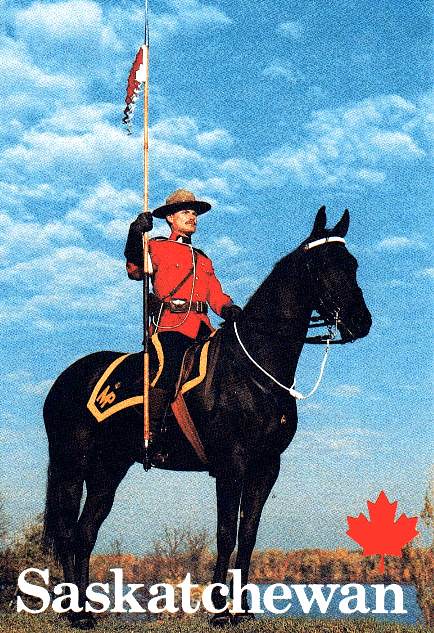
Photo courtesy of R. Orville Lytle via Flickr Commons — Some Rights Reserved
 Behind the Yellow Tape