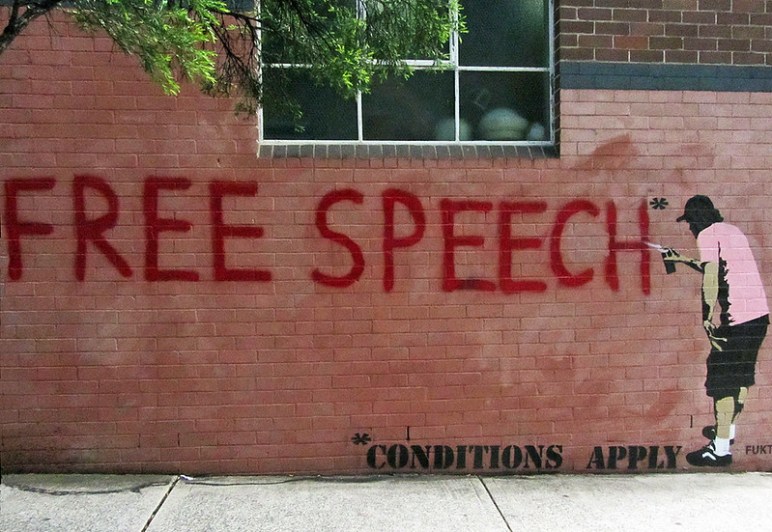
Small Dutch boy needed…

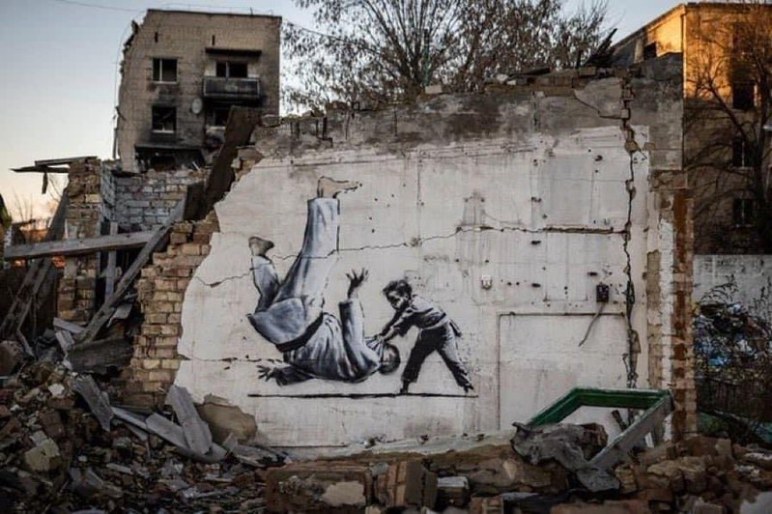
There are a lot of analogies that would seem to fit the current state of bedlam in Surrey, that bastion of the Royal Canadian Mounted Police efforts in municipal policing, their veritable flagship of contract policing. Mary Mapes Dodge in her story of “Hans Brinker; or the Silver Skates” wrote about the little Dutch boy who saved his country from disaster, by plugging a finger in the dike until help arrived the next day. It seems to be a fitting description of Surrey and the RCMP– in light of the back and forth bureaucratic political maelstrom now taking place in that fair city while also reflecting the current overall state of Canada’s national police force.

Of course in this metaphorical dike there is more than a single hole, there are many, all of which are being plugged by the fingers of the likes of Assistant Commissioner Brian Edwards, Assistant Commissioner Manny Mann, and Chief Superintendent Sean Gill. Playing the Dutch Queen, is the the illustrious and apparent policing expert Brenda Locke who is of course, now the mayor of Surrey with her 28% of the popular vote versus 27.3% of the popular vote for Doug McCallum.

Her lacklustre .7% win did not deter her from giving the speech about the “people have spoken”. Brenda Locke to keep her promise is willing to pay out over $100 million of taxpayer dollars to go back to the status quo of keeping the Mounties. (Did we mention that she used to be a party supporter of McCallum when he originally made it an election issue for a separate police force). She fell out of McCallum’s favour though and then switched her position. This all seems to be more about political revenge than thought out policy. In any event it has come about that on November 29th, Locke and her new group of councillors voting 5-4, have now endorsed the “framework for a development of a plan” to undo what has been done. This was after a presentation by A/Comm Edwards to the City council wherein he talked about what a great job the Mounties are doing and will continue to do when they get rid of those nasty Surrey Police Service upstarts, which by the way are now a few hundred members strong. A “Project Team” will oversee a development of this plan, that will need to be submitted to city council by December 12, 2022– which in turn would need to be forwarded to the BC Solicitor General and the Public Safety Minister for approval. Of course new Premier Eby will have a final say, one way or another.

One must keep in mind that the transition to a City Police Service has already been approved by all three levels of government.

For the BC Police Services and the Ministers to reverse that original McCallum majority government led initiative, one would think will take some real persuasion. Locke must realize that it is a high hill to climb so she has tried to stack her Project Team by hiring Dr. Peter German (clearly someone who has the ear of Premier Eby who had hired German when he was looking into money laundering and the casinos) and Tonia Enger (a self-declared “contract policing expert”). Both of course are former RCMP officers of lengthy service, and one would have to assume that their report will now have to be supportive of a return to the RCMP, and somehow also make it seem logical. Expect to see the money issue down-played.

The RCMP and their union, the National Police Federation, have been strident and vocal supporters of Locke to oppose McCallum, the Darth Vader of Surrey politics. I have been told on good authority that at the election headquarters for Locke on the night of the vote, Edwards, Mann and Gill were there in full glory, exhorting and cheering on their new mayoral hero. So much for police being politically impartial.

Then there was the curious case of public mischief brought against the Mayor, of which he was acquitted, much to the Mountie chagrin. What was curious about the case was that McCallum made a complaint of assault, and within a few days, he himself was charged with public mischief. The whole case should never have gone forward, but that aside, there is something highly suspicious about the Mounties bringing charges against McCallum in the first place, and in such a quick turnaround. Now, with little doubt, the City will also have to pick up McCallum’s very pricey legal bills.

There is also a ground level war going on between the Mounties and those that wish to replace them. The Mountie union for their part, will also be sending a report to the government with their view of the situation. The NPF spokesman, Ryan Buhrig, made an interesting comment to the press, in that he stated that seven of the fourteen “shifts” were currently “below minimum staffing levels”. Is this to blame on the transition, or is he admitting that the RCMP is currently not able to meet the contract needs? There is little doubt that these shifts were “below minimum” long before the Surrey Police Service came into existence.

I have by now heard from uniform officers from both sides. The RCMP officers I have spoken with make no bones about the fact that they don’t like the SPS officers, and the SPS officers in turn have complained about the brutal way they have been treated. Safe to say, the situation, morale wise is not good. I heard on high authority that the government at one time seriously considered making a formal complaint to the Public Complaints commission about the actions of some of the RCMP top management in their efforts to block the SPS. Their brief consideration was that the level of obstruction amounted to a form of “corruption”. They did not follow up for obvious political reasons.

If one wants to judge what the best course of action would be, there is a clear need to step back from the infantile actions of the politicians and senior police managers. One needs to look at this from the practical viewpoint and step away from the misinformation campaigns and the biased and often ignorant rhetoric. Let’s even forget about the monies spent, the monies about to be spent, or the monies about to be lost. The most basic decision and central question is whether or not the RCMP are even still capable of municipal and contract policing.

In the rest of the country, in academic circles, and even in the Federal RCMP rarefied air of Ottawa there is a very different dialogue going on. If contract policing is the dike then the holes in the dike, the holes in the organizational structure, are becoming increasingly apparent and they are numerous. The solution that is being discussed, proffered and debated is whether or not the time has come to let the dike break and in effect let the RCMP to get out of “contract policing”.

The most recent example is in an essay by Kevin Lynch and Jim Mitchell. Lynch is a former clerk of the Privy Council Office, and is now with BMO Financial; Mitchell is an adjunct professor at Carleton University. The paper got the attention of the Globe and Mail and is adding to the further discussion of this possibility. In the paper they argue that the problems of the RCMP are large in scope and that “they are inherently structural, requiring fundamental change to re-shape”. The Mountie “jumble of accountabilities” is supported by an “organizational model that fails them” and that they are “poorly positioned to discharge their responsibilities”.

Of course this is just the latest, in 2007 the Task Force on Governance and Cultural Change in the RCMP, stated that there was a requirement for a “much higher degree of managerial competence and sophistication than that which is currently found in the RCMP”. The Bastarache report said that the “culture is toxic, misogynistic, and homophobic”. In July 2022 an all party committee of the BC Legislature was tasked with reviewing the Police Act for the Province, stated that “we need to end contract policing”. In an associated poll, 39% of the people agreed with replacing the RCMP, 38% opposed and 23% were undecided.

Further along this year we have witnessed the Portapique inquiry, which showed that the managers of H Division, at the senior levels were in-fighting with their municipal agencies. Lynch and Mitchell also believed that the Emergencies Act inquiry in the end “portrays an indecisive federal police force”. It demonstrated that the very top of the organization is fraught with miscommunication and that they have become a fully integrated “political” police force, more interested in playing the political game than the operational game. Again, none of these latest revelations are good and the tarnish is not going to wear off soon.

On a lower level, when it comes to the more basic issues and the ability to staff their contracts, I am being told that the Federal positions in British Columbia are now almost 50% vacant, while the other Provincial units are approaching 30% vacancy rates. There is a lack of recruitment and the RCMP is now having trouble enticing anyone to a career and therefore an inability to staff positions. This is not new, this organization has been failing in this regard for many many years. As a result ideas are being floated in British Columbia, Alberta and parts of Saskatchewan for leaving the RCMP contracts altogether.

The Eby government has now had to provide an additional $230 million to the RCMP to assist in “fully staffing” rural policing as part of his “Safer Communities Act Plan”. This would seem to go to the very heart of the issue of not being able to fulfill the current contract.

It is also impossible to argue that the RCMP is any “cheaper” than a municipal police force, as it is a myth that the 10% discount given to the RCMP is a game changer. This is wholly swallowed up with the extra manpower demands which come about due to Federal commitments at a cost to the municipal and provincial policing needs.

There is historic irony. The British Columbia Provincial Police were disbanded on August 15, 1950, a move that was made for two primary reasons. One, was the hope that by doing so, if they brought in the RCMP they wouldn’t unionize; and secondly, they wanted to put a better fight against Communism. It would seem that on both of those issues the fight is over.

The current structure of the RCMP is damaged, in need of severe repairs. As a retired RCMP who preferred contract and the criminal work over the Federal, it is indeed bittersweet to watch the current machinations in Surrey. It is difficult to watch the demise of the RCMP in its present form, but if you don’t think it is happening you are not watching. The organization will not disappear, but I suspect we will not recognize it 20 years from now. It was good while it lasted, but policing is evolving, the past is the past and evolution is necessary to keep up with the quickly changing times. In Surrey, there is a futile attempt underway to argue that all would be good if one were to return to the RCMP. But it is a dishonest argument.

Who knows or would even dare to guess where this group of politicians will lead us. If the government gives in to the misguided sentiment of Brenda Locke and her cohorts, the only known thing for sure that the Surrey taxpayers are going to be on the hook for a rather imposing tax bill. All to return to an organization whose time is now completely taken up in plugging the holes, trying to hold back the flood waters against structural and inevitable change.

Photo by bertknot Courtesy of Flickr Commons – Some rights Reserved

Is the World spinning Faster?

Policing issues and the stories that surround it seem to be growing exponentially, always accompanied by surrounding commentary and self-proclaimed expertise flowing from every social platform. Instagram, Reddit, Facebook and Twitter abound with the examination of the police and a professed expertise. The armchair investigators of Netflix are in full voice. In trying to understand why, I have learned that In the last few years the earths rotation has in fact been speeding up (on a normal day the earth travels at the speed of 1000 miles per hour as measured at the equator). So as I find my eyes ricocheting from headline to commission to judicial decision, blaming the earth’s rotation as being responsible is as likely an answer as any other.

In the past week to ten days we have had the start up of the Public Order Emergency Commission in Ottawa; we have learned that 469 foreign criminals are “missing” according to the CBSA; two officers were killed in answering a domestic dispute in Ontario, ambushed by a male with an AK-47; and an Ontario court Judge has ruled that if you are an Indigenous offender you are not allowed to be cross-examined as to any previous offences. So now not only do you have the Gladue decision, you know have it dictated that the Indigenous are not to be subjected to the same trial process.

Closer to home, in the Surrey civic election the old dodger with the sore foot, McCallum, has been replaced by an equally woefully inadequate Brenda Locke. In the first 48 hours, she has already painted herself into a corner, by saying she is giving the Mounties back their job in Surrey, regardless of reality and cost.

So having to choose one story over another is difficult this week. That being said, as much as I would rather ignore it, I guess we will have to go with the Public Order Emergency Commission as the lead story, which is being headed by the Honourable Judge Paul Rouleau. This Commission (we have sure had our share of them lately) has been tasked with understanding “the Government’s decision to declare a public emergency, the circumstances that led to that declaration, and the effectiveness of the measures selected by the Government to deal with the then-existing situation”. As in all Commissions of Inquiry, one needs to be reminded that none of this is to determine criminal fault or civil liability. This is all to determine the “effectiveness” of the implementation of this draconian piece of legislation.

And like all good government Commissions, this too is filled with lawyers of every stripe and denomination: there are two co-lead counsel, five senior counsel, three regional counsel, twelve just “counsel”, three senior policy advisors, seven research counsel, and two “staff”. So including the Judge, there are thirty-two counsel and that is just on the government side of the ledger. The audience at these hearings will be for the most part other lawyers and the media. With this many lawyers there is diminishing hope that the truth behind the declaration of the emergencies act will not be watered down through all these filtering lawyers.

Judge Rouleau is a native of the Ottawa area, went to the University of Ottawa and then went on to be associated with several central Canadian legal firms such as Heenan Blaikie and Cassels Brock and Blackwell. He has been a Judge since 2002 and a strong advocate for French language rights, and would have probably been a better candidate for the Supreme Court than the new Justice O’Bansawin–but let’s put that aside for now.

The good Judge will be overseeing the evidence of sixty five potential witnesses, however do not despair and give up on your regular life schedule, as it is likely that you only need to begin to pay serious attention to the last twenty or so witnesses– which include the politicians such as Trudeau and Freeland. After all, the police have already established that they did not ask for the Emergencies Act, it has also been established that there was no real intelligence indicating that there was a foreign inspired threat in the makeup of the convoy group, nor conspiracies to commit violence, which should leave the Commission with some rather obvious starting points. There is going to be a lot of dancing to be sure. Commissioner Lucki has already done the two step in public committee hearings, where she was forced to admit to not having asked for the implementation of the Emergencies Act. As a devotee to Blair and company, she needed to backtrack, and she did this by saying what a great thing it was, once they had been given these extra powers. Justin Trudeau who spoke publicly about “foreign money” was clearly lying as the intelligence community today said there was no such evidence.

One should also remember that the government is not holding this hearing because they wish to be frank and forthright to the Canadian public, it is because the law states that they have to have an inquiry within 60 days after the enactment of the Emergencies Act. This particular group of Liberals are not fans of focused scrutiny, whether it is in the House of Commons question period or in front of a Commission. They have released some Cabinet documents but have raised “confidence” issues on them; so the general public may never be shown them.

In checking out a Commission it is always helpful to find out who has been given “standing” and “funding” in terms of appearing before the Commission, which simply put, is based on who has a direct and vital interest in the proceedings. So in this case, groups such as the Criminal Lawyers Association, the Canadian Civil Liberties Association and the Ottawa Coalition of Residents and Businesses line up for standing, and of course for the government to pay for it. These three groups were in fact granted both permission and funding.

However, there was some rather unusual decisions in this regard. Take the case of Mr. Eros who applied for “standing”. Mr. Eros is a CPA and dealt with financing and accounting matters related to the Convoy Group. He was also intricately involved in the administration of the crowd-funding campaign with this same Convoy group. He was however denied standing, as the Judge ruled that he was merely a “witness”. This may be fair.

However, incredibly, the Union of British Columbia Indian Chiefs was granted “standing” and “funding” to participate in this matter. They argued that they had a substantial and “direct interest in the commission” based on its “role as an umbrella organization representing Indigenous governments” and that it plays a “critical role in governance in Canada in terms of its ensuring that other governments are held accountable for their actions”. Some of you may be surprised at their being Indigenous “governments” in Canada. However, to think that they are there to hold the other “governments” accountable is audacious to say the least, even under the current Federal Liberal love-in regime. So we now have a group who has supported its share of protests, such as the damaging of pipelines and the burning of rail lines which is now going to sit in judgement of the governments reaction to the Ottawa convoy.

The witness testimony has started and began with the bubble wrapped represented citizens of Ottawa talking about the nights of continuous air horns, the disruption of their businesses and the “occupation” of Ottawa. Terms are being bandied about such as a “siege” and a “horrific experience”. The lead plaintiff in the civil suit Zexi Li, is a data analyst, and the second witness. She was working for the government from home and her testimony was how it completely disrupted her life, a story which under cross-examination was by no means dramatic. Most of the city of Ottawa were at this time working from home.

In the last few days the Commission has now started to examine some of the government and police response, before, during and after this clearly “unprecedented” upheaval. What would you expect to find when you have three levels of government; the city, the Province of Ontario, and the Federal Government all weighing in on strategy and tactics with three different police forces, the Ontario Provincial Police, the Ottawa City Police, and the RCMP? Now consider the Ottawa mayor who liked to have confidential discussions with Trudeau, Blair, and Mendocino, but not share those discussions with the Ottawa Police Services Board who supposedly were the designated oversight to the operations. There were Provincial and Federal concerns with the OPSB itself. Then throw in the new Ottawa Police Chief who with the other police managers from the other jurisdictions could not even agree on a “command structure” for several days. Throw in a request for 1800 Ontario Provincial officers, while at the same time consider the initial lacklustre involvement of the RCMP, and then consider an inability to even develop a policing “operational plan” for over 10 days.

Needless to say it was all bureaucracy, miscalculation and the very definition of too many cooks in the kitchen. Bill Blair was suggesting to the Ottawa Chief that he consider more bylaw enforcement, even though by that time 2000 bylaw tickets had been issued. I am sure he thanked Mr. Blair profusely. Justin Trudeau was busting on Doug Ford not doing enough, while at the same time, the OPP seemed to be the best at getting extra officers to the scene. Chief Slolys then resigned. With little doubt he was about to become the scape goat in this massive cockup.

The enacting of the act seems quite clearly to have been a reaction to a discombobulated police management action brought created by a lack of foresight and intelligence gathering, combined with meddling by the usual political group which surfaces in any calamity. It was done for the singular purpose of gaining a political upper hand in the media, to show that they were doing something, and it was concocted by the Federal government and the Liberal ruling party.

The core or the fuel for this action seems to been an inherent inability on the part of the liberal left to relate to the protestors driving these big trucks. They were seen as the working class, the blue collars. This was more than a paper exercise to the protestors. They had lost jobs and the ability to feed their families, and now they were being ignored and pushed to the sidelines. They were at times crude and in your face, willing to physically push back, but their cause was the centre of their existence. This was not a philosophical theory dealing with “systemic” complaints, theirs was a cause that affected their mortgage and their ability to make a living. They were not bubble-wrapped, did not speak in plural pronouns, and did not understand or adhere to the niceties of government levels and protocols. They were not from Ottawa, they did not look like they belonged there, they were not Liberal constituents, and most troubling of all– they drove very big immovable trucks.

So when they got to Ottawa, no one would talk to them, no one even liked them, and they needed to go, at any cost. It was hurting the images of the politicians in power. And the media were willing to report it without question or due diligence.

The protestors prevailed as long as they did because they were met with an unprepared and ill-equipped police force, governed by layers and layers of Ottawa political mandarins concerned only with optics. The politicians found themselves facing, according to the Ottawa mayor’s chief of staff, a “crescendo of collapsing confidence”.

They were also scared. They did not understand and could not relate to the visceral outpourings of the protestors. Their problems were not their problems. So this “local emergency” demanded in their view, the full force of government, the suspension of their inherent rights, and the seizure of their personal financial assets– and now they will be lying to justify it.

Photo courtesy of Ross Dunn via Flickr Creative Commons – Some Rights Reserved

We are all suing the Mounties…apparently…

On September 20th of this year, the Federal Court “certified” a class action lawsuit against the RCMP, and is asking for $1.1 billion. And you, whether you know it or not are a signatory– with no signature required.

We are with little doubt into a new age, in terms of lawsuits, everyone has a complaint and just as importantly everyone seems to feel the need for compensation. Hundreds of millions of dollars, in fact billions of dollars have been coming out of the Federal coffers; to pay off, or more accurately to “settle”, rather than facing a trial and protracted court cases. These settlements are often cloaked in secrecy, far from the prying eyes of the persons who are in actual fact paying out these monies. The end results or conclusions to these cases, are often just flashes in our mind’s eye, prompted by a headline or two, which makes us briefly flinch. Then we move on, our sanity and possible outrage papered over by our ignorance or our inability to dig deep.

What is somewhat surprising in this most recent lawsuit is the fact that every officer of the RCMP and reserve officer, since 1995 until the present, are automatically included in this particular lawsuit. The nexus of the claim, or your claim, is built around the central contention that we (present and former police officers) were subjected to “bullying” and “harassment”. Furthermore, the Mounties failed to provide a safe and respective “workplace”. One does have the option to “opt out” of being a participant, should you wish to fill out a provided form and send it in to the respective law firm before November 23, 2022.

So I and you (RCMP officers) am now being represented, without any effort, retainer, or affirmation by the firm of Kim Spencer McPhee Barristers PC. Since they are your new barristers it would seem pertinent to learn a little about them. It turns out that this firm is no stranger to the lawsuit game, in fact, their stated “focus” is “complex, high value class actions”. This Bay Street Toronto firm has been involved in many lawsuits and come up against such entities as ManuLife, General Motors, FedEx and Sunlife. RCMP members and ex-members have also been some of their favoured clients having been involved in the RCMP Gender Sexual Harassment and the RCMP Medical Examination suit.

The two principals of this law firm are Megan McPhee, a seemingly rising star in the field of class action suits in Canada and Michael C. Spencer, an American trained lawyer who brought his expertise in the field of securities and class actions from California and New York to Canada. This firm with regard to “our” lawsuit, has negotiated an agreement that will stand to net 1/3 of any awarded damages. That would be 33% of a possible $1.1 billion.

The firm have fronting this suit, two “representative plaintiffs”, Geoffrey Greenwood and Todd Gray, both RCMP members from Alberta. It was in 2019 that these two officers filed a suit alleging that they were the victims of “systemic negligence in the form of non-sexual bullying, intimidation, and general harassment”. The plaintiffs also argue that the RCMP chain of command that was “tasked to deal with internal recourse and harassment claims include those that are responsible for the harassment that is being complained about”. This they argue has led to a “toxic work environment” and is “characterized by abuses of power”.

There have been two other outside developments which seemed to have helped spur the lawsuit. One was the report by Chief Justice Michael Bastarache, “Broken Dreams, Broken Lives” which dealt with the sexual harassments claims of women in the RCMP. This report stated among many other things, that the RCMP can not fix itself “internally”. The lawsuit is also supported by a statement in 2016 when then Commissioner Paulson went on the record stating that the RCMP was guilty of “harassment and intimidation”.

The Federal government has by necessity tried to quash this latest suit, appealing to the Supreme Court of Canada. They argued that the internal systems already in place for grievances, was a sufficient remedy for these types of complaints and allegations. Without any written reason, in March 2022 the Supreme Court rejected that appeal.

If one attempts to amateurishly dissect and analyze the central core of these arguments one could probably come to some relatively easy conclusions. Albeit subjectively, there seems to be some strong arguments to be made in support of this civil case. It would be difficult to argue that even the basic training academy at the earliest point of a police officers career, centres on discipline and uses intimidation and harassment as the basic tools to force compliance and reinforce that “team” mentality. Depot has mellowed significantly since the 1970’s and 1980’s, but let’s face it, it is still there and was definitely there in 1995. Does anyone from the early era forget the Drill hall? There was a large caveat though, it was all intended as part of a game of survival. It was expected. You were challenged to ignore and face the often offensive behaviour, it was part of the indoctrination, it was part of the preparation for facing the abuse on the streets. So if this type of thing is accepted under todays standards as being harassment or intimidation the lawyers for the plaintiffs seem to be in a good position.

There is also little doubt that the RCMP has always investigated these types of complaints internally, and often it was the immediate supervisors who were tasked with this very unwanted task. If one accepts that this generally inhibits fairness and objectivity, and in fact corrupts, that too would be an easy argument that could be made by many.

Where the argument in favour of this lawsuit seems to fail is when one draws from the specific to the general. Staff Sargent Greenwood, one of the representative plaintiffs, and the most publicly outspoken is now the Staff in charge of GIS in North Red Deer, Alberta. His specifics are what constitutes some of the base for this lawsuit. He began his career in 1990 and was transferred to Yellowknife in 2003. He says that his troubles started in Yellowknife Detachment where he was ostracized for trying to “uncover corruption”. In 2007 he was promoted to Sgt. and had begun an investigation into some criminal organizations. During this investigation, which included wiretaps, there was some audio captured which implicated some RCMP officers allegedly taking “kickbacks” in amounts up to $60,000; destroying evidence, and leaking the locations of undercover operations and drug raids. Clearly very serious allegations. However the officers were not identified in the tapes, but later an “informant” for Greenwood managed to identify an involved officer.

In 2007 a new Superintendent took over the unit. This Supt. for reasons unknown at this time, told him to drop the case, which Greenwood refused to do, or at least that is the between the lines indication. This Supt. would end up filing no less than seven codes of conduct complaints against Greenwood. All but one would be eventually “dropped”. From this point, we can only rely on the public record, but suffice to say the two had some major differences. Greenwood said he was “demoted” to desk duty and filed a harassment complaint against the Supt. as well as another officer who “tried to punch him in the face”. Greenwood further states that he had suffered harassment and intimidation “throughout his career”, but that in all that happened in Yellowknife he “lost my way for numerous years”. He said that “most members struggle daily” and that he suffers from PTSD due to the “reprisals and harassment on the job”.

Todd Gray the other representative for this lawsuit, provides evidence that as a member of the Musical Ride and while performing at equestrian events was “forced to ride in a bunk in the same trailer as the horses” which was “unsafe, dangerous, and illegal”. He was also made to ride his horse “despite a back injury”. Furthermore he was “ostracized and isolated when he accused a detachment commander in Nunavut of mistreating First Nations people”. At first glance, Mr. Gray’s examples seem somewhat more fragile than that of Mr. Greenwood. Riding in the trailers with the horses was common practise according to my recollection, and part of the shared duties in the Musical Ride. It would also be difficult to believe that if presented a medical certificate of a back injury that any supervisor would have forced anyone to ride a horse. Possible for sure, but it seems unlikely. As to his accusations against the Nunavut detachment commander, also possible, but likely mentioned and underlined in the lawsuit to strike at the Federal government sensitivity to anything indigenous.

Not knowing all the details of this civil suit makes it difficult to sort the real from the unreal or the exaggerated. The complaints of the representative plaintiffs may be real and have proven devastating for these two individuals. But I will also admit to a bit of cynicism in terms of the complaints as they feel more “new age” than “old school”. The proof will be uncovered in the civil case should it in fact go to trial. Given the propensity of the Mounties to cover all wrong doing with greenbacks we may never know the truth in these matters. I personally did not feel that I was harassed or intimidated by my bosses over a thirty-four year career, but maybe I was just lucky. Nor do I believe that “most members struggle daily” as stated by Mr. Greenwood. However, I have often argued that a union was needed due to the various member problems that were given short shrift over the years, lost to an inefficient and bureaucratic system which often suffered from a lack of investigation as well as a lack of outcome.

So good luck to you my fellow participants in the Greenwood versus His Majesty the King. The worst result of “our” civil case may be all of us getting cheques for 40 bucks in a settlement with no real public explanation. You know as well as I that the lawyers are the only real winners.

Photo Courtesy of howtostartablogonline.net via Flickr Commons – Some Rights Reserved

Sharing a Patrol Car

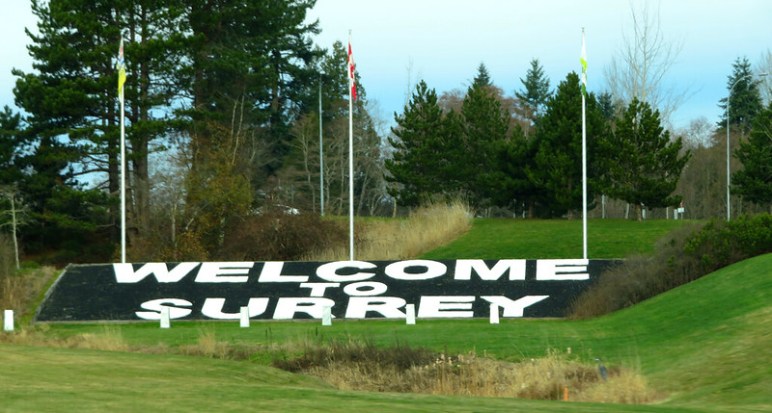
The planned transition from the Royal Canadian Mounted Police in Surrey to the new Surrey Police Service is beginning to fray a little bit. It would seem from one on the outside looking in, that there is a lot of time being spent in that muddled grey “transition” area; the area now “shared” by two separate policing groups. In practise currently, effective control of the policing in the city is still in the shaky hands of the Mounties. Official city signs proclaim that the City of Surrey is “where the future is”. The problem is that nobody knows where what lays ahead in terms of policing, a city which has more than its share of criminal problems.

The longer the residents live in this partially castrated middle ground there will be significant implications for the overall police service to that community. As of today, the RCMP are the policing agency of record, and from that viewpoint, nothing has really outwardly changed. However, as the new Surrey Police Service officers are very slowly being sprinkled amongst the various Watches, there are increasing reports of declining morale and personal friction between the two groups. Members of the two groups are now sharing a patrol car, at least in a theoretical sense, but this changeover is turning into a grinding process with no end in sight.

This shared policing mandate is by no means a normalized policing model and it is clearly unsustainable long term. To expect two separate entities to be tasked to police the same jurisdiction but play by different rules administratively and operationally seems obviously untenable. Even more worrisome is that this may continue for the next number of months or apparently even years. As time marches on, things such as investigational process and file management have a very real chance of becoming very blurry.

For the clarity of record, I have been in favour of an independent Surrey Police Service for many years. This is due mainly to the sadly crumbling RCMP no longer able to deliver what they are if fact contracted to do. There is no idealized thought held that a version of a new police force is the panacea for all that ails policing. Ottawa and its over bureaucratized structures is the albatross hanging around the neck of the RCMP; it is not the performance of individual officers in day to day policing. The structural, operational, and resourcing hurdles now facing the officers of the RCMP continue to be soul destroying and there does not appear any willingness on the part of Ottawa to change. This blog continues to maintain that a trained officer in one uniform is on an individual level, not much different than any other police officer. The colour of the uniform is irrelevant, it is the structure of how they are being asked to operate that is the key to understanding both the problems and the solutions in policing.

That said, sufficient time has now passed since the announced development of the SPS and there are questions that need to be asked and answered as to the overall expectations of this new police service.

The most blatant and obvious question is how long is this going to take? The Surrey Police Board was formed in August 2020. The first SPS officer was deployed in 2021, and now it is projected according to their own “Strategic Plan” for 2022, that in May of 2023 they will have in place 295 sworn officers. At first blush that number seems reasonable, as recruitment, hiring and vetting of new officers is in fact a very time consuming process. Plausible until one considers that the Surrey RCMP currently consists of over 800 officers. So after 2.5 years, the SPS will have only about 36% of the anticipated need of the current RCMP. A little more alarming is that currently, again, according to their own strategic plan, there is no anticipated or formative deadline for this newly formed organization. That would and should seem unacceptable to any Surrey taxpayer.

A second question is to do with the amount of monies currently being spent and what is projected. The first proposed budget for this transition was $63.7 million and it was to cover for the years 2020-2024. So far, the new group has spent $25 million in 2021 and will be spending another $79 million in 2022. There are still two years to go and clearly they are already over budget. Their claim is that the extra costs are largely the result of spending in the area of information technology. Should one assume and accept that in the planning stages they did not anticipate an IT transition in all of its cost and ramifications?

Can the slowness of the development of this new police service along with the budgetary failings be attributed to the fact that it is being overseen by the bureaucratic sounding Surrey Police Transition Trilateral Committee? The fact that this “committee” consists of three levels of government coming together to oversee and supervise this process may be your most obvious explanation as to delay and lack of deadlines.

If you go to the SPS website looking for some insight you will be disappointed. It is the flavour of what constitutes government communication in this day and age, prodigiously filled with government baffle which seems designed to thwart any kind of real examination. You will see all the usual governmental language flags of “appeasement” and “inclusion”. The all too common phrases of “local partners”, “best practises”, “community engagement”, all framed within their newly polished and enshrined motto: “Safer. Stronger. Together”. (One can only wonder what someone was paid for such a benign and lacklustre motto.)

On the website, you will see allusions to Robert Peel and his 9 rules of Policing, but in particular his 7th rule which ended with his less than profound “…the police are the public and that the public are the police”. You will also see a section where are listed the core values of this new age police department which is using the phraseology such as “honour’ and “inclusiveness”. I am sure by this time most readers could guess at all the others.

To reach the citizens of Surrey and be able to respond to their needs, the SPS points to the fact that from June to October 2021 they engaged in large scale community consultation. This included, “public opinion surveys”, “stakeholder interviews,” and the use of “focus groups.” All this has led to their grand 2022 Strategic Plan.

If you examine this “Plan” in greater depth you will find it broken down into three parts; operational readiness, organizational development, and employee development and wellness. Inside all of these three categories of planned action you will find references to the further need for more “research” and further time needed to “develop”. Under operational readiness you will see that their goal includes developing “a file transfer strategy” and the development of an “operational and administrative manuals.” Under the heading of organizational development you will see plans to “research body worn cameras” and “research best practises in community programs” such as the program for a “school resource officer”. This would seem to suggest there is still a lot of research and development to follow.

This is not to say that this transition is not an enormous and often complicated undertaking. It is. One does get the sense as well that the Committee is trying to insure that all the officers of the 2000 applications the SPS say they have now received, do not completely wipe out some of the current and local municipal forces. They have now started reviewing applications from outside the Lower Mainland, so as not to completely wipe out departments such as West Vancouver, Delta, or Port Moody. This underlines the fact that this is as much a political process as an organizational process, that Police Services sequestered in Victoria is trying to orchestrate.

The SPS does seem to be on target in terms of catering to the whim of the special interest groups and the ridiculous and often gratuitous media coverage. They list their community “engagements” as having four meetings with the 2SLGBTQ+, and 21 meetings with the Indigenous. The actual day to day policing needs such as file management, the continuity of investigations and the ongoing need for sustained expertise in investigations is not mentioned in the “Strategic Plan”.

In previous blogs I have questioned those that have been chosen to lead this new SPS. Those doubts have not been alleviated by what has transpired so far. Mr.Lepinski with little doubt, is astute at reading the political winds, bending and curtseying to the social liberalized version of what constitutes policing in this day and age. Whether this type of leadership translates into a vibrant operational police force is quite another matter.

I have been told that Jennifer Hyland in charge of the Support Services group is also overseeing the purchase of Yeti water bottles, ArcTeryx clothing, and Lululemon workout gear for those now under her command– it is not clear whether the Surrey taxpayers would feel that this is appropriate use of transitional monies. She is the one overseeing the hiring of over 800 new officers, so one can only hope the thought of a paid-for water bottle will move that process along a little more quickly.

The other unknown in this SPS transition is the pro SPS-Mayor himself and the civic elections slated for October 15th, 2022. McCallum is a bit of a swollen buffoon, he has been for many years, and some of that character will be exposed in an upcoming ridiculous criminal trial where he is charged with mischief for a false claim of a protestor running over his foot. The fact that he is the political wedge and image for this new police force is at the very least a hindrance. However, as unpopular as he is, with numerous mayoral candidates he may once again outfox the likes of Brenda Locke by splitting the votes sufficiently amongst the eight current candidates. There are over 56 candidates for council, so good luck to the Surrey voters figuring that one out.

I remain convinced that a separate municipal agency is the only viable route for policing in Surrey. But, to say that the current leadership for this new entity is capable of pulling it off, on budget, and with an operational emphasis is still a very open question. Woke leadership is not what is needed right now. They are clearly emblematic of the majority of police leaders operating in this current climate, Lepinski and Hyland are inhalers of all things political, and they have survived and flourished regurgitating the narrative which does not offend and that caters to the special interest groups. The Surrey residents are currently being fed a pablum of meaningless verbiage, and if that is all they wanted, maybe, just maybe, they should have retained the forever opaque RCMP.

An Unremitting sadness…

It is with some reluctance that I approached the possibility of revisiting the “Mass Casualty Commission” hearings. After all, I have written about it a couple of times already.

It certainly was not because of some sadistic desire to listen to Commissioner Lucki as she reiterated several times over, why she was asking for information about the guns used by Wortman. She clearly has been practising her evidence and she is clearly willing to stick it out. Her cover and well rehearsed story is of course that she was merely “disappointed”– in only that she gave the Minister’s office the wrong information. And it is for that reason, and that reason only why she was “frustrated” and chose to vent on April 28th in a meeting with the H Division Senior personnel, all while Supt. Campbell scribbled notes.

Judging by social media, many of you continue to follow and are watching the proceedings so there is no need to go over this well worn ground– you can decide who is telling the truth, even though at this point it seems obvious. Ms. Lucki even seems to have convinced herself of “her truth”, despite all the evidence to the contrary. Her oft repeated denials encased in characterizations: “I am a collaborative person”…”I am a glass half full person”…”I am not an angry person”…”I wouldn’t call anyone a liar, I just don’t think that way”…”I am not a hurtful person”. All good to know for a Tinder bio, but not of much substance.

What struck this writer besides the overwhelming sadness of the event itself, which permeates the hearings with unimaginable visions but that there is another sadness to all of this exercise. It is that we seem to be watching the grindingly slow disintegration of the RCMP as a viable and once formidable renowned operational police force. The fact that the Commissioner and other police officers were asked to dress in civilian clothes so that the very uniform of the Mounted Police would not re-traumatize the victim families was both ridiculous and telling at the same time. What is the overall message when the very sight of the uniform was decided by these three Commissioners as off-putting to the participants.

Commissioner Lucki’s evidence as expected and was for the most part banal and of little value; but it was illustrative in an un-intended way. It put on full display both the internal problems of the RCMP and the chasm which has been for years separating and pulling apart the fabric of operational policing. We, as members of the public, were given an albeit brief glimpse into the dark corridors (they are dark of course partly because everyone is still working from home) and the inner-workings of the RCMP in HQ Ottawa. No one in the management ranks, is usually willing to be forthright and honest in describing the day to day issues. Lucki was not the exception, but in trying to distance herself from “interference” charges, she inadvertently had to put her system on display.

First and foremost was the Strategic Communications group, who appeared to be on first flush not very good with communications and not very strategic. They were talked about often in the hearings and clearly form the centre core for the daily life of the Commissioner. It was patently obvious that Ottawa HQ is far from the land of operations and that “communications” is the God in front of which they all kneel. The transferring and movement of information is their primary product. In how and when they deliver this product of learned information is where they are awarded or chastised for the accuracy and flow of that information. They were and are constantly worried of the “media tracking negatively”. They worry about their “reputational risk” and they talk about “pro-active communications versus reactive” as if written on stone tablets. In this case and in particular with the reference to the media release of the gun information, the communication “experts” in Ottawa did not trust the H Division communication “experts”.

This whole story of Supt Campbell and his evidence of the meeting was butting up against the version of Commissioner Lucki and it completely originates from the Ottawa types being frustrated in their abilities to keep the “higher ups” in the loop about this headline dominating investigation. There was only one portion of the briefing which was needed by Mr. Blair and his office –their only interest was in using the the tragedy to politically further their gun legislation. There could be no other reason. Ms. Lucki was dismayed and expressed “frustration” that there were only three briefing notes in eight days. She went further and said by way of explanation that in her mind: “communications is as important as operational…”. She has said previously, she is just a “messenger”, she is not a “holder of information”. The vital and central question is who is she a messenger for?

What was also illustrated is that Ottawa HQ, just like the Federal government at large is the land of deflection. It is practised amongst layers and layers of bureaucrats, making it difficult if not impossible to pinpoint any culprit and serving to obscure any politically sensitive information. Ms. Lucki in her testimony continually deferred to others, maybe legitimately, as the layers of Ottawa are infinite and confounding even to those living in this rarefied environment.

She was apparently unaware that her chief media person Tessier who continually reported to her, had sent an email to H Division Lia Scanlon saying prior to the press conference: “Please tell me Darren is going to talk about the guns…my phone is blowing up here”. Ms. Lucki denied knowledge of any interest in this subject on the part of her press officer.

She could also not remember making a phone call, her one and only call ever to Chief Supt Chris Leather about the guns. “I don’t recall that conversation” she said simply.

Deputy Commissioner Brennan had previously testified that he “likely” told Ms. Lucki some of the details about the guns as their offices were close, and he would have just have walked down the hallway to her office. Commissioner Lucki said that couldn’t have happened because she was “working from home” on that day, as she was most days.

The threat of COVID clearly played a bigger role in the Ottawa environment than in the policing provinces where one always had to go to work. COVID was oft mentioned by Lucki. A ready-made excuse for her ” not having sent her “Tiger Team” spin doctors to the scene in H Division which could have clearly helped to avoid the back and forth. She was “afraid we would bring COVID to Nova Scotia” was her reasoned decision.

This land of rehearsed un-accountability clearly was the reason for not taking notes at executive meetings. They are continually trying to avoid a detailed and therefore accessible written record of account. I have witnessed this in the corporate world and clearly it has enveloped the Ottawa mandarins. The meeting of April 28th was a glaring example. No one holding to the Lucki version of truth, all the Ottawa people took notes at this meeting. In H Division, C/Supt Campbell who comes from a background of operations took notes; the two fellow officers, Leather and Bergerman did not. Let’s face it, the only reason that Chief Supt. Campbell has been allowed free rein in this instance is that he took those notes.

Ottawa is also the land of “subject matter experts”. (Ms. Lucki confirmed she isn’t one–she is just a messenger remember). Most of these experts are short of operational or hands on experience. This is a world full of courses, “hundreds” according to Ms. Lucki, and it is where “table top” exercises are their reality. In this testimony and in others one heard an awful lot about the “Critical Incident Response” training, courses and command centres all designed to fill in for and ameliorate experience and geographical knowledge. In this vein, Ms. Lucki who is head of the Firearms Program admits that she actually knows “nothing about firearms”. Ottawa mandarins are the only ones who would understand this logic.

Lucki commended her employees and described them as “second to none in service delivery”. Then we had to listen to the fact that the Goulay family, was never notified of their mother being killed, that the crime scene of her death went unattended and unsecured, and then the family went into the house after it was eventually searched, they found evidence that had been missed–a bullet casing no less. Lucki’s response “I’m sorry that happened”.

When asked as to why she didn’t pick up the phone and call Lia Scanlon who had written the damaging letter calling her out on the April 28th meeting, she said that “I didn’t want to effect her wellness plan”.

When Lucki was asked about whether the police needed more education, higher academic standards such as the previous recommendation from another Commission, she said that she did not want to deter diverse applicants. “I’m trying to get people from Nunavut to join the RCMP” and better education “is a barrier”. She then pointed out that they have changed the entrance exam in order to facilitate entry and allow for “life experience”.

She talked about the lack of resources, an issue which has been around for decades, as if she had no control, but agreed that hiring for overtime was unsustainable and had a negative effect on the “work life balance”.

The level of the resourcing in H Division at the time of the incident was only spoken about briefly, but there were some startling revelations. Only two dog officers in the Province. That they already had borrowed 30-50 officers from out of the Province to attend to the fishing dispute were a couple of the examples.

She was asked about the fact that contrary to Section 6 of the Code of Conduct and Section 9.2 of the Conflict of Interest guidelines it is pretty clear that you are not allowed to hire “immediate family members”. When Chief Supt Janis Grey hired her husband retired Chief Supt John Robin or when CO Bergerman hired her husband Mike Butcher, also a retired Mountie, for the Issues Management Team for the Portapique commission she was asked if there were any consequences? No was the answer. Clearly Code of Conduct issues only apply to the low ranking members. It was often mentioned that Lucki is flying at 10,000 feet, above the details, therefore above reproach for any minutiae, so one would presume that the other high ranking officers are above the clouds as well, and they too are beyond reproach.

When asked if she thought that there should be some guidelines made up in terms of political interference, she felt that this was a good idea. Maybe a “mandate letter” she suggested which would explain the line in the sand to the incoming Commissioner and other officers. Are we to interpret this to mean that she could have had some needed guidance upon becoming Commissioner?

As she neared the end of her testimony she was asked about what recommendations she would be looking forward to from the Commission? Her profound response: “anything that will keep Canadians safe.” This scholarly response is coming from the woman who is heading a 32,000 person agency; overseeing 169 policing contracts; and the criminal and Federal responsibilities for the vast majority of this country. One lawyer described the management structure of the RCMP now as an “incomprehensible web”, “this big clump in the middle” of a very “dense management system”.

This agency is crumbling in plain view and by any measurement, weighed down by indifference to its central and core goals, consumed by appearance and an adherence to political survival. Everyone in Ottawa holding hands like Thelma and Louise, somehow indifferent to the consequences. One should also not hold out hope that this socially sensitive victim centred Commission will be the guiding light to significant change. One can expect many references to “community policing”, “counselling” and “coordination”.

It is all very sad.

Photo courtesy of Flickr Commons – Nick Fewings- Some rights reserved

A Psychophysiological Detection of Deception Examination ( for all Politicians )

Presumably the title grabbed your eye, and yes of course I am talking about the polygraph, or as it is often misnamed the “lie detector”. I wrote a couple of blogs ago about not needing a polygraph for Commissioner Lucki, but this is in a different vein. This blog is about to propose a possible solution for a life long problem that we are and have been having with politicians. I can not take credit for this idea, since a friend of mine came up with it and and he proposed I write about it. He is a bit of a philosopher and has been stewing about this particular solution for a number of years. The simplicity of what he was suggesting, I will admit initially made me skeptical. Often times if something seems simple to me, it somehow seems less plausible.

The specific problem which we are about to try and rectify is this: we have reached a stage in this country and around the globe, where politicians universally, no matter what political stripe, are simply not trusted. That actually may be an under-statement, so let me re-state it. We have reached epidemic proportions of mistrust, exacerbated by the likes of Trump on the right and Canada’s own Justin Trudeau on the left. We simply no longer believe them when they say something and they in turn seem confounded by the public questioning of their allegiances or motivations.

The public cynicism is of course well earned, the historic record speaks loudly and clearly. Politician after politician have been caught up in lies, or what they often refer to as “misstatements”, “misdirections”, or “misinterpretations” of what they actually intended to say. In Justin’s case and to be fair in the cases of many others, it is clear many have committed outright lies. For instance some most recent examples include the statement that the police asked for the implementation of the Emergencies Act to deal with the bouncy castle convoy people? Or our dear Commissioner Lucki clearly lying about pressure put upon her by the Bill Blair crew. Do you remember Bill Clinton, Hillary dutifully by his side, turning to face the camera directly and with millions watching to say categorically : “I never had sex with that woman”.

The suggestion being proposed is this. That all politicians while running or sitting in office have to submit to a polygraph test.

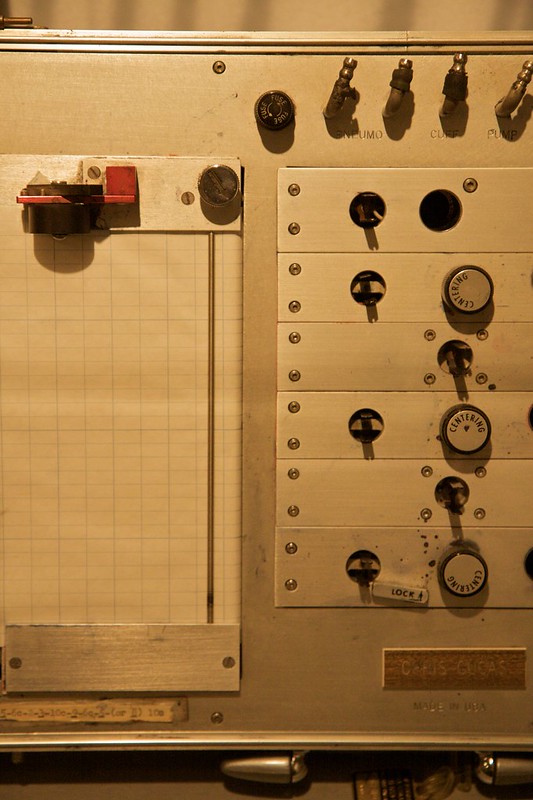
Now before we go any further, this writer does fully understand the negative issues surrounding the polygraph, which the U.S. Supreme Court said was no better than “flipping a coin in the air” in the detection of deception. They are right on one significant level. If one assumes that the polygraph in fact detects lies, it does not, as there is no measurable physiological reaction to lying. The polygraph which measures blood pressure, pulse, respiration and skin conductivity has been deemed to be not a “scientifically credible test” to determine if someone is lying, and as a result it is not admissible in a criminal court of law in this country, or the United Sates. This was confirmed for Canadians by the Supreme Court of Canada in R vs. Beland.

The polygraph is flawed as a “scientific instrument”, but if employed as an interview aid it can be a more than effective tool. It has therefore been accepted as a test in the hiring of employees engaged in sensitive positions for a number of years; agencies such as the FBI, NSA, and the CIA. Canadian police recruiters are often having the polygraph as a test prior to entry. It is a $2 billion industry in the U.S., the average cost of the test being about $700.00. It has been rumoured, but so far I have not been able to confirm, that the RCMP is doing away with the polygraph test for applicants to the RCMP. It seems that the Mounties who are having trouble getting recruits and getting them through training, are doing away with the polygraph admission for the very reason that they were failing too many of their applicants. (If this turns out to be true, the ramifications of this would necessitate a more in-depth examination)

So despite a general acceptance of it as an aid in screening persons in the field of employment; there is still some mixed application of the polygraph in terms of future employees. The Ontario government for instance has banned the use of polygraphs by an employer. (One has to wonder whether this came about as a result of the Ford brothers who dabbled in a little crack cocaine while in office, but that would be a little too suspicious on my part.) The polygraph can also be prejudiced, according to scientific testing, against those that are innocent. Finally, there are clear ways to beat it. In the United States, from 1945 to the present six Americans were found guilty of having committed espionage– all six had previously passed polygraph examinations.

Regardless of the apparent flaws and leaving aside all the naysayers, here again is the proposal. What if a political party and each of its candidates, prior to election, came out and stated that all their party candidates would take the polygraph, and furthermore, it would be in an open and public forum, and they would even provide the questions that were the subject of that polygraph. Additionally they would promise to share those results with the clear assumption that the tests are done by a fully accredited and impartial body.

How many candidates would survive that polygraph test would be the first question. But assume they survive, clearly the pressure would undoubtedly then fall to the other parties and their candidates to also comply and prove their worthiness for public office.

For those not experienced in the use and application of the polygraph process. The actual test is only about fifteen minutes long, but there is a lengthy preamble between the tester and the tested. In the lead-up to the test the interviewer would review the test questions, in order to establish a control question and a probable lie test. This sets the boundaries for the tested and an agreement is reached on the testing questions and the boundaries around them. After going through this process, five or six basic questions are agreed to and formulated and the test is administered.

In this theoretical proposal, what would the basic questions look like:

a) Is everything in your campaign literature and advertisements accurate?

b) Have you ever been a member of an extreme right or extreme left organization?

c) Have you ever cheated on your taxes?

Anyways, you get the picture. It would seem at first blush to not be a bad idea. In the Middle Ages they would pour boiling water over people they suspected of lying, the thinking being that an honest person would be able to stand and take the burning. So a polygraph is at least better than that methinks.

It would be an entertaining drinking game to go down the list of all these “honest” politicians now plying their wares in government and be able to bet (or drink) on the subsequent outcome of the test. There are some politicians that simply ooze that crooked instinct and would be an easy bet with two to one odds, where others may have a fifty-fifty wager. And there are those of you out there that believe that no politician could take and pass the test. Maybe that is true, I am not so sure, it may be a little harsh.

Will any slate of candidates take on this challenge? It seems unlikely, given that it is easier to let sleeping dogs lay, no sense stirring the pot only to find yourself in a un-retractable position. In the 1950’s there was a show called Lie Detector TV which was hosted by Melvin Belli a famous defence counsel of that day. During his day Belli had won over $600 million in damages and defended Jack Ruby who had shot Lee Harvey Oswald, the killer of President Kennedy.

Maybe instead of an all candidates debate hosted by Rosie Barton lobbying softball questions, we could have the polygraph test results revealed. If the candidate failed they could get a chance to debate why they failed, or why the test came back as in-conclusive. We could find a host like the lawyer Marie Henien who could cross-exam them on their explanations. It would be binge-worthy television drama, maybe cringe-worthy would be a better description, but I think it would draw the ratings, and the CBC could finally find a replacement for “Schitt’s Creek”– we could call this “Up the Creek”.

I clearly digress, but maybe ask the question at the next all candidates meeting you attend as part of your civic duty, when each and every politician is expounding on how they are best to represent the people you say:

“Excuse me, Dear Sir or Madam, will you take a polygraph test when you say you will never raise taxes?”

I will volunteer to hook up the electrodes.

Photo Courtesy of Flickr Commons and the Internet Archive Book Images – Some Rights Reserved

No need for a Polygraph

Well, as luck would have it, there was nothing better for me to do on a hot cloudless July summer afternoon but to tune in to the Public Safety Committee hearings in Ottawa, and be given another opportunity to listen to Bill Blair and Commissioner Lucki testify to whether there was any political interference in the investigation in Portapique Nova Scotia. Judging by their on screen looks and overall demeanour, they didn’t want to be there either.

For those that have not been following the controversy, all of it stems from Ms. Lucki demanding and getting a meeting after a press conference on April 28th, 2020, which had been conducted by the H Division group overseeing the Portapique investigation. This was held a week into the investigation of Canada’s biggest mass murder. According to C/Supt Darren Campbell of H Division, who had taken notes as most police officers do, Commissioner Lucki had been “displeased” in this meeting with the local commanders. She was upset at her H Division underlings for not releasing information about the makes and models of the guns used in the attacks; details they had decided not to release in order to safeguard the ongoing investigation. This seemed logical and in keeping with investigational protocol, since much of the gun investigational inquiries was being conducted by the Americans. To release that information as the Americans were still trying to track the gun movement, would not have pleased their American counterparts and could have hindered the investigation.

C/Supt Campbell went on to describe that Commissioner Lucki said that she had “promised” the yet undisclosed information to the “Minister” and proceeded to chastise the H Division Mounties for not understanding her political world and that this all tied to the impending gun legislation, which coincidently, the Liberals were going to announce in a few days. She wanted that information.

The question is therefore: could this belligerent and clearly pressured Commissioner, eager to score points with her Liberal masters, in particular Mr. Blair; could this be translated or legally interpreted to say that she and the Minister were interfering in an investigation?

So these proceedings and this Committee composed of Liberals, Conservatives, NDP and Bloc members were there to determine through their intrepid investigational techniques whether this constituted an interference in the investigational process by the Commissioner and the politicos.

For anyone that has not watched similar proceedings, one has to point out that these types of inquiries very much fall along party lines. In this case, the Liberal members of the Committee know they are in jeopardy and the evidence was not looking good. So the Liberal ministers on the Committee form a protective verbal V to shelter and block for Blair and Lucki. They were clearly there to try and defuse and their blatancy was at times laughable. The NDP member professed a cerebral approach and seem to be focused on what we can do better, the NDP credibility questionable at all times due to their current agreement to keep the Liberals in power for the next couple of years. So it is clearly up to the Conservatives and the Bloc to ask the tough questions, and to do so given the heavily constraining committee time rule limits.

It should be noted, that the Conservative MP from Manitoba Raquel Dancho was prepared and hard hitting and could arguably be said to have been the star of this particular show. She should be applauded for her efforts.

The huggable Minister Bill Blair started it off as the first witness. He was his usual rumpled self and as all LIberal cabinet ministers are now trained to do, answered any question with an unrelated political speech. When asked a question he began by immediately segueing into his gun legislation and his ongoing efforts to “continue to keep Canadians safety” at the top of his agenda. There were also his tried and true usual references to his being a former police chief. His Deputy Minister Rob Stewart sat dutifully beside him, quiet, never looking Blair’s way. Stewarts only contribution was that they were not solely focused on the guns, but just trying to learn the “full story of what had happened”.

Blair has been around awhile. He flatly denied speaking with Lucki “directly” or “never asked” her specifically about the guns. He says he was not in the meeting with H Division and therefore could not speak to it. The entirety of his evidence pointed to his Chief of Staff being the one orchestrating the gun legislation and trying to tie it to Portapique. The Chief of Staff was not there.

Next was the illustrious Commissioner Lucki, who is admittedly a little more poised and getting a little better at the deflect and obfuscate. But Lucki was immediately on the defensive, and obviously could not deny the notes of Campbell, but quibbled with the words “promise”, substituting “confirmed” as what she think she said.

She admitted to being “frustrated” with the flow of information coming to her, and denies that she had a particular interest in the guns that were involved in this mass killing. The question that was never asked was why would the make and model of firearms be the most pressing question in this large investigation that was still unfolding? How it was important could only be interpreted and tied to the Minister of Public Safety and National Security. He was in a few days introducing gun legislation through an order in council that was focused on the 1500 types of firearms they were going to ban. So there does not seem to be any other reason for the focus of Lucki and Blair’s department. There is no other reason for their drive to obtain this information.

On April 23nd a few days prior to the April 28th meeting, Ms Lucki had in fact been told that there would be no release of the gun information. She forwarded an email to that effect, saying that the information shouldn’t be released. This was forwarded to the “Minister” and by implication the PM’s office.

Between the 22nd and the 28th something changed in regard to the gun information. By the 28th she says she believed that the gun information was going to be released, based on her conversations with her press group, who in turn were talking to the H Division press group. It doesn’t appear like anyone in the investigation team told her that this was to be the case. A possible mis-communication? Who would believe in the current RCMP there would be such a thing?

Ms Lucki admitted to having a conversation with Bill Blair’s Chief of Staff where she was asked if the gun information was going to be released in the press conference on April 28th. She told him that it would be and no hesitancy in later that evening forwarding this information to others in the political machinery. By the time of the H Division press conference the Liberals were no doubt by now primed for this information to be released; a perfect springboard to show that the Liberals and their perspicacity when it comes to the banning of firearms. The biggest mass murder in Canada had some political points to score and maybe even a chance for a photo op with guns on full display. Ms.Lucki clearly knew this.

So the April 28th briefing was held by but there was fly in the ointment–H Division at the press conference never released the gun information.

In an email from Commissioner Lucki (that had no context) she sent to Blair’s chief of staff after the press conference said that the press conference “had not gone as expected”.

And it was after this that Commissioner Lucki called a meeting with H Division personnel.

Ms. Lucki according to her account was “frustrated” or “angry” according to the H Division people.

Ms. Lucki said she had been frustrated by the lack of information flowing to their offices in Ottawa. All of the information, not just about the guns. But about the guns, she says she was upset because she takes pride in the information she sends out and was frustrated that the information was wrong. She said she is “only a messenger”. She denied tying them to the gun legislation or Minister Blair. She did not want to argue with the notes from Campbell but that was how she remembered it.

So we had a classic case of he says, she says– except that Campbell took notes– and the Committee had not yet heard from the other officers in H Division that were up to testify next. Lucki left the meeting clearly on the ropes, the dramatic question which was about to unfold –could she survive the next witnesses? Would their loyalty to her win the day?

It is not often that this blogger gets to congratulate the senior executives in the Mounties, but I was surprised and was about to have some of my very diminished faith restored. Retired Commanding officer Lee Bergerman and Chief Superintendent Chris Leather became the next witnesses.

Mr. Leather who had been chastised many times in the press after the mass shooting, not only stood up well, but was articulate and refined, steadfast in his evidence and approach. Ms. Bergerman was succint and to the point, not mincing any of her words. Both showed courage in their convictions.

Both said that they agreed with the notes as taken by C/Supt Campbell. That they were an accurate reflection of the conversation and the tone of that conversation. They said they were taken “aback” by the conversation, “a bit stunned” and “confused” at these allegations by the Commissioner. Bergerman said that Lucki was “angry” and “knows her well enough” to say that. She confirmed as did Leather that Lucki spoke of getting “pressure from the Minister” that “she was under pressure”, and she had in fact mentioned the upcoming gun legislation.

Leather testified that it all began on April 22nd when he was asked by the Commissioner’s office to obtain a list of the guns. He said that he did forward a list, but under the direction of the shooting oversight body, SIRT, who specifically directed that this information was to stay in RCMP hands and not be disseminated. Bergerman and Leather were both asked if they would have in any event shared this information with anybody outside the investigational group. Both said they would not.

So Ms. Lucki defence is that it was all a matter of miscommunication and can give no real answer as to why she was so intent on getting the gun information to the Minster and his Chief of Staff.

The miscommunication Ms Lucki said stemmed from her in ability to get a “team” on the ground in H Division. Her reason they didn’t. Covid. The government would not allow it she said. Her reason was of course incorrect and dismissed later by Bergerman who said they could have come to H Division. There was no rule stopping someone from entering Nova Scotia if they were working during the Covid bubble.

Clearly there is some truth to the miscommunication allegation and the controversy that ensued. The myriad levels of bureaucracy that abounds through the RCMP and in particular in HQ has been well catalogued.

As has been stated many times before in this blog and by many others in the political chorus, Ms. Lucki is merely a foot soldier for the Liberal political elite, an echoing sycophant to the policies of “systemic racism”, “diversity” and “inclusion”. She has memorized the lines and been practising in front of a mirror. That is who she is, that, as she would say, it is part of her “DNA”, and that is how she was elevated to the highest RCMP office in the land. The lane one must stay in as Commissioner is a jagged and bumpy lane, and she has driven into the ditch, she doesn’t even seem to see the line.

The Committee hearings will continue and there will others coming to the committee, including Campbell and Blair’s Chief of Staff. But there is really no need for further revelations. The picture is already clear. Will there be a “fall” person? Maybe, but it is not likely to be Bill Blair. Have I mentioned he used to be the Chief of Police?

There is no doubt that Lucki is blurring the truth (some would call it lying) and she has now been caught, and not only caught, but called out on it by her own senior officers. It was as close to a revolt as one could get. Anyone with a sense of principle and a sense of what constitutes leadership would resign. She has lost her audience.

Picture provided by Marcin Wichary via Flickr Commons – Some Rights Reserved

Crumbling Integrity

Constant bitching about issues facing police is commonplace, a well practised pastime among the veterans of the blue. People will point out that this blog makes its living in this realm of grumbling discontent. Even for the new 21st century cops, bitching and complaining is a rite of passage and there seems to be no shortage of topics to entertain both groups. Resourcing, shifting, promotions and transfers, all seemingly preoccupying the officers now taking up two tables at Starbucks. The old guys and gals in Tim Hortons, like to talk about pensions, Veterans Affairs, and the cost of living index. The belly aching is never-ending and usually never solved.

Something does seem to be different now though. The transition to the new age does not seem to be going as smoothly or as expected. Morale seems deflated, the concern more serious. Is there a fundamental shift in the role of police or just the same old longing for the “good old days”?

An astute RCMP friend of mine of the younger generation, who is well read on the issues of the day, recently opined that we are in fact watching the “crumbling” of an organization. He may have been over-stating the situation a little, but there does appear to be increasing evidence of a significant deterioration; an acute erosion of the “job”, both in how it is done, and how it is perceived. It seems partly due to the fact that society is bending to new norms, and those new norms are incongruent, often out of sync with the historical understanding of the job. At its root may be that police organizations have now completely and willingly blurred the line between the governmental executive branch and the independence of the judicial and policing arms of government.

There have been a couple of recent stories which seemed to serve as an illustration of this fundamental change.

First, was the Senate committee hearings on the imposition of the Emergency Measures Act and the various witnesses and their attempts at defending those measures.

Secondly was the slip up by none other than the Chief Justice of the Supreme Court of Canada, Richard Wagner, who inadvertently displayed his political affinity and loyalty to the “progressive” government of Justin Trudeau. This has led to a complaint and investigation by the Canadian Judicial Counsel on the remarks of Mr. Wagner– to determine whether he had had taken the “liberty to express progressive consensus at the expense of judicial neutrality”.

However, let’s first deal with the Senate hearings, which at times bordered on farce as government officials tried to justify and explain the imposition of the Act in the fight against those dastardly convoy protestors. Otherwise known as the insurrection that never was. Highlights included the fact that Marco Mendocino, the Minister of Public Safety, said that the police “requested” the imposition of the Emergencies Act, the clear inference being that the police were out of options and needed the government to come to their rescue. It has now been established that he deliberately misled the public, the police never asked for it.

As the committee progressed it became obvious to all that the success of the Freedom Convoy was largely due to the failures of senior law enforcement, and the Provincial, Municipal, and Federal governments. They, to put it gently, failed to anticipate and enforce the laws that were always available to them. Commissioner Lucki in her cringe worthy testimony could not, and would not admit to any enforcement failures. Nevertheless, she was forced to confirm under oath that they did not ask for the Emergencies Act. Pushed further in her testimony, she found herself in the position of trying to defend her political masters. She was clearly uncomfortable in criticizing the government, and spent most of her time saying that the Act was in the end beneficial, regardless of how it came about. She did prove herself a diffident public servant to Mr. Trudeau and the Liberals.

It was this failure in enforcing the laws of the day, and then failing to admit to those “sequence of failures that Howard Anglin, writing in the National Post concluded– led to the serious consequences of the police and government combining to use “extraordinary police powers and otherwise unlawful tools of government coercion” to upend which was for the most part a legal protest.

It was in essence “a breakdown in the rule of law”, and this gets to the apparent fundamental shift that is occurring in policing.

The police are the most visible in terms of the upholding the rule of law in this country. When they “fail to enforce the law, or choose not to enforce the law, or enforce the law unevenly, the rule of law is compromised, and the perception of the public and the need for the law to be seen as being fair and consistent is irreparably harmed.” The RCMP for many years now has clearly fully embedded itself with the progressive wing of the Liberal party; its policies and operations designed and implemented to appease the current political narrative and to be sensitive to the political base of the Liberal party.

Mr. Anglin cites several examples where the police reacted and acted on the direction of the governing party. How else he asks could one explain the lack of enforcement for the blockades in 2020 of the Coastal gas pipeline, the broad daylight vandalism of statutes whether it be the Queen, Sir John A, or Edgerton Ryerson? How did the downtown Eastside of Vancouver become the current hive of violence and destruction under the watchful eye of the Vancouver City Police, other than through the lack of enforcement of bylaws, drugs, and public mischief. They too have been caught up in substituting a social democratic approach for a clear enforcement need.

In 2013 the blockade of CN Rail by Indigenous led protestors, was ignored by the police. Anglin points to Judge Brown of the Ontario Courts who asked why the Ontario Provincial Police were coming to court for an injunction, when they already had the powers of arrest to stem the blockades. It got even worse in Judge Brown’s court because the police later still failed to enforce the injunction. The police who were still being hoisted on the petard of the woke led Judge Brown had to chastise the police that “discretion in how to enforce the injunction is not extended to not enforce the injunction at all”.

We have since seen the torching of churches, the wanton eco-terrorist destruction of a pipeline site, and the broad daylight destruction of historical statues; all examples of laws not being enforced. Choices to enforce clearly now being dictated by the political arms of municipal, Provincial and Federal governments. The current managers and executives in the policing world have been promoted, and have recognized that the way to climb the ladder is to become one with the liberal philosophy which is clearly the flavour of the day. They recognized that one must obey the woke prescription, suborn any principles of truth, and ignore the reality brought to your attention by the rank and file.

Anglin, who is a research professor at Oxford, defines the rule of law as ” a society that is governed by predictable rules, duly enacted by accountable officials, publicly disseminated, and consistently enforced”. The rule of law, in particular the enforcement of those laws, are critical to a functioning democracy. The police have in effect now been compromised at the expense of political expediency.

The second example are the statements made recently to the Le Devoir newspaper on April 9th, by the Chief Justice of the Supreme Court Richard Wagner. When speaking about the “Freedom Convoy” and the imposition of the Emergencies Act said that the: “forced blows against the State, Justice, and democratic institutions, like the one by protestors, should be denounced with force by all figures of power in the country”. He describes the convoy as the “the beginning of anarchy where some people have decided to take other citizens hostage”.

Apparently this learned judge was unaware that there is a canon in the practise of judges summed up in the Ethical Principals for Judges which says that: “statements evidencing pre-judgement may destroy impartiality”. In other words, judicial comment on political matters is totally inappropriate.

It could not be more relevant in light of the Committee hearings. There are currently four legal challenges to the Emergency Act imposition, some of which may wind their way to the Supreme Court of Canada, where Mr. Wagner would sit in judgement. His self-admitted bias is obvious. A group of lawyers have filed a complaint with the Canadian Judicial council. Bruce Pardy, a Professor of Law at Queens University says that Wagner has taken “liberty to express progressive consensus at the expense of judicial neutrality”.

Some say we should not be surprised. After all he is an appointee of Mr. Justin Trudeau. He was preceded by the very liberal and also very woke Beverly McLachlin.

Mr. Wagner has a bit of history when it comes to being and wanting to be “progressive”. In an article in 2018 with the Toronto Star he said that “his court was the most progressive in the world” and must lead in promoting “progressive moral values”. Professor Wanjiru Njoya in writing about the Wagner statement has “narrowed reasonable to progressive ideals alone” that only “progressive perspectives are reasonable”.

It would also be arguable that the Supreme Courts decisions leave little doubt in which way the Supreme Court seems to lean to the progressive agenda. In the news recently was the R vs. Bissonette decision where Wagner, writing for the majority said that the conviction of Bissonette, in the killing of six in a mosque in 2017, and sentencing him to consecutive life sentences was an act of “cruel and unusual punishment”. He said that the sentence “presupposes that the offender can not be rehabilitated” and was “degrading in nature and incompatible to human dignity”. It was he wrote contrary to Section 12 of the Charter of Rights.

In R vs Sullivan this same court struck down Section 33.1 of the Criminal Code which said that “automatism” is not a defence to assault or bodily harm cases. In two separate cases two individuals who had voluntarily taken levels of drugs which rendered them in a state of automatism were now wanting to use it as a defence. Sullivan one of the defendants had attacked his mother with a knife, Chan the other defendant had stabbed and killed his father while high on magic mushrooms. The court ruled that this section was unconstitutional as it violates Section 7 and 11 (d) and that they should have been allowed to use this defence.

In a case of the Beaver Creek Cree Nation who is suing for damages to their hunting and fishing rights, the Court echoed the political mantra of the day. In this case the Band, who had already spent over $3 million in their case, felt that they should receive “advance costs” which is where the legal fees are paid in advance by the government, when it is “a matter of public interest”. A rare and unusual request to be sure, and one that is rarely granted. The Supreme Court overruled the Alberta Court of Appeal and said that the government should pay up front, saying the “pressing needs must be understood in the spirit of reconciliation and from the perspective of a First Nation, because it would have its own spending priorities”. The government was ordered to pay $300,000 to the Band to assist them in the suit against this same government.

It is not important whether you agree with the actual decisions or not, what is important is that the political sentiment of this current government in power has now been imposed on the police in their policies and operations, as well as to the highest court in the land.

The independence of both arms of government is questionable if not compromised. Their impartiality in the application of the laws of the land has been severely damaged. If one believes that a democracy has at its core the bindings of law, one could easily argue that our very democracy may be being damaged. One has to believe that all are treated equally under the law.

Contrary to the idea of fairness and an un-biased police force, the RCMP has been busy with the apparent priority of re-writing its “core values”, saying “society has changed, the policing landscape has changed”

“Professionalism” has now been replaced with “excellence” and that they now recognize their historical role “especially when it comes to Indigenous people”. Now the RCMP will “value and promote reconciliation, diversity and inclusion…”

It leaves little doubt as to who is now guiding the RCMP. This ball of tightly wrapped righteousness is rolling down the societal hill, carried by its own momentum, and it is unclear as to who would ever dare to step in its way.

These are disconsolate times, good reason to be bitchy.

Photo courtesy of Government of Prince Edward Island via Flickr Commons – Some Rights Reserved

“Given what we had…”

This simple, semi-apologetic phrase, has become the background theme weaving through all the testimony at the Portapique “Mass Casualty Commission” in Nova Scotia.

I have written previously about the Commission and the obvious misgivings which had surfaced after the government tried to review the twenty-two deaths in private. The government was deaf to the mass of public sentiment, did not predict the hue and cry and accusations of cover-up, but reluctantly in the end, gave in to its now current public format. But again, this was only after being pilloried in the press by the victim families.

It is indeed a compelling story, but one laden with unfathomable and uncomfortable sadness, and the government was clearly reluctant to tell it. That reluctance is still there, reflected in the current set-up of the Commission who is casting a gauzy lens over the testimony. This is a watered down version of what normally constitutes an “inquiry” in the way it is structured, the way it accepts evidence, and the mind-set of the Commission members themselves.

It was predicted then and it seems to be coming to fruition now, that what happened in Portapique was both an abhorrent event, and an aberration; a set of circumstances that is not likely to repeat itself on any regular basis, and a series of events that most police officers through the course of their careers will likely never encounter and likely never anticipate.

The circumstances were unique but the police response as it is unfolding before the Commission points to the “system” and “structure” issues which have been plaguing the RCMP for many, many years. Could it have been be done differently, surely, nothing is ever perfect. Some would and could argue that there were no apparent problems in the police response, that they did the best with “what they had”. Before one delves into the possible problems in the police response, there are some other just as pertinent observations after watching several hours of testimony.

First and foremost, there is the Commission structure itself, which in this “inquiry” is clearly more an exercise in victim identification and the proffering of support more than a need to discern facts. The very name “Mass Casualty” seems to suggest something less than the horrific killing spree it actually turned out to be. The hushed hearing room tones, the condolences, prayers, tears, group hugs, all permeate the atmosphere of the Commission and all of those that come before it. The police, as is apparently the accepted belief in these times are now being included as victims. Unable to recover from having seen, heard or participated in that night of a thousand hours. Broken and deformed by violence, bodies laying on driveways, houses and cars in flames around them providing the only light. A never ending and surreal series of scenes fitting of a Pekinpah movie. However, when everyone is a victim, where does one turn, where is there any room for self-examination?

Is this Commission trying to expose or is it trying to ameliorate the circumstances. Are we trying to learn from the incident or simply trying to provide support and counsel. And that is where this Commission begins to shred, caught between the dichotomy of grief for all versus victim rage. The Commission espouses a “trauma informed approach”, clearly currently less interested in pointing a finger than giving a hug. This may work for those observing and for those support groups that surface endlessly when tragedy strikes. The problem is that it is not what the families of those slain want.

This approach has resulted in the Commission allowing group or panel testimony, remote video testimony, and declarations of fact that have been pre-determined by Commission investigators prior to the hearings. The Commission has ruled that police officers or witnesses with “bona fide wellness concerns” need to be accommodated –and should therefore not have to withstand the usual rigors of cross-examination by the lawyers of the victim families.

As a result, the families of the victims have now decided to boycott the hearings. From any viewpoint this could not be considered a good look or outcome for the Commission.

It has been announced that the Commission has decided that the evidence of Andy OBrien and Brian Rehill will be pre-recorded over Zoom; and only Commission counsel will be able to ask them questions. There is no reason given, as this of course is private medical or psychological information. S/Sgt Brian Rehill was the Risk Manager working in the Operations Centre when this file was generated. Sgt Andrew O’Brian was the Operations NCO for Bible Hill Detachment, the detachment which encompasses Portapique. Both these persons clearly played key roles and should under normal inquiry or civil circumstances be cross-examined. That said both could very well be suffering from psychological trauma. And therein lies the investigative dilemma.

S/Sgt Bruce Briers did testify and was the officer who took over from Rehill in the Operations Center at 0700 am the following morning. Briers testimony was concise, compelling, rational, and at times emotional. His early service was spent in Labrador and Newfoundland, once a polygraph operator and at the time of the Portapique incident had spent four years in the Risk Managers role. His responses to questions were professional and honest. Briers, became emotional when talk became what could have been done to prevent the whole disastrous set of circumstances– when he reflected back on what the community could have done prior to the incident.

In the hours of testimony that has been watched to date, suffice to say that all the officers testifying came across well and well-intentioned. They were honest in saying that night they were doing the best they could with “given what they had”. There was exasperation and futility expressed in some of their answers, and sometimes outright anger, that the system and the structure of the RCMP in their operations is flawed and that night mass confusion and exasperation had resulted in a delayed and confused response.

Again, not the fault of the officers involved, as Briers testified, they were being fed a fire hose of information that was being funnelled through a garden hose. The picture as told by Briers, by Cpl Mills the ERT commander, by Jeff West and Kevin Surette the Critical Incident Commanders, and by others was one where there was problems trying to establish a clear line of command, no unified reporting structure, and insufficient resources –all of which worked to the advantage of a mad man, a denturist, who in high school wanted to be a cop (according to a source), but now just wanted to kill.

These types of problems and issues of disconnect have all been heard before, through other inquiries, other Coroner’s inquests, and assorted criminal trials in one form or another over several years. All of course with the benefit of honed 20/20 hindsight. Too many in “command” working from an assortment of unconnected software programs that when the crisis hit and stopped being a “table top” exercise it distilled down to paper charts and felt markers and a flukey run-in with the killer at a gas station.

For years the RCMP has covered under-funding, inexperience, and under-resourcing with a series of one-off solutions. They add layers and layers of supervision as a form of compensation for inexperience and sporadic training. If the experience or skill set is not there, give a course or a webinar to cover it off. Centralize, de-centralize and the integration of resources have all been initially prompted by a need to cover off a fundamental shortfall, whether it be in resourcing or experience.

Software and technology as part of the communication and reporting systems has proven no different. The inability to orchestrate uniformity has led to multiple systems; CAD, PROS, CIIDS, MWS, and Pictometry. Municipal forces don’t necessarily share with the Federal force, and some RCMP Provinces are different from other RCMP Provinces. As an example, Halifax city police use Versadex instead of PROS or PRIME to report. Therefore for Portapique, the RCMP had no direct access to the Halifax file information. Layers of software programs, multiple data bases, multiple avenues to access, none of them synthesized into one coherent product.

Then add a radio communication system that is not capable of being 100% effective, dead spots, no cellular coverage. The original attending members excited, shouting without pre-announcing themselves, protocols always forgotten in the mad need to be heard.

Jeff West and Kevin Surette were the “Critical Incident Commanders” assigned to the file. A “scribe” for the Commander was assigned as protocol dictated. They were both from out of the area, in fact Surette was a 2 or 3 hour drive from Portapique. Suffice to say they had no personal or direct knowledge of the geographic area of Portapique.

The Critical Incident Commanders have their own command triangle and falling under them is the ERT team, and the Crisis Negotiation Team. After ERT comes the uniform officers, the General Investigation Section and the Major Crime Units. It was at 10:42 pm that S/Sgt Halliday the Acting Operations Officer calls for ERT and the Critical Incident Team. As the calls went out, others now got involved on the periphery, and included, the District Commander, the District Policing Officer, and the District Advisory NCO (the “Danco”) S/Sgt Addie MacCallum. A call to Air Services in Moncton tells them that the helicopter is “unavailable”. Of course.

For a number of years now, all of policing management has fallen in love with the term and idea of a “Command Centre”. The bigger the event the more Command Centers. (As an example, during the Olympics there were no less than three Command Centers)

Often they are large trucks, RV’s and the like, all suitably emblazoned with the logos and community minded sponsors. Or they pick a community hall, a firehall to accommodate the sure to be descending legion of experts and expertise. In this case they chose the Great Village Firehall (they had initially picked the Bass River Firehall but then realized it was in the “hot zone” and had to change locations).

The Critical Incident team arrives at the Firehall at 0100 hrs, more than two hours after the initial call. They initiate their “critical incident package”. In the beginning they are working off portable radios, awaiting a base station to arrive, and in fact often have to stand beside a window so that they have radio coverage. Their planning and tracking tool consists of a series of white boards and felt markers or as Commission counsel likes to refer to as “The Boards”. They have no laptop with them.

The ERT team first goes to the Command Post. The Critical Incident commanders worry about needing to make a firm radio announcement that they are now “in command”. There seems to be much confusion on the air waves at this point, one frustrated officer pointedly asks “who is in command here?”.

The Critical Incident Command strategy comes from their training in “SMEAC”. Situation, Mission, Execution, Administration and Command. This is police operational manual and acronym strategy at its finest, and this stuff makes most operational police officers ears hurt and eyes water. It makes sense in a classroom and rarely translates to efficiency.

Of course, none of this is the fault of the officers involved, West and Surette were doing what they were taught, it is what they are told is the latest thinking in a time of crisis, it is part and parcel of the “National Course Standards” after all.

It is clear that the whole mobile command centre structure needs to be re-thought. Is it time for a fully suited-up command centre that is available on a permanent basis, one equipped with all the technology and a set of unified technology programs?

Secondly, one needs to get rid of all of the supervisors. The operational triangle, with uniform at the base is now upside down. It is top heavy, bureaucratic, inflated, all at the expense of the base which is the front line. The uniforms, the actual first responders need to be made into the priority, the heavy end of the hammer, where the most experienced and skilled are promoted, reside and prosper. The supervisors or those that need to be in control in these type of situations needs to be pushed down to the lowest level, no different than the theory of quick response developed under Columbine.

Gabriel Wortman came to an end, because he ran out of gas in the stolen vehicle he was driving; and because of some keen observations and commendable actions of a dog man and an ERT member, Ben MacLeod and Craig Hubley who were travelling together, and had also stopped for gas. Hours and hours of terror came to an end about twenty seconds later.

Wortman was not stopped by the structure or the organization that had been put in place to apprehend him. He was stopped by luck and coincidence. Cpl Mills of the ERT team in testimony called it a “broken organization”. He was referring to the treatment of his team members after the incident, but he just as easily could have been referring to resourcing, communication systems or the organizational structure impediments.

Once again, look to the top if one wants to assign blame, not to the men and women working the shifts.

Photo courtesy of Flickr Commons by Chester902 – Some Rights Reserved.

Policing in Canada’s LaLa Land

Hitting the headlines in the past couple of weeks was the fact that the NDP led government of British Columbia released a report by the Special Committee on Reforming the Police Act , dated April 2022, entitled “Transforming Policing and Community Safety in British Columbia”.

Fairly or unfairly, most times these types of reports receive little or no attention. This report by ten MPP’s seemed to garner headlines for two primary reasons; one being that both of the current political parties produced a bi-partisan report in a rare act of consensus; the implication being that this report could therefore actually result in action. Secondly, it was news because one of its eleven recommendations was that the currently contracted RCMP should be replaced as the Provincial level police force.

It is still a government report of course, so it will likely atrophy on those always burgeoning government shelves. Especially a report with especially grand recommendations. Even In the body of this ninety-six page report they state that enactment of their recommendations will take: “many years and successive parliaments to enact”. So if you are a bettor, bet the under, as the odds of retaining the political attention of successive governments are not good.

In terms of full disclosure, few of you who on occasion read this blog would be shattered to learn that there is a belief, that this once proud organization is structurally flawed and needs to be re-built. Nothing less than a tear down– if there is to be any hope of reformative change. If that is not possible, unlikely, or more accurately never undertaken, then there is little cogent argument against having the RCMP replaced in the Province of BC or any other contracted Province.

This current proposed structural re-alignment is not the first time that this has either been proposed. So no one should be shocked by a recommendation of this kind.

What is shocking is an actual reading of this report reveals some clear and deeply flawed assertions, some mis-held perspectives and is more a reflection of “woke” in-breeding than thoughtful contemplation.

What is truly appalling is the recommendations in this report which are not being talked about. Recommendations which are aimed at totally altering the policing structure in this province to the benefit of a single favoured political group. Even though they state that the goal was to work towards “modernization and sustainability”, the flaw and subjective bias in this report is revealed quickly at the very beginning of this report.

In their words there is a need to determine the “scope of systemic racism with policing agencies” and that their study must be “consistent with the United Declarations of the Rights of Indigenous Peoples”. Their underlining principle therefore is formed around the “increasing widespread awareness of systemic racism in policing…(therefore) transformal change is required”. This is of course a perspective that those in policing circles, if brave enough, would categorically dispute. Unfortunately, police leadership in this country are proving themselves to be sheep not shepherds.

To be fair one can not accuse this committee of not spending a great deal of time listening (and tax dollars) in the pursuit of their truth. They list over four hundred and ten agencies and individuals who came before them over the course of eighteen months. Predictably, there were the usual organizations, those that seem to appear before every committee: Civil Liberties, social workers, Downtown Eastside Women’s centre with a group called “Red Women Rising”, numerous Indian bands throughout the Province, Pivot Legal Society, and even the University of Victoria Environmental Law Centre .

The police were also more than adequately represented: the RCMP, the Chiefs of Police, various Municipal police agencies, Vancouver City Police, the Pacific Training Centre, Depot Division of the RCMP, Nelson Police Department, and the list goes on. One has to wonder what these policing groups thought of the final report and whether it reflected their views in any semblance.

This smorgasbord of agencies and individuals led the committee to come up with eleven recommendations based on hearing “clear evidence of systemic racism in policing as well as the colonial structure of police services”. Ironically, they also heard that many of the Indigenous communities were both “over-policed and under served” –all in the same breath.

The “clear evidence” of systemic racism is a little more difficult to find in the report. There were muddled explanations of that evidence, such as the one by the Human Rights Commissioner who found there were “patterns of behaviour..that create and maintain the power of certain racial groups over others”. How one patterns the entire report on a presumption, without definitive evidence of the underlying premise, is manifestly frustrating.

The police agencies appearing before the Committee, with little doubt talked about things such as service delivery, oversight, accountability, and funding. There was talk of the mental health and addiction issues, and the recommendations coming from that part of the world are also highly predictable. More resources, more funding.

So what are the Eleven recommendations? They are listed here as they appear in order in the report. I paraphrase them here, in the interest of brevity.

Leading the recommendations, first and foremost, is not the creation of a Provincial Police force but:

  1. That the Indigenous have direct input into the structure and governance of police services. The Indigenous need to be involved in the drafting of a revised Police Act.

The Indigenous clearly have now garnered a special advisory relationship in all matters of government whether it be pipelines, the environment, climate change, or lumber and mining, and this now continues into policing. Special laws and special courts already exist, and now their wish is for their own police departments. Their claimed expertise seems limitless. On page 64 of the report, they go even further in that there was a need to “establish robust and well-funded Indigenous civilian police oversight bodies…in all jurisdictions”

2. The formation of a BC wide Provincial Police Force.

This is explained as now being needed primarily because of the “fragmentation” of services. The report authors also point to the needs of of consistent education and training and the sometimes jurisdictional boundaries which interfere with communication and that consistency.

3. That the Indigenous have direct input into their police “service structure and governance”.

What the authors imagine is that the Indigenous be allowed to have their own self-administered policing services as well as the full governance over those services.

This recommendation also includes a revision of the type of training and education that will be required for all police services. In effect extending programs such as “Circle of Understanding”. In anticipation of this being a successful venture they hypothesize that the Indigenous police services may be able to expand and offer up their services to other non-Indigenous neighbourhoods and jurisdictions who are in close proximity. Logistically just to be clear, in this Province there are 13 municipal departments, and 65 RCMP municipal agencies. There are 198 “distinct First Nations”. Does that mean a potential 198 new police departments? (One wonders how one points to an apparent problem of the fragmentation of police services in the province and then recommends further fragmentation.)

The Indigenous want to be involved in oversight to “observe and oversee in (all) cases involving Indigenous peoples”.

4. That there be some revision of the Mental Health Act which includes integrating Mental Health worker attendance into the 911 dispatch system. They also recommend that there be “increasing investment in social services”.

5. That there be “equitable access to high quality police…” …which is “informed by the community”. It is not real clear as to what this even means.

6. An equitable shared “funding Model”.

7. Police Education to be increased.

8. The need to collect and report “disaggregated race-based” demographics. This is interesting because for a number of years, questions directed as to race involvement in crime were in and of themselves discriminatory. The intention here is that if they gather this disaggregated evidence they will be able to prove that there is racial inequality in the enforcement of laws in this Province.

9. Civilian oversight. Not easily done but difficult to argue against and most police officials would counter by saying that there is already policing/civilian oversight.

10. Review of the Mental Health Act.

11. The establishment of an all-party standing committee on policing and community safety.

Of course this report is much more effusive under each of these categories, but you get the intended direction.

The National Police Federation are already out on the hustings, running countering media spin, no doubt apoplectic at the thought of their union representation taking a 4,000 member hit if in fact a Provincial Force was formed. They are reverting to their tried and true arguments, calling the recommendation a “little odd” and a “little premature”. After all they say they have done “waves and waves of independent research in policing in British Columbia, and consistently British Columbians have told us they were very satisfied with policing they receive from the RCMP”. Of course it is not independent research, but that may be nitpicking, but they too are missing the point. This is not about individual police officers being liked or doing a good job. This is about the structure of an Ottawa headed police force being inert and ineffectual in terms of its ability to police portions of this country.

The possibility of a Provincial replacement force, first surfaced in 1994 under Judge Wally Oppal. It has now surfaced a couple of decades later, and will likely re-re- surface again a couple of decades from now. There is little need to concern ourselves with this recommendation.

As to the other recommendations. Public Safety Minister Mike Farnworth said the government would review the report and its recommendations and consult with “community groups” and “First Nation leaders”. Apparently you as the actual police, have no input here as to the recommendations.

This report is another ridiculous and over bearing attempt by the government to genuflect to the dialogue of the enlightened, to bow to a special interest group, regardless of the actual needs of policing. It would establish a fragmented policing structure, where different laws and different levels of enforcement would create two separate classes of individuals, laws and their enforcement based on race, not on equality before the law.

This report should be buried on the very last shelf in the dingy basement of the Legislature.

.

Photo Courtesy of Flickr Commons by Stuart Butterfield – Some Rights Reserved