If we can all tear our eyes away from the ludicrous goings on in Surrey for a moment, which is looking more and more like a Monty Python sketch. The less than Honourable Mayor Brenda Locke now waiting for the City staff to review the Provincial report– and trying to find someone with a pen to sign the non-disclosure agreement (the Province is insisting the City sign off on seeing an un-redacted report).
She has moved on to other important matters such as re-naming “Scott Rd” (a major north south corridor in Surrey) to “Jatt Avenue”. Of course this is just a blatant ass-kissing of the South Asian community city voters, who have become a vital and necessary ally in the Surrey civic elections. Why Jatt? It is because the Jatt Sikh are the ethno-religious group who are one of the dominant communities in the Punjab and of course in this area of Surrey. The now to be forgotten Colonel Scott was the person who originally built the road and for whom it was obviously named. Forget history and contribution, there are new age political fish to fry.
Meanwhile in the rest of the country, people are, and should be concerned about the increase in police officers being killed in this country. Since September 2022 a total of nine officers have been killed, an exceedingly high number. It should be noted from the outset of this narrative that all but one of those calls, which led to their deaths, were in response to mental health related incidents, while only one involved an individual out on bail.
So when stories such as these finally make it to a public forum, the experts and the politicians rise up as one, pushing each other aside to get to the microphone, all expressing their outrage, their bundle of solutions readily available for all the problems in policing. The Liberals never wanting to offend their dedicated progressive constituents, but being hounded and chased by a lot of bad publicity, needed to act. So this time the focus was on the “catch and release” program which has been operating in the Canadian criminal courts for a very long time. Bill C-48 is a quickly constructed eight page bill that could have been written on a napkin. This bill will under certain circumstances create a “reverse onus” on the defendants, so that those who have violently re-offended now need to justify to the courts their need to be released. Prior to this bill, the onus was on the Crown to argue that based on their history they should be kept in jail to await trial. Reverse onus as a legal concept has been in place for a very long time but reserved for the more serious offences such as sexual assault, or homicide.
Sounds good right? The Canadian Police Association likes it, they are calling it a “common sense” piece of legislation, in fact a “transformative” piece of legislation. All of which makes me certain that the executive of that group are a long way from the reality of the courts and the actual barriers being faced by police and prosecutors on the ground. They even were part of a joint press release with Justice Minister David Lametti– read into that what you will.
There are some gaping holes in this legislation. First of all it the Act is worded in such a way, that it must be a second “violent offence committed with a weapon”within the last five years. So if you were involved in a violent offence with a gun and convicted six years ago, one would assume that this new law would not apply. The number of cases that this reverse onus will be applied will in essence be relatively minimal. And remember, this is only reversing the “onus” to prove you are safe to be released. There are a lot of judges in this country, who are empathetic to the “victim” and less leaning to the law and order types. So this is not mandatory– they could very well let them out anyway. Secondly, since 2018 in this country the Federal government and the Courts have been told to “prioritize” bail for the “marginalized community”. Do you know who is “over-represented” in the courts and the jails of this country? This will not apply to them.
When OPP Constable Greg Pierzchala was gunned down by Indigenous male Randall McKenzie, prior to this he had been released from his very violent record because of his Indigenous background. Justice Harrison Arell released McKenzie who had a lengthy history of violence prior to killing the Constable, but he decided he must release him. Canadian Press found the audio recording of the hearing wherein the Judge says, “First Nations people are greatly over-represented in the prison system, especially in pre-trial custody”. This is reverse logic, not reverse onus.
The academics have also risen from their slumber and are spouting a number of theories as to why this is happening. Professsor Tempitape Oriola, a professor of Criminology feels that the police have brought this on themselves, in some ways, because of who the police now “represent or embody”. He draws a line from because of what they represent thus making them targets. Rick Parent, a former 30 year police officer and now an Associate Professor at Simon Fraser University, feels that maybe we should point to the “distrust in more racialized communities” and points to the fact that 21% of black people, and 22% of Indigenous people distrust the police. My guess is that 20% of those of European descent also mistrust the police.
Professor Piche of the University of Ottawa states that it is the “failure on the part of the police” and the panacea lies in bail reform. In his picture for the article he is wearing a toque which says “Build Communities not jails” which may be a bit of a hint as to where he starts his argument from.
Parts of what they say is true of course, but there is only one root cause and it is by far the greatest reason for police officers being killed, and that is mental health. This has always been the case. Nothing has changed in half a century.
By the way, this year is not a record. In 1962 there were 12 officers killed. At that time there were only 26,000 officers in all of Canada. There were 9 killed this year, but now there are 70,000 cops. So maybe it is just a matter of numbers.
The police officers that were killed then, and the ones that have been killed in the last number of months were “targeted”, “ambushed”, because someone in a state of mental breakdown can only call one group to come and be their victim. And the other troubling thing to consider that if a cop is targeted, there is little that can be done to prevent it. That is the hard and dark fact. As Professor Brown notes that what is happening is a “targeting of police officers because they are police officers”. In other words, if there is to be a motto to be remembered, for police officers it must be “there but for the grace of God go I”. All the training, the body cams, the issuing of high calibre rifles, and layers of body armour will not prevent or stop a police officer from going to the call and therefore run the risk of being gunned down. That is their job, that is what they do– and it will not stop a disturbed determined individual from killing them. Statistically, it is a rarity, but there is nothing that can be done in policing to stop this type of individual.
This was true in Moncton, this was true in Mayerthorpe and this was true in Portapique.
The roots of these mental breakdowns or what spurs a demented mind can be found in the homelessness, the drug addicted, and in the overwhelming failure of the mental health system. Those mental health issues and suicides have gone up dramatically since the pandemic, which may also be a causal link to this most recent increase in police killings. People forced into physical and mental lock-downs, loneliness, despair, and economic job loss may in fact be the precursors to mental breakdown. Domestic violence, divorce, child abandonment, and financial problems are often at the core of this societal breakdown— not the fact that they are out on bail. Then add fuel to these mental pressures with excessive alcohol, or continual drug use, and you have a potent mixture for mayhem. If you walk the cities of Toronto, Edmonton, or Vancouver you will pass by a number of persons who are close to that edge, they are just peering over into the darkness and futility.
The fact that the mental health issue is at the core, is further underlined if you examine when cops kill. You will see that in this country, cops killing civilians has also taken a significant turn.
In Canada this year 24 people have been killed by the police and over 1,000 in the U.S. Since 2000 in Canada, 143 people have been killed by the police. Two-thirds were by shootings. And in a recent study, somewhat predictably, B.C. police forces have a higher rate of killing. Three times higher than in Ontario, and 30% higher than 2nd ranked Alberta.
Now, I am not one to argue that in every case, the police did the right thing, that just wouldn’t make common sense, as there is a lot of evidence, especially in the U.S. of officers killing suspects when that option was not necessary. However, the vast majority of police incidents which lead to a deadly reaction would in fact be righteous killings; often the police officer actually waiting too long before he shoots the suspect, or not reacting quick enough to the circumstances.
More police are being killed while at the same time the police are also killing more people now. This too is primarily caused by the clash of police with mental health problems. But there may be a secondary issue also worth examining.
In this country we have chosen to arm and dress our police like Navy Seal team members. They arrive at calls as if fit to do battle. We have been forever trying to deny there is an obvious physical element to the job. Instead, we have chosen to arm all the officers with every tool to subdue. Pepper spray, batons, and tasers to name a few hanging off the officers belt. Training is now, to protect your personal space, engage from a distance, and if someone is not complying, escalate in your choice of tool.
When I first began policing it was extremely rare to hear of an officer involved shooting. It just didn’t seem to happen that much. The statistics, such as they are seem to bear this out.
In 1978 my first year in policing there were 4 police involved shootings in Canada.
1979- 4
1980 – 1
1984 – 1
1987 – 1
1988 – 7 This was the highest in the 1980’s.
Now skip ahead to 2008 which had 7 police involved killings
2009 – 5
2010 – 8
2011 – 11
2012 – 12
2013 -10
2014 – 24
2015 – 28
2016 – 14
2017- 35
2018 – 14
In any event, you get the picture. Things have clearly changed for the worse, an increase in population would be part of it, as would the increased number of cops on the street. But, how could one explain that in these current times, with the massive increase in non-lethal weapons, and the greater manpower, that the deaths by police have increased. In 1978, we had a .38 revolver, two speed-loaders, and some carried a plastic flashlight. Nothing else. Talking and physically controlling the individual were your only “alternate measures”. Nor was ERT a constant call out every time someone ran into a house. Before someone concludes that is all based on an increased in societal violence, just check out the statistics. That does not seem to be the case.
Something is amiss, and someone needs to explain it to me.
When a police officer is killed, we all feel it, and police officers feel it like an emotional hammered thud to their chest. When a suspect dies, a family somewhere also feels it. Maybe, it was a gun wielding murder suspect who was killed, but more than likely, it was a family member, one who the mental health system kept turning away, or did not have the capacity to help. If you want to lower the killings, then treatment for mental health issues is the clear and obvious key, the only real answer.
Right now though, nobody is winning and things need to change on both sides of the blue wall.
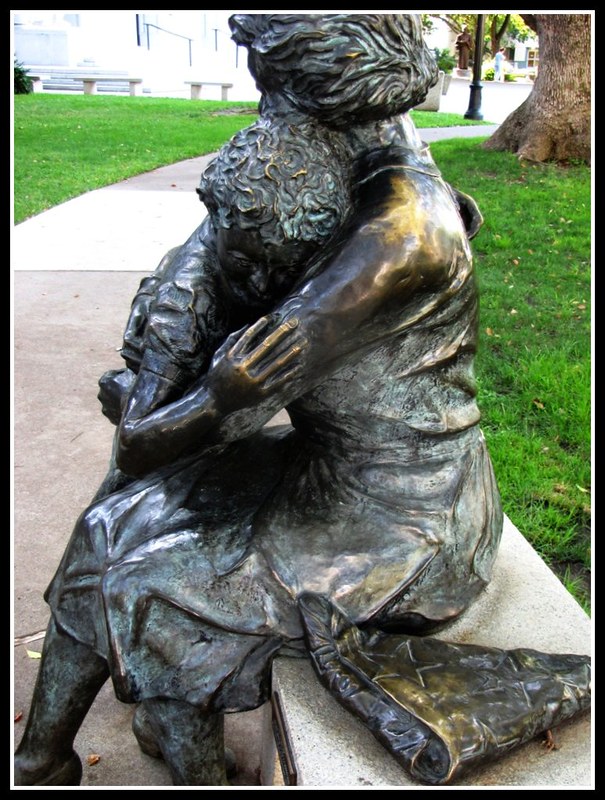
Photo courtesy of Moonjazz via Flickr Creative Commons –Some Rights Reserved
 Behind the Yellow Tape