Blog

Some late Vindication…

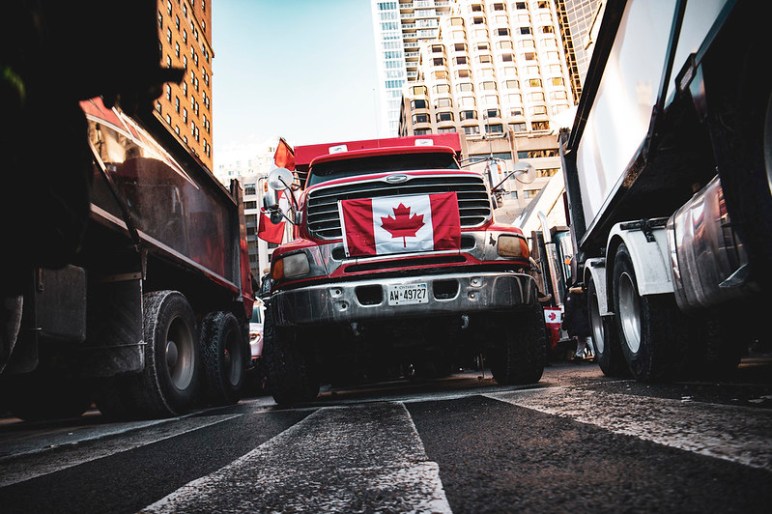
It took a 74 year old long-time lawyer and Justice, having spent a lifetime in security related matters, someone with two feet clearly planted on the ground, to finally call out the Liberals and their authoritarian ways. In the past week, Federal Court Justice Richard Mosley finally righted the wrongs of the imposition of the Emergencies Act. It was roughly two years ago that the “Act” was imposed on February 14, 2022, with grand fanfare and a concerned grimace by the Prime Minister. His forever kowtowing Ministers, and his NDP cohorts, profusely nodding in vigorous agreement standing behind him. This group of progressive liberals launched an Act designed, as it names implies, for a National Emergency, and when imposed, dictated full control over the lives of its citizens and specifically their ability to protest. There should be no mistake, this was a move that was in this writer’s opinion purely political, a move meant to show strength and determination, and aimed specifically at a group that had the audacity to question, a group that did not support the governing Liberals–in other words, they were the enemy. To put it in even simpler terms, the Liberals and their ilk did not like these protestors, these anti-vaccine rednecks, who came from afar. They were not of them.

Judge Mosley declared in his ruling that the imposition was “unreasonable and infringed on protestors charter rights”. That it did not “bear the hallmarks of reasonableness–justification, transparency and intelligibility”. He confirmed in essence what many thought –there was “no national emergency”. The faithful readers of this blog will remember a blog some months ago entitled “Sledgehammer and the Peanuts” which argued these same points; that the blaring of horns, the smell of diesel, bouncy castle encampments, and the disruption of the workday for bureaucrats in Ottawa (who were working from home through all this because of COVID) did not fit the definition, no matter how broadly interpreted, of this being a national emergency and that it certainly did not need such an all encompassing and arbitrary legal hammer.

The protest and the reaction to it did show that in Ottawa, if you put too many police departments in the kitchen, the broth will in fact be spoiled. The frustration and lack of coordination by the RCMP and the Ottawa Police Service, combined with the Doug Ford non-response, bordered on farce.

Of course this ruling was a kick in the pants for those fearless crime fighters Trudeau and Freeland; they know that this is not good in terms of going into the next election. Freeland, undeterred by a lack of factual support for her argument, went immediately running to the microphone, saying in her pedantic kindergarten teacher voice, “the safety of individual Canadians was under real threat…our national security was under real threat”. Quite an explanation.

So the Liberal government immediately have said they were going to launch an appeal. Usually the governing party of the day and any governing party would be more cautious in challenging the judiciary, normally they would “take it under advisement” or would be “studying” the case. It demonstrates the level of incomprehension amongst these Liberals as to someone having challenged their decision making, a court saying to them, no, you were wrong, and in fact you breached the Charter of Rights. How dare Judge Mosley describe the decision making at the time, as only based on “speculation” and that it had led to “unreasonable search and seizure”. The Liberals, of course have not released their legal grounds for that appeal, so I am suspecting that the Justice Department is now assigned to go find those grounds.

It is good to remember that there are four grounds to impose the Emergencies Act as clearly written: a) a public welfare emergency b) a public order emergency c) an international emergency, and finally d) a war emergency. CSIS in the Act is the defining authority in terms of what constitutes a security emergency. Clearly the latter two conditions, c) and d) didn’t apply, so the Liberals will have to continue to argue that it was a public welfare or public order emergency on a national scale. It was very interesting at the time, that CSIS Director David Vigneault in front of the Rouleau Commission, in a classic case of double-speak, said that even though the circumstances “didn’t meet the definition of a threat to national security”– nevertheless he supported the government decision. So in the end he supported what turns out to be a serious breach of rights of Canadian citizens, when he didn’t feel that there were grounds to do so. Time for Vigneault to step down.

So what will be the Liberal strategy be to fight this public relations nightmare. They are going to point to two arguments, and they have already started down this road.

First and foremost, they will point to the earlier mandated government appointed Commission that was chaired by Justice Paul Rouleau. The “appointed” Commission predictably found that it was “a failure in policing and federalism”, that it was in fact a “national emergency”. This was a bit of sleight of hand. The Commission mandate was to “examine and assess the basis for the Government’s decision to declare a public emergency…appropriateness and effectiveness of the measures selected by the government”. It was was not in fact a “legal” finding. The Federal Court with Judge Mosley on the other hand was to determine the legal “threshold” having to be met for the imposition of the Act.

Rouleau interestingly also said that it was a “difficult decision” he came to and that the “factual basis” for his finding “was not overwhelming”. I guess the lesson there for everyone is to never let the facts get in the way of a good argument.

The Commission was politically tainted, it appeared to have been set up purposely to ameliorate the decisions by the government of the day. The allowed testimony was not subject to being tested in terms of any extended cross-examination. The Minister of the day, now former Justice Minister David Lametti, during his testimony even refused to reveal the legal opinion which prompted their taking of the action, arguing lawyer client privilege. It was pointed out to him that he could have waved the privilege, but he would not. Mr. Lametti, who was so traumatized during the days of the convoy, that he moved back to Montreal, in a recent interview he now of course “disagrees totally” with Judge Mosely and is “confident” that they will win an appeal.

The other argument that the Liberals will bring is the example of what was going on at the time in Coutts Alberta and the roadblock there. It led to an investigation of an extremist group who wanted to attach themselves to the protest, and they were intercepted and charged by the RCMP. This Liberal argument is also disingenuous. The investigation and charges were brought about through the Criminal Code not the Emergencies Act. The police used the existing powers to bring that investigation to a close. So as Judge Mosley points out in his decision, the “existing laws were sufficient”, to deal with the Convoy protests, that the regular laws were open to the police and could handle the situation. The protestors that were charged, Tamara Litch and Chris Barber won’t necessarily be helped by this Federal Court decision, because they were also charged under the Criminal Code, not under the Emergencies Act.

Judge Mosley also added that “economic disruption cannot form the basis of extraordinary measures”. The Liberals during this “crisis” often argued that the Windsor border blockade was disrupting trade going into the United States. Ms. Freeland trotted that argument out again at her recent press conference, again arguing that Canada’s “economic security” was threatened. Maybe, she had not read the entire decision?

It is also interesting to read the various takes of those in the Liberal support groups, who were supportive of the government measures at the time. The CBC called it a “a divisive decision” and that illustrious leader of the NDP, Jagmeet Singh now says that he only “reluctantly supported the Act”. The Ottawa citizens who formed a civil class action against the protestors, which is seeking $290 million for their Wellington Street disruption, are still saying this ruling does not hurt them. Their lawyer Paul Champ argues that their case is about “honking, its about parking on the street, not for an afternoon of protest, but for weeks”. If one ever needed convincing that the citizens of Ottawa, and the bureaucrats who are governing this country live in a hermetically sealed environment, this is the case.

The Canadian Civil Liberties Association, a group which I rarely find agreement with, but brought the case forward to the Federal Court, said that the actions of government in this case, that the imposition of these types of laws “…are dangerous to democracy”. This decision, if looked at in a broader scope, should be seen as an examination of the very tenuous nature of democracy. The solitary Judge showed us how thin that thread really is, and for that we owe him a debt of gratitude.

Photo courtesy of Michael_Swan of Flickr Commons – some Rights Reserved.

A New Year…

Welcome to 2024, and I hope the it finds you healthy and happy and full of energy to face life’s winds, in this the year of the Dragon.

I do find that you reach a certain age in life where one spends more time looking backward, rather than looking forward, but let’s be honest, there is no such thing as the good old days. With the new year now in front of us, I feel that we need to spend some time on what is to come.

The easiest prediction is that the cost of living is going up, and house prices, despite the claims of some aren’t really coming down. The cost of policing is also on the rise and will be adding to that cost of living, usually in the form of property taxes. At some point those costs are going to be the subject of debate. In terms of groceries, never fear, Mr. Singh, our Rolex wearing NDP leader has teamed up with our expensively well tanned Prime Minister and is going to go after those bandits of the check out aisles– as soon as he and Trudeau have fixed all of our teeth.

Speaking of policing costs, in this part of the world, the transition to the Surrey Police Service will once again provide many headlines as Ms. Locke does her best imitation of Don Quixote and keeps tilting at the windmills of change in that fair city. Do you remember that this all started in November of 2021? She is clearly committed to the idiocy of her argument and is now spending $500,000 for a poll and advertising to retain the RCMP– despite the recently past legislation and having been removed from the police oversight board. The poll questions are clearly skewed to give her the results she wants, and says that 46% wish to retain the RCMP, 29% want to go forward. Of course, you will see that leaves 25% unaccounted. So they changed the questions around a bit, to show that the majority want the RCMP now. It would be funny if it wasn’t so sad and desperate. It has clearly become personal.

The other counsellors in the city are being surprisingly mum on the subject, and one has to wonder if they are sitting back waiting for the next civic election to get rid of the un-glued Locke and are just using this time to plot the coup. Then there is the RCMP leadership in Surrey who seem to at least be supporting the shenanigans of Ms. Locke –and the RCMP in Ottawa who must be still trying to find Surrey on the map and are doing their best ostrich impressions of hiding their heads, hoping I guess that it will all blow away.

So the headlines and the talk will continue, as the city petition likely heads to the Supreme Court with the city arguing in part, that the Province is limiting their “freedom of expression”. Millions of dollars are going out the door with the duplication of services, not to mention the lucrative consultants and lawyers hovering on the sidelines. No one is moving the needle, and clearly nobody is worried about the cost. The individual officers are trying to make the best of this ridiculous situation. On the positive side, again remember my resolution, the Surrey Police Service with all their present hiring needs, has found the time and put a priority on hiring Ragnar, an Occupational Stress Injury dog.

In terms of sad trends, in the past year, ten officers were killed in the line of duty, mainly in the Provinces of Quebec, Alberta, Ontario and BC. One can only hope that the new year will see an easing of this alarming trend. Police involved shootings are also up; 35 in 2022, 26 in 2021 and 15 in 2020. It would seem that unstable Canadians are turning to gun violence more frequently and it would seem that the police are using deadly force to counter it, also at an ever alarming rate. It is a bit of the old chicken and egg discussion. Is it a matter of demographics, or is there something more sinister afoot? There is definitely no evidence of it changing, nor is there any evidence of people trying to even address the situation.

The homeless situation, sorry, I mean the “un-housed” situation will continue, inextricably intertwined with mental health issues, and rampant drug use. You would like to feel that enough attention is being given to it to force some level of change, but there seems to be no political authority in sight willing to face the wrath of the liberal cognoscenti and the cries of injustice that bellow forth every time someone moves a tent. The Vancouver east side will continue to be a cesspool and an embarrassment in the eyes of the world, but freer drugs is still the current liberal cry, even though it has even proven to be statistically ineffective. So people will continue to die in this Province at the rate of 7 per day, and every month there will be a wringing of political hands asking, what can we do? That too is an easy prediction.

More body cams are being given to the police now. Some will argue that this is great thing, with Vancouver PD being the latest to proclaim their commitment. The advertisers and sellers of the technology, say it will create greater “transparency” and an “increased civility”. However, we all know it began with the cries of the woke and the vocal demand for greater police “accountability”. With little doubt it will probably cut down on frivolous internal complaints, but that comes at a very great price. Winnipeg got rid of their body cams in 2017 because of the $11 million dollars to keep the program running annually. In Baltimore, the city implemented body cams in 2016 at a cost of $11.3 million, four years later in 2020, the cost had grown to $35.1 million. One should be cautious, and realize that there is a lot of money being made by companies in selling these cameras and the enormous infrastructure around it, and also be mindful of the fact that the verdict on their effectiveness has yet to be measured. (I won’t mention the New York officer in Staten Island who had his camera burst into flames while he was wearing it, leading to the recall of thousands of them– because that would be being cynical.)

It seems that in the New Year, we will continue to immerse ourselves in being victims, part of a larger traumatized society, that is always in further need of comforting. Despite all the relative prosperity of this country. If in doubt, here is one of the more recent examples, brought to us by the CBC who search the world over in pursuit of the most needy victims. Two Canadian law professors at Dalhousie University in Halifax, feel that the requirement to verify ones Indigenous status, in other words if you claim to be Indigenous for the purpose of using it as a stepping stone in furthering your academic career, that you shouldn’t have to actually prove the substance of your heritage claim. They say that “the schools proposal, the process of verifying Indigenous heritage, risks re-traumatizing staff, students, and faculty subjected to it”.

In more international news, the National Counsel of Canadian Muslims is calling on the Federal government to remove “a cap on the number of Palestinians that can seek refuge with their Canadian extended family members from the violence in the Gaza strip.” Now, that may be a group that could legitimately argued that they have been traumatized, it would also prove a perfect escape route for any fleeing members of Hamas.

Like death and taxes, an equal inevitably for the coming year is that the size of the Public Service in Canada will continue to grow. In fact it is at a “record high”, and it will cost $151 billion this year, a 31% increase in the last seven years. Coincidentally, more of these dedicated public servants have also been “investigated” for wrong-doing, in fact more than at any time since 2015. Let’s chalk that up to COVID, which is also keeping those civil servants away from a full return to the office.

The dirty money will continue to roll through Canada this year. It is now estimated to be between $46.7 billion to $54 billion, which is the equivalent of the Nova Scotia gross domestic product. According to a recent book entitled “Dirty Money” which has been authored by a group of financial investigators and academics in Canada, their conclusion is that little has changed, and Canada remains a haven for criminals. It has grown so large that it is “corroding” Canada. The FINTRAC president on the other hand, says all good in their office, and reveals that they handed over 2,085 financial disclosures to the police authorities; who apparently have done very little with it, and the information has remained “unused or un-acted upon”.

HQ and O Division of the RCMP will continue in the new year to make headlines. We are still awaiting the sentencing of Cameron Ortis, the once favoured child of former Commissioner Paulson. That was until the Americans caught wind of Mr. Ortis and his international shenanigans, and then let the Canadians know that there was a devil in their midst. He was found guilty of four counts of breaching Canada’s secret laws, in a need to know trial, and his defence counsel was flabbergasted, and will of course launch an appeal. He is facing twenty years.

HQ will continue to prove their commitment to the war on terror, and maybe gain some favourable publicity along the way. They went on full attack mode and went after and arrested a Grade 10 terrorist. A minor, that can not be named, for planning an attack on the Jewish people “by communicating instructional material related to an explosive substance”. How else can one explain the dramatic arrest which was an operational production befitting Broadway, with a perplexed Mom and Dad standing on the sidelines saying, “I don’t know w hat happened”. Clearly, they weren’t paying attention to what their son was doing in his room, and clearly the Federal Mounties treated it as though they were going after the Baader-Meinhoff gang.

O Division also recently charged one of their own. RCMP Constable Yahsif Israel Mane Monter arrested for firearm violations, human trafficking and animal cruelty (in relation to his dog breeding business). He worked previously on Project O-HELIX which was a labour trafficking case out of Hamilton Ontario and apparently drew some ideas for his own business. What happened to the days when cops were just being charged with assault, or impaired. Oh, the good old days.

The RCMP is also starting the new year, proving to be a bit of a leaking ship, either that, or they have come up with a new police operational method which includes announcing when they are going to make “arrests”. The Globe and Mail has been told of an upcoming arrest in the BC murder case of Hardeep Nijar by “no less than three sources”; who also maintain that they have been watching “the suspects” for “months”, and that they will be “laying charges in the coming weeks”. Trudeau was the first leaker, now there are three others. One has to wonder whether the leaks are being orchestrated in order to “stimulate” the suspects into some sort of culpable action? If not, then the RCMP has a serious problem. Undoubtedly there will be further announcements or arrests as the Mounties continue to watch their suspects in the new year.

My personal resolution by the way, is to be less cynical, but I will admit, that like most of my previous resolutions, it is not likely to last. We and I do need to remember that we are not living in the Gaza, or in Eastern Ukraine. Nevertheless, there was a red flag on my Weather Network app this morning– a serious warning, because Vancouver is expecting 1 cm of snow, turning to rain. I began to feel my cynicism meter already flaring.

We need to remember in this new year, even though we are continually drawn into the realm of the disenchanted, that day in and day out, there are thousands of Mounties and coppers doing a good job, or at least trying to do a good job. The media and sometimes this blog spend very little time in exulting the good that is often done quietly and with little fanfare. It is usually less interesting, less salacious, and doesn’t grab ones attention, which is the unfortunate truth of it all.

So where does that leave us for the new year. Are we hopeful, timid, apprehensive, or eager in anticipation? One presumes that it depends on your viewpoint and your circumstance. My guess is that in the end, this year will be like most years, most of us will keep plugging away at what we do, head down, while trying to ignore the craziness around us.

Happy New Year!

Photo courtesy of Doug Anderson via Flickr Commons – Some Rights Reserved

Still Swinging to the Left

I will state from the outset, that when it comes to the political spectrum, I am boringly straight down the middle. I have never considered myself on the fringe of any pendulum, never wholly to the right, never wholly to the left. Many decades ago when I studied political philosophy and was exposed to the root beliefs of Marx and Mao, Hobbes and Rousseau, I walked away probably just as personally confused as when I started, at least in terms of having formed any hardened views. After gaining many years of wisdom, or at least I think that is what life experience gives you, I seem to have only settled on the fact that I still believe in some core values: personal responsibility and accountability, privacy, and the right to free speech. Does this mean that I may be now in the wrong country?

The current Liberal government in Ottawa and the Provincial NDP in British Columbia where I live, have for the last number of years driven us towards a system that would be defined as “socialism”. Socialism is defined as “a political and economic theory of social organization which advocates that the means of production, distribution and exchange should be owned or regulated by the community as a whole”. All of our politicians, for fear of being labelled, would deny following the principles of socialism, at least in any public forum, but it is clear that they are admirers of some imagined Scandinavian styled nirvana. As they see it everyone will be protected and regulated by some form of a big, comforting, arm of government.

The current crop of Canadian politicians are going to fix housing, immigration, education, and healthcare, and while they are at it, eliminate discrimination, systemic racism, and the overall general unfairness of life. They will advocate free “safer” drugs, but insist that a single individual cigarette be labelled with the dangers of smoking in case some of missed the messaging for the last 40 years. The policing world has been led for the last number of years by sycophants who have willingly absorbed this mindset of correctness to become true champions against the horrors of inequality and the lack of inclusiveness. In order to be sanctioned by the ruling liberal elites and moved up the operational chain, they have abandoned their principles and left traditional policing values behind. They are now fully tuned to the internal goals of eliminating the enemies of the new age liberalism and willing to echo the “truth” as dictated to them.

But get outside the Canadian environ and you will find that there are developing trends in other parts of the world which are beginning to question this left liberal bias, and are now considering that maybe it has gone all gone a little too far, that maybe its time to let the pendulum swing back into some middle more normal ground. This is possibly reflecting a realization that the ridiculous aspects of the “wokeness” fringe may be driving them to political extinction.

The Canadian left power constituency want no part of any reversal of the current trend. Even with the Conservatives trouncing them in the polls, the Liberal stalwarts are doubling down on their social activism. It somewhat makes sense, all their policies are aimed at the political and demographic future voter wheelhouse. Here are a couple of recent examples.

Marc Miller, the former portfolio holder for the Indigenous, now the Minister of Immigration, Refugees and Citizenship now wants to allow people who have been “illegally working and living in Canada”, and who have no documentation, that they be allowed to automatically become Canadian citizens. This would permit anywhere from 300,000 to 600,000 additional “new” Canadians. In addition, it is he and his department that will also will be overseeing the goal of 500,000 new immigrants this year (legal immigrants). Exhibiting extreme political arrogance, Mr. Miller tells his followers that he doesn’t want Canada to become “like the countries such as France, Hungary and Germany” who are reflecting the dangerous “hard far right” and are evil in their cutting back on immigration levels. He does not want to see this type of thinking “repeated in Canada”.

In the same vein, Seamus O’Regan, Justin’s long-time cohort, now sitting as the Minister of Labour, wants to make some changes to the Employment Equity Act which already sets out a “mandated diversity scheme”. The Act currently requires that the Federal government and its contractors set hiring targets for “women, visible minorities, Indigenous, and disabled”. Mr. O’Regan now plans to add LBGT and Black people to the list of those with special “hiring privileges”. The charge is being led by McGill University law professor Adelle Blackett, who is a “critical race scholar”. They steadfastly defend this policy by saying that this is not advocating a “quota system”. They try to legally get around the obvious conclusive cries of “reverse discrimination” by saying that it is fortunate because our courts, following the Charter of Rights and Freedoms, equate “equality” to mean “substantive equality”– a matter of “equal outcome” over “equal treatment.” Only academia and bureaucrats and Federal lawyers could draw this distinction.

Meanwhile, in the United States the legal stance on DEI programs is going the other direction. The big turning point was in June of this year when the Supreme Court of the United States rejected affirmative action at colleges and universities around the country, Harvard and North Carolina specifically, declaring that the “race conscious admissions programs” at those two schools were “unlawful and sharply curtailing a policy that had long been a pillar of higher education.” The Chief Justice wrote that “both programs…unavoidably employ race in a negative manner, involve racial stereotyping, and lack meaningful end points”.

This U.S. Supreme Court ruling is now rippling downwards and resulting in the DEI programs throughout the U.S. now being put to the test. Several groups are now instituting civil action against seven different law firms for their DEI hiring practises. Why law firms? Well, they are the most risk adverse of the businesses in the U.S. If they are found to be in counter step to the current U.S. Supreme Court ruling, it is bad for business, and in turn they make their living advising the Fortune 500 companies. The plaintiff groups want to “shatter diversity fellowship programs” in these firms, which they maintain “exclude qualified white and asian students”. They are also including in those claims not just “fellowships, but hiring and recruiting retreats”.

Three of the law firms have already reversed their positions rather than duke it out in court. The plaintiffs have also demonstrated that the efforts of the last number of years with these programs has not resulted in greater black and minority representation, it still lags behind. They are also civilly pursuing particular firms where executive compensation is tied to diversity goals. So far, NASCAR, MLB, Nordstrom, and Activision Blizzard have all come under scrutiny because of their “workplace affinity groups and grants to black owned businesses”. Microsoft is now “re-examining their DEI policies” and the “explicit racist quotas and preferences in hiring, recruiting, retention, and promotion and advancement”.

Now, to be sure, we are not the United States. I am coming around to the belief that Canadians are maybe wanting a form of socialism, tax the rich, give to the poor, tell the grocery stores what they can charge, disallow AirBnb, regulate what you can say, what you can see. Maybe Canadians believe the allegations of systemic discrimination and racism. Maybe we all believe, that colour of skin or one’s gender is a greater determinant of job worthiness, and that “representation” is a better goal than academic or experience based qualifications. The strange part is that so far these enlightened programs don’t seem to help, but we Canadians are steadfast, we stay the course, disregarding the hard evidence. I guess it makes us feel better about ourselves.

Personally, I am hoping that we also begin a swing back to the middle, where rational thought and common sense seems to reside– and I am also hoping for a lot of snow in Ottawa this year– and Justin feels like going for a long walk.

Merry Xmas to you all and thanks again for reading. We will see you in the New Year.

Photo courtesy of June Marie via Flickr Commons – Some Rights reserved.

A Submission from – Ian Parsons

This flows from an earlier blog where I offered this site as a potential forum for those that wish to write about any topic near and dear to them and most importantly, to open up the dialogue. The following is from Ian Parsons, a now retired former Inspector, with a long family history with the Mounties, who published a book in 2013 “No Easy Ride” about his experiences in the RCMP. The issues within the RCMP and its lack of leadership and direction has been at a sharpened point for at least a couple of decades, and therein lies the frustration. Ian Parsons book is linked here, but this submission is in essence part of the last chapter of his book. In it he argues for the RCMP to become a Federal entity, and to move away from contract policing. Not everyone will agree and one could easily argue the other side, but this viewpoint is clearly gaining favour inside and outside the RCMP.

I will also be posting a blog in the next couple of days, but in the meantime, my extended thanks to Ian.

             HEAD SMASHED IN BUFFALO JUMP

During the summer of 2008 I visited “Head Smashed In Buffalo Jump” located near Fort Macleod in southwest Alberta, a museum/monument dedicated to Canada’s first peoples and a way of life that has long since disappeared. In spite of the numbers of tourists who frequent the location, it is a spiritual place that every Canadian should see at least once.

As one peered at the cliff where millions of buffalo met their deaths after being herded, stampeded and driven, it is perhaps easier to understand how such a massive animal who dominated the prairies for centuries could have been reduced to a smattering of herds located in protected areas of western Canada today. The buffalo might even have survived had the influx of European society, white buffalo hunters and the incursion of pioneers hungry for large tracts of farmland not led to their demise.

The Indigenous tactic of approaching a large gathering of buffalo by foot and herding them toward the edge of the cliff, stampeding them at the last moment so the momentum of the herd took the animals over to their deaths was not a conservation maneuver, but a very efficient one. The women and children waited at the bottom to butcher prime animals for their choice parts.

As I mused, another icon of the Canadian west came to mind: the Royal Canadian Mounted Police. This worthy and durable organization has been a fundamental building block of my personal being. My father joined the Force in 1930 and spent 35 years policing all parts of Canada. I followed his footsteps in 1961 and served 33 years serving from Newfoundland to British Columbia,affording me a “macro” view of the RCMP in Canada My son is embarking on his RCMP career, having recently completed his recruit training in Regina. One would think my son’s future should be assured, as the demise of the RCMP should be about as likely as the disappearance of the plains Buffalo.

However the analogy between the Buffalo and the RCMP seems rather ominous when one observes the Force as a spectator. Once the buffalo were pointed in the direction of the cliff, the run was commenced. The momentum was so great that literally nothing would prevent their rush over the precipice. It occurred to me that a similar fate may be in store for the RCMP as an entity. They seem to be heading for the “cliff”. Momentum is building. They soon may be “over the edge”. This is particularly ironic, as the plains Buffalo is one of the symbols of the RCMP.

How can this happen? What is precipitating this potential tragedy? Essentially, the increased population and complexity of Canada has overwhelmed our frontier police force. Originally, the Force accepted and discharged all facets of policing in the Canadian west. No matter what the request from Ottawa, this versatile body of men, now men and women, accepted the task and usually carried it out successfully. The philosophy of the Mounted Police has always been “Never say No!”. Even if the task overburdened the troops, the job was undertaken without question and every effort was expended to meet challenges.

Such was the case when the RCMP expanded municipal responsibilities from small prairie communities to large cities after their takeover of provincial policing in BC. In the early 1950’s the Mounted Police began policing the municipality of Burnaby, British Columbia. This was the forerunner for the contracting of several other very large municipal details in the lower mainland of British Columbia. The logistics of supplying human resources for these operations were extremely taxing, and sapped the Force in many other areas. The necessary tactic of “Robbing Peter to Pay Paul” became a common policy. Many operations ran shorthanded in an effort to “Feed the Monster” consuming human resources in southern British Columbia. Administrators of the RCMP were loathe to lobby governments in power to increase resources, and attempted to deal with inadequacies internally. Amazingly, until the late seventies, payment of overtime was not a factor. Putting in 300 hour months was not unusual for field personnel during this era. RCMP members worked any required additional hours with no compensation. Often they would toil alongside municipal police who were being compensated for overtime.

As Canada’s human tapestry began the transition to multi cultural, exacerbated by population growth, more cracks and fissures began to appear. The basic para-military infrastructure did not change, and the RCMP continued to be responsible for all levels of policing from coast to coast. Provincial contracts were demanding more and more resources, as were growing municipal contracts. Our frontier police force was attempting to be all things to all people in what was becoming a very diversified country.

The sudden and welcome addition of women in policing which compelled maternity and paternity leaves,and the new policy of having to pay overtime for additional hours worked began to take its toll. An overdue bill which had gone long unpaid in the form of hours and hours expended by an exhausted body of people was looming large. Now Detachment and unit commanders were required to dole out their resources according to fiscal budgets. Work began to be priorized. More than ever before, some investigations took on more importance than others. It became evident that, in many cases, there were insufficient person/years to do the job.

During the 1960’s, trying to balance all of these mandates coupled with being responsible for Canada’s national security caused serious shortcomings. The McDonald Commission was struck. Its mandate was to examine how the RCMP was functioning at the national security level. The resulting recommendations saw the removal of Security Services from the purview of the RCMP. At no time did the Force relinquish this responsibility voluntarily. It had to be arbitrarily removed.

Today, even with the recent Brown study that recommended changes internally, there are few executives at the upper echelon of the RCMP, or any politicians who have focused on the essential problem; multijurisdictional saturation. Currently, lofty policy statements have been forthcoming from RCMP management that speaks to elevating professionalism, improving the management environment, and tasking individual members to “meet the challenge”. Daily, RCMP detachments are operating under strength. Morale is not improving, and members are feeling more and more under siege, both inwardly and outwardly.

Sadly, the Force seems headed for the “cliff”. One is also reminded of the story of the Emperor. As he rode through the streets naked, not a single member of the kingdom would comment. The problem of “Mandate Overload” is so massive and should be so obvious, yet not a single warning has been voiced. THE TIME HAS COME TO ADMIT THAT THE RCMP CAN NO LONGER ATTEMPT BE ALL THINGS TO ALL PEOPLE. The Force has reached the point that it has so many diversified and complex tasks at so many levels; the appearance of success is becoming more and more elusive. Immediate action must be taken to bring the RCMP into the 21st century. The RCMP must be extricated from Municipal Policing and Provincial Policing contracts. Provincial contracts are up for renewal in 2012. The Mounted Police must make a transition to an exclusively “federal focus” by that time. If the RCMP brings its considerable expertise to bear primarily on federal responsibilities, ASSISTING provincial and municipal police Forces on serious and interprovincial crime when called upon to do so, there may be time to prevent this noble “herd” from crashing over the cliff. Rather than being distracted by a myriad of assorted demands, the Force could target national issues such as biker gangs, terrorism, corporate and economic crime along with all the other criminal maladies at the national level.

It will be a psychological debilitating national trauma if the “RCMP Herd” is not turned around and saved from destruction. The RCMP is a Canadian icon, etched indelibly into the Canadian psyche. Canada’s leaders have a responsibility to ensure this national treasure is preserved. The Royal Canadian Mounted Police is still admired worldwide. Canada will be a smaller country without them.

Turning the herd will not be an easy task. There will be resistance at all levels…..from the municipalities, the provinces, and from within. The logistics are difficult and complex. Resistance to change will be rampant. It will take great political courage and dynamic leadership. The alternative? The loss of a Canadian Icon.

If current leaders, both inside and outside the Force do not display courage and stamina and move on these initiatives, the Royal Canadian Mounted Police will continue to be deluged with a complexity of problems from the multi levels of jurisdiction it is now futilely wrestling with. The disasters will continue. The RCMP will sadly be swallowed up by a barrage of criticism and find itself broken and dying at the bottom of the cliff.

Photo courtesy of Flickr Commons – Dry Island Buffalo Jump – Some Rights Reserved

Ian can be reached at: liparsonsposse@shaw.ca

Money, Money, Money… Money everywhere

I will admit from the beginning that there is a jealous undercurrent to this story, although I am sure it is misplaced. Jealous of the current cop world is normally not where I usually find myself. I am talking about the pot of gold which can be found at the end of the Vancouver police departments rainbow. And more monies in a general sense are now being thrown into the policing circle of life than has been seen for quite some time.

The rationale varies and the rationale is wholly dependent on what side of the equation you find yourself. For the Vancouver Police Department, all is good, while on the flip side, the taxpayers of Vancouver might not be quite as charmed. The search for greater monies in the form of police salaries can sometimes cause those on the outside looking in say that those numbers are becoming excessive; especially in terms of city budgetary needs and fiscal constraints. Some would even categorize it as greedy, that there is some over-reach going on, and the justifications for it are much more tenuous. It should be noted that Plato felt that greed was a part of human nature; while Darwin in his theory of evolution felt that greed was natural and good. However despite their distinguished and historic reputations, it is unlikely that their arguments would sway many in 2023– especially those living in Vancouver.

You may not remember those days when police salaries were only in the double digits. You may forget when police salaries were never headlines, mainly because they were mid-level, average Canadian salaries. The salaries seemed in the realm of normal expectations. The average family income in 1976 as an example was $19,000 per year. My first salary in the Mounties was $13,500 in 1978. Using basic math, a cop in 1978 was therefore making about 71% of the average “family” income.

Fast forward to today and the recent headlines in the Vancouver news. The Vancouver Police Department is about to ratify a 2 year agreement which will entitle a 1st class constable (someone with at least 5 years service) a salary of $122,000. ($63.41 per hr) The average family income in Canada in 2023 is $75,452 ($39.00 per hour). Therefore, a cop working today in Vancouver will be making 161% of that average family income. In terms of other “first responders” a firefighter in Canada on average makes $83,138, 110% of the average family income. A nurse in British Columbia is $91,732, 121% of average family income. These first responder salaries it would be argued would be in line when compared with other “first responders”. When the comparison is with anyone else in public view, they are indeed eyebrow raising numbers.

In case you think an RCMP officer is now under paid, lets not forget that they too just received a large pay and retroactive increase. An RCMP officer after only three years on the job is now making a salary of $106,576, roughly 141% of that average family income.

I recently received a copy of the wage rates for the new Surrey Police Service (you know those ones battling Brenda Locke). A first class constable salary is $121,989, only slightly less than that of the new VPD raise, and if you rise to the level of Inspector with the Surrey Police Service you will be at $207,381.00. This would put one well ensconced in the top 10% of Canadian wage earners which requires a salary of at least $174,000. The median doctors salary in British Columbia is $178,810 per year.

So now you get the picture, it is in effect raining gold in the world of “first responders”. And we are not even mentioning the often gracious benefits that are also attached to some of these jobs.

The rationale provided by police spokespersons normally is two fold, that it is a thankless and dangerous job, and there is a need to sweeten the pot to attract people to the job, especially in this age of heightened public scrutiny. Ralph Kaisers of the Vancouver Police Union said that police “are finally being shown the value and support from city council…they need to be properly compensated for the work they do”. He predictably cites the “dangers of the job” and the need “to retain members” as the true drivers of this pay raise.

Let us deal with the first proposition.

There is a danger to the job, that can not be disputed. That is the primary factor when police salaries are being negotiated and has been for decades. But has that danger increased? At first blush that seems to be true. New data coming from the University of Ottawa shows that the recent 10 deaths of police officers in 8 months has not been seen since the 1960’s. But as the authors note, there are twice as many police officers working now, compared to then, therefore the overall death rate is actually lower than in the past decades. The data also shows that the leading cause of police deaths, contrary to the movies and the television, are car accidents. Justin Piche the University of Ottawa professor balks at the current claims of police officers that it is more dangerous now then in the past, and says that “…it doesn’t mean they (the Police) get to make any claims they want”. The deadliest years were 1962 and 1968 when 16 officers died in those years. Since 1962 on average there have been six and seven deaths per year while on duty. All those are tragic, and this appears insensitive when you look at cold hard figures like an actuary, but we can not dispute the numbers. From a statistical perspective, there are 70,566 police officers in Canada currently, which means as a percentage that 0.009 % of police officers are killed in the line of duty.

In Canada, union and non-union construction workers are fourth in workplace fatalities in Canada and average 20.2 deaths per 100,000 population. The top three are fishing and trapping; mining quarrying and oil wells, and logging and forestry. Policing is not even in the top 10, not even above tenth place trash and recycling collectors. Nor of course are fire personnel or ambulance attendants or nurses.

A corollary to the danger question maybe are the police busier now than then? The violent crime rate in this country according to Statistics Canada dropped dramatically from the year 2000 to 2014– then there was an upswing, from 2014 to 2021 and where it stands now is about 1/2 of what it was in 2000. Is it on the upswing, yes, is it higher than in the year 2000, no. During this time period the number of police officers in Canada have gone from 55,954 in 2000 to 70,556 in 2022, giving them a 26% increase in manpower.

It is a thankless job, but that has also been true for many many years, and in previous years there was never a need to attract people to the job so other things must have changed.

Will it help to retain members? Maybe, but that is difficult to measure. Will it attract the “cream of the crop” as described by Kash Heed, the go to analyst for CKNW and Global News? Possibly, but what makes a police officer the “cream of the crop”? There are no other jobs like it, so the prior police experience factor is the only one at play here. My guess is that you will get more officers trying to transfer from the lesser paying entities to the VPD, but whether they are the best of the best is highly debatable and definitely not a sure thing.

So what are the legitimate arguments for a pay raise for policing and in particular the VPD? It would seem that the only logical argument has been the increase in inflation. The last two years have seen 6-8% inflation rates; the VPD raise amounts to 4.5 per cent per year, for a total of 9%. Mr. Kaiser needlessly points out that “our members feel it when they go to the gas station or to the grocery store”. Hopefully he is not implying that other parts of our society don’t have that same feeling.

As an aside, of course, not everyone in society gets an inflation levelling pay raise in Canada, so the police unions with their greater societal levers can lead the way in any clawing back of earnings that have been lost to inflation. Statistically, inflation has a greater negative impact on lower income families– so the average family income which was mentioned previously, is going to be proportionally hurt by inflation much more than the higher income levels. Milton Friedman, the Nobel prize winning economist would say that inflation is ” a result of too much money…a more rapid increase in the quantity of money than an output”.

Of course the biggest immediate problem with this raise is that for the people of Vancouver it will add $30 million to the annual cost of policing in the City. Which in turn means a 2.5% increase in property taxes to cover the extra policing costs. The VPD’s 2024 budget is a net $415.9 million, $6million more than the finance team was “comfortable” with; and $42 million more than the department began operating with in 2023. The VPD is also expecting to run a $3.6 million deficit this year (They also had to throw in an extra $3.3 million for the Vancouver Fire Department). As an aside you should remember that the VPD union endorsed the current Mayor Ken Sim in his election in 2022. For his part, Sim recently put in place a “budget task force” to look into areas where savings could be found–the VPD budget is not part of that review. It is estimated that by 2028 the policing budget will be approaching $500 million.

Chief Palmer in speaking about the budget is sees it as somewhat as a fait accompli; he says “so if you go back to 1990 and you look at the trajectory its always been 20-21% (increase) which is what it is today, and what it will be in 2024, and I am sure in 2028”. In others words, there is nothing you can do about it. He says, “It costs a lot to keep Vancouver safe. Thats what it costs and people get great value for their money”.

Mr. Palmers salary by the way in 2022 was $493,932 with an additional $48,282 in allowable expenses. He is overseeing 1400 police officers. In terms of responsibility, the Prime Minister of Canada annual salary is $357,800. He is overseeing the Federal public service which now has 335,957 employees, and revenues of $457 billion. Clearly Mr. Palmer is doing very well personally and is a long way from the average worker.

The million dollar question (in keeping with the money theme), is whether or not there any saturation point? Is there some point where people begin to ask or question the ever constant growth in policing costs, which will in turn at some point force us to talk about layoffs rather than hiring? Some tough questions, despite Mr. Palmers nonchalance on the issue, are clearly just around the corner.

Photo courtesy of Bruce.Guenter via Flickr Commons – Some Rights Reserved

A Murder Myth

In this age of crime podcasts and burgeoning internet sleuths, I think there may be room for a podcast or blog, whose topical subject would be all the “false” or “fictitious” information around murder cases; we could call it “Jumping to Conclusions” or “Spreading the Lie”. I was inspired to this notion this morning when I somewhat absently listened to the Simi Sara show on CKNW. Simi is the celebrated morning host for the station; who is always willing, armed with little or no knowledge I might add, to offer up solutions to fix all the wrongs in our current society. (Spoiler Alert: the solution is always more resources or more monies) She is a quick worker and can usually figure out a problem and find a solution in five minutes or less. Her investigative or journalistic “technique” is to mirror a viewpoint of her guest, a guest who always comes with an agenda, and she never feels the need to challenge or show any curiosity, she is there to agree and reinforce, on the one condition of course that it fits within the progressive acceptable dialogues.

Today’s topic on CKNW was the Highway of Tears; which was in turn entirely prompted by the finding of the body of Chesley Anita Quaw (Heron) age 29, who went missing on October 11, 2023. Chesley was an indigenous young woman who went missing from the Saik’uz First Nation, a Nation located about 85 kms west of Prince George. But the crux of the CKNW story was founded on the fact that because of where the Nation is situated, next to Highway 16, the “Highway of Tears”. And this fact alone is all the invitation that is needed for CKNW to draw a conclusion and a headline, and conflate the Indigenous narrative.

So Ms. Sara and her fellow journalists and editors at CKNW, despite having no information about the actual circumstances surrounding the death of Ms. Quaw, inferred that she must have been murdered, and that she is another victim of the “Missing and Murdered”, those that have ended along the Highway of Tears. The Highway of Tears story is an over-extended narrative which almost all news reporters have been feasting on for several years now. The Indigenous spokespeople in turn continue to fuel the narrative, after all it works in their best interests in terms of demanding a re-focusing to their plight and corollary to the need for more services and funding. So on this day, CKNW needed a guest who would talk about the “Highway of Tears” and the death of Ms. Quaw so it came about on this day that journalism was taken down another notch by Ms. Sara and her illustrious team of no fact-checking journalists. The 10 minute story was completely irresponsible, and not based on a single fact. It was shameful, and should offend anyone who relies on the news to at least bear some shred of truth and authenticity.

This was not inadvertent. Simi Sara started the show with the disclaimer that there “are no details yet”. This is an age where corroboration or confirmation is fleeting at best, although still taught in the journalism schools, it is no longer being exercised in the field. So having no details was not a deterrent to going ahead with the story, their story, one based on assumption and conjecture. They were also more than willing to comment and form a conclusion– the goal of which clearly was to resurrect the Highway of Tears narrative for dramatic affect. Her selected guest was Morgan Asoyuf, an “artist” from the Ts’msyen Eagle Clan, who was more than willing to reinforce and illustrate the CKNW investigative assumption. No need to bring on someone with at least some minimal credentials, just someone willing to be part of the act, someone that would not deterred by the lack of fact.

The show started with Simi pondering and talking about her general exasperation on having to deal with another story involving this infamous highway: “Why we are still talking about deaths on the “Highway of Tears?” She followed that up with the burning and completely inane question to her guest “Has it got any better?” (meaning one can only presume the murders on the highway) No, was the sought after answer and the guest quickly complied, and then warming to the narrative, went one step further, and added that in fact it had “gotten a lot worse”.

Simi mimicked the artist’s concern and asked her to of course elaborate. So Ms. Asoyuf went on to describe the “multiple incidents of potentially violent situations” she had encountered over these many years in driving on the highway, and then weirdly laughed when telling of the evidence that she had many times encountered “men yelling at me”. Simi was clearly dismayed and asked her how she copes with this potential violence and how she manages to fend off this always lurking danger– “how do you protect yourself?” Ms. Asoyuf then described how when she drives this remote highway, she lets friends or relatives know where she is going, and what time she is leaving. “Thats sad” replies Simi.

This moronic interview continued, with Simi asking of course as to how the community is “coping” with the finding of the body. Ms. Asoyuf is clearly now emboldened to the topic offers up her insights in these matters. She prefaces her remarks by saying that of course “as native people we are always hoping to find them alive”. She then further explains that because “these are our traditional territories” that these deaths are the “direct result of colonization” and the “targeting of indigenous women…so much racism…they think that they can kill us and get away with it”.

The interview show thankfully ends with Simi thanking the guest for her time and then attempts to sum up the devastating story we had just heard by saying, that clearly there “is no adequate safety measures” in that part of the world, and asks the audience to try and imagine a world her guest had described– one in which a woman “has to take preventative measures”. The predictable solution, by the way, was a need for “more resources” and “more funding” for “murder investigation”.

Before we go any further, here are a couple of basic facts about this particular case. Chesley Quaw was found in a wooded area “on reserve land.” Currently, there is no tie-in to the highway. Secondly, the police say that this is a Coroners case, which implies that the cause of death was not readily apparent, and the cause of death may not even be homicide. Cause of death had yet to be determined, so everything said in the media and bandied about on the social networks was nothing more than pure speculation.

This over-sized myth of murdered and missing grows and grows, by repetition, not by evidence. It is time for some context. Here are some numbers recently provided by Statistics Canada; and let us also agree that bald numbers for the most part don’t lie. They can be fudged and twisted, but they don’t lie.

These statistics are for the years 1980-2014, and during this time, there were 6,849 female homicide cases reported in Canada. Of that number 16% were indigenous women, clearly a number in greater representation to their 5% or less of the entire Canadian population. Since 1991, the number of murdered non-indigenous women has declined, while the rate of murdered Indigenous women has remained stable. Therefore, the rate of homicide for Indigenous women was almost six times higher than non-indigenous women– and in 2014 they accounted for 21% of female homicide victims. Clearly and undoubtedly there is a problem in the Indigenous community, clearly Indigenous women are getting murdered at an alarming rate. That is not a question.

The question is– is this due to colonization? Or Racism? According to the Indigenous of course it is, everything ties to colonialism. But the true answer is much more nuanced.

Between 1980 and 2014, half (53%) of the Indigenous homicides were committed by a family member, another 26% by an acquaintance– and a mere 8% by strangers. Therefore 79 % of Indigenous women were killed by a family member or a friend and acquaintance. Another interesting fact is that only 66% of those indigenous women were killed in a residence, in comparison to non-indigenous women, who were killed in a residence 88% of the time. So 17% of those indigenous women killed were killed on a street, road, or a highway, which is probably a reflection of a dangerous led lifestyle by the victim.

So the story and headline should be that Indigenous women in the vast majority of cases are being killed by their own friends and family. If Ms. Quaw is in fact a victim of homicide, the first place to look as an investigator, is to her family and friends. Not to a passing motorist on Highway 16. That is just the sad fact.

So Ms. Sara– lets do a story on the problems that infect and flourish on the reserves or Indigenous nations of this country. Take your pick on the topic. The poverty, the drug abuse, the alcoholism, the rampant birth rates, the dysfunctional families, or the ongoing in-house violence. Is the poverty the result of colonization, or is it the fact that many reserves are in un-sustainable economic regions, allowing poverty and needed government support to become a way of life? If you find poverty and drug and alcohol abuse you will undoubtedly find violence. Is ill-education the result of historic abuse or a much broader cultural and social disconnect with the 21st century? The residential schools after all were set up, however badly they performed, to address a culture and a society which was in the opinion of the politicians at the time, being left behind. Now, with guilt thrust upon us, billions upon billions of dollars are now being expended for the same reasons towards education, health and economic start ups. Is anything working? Do we need to re-examine the current concept that more money will insure success? Most importantly is there any level of personal and social responsibility in play here? Is it possible to have some introspection, or is it all the fault of the colonizers? It is easy to blame historic treatment, but surely even this argument’s validity diminishes over time.

Ms. Sara wants you to believe that Ms Quaw died because of a highway driving serial killer– there is a much greater chance she was killed or died unnaturally, because of how she lived, where she lived, and the people she was surrounded and raised by. It is time to deal with those facts and to address the underlying and dominant issues of violence and death in Indigenous society. I was offended by this story by CKNW, both as a former homicide investigator, but just as importantly as a human being wanting to find answers.

It is undeniable that we are currently in a place and time where no current government, at any level, has the courage to answer the relevant questions because of the risk of being branded as a neanderthal racist. There is no corporate entity who does not facilitate or play to the “enlightened” vocal few, there is no university willing to question rather than comply. Until there is, solutions seem unlikely, as it seems that all hard truths are only uncovered by open, fair, and honest and questioning discourse. The Report in 2019 from the National Inquiry into Missing and Murdered Indigenous Women and Girls said that the “victims” was the result of a “Canadian genocide”, that the violence occurred through “state actions and inactions rooted in colonialism and colonial ideologies”. As the years tick by, it’s becoming a weaker and weaker argument.

Maybe its time to look a little deeper, maybe its time for the Indigenous leadership to look a little inward. Maybe the answer is not just “economic reconciliation” but a reconciling and an accurate accounting of the human tragedy inside the Indigenous nations of which they are a part.

Photo courtesy of Flickr Commons via Adam Jones – Some Rights Reserved

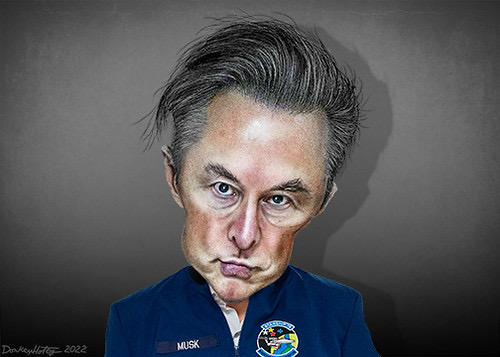
If Elon was the Commissioner

During a few minutes of contemplation, while staring at those fluffy clouds in the blue sky above, my mind wanders to the topic of how the RCMP can pull out of this current management death spiral. You must understand that I have come to truly believe that if there is not significant and fundamental change in this once proud organization, that it may be doomed to become a shadow of what they once were, a poor cousin to other policing agencies. Now, before we go further, for those that will criticize wasting ones time with pondering the future, Professor Ethan Kross of the University of Michigan believes that allowing your mind to wander is “valuable”– as it “helps us simulate and plan for the future and learn from out past, and it facilitates creative problem-solving”. So with the Professor’s blessing I recently had this thought.

What if Elon Musk was made the next Commissioner of the RCMP?

This thought admittedly was in turn prompted by having just finished the excellent biography by Walter Isaakson entitled, fittingly, “Elon Musk”. I also am just finishing Michael Lewis‘ book, “Going Infinite” which details the rise and fall of Sam Bankman-Fried. Both of these book subjects are clearly of genius level IQ’s, and come from the world of math and engineering. Bank-man Fried is a riddle and problem solver and relates everything to a math and the ability to solve anything by the use of numbers. He of course is likely going to jail, so I thought he may not the best candidate for the job of RCMP Commissioner. Elon is also a genius in the engineering and production fields, but he may end up living on Mars. However, he is probably the best candidate for the job of Commissioner, even if he is to be only semi-available and would need to “work-share”. One would also have to allow for a 30 minute delay in voice transmissions. But, let’s put that aside.

Many of you will recoil at the thought of Elon in red serge, and let’s be clear, Elon Musk is admittedly a human relations nightmare. So I understand that if you are someone who favours the current climate of employees allowed to dictate to management, working from home, or having designated psychological safe spots inside the office (as was in the Twitter offices) you should stop reading now. Elon is not your man. This will include most people of a liberal progressive nature, who spend inordinate amounts of time talking of diversity and inclusion. I get it, you will openly despise Elon Musk, so it would also be safe to assume that those currently at the higher echelons of the RCMP, would not be in his camp and will not be the first to nominate Elon for Commissioner. It would sort of be a Bill Elliott situation.

This lack of support for Elon by the extreme woke is interesting, because Musk has stated his major agenda items clearly, and all come from the progressive side of the fence. They are to reduce the carbon footprint– and he created Tesla which makes more electric cars than all the other companies combined; to make possible inter-planetary travel and the need for scientific advancements in space, and then he created Space X, which has now replaced NASA as the provider of space travel; and he is concerned about unrestricted development of artificial intelligence; and has developed OpenAI, and then Neuralink. There should be no argument that his momentous accomplishments from building rockets to robots, will not in my opinion be duplicated in my or your lifetime.

How did he do it, how is it possible for a person who grew up in South Africa, bullied, abused physically and mentally, how is it possible he has had these accomplishments, while albeit at the same time becoming such a polarizing figure? It wasn’t easy, it was mind bending hard work, but he did have some basic formulas to his success. So my wandering mind wants to know– can we apply his formulas to the current policing Mountie dilemma?

Part of the “magic” of Elon is his ability to drill down, to determine and decide on the goal of the agency or company. So imagine if you will, that as he sits in the Commissioner’s boardroom surrounded by the multiple levels of top brass– the first question he would ask is what is the role of the RCMP in Canada? Not the secondary goals, but the primary goal. No one by the way, should dare answer “to keep Canadians and their interests safe and secure” because you would be un-ceremoniously escorted from the room.

He would with little doubt marvel at the massive all inclusive mandate, whether it be members on the musical ride, members involved in peace keeping, or cybercrime, rural policing and Federal policing. He would also be astounded that the officers doing public relations could be placed in or be promoted to a staffing or to drug position, with little or no expertise in any of the areas. He is big on getting the very best experts.

Getting back to the central question though, my best guess would be that he would determine that the central role of the RCMP is to “investigate”. Once that was agreed, he would then drill down further. He would say that if you are not tied to an investigation, or have participated in an investigation, or are running an investigation, then you are not in fact needed. And he would make each and everyone prove and point to an investigation that they were involved in, explain their role, and what that role entailed in terms of expertise and experience. If you could not, you would also be released.

He would explore each and every layer of an investigation and the procedures to determine who made a single decision in the course of the investigation, and then determine what was the result of those decisions. One would need to justify your method, your process, and your results. You could equally be assured if the results weren’t positive, you too would likely be expendable.

Needless to say the administrative and operational pyramid would be completely flattened. If you were supervising another supervisor, or just one of the many layers of authority up and down the organization– you also would be gone. Musk practised what he preached in all of these businesses and would often make massive cuts to personnel. Those that were not central to the mandate would be terminated, which in this puffed up 21st century meant that you would have to fire a lot of people. Later on, he reasoned if you didn’t need to hire back 25% of those that you fired, than the original cuts clearly had not been deep enough. It was ruthless and unfeeling. He cut down 1500 software engineers at Twitter to 150– if you hadn’t recently written any code you were gone. (Just as an aside, Twitter or X is still running despite all the dire predictions.)

Elon has no emotional sensors and no ability to show empathy or read body language. He is an uncaring, results oriented, and highly driven individual– but always leading by example, sleeping on assembly line floors at Tesla, and outworking everyone in his path. He had an intimate engineering knowledge of each process, and of each layer of that process. By speaking to the ones on the ground floor, the ones who actually built the car or the rocket ship, he was able to cut costs, and drastically cut timelines, and would in almost every instance reach a mission accomplished moment. He would take on complete personal and financial risk, while at the same time be oblivious to criticism– some of which was warranted, and some which was not.

So how many in the RCMP would survive this onslaught of accountability? Not many at 73 Leikin Drive would be a first guess. Commissioner Duheme who recently toured some Mountie detachments and received plaudits for reaching out to the working folk, is clearly still of the Ottawa/Lucki/Liberal mindset. He illustrated this when he recently put out the “Big Five” goals for modernizing the RCMP: 1 )Ensure a safe and equitable workplace 2) Address systemic racism 3) Advance reconciliation with the Indigenous Peoples 4) Support Modern Policing and 5) Improve accountability, transparency and conduct.

I think I can say with some certainty that Mr. Musk would deep six all but number four. All members involved in or working on the other four unmeasurable “goals”, would be removed or sent to an investigative field. There would be no more musical ride for instance, there would be no more strategic media relations groups, there would be no more school liaison, or community policing groups. There would be no more VIP security, replaced by half price security guards or by technology. All administrative officers would be re-assigned, such as those in Staffing and Training sections and if they were in fact needed for the day to day running of the operation, they too would be replaced by cheaper civilian staff.

Command Centres would be no more. If you were leading or supervising, you would be in the cars, on the ground, leading by example, not by gold, silver or bronze command oversight. Of course there would still be supervisors, but if the supervisor’s team failed, the supervisor failed, and would be replaced, not the other way around. One could also believe that there would be no more RCMP shortages of manpower to worry about– as the Mounties living in Nepean were sent to Buffalo Narrows or Flin Flon Manitoba, asked to now find those uniform pants and be prepared for night shifts. Same pay, but a different job.

There would also be financial accountability. Elon famously reduced a $1.5 million air conditioning system on a space module to $150,000 with nothing lost in effectiveness simply by drilling down on the costs to produce. He would question such things as the recent VIP security bill for the PM which rose to $30.9 million in 2021 from $23.3 million in 2019/2020, a 32% increase. The overall budget for the RCMP is currently about $7 billion, Elon would want an accounting of all those dollars being spent, including where the $4 billion for contract policing is being spent on a dollar for dollar basis.

But alas, one’s mind can only wander for short periods of time as something inevitably jolts you back to reality. You and I know there will be no campaign for Elon as Commissioner. Nobody gets fired in the Mounties, nobody is held to account, nobody is required to justify their decision making, and all are protected by a shroud of rules around privacy and the everybody as a victim cloak; that is the society we now inhabit. There would be many that would thrive in an Elon environment, happy to be finally be recognized for the job that they are doing, and to see those that were taking advantage of the “system” removed. But an un-comprehending general malaise would also befall many. The lawsuits and grievances would in and of themselves probably sink the ship.

That being said, it is fun to think of the possibilities, don’t you think, to let your mind wander to another world, where responsibility and accountability replace diversity, inclusion, and proper pronouns. It’s very cathartic, to just for a short time exorcise those woke demons.

Photo courtesy of DonkeyHotey via Flickr Commons – Some Rights Reserved

An Open Invitation

This blog issue is somewhat out of the norm–it is more of a request and an invitation. For quite some time I have been toying with the idea of reaching out to the readers of this blog for your assistance.

I have been thinking about this idea for quite some time, an idea which has grown from a couple of observations. Firstly, the numbers of readers of this blog has grown over the past number of years. Currently the blog is being read in all parts of Canada and there has even been a reader or two from overseas. On a strictly personal level, it has enabled me to connect with the past, officers who I worked with over the years, or people that I have met through these last few decades either by circumstance or situation. In all these meetings or conversations I almost always learn something new, or hear a story I have never heard before. The stories range in scope, much like the types of people who are telling them; some are comical, some are dramatic, and some are heart wrenching and tragic.

Secondly, I have also come to realize that there are a lot of individuals out there who have a way with words. They have literary talents in my humble opinion. So then the question became for me can we harness these talents, and is this blog a possible forum for those that would be inclined to share, and just as importantly are willing to put the thankless time and effort into writing?

Are there issues that need to be covered, are there stories which bear some further investigation and examination? Of course. This is a broad world and the theoretical and practical elements of policing touch on all facets of our society. Clearly, there are many subject areas which I know nothing about. I also find myself continually asking myself whether my ideas and thoughts have been made redundant by time. The basic principles of policing remain the same, but the experiences and perspectives are clearly changing.

So I am asking if anyone out there wants to send in their thoughts and writings to me to have them posted here?

The blog would thus take on a more open magazine format. I am imagining a like a “New Yorker”, not so much the “Blue Line”. The latter magazine clearly serves a purpose and they do a commendable job, but it is an industry magazine for policing. The publisher also publishes a magazine for firefighters, and cannabis producers. There are articles by police managers, articles on “note taking” and the “history of handcuffs” (in the latest edition) set amongst a lot of advertising for body armour or flashlights. The editors of the magazine have a background in publishing industrial magazines, not policing, and I think that makes a difference in what makes it into the pages.

I see this blog and this proposal as more of a call for an open literary forum, a town hall soap box if you will, covering a wider range of topics, more philosophical, more academic than opinion. I am curious and would like to hear from all the voices on the other side –those that tend to remain silent amongst the chaos around them. I would encourage all those voices to come forward; spouses of officers, civilians, members of the public, the trainers, the staffing officers, the executive ranks, and those in uniform working the shifts and guzzling the Tim Horton’s coffee. I would also like to hear from those that like to find things out, they like to investigate, research the topic, and then present their evidence. The policing world is by circumstance and by choice an opaque world, one where shining a light into the corners of the room is frowned upon, often discouraged, and sometimes punished. That needs to change.

Obviously, there have to be some rules to the game and what I am proposing.

a) First and foremost I will need to maintain editorial oversight, the blog is in my name, and therefore forms my reputation.

b) The written work should be no longer than 1500 words, and can be sent on Pages or Word documents.

c) You will need to identify who you are but you can ask for it to be printed anonymously, but I personally will need to know who is writing. I would correspond and advise anyone whose blog I would like to post ahead of time. All submissions would be stored and maintained in a separate and secure location.

d) The subject material should not be just a personal grievance, or a personal complaint, it should have a broader audience. Nor obviously can it be racist or derogatory, slanderous or a mere rant, as neither serves any purpose and is usually in the end quite boring. It does not have to be a positive comment, but any negative, or positive comment for that matter, should be presented with the evidence. It can be irreverent but not crass.

It can either be fiction or non-fiction.

The idea is to develop, present, and to orchestrate a dialogue. Ideally it will be different than what you have seen or read in the past, it will hopefully present new ideas, or open up fresh points of view, and hopefully also entertaining.

So let me know your thoughts. Do you think there is room for something outside the normal journalistic media or industrial magazine, something that is a more considered dive into the issues of the day? I will await your comments, and hopefully your submissions.

All submissions can be sent to: pjn2243@gmail.com

Photo courtesy of Cathy Stanley-Erickson via Flickr Commons – Some Rights Reserved

No longer Dancing with India

Can anyone forget our Prime Minister dancing on to the stage at a diplomatic function in India, dressed in full Indian garb, apparently trying to demonstrate both his ability to cut the rug with the locals, while at the same time demonstrating his love for the Indian people and his obvious personal love of the spotlight. Flash forward to the present day, to the Prime Minister Narendra Modi of India now kicking our Prime Minister hard and squarely in his back end with his pointed juttis. Trudeau was snubbed so like the petulant child he skipped the formal dinner, pouting, and just wanted to get away, only to be stymied by a grounded airplane with a single missing part. He was personally embarrassed and he embarrassed our country.

A short time later, back in the safe confines of Canada, Trudeau decides to publicly out and allege that India was complicit in the murder of Hardeep Singh Nijar. Nijar was gunned down outside the Guru Nanak Gurdwara Sikh temple on a mild June evening this past summer in Surrey, British Columbia- shot in his vehicle as he was leaving the area. It was an outrageous allegation, that in and of itself demanded evidence. Trudeau stated, and we must pay attention to the words, that there were “credible allegations” that “agents of the Indian government were involved”. The press began to move in and question, so the government elaborated to a minor degree by way of explanation that they had “shared intelligence among the Five Eyes Partners that helped lead Canada to making these statements.” The pressure for answers began to grow, the government went a little further and said that the information came from “an unspecified member of the intelligence sharing alliance”.

The two masked and unidentified suspect gunmen fled, and were only captured on video, leaving in a grey small sedan. No charges have been forwarded to date although it is still somewhat early in the investigation.

This is not an easy case, because Nijar was not just a plumber, as was his listed occupation. Mr. Nijar has a complicated history, in fact a long history of interactions and clashes with both the government of India who were chasing him as a labelled “terrorist”, and then with the Canadian government as he fled India and took up residency in Canada.

Some deeper historical background is necessary. The Sikhs make up about 2% of the Indian population, and are in fact a religious minority in their home country. In the 1980’s there was an orchestrated Sikh movement in the state of Punjab, to form a separate state of Khalistan. They pushed their agenda with acts of repeated violence and numerous attacks on government agencies. It was ongoing until the armed forces of India eventually made a concentrated effort against the group; running several military style operations which effectively helped to dismantle the group or at the least drive it underground. The central government of India to this very day has strongly opposed the Khalistan movement, as have all the mainstream parties, including those in the Punjab; and all have continued to denounce the violence and the move to separatism.

Canada became a favourite country for the Sikhs and now is the largest Sikh diaspora outside of the Punjab. The cries for a separate state of Khlistan simply moved or were imported to the ever welcoming Canadian mosaic. Over the last number of years, both sides of the Khalistan argument have frequently taken to the streets in Canada in variously sized protests, with the people siding with the separatists posting signs such as “Kill India” and labelling Indian diplomats as “Killers”. Canada’s short history in terms of the Sikh’s is replete with extremism; do we need to remind people of June 1982 when Air India flight 182, was bombed out of the sky killing 329 people– and the fingers of that investigation pointed directly to Sikh extremists inside the borders of British Columbia. So when we consider that one man’s terrorist is the next man’s freedom fighter, it is not difficult to imagine Mr. Nijar as possibly not being a completely innocent victim in all of this. It is equally important to note that the Sikhs in Surrey and in Vancouver British Columbia, are a prominent and active vocal political group–and massive supporters of the Federal Liberals and the Liberal and NDP Provincial governments.

In 1998, Mr. Nijar had arrived at Pearson airport in Toronto, under the name “Ravi Sharma”, and applied for Canadian citizenship and in doing so told a long sordid story of torture and threats to his life, his brother and his father. He was turned down as the Immigration authorities simply did not believe his story. Eleven days later he applied for Canadian citizenship, as he now claimed to be married to a B.C. woman. She had been also sponsored to Canada, but by a different husband. So again, Mr. Nijar was denied Canadian citizenship and he appealed. In 2001 that appeal was denied. However, in the ensuing years and at the time of his death, Mr. Nijar identified himself as a Canadian citizen and was married with two children, and supporting himself as a plumber in Surrey British Columbia. He remained politically active and in 2018 he was elected President of the Guru Nanak temple, which is a Federally registered charity, and has over the years had some questions raised in terms of their financing. In 2019 Nijar would be charged criminally with assault, but the charges were later dropped.

Meanwhile over this span of years, the Indian authorities had issued a warrant through Interpol for Nijar’s arrest in 2014 and alleged, that he was the “mastermind/active member of the Khalistan Tiger Force”–a terrorist group. He was implicated in the bombing of a cinema in 2007 as part of their evidence. India’s National Investigation Agency announced a reward for his arrest in the amount of the equivalent of $16,000 Cdn.

So this raises a couple of serious questions. Why was Nijar never arrested under the warrant, although he was clearly in plain and public view? Canada has an extradition treaty with India, so that is not the excuse. The Indian government has in fact been complaining for years of Canada being a refuge for Sikh extremists; despite this, no effort appears to have been made to arrest Nijar. Was Nijar in fact a Canadian citizen? If he wasn’t, that too would have made him libel for extradition proceedings under the Immigration Act.

One must be clear though that nothing allows or would allow a government sanctioned killing in Canada; regardless of the long-standing political and economic ties to India. As the American ambassador said of course, if those allegations “prove to be true”. Or as Melanie Joly said that the Indian government “may have been involved”.

But we need to look at Trudeau’s decision to out the “ties” to the Indian government in terms of Nijar’s murder. As a former member of the CSIS precursor, Security Service, and as a former homicide investigator, at no level, and under no set of circumstances, could this Trudeau move ever be sanctioned. It was irresponsible and will have secondary economic ramifications in the billions of dollars. Politically now India has expelled a number of Canadian diplomats and the relations between the two countries is at its lowest. It would seem that the only motivation behind the pronouncement by Trudeau was to swivel the klieg lights onto our brilliant freedom fighting Prime Minister and away from the negative tone of his trip.

From a homicide viewpoint, how could this have helped? If your true goal is to bring some justice to this matter, and capture the persons responsible how was this supposed to play out? Do you think that by advising the possible suspects that the Canadian government may be on to them would do anything other than alert them to either run or be more cautious, or if the Indian government was involved, to destroy any linking evidence.

From a CSIS perspective, it is always considered a final step in any diplomatic kerfuffle, whether it be a diplomatic spying case, or a case such as this, linked to some criminal behaviour, that you expel any persons. You never tip your hand, until you can do nothing else. That is just the nature of this murkish spy and political investigation world. To kick a diplomat out of the country was always considered an admission of desperation on the part of the investigative group, simply a last ditch effort to demonstrate your effectiveness, to send a message. And almost always, one had to anticipate that the offended country would then do the same, tit for tat, expel a Canadian diplomat in retaliation, with nothing ever really accomplished by it. Furthermore, if there was some diplomat of India involved in the case that was captured by human or signal intelligence, it is better to leave them in place, to know and control the identity of the devil, rather than expel him or her and start over again.

So as far as can be determined, Trudeau has one possible out. Reveal your evidence. Lay criminal charges– as did Britain in the Sergei Skirpal case in 2018, when Skirpal and his daughter had been poisoned by the Russians. Charges were layed, and people were expelled, and the offending country was called out with the presented evidence. If you can not do that, then this could only be labelled as blatant and disarming level of incompetence which may have interfered with a criminal investigation.

We as Canadians need to understand that if you going to open the doors to the immigrants of the world, they will come with their customs, their religions, and their beliefs. We have offered safe harbour to many groups that are escaping the violence and corruption of their homelands, but it has always been well known that planted among them will be the extremists. The Canadian government seems to have naively looked the other way. Meanwhile one can only assume that the Five Eyes community are not looking the other way, but are now rolling their eyes heavenward.

Photo courtesy of Jorge Lascar via Flickr Commons — Some Rights Reserved

Fall Reflections…

“And all the lives we ever lived and all the lives to be are full of trees and changing leaves” – Virginia Woolf

Writers and poets have spent many words in trying to capture the essence of the coming of Autumn. As nature changes to reflect the shortening of sunlight and what Keats called “the season of mist and and mellow fruitfulness”, for me it is a time to pause, a lull in time when we all re-adjust and prepare for a return to the comfortable routines. It is a favourite time for many, these days of changing colours, when the sky seems bluer, the clearer air markedly cooler. In nature, it is also a time of decay, a coming to the natural end of life. So it seems as good as time as any to reflect on the good and the not so good which have come out of these last few months. They are subjective, in no particular order, and of no particular importance.

One of my over-riding thoughts is about our news, the constant stream, less and less from traditional media, as the digression to a reliance on social media seems to be accelerating at an alarming rate. Thus, the reliability of that watered down news should be of the utmost concern. This is not new, this trend has been going for several years and it is indeed worrisome, especially for anyone who historically has valued the role of the 5th Estate. The news now is in snippets, pieces of video, pieces of conversation, mixed in with fully partisan and fragmented opinions. Press releases are being issued, and then regurgitated through the media in tiny sound bites to a public, which has clearly become disenchanted, and that disinterest is palatable. Every story is purposely planned to begin with “unprecedented”, “historic” and “never seen before”. It is like television and radio have been swallowed up by the National Enquirer. This summer as we took in the sunshine and communed with nature, our phones were constantly being pinged and alerted; bombarded by the news of “soaring inflation”, “unprecedented wildfires”, and the “historic cost of housing”. Youtube video and Instagram posts are now spliced into to be part of the actual coverage, and often polarized opinion is dangerously assumed to be fact. This trend is only disturbing if one values a functioning democracy, and therefore the need for an informed populace. One wonders whether we, the consumers, who seem addicted to instant scrolling gratification are also the problem or have we just been trained?

As one reflects on the political waves of the last few months, there does seem to be a swinging of the left/ right pendulum. Has the leftist arc of the pendulum reached its pinnacle, and is it now moving back? For sure, the Federal Liberals are coming to realize that things are not quite as rosy for their fatuous leader as they originally thought. So, in recent days they have been frantically swinging their arms in a desperate effort to fan the flames of fear, the fear over those evil right wingers marching over the horizon to destroy all the good they have created.

Pierre Polivere, the Conservative opposition, has executed a dapper change in his haberdashery from Clark Kent to Superman, and is finally feeding with some effect on the overt stupidity of recent Liberal pronouncements. His biggest concern may be that he is peaking a little too soon, as the election is still a couple of years away.

That said it does seem like we are adopting the American version of an election in which the campaigning starts at least two years in advance. This will mean that we will be very sick and very tired of hearing from any of the politicians with their dumbed down commercials filled with statements of progress and diversity, of being “there for you”, “going forward” and “working together”. For her part Deputy Prime Minister Chrystia Freeland, who has cut some of her television cable to account for the rough financial times, will continue to stand behind Justin, and nod with vigour at every statement he makes. The flame proof Bill Blair having survived being tied to Commissioner Brenda Lucki, will try and remain hidden in his new job as Minister of National Defence. Foreign Minister Melanie Joly will continue to have her minions prepare for the unforgivable possibility of a Republican being elected in the United States; as she also “revamps” her department to make it a nice place to work. The Governor General will continue to distribute her valuable wisdom and insights to anyone who will invite her to an exotic locale, and will arrive with her twenty plus entourage in tow, but sadly will only be able to offer and provide box lunches on any future flights.

Locally, the domestic theatre of the absurd politics in Surrey continues, and Mayor Brenda Locke keeps on with her obfuscation and attempt to prolong any transition to the Surrey Police Service. Brenda it would seem simply does not want to admit defeat. Meanwhile, it is costing the Surrey taxpayers $8 million a month currently for the present state of policing, but Ms. Locke will continue to tell everyone she is concerned about future policing costs. She continues to blame the Provincial government and it would seem that most of the most recent delay is because most government workers decided to take the summer off. Apparently losing $8 million a month and getting a functioning police force in place is not enough reason to postpone anyone’s holidays.

And do you remember the campaign by the Surrey Mounties and the Mountie union, the National Police Federation, where they detailed how they were the better persons for the job, and that future staffing was not an issue? This while recently we have been watching the current Commissioner Duheme touring the rural areas of Saskatchewan, and hearing story after story from his own members on the lack of staffing and the inability to do the job. The irony is overwhelming. Duheme is even saying now that there is “a recruitment crisis” and the Mounties are now at a “cross roads” in terms of their survival in their present form. So who was lying, the present Mounties in charge in Surrey or the current Commissioner?

The Federal Mounties it seems, still have not figured it out why no one is applying for their department. They now believe that to increase recruitment, the solution will be to further lower the standards. The head of the RCMP in Saskatchewan is Rhonda Blackmore. Ms Blackmore and the brass heading the Saskatchewan RCMP have now created the Saskatchewan RCMP Indigenous Recruiting Unit; who among other things recently sponsored a three day event to recruit indigenous candidates, give them tours of Regina, and were there to “help them fill out the application forms.”

Meanwhile the Feds in RCMP Ottawa, the dreamland capital, are debating reducing the time away from the use of marihuana, before working as a police officer, down to 24 hours– from the current 28 days. By putting scientific evidence aside, there belief is that would then be able to attract those daily doobie smoking future recruits who also have an interest in crime fighting.

Here is a reflective thought. How about they try and attract future police by making the RCMP a viable and expert policing organization once again? It will take longer, it is definitely not an overnight solution, but it will work.

Unfortunately, over the last few weeks and months we continue see the baleagured and beseiged Mounties being thrown to the wolves. The most recent slap in the face was the 123 page report commissioned by the B.C. Public Safety Ministry which stated that Combined Forces Special Enforcement Unit, a group of over 440 officers with a budget of over $90 million “is neither effective in suppressing gang violence and organized crime nor is it providing the Province with an adequate return on investment”. They described it’s governance as a “tangle of organizations…” that its “funding is unstable”…and that there is a “lack of continuity”…and “high rates of turnover”. The RCMP response to this damning indictment on September 8 for this report that was issued on April 16th, was that they had not yet received a copy of the report. Can anyone imagine a private company or even a government department getting this kind of review and no one being held accountable? The head of CFSEU, RCMP Assistant Commissioner Manny Mann is saying nothing, so one can only hope that he is busy preparing his retirement papers.

Further to the RCMP in Saskatchewan, in the past few months it was also announced that they will be holding two inquiries. The first is the inquiry into the eleven individuals stabbed to death on the James Smith Cree Nation. There is little doubt that it will be comparable to the inquiry in Nova Scotia over the Portapique mass murders in terms of the eventual criticism and the conclusions that will be reached.

It was also in Saskatchewan that the Province is now forming a 70 person Marshall service to deal with property crime at the cost of $20 million, to supplant the lack of attention to rural property crime from the RCMP. It has not been a good time in Saskatchewan lately and it looks like they will be front and centre in the next few months.

So as we have reflected, have we learned? Not really. There seems to be a lot of sameness and it seems that the culprits of the past few months, will be the culprits of the next few months. The problems of the past are ongoing and will continue, the solutions proposed in the past, likely will be the solutions proposed for the future.

I wish I could offer more solace, but at least we took the time to reflect and take a deep breath.

Personally, I am looking forward to the Fall, but mainly because I love baseball– and there is nothing like October baseball.