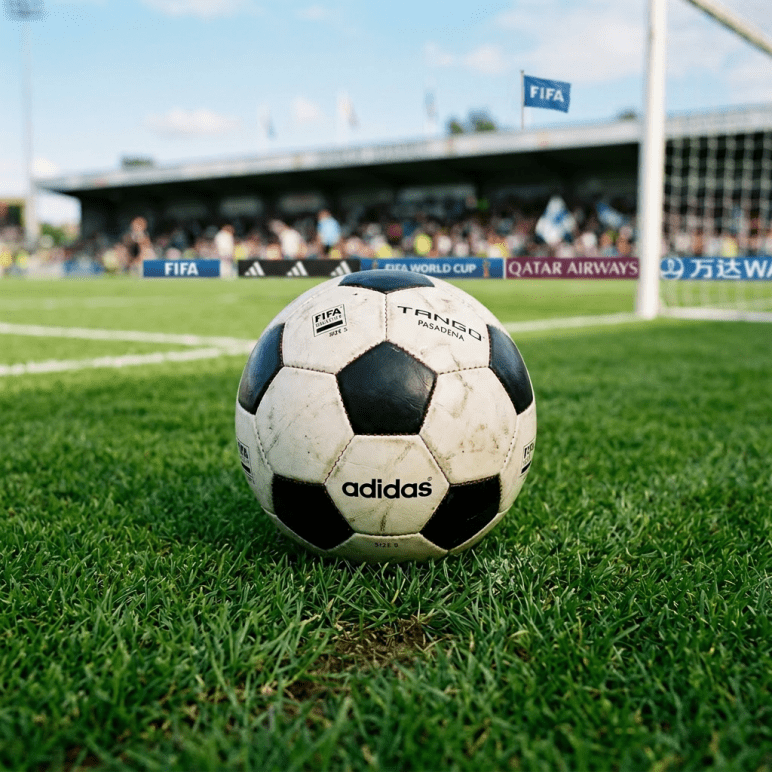
This is a personal bitch. I just spent 20 minutes trying to circumvent the 1st Ave and Terminal Ave area in downtown Vancouver, a city where I live, which I have nicknamed the City of Sirens. I wasn’t the only person trying to reroute so as expected, grid lock quickly ensued. This main intersection we learned was now blocked with a sleepy looking VPD officer sitting inside his vehicle, staring at his phone, parked behind a somewhat flimsy wooden barricade, but clearly ready to pounce should a nearby resident dare to try and breach the barrier and get back to their nearby apartment. It took a few moments for me to realize, ah yes, the Federation Internationale de Football Association (FIFA) security was now in place–three weeks before the 1st game. No doubt all the frustrated drivers who were trying to do u- turns were captured venting their frustration on one of the two hundred extra security cameras now in place around the stadium, which also was cocooned by 12′ high barricades.
Later that same day, sirens erupted once again and those of us sitting in our cars in rush hour were surrounded by numerous motorcycle cops, blazing by, who quickly gained the intersection, jumped off their bikes and began urgently directing traffic and forcing everyone to again divert around them. It was just another “practise” session for FIFA security. As a resident of downtown Vancouver, even as a sports fan, I am here to tell you that my patience with this city is beginning to thin.
I’m sure you haven’t missed the news that the World Cup of football (“soccer” to you North Americans) is coming to Vancouver and Toronto who are hosting thirteen games between them, starting in the merry month of June. Forty-eight countries, 104 games in 16 cities spread throughout the U.S., Canada and Mexico.
So as I drive and encounter the various road closures around the stadium and other parts of the city, I am given quite a bit of time to ponder whether this could all be worth it.
To make some sort of assessment, I guess you need to know how much it is going to cost. Well, you will quickly learn that the cost depends on who you ask and what the authorities deem you are able to know without causing an undue security risk to the attendees. Global news recently estimated that in 2025 the cost for Vancouver was given as $624 million, while in 2026 the cost is now $729 million. Of that $729 million, they attribute $242 million to policing costs. Canada’s Parliamentary budget office recently estimated the total cost to Vancouver to be around $578 million. A disparity in measurements, but all these pronounced figures have the caveat attached that costs could go higher.
Our local mayor Ken Sim says not to worry, the spin off residual economic impact is the equivalent of “40 Super Bowl” parties, although he says it is not his job to “crunch numbers” (Ken Sim’s background prior to being a mayor is as an accountant) The other government officials involved in the Province and at the Federal level bloviate that the spinoff is about $1 billion –and not only that it will lead to an additional 100 million people wanting to visit Vancouver over the next five years.
This is of course is the same rinse and repeat arguments that were brought up for the 2010 Olympics in terms of the expected increased economic benefits and the greater visibility for Vancouver around the world. The Vancouver Olympics came in at a cost of $1.9 billion. The operational budget, was balanced off through operations. However, they did not take into account the infrastructure costs such as the building of the sea to sky highway, or the upgrades to transit, or the $603 million spent on venue development. Spinoff benefit measurements from those Olympics or at these World Cup games are in economic terms difficult to measure as they suffer from a high degree of speculative data, often based on surveys, or general measurements such as hotel room occupancy. Positive attributions can be easily skewed and FIFA organizers like Olympic organizers are often the masters of promotional accounting.
For these seven world cup games, they are currently estimating that Vancouver will attract another 350,000 visitors for the games themselves. Sounds impressive, but let’s put it in some perspective. For the last three Taylor Swift concerts that were in Vancouver in 2024, they estimate that it drew 160,000– 70% of which were from out of town. So maybe not 40 Super Bowls Mr. Sim, but a better comparison as an economic spinoff may be if there had been seven Taylor Swift concerts, which, by the way, would have likely outdrawn the current World Cup. Nevertheless, FIFA has proclaimed that there will be a world wide $41 billion economic benefit. They point to various groups which will reap in the greatest rewards: hotels, airlines, beer stocks, Adidas, Puma, Nike, McDonalds, Dominos Pizza, and $380-400 million to the advertising agencies. There is little doubt that these groups will benefit, as they did when Taylor Swift appeared on the big stage.
The big difference between the Swifties and sporting events like the Olympics and the World Cup is the level and cost of security. We are much more concerned about our safety when the sporting events are on, than when the popstars arrive. In 2010 the Olympics involved over 7,000 police officers over 17 days of events. This World Cup will spread 7 games from June 11th to July 19th; 17 days of events during the Olympics versus 7 days of events for the World Cup. Yet to police the World Cup it is going to require 800 additional officers being brought in (I was told 1000 by a source) helping to fill the requirements for over 1200 officers per day. A security contingent for these games therefore larger than the Olympics.
The security bureaucracy will indeed be large. There will be an “Integrated Safety Unit” comprised of 18 agencies, including fire, ambulance, transit and “health authorities” (During the olympics they called it Gold, Silver and Bronze Command Centres). They will also be guarding practise facilities at UBC and Killarney Park, the Fan Festival, and the airport and the numerous hotels to look after the various VIP’s and one-percenters.
Dave Jones, who is head of Security for these Vancouver events and the 1200 officers per day (he is a former Chief of New Westminster Police Department and its 104 officers) outlined what he considered the potential risks during these games; “fraud, petty crimes, unruly behaviour, protecting pedestrians from vehicle ramming, and cyber attacks”. There is also a major concern over “human trafficking” and there is even a “Human Rights Action Plan” to insure “non-discrimination” against “un-housed residents”. He proudly added as further assurance that the RCMP will be using “drone detection technology” and the roof will be closed to avoid any foreign drone attacks one must presume. Some will argue that global tensions are different in 2026, than say the Olympics in 2010, that could be true, but this is still a sporting event, and one has to wonder how much is too much.
I fervently believe that this unprecedented level of security for a series of football games is an almost self fulfilling prophecy. One could argue that if the goal is to prevent any level of concern, then there is an infinite amount of security that can be undertaken. To the casual observer it does seem that the more the merrier theme is currently running rampant through policing and security in our current environment and in the various police agencies–what once took two, now takes six. Has it reached what I believe to be a ridiculous level of caution? (FIFA recently announced that you cannot bring refillable water bottles into the venue, as a caution as someone might bring in a bottle containing poison which they would throw at the players).
The other big question of course is who is paying? Well in essence you the taxpayer and the people that purchase tickets. (My last check of ticket prices showed a price of $400 for a nose bleed section ticket in a game between Australia and Turkey and the average room rate at a hotel was $900). Public Safety Canada (you the taxpayer) is going to kick in $100 million, and Vancouver is going to use the 2.5% hotel tax, referred to as the MRDT, which has been in place since 2023 (to date the tax has generated $105.7 million.) Sports Canada (also you the taxpayer) will kick in $116 million. So the cost coverage will be generated by taxes from hotel goers and then tax dollars spread over various levels of government. Of course, the actual cost as we stated before seems to be fluid. We must be reminded that the Olympic security budget was at one time estimated at $175 million and went to $900 million, but hey all is forgiven.
So who is complaining, other than we locals? The police officers involved are not complaining. They will all be on overtime trying to get that down payment for the house. The officers who have to make up for them being gone from their regular duties may complain. The members of the general public who are often docile and silent seem to be accepting of the fact that nothing changes, everything just gets bigger and more expensive, including policing and those ticket prices. The acceptance of this level of funding gets a little more blurry though if one considers other spending priorities. For instance, if we assume that we will be spending roughly $700 million for the ability to watch 7 games; we could instead build 46 elementary schools, pay the annual salary and costs of an additional 2,333 police officers, or buy 35 million single dose bags of heroin, or 3.5 million grams of fentanyl to be given out at Vancouvers’ safe supply clinics. Or if we assume a cost of $35,000 per person for a private addiction treatment facility, that would be enough money to care for 20,000 people.
Clearly, its’s always a matter of perspective and who will benefit. Who is paying is not a mystery, how much the total cost will be still is. Of course this is not a concern for FIFA or apparently for our various levels of government.
So welcome to Vancouver all you avid football fans and most of all stay safe.
p.s. the Federal budget watchdog, now estimates the cost of FIFA Canada wide as $1.06 billion or $82 million per game.

