Policing in the age of Misinformation and Distrust

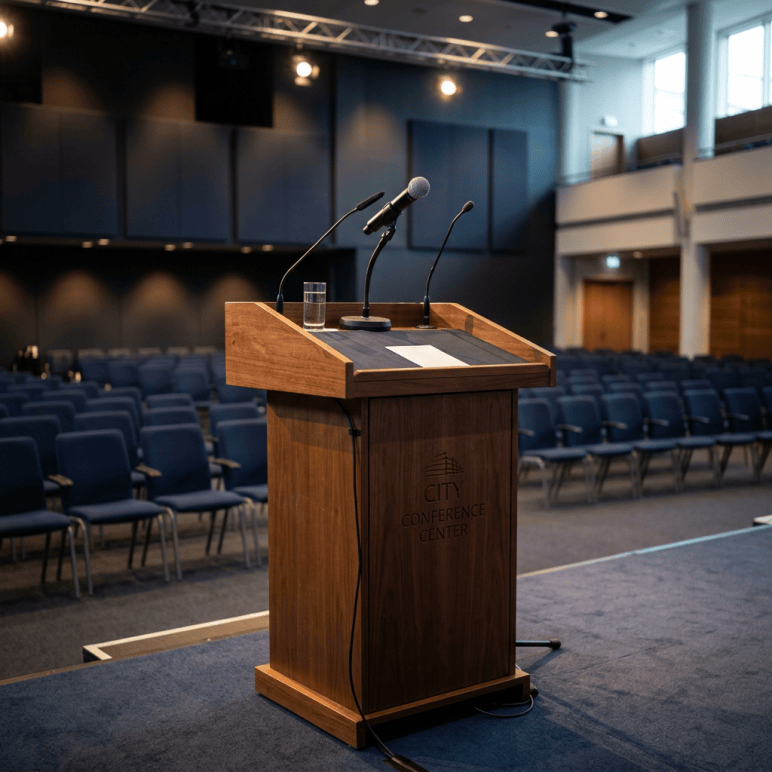
Wooden City Conference Center podium with microphones in an empty auditorium

We are in a crisis of honesty in this country. No one believes anyone, nobody trusts what they hear, let alone what they read. All of us are now franctically checking the source of the information so that we can judge whether it is real, fake, or somewhere in between. It also takes us twice as long to read the news because we need to fact check every story through another “trusted” source.

I was a long time reader of the NY Times and the New Yorker, but they turned on me. The Times motto of “all the news that is fit to print” is now all the news that they want you to see and as long as it fits the socially progressive and Democratic agenda. The New Yorker is/was famous for its illustrious past and well informed narratives and their prolific and amazing stable of writers; John Updike, Joan Didion, and Malcolm Gladwell to name just a few. The New Yorker always had a “progressive” and liberal attitude, however it seems that now they have officially crossed over the line to becoming advocates and not observers. Recently I watched a documentary on the New Yorker which covered the period of time during the 2nd election of Trump versus Kamala Harris. It was a behind the scenes look, with interviews of the writers and the process in putting together a magazine issue on the election. Their bias for Harris and their abject fear and loathing of Trump was on full display. Even the selection of the cover when Trump won was designed to show their hate of the outcome. There was no pretence of fairness, no attempt to cover the story from all angles, there was only one angle in their view. I also think Trump is a buffoon, but I also appreciate and have long applauded good journalism, this documentary was truly revealing and therefore disappointing.

In the last number of decades in the police universe, there has been a consistent push towards an emphasis on media relations; a need to be seen to be out there, a need to push the “breaking” news out as fast and as efficiently as possible. The police bought into the need to be always appear to be front and centre, and therefore in control. They were not deterred in their rush to judgement, even if sometimes it was to the detriment of the facts. They believed it made them seem forthright, professional and that they were indeed servants of the people. They were only there to serve. It should be said that there is not something inherently wrong in this guiding principle, but part and parcel of such an approach, is that it needs to be accompanied by a high degree of honesty and belief in what was being said. If you were intent on putting out a press release or holding a press conference then one should assume that one needed to come armed with the facts and significant pieces of information that were relevant to the story. And more importantly you needed to be willing to reveal that information.

The police agencies in their sometimes well earned cynicism of the Fifth Estate sometimes felt that it was enough to be just standing there and besides looking to be in control, they would also be in a better position to control any narratives that flowed from it. That they could be somewhat manipulative in creating a positive viewpoint of the police. It should be remembered that these were the decades of the “media managers” and “media consultants” who studied and influenced how a company or an agency should “project” itself to the general public in an effort to control that public image. Over the last number of years what it did do was automatically force viewers or readers to interpret what was being said –to read “between the lines”.

So we are now at a point in time where everyone has caught on. We don’t trust the media, the politicians, the police, the medical establishment, or anyone for that matter who is trying to influence our opinion or make us believe. COVID underlined the problem of blind trust. We are now learning of some of the misinformation surrounding the vaccine and the implications of its use. We were constantly told that it was a time of “crisis”, therefore we were not allowed to question. Recent polls now show that god forbid that if we entered another viral age, most people would not conform or believe the authorities.

Currently, we are told we are in a “tariff war”. However we are not allowed to see the details of the derailed agreement and we are told that there is now a need for an associate membership in the European Union, but no details in either case are provided on how it all works. Both are cases of political and social media press management, where the details are being withheld and one can only walk away with a feeling of distrust.

I am not the first person, nor will I be the last who is concerned about this lack of trust. It has been talked about politically and studied academically for some time. The general policing approach to alleviate this lack of trust, according to many and even to the United Nations is “community policing” and the need “to feel heard”. Many studies and the U.N. emphasize that the diverse communities need to feel “heard, protected, and represented”. That this is the only practical way to build trust. In their view they address distrust as a phenomenon of being displaced, they do not look at the much larger picture. However, if one turns to the psychology behind a lack of trust, the literature actually points to the need for “consistency”, “transparency”, and “competence”. From a psychological perspective distrust is often the result of overpromising, being defensive, and hiding the hard news. In my view this is the heart of the matter and it is not solved by a community policing agenda.

This is not to say that the RCMP, our largest policing agency, has not paid attention to this lack of trust. The RCMP has since 2015 been paying lip service to the need for transparency, integrity and open government. The RCMP actually has a”Transparency and Trust Strategy” and by 2023 began calling itself an “international leader in public safety, transparency, open government practices and embody principles of trust, transparency, integrity, accountability and participation.” Should you need proof of this feel free to go to the website and read the 35 page document . Like most readers, I had no idea that this existed, but apparently the Mounties have been dragged into being more open because of the Federal Government commitment to the Open Government Implementation Plan . It is a difficult read, filled with the usual government bromides, with not much of any substance.

However, the document does clearly show that the “transparency” that they are seeking and have accomplished is about data sharing for academia and other interested parties. It is not about grass roots and operational honesty. By the way, this past eleven years of this policy has resulted in only data releases concerned with “calls for service”, “diversity statistics” and “police intervention options”. In this policy paper which advocates openness it is always followed with the caveat of the overriding need to respect “privacy, security, and confidentiality”.

For anyone who has put a Freedom of Information request forward, or if you ask any journalist or academic as to the state of transparency in the RCMP, they usually answer with a laugh.

So how do we combat this lack of trust, or more specifically how do the police regain that trust which clearly has eroded over the last number of decades. Is there a way out? First, we must start with the old dogma that “trust isn’t owed, it’s earned”.

Data transparency is one thing and for statistical analysis may be of some value, but the transparency needed to restore trust in the policing agencies is much more basic. Until the front line managers can be more open as to the realities of policing, it is only that will eventually restore trust and with it integrity. For instance managers or supervisors need to speak of the staffing and resourcing issues which is being faced every day and affects their ability to police. Did you know that the RCMP is so desperate for bodies that the Commissioner has recently issued a directive to the Depot training staff that they are not to fail more than 10% of the recruits? Did you know that the biggest issue facing that training staff is English as a second language?

Did you know that there are historically about 1700 unsolved homicides in British Columbia alone? Since the formation of IHIT they have generated 350 unsolved homicides. Across Canada there is about 12,000 unsolved cases. Have you ever heard police executives talk about the enormous efforts needed for unsolved cases, or talked about the fact that there are too many to even be managed. Instead the general public is led to believe that no file is untended, that all open files are being actively worked. IHT now wants you to believe that the formation of another team for gang related homicides is the cure. The VPD on their unsolved web site, display 17 cases, do you think that is an accurate number?

Have you ever heard the police talking about their frustrations with Crown, or the ridiculous amount of time it takes to get a case into court and then through the courts? Have you ever heard Ottawa talk about the mind boggling problems with resourcing internet crime and their inability to even make a dent in those types of cases and that they are madly scrambling to fill all these “Federal” positions. Have you heard the final policing costs for the World Cup yet? Have you ever wondered why the RCMP is not investigating the alleged grave sites at residential schools where children were allegedly murdered?

It is about time that a new approach is undertaken by police managers. It is time to speak the truth and no longer hide behind the need for privacy, security reasons, or opaque investigative purposes. I understand the need for managers to “toe the line” but if you can’t or won’t provide sufficient and truthful detail, don’t say anything at all. The only way the public is going to begin to regain trust in the police is if they stop thinking they are being manipulated and that the police are coming to them with straightforward answers. It’s the only way. It’s not by sharing data on diversity. Trust isn’t owed, it’s earned, and they need to be aligning their words with their actions.

The Cost of FIFA

Adidas Tango soccer ball on green grass near soccer goal

This is a personal bitch. I just spent 20 minutes trying to circumvent the 1st Ave and Terminal Ave area in downtown Vancouver, a city where I live, which I have nicknamed the City of Sirens. I wasn’t the only person trying to reroute so as expected, grid lock quickly ensued. This main intersection we learned was now blocked with a sleepy looking VPD officer sitting inside his vehicle, staring at his phone, parked behind a somewhat flimsy wooden barricade, but clearly ready to pounce should a nearby resident dare to try and breach the barrier and get back to their nearby apartment. It took a few moments for me to realize, ah yes, the Federation Internationale de Football Association (FIFA) security was now in place–three weeks before the 1st game. No doubt all the frustrated drivers who were trying to do u- turns were captured venting their frustration on one of the two hundred extra security cameras now in place around the stadium, which also was cocooned by 12′ high barricades.

Later that same day, sirens erupted once again and those of us sitting in our cars in rush hour were surrounded by numerous motorcycle cops, blazing by, who quickly gained the intersection, jumped off their bikes and began urgently directing traffic and forcing everyone to again divert around them. It was just another “practise” session for FIFA security. As a resident of downtown Vancouver, even as a sports fan, I am here to tell you that my patience with this city is beginning to thin.

I’m sure you haven’t missed the news that the World Cup of football (“soccer” to you North Americans) is coming to Vancouver and Toronto who are hosting thirteen games between them, starting in the merry month of June. Forty-eight countries, 104 games in 16 cities spread throughout the U.S., Canada and Mexico.

So as I drive and encounter the various road closures around the stadium and other parts of the city, I am given quite a bit of time to ponder whether this could all be worth it.

To make some sort of assessment, I guess you need to know how much it is going to cost. Well, you will quickly learn that the cost depends on who you ask and what the authorities deem you are able to know without causing an undue security risk to the attendees. Global news recently estimated that in 2025 the cost for Vancouver was given as $624 million, while in 2026 the cost is now $729 million. Of that $729 million, they attribute $242 million to policing costs. Canada’s Parliamentary budget office recently estimated the total cost to Vancouver to be around $578 million. A disparity in measurements, but all these pronounced figures have the caveat attached that costs could go higher.

Our local mayor Ken Sim says not to worry, the spin off residual economic impact is the equivalent of “40 Super Bowl” parties, although he says it is not his job to “crunch numbers” (Ken Sim’s background prior to being a mayor is as an accountant) The other government officials involved in the Province and at the Federal level bloviate that the spinoff is about $1 billion –and not only that it will lead to an additional 100 million people wanting to visit Vancouver over the next five years.

This is of course is the same rinse and repeat arguments that were brought up for the 2010 Olympics in terms of the expected increased economic benefits and the greater visibility for Vancouver around the world. The Vancouver Olympics came in at a cost of $1.9 billion. The operational budget, was balanced off through operations. However, they did not take into account the infrastructure costs such as the building of the sea to sky highway, or the upgrades to transit, or the $603 million spent on venue development. Spinoff benefit measurements from those Olympics or at these World Cup games are in economic terms difficult to measure as they suffer from a high degree of speculative data, often based on surveys, or general measurements such as hotel room occupancy. Positive attributions can be easily skewed and FIFA organizers like Olympic organizers are often the masters of promotional accounting.

For these seven world cup games, they are currently estimating that Vancouver will attract another 350,000 visitors for the games themselves. Sounds impressive, but let’s put it in some perspective. For the last three Taylor Swift concerts that were in Vancouver in 2024, they estimate that it drew 160,000– 70% of which were from out of town. So maybe not 40 Super Bowls Mr. Sim, but a better comparison as an economic spinoff may be if there had been seven Taylor Swift concerts, which, by the way, would have likely outdrawn the current World Cup. Nevertheless, FIFA has proclaimed that there will be a world wide $41 billion economic benefit. They point to various groups which will reap in the greatest rewards: hotels, airlines, beer stocks, Adidas, Puma, Nike, McDonalds, Dominos Pizza, and $380-400 million to the advertising agencies. There is little doubt that these groups will benefit, as they did when Taylor Swift appeared on the big stage.

The big difference between the Swifties and sporting events like the Olympics and the World Cup is the level and cost of security. We are much more concerned about our safety when the sporting events are on, than when the popstars arrive. In 2010 the Olympics involved over 7,000 police officers over 17 days of events. This World Cup will spread 7 games from June 11th to July 19th; 17 days of events during the Olympics versus 7 days of events for the World Cup. Yet to police the World Cup it is going to require 800 additional officers being brought in (I was told 1000 by a source) helping to fill the requirements for over 1200 officers per day. A security contingent for these games therefore larger than the Olympics.

The security bureaucracy will indeed be large. There will be an “Integrated Safety Unit” comprised of 18 agencies, including fire, ambulance, transit and “health authorities” (During the olympics they called it Gold, Silver and Bronze Command Centres). They will also be guarding practise facilities at UBC and Killarney Park, the Fan Festival, and the airport and the numerous hotels to look after the various VIP’s and one-percenters.

Dave Jones, who is head of Security for these Vancouver events and the 1200 officers per day (he is a former Chief of New Westminster Police Department and its 104 officers) outlined what he considered the potential risks during these games; “fraud, petty crimes, unruly behaviour, protecting pedestrians from vehicle ramming, and cyber attacks”. There is also a major concern over “human trafficking” and there is even a “Human Rights Action Plan” to insure “non-discrimination” against “un-housed residents”. He proudly added as further assurance that the RCMP will be using “drone detection technology” and the roof will be closed to avoid any foreign drone attacks one must presume. Some will argue that global tensions are different in 2026, than say the Olympics in 2010, that could be true, but this is still a sporting event, and one has to wonder how much is too much.

I fervently believe that this unprecedented level of security for a series of football games is an almost self fulfilling prophecy. One could argue that if the goal is to prevent any level of concern, then there is an infinite amount of security that can be undertaken. To the casual observer it does seem that the more the merrier theme is currently running rampant through policing and security in our current environment and in the various police agencies–what once took two, now takes six. Has it reached what I believe to be a ridiculous level of caution? (FIFA recently announced that you cannot bring refillable water bottles into the venue, as a caution as someone might bring in a bottle containing poison which they would throw at the players).

The other big question of course is who is paying? Well in essence you the taxpayer and the people that purchase tickets. (My last check of ticket prices showed a price of $400 for a nose bleed section ticket in a game between Australia and Turkey and the average room rate at a hotel was $900). Public Safety Canada (you the taxpayer) is going to kick in $100 million, and Vancouver is going to use the 2.5% hotel tax, referred to as the MRDT, which has been in place since 2023 (to date the tax has generated $105.7 million.) Sports Canada (also you the taxpayer) will kick in $116 million. So the cost coverage will be generated by taxes from hotel goers and then tax dollars spread over various levels of government. Of course, the actual cost as we stated before seems to be fluid. We must be reminded that the Olympic security budget was at one time estimated at $175 million and went to $900 million, but hey all is forgiven.

So who is complaining, other than we locals? The police officers involved are not complaining. They will all be on overtime trying to get that down payment for the house. The officers who have to make up for them being gone from their regular duties may complain. The members of the general public who are often docile and silent seem to be accepting of the fact that nothing changes, everything just gets bigger and more expensive, including policing and those ticket prices. The acceptance of this level of funding gets a little more blurry though if one considers other spending priorities. For instance, if we assume that we will be spending roughly $700 million for the ability to watch 7 games; we could instead build 46 elementary schools, pay the annual salary and costs of an additional 2,333 police officers, or buy 35 million single dose bags of heroin, or 3.5 million grams of fentanyl to be given out at Vancouvers’ safe supply clinics. Or if we assume a cost of $35,000 per person for a private addiction treatment facility, that would be enough money to care for 20,000 people.

Clearly, its’s always a matter of perspective and who will benefit. Who is paying is not a mystery, how much the total cost will be still is. Of course this is not a concern for FIFA or apparently for our various levels of government.

So welcome to Vancouver all you avid football fans and most of all stay safe.

p.s. the Federal budget watchdog, now estimates the cost of FIFA Canada wide as $1.06 billion or $82 million per game.