
Policing in the age of Misinformation and Distrust

Wooden City Conference Center podium with microphones in an empty auditorium

We are in a crisis of honesty in this country. No one believes anyone, nobody trusts what they hear, let alone what they read. All of us are now franctically checking the source of the information so that we can judge whether it is real, fake, or somewhere in between. It also takes us twice as long to read the news because we need to fact check every story through another “trusted” source.

I was a long time reader of the NY Times and the New Yorker, but they turned on me. The Times motto of “all the news that is fit to print” is now all the news that they want you to see and as long as it fits the socially progressive and Democratic agenda. The New Yorker is/was famous for its illustrious past and well informed narratives and their prolific and amazing stable of writers; John Updike, Joan Didion, and Malcolm Gladwell to name just a few. The New Yorker always had a “progressive” and liberal attitude, however it seems that now they have officially crossed over the line to becoming advocates and not observers. Recently I watched a documentary on the New Yorker which covered the period of time during the 2nd election of Trump versus Kamala Harris. It was a behind the scenes look, with interviews of the writers and the process in putting together a magazine issue on the election. Their bias for Harris and their abject fear and loathing of Trump was on full display. Even the selection of the cover when Trump won was designed to show their hate of the outcome. There was no pretence of fairness, no attempt to cover the story from all angles, there was only one angle in their view. I also think Trump is a buffoon, but I also appreciate and have long applauded good journalism, this documentary was truly revealing and therefore disappointing.

In the last number of decades in the police universe, there has been a consistent push towards an emphasis on media relations; a need to be seen to be out there, a need to push the “breaking” news out as fast and as efficiently as possible. The police bought into the need to be always appear to be front and centre, and therefore in control. They were not deterred in their rush to judgement, even if sometimes it was to the detriment of the facts. They believed it made them seem forthright, professional and that they were indeed servants of the people. They were only there to serve. It should be said that there is not something inherently wrong in this guiding principle, but part and parcel of such an approach, is that it needs to be accompanied by a high degree of honesty and belief in what was being said. If you were intent on putting out a press release or holding a press conference then one should assume that one needed to come armed with the facts and significant pieces of information that were relevant to the story. And more importantly you needed to be willing to reveal that information.

The police agencies in their sometimes well earned cynicism of the Fifth Estate sometimes felt that it was enough to be just standing there and besides looking to be in control, they would also be in a better position to control any narratives that flowed from it. That they could be somewhat manipulative in creating a positive viewpoint of the police. It should be remembered that these were the decades of the “media managers” and “media consultants” who studied and influenced how a company or an agency should “project” itself to the general public in an effort to control that public image. Over the last number of years what it did do was automatically force viewers or readers to interpret what was being said –to read “between the lines”.

So we are now at a point in time where everyone has caught on. We don’t trust the media, the politicians, the police, the medical establishment, or anyone for that matter who is trying to influence our opinion or make us believe. COVID underlined the problem of blind trust. We are now learning of some of the misinformation surrounding the vaccine and the implications of its use. We were constantly told that it was a time of “crisis”, therefore we were not allowed to question. Recent polls now show that god forbid that if we entered another viral age, most people would not conform or believe the authorities.

Currently, we are told we are in a “tariff war”. However we are not allowed to see the details of the derailed agreement and we are told that there is now a need for an associate membership in the European Union, but no details in either case are provided on how it all works. Both are cases of political and social media press management, where the details are being withheld and one can only walk away with a feeling of distrust.

I am not the first person, nor will I be the last who is concerned about this lack of trust. It has been talked about politically and studied academically for some time. The general policing approach to alleviate this lack of trust, according to many and even to the United Nations is “community policing” and the need “to feel heard”. Many studies and the U.N. emphasize that the diverse communities need to feel “heard, protected, and represented”. That this is the only practical way to build trust. In their view they address distrust as a phenomenon of being displaced, they do not look at the much larger picture. However, if one turns to the psychology behind a lack of trust, the literature actually points to the need for “consistency”, “transparency”, and “competence”. From a psychological perspective distrust is often the result of overpromising, being defensive, and hiding the hard news. In my view this is the heart of the matter and it is not solved by a community policing agenda.

This is not to say that the RCMP, our largest policing agency, has not paid attention to this lack of trust. The RCMP has since 2015 been paying lip service to the need for transparency, integrity and open government. The RCMP actually has a”Transparency and Trust Strategy” and by 2023 began calling itself an “international leader in public safety, transparency, open government practices and embody principles of trust, transparency, integrity, accountability and participation.” Should you need proof of this feel free to go to the website and read the 35 page document . Like most readers, I had no idea that this existed, but apparently the Mounties have been dragged into being more open because of the Federal Government commitment to the Open Government Implementation Plan . It is a difficult read, filled with the usual government bromides, with not much of any substance.

However, the document does clearly show that the “transparency” that they are seeking and have accomplished is about data sharing for academia and other interested parties. It is not about grass roots and operational honesty. By the way, this past eleven years of this policy has resulted in only data releases concerned with “calls for service”, “diversity statistics” and “police intervention options”. In this policy paper which advocates openness it is always followed with the caveat of the overriding need to respect “privacy, security, and confidentiality”.

For anyone who has put a Freedom of Information request forward, or if you ask any journalist or academic as to the state of transparency in the RCMP, they usually answer with a laugh.

So how do we combat this lack of trust, or more specifically how do the police regain that trust which clearly has eroded over the last number of decades. Is there a way out? First, we must start with the old dogma that “trust isn’t owed, it’s earned”.

Data transparency is one thing and for statistical analysis may be of some value, but the transparency needed to restore trust in the policing agencies is much more basic. Until the front line managers can be more open as to the realities of policing, it is only that will eventually restore trust and with it integrity. For instance managers or supervisors need to speak of the staffing and resourcing issues which is being faced every day and affects their ability to police. Did you know that the RCMP is so desperate for bodies that the Commissioner has recently issued a directive to the Depot training staff that they are not to fail more than 10% of the recruits? Did you know that the biggest issue facing that training staff is English as a second language?

Did you know that there are historically about 1700 unsolved homicides in British Columbia alone? Since the formation of IHIT they have generated 350 unsolved homicides. Across Canada there is about 12,000 unsolved cases. Have you ever heard police executives talk about the enormous efforts needed for unsolved cases, or talked about the fact that there are too many to even be managed. Instead the general public is led to believe that no file is untended, that all open files are being actively worked. IHT now wants you to believe that the formation of another team for gang related homicides is the cure. The VPD on their unsolved web site, display 17 cases, do you think that is an accurate number?

Have you ever heard the police talking about their frustrations with Crown, or the ridiculous amount of time it takes to get a case into court and then through the courts? Have you ever heard Ottawa talk about the mind boggling problems with resourcing internet crime and their inability to even make a dent in those types of cases and that they are madly scrambling to fill all these “Federal” positions. Have you heard the final policing costs for the World Cup yet? Have you ever wondered why the RCMP is not investigating the alleged grave sites at residential schools where children were allegedly murdered?

It is about time that a new approach is undertaken by police managers. It is time to speak the truth and no longer hide behind the need for privacy, security reasons, or opaque investigative purposes. I understand the need for managers to “toe the line” but if you can’t or won’t provide sufficient and truthful detail, don’t say anything at all. The only way the public is going to begin to regain trust in the police is if they stop thinking they are being manipulated and that the police are coming to them with straightforward answers. It’s the only way. It’s not by sharing data on diversity. Trust isn’t owed, it’s earned, and they need to be aligning their words with their actions.
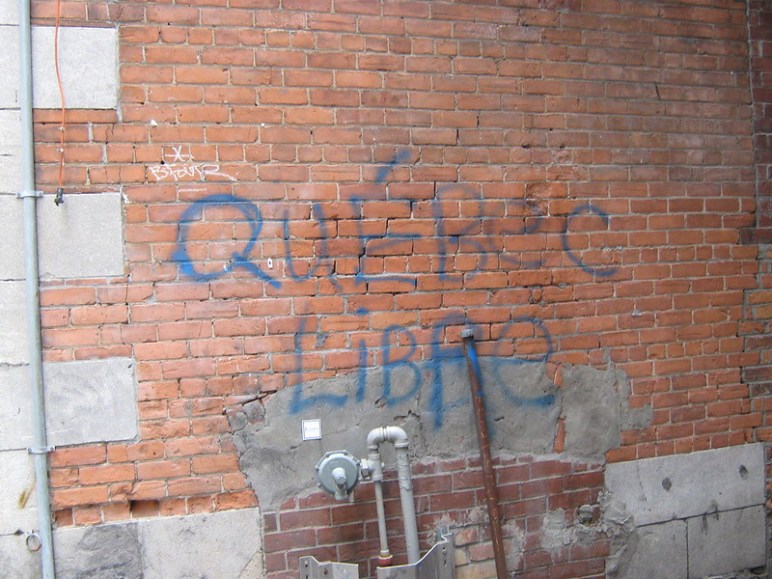
The Indigenous and the FLQ parallel

In October of 1970 a small group of radicals known as “separatistes” gathered and organized determined to take the Province of Quebec into a new political order. They imagined and sought a transformative and radical change, one in which Quebec would become a “sovereign nation”, no longer part of the Dominion of Canada. The “Front de Liberation du Quebec”, the FLQ, did not believe it was possible for this to happen using normal political avenues. They felt that there needed to be a jolt to the sensibilities. They, in the end, were responsible for over 950 bombs being detonated around the City of Montreal in the quest for that freedom and independence.

The Federal Liberals at the time under then Prime Minister Pierre Trudeau would institute the War Measures Act and 497 people would be arrested and arbitrarily held. Charles de Gaulle would exclaim from a balcony in Quebec in 1976, “Vivre le Quebec libre!” in what some would say was a misguided and impromptu show of support for an independent Quebec.

In the end this radical cell was thwarted; 23 of the FLQ went to jail and 4 went to jail for the murder of Pierre Laporte, who died in honour of the cause. Tanks were parked on Parliament Hill. It was a truly significant and violent chapter in the history of Canada— all in the name of Quebec provincial independence. 

In 1976 the potential of separatism still enthralled many of the people of Quebec and Rene Levesque was voted in as Premier of that Province as the leader of the newly formed Parti Quebecois. His and his party’s platform was founded on the single fundamental principle of leading Quebec away from Canada, but this time through a legal and electoral process designed to do what the FLQ could not achieve through violence. 

After a few years and an early referendum on the issue, in 1980, a Province wide referendum was held which requested the support for the legal removal of Quebec from Confederation. The process and voting captured the eyes and ears of the entire nation. The rest of Canada awaited the results that night with bated breath, not knowing whether or not Canada was going to be forever changed, its geographic boundaries re-drawn? A new sovereign nation literally dividing Canada.

It was a hard fought political battle between the diminutive and scrappy Levesque and many had a grudging admiration for his hard held belief and his impassioned ability to articulate the desire of the Quebec people. Pierre Trudeau was his natural nemesis and argued with equal personal passion that Canada could not survive such a radical and ill thought out solution. Both carried the level of oratory and debate to a level never seen before or since in this country.

Levesque and the Parti Quebecois lost the referendum by a slim majority. The people of Quebec decided that to remain in Canada was the wiser choice. (under Premier Parizeau, the Parti Quebecois would again seek to separate with another referendum in 1995 which was also lost).

Now, some fifty years later, many would be dumbfounded by the ease by which another group in this country, a much smaller group, is about to achieve the same goal once held by the Parti Quebecois, with little or no fanfare, no call to arms or public debate.  This time, ironically, the son of that ardent Federalist Pierre Trudeau is about to grant virtual independence and self-government with the stroke of a pen. No referendum, no debate.

The Indigenous of this country have convinced the political powers that the necessary extension of this long long road to “reconciliation” has an ultimate goal—and that goal is the wholesale adoption by Canada of a United Nations Declaration on the Rights of Indigenous Peoples. A legally non-binding UN resolution, which the Liberals are now going to make legally binding. 

The Conservatives were in power at that time of the original U.N. Declaration which was passed in 2007. In its initial inception, Canada voted against the Declaration as did other countries.

At that time the Conservatives made official public statements against the application of UNDRIP in Canada. The Indian Affairs Minister at the time Jim Prentice stated the opinion that the the Declaration conflicts with the Canadian Charter of Rights and Freedoms. While it supported the “spirit” of the declaration, it said that it contained elements that were “fundamentally incompatible with Canada’s constitutional framework”, including “the Charter of Rights and Freedoms and Section 35 which already enshrines aboriginal and treaty rights”. 

The most specific problem they argued then and it can be argued now was with Section 19 : which appears to require “governments to secure the consent of indigenous peoples regarding matters of general public policy”. 

The Liberals in 2015, when the UN Declaration was changed to be a “non-binding” document and therefore not carrying the legal weight of its previous iteration, reversed Canada’s position  to one of support for the document. This appeased for a time the Indigenous political agenda, but without legal enshrinement, it was merely a statement of principle. 

The Liberals in 2020 under the un-relenting urging of the Indigenous leadership are now about to be granted enshrinement of the declaration into law in the form of Bill C-15.

This bill is being presented, or a better term may be marketed, as merely an affirmation of basic human rights; and they are urging that we should all applaud in unison. The news media being presented with this explanation of it being only a matter of basic human rights, glosses over the details and have fallen into subservience. No further questioning as to the political and economic ramifications.

Justice Minister Lametti, flanked by his Indigenous cohort Perry Bellegarde echoed the marketing theme when asked about whether there would be opposition support: “who is going to vote against human rights?” 

While on one hand downplaying Bill C-15 as a foregone conclusion, a mere exercise in codifying the obvious, Lametti does admit that “it has the potential to be transformational”.  Mr. Lametti refers to this Act as being at the “starting line” as he wishes to place “150 plus years, longer than that, of colonialism and the impact of it behind us”. He wants us to move on to “a different model.” 

Mr. Bellegarde, the spokesperson for the Assembly of First Nations, has also been pushing this bill for some time, but he too downplays the significance of the legislation and sticks to the script saying that it doesn’t really do anything; other than “it acknowledges and and affirms our rights under international law”. Although, he does later return to the familiar trope– the Act will serve to condemn the “racist and colonial doctrines and beliefs that have led to grave human rights abuses including the residential school system. “

Bill C-15 and the U.N. Declaration is based on the principle, that this country we know as Canada, is actually the “territory” of the Indigenous. This narrative has been pushed willingly for some time by the woke Liberals and NDP.

Their contention is that the immigrant side of this story, the immigrants who “colonized” or some would say “settled” this country needs to be pushed aside in the history books. Those Poles, Germans, Ukrainians, Chinese and Italians who long ago carved a living out of often hazardous and meagre circumstances now have no direct or historical claim to the vast and largely empty lands which they settled. Mr. Lametti would like to place that portion of history “behind us”. The indigenous fundamentally believe and argue that colonization dispossessed them of “their lands” —that colonization was inherently evil and the country that was built around that settlement was somehow invalid. They never “ceded” their territory they exclaim.

The United Nations in writing their declaration were concerned that “indigenous peoples have suffered from historic injustices as a result of inter alia, their colonization and dispossession of their lands, territories and resources thus preventing them from exercising, in particular, their right to development in accordance with their own needs and interests”. The two themes, which plays throughout this document are: “Recognizing their rights to their lands, their territories and resources” and “the right to self-determination of all peoples”.

No matter what one believes, one should at the very least realize that the nature and process of government in this country is about to significantly change if this bill passes 3rd reading. If the constantly reconciling Liberals have their way with Bill C-15– 5% of the population, regardless of historic claims, will have effective economic and political sway over the 95%.  If this sounds like an exaggeration then you need to read the very articles which are being proposed (my italics) and are swallowed up whole in Bill C-15: 

Article 3 – spells out “the right to self-determination”

Article 4 – “in exercising their right to self-determination, have the right to autonomy or self-government in matters relating to their internal and local affairs, as well as means for financing their autonomous functions”

Article 14 – “ Indigenous peoples have the right to establish and control their educational systems and institutions providing education in their own languages, in a manner appropriate to their cultural methods of teaching and learning”

Article 16 – “States without prejudice to ensuring full freedom of expression, should encourage privately owned media duly reflect indigenous cultural diversity and have access to all forms of non-indigenous media without discrimination”

Article 19 – Probably the most contentious is the article —“States shall consult and and cooperate in good faith with the indigenous peoples concerned through their own representative institutions in order to obtain free and informed consent before adopting and implementing legislative or administrative measures that may affect them”. 

Article 21 – “Indigenous peoples have the right, without discrimination, to the improvement of their economic and social conditions, including, inter alia, in the areas of education, employment, vocational training and retraining, housing, sanitation, health, and social security”.

Article 26 – “Indigenous peoples have the right to the lands, territories, which they have traditionally owned, occupied, or otherwise used or acquired” 

Rene Levesque must be looking down from a cigarette smoke-filled heaven and be astounded about the ease of this process. Pierre Trudeau will be rolling over in frustration at the idiocy of an argument now being put forward by his own son –that any of this is sustainable, workable or in the best interests of a Federal Canada. 

What is slowly being revealed however is that the Liberals, under the cover of COVID and the billions of dollars of incurred debt may have now discovered that maybe this is the opportune time to spend a few more billion in the pursuit of their loyal followers, whether it be the environmentalists or the Indigenous. Carbon tax or sovereign institutions, a few billion here and there to promote their agenda will go unnoticed. After all, all the media can talk about is Covid-19.

Some Provinces have urged the Feds to slow down on Bill C-15 that the repercussions of this bill could be momentous. No, no says Justin, it is time to move forward. To argue against their cause effectively puts you in the category of the unenlightened, intolerant of change, and ignorant of this new history.

This Bill of course is not about fundamental human rights. As previously stated that is already covered in Section 35 of the Constitution.

This is about power and money and future votes. This is part of a payment plan designed by the Liberal party for the security of the Indigenous vote in perpetuity. That is frustratingly obvious. 

Nobody even knows what weight this Act will carry, what political shape it will take and the economic cost of implementing these principles of self-determination and separation from the other parts of Canada. Mr. Lametti when asked about “free, prior and informed consent” says he can’t define how that is going to turn out. His ineffectual response was that “every consent requires a unique process that includes a dialogue with Indigenous people”. 

In the 1970’s Quebec under Levesque and the Parti Quebecois at least had a plan; one which included a distinct geographic boundary, a proposed parliamentary style government, a singular and unified culture and an economic plan for self sustainability. This has none of that.

There is no plan. The only commonality is the ever increasing need for continued and increasing economic support from the part of the country from which they wish to be politically separate. To add to the political and economic confusion and chaos which surrounds the Indigenous cause, we now have a Justice Minister introducing a fundamental change in the law—and he doesn’t really know how it is going to turn out. Who could argue with such political vision?

One should note that the first Parti Quebecois government in the 1970’s was the first government to recognize the rights of aboriginal peoples to self-determination. But, there was a huge caveat, it was only “insofar as this self-determination did not affect the territorial integrity of Quebec”. Over 50 years ago even a radicalized Rene Levesque saw the possibility of a sovereign Indigenous as constitutionally unviable.

Photo Courtesy of Flickr Commons Renegade 98 – Some Rights Reserved