The Gastronomic leanings of Police Officers

Philosopher Anthelme Brillat-Savarin is credited in 1826 of declaring, “Tell me what you eat and I will tell you who you are”. This has morphed slightly in these modern times to “you are what you eat”, a phrase now bandied about by every dietary consultant, gym enthusiast, protein pusher, and cross-training instructor, who are continually bombarding us with their pithy aphorisms on how to feel better and thus be a better person. If we are indeed a reflection of what we eat, or have eaten in the past, this may be a bit of a scary realization– especially for those of us in the earlier policing days, who have wolfed down the gas station hotdog, or enjoyed mountains of carbs in various forms, all doled out in the late night establishments catering to the midnight shift.

This blog is probably not for those of you who are religious in your meal consumption, you who weigh out your proteins, or create your morning shakes with your Nutribullet Pro 900. There are many police officers, old and young, who now take to social media, be it Twitter, Tik Tok, Facebook or Instagram, taking selfie poses to show off their personally cultivated abs and extraordinarily firm buttocks. Quite honestly, I don’t understand it. However, this is not yet the norm for all police officers, although this “healthy” at all costs is a growing movement in the world of the blue uniforms. The National Health Institute however, still estimates that 50% of police officers have a body mass index described as being in the “overweight range”.

Before going any further I must confess to being one of those people who now display the old age paunch and could definitely afford to lose 20 lbs. I would be much better off if I conformed to the retirement norm of 10,000 steps and replaced the peanut butter cookie with the keto nutri-bar. However that is not likely to happen–also I am a nicer person when I eat the cookie.

Throughout policing I was always conscious of my future health and the need to stay fit for the job. I was a constant gym user for all of those policing years. But, it was more maintenance than improvement as I worked shift work and was on call for many of those plus 30 years. This resulted in the consumption of mounds of pasta at late night eateries, most of which were unlikely to win any Michelin stars. According to National Health we were in those days, continuing to put ourselves in the position of “increased risk of weight gain and developing diabetes and cardiovascular” problems. In an academic explanation we were eating more “disparate meals” and we were suffering from a “displacement of the fasting/feeding cycle”. But, we didn’t spend much time worrying about it in those years and what I remember is a lot of good times, sitting with co-workers over a heart warming plate of food; admittedly, followed by many periods of indigestion and reaching for the Tums or the Pepto- Bismol.

What police officers eat is normally a result of two primary factors, availability and time of day. Those people working in remote or rural areas on a night shift are in desperate straights, often faced with a late night snack or meal from a 7-11, Circle K, a 24 hour Chevron station, or the ubiquitous Tim Hortons. (Tim Hortons by the way has an in house coffee shop located inside the classified walls of Surrey RCMP HQ- clearly a monument to bad coffee and unhealthy eating –and maybe an ode to old school policing.) Nutrition and calorie wise meals are almost non-existent in a lot of policing areas and would often be substituted by buckets of coffee and a honey crueller. In my early years, it was even more dire, as we were smokers, and there was many a long shift, where a Players Light would sustain us for 12 hours. I managed to kick the smoking habit, but not the coffee habit.

The new age police officer is much more in tune with their health. Even if they eat in an unhealthy way, they at least know they are eating poorly. They often now “prepare” their meals, lunch bags filled with nutritious small clear plastic containers with almonds, kale salads, a chicken breast and maybe a pudding cup. Don’t get me wrong, they are in all likelihood in better shape and less prone to illness– although the RCMP has unlimited sick leave and this remains a continuous problem, despite this new health awareness, there are a lot of officers calling in sick, especially on Friday and Saturday nights.

This is all to say that we seem to have lost something in our transition to the soy milk latte from the dark roast Tim’s. Is it possible that transitioning from the Salisbury steak drowning in gravy, to the pesto covered chicken breast with a salad (dressing on the side), may be altering how police are perceived and how they go about their business? Just consider the side effect of removing officers from sitting with the locals on the night shift in the local establishment. I have fond memories of Tim Hortons at 96th and King George Highway in Surrey and eating and kibitzing with the local street walkers, the ambulance attendants and the odd runaway from Surrey General Hospital. Many police officers instead are now found munching away in their vehicles, eyes fixed on their computers and cellphones for entertainment when enjoying their 10-62 (even this has apparently changed to Code 10-98).

Don’t get me wrong. I am not an advocate for obesity as a policing goal, but times are different now and I think I liked it better then. The eating habits of those bygone days seem to reflect a different attitude to the job, a type of personality more suited to the job of serving the public and being one of the members of a community. The eateries were meeting places where you became acquainted with the waiters and the cooks, where they often placed a pot of coffee in the middle of the table, and tried to entice you with the daily special. The diners and late night spots were in some ways the community policing stations of their day.

I was recently standing behind four young Vancouver City Police officers in line at the local Starbucks. All four, two women and two men looked sharp in their uniform, they were slim and looked to be in good physical shape. As they stood politely in line, people came up to them, asked them questions or made the usual “What no donuts?” remark. It made me hopeful. A few days later I was in my local Vietnamese pho shop when an older Vancouver City cop came in, and picked up an order, calling the shop owner of this cubby hole family restaurant by his first name. They shared a laugh and a nod of appreciation for the food and for the business. That also made me feel good. Although those deep fried delicious spring rolls probably were not as healthy (he should have gone for the salad rolls). It was clearly not this officers first time at the deep fried dance, as he did display more of that well-fed girth.

I liked both these groups of officers although I did not know them, but if I called the police for some form of assistance, I think I would prefer the latter, “spring roll cop”, to come to my apartment. I can’t say specifically why, maybe I just relate more to the older version. This, even though I know the first group would likely be more efficient with their words and their procedures. So was it their epicurean choices that would lead me to lean one way more than the other?

This may all be just a silly perplexing debate, of minimal importance in the overall measure of policing challenges and one for which there is no resolution, it is just merely an observation.

Maybe I am just hungry.

Photo courtesy of Andrea Clayton Vail via Flickr — Some Rights Reserved

The Harm of the Online Harms Act

First there was Bill C-11, an Act to amend the Broadcasting Act in 2023, which gave the government the ability to regulate internet content, or at least some more direct oversight. It’s stated purpose was to give “Canadian broadcasting a framework to ensure online streaming services make meaningful contributions to Canadian and Indigenous content”.

Then along came Bill C-36 which offered up in a long-winded explanation of their mandated need to amend the Human Rights Act. It stated that it would be an offence to engage in “… a discriminatory practise to communicate or cause to be communicated hate speech by the means of the internet or other means of Telecommunication in a context in which the hate speech is likely to foment detestation or vilification of an individual or a group of individuals on the basis of a prohibited ground of discrimination”. One needs to remember the words detestation and vilification as they re-surface in this latest legislative manifestation which is Bill C-63. An Act to Amend the Online Harms Act.

For the purposes of this blog, we will only speak to this latest bill which has now drawn the ire and prompted warnings from many fronts, even esteemed author Margaret Atwood, who has called it “Orwellian”. She warns us that “the definitions or lack of them in the law as to what constitutes punishable speech and or thought are so vague as to invite abuse”. Michael Geist, a law professor at the University of Ottawa points to the fact that the commission which is to enforce these latest proposed rules is not “bound by any legal or technical rules of evidence”.

To understand these growing concerns you have to sort through the interminable language and legal nuances that typically run through every piece and form of government legislation and explanation. Bill C-63 is what is called an Omnibus bill, a grouping of various Act changes all rolled into one. This type of packaging should come with a warning, as it is often used as a tactic to obfuscate some of the more controversial proposals by wrapping them around other changes.

It is clear that Bill C-63 is first and foremost an online harm bill, aimed to “reduce harms caused to persons…as a result of harmful content” that comes primarily by way of social media. It is hoping to put a stop to the online bullying and harassing, often using sexual innuendo in words and pictures as a damaging weapon. The government wish to transfer responsibility to moderate or eliminate this activity, on to the purveyors of social media and to hold them “accountable with respect to their duties under the Act”. In terms of purpose, few would argue with the intent. Whether it can be accomplished through legislation is a second real question. In any event, they are going to require that social media services submit “digital safety plans to a Digital Safety Commission”, which sounds about as “Orwellian” as George Orwell imagined.

Of course, whenever government undertakes anything, it also means the growth of more bureaucracy. In this case they want a Digital Safety Commission consisting of 3-5 appointed persons on five year terms, and a Digital Ombudsman who will advocate for the “public interest”. Those working for the Commission (they are allowed to hire “any employees are necessary” )will have authorized and unrequited access to “inventories of electronic data of the operators of the social media services”.

This legislation is also bundled with some amendments to both the Criminal Code and to the Canadian Human Rights Act (CHRA). The Criminal Code will be amended to first and foremost define “hatred”. They will also “create a hate crime offence…” when that offence is “motivated by hatred based on certain factors”.

The CHRA amendments go further and make it an offence for any instance “in which the hate speech is likely to foment detestation or vilification of an individual or group of individuals on the basis of a prohibited ground of discrimination” and “content that foments hatred..” or “incites violence”. Also, alarmingly, “the Commission is not bound by any legal or technical rules of evidence, which includes the right to get a warrant to enter a dwelling house”.

Clearly, as stated previously, the nexus of this series of amendments intent is aimed at “intimate content online” and the “victimization of children”. But the problem is that it strays and has an amoeba like ability to stray into a broader definition of any “content that incites violence, extremism, or terrorism, or content that foments hatred”. So how does one define “foment” or for that matter “hatred”. The definitions are subjective and can take on different levels of seriousness. Foment can mean; to instigate, to provoke, inspire, encourage, generate, kindle, or fan the flames. Hate can also be described according to the dictionary as; loathing, dislike, resentment, aversion, or animosity.

It is the reason why most online law experts say that the Act as written due to these broad definitions, violates constitutional and privacy rights. That the social media groups if forced to comply would by necessity have to rely on artificial intelligence and algorithms to mediate their platforms, and this will by its very nature cause a “disproportionate use of censorship”. The Canadian Civil Liberties Association point to the sections which allow searches of electronic data without warrant, which would grant sweeping powers to a single government un-elected agency and could be in a position to censor strong opposition to political authorities. The Canadian Constitution Foundation focuses on the words “detestation” and “vilification” as being too broad and they believe it would widen the various grounds of discrimination. The punishment by the way for a contravention of the hate laws should one be convicted of a “hate crime” can be as much as a “life sentence” –under these Criminal Code amendments.

Interestingly, there is even a provision which allows for a peace bond to be obtained– if someone or some group were “likely to create a hate crime”. In other words there will be an ability to exercise what they call “prior restraint” under this Act. If a Judge believes that there are “reasonable grounds” to fear some “future” hate crime, that person can be sentenced to house arrest and electronic tagging. Keep in mind a peace bond needs only one person to proceed if they can convince a Judge of their concern.

When you look at the continuum of government legislative moves, including Bill C-11 and Bill C-36 you can clearly see a rather ominous pattern. They are models of government trying to grasp greater control of what we see, read, and listen to. Also troubling is that these most recent legislative attempts are well hidden, disguised in the world of good intentions, covered with the cloak of big brother. In trying to get to the motivation one wonders if this progressive Liberal government is simply overwhelmed by the need to react. To see any evidence of public outrage as a time for them to act. In this case, online harassment and the tragic cases like Amanda Todd have been receiving constant and continued attention and the government feels the need to protect us and thus gain our continuing support.

A further question is whether it is possible that in order to be seen to be proactive and in their knee jerk reactions they produce a piece of legislation without enough scrutiny as to the side effects or results of their activism? If one considers the levels of bureaucracy and the layers of legal scrutiny that act as filters before something becomes legislation it would seem unlikely that the government has just not thought it, so if government ineptitude is not the case, then the explanation becomes a lot more sinister.

John Stuart Mill, considered one of the most influential philosophers of the 19th century who wrote extensively on the history of liberalism, described the need for protection from the “tyranny of the magistrate” and the need for protection from the “tendency of society to impose its own ideas and practices as rules of conduct on those that dissent from them…” He referenced it as the “tyranny of prevailing opinion”.

It does seem clear that this Federal government has a fundamental precept that they know better, that they in their elected duty, have been entrusted to look after us; the flip side being that we can not be trusted to look after ourselves. This, they constantly argue is all for the betterment of a progressive society and therefore self-justification to extend into every aspect of our lives. This philosophy is not new, it has been going on for some time. Rules and regulations now already saturate our work places, our private lives, where we live and how we live. We can not be responsible therefore they will be responsible for us.

This most recent legislation will protect all of us from “harm”. It is a laudable goal to be sure when it comes to the targeting of children and teens by those wanting to exploit them. However, this government whether through lackadaisical legal drafting or in a conspiratorial way is trying to gain the upper hand in what is written or spoken against their agenda. Maybe this government has been emboldened by the use of the Emergencies Act, and Covid 19, where they proved that Canadians will go along with even some of the most draconian measures –if they can be convinced that it is merely to protect them, to keep them out of harms way.

And if you think it may be far fetched to think that persons could try and control speech through this particular piece of legislation, consider this; currently, there is a lawyer in Saskatchewan, Eleanore Sunchild, claiming that residential school “denialism” should be included in the Criminal Code as a criminal offence and is equivalent to Holocaust denialism and therefore a “hate crime”.

Bill C-63 for all these reasons should be considered completely unacceptable. This Federal government unwillingly or intentionally is leading us into very dangerous territory. It is hard to believe that most Canadians continue to not pay attention.

Photo courtesy of Flickr Commons by Apionid – Some Rights Reserved

An Open Invitation

This blog issue is somewhat out of the norm–it is more of a request and an invitation. For quite some time I have been toying with the idea of reaching out to the readers of this blog for your assistance.

I have been thinking about this idea for quite some time, an idea which has grown from a couple of observations. Firstly, the numbers of readers of this blog has grown over the past number of years. Currently the blog is being read in all parts of Canada and there has even been a reader or two from overseas. On a strictly personal level, it has enabled me to connect with the past, officers who I worked with over the years, or people that I have met through these last few decades either by circumstance or situation. In all these meetings or conversations I almost always learn something new, or hear a story I have never heard before. The stories range in scope, much like the types of people who are telling them; some are comical, some are dramatic, and some are heart wrenching and tragic.

Secondly, I have also come to realize that there are a lot of individuals out there who have a way with words. They have literary talents in my humble opinion. So then the question became for me can we harness these talents, and is this blog a possible forum for those that would be inclined to share, and just as importantly are willing to put the thankless time and effort into writing?

Are there issues that need to be covered, are there stories which bear some further investigation and examination? Of course. This is a broad world and the theoretical and practical elements of policing touch on all facets of our society. Clearly, there are many subject areas which I know nothing about. I also find myself continually asking myself whether my ideas and thoughts have been made redundant by time. The basic principles of policing remain the same, but the experiences and perspectives are clearly changing.

So I am asking if anyone out there wants to send in their thoughts and writings to me to have them posted here?

The blog would thus take on a more open magazine format. I am imagining a like a “New Yorker”, not so much the “Blue Line”. The latter magazine clearly serves a purpose and they do a commendable job, but it is an industry magazine for policing. The publisher also publishes a magazine for firefighters, and cannabis producers. There are articles by police managers, articles on “note taking” and the “history of handcuffs” (in the latest edition) set amongst a lot of advertising for body armour or flashlights. The editors of the magazine have a background in publishing industrial magazines, not policing, and I think that makes a difference in what makes it into the pages.

I see this blog and this proposal as more of a call for an open literary forum, a town hall soap box if you will, covering a wider range of topics, more philosophical, more academic than opinion. I am curious and would like to hear from all the voices on the other side –those that tend to remain silent amongst the chaos around them. I would encourage all those voices to come forward; spouses of officers, civilians, members of the public, the trainers, the staffing officers, the executive ranks, and those in uniform working the shifts and guzzling the Tim Horton’s coffee. I would also like to hear from those that like to find things out, they like to investigate, research the topic, and then present their evidence. The policing world is by circumstance and by choice an opaque world, one where shining a light into the corners of the room is frowned upon, often discouraged, and sometimes punished. That needs to change.

Obviously, there have to be some rules to the game and what I am proposing.

a) First and foremost I will need to maintain editorial oversight, the blog is in my name, and therefore forms my reputation.

b) The written work should be no longer than 1500 words, and can be sent on Pages or Word documents.

c) You will need to identify who you are but you can ask for it to be printed anonymously, but I personally will need to know who is writing. I would correspond and advise anyone whose blog I would like to post ahead of time. All submissions would be stored and maintained in a separate and secure location.

d) The subject material should not be just a personal grievance, or a personal complaint, it should have a broader audience. Nor obviously can it be racist or derogatory, slanderous or a mere rant, as neither serves any purpose and is usually in the end quite boring. It does not have to be a positive comment, but any negative, or positive comment for that matter, should be presented with the evidence. It can be irreverent but not crass.

It can either be fiction or non-fiction.

The idea is to develop, present, and to orchestrate a dialogue. Ideally it will be different than what you have seen or read in the past, it will hopefully present new ideas, or open up fresh points of view, and hopefully also entertaining.

So let me know your thoughts. Do you think there is room for something outside the normal journalistic media or industrial magazine, something that is a more considered dive into the issues of the day? I will await your comments, and hopefully your submissions.

All submissions can be sent to: pjn2243@gmail.com

Photo courtesy of Cathy Stanley-Erickson via Flickr Commons – Some Rights Reserved

The Political Fires of the North Shuswap…and the embers of discontent

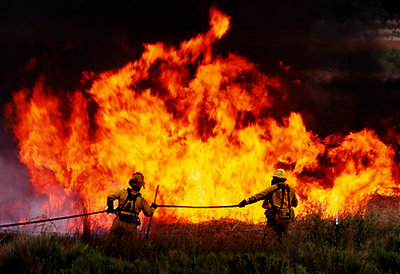
This is a blog which is more personal than most, it is about the small village of Scotch Creek, where about 1,500 people live scattered along the edge of Shuswap lake in BC’s interior. This is personal because this is a place where I lived for five years, felt that I was home there, although I am sure I never reached the status of being a “local”. I moved away about two years ago, but still feel an ill-defined connection to those that I got to know, and I often still linger and dwell when looking over my photos of that time and place. When I lived there very few people knew of the existence of this small village, but as you probably know it has now received national attention, and the expected dedicated fevered media examination, only because for the last couple of weeks, the people there have been fighting for their lives and their property, against two raging wildfires. The Adams Lake fire and the Bush Creek East fire, which came together and within twelve hours co-joined to create a seemingly indestructible inferno, a combined fire capable of travelling 20 kms in 12 hours, and then being able to surround the community of the North Shuswap.

It was a coming together for which government and the British Columbia Wildfire Service had no answer, and one where there attention had already been diverted to the more populous fires in Kelowna. But this turned into something other than just the fires, because it was also a collision between the socialist oriented BC government and to a lesser extent the Federal government, versus a small group of independent rural residents, more libertarian, more independent, and more self-reliant than currently found in most urbanized areas of the country. The BC government could not relate. In the current political mind-set, it seems that when the duly elected feel constrained, when others are not conforming to their beliefs, then they should be treated with derision. They even resort to labelling and name-calling, and always place them in the category of the far right.

For the last number of years, the citizens of British Columbia, like many in the rest of Canada have been gladly and willingly led down the path of government being allowed to control of most of our daily lives. Theirs is a utopian society where the government knows best, it is a government that will protect us, that will feed us, house us, and all the “un-housed”, and keep us safe from the mental stressors and complexities of the real world. We are to be bubble-wrapped. And when this government mind set doesn’t find like minded individuals, or when it stumbles or fails in its goals, then the general populous demand to know why; and demand to know what the government is going to do to fix it. The government continually re-enforces these beliefs and spews a constant mantra of being “there for you”. The citizens in return are expected to never question, never provoke, and the government hides behind the opaque wall of bureaucracy. We have created a population with hands continually extended palms upward, for an infusion of the always flowing monies, to hold us over, and to make all the pain go away. Money is never an issue under this regime, Provincially or Federally.

It is at least politically successful, until one hits a pocket of the public that doesn’t like the government, a group that don’t want the government making all the rules and regulations, and still exude a stubborn pride of place. It is in many ways a throwback to earlier times. Your car breaks down, you fix it, your sewer backs up, you dig the trench to fix it, and for the most part there is nobody else around anyway. This is in essence the character of the community of Scotch Creek, they are the square pegs that the government wants to try and force into the round holes of compliance.

So as these two wildfires came together, the government body charged with fighting it is the British Columbia Wildfire Service, along with the BC Emergency Management Minister, Bowinn Ma, and she in turn is backed up by the NDP Premier David Eby. The government spin during this time is too predictable “we are here for you,” “to save you”, “to protect you” from the fires. How were they going to do that? The first order of their business plan is that they are going to get you to leave, to run from the fires, and to leave everything behind, everything you worked for, everything that is your material tie to the world. Secondly the Wildfire Service will be there to “mitigate” the disaster, which in a lot of cases is not to fight the fire, but to try and “control” it. As the Scotch Creek residents watched and physically saw the flames barreling down on them, they were told to flee, but their instinct was to fight, especially when there was no sign of the Wildfire Service, in fact the Service did not show up for a couple of days. They were un-officially abandoned.

So a pocket of individuals, about 300 people reacted instinctively, they decided they were not going to lose everything without a fight. They were local, they knew the woods, the lakes, the winds and the force of the fires coming at them. They also knew with their access to boats and the lake that they could never be fully cornered, they had a planned escape hatch. And so they did fight, with every water pump, shovel, and mechanized device that they could muster. In so doing and with an inhuman amount of energy they managed to save a number of properties, and many parts of their community. It was a formidable battle, and in the end they still lost 170 properties that were completely destroyed or heavily damaged despite their efforts.

And what was their government doing? They were on the radio and the television and pronouncing in front of anyone that would listen that it was not “safe to defy evacuation orders”, that these people were “un-trained”, that they needed to leave or they would be “arrested”. When someone pointed out that they actually couldn’t be arrested, they pointed out that they could if they strayed from their own property and tried to help a neighbouring residence. The government was fully immersed in their “process” and their Command Centres issued press release after press release how these people were endangering the lives of the firefighters, these renegades were daring to disobey their direction. The media as they always do in today’s environment, echoed the government concerns almost verbatim, feeling free to chastise those that had dared to stay and fight.

The people on the ground paid no heed. But as they fought on, they were running out of diesel and water and some other necessities to survive. Their like minded residents from across the lake gathered at the Finz restaurant and marina, and they gathered together and rallied to deliver food and goods to those in the fight by boat, driving across the smoke filled lake. What was the government response to this outright defiance? They ordered the police at the road blocks to turn back the food truck, not allow it through, which one can only assume was in an effort to try and force the residents to leave by cutting off their supply lines.

A twenty person protest fringe group showed up at the roadblock, one particular day, and the police went to the media stating that these people “intended to overwhelm the police” at their roadblock. The BCWS immediately issued a social media notice that they too were leaving, it was too dangerous for them, that these twenty “protestors”, had issued “threats of violence against these safety officers”. Interestingly the media also began referring to these protestors as part of a “convoy”.

In the end, the panic was short lived. A short time later the police rescinded their concern, and the BCWS realized they over-reacted and pulled down the media post. The RCMP then felt it necessary to speak about how their officers were “well trained and de-escalated the situation quickly.” They apparently disposed of this “massive” protest of 20 people in an hour with “no violence and no arrests.”

Meanwhile, as expected the Premier was touring the sites, focusing primarily on the voters of Kelowna and the Indigenous, photo ops of comforting those that had lost their homes and belongings; Trudeau was in Kelowna as well, but was warned about coming to the Shuswap it was reported, because of the dangerous backlash that was going on there. The Vancouver media who had sent all their resources to this “climate crisis”, now wandered the evacuation centres, trying to find someone that would cry on record about having lost everything or get video of them staring through binoculars at the distant shore to see if their house was still standing.

The people at Finz, continued to say to the authorities, whether you like it or not, we are going to get help to our friends. Ever slowly, the Wildfire Service knew they were not going to win the publicity battle, the opinion tide was turning, and if there is anything the government pays attention to is the social media –so their messaging began to morph. Ms. Ma became less strident in her pleadings to comply with the government evacuation orders, never admitting they were wrong, but that they were now going to “fold these people into our operations”. They were going to co-opt these malcontents, train them in the Wildlife Service ways, and then they could begin to allow these now fully “trained residents” into the area. The extensive training by the way in the end was for one day. So in the end they were now able to supplement the 1600 “expert” personnel which they hire each year, a third of whom are summer students with the “trained residents”.

The Wildfire Service were now also facing some hardened questions. There had been a controlled burn that some folks in the area questioned as to whether or not it had aggravated the situation. The Wildfire Service denied this possibility, and quickly countered with another media conference where the controlled burn was described as being a major “… success and saved hundreds of homes”.

One may never get to the truth of it all for quite some time. The Shuswap region lost 170 properties and 137,000 hectares burned, the Kelowna region lost 180 homes or outbuildings. One would think that there need to be some questions asked, although one should know that to question firefighters is akin to asking the Pope to become a Baptist. They are to be celebrated at all times.

To date the government according to the BC Forest Minister has spent $585 million, but not to worry, “the money is there” and they are not concerned about running out of money, “whatever it takes to protect people and property”. No one pointed out in his news conference that that there are a lot of people that may tell them that they in fact didn’t do a a very good job of saving peoples property. But why quibble and distort the popular narrative.

When you look at some basic numbers, it is fairly obvious that this is about mitigation, not about saving all. There are currently about 377 wildfires burning facing these 1600 firefighters, which amounts to about 4.2 persons per fire. Clearly they are not going to fight every fire. The question is how it is determined when and where they will fight? At least 40% of their budget goes to “contracted” aviation services, 130 helicopters and 35 fixed wing aircraft. Is contracting these services the way to go? Are helicopters with their single buckets the most efficient way of fighting the fire? Firefighting is clearly a very lucrative business for some, and when large amounts of money are being expended, maybe someone should be auditing costs and the financial controls in place.

Throughout this process, it has been continually been said that these fires were “historic”, that they were the result of “climate change”. Well that is not quite true either. According to the Fraser Institute, and an examination of the data, “the annual number of fires grew from 1959 to 1990 peaking in 1989 at just over 12,000 that year and has been trending down since.”

“From 2017 to 2021 (the most recent interval available) there were about 5500 fires per year, half the average from 1987 to 1991”. The annual area burned also “peaked 30 years ago”. The Wildfire service now bends the statistics slightly, and now contends that this year, the number of fires is “six times the 10 year average”.

So the question that needs to be asked is whether the tendency for fires to become larger and more dangerous is as some claim, something that “can be traced to our approaches in forest management”. This is not a question for the individuals actually on the ground dealing with the fires, working 12 hours shifts and sleeping in pup tents, these questions are for the leaders of our government and the bureaucratic functionaries of this service. The BC Wildfire Service at the very least need to be audited in terms of management, resources and the expenditure of funds. Do I expect it to happen? No. Remember these are fire fighters.

So as the politicians slowly work there way back to their safe urban environments, the media in tow, maybe some should also realize that maybe evacuation notices should not be the only tool in their policy belt. Maybe, just maybe, they should listen to those that still project and protect their independence. They are a minority to be sure, their numbers are dwindling, but the government needs to think as to whether coercion and ignoring their input is the best policy decision. These people are in fact reminiscent of that dreaded “colonial spirit”, reflections of that “greatest generation” which for the last number of years your governments have decided need to be criticized and humiliated and spoken to as ill-educated and unworthy. The truth is that we need more of them.

And yes, they did save my old house, and I for one are very grateful for those “untrained” firefighters.

Photo courtesy of Flickr Commons by U.S. Fish and Wildfire Service – Some Rights Reserved

Harassment Complaints and officers searching for gold…

It would be easy to speak to the nonsense that continues in Surrey and the shenanigans of Mayor Locke, or the fact that our Prime Minister has revealed himself to be a “Swiftie”, and is apparently devastated by the fact that Taylor isn’t scheduled to appear in Canada this year– but those topics are too easy. They are the types of subjects that are repeatedly proving themselves too easy to poke fun at and there is no challenge in it. And It’s summer, so one’s thoughts should be filled with images of sand, sun and warm rays. Nevertheless the ridiculousness continues to keep washing over us, as much as we try to not watch the news or listen, we are being inundated by the blarney.

So lets talk about sexual harassment and harassment complaints in the RCMP. Nothing like a good debate on sexual harassment to kill the beach boys vibe. It is a serious issue to be sure, but one which the RCMP, or more specifically the Liberal government has managed to turn into another three ring victim compassion circle. As is often the case, my interest and then my incredulity, was spiked by a recent CBC article. By the way, should you ever wish to get riled up, the CBC is usually the best place to start, as they are continually searching the world over, for the next victim, the next devastated community, the next world crisis which is forcing us to the brink of extinction. In terms of the story in question, one has to suspect that when they ran this sexual harassment story, they were clearly having a slow day, or were maybe more concerned with the current campaign by the Liberals to try and get Facebook to pay them for putting their television news clippings on their website.

The CBC story begins with the usual flabbergasted proclamation in the headline, that the Independent Centre for Harassment Resolution is, god help us all, backlogged. Justice is not being done, justice is on hold, victims, and their lawyers are forced to wait long lines, bureaucratic stalemates are everywhere. The CBC voiced their outrage, and then they needed to go find a couple of prattling victims to outline and demonstrate these nefarious examples of injustice.

First, one needs to remember that the RCMP has already paid out $125 million to 2,304 female officers who made claims of being sexually harassed or abused over the last thirty or so years; this averages out to $54,253.47 paid out per complainant. That was in 2016. Then, a few years later they then paid out another $100 million to female employees who were in “non-policing roles” with the RCMP. But that was clearly not enough for the liberal gods of outrage.

On June 30th, 2021 the government and the RCMP then created the Independent Centre for Harassment Resolution. This was another bureaucratic group that was going to act as an “investigative” body to deal with the apparent and rampant ongoing harassment that was taking place daily in the misogynistic RCMP. They have proven to be too popular. Since opening their doors, they say they are now dealing with “hundreds of sexual assault and harassment complaints”. This has led to “long delays”, and now having to apologize due to the fact that in their initial mandate they were claiming that the time line for any complaint was going to be a maximum of 12 months.

In their current reporting the ICHR says that in the two years of their existence, they have now received 940 notices/complaints– 165 in this year alone. They have completed 325 investigations to date, and at least 71 are still awaiting the assignment of an “investigator”. Of course because of this deluge of discontent, they are now not able to stick to their 12 month timeline.

These numbers seem high. Is it possible that this has become another place where the ever sniffing Mounties have picked up the scent of gold. Has this become another Veterans Disability pot of shiny substance, where certain members, who are willing to abuse the system, are now also lurking in great numbers? I realize some people may take offence at this proclamation, that this will be seen as a damning indictment which aims at the honesty and credibility of the officers involved. I will apologize in advance, to those with legitimate claims. However there is a great deal of anecdotal evidence, a great deal of smoke, of this simply being the latest pot at the end of the rainbow. This has excited the less than scrupulous officers, who we all know are out there.

Of course, we are not allowed to look in, all of the files are guarded by Privacy “concerns”, so we will never know the true extent of fraudulent claims, unless someone on the inside speaks out. But, no worries, the CBC is an expert in seeking out the victims and have enticed some to come forward to at the very least, provide the nature of their complaint.

The example provided by the CBC concerns the case of officer Nicole Patapoff, who speaks through her lawyer, Sherry Shir. Ms. Patapoff is an eight year member, who was just coming off maternity leave, so has probably six or seven years active service, and she was thus required to attend firearms qualifications at her local range to “re-qualify”. Ms. Patapoff was having troubles on the firing range, with the strength in her “trigger finger”. Now, for those that don’t know, this is a common problem, as it requires some strength to pull the trigger and hold it while maintaining breathing and control. Every time I was at the range doing the same thing, there was inevitably someone who was having problems with their trigger finger not being strong enough, or they had small hands, which made it more difficult for consistent trigger pull. Often the instructor will encourage the person to actually do finger exercises, in their off-time, to try and get it right.

The offence according to Ms. Patapoff, was that the instructor told her to go home, clean the bathroom with windex or something similar to help strengthen that trigger finger. One could only assume that he meant that by using the spray device would help build up strength, but of course that is not how Ms. Patapoff took it. She was angered, and said that the statement was “misogynistic, belittling, offensive, disrespectful, and demeaning”.

An 18 month harassment investigation ensued.

The eventual but short lived good news is that her complaint was dismissed, as not meeting the criteria under the Canada Labour Code.

Had sanity finally prevailed?

But wait, as you guessed, the madness of it all continues. There is no administrative appeal process. So, lawyer Sherry Shir took the case to Federal court and argued that the complaint was “dismissed improperly”, and launched an appeal on behalf of Ms. Patapoff.

Court documents now reveal that the original investigator has now been removed from the approved list of ICHR investigators; and earlier this month the RCMP have now agreed to assign another investigator to this case. Would anyone like to guess what the new outcome will be?

They are also complaining that it is all taking too long. Amanda Nemer the Executive Director of the ICHR blames the delays on the “lack of market availability for external investigators”. One would think that you would only have to go to LinkedIn because they seem to have lists of people who advertise themselves as “investigators”. But, I will accept her explanation, as who in their right mind would want to head up this massive investigation. One must also keep in mind it took the first investigator 18 months for an investigation that would boil down to two questions. Did you say it? Is this contrary to the Canadian Labour Code?

Marco Mendocino, the Minister responsible, and quickly trying to overtake Bill Blair as the most incompetent Minister in the Liberal government, is heartened by “the rise in complaints”, that it is a “positive sign as it demonstrates the confidence that the RCMP members and employees have in this system”. So one could assume if every singe person in the RCMP made a complaint, Mr. Mendocino would interpret this to mean that everything was good because they had faith in the process.

The second case, albeit briefly mentioned by the CBC is the one involving RCMP officer Todd Gray. You will remember him; he is the member complaining of harassment, and one of his complaints is that he had to ride in the horse trailer while assigned and on the Musical ride. (by the way, I am told that that was a common practise when the Ride was travelling with the horses).

If these two examples are the best cases for the argument against sexual harassment and bullying, then the RCMP and this government is in some serious trouble in terms of their credibility.

The problem with all of this seems to be that the Mounties are just one group, that has come to the realization that when it comes to suing the Federal government, there are certain cases you will always win– regardless of the evidence or lack of evidence. Any suit you can bring that deals with harassment, sexual harassment, disabilities, or indigenous rights will in effect be settled– the government and the RCMP will never go to court. When anyone brings forward a case that can involve these topics, it seems to chum the waters for the circling lawyer sharks. The lawyers and their clients know that virtually all of these types of cases end with the conversation “What will it cost to make this go away?” It is now well established that the Liberal government will never be forced into a headline where they are appearing to be insensitive to these issues. Money is no object, when one needs to be seen and are being directed so as to be on the right side of good.

Unfortunately, there are certain officers who can convince themselves that any infraction or misstatement should result in compensation. I know of many cases of officers abusing the Veterans Affairs disability system, and I know many cases of officers benefitting from the sexual harassment settlements where the evidence was dubious or weak at best. It’s all anecdotal, although many officers can’t help themselves and brag about their winnings, because no one is allowed to know, and therein lies the beauty of the fraud. There is no punishment or redress for making a vexatious complaint, you simply give it a try and see if it works.

So, I am sorry Ms. Patapoff, your complaint from the outside looking in, appears ridiculous, you are wasting the resources of government. But, I also suspect that in a year or two, if you hang in there, you will get a settlement and that it will be paid out, just to have you go away. It may not amount to much in the end, once your lawyer takes their 30% however. And if you continue your policing career, prepare to get much more offended by what people say to you– it will be more offensive than someone telling you to squeeze a Windex applicator.

Photo courtesy of Paul Scott Via Flickr Commons — Some Rights Reserved

Healing Lodges – just a better place to be

Tori Stafford was last seen alive on April 8, 2009, shortly after leaving school, heading home, captured on a video camera going down Fyfe avenue in small town Woodstock Ontario. She was being led by the hand by a woman, feeling be-friended,  no doubt filled with an eight year old’s optimism.

Almost three months later, on July 21, 2009 her body was found in nearby Mount Forest, naked from the waist down, her Hannah Montana t-shirt and a pair of earrings she had borrowed from her mother her last vestiges of her short time on earth. She had suffered broken ribs, a lacerated liver and had died as a result of repeated blows to the head with a claw hammer.

A slow torturous death. Unimaginable to most, perpetrated by two individuals, 28 year old Michael Rafferty and 18 year old Terry-Lynne McClintic. In a trial Rafferty was convicted of sexual assault, kidnapping and first degree murder.

Originally charged with being an accessory to the murder, McClintic eventually pled guilty to a higher charge of first degree murder.

It was a case that in the view of the general public demanded retribution, they needed to pay for their crimes. We have become inured to a lot of public deaths, not this one, it was one of those that went to a level that causes a visceral reaction, you taste the bile in your throat.

She was sent to the Grand Valley Institution for Women in Kitchener, Ontario, a normal conclusion in our Canadian judicial world to a heinous crime. Justice, or some form of justice meted out.

But then she entered our correctional system. And that is where the story re-ignited.

There is a couple of truisms that usually play out by those prisoners doing “Fed time”. First and foremost they quickly develop the need to survive; they need to find the easiest route through the system, the best jobs, the placement of video cameras, where you sit at dinner, who you befriend, who you don’t. A child killer has a path fraught with even greater peril, their heads becomes a swivel, their own deaths anticipated.  If you are capable, you learn the game and then you learn how to play the game.

A second truism is that those that are incarcerated find religion on a regular basis. It would be fair to say that not many murderers or child killers are religious when they enter the institution. But imprisonment, like imminent death, seems to assist in finding that religious part of your soul and lo and behold a child of God is often re-awakened.

Federal institutions are not fun places and one suspects that McClintic somehow learned of a better place to be during her first years in prison. Somehow she became aware of “healing lodges” which had been created primarily for indigenous women prisoners.  Apartment style living, a kitchen, visitors, no guards, versus 8 x 10 cell living, constantly staring at your requisite Orange is the new Black poster. Who could deny the appeal?

One can imagine the semblance of the conversation, where she was told that you had to be Indigenous to get in (which isn’t true), so she asked how do they test for that? They don’t, she was told. You can just say you are.

It is only a short step to then apply, declaring oneself indigenous and probably throwing in for a little positive aggrandizement, that she was very spiritual in nature.

It took eight years, but at last she got her wish, making it to the Okimaw Healing Lodge.  She had just begun enjoying the comforts of something like a home when all hell broke loose; her case came back into the public eye, and finally the Liberals broke down and made sure she got sent back, the public backlash too much for the sensitive Liberals. Sensitive to public outcry, not the plight of the victims family.

One should not resent Ms McClintic, she was just working the system and it almost worked. It may be that her fellow women prisoners are having a good laugh about the whole thing, McClintic now a heroine for gaming “the man”.

But one must hold the “system” accountable. How the decision was made reeks of a bureaucrat not doing a proper job, but should we not be questioning the very existence of the healing lodges themselves.

According to Correctional Services Canada, a healing lodge is a place where “we use aboriginal values, traditions and beliefs to design services and programs for offenders. The approach is “holistic and spiritual”. A religious treatment of the whole being.

Non-indigenous can also live at a healing lodge however they must follow “aboriginal programming and spirituality”. You must be the same religion, in line with indigenous spirituality. One would think that a person fitting this category would be a rare phenomena.

Spirituality is “the quality of being concerned with the human spirit or soul”. But by no means is indigenous spirituality monolithic, there is no religious uniformity across the country, in fact of the 1.7 million indigenous, two out of three identify as being Christian. So it is sometimes difficult to understand what is being sought or would be practised.

Healing Lodges are funded either by Correctional Services Canada (CSC) and staffed by CSC, or funded by CSC and managed by “community partner organizations”.

There are a total of 9 lodges in Canada, 4 run by CSC and 5 by “community partners.”

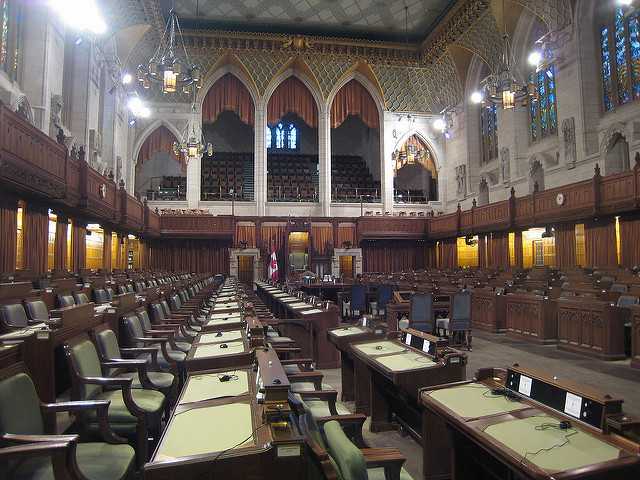
How they came about is an example of the Ottawa world and the rarefied air they breathe. A constant whirling mix of academia, politicians intent on re-election, and business leaders trying to get in on the gravy; all feeding off each other, absorbing the latest en vogue thoughts and processes, all circling and feeding. A bureaucracy, acting autonomously, guided by the political flavour of the day, then developed and constructed without scrutiny. Nobody allowed to question or look within, and the process itself hidden behind multiple meetings in multiple layers, conducted in their own governmental language.

This force moves and adapts very slowly, moving in concentric circles, through steering committees, Senate and Parliamentary committees, inquiries, task forces, and fact-finding missions. They are unaware and uncaring of the public looking in, common sense often in short supply. To question is to be tossed out of the circle cut off from the government teat. Costs are not often part of the equation. It is from this process that came the belief that a healing lodge made perfect sense.

In 1990 there were calls and plans being made for five new regional correctional facilities.

A task force, as is often the case, was lurking in the background. The Task Force for Federally Sentenced Women, who in their report “Creating Choices” recommended that one of these facilities be specifically designed and run for indigenous women.

The Native Women’s Association, a Federally funded advocacy group, one of the groups in this Ottawa circle of life, proposed the concept of a healing lodge.

There was also a group at the time of  “former Federal aboriginal offenders who were advising the CSC”.  This would normally make one scratch their collective heads, however it is true. They of course agreed wholeheartedly and supported the Native Womens’ Association in the need for and development of a healing lodge.

So what is the logic behind this clearly subjective policy proposal. According  to the CSC there were two main reasons:

“Mainstream programs don’t work for Aboriginal offenders.”  This seems to have been presented as a statement of fact, but it is difficult finding any verifiable research this pronouncement is based upon.

Secondly, they stated that there is a dramatic “over-representation” of Indigenous people in Federal facilities. (Apparently persons convicted of crimes were now “representatives” and not convicts) They were not wrong.

In 2017 Indigenous individuals made up only 5% of the Canadian population; yet 25% of the males and 36% of the females behind bars were Indigenous. This number is expected to continue to grow, mainly due to the ever expanding birth rates and the continuing problems experienced by the Indigenous.

If one accepts the concept of needing a special place, a place where they would be treated differently from all other inmates, then the obvious next question is do they work?

A review of the digital brochures for each of these facilities talks about a holistic and spiritual approach, training and maintenance skills promoted as in other facilities, but all given the opportunity to “heal”, “grow spiritually”and re-connect with Aboriginal culture”.

Again, little to no evidence of its effectiveness, but they continually issue the statement that  “culturally-appropriate environments can contribute to the healing process of offenders”. That participants develop a “stronger familiarity with Indigenous history and traditional languages”. Not exactly an insurmountable goal, and it would be unfair to expect any kind of reduction of criminal activity, as this is after the fact after all. Heinous crimes have already been committed.

By offering beyond the usual training and teaching found in any correctional facility, does the offering of “weekly sweat lodges”, “pipe ceremonies”, “smudging”,”medicine wheel teaching”, “carving”, “beading” and “sun and rain dances” lead to a lesser recidivism rate among indigenous? Is it any better training than what is offered already to the rest of the prison population. Or is it serving as just an easier place to do your time.

In a 2013 government backgrounder, the government said that the recidivism rate was 6%, when the national average was 11%.

However, in an earlier government analysis in 2002, it measured the recidivism rate as being 19%, compared to 13% for indigenous released from minimum security facilities. A dismal failure.

In 2016 the National Post reported that 18 inmates had escaped from healing lodges over the previous five years. Not unexpectedly, as there are only security guards watching video monitors, instructed only to call the police if someone walks away.

There is even a lack of acceptance by the Indigenous Reserves where the healing lodges have been proposed. In 2012, a Review by the government found that there was a problem with community acceptance as not every aboriginal community wanted or was willing to have the lodges in their communities.

So where does leave us. Everyone knows that the ‘real’ problems for the indigenous: substance abuse, inter-generational abuse, residential schools, low levels of education, low employment and income, sub-standard housing, sub-standard health, isolation, violence, greater inclination to gang violence, and mental health issues are the reasons the Indigenous and their youth incarcerations rates are at stratospheric levels.

In March 2018 the government released a report entitled ‘Updated Costs of Incarceration’. A male offender in a minimum security institution costs $47,370 per person or $130 per day. A female offender in a minimum security institution costs $83, 861 or $230 per day. An inmate at a healing lodge is the most expensive, costing $122,796 or $336.00 per day.

The Salvation Army gives out a bowl of soup and a prayer on the skids of Vancouver each and every day, before providing food and lodging, combining their spiritual beliefs of salvation with a social cause. But they are dealing and providing at the source. There is a measurable impact.

The Federal government has released records indicating that since 2011 over 20 child killers have been sent to healing lodges. The Liberal defence in the McClintic case is that the Conservatives did it too.

These lodges are better for the inmates, providing a nicer place to be, but as a tool in the Corrections toolbox, they have been a costly and failed experiment.

Is it not time to close down this experiment?  Besides, we don’t want McClintic to have a nicer place to stay.

It isn’t fair to Tori.

Photo Courtesy of Carlos Ebert via Flickr Creative Commons – Some Rights Reserved


Historical negativism…reaching Orwellian levels in this country

Historical negativism or denialism is the illegitimate distortion of historical records, which James McPherson, the Pulitzer winning historian further describes as a “consciously falsified or distorted interpretation of the past to serve partisan or ideological purposes in the present”.  A “cultivation of a specific political myth, sometimes with the consent of government.”

Which brings one to the 2nd last apology by PM Trudeau and the Liberals. (It is admitted that keeping track of the numerous apologies is getting increasingly difficult)

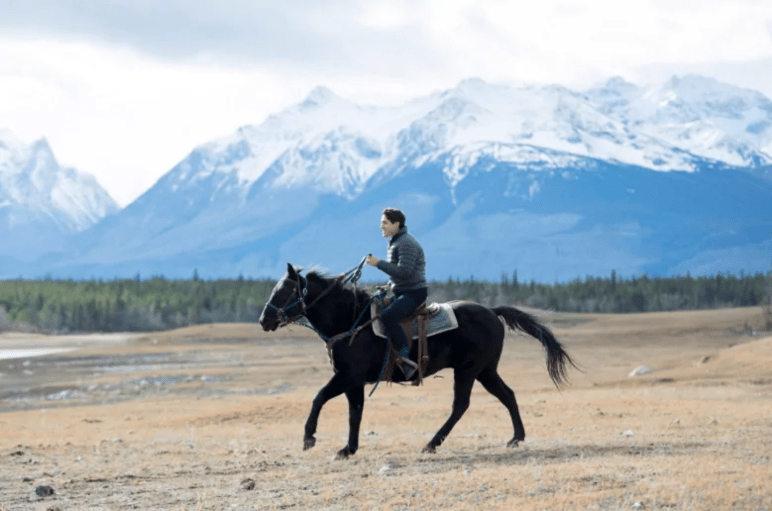
We were recently exposed to Trudeau riding in on a black steed, in a set-up photo moment. He was cantering in to dramatically apologize to the Tsilhqot’in in Nemiah Valley part of the Quesnel area of British Columbia.  He had travelled across the country to once again apologize for events which occurred over 150 years ago; events that occurred on October 26, 1864, an event which has been termed by historians as the “Chilcotin uprising”.

This “uprising” was carried out by the self-designated “War Chiefs” of the Tsilhqot’in: Chief Klatsassin, Telloot, Tahipitt, Piele and Chessers.  As the Liberal story goes they had been arrested 150 years earlier, convicted of murder, sentenced to death and eventually hung. This was a travesty according to your current government.

Apologizing to persons convicted of murder is unusual even in this day and age, even for this current group of politicians. Pictures of our theatrical PM Justin Trudeau literally riding in to set the record straight, to apologize for the execution of six chiefs of Tsilhqot’in more than 150 years ago seemed curious, worthy of further exploration.

In fact this was not the first apology for this event. In 1993 the B.C. Government apologized originally and erected a cairn in memoriam.

This first apology, as it turns out, was as a result of an Inquiry in British Columbia headed by Justice Anthony Sarich, who had been tasked to explore the “native people of the Cariboo-Chilcotin and the Justice system of the Province”.

He  issued a final report: “Report on the Cariboo-Chilcotin Justice Inquiry, 1993.”

In his report Justice Sarich talked about this historical event which was referred to as the  “Chilcotin uprising” or sometimes the “Bute Inlet massacre”.

There appears to have been no argument at any time that the Chiefs were innocent, but he said that there was “concern that the chiefs were induced to surrender and give inculpatory statements on a promise of immunity by Magistrate Cox”. In other words they had been “tricked” into surrendering and in doing so made some statements that implicated themselves.

Sarich stated that throughout the Chilcotin region, the story of this “uprising” had verbally been portrayed in the Indigenous community as the Chiefs defending their land, an effort in the fight against colonialism. So Sarich now had to confront two versions of the story; the documented historical version including trial transcripts and the one being verbally passed down in the Indigenous community.

Sarich in his final report, somewhat surprisingly, and not very Judge like, could not come to a conclusion and as the flavour of the day was appeasement, said “whatever the correct version that episode of history has left a wound in the body of Chilcotin society. It is time to heal that wound.”

So, on the basis of “whatever the correct version”, the BC government formerly apologized to the Indigenous of the Chilcotin in 1993.

Not to be outdone, the Trudeau government, who seems to search the historical records for anything resembling a good bandwagon when it comes to anything Indigenous also issued a “Statement of Exoneration” in March 2018 in Parliament. Of course, the opposition parties on hearing an apology to the Indigenous felt naturally compelled to join in unified approval. After all, how could any apology to the indigenous not be assumed to be well researched, another step toward reconciliation. Perception is  everything, it is part of the reconciliation dogma.

What really catches ones attention were the actual words in the Exoneration document drafted by the Liberals. It said that the Chiefs are “fully exonerated because they were acting as one independent nation engaged in war with another when they were attacked and killed… a betrayal of trust” .

Even a dim historian, would wonder how was it possible to be a Nation at “war” when we were not yet a nation.  This occurred in 1864 and our country was formed in 1867. Needless to say there neither was there a recollection of our yet to be “country” at “war” at the time.

Trudeau said the Chiefs were “protecting their Nation which was under threat” and they had acted “in accordance with their laws and traditions”.

So where did all this start?

In 1864 Governor Frederick Seymour was the colonial administrator in the region at the time and because of the interest in the extraction of gold, he also had a Gold Commissioner named William Cox. The governor had authorized or sanctioned the building of a wagon road from Bute Inlet to Fort Alexandria, with the idea being to connect it eventually to the Cariboo road, and then on to the gold fields of the Cariboo.

The killings for which the Chiefs were convicted began on April 29, 1864 when a ferryman, connected to the road crews, Timothy Smith, was confronted by the Chiefs. Whatever form the confrontation took it did not end well for Smith. They demanded food, shot Smith, and then threw his body into the river. The Chiefs then looted the food stores and supplies taking with them a 1/2 ton of provisions.

The following day, the Chiefs then attacked a workers camp in which three men were injured and escaped down river. Peterson Dane, Edwin Mosely and Buckley (last name unknown) escaped down the river, but the remaining crew were all shot or hacked to death. Their bodies were also thrown into the river.

Four miles further down, a foreman William Brewster was working on blazing the trail along with three others. They too were attacked by the Chiefs, and all were killed. Brewster’s body had been mutilated, his penis cut off and stuffed in his mouth, his heart cut out of his chest and eaten.

Later a settler of Puntzi Lake, William Manning, who was not related to the work crews was also killed.

A few days later, a pack train which was travelling through the area was subsequently “warned” about the Chiefs and the killing rampage, but the train decided to carry on. They were “ambushed” by the Chiefs and all were killed.

By the end of this spree, nineteen persons had been killed, shot or hacked to death.

Governor Seymour on hearing of the killings sent crews of twenty, and then fifty people in an effort to locate and arrest the Chiefs. All were to no avail.

This led to an eventual meeting of Commissioner Cox with the Chiefs. Cox apparently gave them assurances of friendship, and when the Chiefs came forward, all were arrested in what had to have been one of the original ‘sting’ operations.

In a trial all were convicted and sentenced to death by Justice Begbie who was fluent in both the Shuswap and Chilcotin languages. Their defence at the trial (and there is a transcript) was that they were “waging war”. The road crew they argued had been sent by the Colonial government, and therefore they were “under threat of smallpox and further loss of land”.

This was presented by Trudeau in his speech, in the Liberal revision said that the colonial government was “unwilling to accept that these six chiefs were leaders and warriors of the Tsilhqot’in Nation”…and that they were trying to “maintain rights to land that had never been ceded.”  Then adding that they were “well regarded as heroes by their people”.

The heart of the issue is the motive. The Chiefs, and now this latest government all seem to believe that they were an “unceded” nation that could lay claim to any and all lands at any time. Therefore they could self determine if the road crew was on their “territory” and therefore conclude that the very building of the road was an act of war by a colonial government.

It stretches ones incredulity. The other possibilities and far more likely motives were “plunder”, “revenge”, and “starvation”.

The fact was that these individuals were innocents, killed in cold blood, persons working on a road, not at “war”. These were defenceless individuals who were slaughtered, mutilated and their bodies thrown in the river all seemed to escape the government vettors of apologies.  There was no innocence here. There was no denial of the killings. Judge Begbie in his comments called the Chiefs “cruel, murdering pirates”.

If this trial was conducted in 2018, it is highly likely that their self declaration of war on a nation would not bear much evidentiary weight. The fact that they made inculpatory statements, and had been tricked into being arrested may have tainted any inculpatory statements they made, but it would not have led to a finding of innocence.

Mel Rothenberger, who wrote a book on the events, and who is a descendent of one of the victims of the massacre was interviewed by CBC Radio. He was upset by the revisionist version which has been allowed to be told without any kind of academic review. He too talks about the fact that there was no declaration of war, that these victims were hacked, shot and plundered. This was not war, this was a robbery homicide.

Rothenberger’s version is based on the record, as there are numerous academic documents including a trial transcript record. In fact he says it was one of the best documented areas of research in Canadian history of this time period.

The Indigenous version is clearly subjective, verbally worked over and passed down over the decades. In their reworking of the events, they obviously felt that portraying them as heroes and not criminals was in their best interest and now goes with this modern age of revisionism, the chant being forever and always the victims of colonialism.

This was cold-blooded murder. And your government in an effort to further ingratiate themselves to the indigenous cause seems to feel it is ok to pardon those murders, the colonialists and the innocent victims forgotten.

Michael Dunn in an article on Theory of Knowledge.net, writes on how and why history gets re-written and offers up four possible scenarios.

The fourth reason he cites is that there are social, political, and psychological paradigms that alter the historical record. In other words the political and social climate seeks to change history.

We were warned by George Orwell who said, in his acclaimed book “1984” that “he who controls the past controls the future, and who controls the present controls the past”.

This story,  at this particular time in Canadian history was indeed a black mark, one from which we should all learn. It should not be a proud moment for the Indigenous. Maybe, just maybe it is an example of the state at the time, the ongoing clash of colonialism with the indigenous. Nothing more.

Even if one accepts that this Indigenous group were desperate, hungry, frustrated by the ongoing Colonial inroads being made one still has to conclude that this was a murderous crew with much different intent. To bend and twist the pages of history, to hide the motivations, to cover up the brutality of it all and then make them heroes for massacring innocents is beyond the pale.

Not one journalist, not one parliamentarian felt the need to ask a question. No one did their homework. It makes one wonder how the descendants of the victims feel, but one thing is certain, they will never get an apology.

In March of 1968 during the Vietnam war, over three hundred unarmed civilians were killed by U.S. Troops; unarmed women, elderly and children were killed as an act of war. The defence argued that they were at war, therefore anything goes.  Eventually Lt. William Calley was convicted of “war crimes” in a highly publicized trial which was considered one of the most shocking incidents of the Vietnam war. The killing of innocents even in a time of war could not be sanctioned.

In this smaller, Canada version, there was no war, but the Chiefs claimed in their defence and during their rewriting of their history that they were at war, defending their “nation” regardless of the fact that these were innocents, not soldiers in some real or imagined war. At the very least these Chiefs were war criminals. No mangling of the historical record can make them heroes.

Trudeau recently said while in Europe that “the very capacity for a citizen to engage with the truth is under attack”. How right he is.

The Liberals and those that followed suit should be ashamed. We will have to see if they too get “exonerated” in the next election, or maybe in 150 years.

Photo Courtesy of Jonathan Hayward of the Canadian Press some Rights Reserved


Mandate

Like a 1950’s child running to meet the postman for the Sears catalogue, one wonders whether Ms.Lucki dashed to greet the postman who was delivering  her new “mandate” letter.

If you were bored, frustrated, killing time waiting for shift end, or enjoy a little masochism, then you too may have read with anticipation the Honourable Ralph Goodale’s “mandate letter” to Commissioner Lucki.

The document is surprisingly brief from the illustrious Minister of Public Safety and Emergency Preparedness. It was likely “ghost written”, by a high placed bureaucrat and screened by a legal team, nevertheless it is still revealing. With a little in-between line reading, if there were any doubts as to why Commissioner Lucki rose to the surface and became the cream of the crop in the view of that Liberal august selection committee, then this document should remove that doubt.

What is interesting is what is missing, what was not worthy of mention. If you want to believe that operational policing is the soul of the future RCMP under Commissioner Lucki, you may be wrong. If you think terrorism, cyber crime, white collar crime or child pornography are occupying the minds of the RCMP management in the endless future meetings at 73 Leikin Drive in Ottawa,  you will likely be disappointed.

The letter begins with a reference to Section 5(1) of the RCMP Act where the Commissioner of the RCMP has the “control and management of the RCMP and all matters connected to the Force”, but of course at the “direction of the Minister”. He goes on to say that “police independence underpins the rule of law and ministerial direction”,  that he will rely on the “advice and input” to “help me” establish “strategic priorities.” Blah blah blah.

All that requisite dribble aside, he then goes on to outline what Commissioner Lucki’s “role” will be. Which will be to “reinforce” and “support” the organization in its effort to modernize and reform the RCMP’s culture”

Its future “transformation”, as envisioned by that old sage Goodale will include the “health and safety of the RCMP employees”… “including from harassment and violence in the workplace”….and of course “enhancing its role in reconciliation” with “Indigenous peoples”.

All predictable of course, in light of Justin Trudeau and his cabinet recurring themes, but stark all the same in its simplicity.

The next paragraph mentions “internal and external governance structures and practises”, no doubt a reference to a future civilian administrative oversight.

Then the letter returns to clearly its main preoccupation. “You will need to prioritize that the RCMP is free from bullying, harassment, and sexual violence” and that she should prepare an extensive response to the reviews that were outlined by Sheila Fraser from the Civilian Review and Complaints Commission. She will need to “ensure that the RCMP is representative of Canada’s diverse population, including gender parity, and that women, Indigenous Peoples and minority groups are better reflected in positions of leadership”.

Mr. Goodale ends by reflecting on Commissioner Lucki’s previous posting of Training Branch in Regina, and he lauds her for her commitment to training, including “diversity, inclusion, and a respectful workplace”.

So where does this leave us? Like any change in power, whether it be in government, or in a government agency, it is helpful to look at the scope and focus of the change and try and determine who are the winners and who are the losers. Who are now in favour, and who have fallen out of flavour. Here are some predictions.

The Winners

If you are indigenous in the RCMP, or if you are even partially indigenous, or if you can claim a distant ancestry to anything resembling an indigenous group you are a clear winner.

If you are a member of the First Nations Policing Program in 2018 the Liberals have already invested $291 million in the program over the next five years. You are a winner.  This group which is overseen by this same Ministry is designed to “enhance the effectiveness of policing services in First Nation and Inuit communities.”

What “enhance” means in government speak can be anybody’s guess, but lets face it, they will likely be able to reach that goal.

If you want further proof of the constant indigenous theme, don’t stop at Ms. Lucki, look at the rest of the Senior Executive Committee of the RCMP management. Besides, a clear background tendency to the Federal policing side, you will also constantly see the theme of indigenous relations and its level of importance.

Even the more vocal and somewhat rebellious indigenous groups in Northern Manitoba are winners. Commissioner Lucki worked and resided in that area and received an Order of Merit for her “efforts to improve relations”. It doesn’t say that she did improve them, just that she made an effort of course.

The second clear winner are female officers.  With a relatively pristine record, and if you have more than 15 years of service, your odds of becoming management have become markedly greater.

This is not new. The trend for more women officers has been moving along at a high clip since the 1980’s when they first became the hiring priority.  In 2006 there were only 6% of officers were female, in 2016 that number has increased to 21%; more than a 250% increase. In 2016 as well, 13% of senior officers in policing were women.  There will need a massive advancement of female officers in the next few years to have a visible measurable impact, one which Lucki can hold up as evidence of success. Expect demands for more flexible work hours, greater considerations for pregnancy and eventual return to work accommodations.

If you self identify as a member of LGBTQ during the recruitment process or a member of any of the visible minorities, then you too should be a winner.

If you have a claim under the sexual harassment class action you will be a winner. There is little likelihood that this Liberal free-spending government will be eager to deny any claims even if some may be spurious and would normally warrant some authentication. There has been an exponential growth in claims, so expect that to continue.

The Losers

If you are a farmer or resident of the North Battleford area of Saskatchewan which enjoys the highest crime rate in Canada you are a loser, and you should not expect any improvements in policing for the next few years. You are in the way for those who will be pushing the indigenous agenda, so therefore you are politically expendable.

If you are an officer in Chase B.C. or Dauphin Manitoba, hoping beyond hope, that a replacement will be found to fill your position, you are a loser. The current staffing consensus indicates that there are not enough new people to even fill the retirement levels. Lack of manpower has been the theme for a few years, but expect this to continue as it never even gets honourable mention anymore. Clearly, they have given up on the phrase “more for less”, as its marketability has become more irritant than salve for the masses.

If you are optimistically expecting a pay raise to bring you back into contention in the police universe, you are a loser. The Federal government is clearly sitting back and waiting for the union process to get settled. Is it necessary to also point out that manpower and wages are not mentioned in the mandate letter? They haven’t quite figured out that morale, quality of life and optimism are directly linked to these issues.

Are we making too much of this mandate letter? Is this the thin edge of the knife?

The concern of course is that there has always been a curtain drawn, a line not crossed when it comes to the relationship between the police and the State. Goodale even makes reference to “police independence” in the beginning of the letter. However in real terms policing is at a crossroads. In the U.S. Donald Trump is trying to wrest control and direction of the FBI with political shenanigans only impeded by a robust 5th Estate, and an unwilling to go along attitude of the Justice Department and the FBI themselves.

Has Canada, the docile and compliant country that we are, now entered into a relationship between the police and the state which is a little too close for a properly running democracy? Have we now rolled over and woken to a new political RCMP, one wholly directed and run by the authorities?

Has that line been crossed? Is Commissioner Lucki now no different than the other Ministers who rely on the government of the day for their survival?

Maybe we are reading too much into it. Maybe the RCMP bureaucracy is so stultified that nothing will ever get done, maybe we can rely on bureaucratic incompetence to keep us safe.

But there is little doubt the RCMP is teetering, in fact it may be too late. It may have already become a fully engulfed political institution, part of government, not separated from it, no longer an ethical divide between them and the governing party of the day.

In the end the ultimate winner may be Commissioner Lucki herself.

After all, if she succeeds in pleasing her political masters in the next few years and if the Trump of the north continues to reign, who knows, maybe the Liberals will make her a Senator too; for a job well done of course, a job done as directed.

Photo Courtesy of Flickr Commons by elPadawan Some Rights Reserved


The Case of the Missing 100 Police Officers…

The RCMP in almost every field of endeavour for the last several years has been beaten up, the badge tarnished; the criticisms coming fast and furious, sometimes unfair, but more than often deserved.

They, meaning the management of the RCMP,  have been displaying a lack of operational understanding, often proving themselves to be ineffectual in times of crisis or at critical investigational junctures. This has been in combination with an embarrassing lack of leadership in terms of managing their own personnel.

The RCMP’s inability to solve crimes, their inability to bring terrorists to successful trial conclusions, their inability to defend Parliament hill,  and their inability to appreciate and anticipate sexual harassment civil suits costing hundreds of millions of dollars, have left this once proud organization, this policing icon to the world in shambles. Piece by piece it is being exposed and stomped on, while being watched over and supervised by ineffectual governments.

The current group of managers extoll the qualities of political correctness, strive at being inclusive; they are not known for principled steadfastness, successful investigations or timely intelligence gathering.

The RCMP does not operate in a vacuum. If internal ineptness is not enough they are also being hampered and hindered on several fronts, whether it is the judiciary and the Jordan rule, prosecution services hiding behind “substantial likelihood of conviction”, or a simple lack of resources and an absence of  human relations policies.

The incestuous world of RCMP upper management is now being governed by a new leader, one known apparently for her inclusiveness, and as recently announced her willingness to go along with the mandate of the Liberal government. She has effectively declared herself a follower, not a hoped for leader.

Present day officers have been suffering for years from a flawed promotional and staffing system, an unsupportive  management and an infusion of political correctness that has left this organization confused, struggling with 21st century issues, and in need of a complete re-build.

Many wonder how the RCMP has lost its way in such a profound manner?

The RCMP is being buffeted by wave after wave of 21st century standards and policies being forced upon a 20th century stultified organization. Nowhere is this more evident than at their flagship for operational policing in Canada, the Surrey detachment of the RCMP, its largest operational Detachment.

Located at 14355 57th Ave., in Surrey, British Columbia, its city sculpted flowered entrance belies a troubled organization. Behind this somewhat imposing concrete bunker style building the problems battering the RCMP play themselves out on a daily basis.

As any quantitative researcher will tell you, numbers matter, and an examination of the statistics coming out of this office are enlightening. (After a year long wait, an Access to Information request was recently received.)  Questions have been asked about the makeup of the detachment, the deployment of resources to see what could be found out from this rather secretive group. It is believed that Surrey is an example of what is going wrong within the RCMP in terms of its operational capabilities.

First: the population of Surrey has been growing.  In 2006, the population of Surrey was at 394,080; in 2016 the population was 530,443 an increase of 34% in those 10 years. So you may assume that there must have been a requisite change or increase in the number of occurrences or operational files generated by the RCMP just based on the increase in population? More people, more problems? (Most policing agencies base their requests for further manpower on the numbers, the more people the greater the need for officers, based on a police/per person ratio of anywhere from 1/600 to 1/900 for example)  However, if you look closer you will find a different story.

The actual number of  operational investigational files generated by calls for service went from 162,973 in 2006 to 185,801 in 2016.  That is only a 14% increase. How can this be explained?

One theory is that the reporting of actual crime has dropped. Businesses in Whalley for example, which have been broken into a number of times simply are not reporting them anymore, keeping the numbers at an artificial low. Difficult to measure for sure, but the anecdotal evidence is strong.

It is also possible that the makeup of the population is changing;  is Surrey becoming a wealthier suburb of Vancouver? Is the criminal element shifting further east? Also possible but not being measured as of yet.

So if the occurrences are not growing, because those numbers show an occurrence rate growing at only 1.5% per year, what about the actual types of crime: comparing the years  2006 with  2015.

                                 *2006                            2015

**Homicide                 11                                 15

Assaults                  4,909                              3464

Robbery                   670                              762

Abduction                144                                 45

Crim. Harassment   1, 708                          1,907

B &E                          4675                              3786

Theft MV                 4,769                              3,291

Total thefts             15,068                           15,262

*All Stats are from the RCMP Web sites. ** One should also note that homicides in Surrey are handled by IHIT, not resources of Surrey Detachment.

These are just a few examples listed on the RCMP Web site. What is striking is that the numbers are pretty similar even though nine years of growth have occurred. The crimes of 2006 are the crimes of 2015. Some went up, some went down, and in the totals: Criminal Code offences per population as measured in 2006 was 113.91; in 2015 that number was 97.74.

The 10 year average was down overall. So if one were to generalize, you would have to lean to the fact that the crime rate has actually decreased during this time period.

So if the investigational files generated has only grown by 14% in terms of actual calls to the police, then should we not expect to find that the Detachment has grown accordingly?  The actual detachment size has grown at a staggering rate, despite the drop in crime and a very meagre growth in investigational calls, and despite cries for more officers.

The number of personnel now working in Surrey Detachment during this time period has grown by f 41.069 % .

The annual budget for the Surrey RCMP has gone to $144,981,000.00 in 2017. This is roughly 45% of the Surrey municipal government’s overall budget.

If we examine just one of the ranks in the building, the Sargeants for instance they have gone from 29 in 2006 to 73 in 2017. In strict pay dollars that amounts to an increase in spending on Sargeants who make a salary of $102,715 (not counting overtime) from $2,978,735 in 2006 to $7,498,195 in 2017.

The number of personnel working in the Detachment in all capacities has grown from 570 in 2006 to 837 in 2017.

There is a general theory in policing, that boots on the ground matter. The “broken window” theory of policing as espoused by the New York Police Department to great effect has become an accepted belief. That if you look after the small crimes, the rest will come naturally.  In looking at the growth in Surrey detachment you would probably assume that the streets of Surrey are heavily policed. A police car and an officer on every corner.

One must bear in mind, that the face of operational policing in any detachment is the uniform personnel. They are the ones that take the calls, patrol the streets, and conduct the  majority of the investigations that are generated day to day. The RCMP management continually call it the “backbone” of the RCMP.

The RCMP does not seem to agree or go along with the “broken window theory”.  Remember the cries for help and the 100 new officers that were being promised in the wake of the murder of middle aged mom, Julie Paskall outside the Newton Wave Pool?  The Surrey RCMP decried the lack of resources but promised all would be solved by an increase of 100 officers. (a perfectly round number and one wonders what formula came up with this)

Unfortunately what they say and do is quite different. For the last number of years and possibly decades, the uniform personnel have been treated as 2nd class citizens, and the RCMP management has taken this opportunity to enhance their plain clothes establishment, increasing the numbers and increasing the promotions, growing the policing empire. Upper management at this Detachment have thoroughly bought into the theory that everyone is a specialist, policing is more sophisticated, more in need of specialized education and investigation to combat the overwhelming problems of policing. They have become more of a Federal government department, fat with oversight, fat with overtime, fat with jobs that seemingly grow more distant from the actual job needs. They have lost sight of the core job of policing a City like Surrey.

All officers start on the streets, in uniform, but after three or four year service, most of the current crop of officers believe that their career path has to mean going to a specialized unit. The demographics of the last twenty years with senior officers leaving in droves, means that officers who once stayed on the road in uniform for 12-15 years have been replaced by officers of  3 or 4 years service. And these junior officers, in this environment feel that they should be promoted earlier and be allowed to go to these specialized units much earlier. The current experience of officers on the road has decreased to a significant and marked degree. With seniority declining, the level of experienced supervision has also declined.

According to our filed Request for Information, in 2014, the total police establishment in Surrey was 703. According to the statistics provided by them,  there were 276 officers assigned to General Duty (uniform) for Surrey Detachment.

Remembering there are 4 Watches, that would mean on paper, 69 officers per watch. Unfortunately the RCMP is being misleading.

In actual fact for the years 2011 to 2017 the numbers on the Watch are actually between 40 and if being generous, 50 officers. So 20 or so officers per Watch, have been taken from the uniform side, and also seconded to specialized units. By simply moving the position numbers to the secondary units.

In 2011, when personally last in Surrey, we had difficulty sometimes putting 35 officers on the road, and were routinely calling in officers on overtime to reach the unwritten “minimum” of 35.

Nothing has changed much since 2011. Patrol officers continue to be swamped, unable to obtain meal breaks, unable to get done their 12 hour shift without an extra two hours of paperwork. They were and continue to be over-worked.

If off for prolonged sick leave, or for maternity leave, there is no replacement member put in their stead.

Meanwhile the Detachment managers have for years have been consumed by growth and the perks and enhancements that come with it. The upper echelon have come up through the plainclothes ranks and have become adept on growing departments, padding the payroll, and increasing the promotions, while on the road the uniform numbers remain virtually unchanged, sometimes at dangerous levels.

The  “plainclothes sections”, rule the ship, taking their coffee breaks, lunch breaks, and throwing in a little time for the gym.  Overtime is selective and plentiful. It is “easy street” in comparison to working in uniform.

These are the two worlds in the RCMP; both revolving in the same police universe, but seemingly unconnected. Pepper spray and tasers on one side,  the laptop on the other side. The specialists are not encumbered by a gun belt with the numerous tools of the day, never tied to a radio demanding attention and attendance. They are sometimes “affectionately” referred to as the “carpet cowboys”. It is only natural that they lose site of, and then can not relate to the uniform officer in Estevan Saskatchewan, or the officer patrolling the King George Hwy in Surrey.

In this same orbit, is the uniform officer; tied to the radio, tied to the need for answering calls for service, tied to 12 hour shifts, infinite court, and infinite reporting.

This era of specialization is a mantra, it has taken hold and this general aggrandizement of the roles and ranks of the operations is now firmly ensconced. The Federal and Provincial governments buy the propaganda put out by policing managers giving credence to the theory that if you repeat something enough times, eventually everyone will come to believe it.

So with this increase in sophistication, the argument will be that they are more successful,  it would mean more prosecutions, more success in the courts? Have  prosecutions in Surrey have increased?

In the Annual Report for the Prosecution Service in British Columbia, in  2014/15 there were 59,447 number of accused persons approved to Court in all of B.C. In 2016/17 there were 63,733, a 6% increase.

In 2014 Professor Curt Taylor Griffiths of the Criminology Department at SFU did a study and found that Surrey had the “lowest crime clearance rates” in the Lower Mainland. Also, remember that this was the time that Surrey Detachment was asking and got “100 more officers”.

So clearly all this increased specialization, this increase in manpower, this increase in all these tactical units has not led to a great increase in prosecutions.

So where are those 100 officers that was going to be a solution to all the shootings and the increased crime around Newton.?  They arrived but you can’t see them.

This disappearing magic act is easily explained.  The officers who arrived quickly became absorbed in the operational monolith.  The uniform officers already on the road took this time to apply for and get assigned to plainclothes, to be replaced by these brand new officers. So the detachment numbers increased, not the uniform officers on the road.

The numbers grew inside the building, not on the outside which was the public’s expectation.  There was no increase in the number of “boots on the ground”, which was what was being promised. The taxpayers were duped. More “carpet cowboys” were created, maybe a new Sgt position.

So in this age of declining violent crime, (in 2016 it dropped 16%, in 2017 it dropped an additional 8%) how is that this detachment continues to grow, expand its promotions, expand its core base, and add to the increasing cost of policing in Surrey? How is it that the actual police presence on the road is static, while the ability to respond for calls for service remains virtually the same over the last several years, and the experience on the road is dwindling as is the supervision?

The Surrey Detachment flagship is a reflection of the policing times we find ourselves, and a reflection of the “new” management. Specialization, talking of diversity and inclusiveness, telling the governments of the day what they want to hear.

Uniform policing in the RCMP, its very core, is dying a slow death while bureaucracy rules. Growth of the mandate, growth of the secondary roles is more glamorous, more in keeping with a certain level of sophistication. It is safer, less in the public eye, less risk for a risk averse management group.

Meanwhile day to day policing is looked down upon, where people get sent if they are in trouble. Day to day policing is un-glamorous, 12 hour shifting, working on holidays, endless report writing, Crown Prosecutions sheets prepped while dog tired, all of which will be wrapped in legal arguments to be played out in courts for days on end.

Couple an inability to deliver a core service with thousands of claims of sexual harassment, internal investigations that would make many blush, unionization on the horizon, and unbridled self-promotion and you get a sense of further impending chaos with little or no sense of an ending.  To the old observers and former participants it is futile, doomed to an awkward death.

To the few that hang on; the few that continue to work hard, continue to put the job ahead of their life and their family, they just shake their heads. They keep forging ahead, hoping that someone will care— one of these days.

As to those 100 officers that were received to solve the street policing problem in Newton; don’t look for them on the street. They haven’t actually disappeared. Go down to the detachment and peer in the windows facing 144th Street. That’s where they are, through the tinted glass.

And when you next see four police cars of baby faced officers, sitting in the Tim Hortons at 2 in the morning on Fraser Hwy, having their break of coffee and cruellers, don’t think ill of them. They are not being supported and it is probably their first break in a 12 hour shift. During their fitful sleeps between day and night shifts, sugar plum fairies are not dancing in their heads, they are dreaming of being able to one day sit behind those windows on 144th St. They want to be part of the new policing.

(In terms of full disclosureSurrey Detachment  it was this writer’s home for 10 years. It is my alma mater, and I look back with fondness of my years spent there. I worked in uniform and in plainclothes)

Photo courtesy of Flickr via Commons by FB Some Rights Reserved

Some follow-up

In recent days, Surrey has once again been hit with a string of shootings, one case of particular concern, as the victim appears to be completely innocent; a case of mistaken identity. (This is not the first case of mistaken identity in Surrey over the years as a point of fact). The media are re-acting on talk shows and on television to this latest outpouring of violence.

The RCMP management team in Surrey led by Dwayne MacDonald have provided the expected reaction.  In a rehearsed statement talking about his sadness and outrage and promising to bring the perpetrators to justice.  And in a cute deflection move, released pics of some gangsters who have been shot at recently, and telling the public to avoid hanging around them. Really? He also reiterates how the Surrey Detachment Gang Enforcement Team is “working” with CFSEU. Again, the specialized units who target these individuals over long periods of time is going to solve this, the theme being just trust us we are working hard. He assures everyone that they are “making headway” and they are “strategically targeting” the wrong doers and of course he is asking for “the community to join us in this effort”

There are rumblings developing and judging by the hits on this blog from police and politicians, some people are now seeing the problem of being of one of deployment rather than resources. Current Surrey mayor candidate Tom Gill is calling for a re-assessing the RCMP contract in terms of how the resources are deployed. There have been a call for a “beat program”.  There are even a few persons calling for a regional or city force to replace the RCMP.

The RCMP, if they do not adapt and change are going to go down. MacDonald’s platitudes despite his best intentions are tired, well-worn and of little value. Put away the talk of community “initiatives”, “strategies”, “targeting”, “community effort”, “youth initiatives” and “more resources”.  My advice, get back to the core of policing , put officers on the street. It really is not complicated.



The CBC….are you getting your $1billion dollars worth?

The unique tactile feel of a newspaper, especially in the early morning,  fresh from the presses, still damp with ink was one of the subconscious experiences which is now missed, and much forgotten. By admitting this, it is also admitting to being the older generation, possibly caught up in a romantic remembrance of journalism, nostalgic for the simpler times. However, it may be more significant, it may be that we are watching the tick tock death of responsible and professional journalism.

In our working lives we followed stories such  as the Watergate break-in, or Daniel Ellsberg and the Pentagon Papers, muted headlines and bylines over days and months, eagerly read each morning or in the evening during our daily commute. Hundreds of heads lined the subway cars, heads often immersed and hidden in the broad sheeted papers. Experienced readers were envied in their skilled ability to fold the paper in thirds making it more manageable and less intrusive for their seat mate.

None of the stories were “timely” in the current sense, but all were detailed, 800 or 1200 word stories, all attempting to abide by the accepted journalistic standards of the day.  It did not matter that the events that were written about were 24 or 48 hours “old” in terms of when they happened, what mattered was getting the full facts of that story. We believed that was written was the truth, had gone through a process of checks and balances and reliable sourcing.

None of us believed that the world would tip over if we were reading that news 12 or 24 hours after the actual event. The term “Breaking News” did not exist, we were able to quickly judge the seriousness of the story by the size of the caption lettering. The declaration of war was only a couple of inches in font size, the journalistic shout of the times.

Of course, this has all changed. We are constantly told now that we are on the edge, teetering, just seconds behind the latest “breaking news”. We need to hear about an accident before the blood has coagulated, to hear a political turn of events as the words are uttered so it can be analyzed and spit out replete with editorial content before it has echoed down the corridors of power. The death of a notable personality or celebrity, is shouted at us before the shroud covered gurney has reached the street.

All thrust upon us at lightning speed,  all possible because of technology, possible because of the inter-connectedness of the world. To be heard above everyone else, everything now is a shouted headline. Not enough time for more than 140 characters.

Of course to be first, to be the quickest, there is a cost.

Competitive speeds, literally leaves no time for thought, no time for reflection, and most importantly no time to question or verify. Conclusions are reached with little or no depth to the debate, no “other side” to be heard.  It is quicker for sure, but it belies the question of whether inaccurate or timely information is better than slower and more informed.

There has been much written about the declining media presence in this country, paper-thin newspapers, all struggling for survival. Video supplanting the written word, the truism of a picture being worth a thousand words is now being fully tested.

The media tells us that there is a rapidly dwindling interest in in-depth analysis or reportage.  We want to see pictures or video they say, we want  the news in staccato bursts which hints at a fuller story. The  full story now often remains uncovered,  buried and forgotten in a few hours.  Further development of that story needs more time and effort than the news agencies are willing to give.  They scrape the surface because they say we demand it, we want to move on, there is another story coming.

They blame our inattentiveness, our clear lack of interest in all things grey. They say we demand only black and white answers.

As a result, we are now  reaching absurd levels of polarity. We seek out what will quickly fit into our version of events, our pre-conceived notions reinforced.

To get the attention of all these scrolling eyeballs one needs to scream louder, one needs to make statements that inflame or capture ones attention by being outrageous or absurd. It is the most obvious in the  Red or Blue United States: FOX news exhorting Trump as a saviour, MSNBC seeing him sitting next to Hitler.

In the more modest Canada, cheap news reigns, a deer stuck in the ice is now headline news. Fire personnel rescuing a cat replacing city or provincial legislation coverage.

In this fight over dwindling ratings, empathy fuelled stories reign supreme.  Blood and tears in 10 second increments, video the needed currency.  Youtube and hand held devices determining the news lineup.

The CTV and CBC have purged senior reporters, even video librarians, replacing them with inexperienced twenty five year olds.

Writers working up through the ranks, covering city hall, writing obituaries are no longer required. Replaced now by pretty, under 30,  gender and ethnic balanced newsrooms. The new talking heads on fifteen minute loops endlessly playing throughout the day, with the “Breaking News” banners.

Monies that used to be spent in covering detailed stories, are now being spent on staged newsrooms, filled with massive monitors, all to give an impression of being technically advanced, cutting edge, trying to appear more like NASA’s control room. The assumption is that no younger generation person can resist a screen as a background. It is  blatant to the point of being laughable.

There are five maxims of ethical journalism.

1) Truth and Accuracy.

2) Independence – where it is expected that they should not act formally, or informally on behalf of special interests whether political, cultural or corporate.

3) Fairness and impartiality – most stories have two sides, stories must be “balanced” and in “context”.

4) Humanity – in other words, it should do no harm

5) Accountability – there must be correction of errors

Which leads into the role in Canada of the CBC in all this, the government funded Liberal backed and supported Canadian Broadcasting Corporation.

This tax payer funded agency in 2016/2017   had a budget of $1.09 billion.

66% of that funding comes from government, which of course means the taxpayers. Only 8% comes from subscribers and a paltry 18% from advertising. They do not need to play by the same rules of fiscal responsibility when it comes to reporting of the news.  The government-supported CBC does not have to compete on a level playing field with the privately held television networks, or the newspapers. They have the advantage.

So one would have thought that if there were any hope for sticking to the ethics and professionalism of journalism, it would be the CBC, where striving to find viewers and monies was not crucial to survival. It was hoped that this may have been the one place where some in depth reporting could emerge without the usual budgetary constraints.

Unfortunately, they may be the worst offenders.

There is one rub that has become obvious. Besides showing all the vestiges of a government agency in terms of bloat and inefficiency, they owe their very survival to the government.  Clearly they believe that they must  be loyal to the government of the day, especially when it is Liberal, regardless of the rules of ethical journalism.

Their bias is discomfiting, no longer are they being journalists, they are being conduits for current government policy, whether it be the incessant push of indigenous issues, or defence and social policy.  Their editorializing and clear bias for the Liberal party is telling, difficult for them apparently, to bite the hand that feeds you.

Examples can be found everyday, one does not need to look very deeply.

The Colten Boushie coverage was a glaring example of both the Liberal/CBC  agenda towards indigenous policy and inflamed sub-standard reporting of “systemic racism”.  The facts took a back seat to their already reached conclusions. Editorial content blurred the facts.

Their follow up in their news series the “Investigators” pushed the agenda of a “botched police investigation”, pushed clearly by the Boushie family and their legal representative. Colten’s mother, said the “RCMP did a botched-up job”.

They “investigated” and then headlined their story, splayed it nationally, and trumpeted the police investigation as being  “sloppy and negligent”.

Of course, they had very little evidence to support this, and so even went out to find experts that would confirm their version of the story.  All of their allegations centred around the interrogation of Gerald Stanley and the seizure of his clothes. Claiming that Stanley had been let to go home prior to being interviewed, and that they never seized his clothes at the time.

Both of these allegations were completely false and eventually discounted. In a ten second apology they admitted to the wrong doing. Of course the damage was done. These top notch reporters had two basic facts central to their story completely wrong. Their sources clearly had not been tested, clearly their fact checking was completely lacking.

Were they further stoking the flames of racism that they had done throughout the whole trial? Maybe the intent was not that evil. But clearly they had a bias, and clearly nothing was going to stop them in their pursuit of the truth as they perceived it. It fit with the Indigenous theme.

If this had been the NY Times the journalists would have been fired.

Investigative journalism is for the most part invisible inside this journalistic behemoth. They are no longer reporting, they are “tracking” stories to use their own terminology.

It is no coincidence that they now concentrate on those teary stories which require no work in terms of reporting. The Humboldt crash fills our screens for days on end, where their reporters ask such probing questions as “How is Humboldt surviving this crisis”? to anyone walking in front of their cameras. Days of trying to have someone speak about one of the victims, then coverage of all the funerals in all the different cities, coverage of the Go Fund me account as much as the Stock Market. They even fly in the National talking heads to sit in front of the hockey arena.

A tragic accident to be sure, but days of self flagellation is not reporting, its just easy.

If we believe that other news sources are not being competent or trustworthy, we can turn them off, or cancel our subscriptions. The CBC survive only because they are funded. And generously funded. They have lost their way, they have lost sight of  the rules of honest journalism. What is covered in terms of news is often just the regurgitated stories of other news agencies. How does the BBC for example, enjoy the journalistic reputation they have, even though they are government funded. The two are incomparable.

So you can turn the CBC off; or go to a rerun of Schitts Creek , but it is time for a serious discussion of their role and whether it has any place in the sadly dwindling Canadian journalism landscape. Maybe it is time to read the paper instead.


Photo Courtesy of Elijah van der Giessen via Flickr Commons Some Rights Reserved