The Killings at James Smith Cree Nation…

If one ever wanted a clear picture of the utter desperation and the scope of problems facing First Nations in this country, one only needed to follow the coroners inquest that has just finished up in Melfort, Saskatchewan which was looking into the slayings at James Smith Cree Nation.

Unfortunately, but predictably, the recommendations coming from it are more reflective of our current political progressive climate, and less about the core issues. For the most part they missed the mark. We can not possibly be surprised, being that this is the age of the “victim”, this is the age of blaming, of never look inward, of instead pointing at the “system.” Let’s be honest, the Indigenous leadership in this country have turned victimization into a professional art; one which they have effectively practised at every opportunity. Their constant themes of cause and effect are always the same, then continually repeated, and the outcome sought is always the same.

Simply put, the James Smith Cree massacre is the story of a single individual with “psychopathic traits” and an “anti-social personality disorder”, a personality sculpted by abuse and crime, exposed to alcohol at the age of 13, and not soon after, transitioning to cocaine and methamphetamine. On one particular day this violent psychopath decided that he wanted revenge for some ill-defined wrong, and was also mumbling on revenge against the “Terror Squad” (part of the extensive group of Indigenous gangs that have proliferated throughout Winnipeg and Manitoba). So on September 4, 2022 after guzzling back some liquid courage with his brother, then went on a killing rampage–starting with his own brother.

Myles Sanderson had 78 previous convictions between 2004 and 2019 and at the time of the killings was “unlawfully at large” and as an occupation was dealing cocaine on the Reserve for three months prior to the killings. Most recently he had been serving five years for assault, robbery, mischief and uttering threats. In 2021 when seeking parole, he was considered an “undue risk to society”, but later in August of that same year, was still given statutory release, having served 2/3 of his sentence.

Four months after that release he was found once again in breach, re-arrested– and then in February 2022 released again.Throughout his prison life, his get out of jail card was that he was treated as an “Indigenous offender” therefore someone that the courts have been directed to deal with differently; not like other Canadians, part of a special group who had suffered “generational trauma” and through no fault of his own was one of the over “represented” in the Criminal court system. Geraldine Arcand, an elder employed by the Saskatchewan Penitentiary testified at the inquiry, about having given him his first “healing plan”.

Myles Sanderson and his wife had moved back to James Smith for the stated purpose of dealing cocaine. Despite all these efforts at understanding and empathy and despite all the socialized efforts at reform– that night he went out and killed his brother Damien, and then stabbed 10 others to death– and in the process wounded 17 others. He leaves behind his common law spouse, Vanessa Burns and their five children. At the inquiry she testified to having suffered 14 years of domestic abuse, and having reported him 12 times for domestic violence. Her suffering wasn’t over with his death, Myles on that dark day, also killed her father during the rampage.

After the killings, Myles went and hid in the nearby woods for 3 days and 7 hours. He subsequently died in police custody, after driving into a ditch in a stolen vehicle while being checked by the police. There will be a separate inquiry later this month concerning his death, because we are just as concerned about the police behaviour during his arrest, as we are of the massacre that Mr. Sanderson had perpetrated.

So this Coroners inquest, headed by Blaine Beaven, with six jurors came up with 14 recommendations, and then the Coroner added 15 more for consideration. Can you guess at what was recommended? They quickly went to the usual blaming template, aiming at all levels of government who are within easy reach. They declared that they needed “More programming and resources for offenders”..”more collaboration” (between the various agencies)…”more resources for prisoner integration”…”changes to how the RCMP deal with wanted suspects”…and in this case there is the need to “hire more elders” for the jails.

The Saskatchewan government for the record, as is also easily predictable, is “supportive” (of the recommendations)and added that they are so on top of the needed action that “some are already being implemented”. The Saskatchewan government says it wants to see more “crime reduction teams” and the RCMP for their part says it wants “greater communication”. The National Police Federation, representing the Mountie union, want “$100 million” more dollars to fund 300 more police officers, 138 of which would be there to “supplement First Nation policing resources”. (It is currently estimated that Saskatchewan is running 10% short in staffing, and an additional 7% from “soft” vacancies such as maternity leave etc.)

Another constant theme was brought up by Chief Peter Chapman who pushed for First Nations policing, which seems to be now referenced as “self-administered policing”. Chief Burns echoed his fellow Chiefs thoughts and also talked about the need for further funding of their own policing service; a police service that would be “suitable for our people”. This was followed by the usual complaint about no support and not enough monies coming from the Federal government.

Would having their own police service stopped what happened at JSCN? Would further funding and recruiting of Indigenous officers by the RCMP as Assistant Commissioner Rhonda Blackmore suggested have stopped Myles Sanderson? Would more “elders” in the prison system, more “healing plans” stopped Myles Sanderson? Would increased programming for inmates stopped him? No, of course not, Myles Sanderson was a psychopath who on that particular day was “triggered”.

All governments in Canada, Provincial and Federal are going down the road to Indigenous policing. They all agree that the 600 First Nations in this country should all have their own police services, not to mention their own laws and outcomes.

Small town police departments in this country has been fading and dying out throughout this country for many decades now, as the size and cost of policing has grown to greater and greater proportions. Practically speaking few are left because of the financial costs alone; now roughly estimated to be about $200,000 per officer per year in terms of salary and support; without adding in the costs of the initial infrastructure that is needed. Small town and village tax bases can not support this level of expenditure, it is simply economically un-feasible. Then add in the major issues of retention, staffing and training and the prospect of having multiples of small independent forces becomes patently unreasonable.

Another serious consideration is who has and can exert political control of small departments, where the officers are policing their friends and relatives, and thus opening up of the opportunities for corruption. The sole reason for having a smaller police unit in any town or village is that it is more accountable to locals, and that it can be then “tailored”. There is no other attributable reason. There is no hiding the fact that the Indigenous want political control of the police force and simply disguise it as being more “culturally sensitive”. They also don’t have the normal financial constraints, they argue that the Feds and the Provinces just need to give it to them.

Our current crop of political leaders throughout this country apparently agree, and therefore believe a separate police force, or many separate police forces, in often isolated and uneconomic regions of this country are needed as some form of twisted reconciliation logic, and they are also o.k. with the Canadian taxpayers funding it. One needs to understand the numbers.The politicians believe that the 3,394 reserves and 600 First Nations, should all have their own policing units, or “police administrations.” That 331,000 Indigenous living on Reserves, with an individual average reserve population of 600 people, should have their own individual police force to enforce the laws in a way, that is more suitable to their culture and their community needs. The costs, the jurisdictional issues, and the very ability to function under these circumstances runs counter to current police management theory which aims at integration, specialized services and shared costs. This Indigenous model simply defies logic.

This is not to denigrate the individual officers who may be currently involved. However, the thought that a police officer, from a very small community, who will do doubt be related to many that he is to police, someone who will be subjected to the volatile politics of Band councils, will somehow be able to manage and enforce the laws in a fair and equitable way, is a difficult if not impossible task. The RCMP used to move officers every 3-5 years for the simple reason that there is a tendency to become co-opted, because familiarity breeds and leaves one open to the vagaries of community politics and can call into question one’s integrity. What could lead one to think that this proposed solution would somehow be different.

Although one can easily see all the pitfalls, the government is already far down this road, and they are not seeking the approval of Canadians. Currently there are 163 policing agreements, for 1250 Indigenous officers, representing 400 First Nations in this country. They are policing about 338,000 in terms of population, which means there is on average, one officer for every 270 people living on the Reserve. In most cities the officer per capita average that is possible is one to every 800-1200 persons.

The First Nations Chiefs of Police Association claim that the Federal and Provincial governments only provide funding of $130,000 per officer, and they want more. Currently the Federal government contributes 52% of the funding and 48% is provided by the Provinces or Territories. They argue that the funding formula is unfair and amounts to “discrimination”.

The Kahnawake Peacekeepers, who police a large area of 10,000 and who boast of everyone in their department being of First Nations descent, is considered a leading example of Indigenous policing that works. The Kahnawake are now arguing for their own dedicated “highway patrol” so that they can police the 100,000 “outsiders” that pass through their territory. They also want an increase in salaries.

In British Columbia, the BC First Nations Justice Council and the First Nations Leadership Council are involved in the reform of the British Columbia Police Act. They are asking that the RCMP be scrapped throughout the Province and there be a Provincial Force set up with “expanded Indigenous policing”. They argue that there is a need to bring about “de-colonization, anti-racism, community and accountability”. They want “jurisdictional authority and funding” to bring about “self-administered policing”. Some of their suggestions/demands is that police investigation teams be replaced by an “elder, a language speaker, a spiritual leader and one RCMP officer”.

The left-leaning Liberal appointed Supreme Court of Canada has stated that the laws of this country need to “braid together”, a combination of “Indigenous laws, Federal provisions, and international standards” that are compliant with UNDRIP (United Nations Declaration of Rights of Indigenous Persons”.

Should the average person in this country be concerned? Should the average person in this country be concerned that certain citizens have greater rights, have different laws, and now seek to transform the legal and police system in their favour? Should we not be concerned that it is also being done in quiet government conversations with no regard for costing and implementation?

The RCMP testified at the inquest that their investigation involved 548 police officers, also Municipal and Federal employees, 42 separate crime scenes, 1322 investigational tasks, 257 witness interviews and over 1000 exhibits. The theory is that in the future a hand full of officers hired to form the James Smith Cree Nation police department, armed with shiny new police vehicles, will now take over that task.

In brief, Myles Sanderson grew up and was created in a world of dizzying and utter dysfunction and all the while the community watched and protected him. Unless that world changes, there will be no stopping of people like Myles Sanderson– not even by a small local culturally sensitive police department.

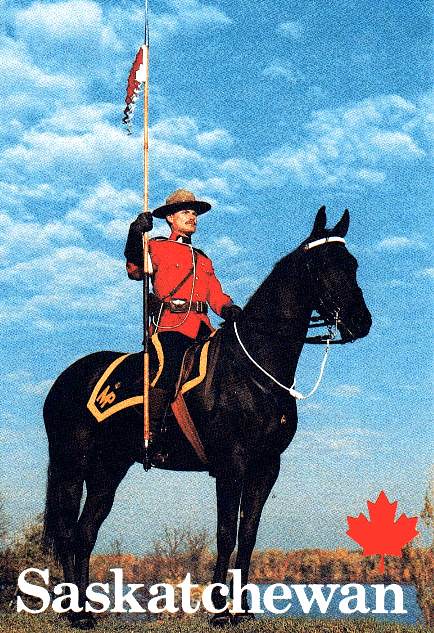
Photo courtesy of R. Orville Lytle via Flickr Commons — Some Rights Reserved

Crime and Punishment on the Prairies…


Like a prairie thunderstorm, building on the horizon and starting to move quickly, the normally placid bucolic life of the small towns of Saskatchewan now lay in the path of this building storm. The W.O. Mitchell’s “Who has Seen the Wind” version of the Prairie lifestyle, is being enveloped and blown aside in a dark wind of violence, racism, fear, and desperation.

This barometric change was entirely predictable. It has been developing over many years, all the while complacent government bureaucracies and police agencies stood idly by; consumed by “modern” issues, seemingly ignorant of the core basic need in government, that of public safety.

It is the most pronounced in the small unique and sparsely populated Province of Saskatchewan, where its main street small towns have become involved in a war of attrition. One side engaged in the fight of maintaining a largely rural lifestyle, the other side fighting for radical change and reimbursement, with an ill-defined final goal. As Ottawa fiddles, rural Saskatchewan is now burning.

This is in reference to the tenuous, often violent,  see-saw balance between the mostly white agricultural community and the Indigenous.  It has been in play for over a hundred years in Saskatchewan.

Reconciliation is the new cry. The Indigenous demand further rights, demand more monies, fresh water, oil rights, the right to hunt, the right to fish, the right to deal marihuana and their cut of the economic pie. These demands and expectations fuelling a seemingly endless amount of court cases.

Whether one sees these demands as fair or intemperate, underlying all of it is a group of Indigenous leaders that has lost control of its own constituents. Many reserves in this country have become crime infested, and a culture of crime is emanating from them in ever increasing concentric circles. Rampant poverty driven crime spilling out into the towns and countryside.  Those waves are now crashing into an armed and increasingly vigilant population not willing to be overrun, not willing to succumb to the apparent effort to subsume them.

The statistics back up the claim that the crime is becoming out of control. The most dangerous cities in this relatively peaceful country of Canada, the ones having the most violent crime statistics are in order:

a) North Battleford,  Saskatchewan

b) Thompson, Manitoba

c) Prince Albert, Saskatchewan.

Saskatchewan remains the most crime plagued Province. A dubious distinction for sure but they hold and have been holding it for many years.

The Prairies is where the Indigenous world meets the other world. It is where radical aboriginal rights meets head on with a stubborn and resistive farm community. It is where it is more eye for an eye, unburdened and unconerned by the latest socio-economic impact study.  It is for the most part, caucasian versus aboriginal, as much as we are not supposed to point that out. It is where racism abounds, on both sides.  The racism has become accepted, part of the dialogue, part of the new way of life.

North Battleford, the most violent city is the epicentre. It is of course near the Red Pheasant reserve, the home of the recent Colten Boushie/Gerald Stanley case. The one where the white Gerald Stanley was acquitted in defence of his property and his family. This was contrary to what the Indigenous wanted, contrary apparently to the outcome wished for by the Liberal government.

The Indigenous, the Boushie family and the Federal Liberals all held it out as a gleaming example of racism in this country. It became a National liberal cause, Canada’s version of the Confederate South and the Yankee North.

Actual details of the trial took a back seat to flashier banner headlines, stoked by a CBC media group which seemed intent on inciting the racist tone to the case.  The whites were forced into hiding, supportive comment for Stanley was pushed underground.

This factional divide did not start in the last few years in this part of Saskatchewan.  It has been building for decades, going back to as early as 1885,  during the North West Rebellion, where eight Indigenous were hung in the Battleford area.

There are two versions of this event. One, according to the whites, was that the suspects were hung for “ransacking”, for stealing from the residents of  Fort Battleford. The Indigenous version on the other hand, said they had only come to “plead” for supplies and were simply massacred. Which side you believe, which is your truth, depends on which side of the divide you fall.

The city of North Battleford is located two hours away west from Saskatoon. It has placed highest in the Crime Severity index since 2009 when they began compiling this information, and still carries this title into the 2017 records. This index and North Battleford’s ranking is heavily weighted by intoxication, theft, and a mass of mischief offences.

Fourteen (14%) percent of the population of Saskatchewan is Indigenous,  but in 2016/17 a staggering seventy-six (76%) of admissions to jails were indigenous peoples. This was the highest of all the Provinces.

The liberal left call it the result of rampant systemic racism, and decry that the system is not working. In response to the high incarceration rates, the Federation of Sovereign Indigenous Nations vice-Chief Heather Bear is quoted as saying “we are working with a broken system….its about lock the Indian up”.  On the conservative right they say the system is working exactly at it should; it is catching those that are committing the crime.

Two worlds colliding. Colonists initially enticed to settle this vast and often barren landscape with promises of 160 acre tracts of land. The ability to own their own piece of the land, made them set sail from faraway shores, leaving impoverished and desperate conditions to fight for a piece of land, a better life. Their new life was not always as advertised, it was often harsh and unforgiving whether fighting drought or bitingly cold winters.

The Plains Cree, hunters and traders meanwhile patrolled this same vast landscape, but they were a culture that did not share the same conceptual framework of property and ownership.

The settlers settled while the Cree continued to roam these vast, and for the most part, unpopulated regions. It was unlikely that anyone believed then that the country was not big enough for everyone.

Colonialism continued, evolved, and developed. Rules and laws were established. Responsibility was based on the concept of the individual. Being agrarians, the land which they struggled with from season to season was their reason for being.  This land was their very existence and thus needed to be defended to the death.

The Cree life began to stagnate, their economic system was beginning to falter. Two very different economic and political systems were destined to clash. One system continued to thrive, the other fell into the abyss. The Cree old way of life is now for the most part unrecognizable.  Successive governments of the settlers tried to reach agreements or impose agreements on sharing, and the treaty system and residential schools were all geared to some form of assimilation.

The 21st century Cree now believe that the historical wrongs need to be righted. Having stagnated for years on the Reserves, they now want their share of the economic pie. They now want what those first settlers wanted. A new life, free of recriminations along with financial wealth and independence. And if the government doesn’t want to give it to them, they will take it.

And therein lies the rub. If the government is going to give the Cree property or transfer wealth then someone else must lose it. The First Nations have tied their demands to the belief that because they roamed the lands, worshipped the lands, it is their land. It is all their land, because they never “ceded” the land.

This very concept is incomprehensible to a group like the Prairie settlers who believe that being here first is not a right to claim all of the land, that their rights should be considered as much as anyone’s, that there is no singular entity beyond the law, no one that is special, no one should have a priority over everyone else.

They describe a Federal government which is continually siding with the Indigenous, afraid to call out the violence, afraid to hurt their constituency.

They describe a cowering police force, sometimes miles away offering little support or even attendance.  The RCMP masters are this same Liberal government and therefore they dare not talk or point the finger at this obvious politically protected group.

So the unpleasantness grows, a liberal social media fuels the invective and the polarized arguments. The farmers in the small towns, arm themselves, preparing for a fight. The farmers demand that individual responsibility and adherence to the laws are a must, something not negotiable.

The result. Fort Battleford which went on to become North Battleford, is now the “most crime plagued city in Canada”. A town of 13,000 surrounded by seven First Nations groups with a total population of around 14,000, are still fighting and the battles may soon turn in to all out war.

The farmer, and the Plains Cree, who once worked together over the last hundred years has inexorably been pushed closer to the gaping chasm where extremists on both sides get the audience and the attention. Can it all be blamed on “colonialism”, or on the perpetration of “residential schools”? Does the 60’s scoop explain alcoholism, abnormally high pregnancy rates, malnutrition, and illiteracy. Not absolutely, it is much too simple an explanation.

The First Nation and Indigenous leaders, who trumpet the need for “reconciliation”, who are quick to cry systemic racism see the only remedy as money and more money.  Separate education, separate justice, separate police, endless health care workers, boundless hospitals and  health systems.

Another truism that never seems to let us down, is that people who have little, see people who have a lot, and they want it too. Two percent (2%)of people in Saskatchewan are on income assistance, while forty-four (44%) per cent of the Indigenous in Saskatchewan are on Federal income assistance. It has created an environment and an addiction to government funds on the part of the Indigenous, while helping fuel a belief that the other side is lazy, not willing to work, not wanting to be part of the larger society.

The Indigenous leaders are quick to jump into any fray, smelling fear in government circles of being branded racist, salivating at settlements way beyond the pale or understanding of the ordinary citizen. But at the same time blindly ignoring the obvious.

Colten Boushie grew up surrounded by alcohol and drugs, not atypical to many reserves.  He talks on Facebook about Red Power interspersed with bragging up the effects of marihuana, all while lamenting the raw deal given to his race.

Colten Boushie died because Colten Boushie grew up surrounded by violence; his banter  more in keeping with the Bloods and the Crips from a land far away.  He had a misguided bravery,  fuelled no doubt by a ridiculous video game level of understanding of that violence and its outcomes. To his group violence was heroic, copied from mediums which were far removed from their personal situations. Spewing toughness, “Fuckn punk d lee duck you talk shit back it up nigga I’m always on my tos come on niggah”, (Facebook – April 24, 2016) when none may have existed.

Colten Boushie’s uncle, his mother’s brother Colin Leonard Baptiste was found guilty of a home invasion in 1994 looking for gas and money. They put two people, Gordon Tetarenko and Bryan Kipp, in separate rooms, and then he and his co-accused Ron Coldwell individually shot them dead with a rifle. Colin was only 23 and served only two years for his murder conviction.

Stewart Baptiste was the Chief of the Red Pheasant Reserve and in 2012 was re-elected finding out from his jail cell where he had been put for breach of probation, and driving while disqualified.

Colten Boushie through no choice of his own grew up surrounded by violence and poverty. He did not have a chance.

The government talks about the “over representation of Aboriginal peoples in correctional services” as if it was a vote. Let us be clear, Saskatchewan aboriginal incarceration rates are reflective of who is doing the crime, who are committing the offences. They are not all innocent, they are not victims, they are hard core criminals, no different than any gang banger or a Hells Angel.

The government of see no evil will not go there. They say things like, the need for an “equitable justice” system. They want policies that address the “representation” of Aboriginal people in the justice system. They make it sound like a misunderstanding that they need to correct.

The Reserves like the ghettos of Jamestown in Toronto, the downtown eastside of Vancouver, are festering pits of violence, fueled by alcohol and drugs and mental illness. This is where criminal activity is bred. There are parts of Winnipeg in the north section which have greater crime rates than the Compton area of Los Angelas.

With over 600 Nations, speaking 60 different languages, they are not a united front, nor one where each nation is equal. Some reserves are heavily involved in the 21st century, building apartment complexes, developing their own pipelines, their own businesses. The others are living in poverty where the dialogue is representative of ghetto rap. They are often being governed by corrupt management and over paid chiefs and “development officers”. Some drive Mercedes while others have no covered windows in their residence.

Some Indigenous are using their political connections to a huge advantage, gaining air miles continually being summoned to Ottawa for their viewpoint. The others are smuggling cigarettes, have no running water, are drinking copier fluid, and breaking into cars in the city for spare change.

Which all leads to what is believed to be a pretty obvious certainty. If there is a chance to stem this growing civil unrest than there needs to be a meeting half-way. Personal responsibility by Indigenous leaders and by their followers must enter the equation.

In this country which is often referred to as a cultural and social mosaic, there is no room for one group having greater rights than others. Each in their own sphere allowed to grow and cultivate their culture and language, but not to the detriment of others. A single set of laws acting as a binder, property rights recognized, but holding to central tenets of decency and honesty.  A respect for others must be re-gained. Assimilation not domination. There is no room for a separate state in Canada.

The Indigenous leadership needs to be held responsible for their people and the actions of their people. The radical statements and cultivating a culture of being owed, of everything being blamed on racism must end.  They need to address issues on these reserves. They need to gain control of their youth, the monies they are receiving need to be distributed down and put to the people directly. The government needs to monitor and audit that spending giving it a chance to be accountable and visible to all.

And it is then and only then that the other side will get out from under a siege  mentality. Once there is a recognition of an attempt to be accountable, only then will it be possible for a reconciliation. Calm measured voices from both sides need to meet in the middle.

In the meantime the farmers will continue to arm themselves and the Indigenous youth will continue to mimic their gangster kin, still destined statistically for a Regina jail.

Colten Boushie and his family, living in squalid conditions, no sense of a future, no  reason for participating, surrounded by a family who seemed to be hinging their future on “reconciliation” and what they believed the government owed them.

Glimpsing Colten’s facebook is in many ways similar to what one would expect from any immature early 20’s male. Random often non-sensical thoughts, but with repetitive themes of boredom, the beauty of marihuana, and the lack of money. But interspersed with comments no doubt particular to Indigenous youth; Red Power, the wanna be affiliation with gangster style and music. Their “bros” are their lifeblood. One friend brags about his friend “doing 25 to life in the Federal pen”

Always newsworthy when the cops are on “the rez”… “a good morning to all back in the saddle again middle finger up to the law” (Colten Boushie on Facebook July 27, 2016) ” and often brave talk of dying or the willingness to live on the edge.

“Its a good day to ride or die” (Colten Boushie on Facebook July 28, 2016)

“Back in the saddle again throw my middle finger up to the law, ain’t gotta rob nobody tonight but I do it just because I’m a nut i get bored did some pills but I want more fuck this world fuck this town” – (Colten Boushie on Facebook April 29, 2016.)

Until the Indigenous leadership recognizes and takes some responsibility for the problems on the Reserves and only when everyone can openly talk about the criminal element which saturates the Reserves and blinds people to real solutions, only then will there be hope.

The current Federal government doesn’t see the storm, only appeasing one part of the equation. This is a Federal Justice Minister who was an advocate for the Indigenous in her previous life and it is obvious to all that she is compromised. She is clearly an advocate of a separate state, a separate set of laws. She has no credibility with one half of the two sides that need to come together. The Poles, Ukranians, Estonians and others who also and equally “settled” this country need to be recognized and have a voice. They are after all the majority.

To do otherwise is a recipe for disaster. Blood is being and will continue to be spilled. The extremists on both sides need to be ignored and reasonable arbiters need to come forward.

Sylvia McAdam from the Big River First Nation in Saskatchewan and a co-founder of the IdleNoMore Movement was typical in her statements, saying after the Colten Boushie verdict that “There’s something very rotten to the core about what’s happening in Saskatchewan”. She’s right, but she is part of the problem, not the solution.

The truth and the road to understanding is in the facts buried just beneath the rhetoric.  Only an honest assessment by honest leaders will pull both sides out of this ever downward spiral.

As Henry David Thoreau said “It takes two to speak the truth..one to speak and the other to hear”.

Photo Courtesy of Mark Goebel via Creative Commons Flickr. Some Rights Reserved