I’m sorry…I’m sorry… I’m sorry…

Our newly minted Commissioner of the RCMP is taking a page from her nominal leader, Mr Justin Trudeau, and has begun to fulfill her mandate, by apologizing to the Missing and Murdered Indigenous Women inquiry saying: “On behalf of myself and my organization, I’m truly sorry for the loss of your loved ones and the pain that this has caused you and your families and your community. It is very clear to me that the RCMP could have done better and I promise to you we will do better”.

As has been commented on many times, Canada has become the land of apologists. Each additional apology minimizing the one that preceded it. The now watered down genuflecting continues to work its way through every government agency and department. The RCMP are not alone in this, they are just following the political crowd, each department elbowing out the other in the fight to be the most empathetic, and the most apologetic. It does not seem to matter why you are apologizing, but it is only important that you are apologizing. The Liberals, the Conservatives, and in particular the NDP; each podium apology provided by (pick a leader) with the witless bobbing heads nodding in unison surrounding their leader.

This specific and particular apology is based on the inquiry into Missing and Murdered Women and  Indigenous Girls which has been hearing “many” stories of how the police have not taken the cases of the indigenous “seriously”. They are alleging that victims were “written off” as sex trade workers or addicts. They have alleged many times over and over again, that if they were sex workers or addicts as many of these victims were, that somehow that meant that their homicide file was not investigated.

Unlike most of the general public, if one paid attention to this inquiry and listened to the testimony presented to this inquiry for many long, long hours, this apology is based on un-tested, un-verified, sometimes outlandish but mostly unchallenged statements of friends and family of “victims.”

This is not to deny that there is a possibility that a few cases fit into this category, its just hard to find the examples, which seem to be accepted as the gospel truth by this disaster of an inquiry. It is duly regurgitated by the CBC, a CBC who clearly have lost what should be the most innate characteristic of of every able bodied “journalist”–  the ability to question.

After 34 years in the policing world, a great many of them spent on major crime cases, and with a couple of hundred homicides under the belt, if anyone can show me a case that was handled differently because the victim was indigenous, please step forward; including you Commissioner Lucki.

In the future, Commissioner Lucki, please do not be so presumptuous as to apologize for something for which you clearly don’t seem to have any intimate knowledge. It is creating a dialogue of misinformation, misrepresentation, and a warping of the historical record.

Heather Bear, Vice-Chief with the Federation of Sovereign Indigenous Nations is representative of what was being said and sold at this inquiry. In commenting on the new training to be undertaken by recruits, said that she will be watching to make sure that there is a change and that the “harassment stops”. She “backs up” her claim by saying that she still gets calls from “Indigenous women who have experience police violence”.

Is Ms. Bear referring those callers to the police for investigation? Of course not. If there is anyone would care to provide some actual details please step forward.  If not, do not make such generalized statements.  It is irresponsible and would not be tolerated if those statements were going in the other direction.

Where is the accountability in making such egregious statements? The 5th Estate have for the most part reneged on their role, and the police management of the RCMP quiver in fear of having to defend their own officers.

Marion Buller,  the biased head of the Inquiry and the standard bearer of all things Indigenous says she thought that the apology by the Commissioner was “heartfelt and sincere”. Ms Buller doesn’t seem to realize that the RCMP, like all Federal departments, has finally mastered the art of the spin, presenting a tear or an empathetic face, some being so practised that they are the envy of Stanislavsky school for method actors. Whether it was heart felt is irrelevant of course, but Buller seems to measure the effectiveness or veracity of a witness with the crocodile tear index. What exactly she was apologizing for, as there were no specific examples given, remains a mystery.

It was noted that in a recent Veterans bulletin, Commissioner Lucki who took a little heat, met with some veterans who were rightfully upset with her “apology”. She of course moon walked  to a degree from her apology, but continued to maintain that cases had been brought to her attention which were biased and not complete. The obvious follow up question would be, when and where, and what have you done to the persons who were responsible for those cases. And please, please,  give us some examples.

These pronouncements are ridiculous and carry no weight if you are not willing to name the cases and expose those issues. Open them up, go after those that you feel that were unprofessional in their conduct.  As Commissioner of the RCMP, should you not be cleaning house of inadequate or racist investigators? Wouldn’t that be more effective and meaningful in terms of proving your claims of wanting reconciliation?

It would be foolish to argue that oversights and sloppy police work don’t exist, and it is unlikely that sloppiness or mistakes  would be specific to the world of indigenous investigations.  Of course careless or lackadaisical investigations are possible. But for that to be true one must know how a homicide investigation is handled. It is not as portrayed by the infinite parade of crime dramas, beautiful people having Sherlock Holmes moments of brilliance. It is more about painstakingly followed processes.

Usually, there is not one person or even two persons who are responsible for an entire homicide investigation.  IHIT in British Columbia for example, works in teams of eight.

On each and every homicide a routine is fallen into; crime scene, exhibits, witnesses, video and on it goes. One rarely recognizes the victim by their race, why would you. The same protocols are followed, the same expectations by supervisors and their bosses. The investigators are driven by fresh cases with leads, fresh cases where there is an operational moving forward, a sense of being on the hunt for the “bad” guy, girl or group. When dead ends are reached, when witnesses turn tail, when DNA can not be found, cases begin to go “cold”; they become stale, harder to generate leads, harder to command resources. That is the natural process, and the natural process does not recognize victim nationality. Long time investigators like the “game”, they get addicted to the adrenaline burn, the feeling of being “close”, the hounds pursuing  the rabbit.  The pursuers do not care about the nationality of the rabbit.

Therefore for an investigation to be hampered by laziness, or inadequate probing, for it to be true, one would have to assume that several investigators on the same file are all lazy or racist, or disinterested in doing the job. Possible of course but not probable.

Not all investigators are created equal, they are humans too. But to tarnish all investigations based on a slim sample is simply wrong, and to base allegations on the verbal subjective history of indigenous who clearly have an agenda and a narrative which they are pushing is also both wrong and dangerous. It could be argued that these misstatements are hurting any attempts at reconciliation by contributing to the divide.

In reading Commissioner Lucki’s resume, there is no major crime background; there is nothing that suggests that she has investigated or been part of homicide investigations. That is not her fault, she rose to the top through a different route, a more political route. But that in itself should make her pause when commenting on things of which she has no intimate knowledge. She has been clearly part of the new wave of appeasement, the political need for survival, the all consuming mantra of most police leadership at this time. A purely political move, by a purely political appointment.

The new Commissioner has not made many public pronouncements, she is being relatively subdued, maybe for good reason. This was not a good way to start.

Many are anticipating the end of the game for the RCMP which continues its seemingly daily endless struggles. Its the bottom of the 9th in many peoples eyes and Commissioner Lucki is up to bat. The officers, to continue the analogy,  are hoping for someone clutch, someone batting .300, instead we got a designated hitter. The Inquiry threw the first pitch.

Strike one.

Photo courtesy of Flickr via Commons and Justin Trudeau. Some Rights Reserved. 


Unionization in the RCMP…the beginning of the end?

It has been a long, bumpy, and hesitant progression for officers of the RCMP towards possible unionization. Will eventual unionization be the panacea to all that ails?  Or, is it the subtle push over the cliff for an organization which is reeling, staggering under a bloated bureaucracy, inept Federal direction and inadequate financing and resources?

In the last twenty years this stetson and breeches symbol of Canada is quickly becoming just that; a symbol, not a viable operational policing structure; proving itself time and again no longer able to be all things to everyone. A Federal agency not able to admit its shortcomings. There is mounting evidence that it is slipping, has lost sight of its core abilities, no longer able to provide Municipal and Provincial policing, at least not at an acceptable or comparable level to other police agencies.

Its current inflated management struggles with 21st century issues, leaving most of its 179 Superintendents, 58 Chief Superintendents and 26 Assistant Commissioners ill-equipped to handle what is about to come their way; either administratively or from a practical perspective. A colossal ship unable to turn in time, unable to steer clear of modernization, try as it might. They are a struggling para-military organization which seems confounded by the need to absorb and learn about labour law, sexual harassment, grievances, arbitration, wage negotiations and the other policy trappings of policing in the new age.

Until now it has always been a closed shop, promoting and advancing from within, oblivious to the “real world”, often using the RCMP Act to bludgeon officers into compliance and acceptance whether it be an issue of pay, or a grievance.  More often than not the preferred solution was to ignore the problem, often for years on end.

There was at one time an era of independence from their Federal masters, a time when the RCMP still seemed concerned with operational policing,  and tried to maintain at least a perceived distance from political machinations. It was indeed the Mad Men era, where drinking, smoking and making yourself available for “choir practise” was the way of handling dissent; personality clashes often ironed out over rambunctious and censor free talk. It was not necessarily acceptable nor right, but it was the way of the times.

The “old school” group of officers tended to be Saskatchewan farm boys or South shore  Nova Scotians happy to have a steady, exciting, yet blue collar job. You were allowed into the “club”, informally vetted,  became a “member” of the blue line, and that line was inviolate, only allowed to bend, not break.

The vast majority of the officers in the RCMP were ironically, anti-union, with a greater chance of breaking up a strike or quelling demonstrations than voting for or supporting a union.

The officers of those days carried their .38 revolver and cheap yellow plastic flashlights, but they have now been replaced by officers adorned with multiple weapons, body armour, and carbine rifles and who would not be out of place in a theatre of war. They are now better educated, interested in career planning, paternity and maternity leave, isolation pay, and the utopian work/life balance. PTSD has become common place, sometimes seemingly more prevalent than the flu.

This ponderous, slow evolutionary process inside the RCMP has set these two worlds, the old and the new, on a collision course. The old way of doing things are coming to an end, there is no other plausible or possible outcome.

In January of 2015 the Supreme Court of Canada fired the first shot allowing the right to organize within the RCMP and even went further saying that the government needed to bring in legislation and a framework that would clear a path for the RCMP to pursue unionization.

The government was of course late in reaching this court deadline handed to them by the Supreme Court, but finally produced Bill C-7. In its initial form it looked suspicious.  It seemed to be a bit of a trojan horse, and seem designed to provide the legislation while at the same time trying to rip the heart and power out of any future collective bargaining agreement.

The Senate  in their due process found that the bill as proposed by the Liberals were trying to keep normally assumed rights issues such as harassment, code of conduct, equipment and staffing levels excluded from the collective bargaining process. It would be hard to believe that this was just an oversight on the part of the Liberals.  This was a direct attempt to keep away from the hot button issues. And it was a ridiculous attempt to cling to the old world, a brazen attempt that even the dust covered Senators were quick to realize and raise opposition.

Most of what they they tried to exclude were coincidently ones that would also lead to a  monumental increase in budgets.

The Senate proposed amendments to the bill and sent it back to the House. They recommended that these normal bargaining issues should be put back into the legislation, and needed to be included in any possible RCMP collective agreement.

(There were a couple of line items that the Liberals still refused to go along with; the expanding of the Public Service Labour Relations Board to hear RCMP grievances; and  the inability for the RCMP to strike. They also rejected the need for a secret ballot which had been introduced by the Conservatives.)

In May 2017 the Liberals, bending to some mounting pressure adopted almost all of the Senate recommendations. The bill has now received Royal assent and will become law shortly, a bill that would allow bargaining on issues such as manpower resourcing and code of conduct.

As Bill C-7 wound its way through the Senate review process, the Federal government had also moved to make the 3900 “civilian” employees, into members of the Public Service. Workers in the RCMP such as those working in wiretap rooms and at the RCMP call centres were no longer going to be civilian police, they were going to become members of PSAC.

Although this seems like a relatively minor change, this too engendered a small amount of controversy.  As “civilian” officers of the RCMP, some argued that they often indirectly enjoyed greater benefits that accrued to the RCMP as opposed to being a member of the public service. These workers will now be represented by PSAC beginning in 2020 (the delay is because of the boondoggled Phoenix pay system, and the government does not want to make the change until it is confident that the pay system is rectified. ) Their jobs haven’t changed, nor should they, but the very responsibility for their employment standards and pay now rests with a union.

Meanwhile, in April 2017 there were two groups of Mounties who wanted to form a union group and apply for certification. One group of Mounties calling themselves the National Police Federation gained the upper hand and with a sudden influx of memberships were in a position to apply for union certification at the Public Service Labour Relations and Employment Board. They are now seeking to represent the 17,945 officers.

In typical Mountie fashion, this application and the ability of the NPF to represent was not without controversy.

At the time the NPF was vying with another group of Mounties who made up the MPPAC (Mounted Police Professional Association) to be the union group of choice. The MPPAC has a long history dating back a couple of decades where a small vocal group of officers cajoled and hammered away at the RCMP management group. They called for a unionized force years before, and developed a legal fund to assist officers they felt had been unduly treated. Their overall effectiveness was open to debate, but there was little doubt that they were thorns in management’s backside.

The NPF on the other hand are made up of former Division Staff Relations Representatives. In the years before the court go ahead for unionization, there was the the Division Representative program. It was a system clearly which favoured management both in terms of power and outcome.  Although officers voted and elected a group of individuals who were to represent them to management, it was a half-hearted attempt by management to suborn any kind of union talk which was festering and bubbling below the surface at the time. It was of pure government design, one intended to appear advanced and supportive of the rank and file, but in practise somewhat of a slight of hand operation.

The DSRR’s had no real power  (even their assessments were done by their Commanding Officers) so they were often seen as being pawns of the managers and too eager to choose the side of the managers. They were clearly beholden to upper management, some were more vocal than others, but their effectiveness and power lay in the ability to persuade.

So as the deadline approached for filing for union certification the two groups were pitted against each other and seemingly evenly split in terms of support.

It seems that the NPF, the former group of DSRR’s, were allowed to access and use the RCMP email system to garner support. This is contrary to how the system should work as management is not allowed to show favour to one group over another. The MPPAC wrote several emails complaining and have now filed a grievance, which they hope will be expedited by the Public Service Labour Relations and Employment Board complaining of this favour and demanding retractions.

The NPF also used the management condoned Legal Fund to further their cause. The Legal Fund was a not for profit fund, supported by over 16,000 officers through voluntary pay cheque deductions. The RCMP allowed the NPF to seek support in an email through the auspices of the Legal fund and it also provided a loan to the NPF to get started in their union certification drive.

Both seem unethical to a great many officers and of course the MPPAC.  It clearly reeked of favourites being played, a group of officers who had previously worked for the rank and file but somewhat beholden to the managers of the day were now being supported by management to be the union group of choice. If this process was not tainted it certainly had the appearance of inequity.

Then along came another bump in the road when officers in Quebec  decided that they wanted to form their own union in “C” Division, distinct and apart from the rest of the National police Force. They have launched an appeal of the decision to have one union for all RCMP.  Serge Bilodeau, the head of the Quebec push said that  “the move is justifiable due to the specifics that are applicable to the needs of Quebec’s frontline members”.

Quebec or “C” Division has always been an outlier, fed by a Provincial culture which often identified itself with the labour movement and generally in favour  of unionization.  Its a Division which has always seen itself as distinct from the other RCMP officers in Canada. This has created a chasm between them and their fellow officers in other parts of Canada. The divisive politics of the Quebec region, between the English and the French, has always carried over to the RCMP as well. That being said, it would be difficult to argue that they are unique in their issues to the other officers in Canada.

Nevertheless the NPF group seems best positioned and awaits certification after it  got a major influx of “sign ups”  when they publicly stated their support for the “yellow stripe”campaign.

If one accepts that the majority of officers will vote in favour of a Union (and this is not a sure bet), it will be a long uphill climb with a momentous learning curve but it does seem that the general membership has turned the philosophical corner.  There seems to be a time for union membership to be nurtured, when disgruntled employees reach a breaking point with the big brother attitude of management or with a poisonous work environment. The RCMP officers seemed to have reached that point.

But make no mistake, if it proceeds, it will be the catalyst for significant change previously unseen in the long history of the RCMP.

Historically, the RCMP management kept staffing levels low, and this combined with the discounted municipal contracts offered by Ottawa has always made the RCMP the “cheap” choice. There is little doubt that a collective agreement will alter manpower, costs and salaries will go up, and the overall cost of running the RCMP will increase.

Some estimate a 30% increase in overall costs, which Ottawa would have to try and download to the towns and cities.  (For example: the people in the City of Vancouver for the VPD pay $420 per capita; North Vancouver, an RCMP jurisdiction bordering Vancouver pay $230.00 per capita)  Regional policing in places like the Lower Mainland in British Columbia may be an  inevitable second wave of change, as politicians will vie to have more political control of the now more expensive police officers.

Grievances will still be handled in house, but union representatives will be in place, and the dynamics will change dramatically. There will be no more prolonged or ignored labour issues. A grievance will need to be heard quickly and the outcomes will be measured and set precedents. The lineup for those wrongs will be extensive, and the members should be prepared to recognize that the outcomes may not be to the liking of all officers.

Meal breaks will be monitored, staffing levels will need to be maintained, and supervisors will have a more accountable role. Overtime and promotions will be questioned and there will a need for justification. Seniority will play a bigger role, and early promotions whether justified or not will almost become non-existent.

Shop stewards, union heads and union administrators will all have to learn the job for which none of them for the most part have any experience. All will have to be elected through an internal process. Union monies will need to be collected and charters and budgets will need to be developed. (Union members now pay roughly 1.1 to 1.3% of their salary to dues. For an $80,000 officer, you would be paying at least $1,040.00 per year. That would equate to a union with a budget of over $20,000,000.00.) 

Setting up a the structure needed, communications budgets and all that this entails would be an enormous undertaking for any newly formed union group. As personalities jostle for position in the NPF the members themselves will need to be paying attention. They will now be a political Force.

Will the current RCMP senior management in Ottawa be able to meet these demands?  It seems unlikely. Certainly not in its present format.  The old management guard will be pushed and prodded to adapt, some will and some won’t,  but the RCMP Act will no longer be a hiding place where they can seek shelter. The administrative roles will be pulled away and the freedom to operate within the current vacuum will dissipate, as  new air will be blown in.

As to the membership, the current crop of young officers will adapt, and likely applaud the changes. The veterans will decry the strictures now placed on them, and continue to wax eloquently about the good old days.

There will be bitching about the amount of union dues.

There will be talk about an FBI styled RCMP and the need to get out of uniform policing altogether.

Will it work, will the RCMP officers be better off?  Only time will tell, but you can be assured it will not be the same. There will be a tectonic shift in both makeup and administration of the RCMP.

Maybe thats a good thing. Maybe it needs to start over.

Maybe like the 75 year old wooden house the structure needs to be demolished; no longer practical to save, the planks and cross beams decaying and  unable to support the overall building. This house which has been ignored, uncared for over the years, has made it no longer serviceable.

The proud, historic, and hereditary structure now just a symbol of what was, of a day gone by. It will be lamented but it will never be reversed. Someone should be accountable for the lack of upkeep, but they wont be.

These managers who placed the officers into this point in history are likely to be moving on — probably just before that house roof falls in.

In a recent interview with CTV the seemingly single issue Commissioner Lucki continues to speak in sync with the Liberals, on building a “more tolerant, more inclusive and absolutely more respectful workplace”. These are obvious and warranted goals, but somehow out of sync, secondary needs considering the chaos that surrounds this organization and the chaos which is about to come.

It is analogous to the Band on the Titanic, continuing to play, ignoring the cries to abandon ship, as the water begins lapping at their ankles.  Trudeau the conductor and Ralph Goodale playing the violin. Commissioner Lucki on 2nd violin following their lead, trying to stay in rhythm.

Photo Courtesy of David Whelan via Flickr Creative Commons – Some Rights Reserved


Crime and Punishment on the Prairies…


Like a prairie thunderstorm, building on the horizon and starting to move quickly, the normally placid bucolic life of the small towns of Saskatchewan now lay in the path of this building storm. The W.O. Mitchell’s “Who has Seen the Wind” version of the Prairie lifestyle, is being enveloped and blown aside in a dark wind of violence, racism, fear, and desperation.

This barometric change was entirely predictable. It has been developing over many years, all the while complacent government bureaucracies and police agencies stood idly by; consumed by “modern” issues, seemingly ignorant of the core basic need in government, that of public safety.

It is the most pronounced in the small unique and sparsely populated Province of Saskatchewan, where its main street small towns have become involved in a war of attrition. One side engaged in the fight of maintaining a largely rural lifestyle, the other side fighting for radical change and reimbursement, with an ill-defined final goal. As Ottawa fiddles, rural Saskatchewan is now burning.

This is in reference to the tenuous, often violent,  see-saw balance between the mostly white agricultural community and the Indigenous.  It has been in play for over a hundred years in Saskatchewan.

Reconciliation is the new cry. The Indigenous demand further rights, demand more monies, fresh water, oil rights, the right to hunt, the right to fish, the right to deal marihuana and their cut of the economic pie. These demands and expectations fuelling a seemingly endless amount of court cases.

Whether one sees these demands as fair or intemperate, underlying all of it is a group of Indigenous leaders that has lost control of its own constituents. Many reserves in this country have become crime infested, and a culture of crime is emanating from them in ever increasing concentric circles. Rampant poverty driven crime spilling out into the towns and countryside.  Those waves are now crashing into an armed and increasingly vigilant population not willing to be overrun, not willing to succumb to the apparent effort to subsume them.

The statistics back up the claim that the crime is becoming out of control. The most dangerous cities in this relatively peaceful country of Canada, the ones having the most violent crime statistics are in order:

a) North Battleford,  Saskatchewan

b) Thompson, Manitoba

c) Prince Albert, Saskatchewan.

Saskatchewan remains the most crime plagued Province. A dubious distinction for sure but they hold and have been holding it for many years.

The Prairies is where the Indigenous world meets the other world. It is where radical aboriginal rights meets head on with a stubborn and resistive farm community. It is where it is more eye for an eye, unburdened and unconerned by the latest socio-economic impact study.  It is for the most part, caucasian versus aboriginal, as much as we are not supposed to point that out. It is where racism abounds, on both sides.  The racism has become accepted, part of the dialogue, part of the new way of life.

North Battleford, the most violent city is the epicentre. It is of course near the Red Pheasant reserve, the home of the recent Colten Boushie/Gerald Stanley case. The one where the white Gerald Stanley was acquitted in defence of his property and his family. This was contrary to what the Indigenous wanted, contrary apparently to the outcome wished for by the Liberal government.

The Indigenous, the Boushie family and the Federal Liberals all held it out as a gleaming example of racism in this country. It became a National liberal cause, Canada’s version of the Confederate South and the Yankee North.

Actual details of the trial took a back seat to flashier banner headlines, stoked by a CBC media group which seemed intent on inciting the racist tone to the case.  The whites were forced into hiding, supportive comment for Stanley was pushed underground.

This factional divide did not start in the last few years in this part of Saskatchewan.  It has been building for decades, going back to as early as 1885,  during the North West Rebellion, where eight Indigenous were hung in the Battleford area.

There are two versions of this event. One, according to the whites, was that the suspects were hung for “ransacking”, for stealing from the residents of  Fort Battleford. The Indigenous version on the other hand, said they had only come to “plead” for supplies and were simply massacred. Which side you believe, which is your truth, depends on which side of the divide you fall.

The city of North Battleford is located two hours away west from Saskatoon. It has placed highest in the Crime Severity index since 2009 when they began compiling this information, and still carries this title into the 2017 records. This index and North Battleford’s ranking is heavily weighted by intoxication, theft, and a mass of mischief offences.

Fourteen (14%) percent of the population of Saskatchewan is Indigenous,  but in 2016/17 a staggering seventy-six (76%) of admissions to jails were indigenous peoples. This was the highest of all the Provinces.

The liberal left call it the result of rampant systemic racism, and decry that the system is not working. In response to the high incarceration rates, the Federation of Sovereign Indigenous Nations vice-Chief Heather Bear is quoted as saying “we are working with a broken system….its about lock the Indian up”.  On the conservative right they say the system is working exactly at it should; it is catching those that are committing the crime.

Two worlds colliding. Colonists initially enticed to settle this vast and often barren landscape with promises of 160 acre tracts of land. The ability to own their own piece of the land, made them set sail from faraway shores, leaving impoverished and desperate conditions to fight for a piece of land, a better life. Their new life was not always as advertised, it was often harsh and unforgiving whether fighting drought or bitingly cold winters.

The Plains Cree, hunters and traders meanwhile patrolled this same vast landscape, but they were a culture that did not share the same conceptual framework of property and ownership.

The settlers settled while the Cree continued to roam these vast, and for the most part, unpopulated regions. It was unlikely that anyone believed then that the country was not big enough for everyone.

Colonialism continued, evolved, and developed. Rules and laws were established. Responsibility was based on the concept of the individual. Being agrarians, the land which they struggled with from season to season was their reason for being.  This land was their very existence and thus needed to be defended to the death.

The Cree life began to stagnate, their economic system was beginning to falter. Two very different economic and political systems were destined to clash. One system continued to thrive, the other fell into the abyss. The Cree old way of life is now for the most part unrecognizable.  Successive governments of the settlers tried to reach agreements or impose agreements on sharing, and the treaty system and residential schools were all geared to some form of assimilation.

The 21st century Cree now believe that the historical wrongs need to be righted. Having stagnated for years on the Reserves, they now want their share of the economic pie. They now want what those first settlers wanted. A new life, free of recriminations along with financial wealth and independence. And if the government doesn’t want to give it to them, they will take it.

And therein lies the rub. If the government is going to give the Cree property or transfer wealth then someone else must lose it. The First Nations have tied their demands to the belief that because they roamed the lands, worshipped the lands, it is their land. It is all their land, because they never “ceded” the land.

This very concept is incomprehensible to a group like the Prairie settlers who believe that being here first is not a right to claim all of the land, that their rights should be considered as much as anyone’s, that there is no singular entity beyond the law, no one that is special, no one should have a priority over everyone else.

They describe a Federal government which is continually siding with the Indigenous, afraid to call out the violence, afraid to hurt their constituency.

They describe a cowering police force, sometimes miles away offering little support or even attendance.  The RCMP masters are this same Liberal government and therefore they dare not talk or point the finger at this obvious politically protected group.

So the unpleasantness grows, a liberal social media fuels the invective and the polarized arguments. The farmers in the small towns, arm themselves, preparing for a fight. The farmers demand that individual responsibility and adherence to the laws are a must, something not negotiable.

The result. Fort Battleford which went on to become North Battleford, is now the “most crime plagued city in Canada”. A town of 13,000 surrounded by seven First Nations groups with a total population of around 14,000, are still fighting and the battles may soon turn in to all out war.

The farmer, and the Plains Cree, who once worked together over the last hundred years has inexorably been pushed closer to the gaping chasm where extremists on both sides get the audience and the attention. Can it all be blamed on “colonialism”, or on the perpetration of “residential schools”? Does the 60’s scoop explain alcoholism, abnormally high pregnancy rates, malnutrition, and illiteracy. Not absolutely, it is much too simple an explanation.

The First Nation and Indigenous leaders, who trumpet the need for “reconciliation”, who are quick to cry systemic racism see the only remedy as money and more money.  Separate education, separate justice, separate police, endless health care workers, boundless hospitals and  health systems.

Another truism that never seems to let us down, is that people who have little, see people who have a lot, and they want it too. Two percent (2%)of people in Saskatchewan are on income assistance, while forty-four (44%) per cent of the Indigenous in Saskatchewan are on Federal income assistance. It has created an environment and an addiction to government funds on the part of the Indigenous, while helping fuel a belief that the other side is lazy, not willing to work, not wanting to be part of the larger society.

The Indigenous leaders are quick to jump into any fray, smelling fear in government circles of being branded racist, salivating at settlements way beyond the pale or understanding of the ordinary citizen. But at the same time blindly ignoring the obvious.

Colten Boushie grew up surrounded by alcohol and drugs, not atypical to many reserves.  He talks on Facebook about Red Power interspersed with bragging up the effects of marihuana, all while lamenting the raw deal given to his race.

Colten Boushie died because Colten Boushie grew up surrounded by violence; his banter  more in keeping with the Bloods and the Crips from a land far away.  He had a misguided bravery,  fuelled no doubt by a ridiculous video game level of understanding of that violence and its outcomes. To his group violence was heroic, copied from mediums which were far removed from their personal situations. Spewing toughness, “Fuckn punk d lee duck you talk shit back it up nigga I’m always on my tos come on niggah”, (Facebook – April 24, 2016) when none may have existed.

Colten Boushie’s uncle, his mother’s brother Colin Leonard Baptiste was found guilty of a home invasion in 1994 looking for gas and money. They put two people, Gordon Tetarenko and Bryan Kipp, in separate rooms, and then he and his co-accused Ron Coldwell individually shot them dead with a rifle. Colin was only 23 and served only two years for his murder conviction.

Stewart Baptiste was the Chief of the Red Pheasant Reserve and in 2012 was re-elected finding out from his jail cell where he had been put for breach of probation, and driving while disqualified.

Colten Boushie through no choice of his own grew up surrounded by violence and poverty. He did not have a chance.

The government talks about the “over representation of Aboriginal peoples in correctional services” as if it was a vote. Let us be clear, Saskatchewan aboriginal incarceration rates are reflective of who is doing the crime, who are committing the offences. They are not all innocent, they are not victims, they are hard core criminals, no different than any gang banger or a Hells Angel.

The government of see no evil will not go there. They say things like, the need for an “equitable justice” system. They want policies that address the “representation” of Aboriginal people in the justice system. They make it sound like a misunderstanding that they need to correct.

The Reserves like the ghettos of Jamestown in Toronto, the downtown eastside of Vancouver, are festering pits of violence, fueled by alcohol and drugs and mental illness. This is where criminal activity is bred. There are parts of Winnipeg in the north section which have greater crime rates than the Compton area of Los Angelas.

With over 600 Nations, speaking 60 different languages, they are not a united front, nor one where each nation is equal. Some reserves are heavily involved in the 21st century, building apartment complexes, developing their own pipelines, their own businesses. The others are living in poverty where the dialogue is representative of ghetto rap. They are often being governed by corrupt management and over paid chiefs and “development officers”. Some drive Mercedes while others have no covered windows in their residence.

Some Indigenous are using their political connections to a huge advantage, gaining air miles continually being summoned to Ottawa for their viewpoint. The others are smuggling cigarettes, have no running water, are drinking copier fluid, and breaking into cars in the city for spare change.

Which all leads to what is believed to be a pretty obvious certainty. If there is a chance to stem this growing civil unrest than there needs to be a meeting half-way. Personal responsibility by Indigenous leaders and by their followers must enter the equation.

In this country which is often referred to as a cultural and social mosaic, there is no room for one group having greater rights than others. Each in their own sphere allowed to grow and cultivate their culture and language, but not to the detriment of others. A single set of laws acting as a binder, property rights recognized, but holding to central tenets of decency and honesty.  A respect for others must be re-gained. Assimilation not domination. There is no room for a separate state in Canada.

The Indigenous leadership needs to be held responsible for their people and the actions of their people. The radical statements and cultivating a culture of being owed, of everything being blamed on racism must end.  They need to address issues on these reserves. They need to gain control of their youth, the monies they are receiving need to be distributed down and put to the people directly. The government needs to monitor and audit that spending giving it a chance to be accountable and visible to all.

And it is then and only then that the other side will get out from under a siege  mentality. Once there is a recognition of an attempt to be accountable, only then will it be possible for a reconciliation. Calm measured voices from both sides need to meet in the middle.

In the meantime the farmers will continue to arm themselves and the Indigenous youth will continue to mimic their gangster kin, still destined statistically for a Regina jail.

Colten Boushie and his family, living in squalid conditions, no sense of a future, no  reason for participating, surrounded by a family who seemed to be hinging their future on “reconciliation” and what they believed the government owed them.

Glimpsing Colten’s facebook is in many ways similar to what one would expect from any immature early 20’s male. Random often non-sensical thoughts, but with repetitive themes of boredom, the beauty of marihuana, and the lack of money. But interspersed with comments no doubt particular to Indigenous youth; Red Power, the wanna be affiliation with gangster style and music. Their “bros” are their lifeblood. One friend brags about his friend “doing 25 to life in the Federal pen”

Always newsworthy when the cops are on “the rez”… “a good morning to all back in the saddle again middle finger up to the law” (Colten Boushie on Facebook July 27, 2016) ” and often brave talk of dying or the willingness to live on the edge.

“Its a good day to ride or die” (Colten Boushie on Facebook July 28, 2016)

“Back in the saddle again throw my middle finger up to the law, ain’t gotta rob nobody tonight but I do it just because I’m a nut i get bored did some pills but I want more fuck this world fuck this town” – (Colten Boushie on Facebook April 29, 2016.)

Until the Indigenous leadership recognizes and takes some responsibility for the problems on the Reserves and only when everyone can openly talk about the criminal element which saturates the Reserves and blinds people to real solutions, only then will there be hope.

The current Federal government doesn’t see the storm, only appeasing one part of the equation. This is a Federal Justice Minister who was an advocate for the Indigenous in her previous life and it is obvious to all that she is compromised. She is clearly an advocate of a separate state, a separate set of laws. She has no credibility with one half of the two sides that need to come together. The Poles, Ukranians, Estonians and others who also and equally “settled” this country need to be recognized and have a voice. They are after all the majority.

To do otherwise is a recipe for disaster. Blood is being and will continue to be spilled. The extremists on both sides need to be ignored and reasonable arbiters need to come forward.

Sylvia McAdam from the Big River First Nation in Saskatchewan and a co-founder of the IdleNoMore Movement was typical in her statements, saying after the Colten Boushie verdict that “There’s something very rotten to the core about what’s happening in Saskatchewan”. She’s right, but she is part of the problem, not the solution.

The truth and the road to understanding is in the facts buried just beneath the rhetoric.  Only an honest assessment by honest leaders will pull both sides out of this ever downward spiral.

As Henry David Thoreau said “It takes two to speak the truth..one to speak and the other to hear”.

Photo Courtesy of Mark Goebel via Creative Commons Flickr. Some Rights Reserved


The Case of the Missing 100 Police Officers…

The RCMP in almost every field of endeavour for the last several years has been beaten up, the badge tarnished; the criticisms coming fast and furious, sometimes unfair, but more than often deserved.

They, meaning the management of the RCMP,  have been displaying a lack of operational understanding, often proving themselves to be ineffectual in times of crisis or at critical investigational junctures. This has been in combination with an embarrassing lack of leadership in terms of managing their own personnel.

The RCMP’s inability to solve crimes, their inability to bring terrorists to successful trial conclusions, their inability to defend Parliament hill,  and their inability to appreciate and anticipate sexual harassment civil suits costing hundreds of millions of dollars, have left this once proud organization, this policing icon to the world in shambles. Piece by piece it is being exposed and stomped on, while being watched over and supervised by ineffectual governments.

The current group of managers extoll the qualities of political correctness, strive at being inclusive; they are not known for principled steadfastness, successful investigations or timely intelligence gathering.

The RCMP does not operate in a vacuum. If internal ineptness is not enough they are also being hampered and hindered on several fronts, whether it is the judiciary and the Jordan rule, prosecution services hiding behind “substantial likelihood of conviction”, or a simple lack of resources and an absence of  human relations policies.

The incestuous world of RCMP upper management is now being governed by a new leader, one known apparently for her inclusiveness, and as recently announced her willingness to go along with the mandate of the Liberal government. She has effectively declared herself a follower, not a hoped for leader.

Present day officers have been suffering for years from a flawed promotional and staffing system, an unsupportive  management and an infusion of political correctness that has left this organization confused, struggling with 21st century issues, and in need of a complete re-build.

Many wonder how the RCMP has lost its way in such a profound manner?

The RCMP is being buffeted by wave after wave of 21st century standards and policies being forced upon a 20th century stultified organization. Nowhere is this more evident than at their flagship for operational policing in Canada, the Surrey detachment of the RCMP, its largest operational Detachment.

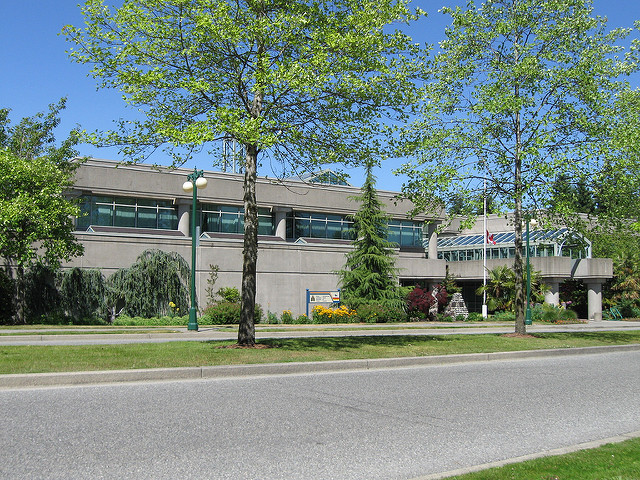
Located at 14355 57th Ave., in Surrey, British Columbia, its city sculpted flowered entrance belies a troubled organization. Behind this somewhat imposing concrete bunker style building the problems battering the RCMP play themselves out on a daily basis.

As any quantitative researcher will tell you, numbers matter, and an examination of the statistics coming out of this office are enlightening. (After a year long wait, an Access to Information request was recently received.)  Questions have been asked about the makeup of the detachment, the deployment of resources to see what could be found out from this rather secretive group. It is believed that Surrey is an example of what is going wrong within the RCMP in terms of its operational capabilities.

First: the population of Surrey has been growing.  In 2006, the population of Surrey was at 394,080; in 2016 the population was 530,443 an increase of 34% in those 10 years. So you may assume that there must have been a requisite change or increase in the number of occurrences or operational files generated by the RCMP just based on the increase in population? More people, more problems? (Most policing agencies base their requests for further manpower on the numbers, the more people the greater the need for officers, based on a police/per person ratio of anywhere from 1/600 to 1/900 for example)  However, if you look closer you will find a different story.

The actual number of  operational investigational files generated by calls for service went from 162,973 in 2006 to 185,801 in 2016.  That is only a 14% increase. How can this be explained?

One theory is that the reporting of actual crime has dropped. Businesses in Whalley for example, which have been broken into a number of times simply are not reporting them anymore, keeping the numbers at an artificial low. Difficult to measure for sure, but the anecdotal evidence is strong.

It is also possible that the makeup of the population is changing;  is Surrey becoming a wealthier suburb of Vancouver? Is the criminal element shifting further east? Also possible but not being measured as of yet.

So if the occurrences are not growing, because those numbers show an occurrence rate growing at only 1.5% per year, what about the actual types of crime: comparing the years  2006 with  2015.

                                 *2006                            2015

**Homicide                 11                                 15

Assaults                  4,909                              3464

Robbery                   670                              762

Abduction                144                                 45

Crim. Harassment   1, 708                          1,907

B &E                          4675                              3786

Theft MV                 4,769                              3,291

Total thefts             15,068                           15,262

*All Stats are from the RCMP Web sites. ** One should also note that homicides in Surrey are handled by IHIT, not resources of Surrey Detachment.

These are just a few examples listed on the RCMP Web site. What is striking is that the numbers are pretty similar even though nine years of growth have occurred. The crimes of 2006 are the crimes of 2015. Some went up, some went down, and in the totals: Criminal Code offences per population as measured in 2006 was 113.91; in 2015 that number was 97.74.

The 10 year average was down overall. So if one were to generalize, you would have to lean to the fact that the crime rate has actually decreased during this time period.

So if the investigational files generated has only grown by 14% in terms of actual calls to the police, then should we not expect to find that the Detachment has grown accordingly?  The actual detachment size has grown at a staggering rate, despite the drop in crime and a very meagre growth in investigational calls, and despite cries for more officers.

The number of personnel now working in Surrey Detachment during this time period has grown by f 41.069 % .

The annual budget for the Surrey RCMP has gone to $144,981,000.00 in 2017. This is roughly 45% of the Surrey municipal government’s overall budget.

If we examine just one of the ranks in the building, the Sargeants for instance they have gone from 29 in 2006 to 73 in 2017. In strict pay dollars that amounts to an increase in spending on Sargeants who make a salary of $102,715 (not counting overtime) from $2,978,735 in 2006 to $7,498,195 in 2017.

The number of personnel working in the Detachment in all capacities has grown from 570 in 2006 to 837 in 2017.

There is a general theory in policing, that boots on the ground matter. The “broken window” theory of policing as espoused by the New York Police Department to great effect has become an accepted belief. That if you look after the small crimes, the rest will come naturally.  In looking at the growth in Surrey detachment you would probably assume that the streets of Surrey are heavily policed. A police car and an officer on every corner.

One must bear in mind, that the face of operational policing in any detachment is the uniform personnel. They are the ones that take the calls, patrol the streets, and conduct the  majority of the investigations that are generated day to day. The RCMP management continually call it the “backbone” of the RCMP.

The RCMP does not seem to agree or go along with the “broken window theory”.  Remember the cries for help and the 100 new officers that were being promised in the wake of the murder of middle aged mom, Julie Paskall outside the Newton Wave Pool?  The Surrey RCMP decried the lack of resources but promised all would be solved by an increase of 100 officers. (a perfectly round number and one wonders what formula came up with this)

Unfortunately what they say and do is quite different. For the last number of years and possibly decades, the uniform personnel have been treated as 2nd class citizens, and the RCMP management has taken this opportunity to enhance their plain clothes establishment, increasing the numbers and increasing the promotions, growing the policing empire. Upper management at this Detachment have thoroughly bought into the theory that everyone is a specialist, policing is more sophisticated, more in need of specialized education and investigation to combat the overwhelming problems of policing. They have become more of a Federal government department, fat with oversight, fat with overtime, fat with jobs that seemingly grow more distant from the actual job needs. They have lost sight of the core job of policing a City like Surrey.

All officers start on the streets, in uniform, but after three or four year service, most of the current crop of officers believe that their career path has to mean going to a specialized unit. The demographics of the last twenty years with senior officers leaving in droves, means that officers who once stayed on the road in uniform for 12-15 years have been replaced by officers of  3 or 4 years service. And these junior officers, in this environment feel that they should be promoted earlier and be allowed to go to these specialized units much earlier. The current experience of officers on the road has decreased to a significant and marked degree. With seniority declining, the level of experienced supervision has also declined.

According to our filed Request for Information, in 2014, the total police establishment in Surrey was 703. According to the statistics provided by them,  there were 276 officers assigned to General Duty (uniform) for Surrey Detachment.

Remembering there are 4 Watches, that would mean on paper, 69 officers per watch. Unfortunately the RCMP is being misleading.

In actual fact for the years 2011 to 2017 the numbers on the Watch are actually between 40 and if being generous, 50 officers. So 20 or so officers per Watch, have been taken from the uniform side, and also seconded to specialized units. By simply moving the position numbers to the secondary units.

In 2011, when personally last in Surrey, we had difficulty sometimes putting 35 officers on the road, and were routinely calling in officers on overtime to reach the unwritten “minimum” of 35.

Nothing has changed much since 2011. Patrol officers continue to be swamped, unable to obtain meal breaks, unable to get done their 12 hour shift without an extra two hours of paperwork. They were and continue to be over-worked.

If off for prolonged sick leave, or for maternity leave, there is no replacement member put in their stead.

Meanwhile the Detachment managers have for years have been consumed by growth and the perks and enhancements that come with it. The upper echelon have come up through the plainclothes ranks and have become adept on growing departments, padding the payroll, and increasing the promotions, while on the road the uniform numbers remain virtually unchanged, sometimes at dangerous levels.

The  “plainclothes sections”, rule the ship, taking their coffee breaks, lunch breaks, and throwing in a little time for the gym.  Overtime is selective and plentiful. It is “easy street” in comparison to working in uniform.

These are the two worlds in the RCMP; both revolving in the same police universe, but seemingly unconnected. Pepper spray and tasers on one side,  the laptop on the other side. The specialists are not encumbered by a gun belt with the numerous tools of the day, never tied to a radio demanding attention and attendance. They are sometimes “affectionately” referred to as the “carpet cowboys”. It is only natural that they lose site of, and then can not relate to the uniform officer in Estevan Saskatchewan, or the officer patrolling the King George Hwy in Surrey.

In this same orbit, is the uniform officer; tied to the radio, tied to the need for answering calls for service, tied to 12 hour shifts, infinite court, and infinite reporting.

This era of specialization is a mantra, it has taken hold and this general aggrandizement of the roles and ranks of the operations is now firmly ensconced. The Federal and Provincial governments buy the propaganda put out by policing managers giving credence to the theory that if you repeat something enough times, eventually everyone will come to believe it.

So with this increase in sophistication, the argument will be that they are more successful,  it would mean more prosecutions, more success in the courts? Have  prosecutions in Surrey have increased?

In the Annual Report for the Prosecution Service in British Columbia, in  2014/15 there were 59,447 number of accused persons approved to Court in all of B.C. In 2016/17 there were 63,733, a 6% increase.

In 2014 Professor Curt Taylor Griffiths of the Criminology Department at SFU did a study and found that Surrey had the “lowest crime clearance rates” in the Lower Mainland. Also, remember that this was the time that Surrey Detachment was asking and got “100 more officers”.

So clearly all this increased specialization, this increase in manpower, this increase in all these tactical units has not led to a great increase in prosecutions.

So where are those 100 officers that was going to be a solution to all the shootings and the increased crime around Newton.?  They arrived but you can’t see them.

This disappearing magic act is easily explained.  The officers who arrived quickly became absorbed in the operational monolith.  The uniform officers already on the road took this time to apply for and get assigned to plainclothes, to be replaced by these brand new officers. So the detachment numbers increased, not the uniform officers on the road.

The numbers grew inside the building, not on the outside which was the public’s expectation.  There was no increase in the number of “boots on the ground”, which was what was being promised. The taxpayers were duped. More “carpet cowboys” were created, maybe a new Sgt position.

So in this age of declining violent crime, (in 2016 it dropped 16%, in 2017 it dropped an additional 8%) how is that this detachment continues to grow, expand its promotions, expand its core base, and add to the increasing cost of policing in Surrey? How is it that the actual police presence on the road is static, while the ability to respond for calls for service remains virtually the same over the last several years, and the experience on the road is dwindling as is the supervision?

The Surrey Detachment flagship is a reflection of the policing times we find ourselves, and a reflection of the “new” management. Specialization, talking of diversity and inclusiveness, telling the governments of the day what they want to hear.

Uniform policing in the RCMP, its very core, is dying a slow death while bureaucracy rules. Growth of the mandate, growth of the secondary roles is more glamorous, more in keeping with a certain level of sophistication. It is safer, less in the public eye, less risk for a risk averse management group.

Meanwhile day to day policing is looked down upon, where people get sent if they are in trouble. Day to day policing is un-glamorous, 12 hour shifting, working on holidays, endless report writing, Crown Prosecutions sheets prepped while dog tired, all of which will be wrapped in legal arguments to be played out in courts for days on end.

Couple an inability to deliver a core service with thousands of claims of sexual harassment, internal investigations that would make many blush, unionization on the horizon, and unbridled self-promotion and you get a sense of further impending chaos with little or no sense of an ending.  To the old observers and former participants it is futile, doomed to an awkward death.

To the few that hang on; the few that continue to work hard, continue to put the job ahead of their life and their family, they just shake their heads. They keep forging ahead, hoping that someone will care— one of these days.

As to those 100 officers that were received to solve the street policing problem in Newton; don’t look for them on the street. They haven’t actually disappeared. Go down to the detachment and peer in the windows facing 144th Street. That’s where they are, through the tinted glass.

And when you next see four police cars of baby faced officers, sitting in the Tim Hortons at 2 in the morning on Fraser Hwy, having their break of coffee and cruellers, don’t think ill of them. They are not being supported and it is probably their first break in a 12 hour shift. During their fitful sleeps between day and night shifts, sugar plum fairies are not dancing in their heads, they are dreaming of being able to one day sit behind those windows on 144th St. They want to be part of the new policing.

(In terms of full disclosureSurrey Detachment  it was this writer’s home for 10 years. It is my alma mater, and I look back with fondness of my years spent there. I worked in uniform and in plainclothes)

Photo courtesy of Flickr via Commons by FB Some Rights Reserved

Some follow-up

In recent days, Surrey has once again been hit with a string of shootings, one case of particular concern, as the victim appears to be completely innocent; a case of mistaken identity. (This is not the first case of mistaken identity in Surrey over the years as a point of fact). The media are re-acting on talk shows and on television to this latest outpouring of violence.

The RCMP management team in Surrey led by Dwayne MacDonald have provided the expected reaction.  In a rehearsed statement talking about his sadness and outrage and promising to bring the perpetrators to justice.  And in a cute deflection move, released pics of some gangsters who have been shot at recently, and telling the public to avoid hanging around them. Really? He also reiterates how the Surrey Detachment Gang Enforcement Team is “working” with CFSEU. Again, the specialized units who target these individuals over long periods of time is going to solve this, the theme being just trust us we are working hard. He assures everyone that they are “making headway” and they are “strategically targeting” the wrong doers and of course he is asking for “the community to join us in this effort”

There are rumblings developing and judging by the hits on this blog from police and politicians, some people are now seeing the problem of being of one of deployment rather than resources. Current Surrey mayor candidate Tom Gill is calling for a re-assessing the RCMP contract in terms of how the resources are deployed. There have been a call for a “beat program”.  There are even a few persons calling for a regional or city force to replace the RCMP.

The RCMP, if they do not adapt and change are going to go down. MacDonald’s platitudes despite his best intentions are tired, well-worn and of little value. Put away the talk of community “initiatives”, “strategies”, “targeting”, “community effort”, “youth initiatives” and “more resources”.  My advice, get back to the core of policing , put officers on the street. It really is not complicated.


Collusion, tampering, obstruction…only in the U.S you say?

The Donald is struggling, twisting and turning in the winds of feral politics– his family, and financial skeletons exposed and being rattled as a bright light is being shone on all things Trump. We marvel and tune in every night to be updated on the latest insanity.

Trump has been battling hard, in this “post-truth era”, where ridiculous statements are blended and bent into truths, where any factual examination is pushed aside in favour of  the strident comment. Where objective facts are less influential in shaping public opinion than appeals to emotion and personal belief.

He has fired many, threatened to fire others, and has been tampering and belittling the Justice Department, the FBI and the Intelligence agencies in torrential bursts on Twitter.  He has fired the head of the FBI for not showing “loyalty” to him and continues to pursue Special counsel Mueller and the Deputy head of the Department of Justice Rosenstein.

Yet, for all his shenanigans, he has not prevailed, the hounds are still at the gates. The Mueller investigation carries on, in secrecy, seemingly oblivious to the rants of their President. The resulting outcome has yet to be revealed, but it seems unlikely that Trump will come out unscathed. We can only hope that someone continues to keep him away from the nuclear codes.

The President of the United States has been stymied by both an independent and highly resistant judicial and investigative arms, and a highly mobilized 5th Estate.  Freedom of the press is highly guarded in the U.S., supported and backed on many occasions by their most Supreme Court. Justices Black, Marshall, and Douglas wrote, in an infamous test in the courts concerning freedom of the press –” the courts lack the power to suppress any press publication no matter how grave a threat to security”

As much as we often dislike the Americans for their gung-ho bravado, their rights to bear arms, and their often fierce patriotism, one must have some admiration for their ability to pursue, once finally convinced of a wrong doing.  No one is above the law, even the President himself. And this is not the first time, we don’t have to go back very far to Clinton and Nixon, both of whom went down for their indiscretions exposed by a media and subsequent judicial examination.

Which leads us to wonder what about Canada? We are a bland nation in comparison, which maybe good depending on one’s point of view.  This is a nation which is complacent, its peoples often accused of feverishly pursuing the government pension rather than displaying an entrepreneurial spirit.  We are slow to demand answers, more wanting to believe rather than disbelieve our leaders. The political fire and brimstone, often seen to the south of us, seems dramatically lacking in this country.

We never seem comfortable rocking the boat, we thrive in offering support, counselling, “moving forward” and “working together”.  We are populated by the polyester crowd, both in dress and thought.  Does this make us immune to bad and dangerous politicians like Trump? Do we have a swamp to drain, or are we in nirvana?

If our politicians were corrupt ; if our Prime Minister or some of his cohorts were doing something illegal;  if our Prime Minister was trying to alter the Justice system in his or her political favour; would they be exposed?  Would our 5th Estate be there, would they be asking the tough questions even under threat of being ostracized by their political leaders. Would our police and judicial arms swing into action?

There does not seem to be any reason for confidence.

Lets refresh our memories.

When the verdict was reached in the Colten Boushie case in Saskatchewan, both the Prime Minister and the Solicitor General of Canada were implicitly critical of the jury; as they sided with the indigenous voices of the day crying racism. They incorrectly scapegoated the pre-emptory juror challenges. Despite legal criticisms, they were undeterred in their wanting to assuage their indigenous constituency–so in the last month or so, the same  Solicitor General has now put forward proposals  to do away with those pre-emptory challenges. The Boushie family, when asked to comment, approved.

It seems clear that our elected leaders are not hesitant to interfere with the judicial system in order to further their political goals.

In a recent foreign affairs fiasco to India, Justin Trudeau ended up at the same party as Jaspal Atwal, a Canadian convicted of attempted murder in a terrorist style act, and was sidling up for the requisite selfies with both Justin and Sophie.

To explain away this breach of security, the PM put forward a senior government official, Daniel Jean, who not only explained some security measures, but went further and put out a conspiracy theory involving the Indian government. The conspiracy was vehemently denied by the Indian government and now does not seem to stand up to any kind of scrutiny.

The significant part in all of this was that this government official felt the need to assist in taking off the pressure off the  Prime Minister. Was he put up to it?

Is it possible the Security and Intelligence group were trying to aid the PM?  In the worst case scenario the PM office may have directed that this government official to put some spin on this story, throw out a little smoke screen.

Have we forgotten Senator Duffy , paid by the PM Harpers Executive assistant Nigel Wright, who used his own private funds to pay Duffy for what were believed to be fraudulent claims. Duffy was paid $90,000 to cover all the expenses he said he had claimed, and which he could now pay back, along with a promise to go easy on him.

Michael Cohen, paid off Stormy Danials with $130,000, on behalf of Trump. Is the Canadian version of Stormy Daniels Senator Mike Duffy? In typical Canadian fashion Duffy is now back in the Senate readying himself for collecting a government pension.

A two year inquiry into former Prime Minister Brian Mulroney and his connections to a German-Canadian arms lobbyist Karl Heinz-Schreiber found Mulroney accepted $225,000 in cash to hide the transactions.  The inquiry summarized the wrong-doing by saying,  in a typical Canadian spin,  “these dealings do not reflect the highest standards of conduct”.

Mr. Mulroney’s daughter recently ran for the leadership of the Conservative party of Ontario.

The point of this historic review, is that the potential for wrong-doing in this country is a reality.  This country is not immune. But we are not looking.

Our 5th Estate has been deeply wounded, the National Post, the Globe and Mail, CTV, and the smaller papers are burdened by decreasing budgets and are in a deathspin struggle to remain relevant and financially viable.

The CBC clearly has become an arm of the Liberal party, and have been rewarded by increases in their annual budgets. If you are not a believer, the extra money even comes with strings attached; that the CBC develop a 5 year “accountability plan”, with no details given or outlined what this involves.

So that leaves us with the police and the Department of Justice.

In a recent Globe and Mail article, the article notes that Commissioner Lucki has not given any media conferences since her appointment, but was busying herself with finding a home in Ottawa.

However, what was striking was one paragraph, where the author discovers that the government “has been preparing a mandate letter listing the goals she needs to meet in coming years”. It goes on to say that this is unusual, something usually done for the Minister of a particular portfolio, but in this instance “the Federal government wants to lay out exactly what Canadians can expect of their new top cop”.

The days of an independent and viable national police force seem to be rapidly disappearing.  The Liberals have taken the step over the line, the line separating the state from the police.

The mandate of the RCMP is pretty obvious, enforce the laws as constituted.

The Commissioner represents the rank and file of the RCMP and the width and breadth of the investigational and operational policing across this country. In this time of proposed civilian oversight, these could prove to be dangerous times, given the nature of the current crop of politicians who seem to want to wrest control over the direction and scope of the National police force.

Ms. Lucki seems to have been chosen for her amenability to accept direction from the Liberals, one does not get the impression of her pounding the table to defend the rank and file, or standing up to possible governmental interference. Operational policing once again seems to be being pushed into the back seat.

Principals and scruples seem less apparent with our current Prime Minister as he frolics on the beach with Aga Khan. The Solicitor General seems unaware that it is ethically wrong to change the laws to cater to her core political base, a group for whom she once worked.

But no where in sight is anyone who seems concerned.


“What people fail to appreciate is that the currency of corruption in elective office is not money, but votes” – William F. Buckley. 


Photo courtesy of Flickr Creative Commons by DonkeyHotey – Some Rights Reserved


The CBC….are you getting your $1billion dollars worth?

The unique tactile feel of a newspaper, especially in the early morning,  fresh from the presses, still damp with ink was one of the subconscious experiences which is now missed, and much forgotten. By admitting this, it is also admitting to being the older generation, possibly caught up in a romantic remembrance of journalism, nostalgic for the simpler times. However, it may be more significant, it may be that we are watching the tick tock death of responsible and professional journalism.

In our working lives we followed stories such  as the Watergate break-in, or Daniel Ellsberg and the Pentagon Papers, muted headlines and bylines over days and months, eagerly read each morning or in the evening during our daily commute. Hundreds of heads lined the subway cars, heads often immersed and hidden in the broad sheeted papers. Experienced readers were envied in their skilled ability to fold the paper in thirds making it more manageable and less intrusive for their seat mate.

None of the stories were “timely” in the current sense, but all were detailed, 800 or 1200 word stories, all attempting to abide by the accepted journalistic standards of the day.  It did not matter that the events that were written about were 24 or 48 hours “old” in terms of when they happened, what mattered was getting the full facts of that story. We believed that was written was the truth, had gone through a process of checks and balances and reliable sourcing.

None of us believed that the world would tip over if we were reading that news 12 or 24 hours after the actual event. The term “Breaking News” did not exist, we were able to quickly judge the seriousness of the story by the size of the caption lettering. The declaration of war was only a couple of inches in font size, the journalistic shout of the times.

Of course, this has all changed. We are constantly told now that we are on the edge, teetering, just seconds behind the latest “breaking news”. We need to hear about an accident before the blood has coagulated, to hear a political turn of events as the words are uttered so it can be analyzed and spit out replete with editorial content before it has echoed down the corridors of power. The death of a notable personality or celebrity, is shouted at us before the shroud covered gurney has reached the street.

All thrust upon us at lightning speed,  all possible because of technology, possible because of the inter-connectedness of the world. To be heard above everyone else, everything now is a shouted headline. Not enough time for more than 140 characters.

Of course to be first, to be the quickest, there is a cost.

Competitive speeds, literally leaves no time for thought, no time for reflection, and most importantly no time to question or verify. Conclusions are reached with little or no depth to the debate, no “other side” to be heard.  It is quicker for sure, but it belies the question of whether inaccurate or timely information is better than slower and more informed.

There has been much written about the declining media presence in this country, paper-thin newspapers, all struggling for survival. Video supplanting the written word, the truism of a picture being worth a thousand words is now being fully tested.

The media tells us that there is a rapidly dwindling interest in in-depth analysis or reportage.  We want to see pictures or video they say, we want  the news in staccato bursts which hints at a fuller story. The  full story now often remains uncovered,  buried and forgotten in a few hours.  Further development of that story needs more time and effort than the news agencies are willing to give.  They scrape the surface because they say we demand it, we want to move on, there is another story coming.

They blame our inattentiveness, our clear lack of interest in all things grey. They say we demand only black and white answers.

As a result, we are now  reaching absurd levels of polarity. We seek out what will quickly fit into our version of events, our pre-conceived notions reinforced.

To get the attention of all these scrolling eyeballs one needs to scream louder, one needs to make statements that inflame or capture ones attention by being outrageous or absurd. It is the most obvious in the  Red or Blue United States: FOX news exhorting Trump as a saviour, MSNBC seeing him sitting next to Hitler.

In the more modest Canada, cheap news reigns, a deer stuck in the ice is now headline news. Fire personnel rescuing a cat replacing city or provincial legislation coverage.

In this fight over dwindling ratings, empathy fuelled stories reign supreme.  Blood and tears in 10 second increments, video the needed currency.  Youtube and hand held devices determining the news lineup.

The CTV and CBC have purged senior reporters, even video librarians, replacing them with inexperienced twenty five year olds.

Writers working up through the ranks, covering city hall, writing obituaries are no longer required. Replaced now by pretty, under 30,  gender and ethnic balanced newsrooms. The new talking heads on fifteen minute loops endlessly playing throughout the day, with the “Breaking News” banners.

Monies that used to be spent in covering detailed stories, are now being spent on staged newsrooms, filled with massive monitors, all to give an impression of being technically advanced, cutting edge, trying to appear more like NASA’s control room. The assumption is that no younger generation person can resist a screen as a background. It is  blatant to the point of being laughable.

There are five maxims of ethical journalism.

1) Truth and Accuracy.

2) Independence – where it is expected that they should not act formally, or informally on behalf of special interests whether political, cultural or corporate.

3) Fairness and impartiality – most stories have two sides, stories must be “balanced” and in “context”.

4) Humanity – in other words, it should do no harm

5) Accountability – there must be correction of errors

Which leads into the role in Canada of the CBC in all this, the government funded Liberal backed and supported Canadian Broadcasting Corporation.

This tax payer funded agency in 2016/2017   had a budget of $1.09 billion.

66% of that funding comes from government, which of course means the taxpayers. Only 8% comes from subscribers and a paltry 18% from advertising. They do not need to play by the same rules of fiscal responsibility when it comes to reporting of the news.  The government-supported CBC does not have to compete on a level playing field with the privately held television networks, or the newspapers. They have the advantage.

So one would have thought that if there were any hope for sticking to the ethics and professionalism of journalism, it would be the CBC, where striving to find viewers and monies was not crucial to survival. It was hoped that this may have been the one place where some in depth reporting could emerge without the usual budgetary constraints.

Unfortunately, they may be the worst offenders.

There is one rub that has become obvious. Besides showing all the vestiges of a government agency in terms of bloat and inefficiency, they owe their very survival to the government.  Clearly they believe that they must  be loyal to the government of the day, especially when it is Liberal, regardless of the rules of ethical journalism.

Their bias is discomfiting, no longer are they being journalists, they are being conduits for current government policy, whether it be the incessant push of indigenous issues, or defence and social policy.  Their editorializing and clear bias for the Liberal party is telling, difficult for them apparently, to bite the hand that feeds you.

Examples can be found everyday, one does not need to look very deeply.

The Colten Boushie coverage was a glaring example of both the Liberal/CBC  agenda towards indigenous policy and inflamed sub-standard reporting of “systemic racism”.  The facts took a back seat to their already reached conclusions. Editorial content blurred the facts.

Their follow up in their news series the “Investigators” pushed the agenda of a “botched police investigation”, pushed clearly by the Boushie family and their legal representative. Colten’s mother, said the “RCMP did a botched-up job”.

They “investigated” and then headlined their story, splayed it nationally, and trumpeted the police investigation as being  “sloppy and negligent”.

Of course, they had very little evidence to support this, and so even went out to find experts that would confirm their version of the story.  All of their allegations centred around the interrogation of Gerald Stanley and the seizure of his clothes. Claiming that Stanley had been let to go home prior to being interviewed, and that they never seized his clothes at the time.

Both of these allegations were completely false and eventually discounted. In a ten second apology they admitted to the wrong doing. Of course the damage was done. These top notch reporters had two basic facts central to their story completely wrong. Their sources clearly had not been tested, clearly their fact checking was completely lacking.

Were they further stoking the flames of racism that they had done throughout the whole trial? Maybe the intent was not that evil. But clearly they had a bias, and clearly nothing was going to stop them in their pursuit of the truth as they perceived it. It fit with the Indigenous theme.

If this had been the NY Times the journalists would have been fired.

Investigative journalism is for the most part invisible inside this journalistic behemoth. They are no longer reporting, they are “tracking” stories to use their own terminology.

It is no coincidence that they now concentrate on those teary stories which require no work in terms of reporting. The Humboldt crash fills our screens for days on end, where their reporters ask such probing questions as “How is Humboldt surviving this crisis”? to anyone walking in front of their cameras. Days of trying to have someone speak about one of the victims, then coverage of all the funerals in all the different cities, coverage of the Go Fund me account as much as the Stock Market. They even fly in the National talking heads to sit in front of the hockey arena.

A tragic accident to be sure, but days of self flagellation is not reporting, its just easy.

If we believe that other news sources are not being competent or trustworthy, we can turn them off, or cancel our subscriptions. The CBC survive only because they are funded. And generously funded. They have lost their way, they have lost sight of  the rules of honest journalism. What is covered in terms of news is often just the regurgitated stories of other news agencies. How does the BBC for example, enjoy the journalistic reputation they have, even though they are government funded. The two are incomparable.

So you can turn the CBC off; or go to a rerun of Schitts Creek , but it is time for a serious discussion of their role and whether it has any place in the sadly dwindling Canadian journalism landscape. Maybe it is time to read the paper instead.


Photo Courtesy of Elijah van der Giessen via Flickr Commons Some Rights Reserved

Children as pawns, all in the name of “Reconciliation”

“Are you clear to attend social services with reference to an apprehension of a child?”.  Reluctantly, you give the double click on the mike.  Signalling ok to the dispatcher. No further words are needed, you will go, even though you know there are no good outcomes.

This type of story plays out daily, across the country, in our largest cities, in the expansive rural areas,  and in isolated locations. In the Jane-Finch corridor of Toronto, or the Whalley “flats” of Surrey, it is not particular to any race, cultural or religious background.

However, recently the Federal Liberals and your ruling government have made First Nation and Indigenous child welfare a pillar of their next election platform, and have now made the returning of the jurisdiction for child welfare back to the First Nations and Indigenous groups a priority: to be run by them and for them. They are asking the Provinces to turn over their authorities over these very sensitive and complicated matters of safeguarding the undefended children.  They are making this a singular issue, and that issue is now resonating as a talking point in the constant “reconciliation” dialogue. The “Sixties scoop” like “residential schools” are always the cornerstones of their argument.

As recently as January of this year the Federal government led by the infamous two; Philpott and Bennett,  proposed a six part plan which they tried to strong-arm to the Provinces. Their plan involved the “drawing down” of jurisdiction on child welfare. In other words, in this “emergency” meeting, they were proposing that the Provincial governments sign on to handing over jurisdiction for Child Welfare back to the Indigenous communities.

Wisely, none of the Provinces signed.  As of yet anyways.

Their policy intentions for the First Nations and Indigenous groups is both naive and dangerous. There is no solid foundation to this house of cards, and what they want the general public to believe is more than misleading. It is built on a fallacy, a fallacy which is repeated daily in political circles, the old theory that if you say it enough it must be true.

One needs to explore the grit and grime of what these type of situations are in reality. Invariably, it will be something like this.

You anticipate that the house will be rundown, the evidence of poverty and neglect will be oozing from the either overly hot, or cold, un-finished residence. The kitchen will have stacks of unwashed dishes, grease layered frying pans, and boxes of macaroni or canned spaghetti will be overflowing from any nearby garbage container. The linoleum or worn carpeted flooring will be unswept, the toilets and sinks mineral stained and there will likely be evidence of alcohol or drugs or both. There may not even be running water.

The bedrooms will have clothes strewn about, and their will be piles of unwashed children’s clothes on the floor, encircling the washer and dryer. There will be dogs or cats or both. Children’s toys will be everywhere, misleading evidence of proper care.

And the children if young, will be running about, sometimes in dirty unchanged diapers, there mouths encircled with remnants of the last meal. They will cling to you, seemingly any attention being worth their efforts and affection. They will also be clinging to a favourite doll or stuffed animal. They will be invariably sick, running noses, and slightly fevered foreheads.

The teenagers will be either angry or sullen, rarely making eye contact or yelling at you with no apparent rationale. They will be usually be slumped in a chair or a couch. The girls will have too much makeup, and the boys will have too many cheap gold chains and sporting the latest WWF hoodie. Rap music will be on their ever present headphones as they pretend nonchalance.

The room will be filled with tension, and apprehensiveness, and you will be unable to distinguish which way this will end up. Violence or the threat of violence always simmers below the surface. What parenting is present is expressing incomprehension. We once removed a teenage girl from a residence and the mother did not see anything wrong with the fact that her 10 year old daughter’s morning chores including sticking a needle of heroin to her mother as she lay in the bathtub before she went to school.

The parents will be unable to explain bruises, lash marks from a telephone cord or t.v. cable, or the fractured skull and blurred vision of the child. If drunk, the male or female parent will likely physically try to intervene, screaming at the top of their lungs, dial 911 while you stand there in uniform, or call for the nearby friends and relatives to come to their aid.

The parents will often be teenagers themselves.

As you witness or photograph injuries, the bile will rise in your throat, you will want to hurt the offender who stares at you spitting obscenities.

And you will carry that young thrashing child from the residence, little fists hitting you in the face or pulling at your cheeks. And you will fundamentally realize that it is unlikely that this child will be “normal” again, nor will it likely get to know their parents in any meaningful way. But you may have saved their life.

The children may grow up hating the sight of the police who took them from their parents, or love you because they were terrified, and you were a calming voice. Flip a coin, the result is never predictable.

The ivory tower politicians and academics are never around when this is going on. Their reality is that this is a question of racism. This is not about safety of the children, it is about “cultural genocide”.

Carolyn Bennett, during the meeting with the Provinces, and in the subsequent media scrum, continually made her “impassioned plea” to take away the authority from child welfare agencies of seizing endangered children and placing them in non-indigenous foster homes. Bennett goes on to explain that she wants to not repeat the “mistakes” of the Residential schools, and the “Sixties scoop”, because she does not want to alienate kids from their traditional languages, and “culture” and “support networks”. She does not mention safety of the child.

Philpott calls it a “humanitarian crisis” and also echoes it being reminiscent of the “residential school system”. Philpott describes the seizing of these children almost as semi-conspiratorial, unknowing (white) authorities swooping in, and taking away these children.

There is little doubt that there is in fact a crisis. The Reserves are the epicentre of these child tragedies. Their numbers are staggering.

In Manitoba alone, there are about 11,000 children in custody and 10,000 are Indigenous. Across Canada, there are 4300 children under the age of 4 in care who are Indigenous. There are 40,000 Indigenous children across the country in care of all of the Provincial agencies.

Poverty is almost a guaranteed  undercurrent, common to many of these situations. Third generation welfare festers these social wounds. In Saskatchewan 2% of the population is on welfare, while 44% of the people living on Reserves are on Federal welfare.

And the Indigenous population is exploding, and as the population increases, there is a parallel increase in the number of indigenous children in need of care.

From 2006 to 2016 the Indigenous population of Saskatchewan grew by 42.5%. A growth rate four times that of the rest of the population. More children being brought into this world, more children succumbing to poor housing and indentured poverty, more children falling into the child welfare system.

So far Ottawa spent $200 million last year for child welfare to aid the Indigenous cause, and are spending another $256 million this year.

The Liberals are misleading the public. They are perpetrating a myth to further their political goals, in efforts to appease the Indigenous leadership. They want to be the heroes to the Indigenous, with little cost to them, as the Provinces have jurisdiction over Child Welfare. It is a cute move to brag about their moving forward, while at the same time downloading the responsibilities and the problems to the Provinces.

As one who has assisted in such seizures, the seizure of children and placing them in foster care is actually not an exercise born of racism, of wanting to disband a society and a culture, as they would like you to believe. These kids, which Ms Bennett and Philpott want to leave on these Reserves, in the care of “Auntie” are in real physical danger.

They  want to give the leadership of these Reserves control over the system which tries to save them from abuse and neglect, they feel that by giving them control of the Child welfare systems, everything will be righted. This logic is indefensible.

The truth is that when social service workers reach a decision to seize a child, it is after undergoing a very lengthy process including a full debate of the circumstances, a review of what has been tried and failed, often after a consultation with First Nations support groups or their own social worker agencies. They have proposed a foster outcome, after they have already explored the potential for other family members to be involved. And to foster these children, it is simple logistics, there are not enough foster homes on the Reserves, there are not enough capable “Aunties” to take all these children.

There is no need to accept this proposition, one just needs to explore the cases.

Lets take the case of “Levi” (a pseudonym) which is a case out of Alberta. His tragic eventual death was a glaring example of how cases flow through systems in all the Provinces which are struggling to deal with the Indigenous cases on the Reserves.

Prior to Levi even being born, the family, mom and step-Dad were the subject of Child Welfare authorities for the preceding eight years. If the problems of the family could be summed up, there are the usual obvious patterns; family violence, parental addiction and homelessness. Throughout Levi’s story addiction treatment was used, mental health treatment was given, parental supervision orders were issued repeatedly, and foster care was the final approach tried.

When Levi was 18 months old, living in a blended family of five other kids, his mother voluntarily asked that he be taken from her and placed in foster care. Instead, the Ministry worked with Mom, keeping Levi in the house.

Things settled down a bit, but it wasn’t long before the police were dealing with the family as there had been further assaults and restraining orders which resulted in charges.

A Family Supervision order was issued when Levi was 5 years old. When Levi was 6, Mom again requested that all three kids be placed in foster care, and this time her wish was granted, and in arriving at foster care, the kids were found to have head lice and needed extensive dental work. A week later, an uncle requested the kids back, got them back for about a month, but then he gave up, and he sent the kids back to foster care.

Levi eventually was sent home to mother once again, who had undertaken addiction and mental health courses as had the now back again step father. Living with mother lasted two months, and then he was sent to live with grandmother. While visiting his mother who lived nearby Levi was exposed to another serious assault, and also a suicide which occurred in the house. So another month went by, back to foster care he went.

By now Levi was in Grade 3 but reading at a Grade 1 level, and Levi now was asking that he be able to stay with his foster parents.  But on his 9th birthday, Levi was once again returned home to mother, again under another Supervision order. The violence and the drinking continued, and on his 11th birthday, Mom again asked that he be put back into foster care, but nothing happened.

When Levi was 12 years old the police attend to a residence where everyone was intoxicated, and this time Mom said she hadn’t seen Levi for a week. He was found living in a tent, saying he couldn’t handle the drinking and fighting any longer. For the next three years little is heard of Levi.

At the age of 15 Levi was taken to hospital for intoxication. He was cared for and sent home, but after a couple of weeks, and after talking about suicide by intoxication, Levi went to the hospital once again suffering from severe intoxication, but this time he didn’t recover. Levi died.

There are many other examples from many secondary sources. Some further examples come from The Office of the Child and Youth Advocate in Alberta.  In three other cases; the cases of 5 year old Sarah, 2 year old Anthony, and 1 year old Mikwan. (again all pseudonyms), the same pattern emerges, the same depressing attempts to save these children.  Their complete stories and their deaths can be read in the full report of July 2107. 

These three were all small defenceless children, all born to parents with multiple kids, with alcohol and drug addictions, and a history of domestic violence.  All the parents involved neglected and abused these children, all were returned to them after repeated counselling for violence and addictions, after repeated trips to foster care, and a litany of Temporary Guardianship and Supervision orders.

Throughout the workers, including workers from the DFNA (Delegated First Nations Agency), visited, wrote reports, questioned the parents during multiple visits. In Mikwan’s case they actually moved into the house on a 24 hour 7 days a week basis so worried were they about the parents.

All three died at the hands of their mothers, all died of “serious head injury”, “cardiac arrest” “injuries to brain and spine” and “acute head trauma” in these cases. And in all three cases Mom was charged with their deaths.

In summarizing the Mikwan case, the review, that there was a continuing “commitment to work together (between the DFNA and Child Family Services)…and although the policy is in place it does not appear that it is consistently applied.”

If you listen to the Indigenous leadership, all is blamed on lack of funding. There is the circular argument that the Residential schools and the 60’s scoop ruined people and their ability to function, but in the same breath, they say the kids need to be kept within their community, despite inhospitable and dangerous environments.

More money for child welfare, more money to train Indigenous social workers, the ability to run their own child welfare system will cure all according to these leaders. FSIN former chief Sol Sanderson who has spoken for many years about the need for indigenous rights and “reconciliation” says, “we have to do this, if we don’t it will be a disaster”. Mr Sanderson with all due respect, look at the roots of what is going on. It is already a  disaster.

By all means spend the billions of dollars some estimate to do all this, put the process in place, find those foster care residences that could not be found before, find all those in-house social workers who are willing to intervene and seize children, those willing to live in isolated communities, and seize children to whom they may be related. And this is after you fix all those social ills that plague the Reserves so that the children can be returned safely.

Maybe then you can take risks with the children. All the money in the world is not going to fix those problems overnight.

But until then, leave the children out of it. They are not pawns, they have no representatives, they can not vote.

For some reason, the cases like Levi, rarely get the public attention, or the attention of the Fifth Estate. Why would that be? Children are being harmed on the Reserves at a horrendous rate. Just look at the numbers.

However, we do hear about the Indigenous groups blaming a failed foster parent. We do hear about the girl winning a case back from the courts who had seized her child. Or the teenage Indigenous boy who was left in a motel at the age of 15 and committed suicide. Not much on the kids that were returned to their families with disastrous results, or when the removal saved the children.

We are not hearing from the social workers, no doubt in fear of being branded racist, or in fear of losing their jobs, as they have always been a politically correct group. There are several cases which show that in an effort to appease the family, was the priority and times when they did not seize the children and they should have.

Case after case, patching emergencies, striving to keep kids with families, many times leaving unconvinced that their supervisor order or plan will work. Every seized child is after a long litany of other possibilities have been tried. The idea that these children are “scooped” up willy nilly is simply wrong.

We are not hearing from foster parents. The majority of foster parents have been vetted, do it for a number of years and they are difficult to find. To think that all will be solved, according to Ms Bennett by finding “Auntie” to take care of the kids is insulting to those that deal with this on a daily basis. To think that all these cases can be absorbed in the Reserve communities on their own is absolute fallacy.

Climb down out of your ivory tower. Ride the social worker police patrol car for six months, bear witness to man’s inhumanity to child, witness the damage being done to those who can not defend themselves. Then tell me it is ok, as long as they don’t lose their culture.

In Maslow’s hierarchy of needs, a well accepted theorem in the psychological, social, and judicial community. In the hierarchy of needs, there are five stages of needs for a person to arrive at self-actualization. The order in terms of priority are: a) biological and physio logical; air, food, warmth and shelter b) Safety c) love and belonging d) esteem and finally self- actualization. The first four must be met before there is any chance of self-actualization. Culture and language are in that fifth place slot, long after the basic needs are met.

The children in the Sixties scoop and in the current child welfare system are being taken in because their basic needs are not being met. Without that happening, without their physical survival, without their ability to be safe, the ability to be culturally aware is of little use or importance.

Political expediency is the obvious motivator here.  In a story from a couple of days ago, the Liberal government announced  that they are now going on to the Reserves to plan early “engagement initiatives, and cultural training for staff to better serve Indigenous voters at the polls next year”.  Pathetically obvious.

Today in another story from the CBC, they tell the sad story of a mother, Lillian Semaganis, who opened a paper in April 1973 to find pictures of her kids which had been seized being posted up for adoption in the United States.  She goes on to explain that all “six” of her children had been taken by Saskatchewan Child Services. Not one question as to why all of her children were taken?

To their credit, the author actually spoke with a person who ran one of the programs Otto Driedger, who said the only goal at the time was “finding children permanent homes”.  The alternative he no doubt patiently explained was for them to be in foster homes “because of the neglect there was, or the abuse that there was in families”. The intention of the program he said was not placing them with “white families” that was not the “basis of the child welfare program”. Clearly he is a lonely voice in the debate, who has finally chosen to speak up, however he is being drowned out by the First Nations and Indigenous frenzied claims.

So we now have the Federal government proposing another payment for the “60’s scoop” totalling $800 million. Money to compensate for the robbing of these children of their culture and their identity. No case by case review, no questions as to whether removing the children saved those children. Saving the children does not factor into it apparently.

So let this be a warning to the Provinces and to the Federal politicians who are grandstanding on this issue. First walk a mile in the child welfare shoes, be there, experience the conditions these children are in, look at what alternatives actually exist, and then tell me how this plan will work.

Everyone needs to start looking in the mirror as to real solutions for this crisis.

The first child that someone decides is not to be removed or placed in safety, in the interest of avoiding “cultural genocide”, and that child dies from broken bones or untreated disease as a result. The agony and death of that child will be on your hands.

Using children to further your political agenda will never be forgiven.

Note:

This blog is dedicated to “Joe” who played shortstop, while I played third base on a men’s team. He was a good baseball player and we laughed together a lot. The always smiling Joe was part of the Nuxalk nation in Bella Coola.

Joe had a job, a girlfriend, but lived in a home like Levi’s.

While still in his early 20’s “Joe” got excessively drunk, and put a rifle to his head, and pulled the trigger. He and his girlfriend had a fight, and he knew no other way of coping. His family environment dictated and predicted his demise. 

As one of the four police officers in Bella Coola, I had to answer that call, and pick up what was left of Joe. In doing the next of kind notification, his family looked at me, incomprehensible. 

Photo

Courtesy of Flick via Commons by Werner Bayer – Some Rights Reserved


New Commissioner a symbol of Identity politics…

When I sit around with current and former RCMP officers there is a lot of shaking of heads in terms of where the RCMP finds itself now; buried in sexual harassment cases, about to face unionization, and about to have to deal with a possible civilian oversight group.

Operational problems are around every corner, whether it be the lack of policing in rural communities, a completely failed promotion system, mounting PTSD complaints, mounting use of force issues, and the likely partitioning of the RCMP.  All major issues, all daunting to say the least.

So it was baited breath that the members of the RCMP waited an eight month screening process taken on by ten committee members. Thats right. Ten.  These ten were to oversee a selection process, all living on expenses, and I am guessing pretty substantial hourly rates to complete what must have been a more complex task than I imagined.

The Committee was headed by former Liberal Premier and Ambassador to the United States, Frank McKenna. The rest of the committee was comprised of six women and three men, and a job description mandate which included ” having to demonstrate their knowledge of Canada’s indigenous culture and a sensitivity to the issues relevant to the diversity of the Canadian population”.

You will notice a bit of a theme with the Committee members.

Devon Clunis, former Winnipeg Police Chief and the first black police chief in Canada. He was known for dealing with the race issues in Winnipeg, but retired somewhat suddenly just before a police budget came down which included tripling of the promised police budget, and an RCMP investigation into a companies billings for the building of the new police office.

Malcolm Brown , the Deputy of Public Safety who would report to Ralph Goodale.

Daniel Jean, the National Security Advisor to Justin Trudeau, who has now gained notoriety as the fellow who came up with the Indian government conspiracy theory to cover Justin Trudeau’s dinner guest Mr. Atwal. It was a ridiculous slander on the Indian government which they had to apologize for and likely the end of his high flying career. He had no previous experience in Security and Intelligence before taking this job.

Barbara Byers, with the Canadian Labour Congress who specialized in issues such as the LGBT community.

Manuelle Oudar, the CEO of Canada Workplace Standards and Health and Safety.

Marianne Ryan, former Deputy Commissioner of the RCMP in Alberta, and now the Alberta Ombudsman.

Bev Busson, former interim Commissioner of the RCMP, and the first female Commissioner of the Force

Tammy Cook-Searson the elected Chief of the Lac La Ronge First Nation.

It is not difficult to guess, once you see this list as to what the tone and tenor of the selection process would be; clearly a woman, and clearly someone with an understanding or connection to Indigenous issues, or sympathetic to the causes of diversity and inclusion.

So after nine months, lo and behold there were four in the running; three women and one man (the male no doubt thrown in there to avoid any charges of being slanted in their decisions.) Statistically women represent 21.6 of the RCMP, but in this final selected group, they made up 75% of the candidates.

The other candidates were: A/Commissioner Joanne Crampton, A/Commissioner Jennifer Strachan, and Deputy Commissioner Kevin Brouseau.

And the winner and the “absolute best” person according to Justin Trudeau was Assistant Commissioner Brenda Lucki.

Now if they knew they were going to select a female from the RCMP, then I could have saved this committee a lot of work. Just open the internal phone list and look for any female officer above the rank of Superintendent. There aren’t many. I could have come up with this list in a couple of minutes. Now, if you tell me that they must have some sort of Indigenous acceptability, a second screening would have also quickly found Ms. Lucki who received recognition for her work on aboriginal rights. In other words I could have saved them a lot of meetings and expense.

Ms. Lucki, who joined the RCMP in 1986 has had a varied 31 year career, serving in Saskatchewan, Alberta, Manitoba, Ontario and Quebec and then with the U.N in Yugoslavia. She is most recently in charge of Depot Division, the training facility, a former posting of Bev Busson as well, before she became Commissioner.

At first glance it seems impressive but there are a couple of things you need to keep in mind. Every promotion for the most part in the RCMP means that you change jobs, you have to move, regardless. So someone like Ms. Lucki, was promoted seven times in 31 years, serving in a lot of different Provinces, did not land in a place for any length of time. Take off a couple of years while with the U.N. and it measures out to a move every 3-4 years. During that time, she may have had oversight on a couple of hundred officers at any one time. She is now being asked to oversee a vast bureaucracy, over 28,000 personnel, with a budget of over $2.7 billion.

So what put Ms Lucki ahead of every once else? Her resume is almost bland and typical of all white-shirted officers within the RCMP. Constant movement in the promotion process also means that she was not in any one place for any significant period of time, therefore with little time to have any substantial impact. (Bev Busson also suffered from this dilemma leading up to her being made interim Commissioner.)

There is little which points to accomplishments within the RCMP with the exception of the Jubilee award which were given out like candy, and were internally generated.  There is repeated mention of the Governor Generals Order of Merit of the Police Forces and her role with the Indigenous. This too is an internally generated nomination, about fifteen a year get nominated by the Chiefs of Police and almost all nominees are officers as well. There is no evidence or hard factual detail as to what this entailed or what she did to deserve this recognition. These nominations are often part of the upper management Ottawa game in the RCMP of self – promotion.

There are reports that the committee approached Deputy Commissioner Butterworth-Carr who it is said turned the job down more than once.  Butterworth-Carr is a rank above Ms. Lucki and is First Nation from the Tr’ondek Huech’in Han Nation of the Yukon.  She also had the Queen and Golden Jubilee Medals, and the Order of Merit of the Police Forces for her proactive work. There are a lot of similarities with Ms. Lucki, such as her short length of service in a number of locations in the West.

The RCMP is in serious jeopardy as an organization. The problems seem stifling and the threads of the organization are being pulled and torn in every direction. This has been the result of mis-management at the upper levels over the last fifteen to twenty years. There can be no doubt about that. The question in the interview should not have been what can you do for this organization in the future, the question should have been what have you done in the past?

Upper management in the RCMP is known as the “go along to get along crowd” with never a dissenting opinion or a willingness to take a principled stand. Should they be held accountable for this mess, of course. Are they being held accountable, of course not; it is after all government. The upper management of the RCMP are for the most part a self-perpetuating incestuous group, and they should all be given pink slips along with a “thank you for your service” as they are escorted out the door. The roots of this organization are rotting, and the various limbs need pruning so they can grow again. This is not going to be easy.

Ms. Lucki as nice, as personal, and smart as she may be; she was and is part of the problem, not a part of the solution. Shockingly, the Liberals after all this went with someone inside this  same dysfunctional and management challenged organization.  Being female does not exonerate her from management actions of the past. She was part of that management.

Do we really care whether the selected candidate was male or female? Whether your skin is black, white, green, or orange is not a factor. Facing a complicated issue with civilian oversight on the horizon and the disappearance of the administrative side of the Force, one would have thought they would have been looking for someone with a strong administrative or legal background, or a hands on operational background, or at least a familiarity of unionization and all that it entails. Mr. Trudeau assured us that there were “many extraordinary candidates”.  Maybe a Masters in Business Administration, or a speciality in Labour Economics? Were there none out there? Did none apply? Was a candidate with a Bachelor of Arts the height of the academic qualifications? Even the male on the selected group of candidates has a Master of Laws from Harvard, is  Metis, but he did not have a chance.  “He” being the operative pronoun. Clearly indigenous and being a woman were the heavily weighted determinants of their choice, and merit was a very distant third or fourth.

Trudeau’s classified questionnaire must have been multiple choice, no right answer, as decisiveness is not a pre-requisite;  It must have read, Are you:

a) Female?

b) Female?

c) Indigenous? Or do you at least have friends that are Indigenous?

d) Female?

e) Do you like me and agree with everything I say?

Self-declared feminist Trudeau was using his usual clipboard check list selection process, just like his selections to Cabinet.

This country is becoming dangerously polarized, and now the politicalization of the RCMP has reached a precipitous level as well. Trudeau from the left is very similar to Trump on the right, he does not seem to recognize the problems of political interference, the danger of slanting the law and investigations to favour a special interest group.

When you Google check Ms. Lucki, you find video of her participating in the Depot “dunk tank”. Well, new Commissioner Lucki you are about to be thrown in the deep-end once again.

This time the results could have dire consequences for those on the front lines of the Royal Canadian Mounted Police and maybe the very survival of this historic institution.  In her speech she said that she is going to ask “all the right questions”. Doesn’t she know what the problems are at this stage?

What is really needed is someone with answers, someone with a vision and someone with the audacity and authority to do what is right. Rome is burning, we do not need another fiddler.

But good luck to you Ms. Lucki, and I am keeping my fingers crossed that you prove me completely wrong.

I will go back now, to my coffee klatch of the disenchanted, and we will see what they think of Mr.Trudeaus choice, whether they think she will be the next saviour of this once proud organization, and whether positive change is around the corner.

I will withhold my prediction for now, but all should be prepared to hear “diversity” and “inclusion”, as much as we hear Trudeau say “going forward” “working with our partners” and “women”. Hopefully, the two officers that awkwardly fainted during your speech did not have a premonition as to what is to come.

And to this “select committee” of advantaged bureaucrats. Please call me next time, I could have saved you a lot of time and the taxpayer a lot of money.

After all we will be meeting again in four years.

Photo Courtesy of the CBC and may be subject to copyright


You better be paying attention….

The Boushie family was greeted and feted by assorted and sundry Ministers of the Liberal government in the days following the jury acquittal of Gerald Stanley.

Clearly blatant political opportunism, captured for posterity by an eager media, while opposition parties duelled it out to see who could prove to be the most empathetic.  No one taking heed of those on the outside of the Ottawa matrix, where lawyers groups one after another raised alarms about the politicians interfering with a judicial process.

Although this was enough to give one pause, what followed within a day or two of the visits, and more concerning was the “coincidental” major announcement by Prime Minister Justin Trudeau  in the House of Commons.

In practised dramatic fashion he stated that he now intends to draw up new legislation to deal with Indigenous rights.  All coincidental of course to the Boushie verdict. He outlined his vision of a “government wide shift”, one that will affect Canada, somewhat ominously,  for the next “150 years”.

“Recognition” and “implementation” were the oft quoted nouns, as he proposed a new legal “framework” and “new rights legislation” that will allow indigenous groups to “control their own destiny”.  It would allow all indigenous to make ” their own decisions”  furthering the “Nation to Nation” that “all Canadians” according to Mr Trudeau were seeking.

They would enshrine the rights of the Indigenous, under the legal umbrella of Section 35 of the Canadian constitution and they would do so before the next election in 2019. The coverage of this announcement lasted about a day, but the implications of it could change this country.

Is it another grandstand moment, just another furthering of the effort of appeasement to the indigenous? Is it more of the “reconciliation” mantra with little substance, or is it going to be a legitimate effort to change Canada, and the role of the indigenous in this country?

After the announcement in the House by Trudeau, Justice Minister Wilson-Raybould, who speaks to all indigenous issues embraced Trudeau in a way which should have sent a shiver through the #MeToo movement. Clearly, the Justice Minister was happy.

As one watched this orchestration, the political senses were in full twitch mode.

Suspicions as to the true intentions weren’t calmed when out trotted the usual three Liberal amigos in front of the microphone; Wilson-Raybould, Philpott, and Bennett who tried to explain what was actually meant by this generalized announcement,  even though they insisted and continually described it as being “historic”.

They had an unenviable task to be sure, of announcing a policy commitment without clearly understanding which rights were being or about to be changed, or even how that would come about. Listening in earnest to Bennett for a full five or ten minute explanation left one more confused. Her often spastic manner of speech compounded by a clear lack of detail, was frustrating exercise even for the attending usually docile media. A few reporters asked the question more than once, “what does this mean?” only to be met with the usual parliamentary blurred double speak . While each one took centre stage in the scrum, the others bobbed their heads and nodded vigorously and approvingly, however there was no answer to the scope or expectations of an exercise that they were about to undertake.

It seems that they are going to fill in the blanks left by the the very generalist Section 35 of our Constitution Act, which speeks in broad terms on the rights of the indigenous.

No longer would there be a need for the Indigenous to go to Court, they were simply going to provide those rights, in some sort of legal framework, after a year of going “coast-to-coast-to coast” for consultations. Their upcoming road show would set about asking the Indigenous leaders as to what rights they would like to have enshrined, and then, with a wave of the political wand they were going to be granted, all in time of course for bragging rights going into an election.

Wilson-Raybould said that it was going to be a “box full of rights to be filled up by First Nations, Metis and Inuit across the country”. She wants them to be able to “control their own lives”, so they can “draw down jurisdiction” from other levels of government. This of course translates to mean that they will be devolving government jurisdictions in other areas, so that they can provide such things as health services, child welfare, education, health, and make their own laws on everything from elections to fisheries.

This is not a small promise, nor a small undertaking. It is also unlikely that the average Canadian spends a lot of time doing deep dives into the Constitution of Canada, or has been following the history of the relations between the Federal government and the Indigenous, but it is obvious that the Federal government needs to give a better explanation as to their intentions.

There is a level of arrogance being demonstrated by this fiscally reckless inexperienced Liberal group, and one should not be confident that any proposed changes will be fully outlined. It is a complicated messy state of affairs, deep in historical conflict and full of legal context.

The current state of indigenous “rights” and the definitions of those rights, that the Liberals are going to put up some “structure” around,  is a vast political stew of laws, proclamations, and court cases over the last 100 years. It is  a melange of sometimes non-sensical rulings and acts, but all seemingly motivated by a general agreement to right the wrongs, or fix the issues, whilst also maintaining a judicial and political balance.

To examine the threads, to understand the pros and cons of all the actions and inactions is often frustrating, and often finds the same people and groups arguing both sides of the argument, depending on the times. Acts, White Papers, and Declarations all being pushed into a crucible which has left a confused landscape, where people on the left and on the right can cherry pick which historical documents further their political agenda.

What one must also remember is that this road of action and inaction has for the most part been paved with good intentions. Many very intelligent individuals have studied the indigenous issues from all sides, and some have proposed courses of action which have been tried with only limited success, if any. However, Mr Trudeau seems to feel he has found the solution and he has entrusted a biased cabinet group to find what no one else has found in 150 years, and for that reason alone, people need to pay attention.

There are four broad developments which we need to understand where we stand currently in this country. The Royal Proclamation of 1763; Section 35 of the Canadian Constitution Act of 1982; the Indian Act of 1876 which has been amended over twenty times; the United Nations Declaration of Rights of Indigenous Peoples; and the significant court cases and Acts which flowed from these core sources. The process has been on one long historical continuum, going back over 200 years.

The Royal Proclamation of 1763, issued by King George III, was after the British acquisition of French lands in North America and at the end of the French/Indian war. It in effect drew a geographical line along the Appalachian Mountains and forbid  any settlement west of that line, without the permission of the Brits. It angered the American colonists, who wanted to continue westward into new lands for farming and wanted to keep control over their already settled lands. It was partly designed according to historians as one of appeasement to the Indigenous. Some Native Americans who had a long and close relationship with the French were unhappy, finding themselves now under British rule.

Pontiacs Rebellion in 1763 was an attempt by a group of Native Americans to push out the new ruling British. This hastened the passage of this Proclamation as the British hoped that it would somehow alleviate the tensions between the Native Americans and themselves.

Some in the Indigenous rights movement see and view this Proclamation as the fundamental building block for First Nations land claims and self-government. They feel that this Act established the important principal of the indigenous peoples having certain rights to the lands that they occupied.

Other scholars disagree on the interpretation and the intent of the proclamation, that this act by the British was only something that the British did to appease the Native Americans, as they needed their cooperation for further British colonial settlement.  This Act and the discussions that flowed from it led to the many land treaties between the British and the Native Americans.

With the founding of Canada in 1867, the new government of Canada, in 1876 passed the Indian Act, designed to address the Indigenous issues. This Act would over the next 100 years go through a series of over 20 changes, and it is this Act which currently the Trudeau Liberals and the Indigenous groups now want to do away with, after all these years and revisions. This Act has become the icon of wrong-doing, the emblem of “colonialism” by the current Indigenous movement.

Of course during its initial passage it was not seen as an instrument of evil.

What the Act did do was establish and try to address two areas of concern: how Reserves and Bands would operate and the powers of those Band Counsels; it also defined who would be recognized as an “Indian”, who had “status” and what would be the inherited legal arrangements.

This Act dealt with the registering of “Indians”, the formation of their Bands, and the system of Reserves. It should be noted that this Act did not cover the *Metis, or the Inuit at the time. (*This changed in 2013 with an Amendment to the Act which made both the Metis and the Inuit the responsibility of the Federal Government)

It further established that all Native issues were the responsibility of the Federal government, and it was also Canada’s legal response to the already existing Treaties.

It should be noted that in 1867 under the British North America Act (now the Constitution Act) Section 91(24) stated that the Federal Government has power over the subject matter of “Indians, and Lands Reserved for Indians”, so the Indian Act further codified this earlier Constitution Act provision.

What is interesting about the Indian Act as it was drafted, was its intent. It was supposed to lead to “enfranchisement” that the indigenous would eventually renounce their Indian “status”, and join in Canadian civilization as full members of Canadian society, no different than anyone else.

It was during this same time period that in 1884 further to this thought of enjoining the indigenous society with the rest of Canadian society, that the now infamous Residential Schools Act was passed. If the Indian Act is now considered evil incarnate in 2018, the residential school issue is the current flash point, the schools were where the devil resided. If one hears the term “reconciliation” not far behind as justification will be the residential schools.

However, historically from a political perspective it was just another extension of the  belief in the need to enfranchise the indigenous people. The intent of this Act as stated then, was parallel to the Indian Act itself.  They wished to mandate education for indigenous children, in particular the ability to read and write English.

Todays translation and viewing of this Act of course is much different; the Indigenous say that it was a heinous attempt to forcefully remove children from their lands, diminish their culture, and sever family ties. That the political masters were conducting a form of “genocide” on their cultures.

Just as one can legitimately argue that this may have been the result, you could also argue with some validity when one considers the political debates of that era, that this was not the actual intended purpose. For example, Duncan Scott, the Indian Affairs Minister stated at the time that the indigenous “only hope is eventual assimilation into the white race”.  Assimilation not genocide. Indigenous leaders now argue that they are one and the same.

In our present times, it was in 1969 that the ruling Liberal Party of Canada and its leader Pierre Trudeau began an effort to “finally” address the Indigenous issues once and for all, producing the White Paper as part of his “just society”.

The White Paper proposed to eliminate “Indian status” as a distinct legal status for the Indigenous. The Federal government felt that it was a needed step to achieve equality among all Canadians. This “just society’ was one where all discriminatory legislation would be repealed and it would enable “the Indian people to be free to develop Indian cultures in an environment of legal, social, and economic equality with other Canadians”.

Other key provisions proposed in the Paper included abolishing the Department of Indian Affairs, abolishing the Reserve system, and converting Reserve land into private, sellable property owned by the Band or Aboriginal landholders. A $50 million fund would have been established to compensate for the termination of the Treaties and the Indian Act. Also interesting was the fact that they would be transferring the jurisdiction for Aboriginal affairs to the provinces and thereby gradually integrating their services with the services provided to other Canadians.

In the end, this was a failed attempt by Justin’s father to assimilate the Indigenous into Canada. Somewhat surprisingly, the aboriginal leaders and elders of the time became the opposition. They argued in a counter paper (often called the Red Paper) that this proposal eliminated “distinct legal status” and there was no recognition of “special rights”.

Harold Cardinal a leading voice for Indigenous rights at the time called it a “programme of extermination through assimilation”, and wrote a book entitled “The Unjust Society”. (On February 23, 2014 the Liberal party led by Justin Trudeau renounced the White Paper authored by his father, as part of his push to “Reconciliation”)

The next significant development was in 1982, and probably the most significant Act in Canada’s recent history, was the repatriation of the constitution, also under Pierre Trudeau.

The Canadian government during the lead up to this event, and in the drafts, made no mention of aboriginal rights. Indigenous protests began over this oversight and in a last minute effort Section 35 was added and became part of the re-patriated Constitution Act.

Section 35 was a broad and brief statement that stated “existing aboriginal and treaty rights of the aboriginal peoples of Canada are hereby recognized and affirmed”.    (Section 35 recognized aboriginal rights- but did not create them and it is under this brief  general wording that the current Liberal government wants to fill in the blanks- however they are saying they can do this without a change in the Constitution)

Section 25 of the Charter of Rights, which was part of the larger Constitution Act also  recognized aboriginal rights, but did not go any further and did not create or constitutionalize those rights.

As mentioned earlier, during all these years, running in the background were several amendments made to the Indian Act too numerous to mention, or list here. Some significant, others not so much. They dealt with a variety of issues, from the role of an Indian agent, to gender equality, to voting protocols.

In addition to these multiple re-drawings of the Indian Act cases were now being referenced and gaining new grounds through the courts.

In 1973 in Calder v. B.C. the Supreme Court of Canada found that indeed there was an aboriginal right to land that existed at the time of the Royal Proclamation of 1763. However it split 3-3 on whether the claim to land was valid.

In 1990, there was an landmark case, Regina vs Sparrow, where the SCC stated that there was a “right to land, as well as to fish, to hunt, to practise one’s culture and to establish treaties” as had been outlined under Section 35. It “recognized” and “affirmed” the governments fiduciary duty to the Aboriginal people and that their duty should be exercised with restraint. However, it also suggested that aboriginal rights were not absolute, and can be encroached if given sufficient reason.

There were other Acts passed which allowed Indigenous people to opt out of the Indian Act for certain benefits. For instance, the First Nations Land Management Act passed in 1999 allowed First Nations to opt out of the land related sections of the Indian Act, and allows Bands to create their own codes on land use. In 2005 the First Nations Oil and Gas and Moneys Management Act allowed them to take over management of monies held in trust for them by the Federal government or to assume management of their oil and gas reserves on their reserves.

As the courts struggled away with back and forth arguments over rights, the Federal government was also struggling to find some definition.

In 1991 the Federal Government formed the  Royal Commission on Aboriginal Peoples, in response to the Oka crisis which had turned into a fatal stand off between Mohawk and the government.

The Commission was chaired by George Erasmus, and Justice Rene Dussault of the Quebec Court of Appeal, which resulted in a report of some 4000 pages over a 5 year period.  Among its recommendations was the establishment of an Aboriginal Parliament; the takeover of education and health needs; training of 10,000 health care professionals; and the establishment of an Aboriginal university. The significant changes would have meant a change to the Constitution, and the recommendations by the panel of 7 (4 aboriginals and 3 non-aboriginals) went further than any previous Royal Commissions. There were over 2000 briefs and 350 research studies.

In June 2008, the government felt that there was now a need for another commission and thus began the Truth and Reconciliation Commission, formed in response to the examination of the Residential School harmful legacy. Justice Laforme of the Ontario Court of Appeal was the chair, but almost immediately got into disputes with two others on the commission, and quickly resigned. He was replaced by Murray Sinclair, an aboriginal and the first Associate Chief Justice of Manitoba. They concluded with 92 action items aimed primarily at restitution for those that had suffered as a result of the residential schools.

The government apologized and in a civil action agreed to the largest settlement in Canadian history in 2006. (As of 2012 $1.6 billion had been paid to 78,000 former students)

There were a few criticisms from both sides, some saying that the Commission had shown “indifference to robust evidence gathering, comparative or contextual data, and cause-effect relationships”, which resulted in a “skewed and partial story”. For instance the Commission did not compare rates and causes of mortality among Aboriginal and non-Aboriginal children in public schools.

Which finally leads us back to the United Nations Proclamation of 2007 which is described as an international “instrument”, which was adopted by the United Nations to “enshrine” the rights that “constitute the minimum standards for the survival, dignity and well-being of the indigenous people…”

It is a non-binding legal declaration that aspires to demonstrate how indigenous peoples should be treated. It passed 144 to 4. Interestingly, the four who voted against it were, New Zealand, the United States, Australia and Canada. (In 2016 under Justin Trudeau, Canada removed its objector status)

Justin Trudeau has stated that he wishes to incorporate this declaration as part of its “legal framework” so it is worth noting some of the Articles which are contained in it.

Article 3  “Indigenous People have the right to self-determination”

Article 4  “Self-government in matters relating to their internal and local affairs”

Article 5  “right to maintain and strengthen their distinct political, legal…while retaining their to right to participate fully, if they so choose, in the State”

Article 7  States that their children can “not be removed to another group”

Article 14  Right to “establish and control their educational systems..in their own language and culture”

Article 16  States that the State run media needs to “reflect” the aboriginal culture

Article 19  The need to consult to obtain their “free, prior and informed consent before adopting” anything that may “affect them”

Article 28  States that they should have the right to redress

Article 39  That they “have the right to have access to financial and technical assistance from the State”


So where does all this leave us. Over 150 years of trying to deal with the indigenous issues in this country. Proclamations, Acts, Inquiries and Royal Commissions all circling never landing it seems. The demand of time and attention has been at times overwhelming.

In 2011 there were 851,560 First Nations, 451,795 Metis, and 59,445 Inuit. In total 1.3 million representing 4% of the Canadian population of 36.29 million. To show the relevancy of the numbers, in 2016,  there were more Canadians who identified themselves as “Italian” (4.6%).

It is clear that the First Nations feel that they are now in the driver’s seat, that they have reached the apex of their potential power. It is Xmas in terms of fiscal spending.  Their claims in the courts and in the economic practises of Canada are growing at exponential rates in an effort to enforce their “special status”.  Their arguments are for self-government, and ridding themselves of the Indian Act, but only on the condition that they continue to enjoy that “special status”. They argue against its paternalism, but are unwilling or reluctant to give up things like the tax exemptions or their reserves.

There are 634 First Nations Bands who speak 60 different languages spread throughout the country and 60 % of those Bands have a population of 600 or less. Unity in this diverse group is not a given. There are Bands that support the Trans Mountain pipeline and others against it.

Of course, one wonders how such a diverse group of Bands spread throughout the country would operate or function, especially when Bands are diverse in terms of economic viability or in terms of levels of modern assimilation and political sophistication. Some bands have a foot in the old world, the traditional hunting and fishing in remote areas of this country, while others are building multi-million dollar housing developments in the heart of the cities. Some are buying refineries while others are in abject poverty dealing with horrendous drug and suicide issues. Are the Inuit goals the same as the Metis or the First Nations? And how far does the Federal government plan to go in terms of being the “State” and the supplier of financial support.

Further complicating the issues of course are historic and modern treaties and land claims. For instance in British Columbia 60% of the First Nations are involved in the treaty process, but only 20% are said to be making progress, and 40% of the First Nations are not even participating. Recent Supreme Court decisions have extended aboriginal title well beyond the Reserves and now First Nations only need to show some connection to the land through hunting and fishing to potentially allow them effective veto power on resource development.

Like many political debates this one seems to be about power and money. There should be no mistake, “Reconciliation” translates into more power and more money, whether it be for education, health and welfare or infrastructure. Assimilation as imagined by Pierre Trudeau is off the table. Special status is the goal. And Justin Trudeau seems willing to give everything up to further his support, regardless of the eventual cost, regardless of the history that has gone before.

The outcome of this “coast-to-coast-to coast” extravaganza is already decided. Jody Wilson-Raybould your Justice Minister is also the former Regional Chief for the Assembly of First Nations. Her bias can not be more obvious.

Carolyn Bennett a second of the triumvirate just negotiated a land claim in Ontario on behalf of the Federal government which gives the Algonquins of Eastern Ontario $300 million in capital funding and 47,000 hectares of land. She is calling this “historic” as well. Her bias is equally on display.

The Canadian cultural mosaic which Canada has always held as a high principle, it is where all sects are equal and supported, allowed to practise their various cultures and languages, but all bound as equals under one Canada.  Now it is changing, and there is one group that wish to be special, wanting to write their own laws, claiming economic priority and advantage, and wanting a political voice that weighs greater than the others. For the ill-defined “reconciliation”?

There is little doubt that racism existed and still exists, and there is no doubt that there were ill considered policies passed and enforced. The Indigenous give great weight to the fact that they were here “first”, but how does one balance this with colonial advancement and the other ethnic immigrant contributions to Canada as we know it.

The Indigenous have been consistent in their claims of wanting “special status” and are not against resorting to and advocating violence to further those demands. They have been aided by Liberal filled courts in the last 20 years, but they have not won each and every fight. Any loss in the courts is followed by protests. But they now have a Trudeau in power who is acquiescing, there will be no place for a counter argument.

Is it possible that this effort is going to end as fruitless as the MMWIG? Yes, of course. And for the first time Mr Trudeau is falling behind in the polls and this group may not survive another election.

But there needs to be a solution to the Indigenous issues which haunt this country. It will require the Federal government and the Provincial governments, it will require introspection on the part of the Indigenous, it will require compromise, like minds that are interested in a “just society” where everyone is equal. George Orwell wrote in 1945  “Animal Farm”, a satirical tale against Stalin.  In this allegorical novel he described a world where “some animals are more equal than others” the implication being that totalitarianism would soon follow.

Pierre Trudeau borrowed his “just society” echoed Liberal philosophers such as John Stuart Mill, and in a speech to the Liberal convention in 1968 said that a just society, “will be one in which Inuit and Indian populations will be encouraged to assume the full rights of citizenship through policies which will give them both greater responsibility for their own future and more meaningful equality of opportunity”.

William “Bill” Wuttunee, was the first First Nations lawyer in Western Canada, a graduate in 1954 from the University of Saskatchewan. He was the author of “Ruffled Feathers”.  Coincidentally, he was from the same Reserve as Colten Boushie, the Red Pheasant First Nation.

He argued for assimilation, and believed in integration. He was ostracized by the Indigenous for his stand.

Their arguments were for equality not special status. It seems inarguable.

It seems that reasonable voices must prevail, we can not afford any other way, politically or fiscally.


*****************************

William “Bill” Wuttunee, author of “Ruffled Feathers” and coincidentally was from the same Reserve as Colten Boushie, the Red Pheasant First Nation. He argued for the assimilation, and believed in integration. He was the first status indian lawyer in Western Canada graduating in 1954 from the University of Saskatchewan. He was ostracized by the indigenous for his stand.


The courts are a forum where both sides are heard, where Canadian rights are measured against the rights of others including the indigenous. It endeavours to find what is fair and fundamental to a democracy..Trudeau doesn’t want to deal with the courts anymore, he wants to make a fundamental and altering change, where we just give up those rights without any argument, and avoiding the need for examination. It plays well on twitter, but not so much


****************


***************************

Photo courtesy of Canadian Press photographer Justin Tang as shown by CBC
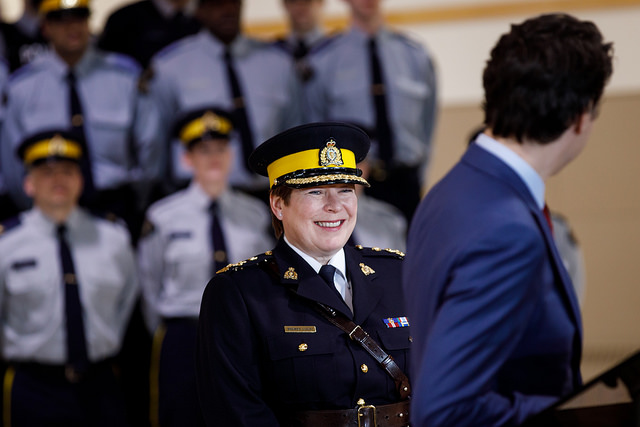
Personal Story – “Heather” Part VIII – The Ending

On Saturday November 4th, Shane Ertmoed was brought into a small bland 9 x 6 interview room, a desk, and two chairs the extent of the furnishings. Video and audio recordings were turned on, and Greg began his interview of Shane. A few boxes on the desk gave the impression of waiting insurmountable evidence. Greg, always cordial, always playing to the theme that we were there to understand, to “help”. “You didn’t mean to do it did you Shane?”, “you are not an animal are you Shane?” It being more of a misunderstanding than a killing.

Gradually, Shane began to speak, quietly, some times nodding in agreement. Eventually, he began offering up possible alibis, each was perfunctorily shut down, escape routes closed as quickly as they were proffered.

Three hours in, Shane Ertmoed confessed to the killing of Heather.

As Shane nodded in agreement about the killing, I was sitting with others in a nearby room, staring at the television monitor screen our collective breath seemingly on pause. It was a few seconds before one of the investigators let out the restrained exclamation “yes!

On Sunday, the following day, a 2nd interview was conducted, this time by Bill Fordy, wherein all the evidence was reviewed again with Shane, going over specific details, and he in essence confessed a second time. Shane said his newly appointed defence counsel had told him to say nothing, but then he continued, virtually repeating the story of the day before. Not emotional, seemingly resigned to some future destiny he could only guess at.

The confession along with what our investigation had revealed seemed to run in parallel, there were no large discrepancies, and it was consistent with the limited forensic information.  How he killed her and how she was found partially clothed gave us the “holdback evidence”, the evidence that only the killer would know in detail.

This was the chronology of the events as confirmed by Shane in his words, with a few new pieces we were unaware of:

  • Shane lured Heather into his apartment to look at books that contained pictures of “birds”.  (This was new to us and gave us the impression that Shane may have previously spoken to Heather)
  • Shane coaxed her to the floor of the townhouse and was spooning her on the floor stripping off her pants and underwear. It was then that she began to struggle, and he put his hand over her mouth to keep her quiet. (He would not admit to how long that would take but she was likely dead before Dad had even called her in as being missing.)
  • After he killed her, he dumped out his hockey/football bag, and put her in the bag along with her clothes.
  • He carried her out through the fence in his townhouse to his nearby car. (In doing so, some plant material got in the corners of the bag we were able to later match some “cultivated juniper”, unique to that area, to the landscaping in front of his residence).
  • And he placed her in the back seat, and drove out of the complex. Upon driving out and looking east he saw the police doing radar traffic enforcement, and so he circled behind, using the secondary roads, to eventually get over to 200th St in Langley.  (Later a witness came forward, who also happened to be an artist, who sketched what he saw that day on hearing the news of Heather; he showed us his pencil sketch done on a single piece of paper–it was a vehicle pulled over, and a male was standing near the back of the vehicle, adjusting something in the back seat; the male in the sketch looked remarkably like Shane)
  • He needed gas and stopped at the Happy Face gas station on 200th St. He then drove further up the road, when the idea came to him to buy a theatre ticket as he rapidly concocted his cover story. (He never went to the theatre to actually see the show, as we believed and could now prove)
  • He thought of going to Maple Ridge because of the distance away, and he had earlier heard about Golden Ears park through a co-worker (we were able to find the co-worker who he had earlier asked about Golden Ears Park)
  • As he drove into the park, he got a few miles in on the roadway, pulled over, and then put the bag containing Heather into the thick woods, just out of sight of the roadway.
  • He returned home; but was not content with where he put her, thinking that she could be easily discovered. So at 5:30 in the morning he left, was checked by the officer on his leaving and he went back to the Park. (it was here when he was followed by the Park Rangers, driving slowly, trying to find where he left her)
  • He eventually found her, and parked roadside, and put his hood up as if he was broken down. (This was observed by the Park worker #2). But by this time he was running out of time and needed to get to work. He marked the spot, by putting a skid brake mark on the roadway, and he headed to work in Maple Ridge, leaving quickly. (Seen by Park worker #2)
  • He feigned having a headache at work around 10 in the morning, and left. But he went to a Canadian store and bought an inflatable raft and a single paddle. (We figured out the store where he bought the raft later, and were able to get a copy of the receipt).
  • He returned to the Park, retrieved the bag containing Heather, and then headed down to the boat ramp, where he got in and paddled out of sight of those who maybe on the boat launch. (Observed by Park Worker #3)
  • He put Heather in the water, weighed down with rocks (Shane in his statement totally denied putting rocks in the bag – a strange disclaimer considering everything he had admitted to)
  • He came back in and drove quickly out of the park, stopped at a dumpster and got rid of the raft. (we were never able to locate the raft, no doubt it had been emptied by that time)
  • Shane gave no insight, nor any denial of why he called in the break and enter case. (It was our guess that he was worried that if for some reason we were able to go after him, and we found something of Heather in his apartment, fingerprints or hair as an example, he would have a cover story that kids had broken into his condo)

By late Sunday afternoon, the weekend over, Shane was placed back into his cell and I like everyone else headed home, in rush hour for the first time in six weeks; content, feeling  lighter, not fully absorbing all the nuances of the last 48 hours, but aware that something good had just happened.

This was the dramatic end of the operational element of this case. The looming courts and their processes, would be the 2nd marathon.  The forty investigators would dissipate, all  returning to their regular duties.  The excitement of the pursuit would soon be replaced by drudgery, the arguing over minuscule points of law, and those bone weary hours of sitting in a quiet courtroom, the drone of lawyers providing the white noise of the court.

The many involved would become the few left to take the case to the next level. It is the unsung hero portion of the story, it is the under-appreciated, it is paper intensive, and it would be wrapped in all the myriad legal issues that always surface. Preparations would begin for a preliminary hearing, and a possible bail hearing. Both would need to be supported in terms of getting all the gathered evidence into the Crown. The Crown would become our constant companions and our usually friendly thorns in our side, always needing more, or a further explanation, or another copy. Officers notes, exhibits and exhibit records would begin moving constantly back and forth, in the rhythm of the  court dance.

The media would go home for the time being,  only to return rejuvenated for the eventual trial coverage.

The secondary reports, the officers notes, and the loose pieces of information continued to trickle in, so we continued the work of sorting, evaluating and follow-up continued at a manageable pace, but with far fewer resources. Some of the information was valuable background, while other pieces were of little value but still needed to be filed. Some of what came forward:

  • We learned that Shane Ertmoed had only arrived in the Lower Mainland in September 1999, a mere 13 months before committing the homicide on October 1. He had been kicked out of his house in Vernon, and recently fired from working at the Dairy Queen in Vernon.
  • Shane’s aunt confirmed that Shane had a hockey bag (unfortunately those DNA tests that were trying to filter out for a good sample of DNA, did eliminate too much of the core DNA and are results were therefore negative.) ( The Aunt told us that she had “jokingly” asked Shane if he was involved in Heather’ disappearance.)
  • Shane was described by his fellow workers as someone who liked to talk to “kids” and they gave an example of him hanging around a kids lemonade stand at their work site.
  • Eight years earlier, in March 1992, while living in Vernon Shane had been forced to see a counsellor for lifting the skirts of two girls on the school bus, and trying to touch them.
  • Shane had written sexually explicit letters to his teacher/counsellor, and eventually left the school, and he was often described as a “scary character”
  • He also had sexually explicit correspondence with this then girlfriend
  • At his work site, he had offered to babysit for one of his co-workers. (those same co-workers would often tease him about him being involved in Heather’s disappearance.)
  • Heather had apparently been on Paxcil and another prescription drug at the time of her death. (not by itself noteworthy, but one when examined by a court trying to determine cause of death would surface as a complicating issue)

When all the information began to settle, having been sifted through the needed or discarded filters, what we were left with what is commonly referred to as a “circumstantial” case albeit with one what we believed was an “voluntary” confession.

We would never find a magic bullet, such as DNA, fingerprints, or matched blood samples. Cause of death was listed as “undetermined.” Every Crown counsel wants these dream pieces before going to Court. This was not going to be that case. We were pushing  Crown’s charge approval boundaries of every case needing to have a “substantial likelihood of conviction”. As the years have gone by, the pursuit of a circumstantial cases seem to becoming rare events. Crown and the police are more reluctant to let the courtroom decide, and as Wally Oppal once opined it seems that the Crown and the police are trying the cases in the reports now, not having a taste for a courtroom, reluctant to face possible failure. One wonders where this case would have stood in this climate.

However in those years  we enjoyed a strong and positive relationship with Crown Counsel both in Surrey and at the Regional level. All of the Crown lawyers, that we dealt with on this case; through charge approval, bail hearing, the preliminary inquiry and the eventual Supreme Court trial were exemplary. They deserve special mention for the hours that they expended and the roles they played; Terry Schultes who provided almost daily legal advice to me on this case and many others; Winston Sayson who handled the preliminary inquiry along with Lana Del Santo; and finally, Ron Caryer who handled the Supreme Court murder trial along with Roger Dietrich. Their lives were put on hold and this case became all consuming, with the added pressure of a constant media spotlight.

On November 22nd, 2000 Shane Ertmoed appeared in Court in Surrey and pled not guilty to the charge of 1st degree murder.

The Preliminary inquiry in Surrey began a couple of months later on February 19, 2001. As in all preliminary inquiries, Crown does not pull out all the stops in terms of showing all the evidence, and for this case they primarily relied on the confession. All they needed to prove was that there was sufficient evidence to warrant a trial. And the confession by itself when admitted would accomplish this purpose.

All was moving along in quick order, and then came the final trial in Vancouver Supreme court. The defence, oddly had applied and been granted a “change of venue” from New Westminster Supreme Court, successfully arguing that they would not get a fair jury trial in the Surrey area. (This seemed illogical at this time, as this case had been getting extensive coverage throughout the Lower Mainland, but it was not argued  by Crown.) So it was decided that the court would instead be held in Vancouver Supreme Court.

As mentioned previously Ron Caryer was leading for the Crown, an experienced trial prosecutor and one of the few who for the most part conducted only murder trials for the Crown. His second on the case, or partner, was Roger Dietrich, a young prosecutor prone to wearing suspenders to cover his large bulk which he had previously used to his advantage as a player in the Canadian Football League. The two were Ying and Yang. Opposites but ideally suited.

The defence counsel was the rather infamous Sheldon Goldberg.  Mr Goldberg had been a criminal defence lawyer in and around Vancouver for a number of years. He  invariably found the police to be involved in some form of conspiracy or another, and this inevitably would form any part of his defences on almost every case. He had a jail-house reputation as one of the best because of the dirt he would throw at the police. He  was a classic example of  “tossing (expletive deleted)” at the police blue wall, and then standing back and see what stuck. He was also “thorough”, although some may say deliberately obtuse, bordering on obstruction. I have met many a defence criminal lawyer, some I liked some I didn’t. Mr Goldberg was in the latter category.

This was also not my first time dealing with Mr. Goldberg either.  Previously in the 1990’s I had been involved in the case of David Snow, a multiple killer and rapist, who was eventually declared a dangerous offender in North Vancouver, and later convicted in Toronto, Ontario of killing an elderly couple. I testified at both of these trials, and was up against Mr Goldberg’s version of cross-examination which is often derogatory and personal. I don’t know if he even remembered me by the time we got to the Ertmoed trial, nor do I know if his demeanour was more a matter of style rather than personal belief. Needless to say I was anticipating lots of defence motions, and a slow moving trial.

Judge Wally Oppal, also of some fame by this time as a prominent Judge was assigned to sit on the Supreme Court case.

As the jury was selected, and the first days of the trial began, it was quite clear that this was going to be a painful, slow moving process. It was decided that I needed to be at the courthouse for at least the morning portion of the case, helping to find documents, answering questions which had arisen the previous day, assisting with witness preparations and notifications, and being a general handy-man. I was given an office at the courthouse, and I moved in with the file, consisting by now of 17 legal 10″ x 12″ x 17″ sized boxes of paper; charts, photos, statement copies, all pulled and eventually returned. The small room a makeshift file library sitting amongst the usual detritus of coffee cups, plastic wrappers, and styrofoam lunches hurriedly eaten.

Monday thru Friday after lunch, I would then go back to Surrey Detachment, and begin my normal usual shift in the Serious Crime group. Other murder files began to come in, which sometimes would blur my memory on the “Heather file”, but only until the next morning at 800 Smythe Street.

The trial was set for 3 months beginning in March but by the time it wound down, seven months had passed and we were now at the end of August 2002. Final submissions were prepared and presented to the jury.

Crown’s submission was a moving testament to Heather’s life, and at one time, Caryer stopped mid way through, and pointedly asked the jury to consider in silence how long it would have taken to kill Heather. Ninety seconds then went by in excruciating quiet, interrupted by the occasional uncomfortable cough or nervous sniffle which seemed to reverberate around the old ornate courtroom. You could feel the forced thoughts, the ugly sequence of events as they would have un-folded being forced into the minds of all those there. Almost all absently bowed their heads.

The jury was then excused to consider the case and render their verdict.

Five hours later, in the evening of August 29, 2002 in one of the quickest decisions ever seen in a murder trial, the jury reached their verdict finding Shane Ertmoed “guilty” of 1st degree murder,

One can not adequately express what I was feeling that night as the news sprayed across all the television news, people interviewed expressing relief that a nightmare was over.

Shane went down swinging telling Judge Oppal at sentencing when asked if he had anything to say,  “….all that happened today was a fundamental miscarriage of justice”.

Oppal seemed surprised, and said rather unusually, “I happen to agree with the jury….you have been found guilty of the most horrific crime in law….you murdered a 10 year old simply to satisfy your sexual desires…” and then he confirmed and levied the heaviest sentence possible in the criminal courts of Canada. An automatic sentence of life without a chance of parole for 25 years.

The case was over at last.

Congratulations came in;  phone calls, letters, emails, and thank-you cards, over the next days and months, from as far away as Europe and the United States. Gradually I had time to absorb it all, to sort through my thoughts, what went right, what went wrong, the twists and turns, the bad luck and the good luck.

You quickly determine that any investigation of this sort involves multiple people, all doing right by simply doing their job. Policing is not magical when things come together, in fact for the most part it is mundane fact checking, onerous paper work, and incessant interviews, interspersed by heart-breaking disappointments, or adrenaline fuelled giddiness. There is no middle ground and very often there is little sleep.

There are no real heroes, that is the fodder of television as envisaged by those that have never been there. As a lead investigator you are holding the wagon’s reins but you are only holding the reins with little or no power as to how each individual facet is going to perform, or where the next turn will be in the road.  You just have to get on and try not to get thrown. If it all works, and you are thrown a bit of luck, you will succeed.

Epilogue

Chris Drotar my partner for this file has been promoted a couple of times and remains with the RCMP in a different section. He is still a friend.

My boss, Mel Trekofski who provided the confidence I was sometimes needing has since retired and doing well.

Ron Caryer, the Prosecutor was made a Judge and is now also retired. He returned to Golden Ears Park for many years on the anniversary of Heather’s death and erected a small cairn in her memory. We also became friends.

Roger Dietrich, the 2nd Prosecutor is now a senior Crown Counsel in the Toronto area. He wrote a book about the case, as a kind of catharsis, but never submitted it for publication.

Dr. Rolf Mathewes, the Botanist, who matched the “cultivated junipers” to the bag and to Ertmoed’s residence, shortly thereafter opened a Forensic Botany unit at the University of British Columbia. Dr Sweet, the dentist who was able to positively identify Heather also began to also specialize in Forensic dentistry.

Cpl Jean Bouchard the Forensic Identification officer who I had put under the hood of the suspect car went on to be an Instructor at the Canadian Police College in Ottawa, teaching other Forensic Identification officers.

All the other investigators are too numerous to mention, but as much as I have been able to follow them throughout their careers, as expected, they all seem to have done rather well.

We eventually determined there were two “leaks” as to the information which led to the media ultimatum. One was inadvertent and came out of the psychiatrists office, while the other was tracked to an upper level RCMP officer. RCMP HQ, a couple of months later said they were ending their investigation, as it was “unnecessary”, after all “you won the case in the end”. You can read what you want to in that.

Sheldon Goldberg, the defence counsel, in 2009 was forced to resign from the practise of law for 5 years, after being found guilty of professional misconduct and incompetency.

After 15 years Shane Ertmoed applied for early parole under the “faint hope clause” and was denied. He is now scheduled to be up for parole in 2025; he will be 48 years old when he is eligible to walk free.

Jodie Aspin Thomas, Heather’s mother is still a survivor, and still often wears a “Heather” button, with the same picture as you saw in Part I of this story. Her sorrow is always with her just like the picture.

I lost track of Pat Thomas but he was last known to be working as a carpenter in the Whistler area, no doubt, also trying to put his life together.

Heather would have been 28 years old this year. Of course I was never able to meet Heather in a way that humans are expected to meet. My thoughts still often go to her, despite the passage of time, and I feel that we quietly and in our own way travelled some type of dark road together. I think we would be friends now. But, nobody should have to meet someone this way.


Photo Courtesy of Flickr via Commons created by x1klima some Rights Reserved