Heroin, guns and a bullet proof vest –but not “morally blameworthy”

There are many cases that come before the courts, almost all receiving little attention or public mention, but once in awhile there are some that make you take note. From Provincial courts to Supreme Courts to Appeals courts one can almost always find a case or two that will make you scratch your head, or possibly get a little agitated.

The case that recently had me perk up and get a higher blood pressure reading is the case of Robert Mero.

He is a 34 year old male, whose father was Metis and his mother was non-indigenous; making him one fourth of Indigenous heritage. Why are we mentioning this, because it was this 25% of his heritage which was enough to keep Mr. Mero from going to jail.

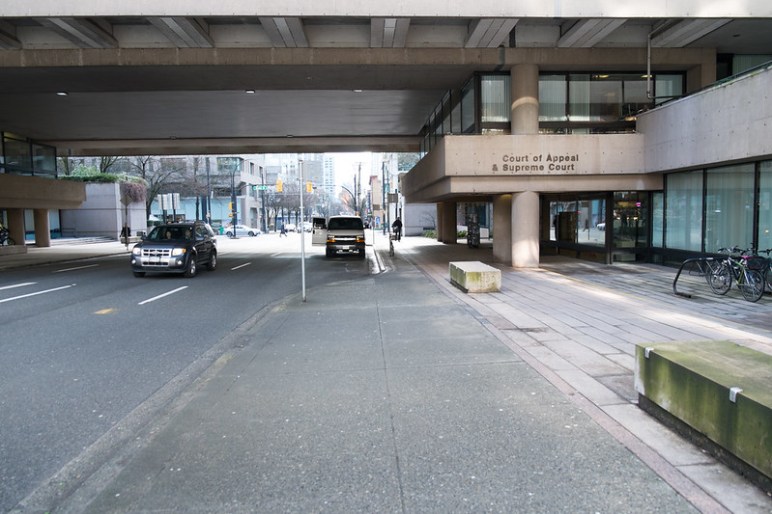
In the eyes of the learned Justice Len Marchand of the BC Court of Appeal, his “moral blameworthiness” necessitated that the 40 month sentence to which he was originally sentenced (by the Supreme Court of Vancouver Judge Joel Groves )–be reduced, more accurately eliminated. Mr. Mero should not go to jail in the view of the Appeals Court as he should not be held accountable due to his Metis heritage. The sentencing was wrong according to Justice Marchand because “neither the Crown or Judge addressed his Indigenous background”.

The unwieldy terminology of “moral blameworthiness”, clearly something only lawyers could come up with, stems from the Supreme Court of Canada and what is now referenced as the Gladue decision.

Regina vs Gladue was a decision by the Supreme Court specifically dealt with sentencing principles that had been layed out in Section 718.2 (e) of the Criminal Code of Canada and had been enacted by Parliament in 1995. This section directed that the courts need to consider “all available sanctions, other than imprisonment” for all offenders. However, it needed to pay “particular attention to the circumstances of Aboriginal offenders”. (It should also be noted that these provisions were put into the Criminal Code under Prime Minister Jean Chretien and the Liberals who ironically have been recently criticized for not understanding the problems in the residential schools.)

Gladue was the first case where the Supreme Court considered these provisions and set out to try and define what factors should be taken into consideration under this newly defined law. In the Gladue case, a young Indigenous woman had appealed her manslaughter sentence of three years for stabbing her boyfriend to death (life was cheap even back then). The pitiful sentence of three years was upheld despite the appeal, but the Supreme court ruled that they should have at least considered her Indigenous background.

The changes to the Code were orchestrated and passed because of the “over representation” of the Indigenous in the Canadian judicial system. The term “over representation” is a bit of a misnomer, they were not going to jail in disproportionate numbers because they were being picked to “represent”, they were going to jail due to the massive criminal problems existing in the Indigenous populations.

This was an attempt by the Liberals of that time to solve the abnormally high criminal activity amongst the Indigenous– from the top down. Too many in jail, simple solution, just don’t send them to jail.

No need to address the actual criminal activity at its origin, which is a much more complicated set of social ills. The overall affect of course was the diminishment of personal responsibility, and broadly, it also had the affect of creating different laws or at least very different treatment before those laws according to race.

In the years since this has morphed into Judges now automatically asking for a pre-sentence report which formalize these considerations for Indigenous offenders. This sociological based report is termed a Gladue report. This report, or lack of a report was a central factor which played out in the case of Mr. Mero.

Mr. Mero’s crime in this case was not a minor crime and he would be unlikely to have received any nominations for citizen of the year in Prince George, where this matter began. A search warrant was conducted of Mr Mero’s residence by the police in Prince George in 2016. It led to the seizure of a .38 calibre pistol, ammunition, 23 grams of heroin, and a bullet proof vest. Clearly, Mr. Mero was exhibiting all the characteristics of a drug dealer.

Mr. Mero had previously served two other jail times, in 2005 and 2006. It was what the Appeals Court called a “dated criminal record”.

Mr. Mero and his defence council (he went through two defence counsels) went through all the motions that are tried in this day and age. A motion of too long to get to trial (Jordan decision) was first tried. The Judge ruled that the delays were due to defence counsel scheduling and the fact that his 1st defence lawyer had gotten suddenly sick. The court chastised the defence counsel: “Mr. Mero’s trial counsel has shown, effectively, since the beginning of the trial, an ability to delay matters on behalf of his client”.

Then the defence argued that Mr Mero who suffers from a lung disease should not go to jail because of the high rate of Covid in the jails which could prove to be detrimental to his health. Worth a try, considering the panic which has pervaded Canadian society over Covid, but this too didn’t work.

The defence counsel then argued that no Gladue report had been prepared. It turns out that they had six months to produce a pre-sentence report but failed to get one before the courts in time. So the sentencing went ahead without a Gladue report.

Justice Marchand of the BC Appeals Court felt that this was a massive oversight.

As a result he imposed a “conditional sentence” of 2 years less a day– the 1st year to be served under house arrest, to be followed by a curfew. He was placed under probation for the drug offences. This decision by Marchand was concurred with and signed off by two other Justices; Mary Saunders and Bruce Butler.

So what would have been in a Gladue report that could alter an outcome to such a degree? Usually, there is general information about the Metis “nation”, the intergenerational aspects of “colonialism” and “displacement”, racism and systemic discrimination, forced attendance at Residential schools and the “over representation” of the Indigenous in the jails of this country.

This is not to deny that Mr. Mero clearly had a troubled life. Most criminals can point to historic family issues. In his defence argument he pointed to the fact that he was “unable to complete school”, his “childhood was traumatic”, his “life was marred with addictions” and that he had “come into conflict with the law”. Mr. Mero’s father was not believed to have been at fault but he was often “away at work” and this left him with a mother who had significant mental health issues. He had runaway from home at 12 years old and got caught up in the street level drug trade, an all too common story.

However, it would be difficult for Mero to argue that these issues were directly related to his Indigenous upbringing. One need not worry because the courts have ruled that “it is not necessary to establish a direct causal link between systemic and background factors and the offence at issue”, as it may be “impossible to establish” a link. In other words you don’t have to prove a causal relationship.

The other aspect of this case which gave me pause was that this was a verdict by Justice Marchand. There are 26 Justices in the Appeals court, but in this instance Mr. Marchand was assigned the case.

Mr. Marchand is the son of Len Marchand Sr, the first Indigenous cabinet minister who once served under Pierre Trudeau. Len Marchand Jr. is a member of the Okanagan Indian Band having grown up in Kamloops, B.C. He articled and practised law in Kamloops with Fulton and Company. While there he spent a substantial part of his career working on “reconciliation for Indigenous people”, was pursuing historic civil claims of child abuse and represented residential school “survivors” and also served on the selection committee for the Truth and Reconciliation Committee.

There is no evidence here that Mr. Marchand had a clear bias in favour of Indigenous claims of “systemic racism”. Also, this is not to claim that all Indigenous cases need to be assigned based on their cultural background. But in this instance the appeal revolved around a Gladue application, central to which is the belief that there should be judicial favourable considerations granted to the Indigenous that are not available to others. That the application of the laws should be different because of their culture and background.

It is difficult to determine whether justice was served in Mr. Mero’s case, but I suspect he was merely a player of the system.Whether justice was served in this case we can leave to others, but does justice also need to be seen as having been done?

Should this case have been handled by someone who had spent the majority of his working life on Indigenous causes or is there a definite taint to this case.

Gladue is just one of the many pronouncements coming from the benches of the Supreme Court of Canada, the BC Supreme Court and in this case the Appeals Courts. They are germinated from the left leaning political dominance in British Columbia. It leads to favourable judicial appointments. Maybe well intentioned, but clearly with very pronounced political leanings. A left propensity to believe that government must protect all and everyone from the evils that society put upon us. Personal responsibility replaced by societal responsibility.

Maybe it is time for a return to the centre, where the vast majority of Canadians actually live. Not necessarily to the right or the left, but where common sense is the prevailing ethos.

The laws of this country are being diminished, watered down, leaving a large class of people now feeling disenfranchised. Many would not be o.k with rules and laws being applied differently depending on your cultural background. It is a difficult issue, but the current judicial climate seems destined to lead to trouble.

Photo Courtesy of Paul Sableman via Flickr Commons – Some Rights Reserved

A personal note

I apologize for the delay in the publication of this blog.

I have recently moved– swimming against the prevailing current and have moved back to the heart of the City of Vancouver leaving the quiet countryside. I have been surrounded by cardboard and the joys of re-connecting with life in the supposedly faster lane.

Thanks for your patience and your continuing support.

Pete

Learning the Language of “Woke”

One of my writing influences in my much younger days was the journalist Edwin Newman, a long time broadcaster for NBC. A foreign correspondent who travelled and reported from around the world, meticulous in how he wrote and the use of language, and would say nothing if nothing needed to be said. He was in the truest and best sense a reporter of the “old school”. His love of the English language and its use was clearly a subject near and dear to him, eventually writing two books about the proper use of language: “A Civil Tongue” and “Strictly speaking”. The books were attempts to sound the alarm and possibly curb our language from turning into a pablum of double speak and mediocrity; which he believed would ultimately irreparably damage the role of journalism. That was 1976.

Some 45 years later we seem to have reached that pinnacle of mediocrity, a total loss of objective reportage, the polarizing and prejudice of any political discussions and the outright abuse and misuse of the English language. Mr. Newman’s take on the new “woke” language would undoubtedly have been harsh.

In this age of auto-correct and on-line editing tools, is it even important that we adhere to definition and the proper use of a word?

It may actually be now more important than ever. The use of language is central to our seemingly fragile democracy and the institutions within it. Maybe now more than ever there is a more pressing need to be clear and concise in our language as we get pulled into and transported along the information highway and immense reach of the digital world.

Language allows us to express, to inform, and to reason, and we humans have the unique capacity to use complex language. We need it to communicate with others and even to construct and maintain our social world.

When many take liberties with the language or re-define its meanings there is a greater tendency to misconstrue, confuse, or obliterate the original meaning and therefore our understanding.

Being firmly cemented into a limitless broadband of narrative the endless bombardment of information seems to be have had the affect of dividing us into our own fragmented segments of society. Forcing people into their own space, a safe space, free from examination. We are becoming a mosaic of information sources, not a blending of our interests and goals. This lack of a central common interest seems to also lend itself to endless claims of disenfranchisement and victimization; of never being part of the majority. Politicians being politicians, now busy themselves with answering and catering to these endless slivers of society not the middle majority.

These separate groups of the like-minded– communicate within their group, often resorting to new terminology or a warping and blending of meanings. The translation of these newly formulated words is often unclear especially to those outside that immediate sphere of special interest.

An example of using language as a tool by a special interest group and the ramifications of when language is not clear has recently come to public light.

For the last number of years, every government and public forum was encouraged to open up any public meeting with an announcement that they were giving thanks to the local indigenous for allowing us to be on the “un-ceded territory of …”

This was of course aimed and perpetrated by the special interests of the Indigenous, and from the outside seemed relatively harmless. So our political leaders championed this clearly scripted genuflection and the word went down the Federal government line to the Provinces and local city governments. All quickly followed suit –not wanting to be left behind in this progressive narrative, or worse, branded part of the systemically racist Canada. But, it now turns out the language matters.

“Un-ceded” is not actually a word by the way, but “cede” means to give up power or territory.

When everyone in unison was saying “un-ceded territory” the implication could loosely be interpreted to mean that the Indigenous had from somewhere, clearly acquired “territorial and property rights” to the land. The more sinister gravamen was that land had in fact been taken from them and therefore an implied need for compensation for property or territory lost.

It was politically astute on the part of the Indigenous –the use of the term “cede” and “un-ceded” was a purposeful use of mis-leading language which could eventually form a foundation for an admission of political and economic responsibility on the part of the majority of Canadians.

The political and legal warning light has finally gone on in New Brunswick.

Justice Minister Hugh Fleming has ordered that staff stop making Indigenous land acknowledgements. The Indigenous, you see, are now claiming title to over 60% of the Province and the Province now finds itself in a series of legal arguments and land claims. The Attorney-General’s department has told the government workers that they should not make or issue “territorial acknowledgements”.

Predictably, the Six Chiefs of the Wolastoqey in the Province have countered by saying that they have “un-ceded Aboriginal title in the Province of New Brunswick”. They said land acknowledgements by the Provincial government were “a symbolic gesture but represent a starting point toward building and improving a relationship with First Nations”. Clearly, there is now some legal advice being given to the lawmakers of New Brunswick that the language being used is misleading at best and could be politically motivated.

The word term “reconciliation” being used and trumpeted by all the political woke is a very similar term and will likely prove to be equally misleading, and possibly equally legally detrimental.

But, what prompted this blogger to an examination of the use of language was not the politically astute Indigenous.

It was my recent discovery of a “glossary of terms” provided by the Association of Chiefs of Police. Prepared, no doubt, as a service to those working in the real world and not safely ensconced in an inclusion seminar in a government meeting room. The clear purpose here is to teach officers on how they should speak and write so as not to offend, a believed need to teach the language of the “woke”.

Before I go further, there is no offence intended, but police officers, at least in my experience were not always the most prolific writers or the best practitioners of the English language. It was often a supervisory life and death struggle to get officers to write reports that were lucid and properly explained the who, what, and where of a particular offence.

Reports to Crown Counsel was often a through the looking glass experiment as at the end of an eye watering read, one would be unsure as to meaning and point of the narrative.

There was the police tendency to write in your best imitation of a learned academic or a lawyer– he “stated” rather than he “said”. “Observed” rather than “saw”.Warrant applications were often long, redundant, with superfluous language designed to heighten the status of the writer rather than to communicate a message. Internal reports and other court applications were often measured and termed to be well done judged by their length rather than their content. The copy and paste function has now allowed obsessively long narratives to expand to the point of farce and is in and of itself proving to be a burden to the entire justice system.

So now, the poor police officer sitting at two in the morning, typing madly away at a search warrant, now needs to be concerned with the language of the “woke” and apparently needs to be armed with the glossary of language on his or her desktop.

Here are just a few of examples the police officer should take to heart according to their leaders. Starting with the “A”‘s

Quote

“ableism” – is a belief system that sees persons with disabilities as being less worthy of respect and consideration.

“agender” – is a person whose gender identity does not align to the traditional system of gender, who does not have a personal alignment with the concepts of either man or woman, and/or sees themselves as existing without gender, sometimes called “gender neutrois”

“Classism” – the cultural and institutional set of practises and beliefs that assign value to people according to their socio-economic status

“Co-gender” – is a term with at least three known possible definitions ( I will only just give you the first) is the mathematical union of two gender, as opposed to vengender, the intersection of two genders. A co-gender person is okay with being identified as either of the two genders.

“Deadname” – generally refers to the birth name of a transgender person that they no longer use.

“Demisexual” – refers to a person who only feels sexual attraction once a strong emotional bond is formed

Closed Quote.

Obviously, I could go on for quite some time, in fact all the way to Z. As a matter of interest, the last definition is of “white” which they say is a “social colour” only “indicating the majority” of Canadians. It is recognized that there are “many different people” who are white but who face class discrimination; because of their class, gender, ethnicity, religion, age etc.

The glossary also gives you examples of problematic language which you need to avoid and gives better alternatives that one should be using. For instance, you should not refer to anything which has “man” in it. Mankind, manpower, man hours, all are inappropriate. Biological sex should become “assigned sex”, and wife or husband should always become spouse or partner. It is not appropriate to say “caucasian” any more, you need to say white people, or European Canadian. (think of all the police forms that need to change). (I guess they didn’t realize that by saying European Canadian they were actually going against the “white” definition they had given earlier.)

So where does this leave us? Are we destined to all sink in this quagmire of ridiculous definition and narrative? Quite possibly.

Will it lead to an inability to communicate with the “majority”. That seems equally obvious.

Alternatively, maybe we could all take the Master Class offered on Clear and Concise Writing. There is a couple of fundamental rules which they all seem to profess. Avoid wordiness and distended sentence structures and to use shorter sentences and simple words. These authorities by the way all point an accusing finger at the biggest offender– government.

Mark Twain ” a strong advocate for simplicity and clarity, said “when you catch an adjective kill it”.

This glossary by the Chiefs was a glossary of adjectives that Mark Twain would like you to kill.

Of course, it would be a safe assumption that the Chiefs who authored this glossary didn’t actually write it. They themselves would likely not know half of the definitions. It was simply a check in the box of inclusion and diversity, a sacrifice to the Woke God to whom they now all pray.

Photo Courtesy of Alby Headrick via Flickr Commons – Some Rights Reserved

Welcome to 1984

There is often a longing for the good old days when even the conspiracy theories seemed simpler–those never ending cover up theories such as the capture of aliens and Roswell UFO’s, or the Kennedy assassination from the grassy knoll. All throwbacks to a simpler age. Some were tenable, but running counter to them was this belief that somehow the government wouldn’t lie to you or be able to cover up any of the outrageous allegations. Now, in this age of instant communication, plotted and sinister theories relentlessly bounce off our brains, coming at us from both the right and the left in the world wide broadband. Outrage and accusations quickly follow, oozing out of the dark holes of Instagram and Facebook, twitching the nerves of the unsuspecting and unquestioning.

The problem with all conspiracy theories of course is that they almost always have at their foundation in the obvious need for several people, if not hundreds of people, to be willing to share and thus be complicit in the conspiracy. One needed hundreds of people all sworn to never reveal the innermost secrets that are central to any alleged plot. And that, is where virtually all conspiracy theories fall apart. Humans, being human, can not effectively keep secrets.

Covid has proved fertile ground for conspiracy theories mainly emanating from those opposed to the double shot in the arm. The root of opposition is a distrust, an exponentially growing distrust of government in any form or political inclination. Objectively, one should at least be able to understand this wariness in the government being able to govern, let alone dictate where you can go, what you can do, and as they are now doing, to take command of your personal physical health. We may come to regret the Charter of Rights being ignored with abandon, but that is another topic for another time.

The anti-vaxxers are being described as the seeds of satan–selfish, ignorant, unwashed, and endangering the rest of us who are on the righteous end of the argument. The media and government messaging has been constant, but mixed, at times even contradictory. All of which gives further rise to the non-believers. But, for the most part the majority of Canadians simply dismiss this fringe group of the discontented as not worthy of consideration, beneath our contempt. Up to now, there has been whole hearted support for the governments of the day who are with grim faced determination are setting out to conquer those damnable anti-vaccine fiends. The un-questioning media gladly plays to the fears of the vast majority of Canadians, continually searching for the anti-vaxxer now providing dying declarations from a hospital bed.

However, a recent story, uncovered by the Ottawa Citizen newspaper; through Freedom of information sources, and authored by David Pugliese should give everyone pause. It would seem that those who saw the vaccine as some form of government conspiracy aimed at controlling both the message and its use may have just gained an extraordinary admission from the government.

This story should make everyone shudder and view any and all messaging from the government with a heavily jaundiced eye. It turns out that the year 1984, the year enshrined by George Orwell in describing his dystopian universe is now upon us –thanks to an unchecked, unguided, and unglued Canadian Armed Forces.

We have now learned that there was a group in the high levels of the military, our very own Canadian Armed Forces, who thought that the Covid scare would be a “unique opportunity to test out propaganda techniques on an unsuspecting public”. The Canadian public to whom they are sworn to serve were to be targeted by the Canadian military, in particular, their “Information Operations” group. This Orwellian titled group is part of the Canadian Joint Operations Command –headed by Lt. General Mike Rouleau.

These information “techniques” apparently were “similar to those employed during the war in Afghanistan”. In essence the Canadian public would be targeted like they had the Taliban.

The senior military leaders astonishingly did not feel any twinge of guilt once outed, that the targeting of Canadians was out of the norm and furthermore they “didn’t believe they needed to get approval for this operation”. The specific goal was to “head off civil disobedience by Canadians during the coronavirus pandemic” and to “bolster government messages about the pandemic”. The pandemic to these intelligence strategists, was a “unique opportunity to test out such techniques on Canadians”.

Rear Admiral Brian Santarpia, Chief of Staff for the CJOC, echoed the beliefs of this group and felt that this was a good “learning opportunity and a chance to start getting information operations into our routine”.

These tactics were going to be done in support of “Operation Laser”. Operation Laser was where members of the Armed Forces were helping out at “long term care homes” and were directing the “distribution of vaccine” to the northern communities. Not even a military operation in the classic sense.

This Orwellian plan only lasted about a month because thankfully some saner heads inside the Department of Defence began questioning both the ethics and legality of this operation. They managed to catch the ear of Staff General Jon Vance who promptly shut it down, clearly recognizing the political minefield he was being handed.

Vance then directed Major General Daniel Gosselin to look into the matter and it is Gosselin’s eventual report which was the source of this news story.

It doesn’t stop there. The report also uncovered a second separate initiative, which was not linked to the CJOC but was overseen by Canadian Forces “intelligence officers”. As part of this separate initiative they began to gather “culled information from public social media accounts in Ontario and were gathering information on the Black Lives Matter gatherings and on their leaders.” Targeting the BLM group has since made many in that group legitimately wonder what could be the possible connection to the distribution of vaccine.

According to Gosselin’s report “support for the use of such information operations was clearly a mindset that permeated the thinking at many levels of CJOC”. He went further saying that some inside the Department of National Defence “want to expand the scope of such methods in Canada and allow them to better control and shape government information that the public receives.”

There were other DND attempts.

In September 2020 military operations “forged a letter from the Nova Scotia government warning about wolves on the loose in a particular area of the Province”. But, the ineptness of the military shone through. The letter leaked out to the general public, causing alarm in parts of the Province. In apportioning blame the Armed Forces said it was done by some “reservists” who “lacked formal training and policies governing the use of propaganda techniques”.

Also in 2020 a plan was launched to allow “military public affairs officers” to use “propaganda” to “change attitudes and behaviours of Canadians” and to “collect and analyze public social media accounts to move to a more aggressive strategy” of using information “warfare” and “influence tactics on Canadians”.

How were they to do this? One of their techniques was to use “friendly defence analysts and retired generals” to push military public relations and to “criticize on social media those who raised questions about military spending and accountability”.

The DND also has spent $1million to train public relations officers on “behaviour modification techniques” –similar to those used by Cambridge Analytica. This was shut down when the Ottawa Citizen revealed details of this plan in November 2020.

After all these revelations, one would think that there would be some government blowback. The DND Deputy Minister admitted that “various propaganda initiatives had gotten out of control”. Not that they were wrong, but just that they got a little “out of control”. Acting Chief of Defence Staff said that “insular mindsets at various echelons” had gone outside of the lines, not that this was wrong, but that they had done it “without explicit” Deputy Minister “direction or authority”.

This is perplexing and alarming on a couple of levels.

The defence department has been in a flat spin for the last 30 years. (There are remarkable parallels to the current state of the RCMP) They have under-resourced and under manned this group charged with the defence of this country to the point that the navy, air force and army are only shadows of their former selves. They have reached an embarassing level of capability in the eyes of the world, all while our Prime Minister was vying for a seat at the big boys table at the U.N. Security council.

The members of the Armed Forces have been relegated to sand bagging in times of a flood, or caring for the elderly in the nursing homes. The distribution of vaccine was the latest excursion into the domestic world, far from anything considered “military.

To trust this group with a nuanced intelligence initiative seems at best ill thought out and foolhardy.

In the last few months we have been witnessing a string of leaders in the DND being named– and then their candidate choices quickly being withdrawn over another allegation of sexual impropriety. This intelligence group is apparently not capable of basic security checks.

This very fragile group of military executives, military game players, decided that they needed to use Canadians as a training exercise. This level of stupidity is hard to fathom yet no one has lost their job.

On another level, the mainstream media for the most part is staying away and staying silent about this story. A Federal government department charged with safeguarding Canadians is instead targeting Canadians and trying to manipulate and control information to the public.

The media silence is deafening, but that is probably just another unfounded conspiracy theory.

“the further a society drifts from the truth, the more it will hate those that speak it” -George Orwell.

Photo Courtesy of Flickr Commons and PhotographyMontreal- Some Rights Reserved

A few good ones

The white bubbling cumulus clouds form a patchwork quilt on a blue sky that stretches to the limits of your vision; and here you can indeed see a long way. This is 2nd visit to the world of canola, wheat and soy, but it doesn’t make the sighting of the broad expanse of Prairie any less breath-taking in its gloriously flattened girth.

This blog is coming to you from my destination on this trip the town of Gilbert Plains Manitoba, a commonly styled village in Manitoba, surrounded and overwhelmed by the surrounding farmland.

To find this small Manitoba village, having just driven through Edmonton the GPS proclaimed: “Drive 512 kms and then turn left.” It must have been a similar feeling for Magellan or Columbus when told to sail west until you hit land.

In this somewhat lonely part of Canada the dust trails follow vehicles on gravel roads like vapour trails, trailing behind for at least half a mile, not allowing anyone to disguise their approach.

In the late 1800’s when a portion of rocky uncleared land was purchased for $10.00– for a parcel or a quarter “section” of 160 acres. The train brought the colonizers to Winnipeg and then left them to defend for themselves, to travel by horseback and wagon to find their small piece of the future. Ill-equipped and largely ignorant of what lay before them they had a limited ability to defend themselves against the oncoming unrelenting seasons of bitter cold and scorching heat. But, it was a better life than from where they came.

So they settled, encountering hardships that are incomprehensible in todays standards. Homesteads, usually consisting of a square basic white house and maybe a barn or outbuilding began to stoically dot the countryside every mile or so. The minimal socialization revolved around that distant culture from which they came. Their food, their dance, and some language survives to this day, but many of those simple homes have largely melted into the soil.

The human cost of settling this harsh land is marked by the old graves and white tombstones on a treed hillside, but it is the need for a 21st century lifestyle that is largely now killing the small communities. The young now in search for a better and easier lifestyle, less risk with more reward. Uber over John Deere. Young families sell, move away or rent out their land, the decaying homestead knocked down and buried deep in the soil.

The town site once the heart of the village is in effect now a ghost town. Faded white squared buildings shoved together on a bleak main street, one store indistinguishable from the next, and most empty, no longer able to compete.

Everyone seems old here. A few younger females can be seen in front of the local school, often pregnant and pushing a stroller, i-phones clutched securely in their hands and demanding constant attention.

An outing trip could be to the town of Dauphin, Brandon or maybe even Winnipeg for a doctors visit or to watch those Jets or Blue Bombers.

The core subjects of this story though are two individuals I will call E and S; not because of any concern for their privacy or safety, but because they would be embarrassed by anyone writing about them. S is the oldest at 74 and his younger brother E is 72. In hard grinding work they seem to have discovered the secret to health– still scrambling up the sides of a combine or a sprayer with the ease that comes with practised movement and a wiry strength that could never be captured in a Cross-fit class.

The other minor character in this story is the wind. It can not be ignored as part of every Prairie story. It assumes a personality of its own and is part of any narrative. It is both the needed friend and the dreaded enemy. They curse at it or grudgingly talk about a “good” wind. They harvest the fields in accordance with the wind, the wind always has the final word.

E and S started their education in that one room schoolhouse but finished up their education some fifty years later, now having achieved a couple of PHDs from the fields. E and S can discuss varieties of wheat, the type of insects, water tables and the commodity prices on any given day. They could give any botanist, biologist, or Bay and Bloor broker a run for their money. They are painfully humble, forever downplaying the immense knowledge they have gained by simply doing.

As this is being written, in the last couple of weeks, we have seen an election come and go. Have I mentioned that E and S really don’t have time for politicians. The campaign slogans always the same, the same promises, the same types running for office. Their votes rarely count even though they and their families have been founding members of this country. The election results only reaffirmed their beliefs. They pay a lot of taxes but are never consulted. The leaders of the major parties virtually ignore this bread basket for the country.

Almost all living and working here are conservative by nature if not by politics; never quick to judge, but once judged difficult to move away. A fair hours pay for a fair hours work is the parentheses around any economic discussion. This is still part of the country where you can discuss individual liberty or government control without being automatically labelled “red neck”. There is a very logical and fundamental belief in the treating of everyone equally. Your word is a summation of your very being and you will be judged and held accountable accordingly.


Anyone needing help would be helped. There are good people and not so good people. Simple.

In the local five table coffee shop E and S would be surrounded by like characters. Laughter and politics occupy the same air space, curses artfully mix with somber pronouncements on the weather or the latest tax coming down from the learned politicos in Winnipeg and Ottawa. Simple problems like the deteriorating coffee quality at Tim Hortons intermingle with issues arising out of the commodity prices coming out of the United States, or the prices of “inputs”. You will often hear “nobody wants to work” interspersed with stories of an older farmer now battling cancer.

At an appointed time, in unison, they rise from their wooden chairs, and head out the door, their backs slightly curved by hard work. They get into their dust covered Ford F-150’s to resume their often 12 hour day. No Tesla’s will be found here.

It was recently announced that China was blocking imports of canola. Once again they are going to be asked to pay for international shenanigans by political players. They are unable to even voice their concerns, but the shrugged shoulders tells it all. The frustration with the constant threats to their ability to make a living is ever present and expected.

The small family farm where E and S grew up is now unrecognizable from its early days. E and S learned the lessons of 20th century economics and have been constantly expanding their land base in an effort for survival. The old tractors have been replaced by combines of extraordinary value. Air filtered and conditioned cabs have now replaced the open air equipment, but that need to survive has not changed.

There is a dark side to life here. Alcoholism and drug abuse are in every family’s peripheral vision, everyone having been touched by this evil. A local Indigenous reservation is rumoured to supply the best cocaine. There are many stories of drunk individuals freezing to death in their cars after running out of gas in February.

But you are more likely to see a Conservation officer here than a police officer. Most theft and damages done to property go largely un-reported. Every farmer by a dictated necessity has a rifle in the closet nearest the front door. The potential for a case similar to Gerald Stanley’s is palpable and predictable. Don’t ever tell E and S that this is not their land. A hundred and twenty years of nursing a life out of once inhabitable land engenders pride and a very strong sense of ownership.

This agricultural and sparsely populated world is the front line in the ever coming closer clash between the Indigenous movement and the “colonizers”. The only evidence of Federal money here are found in the only two new buildings in nearby Dauphin, which consists of Metis health centre and a new Metis administration office.

Politically, the Metis often are at odds with the First Nations of Manitoba, symbolic of the complicated nature of the politics of the First Nations who are unbounded in their pursuit of Liberal and NDP supported largesse. Still the casinos and marihuana stores seem to be the only feasible go-to economic drivers of these still impoverished communities. This continual feeding of human vices is clearly incongruent to the societal problems. The solution is clearly not in reach or even in sight.

As the politics of Canada swirl around them, the Gilbert Plains will still be here and another harvest is only a few months away. E and S for their part, will likely be farming next year, after all, what else would they do; they intone with a smirk. The problems this year will be the problems of next year and if not them, who?

I do look forward to seeing them again.

They are the good ones.

Character building

You must all be breathing a magnificent collective sigh of relief and be filled with profound gratitude over Ottawa RCMP’s latest policy change.

The RCMP Mounties in Ottawa have announced— wait for it— that they will be conducting “character” checks on “staff”! My heart is racing as must be yours at the prospect of finding some individuals with suitable characteristics to fill the senior ranks of the RCMP. 

Although not wholly familiar or conversant with the Human Resource world of the RCMP, or at least what poses as a Human Resources department; this writer was under the distinct impression that Mounties before you were hired would take a little time to research your character. Remember those spots on the application form where you had to put “character references”. Silly us thinking  they were actually going to check on people before they hired them. Apparently not, well at least not in sensitive senior positions in HQ.

Our long held beliefs on the efficacy of our staffing and recruiting units are now being dispelled by a small unit in the corridors of Ottawa called the National Intelligence Co-ordination Centre or NICC —who toiled in ignominy until their boss became the  now infamous Cameron Ortis. Character values and how he treated fellow workers has now  become a headline and a topic of conversation largely because Mr. Ortis is now going to trial. 

To refresh your memory. Ortis began work at the Centre in 2016 and then, unceremoniously was arrested in 2019, a short three years later.  Ortis has now been charged with several counts of revealing secrets to an “unnamed recipient” and planning to give “additional classified information to an unspecified foreign entity or terrorist group”.  Most of the charges are breaches of the Security of Information Act, a single  criminal breach of trust, and thrown in for good measure, a “computer-related offence”. 

The trial and the subsequent revelations that are sure to come are worrying enough, but in addition this upcoming trial has forced senior management to pay attention to allegations made by employees during Mr. Ortis time at the helm of this unit that “coordinates” intelligence. A review of the complaints was in fact ordered at the time that the complaints surfaced, a usually tried and true stall and deferral plan used by politicos of all stripes. However, now there are even some people drawing a straight line from the complaints not being investigated at the time to the possibility that if they had, black hat Ortis, would have been discovered earlier. That seems like a bit of a stretch but it is a theory that will not hurt the litigants and their legal representatives in this case.

The fact that Mr. Ortis may have been spying and ruined the already tattered reputation of Canada with the Five Eyes is not the only pressing issue now facing the Mountie leaders, who are always firmly encased in that cocoon of inclusivity and sensitivity. The subsequent lawsuit that the employees have now launched has shifted the focus of  Commissioner Lucki and her countless advisors. In their civil action they are alleging that Mr Ortis “belittled, humiliated and demeaned” them in their “workplace environment”. 

The three employees, Francisco Chaves, Michael Vladars, and Dayna Young are now seeking $1.9 million in damages as a result of their “abuse” at the hands of Mr. Ortis and they have filed their claim at the Ontario Superior Court of Justice. 

They also allege that Mr. Ortis was “stealing and selling their work” with the overall goal of “sabotaging the unit”. They insist that Mr. Ortis “systematically targeted them”. All of this in an apparent effort to replace them with persons Mr. Ortis would find more simpatico.

A cynic might point out that the more distance the employees put between themselves and Mr. Ortis is at the very least self-serving. They were persons who were in the same unit as Mr. Ortis, and the intelligence damage, whether real or implied, could drift over their way on the winds of suspicion which will be blowing hard from the Five Eyes group.  

Nevertheless, the employees have now been backed up in their lawsuit  by that previously mentioned internal review that was ordered at the time.

The review backfired a bit at least from the Liberal political standpoint.  It was conducted by former RCMP executive, now retired and double dipping with alacrity— former Assistant Commissioner Alphonse McNeil. ( Mr. McNeil had previously been hired to investigate the RCMP handling of the 2014 Moncton police shootings where three officers were killed.) 

Alphonse’s apparently formidable assignment in this case was to  to review the “culture within the intelligence co-ordination unit”.  Sixty interviews later and after having reviewed “policies and procedures” he came to a startling conclusion that there was a failure in “leadership at all levels of senior management”. That the Mountie executive “sought to avoid the situation rather than act”. Who could have guessed that senior executives would rather dodge the bullet than bite the bullet?

McNeil’s apparently profound conclusion said that there was a “failure in leadership and a workplace culture that left employees feeling “broken”. All of this surfaced after the media, through an access to information request receieved a copy of the redacted report.

He writes, “the failure of leadership in this case was noted at many levels and it reveals a need for the RCMP to consider how leaders are selected”. (Would it be crass for me to point out that he could have read this blog or talked to any of the rank and file during the last couple of years he would have saved the taxpayers a bit of money with this recommendation?)

The treatment received by these employees, half of whom have departed for other secret government corridors, created a “feeling of insecurity” and allowed a “lack of confidence” to seep into their workplace. Apparently there is nothing worse than an analyst with no confidence. 

So the lawsuit will continue and it would seem likely that Commissioner Lucki will be recommending that Mr. Trudeau pull out his wallet and commit to another sleight of hand to make the issue disappear. 

It should also be added that the case against Mr. Ortis is going to cause some serious problems for the prosecution which will no doubt result in further headlines and political punditry.  This case is far from proven or won. The need to protect Five Eyes information for example, could prove an insurmountable hurdle in terms of proving this case beyond a reasonable doubt. 

So now four months after Mr. McNeil issued his internal report, the Ottawa Mounties are leaping into action. They have been suitably chagrined by their former coffee break buddy and the leaking of the lawsuit into the public eye has forced them into doing or at least appearing to be doing something. They have now decided that they need to begin looking for a “balance of character” in their hiring practises. They have instituted a “management action plan”.  These “changes” include what it calls a “character leadership approach to the human resources processes”.  

“This approach ensures that employees, regardless of rank or level, have the competencies, commitment, and balance of character to make good decisions across a broad range of challenges and contexts”. In case you were not paying attention, they point out that they had already started this practise over the winter months. 

The media spinner, in this case, Sgt Duval  said, “these new tools allow for the assessment and ongoing development of an individuals character, with a focus on judgement, inclusiveness and self -awareness”.  

This is a lot to absorb, but they have also now established a “centre for harassment resolution” in June 2021 as “a sign of progress” and affirmation of their whole hearted commitment. As they say, “Concerted efforts are being made to create a culture focused on prevention through a healthy and supportive workplace”.  

Meanwhile, the possible real damage done by Cameron Ortis is hidden from public view. His bosses at the time; Assistant Commissioner Todd Shean has now left to join the JD Irving oil group in private industry; Mike Cabana, the former Deputy Commissioner to whom Shean reported has now retired; Commissioner Bob Paulson  to whom Cabana reported who was a strong advocate of Ortis has also gone to retirement. The chance for accountability is indeed slim.

It would be hard to argue that searching for persons of distinguished character is not a good thing. There are a couple of obvious traits seemingly in short supply, such as honesty and integrity which come quickly to mind. This drivel that is being put out as some enlightened policy is not only governmental double-speak it is specifically designed to obfuscate. It is at its core dishonest. 

Those familiar with the Ottawa and Federal system will quickly point out that with the RCMP being willingly politically partisan, that this organization has crossed the line where honesty in policy becomes often blurred in favour of political expedience.

That is indeed unfortunate. Bill Shakespeare is the one that said that “honesty is the best policy. If  I lose honour, I lose myself”. There are a few lost souls in Ottawa right now.

Photo courtesy of Flickr Commons by Kieran Lamb – Some Rights Reserved

The Dog Days

Well, we have finally reached that part of the year, the mid-August doldrums; the time of the year that Hellenistic astrology connected with heat, drought, sudden thunderstorms, lethargy, fear, mad dogs, and bad luck. Check, check, check, check. These are indeed the dog days of summer. 

During this brief summer sojourn there is a couple of weeks when the news of the world and the torturing headlines which endlessly announce another dilemma, another wrong doing, another catastrophe in the making, all fuse into a gauzy shade of blue. 

All those exclamatory headlines and social media alarms which have been demanding your immediate attention, now flow over and around you, the waves of shouted discontent dissipating in the waves of dry heat. It is as if you are under three feet of water looking up at the refracted light just above the surface. You can hear the voices, you can hear the speakers agitation, but the words are muffled, jumbled into drawled out nonsense. The narrative of continuous pessimism during this past year, miraculously transforms in the sticky humidity into something else, something less important. Whether you sit on the sand, waves a few feet away, or stare aimlessly at the embers of a campfire you enter this neutral state of mind. And it’s ok. 

There is a legitimate scientific reason for the “dog days” of August. This is when the Sun occupies the same region of the sky as Sirius (not Siri)  and it is at this time of the year that Sirius is actually the brightest star visible from any point of Earth—part of the Constellation Canis Major; the Greater Dog. 

So as you take comfort in your bliss of unfettered thoughts and guiltless pleasures, it is incumbent upon me —in fact it is my duty to prepare you for the coming months, for the days and months when your stupor will sadly end and you will be forced to re-focus.  

Let’s begin.

Mr. Trudeau, as predicted, only two years into his mandate, has already dissolved Parliament and you will find yourselves at the polling booth lineups on September 20th. The newly appointed Governor General, with her one official language, who has now taken up residence in her fancy digs, has now given him her permission. The story that will be brewing is the raising up of the mailed in ballot, expected to go from 50,000 to 5,000,000 which will cause a delay in announcing the results. Apparently Canadians were not paying attention to the furor in the United States during their last election over mailed in ballots.

You will awaken to a campaign in full swing, a cacophony of practised and unsurprising slogans and issues. Pancakes being flipped throughout the country. The economy, jobs, global warming, the restoration of the middle class, the taxing of the very rich, and of course reconciliation. It will be difficult to tell one leader from the next. Thirty second video and radio sound bites will dominate the air waves; the political managers will insure that every race, gender and relationship will be represented on your television screens. Even though it only constitutes  a four week election campaign you will be numb by the end and likely no better informed.

As you emerge, shaking yourself awake, the Covid vaccine campaigners will be in full force in their fight against the Delta variant. (Just wondering, are the next variants, the Echo and the Foxtrot?) The government will continue to push for further restrictions of your human rights, your ability to travel or attend events throughout the country. The Government is apparently now comfortable decrying that you as a member of Canadian society have no choice. (One government agency was even giving out yellow stars to be worn if you were one of the enlightened chosen.) You must take the sanctioned injection or be barred and banned from participating in society.  So quit pointing out issues such as human rights, show your card or newly minted medical passport and you will be allowed in. After all you are saving lives. 

It being September when you awake, you will find the teachers front and centre. Masks on, masks off. The debate will not likely every involve math or history. It will instead focus on the quality of air filter systems and the teaching of critical race theory.

By the time you rise, there will be another class action lawsuit by the Indigenous. The one currently in seed and should be in full bloom soon will be one concerning the hospitals that were formed in 1945 in the fight against tuberculosis. The Indigenous have started a claim, that they were treated worse than all others when sent to these hospitals. Word of mouth passed over the generations is their evidence and they will never be accused of originality as they are even seeking funds to look for grave sites in and around the hospitals.  

As your eyelids flutter open, you will be quickly alerted to the fact that there has been no progress in the church arsons and no one seems to be talking about it anymore. 

In all likelihood as you re-awaken, soot from the wildfires will still be falling and the wildfires  themselves will still be burning “out of control”.  So depending on where you live some of you may find that your most pressing and singular issue could be your livelihood or your home.

The farmers euthanizing their cattle so they don’t suffer a horrific death and losing their ranches in Westwold and Falkland are not commandeering many headlines, but those that have been greatly affected, contrary to the hope of the NDP government in British Columbia, may not go quietly into the night. There should be some further information on what went on in Lytton. There is a mysterious silence on who or what caused that fire as the police wait for “forensics”.    

As the fires continue, there will be building pressures for the B.C. Wildfire Service to give some accounting as to what happened. Grossly unprepared, under resourced or ill managed?  Questions should be asked.

Afghanistan will have fallen to the Taliban and one of the most inept military and global strategies ever undertaken by the west will be making all foreign policy headlines. The soldiers who died in this losing cause will likely never forget or forgive. Canadians and Trudeau have already agreed to take in 20,000 Afghans (although there seems to be a problem with the logistics of actually doing this) who are being forced to flee in some sort of panacea to an ill thought out and performed military operation. 

Stress will be the mental health issue and the word of the day into the future months. Work stress, school stress, family stress, relationship stress, loneliness stress, financial stress, medical stress, and by the time you awake — the no CRB available stress. 

Unemployment will continue to remain high and inflation once again may be talked about in government circles, unless of course the Liberals return to power. 

We will need more housing for the first time buyers and for the homeless. The homeless have a better chance. 

The opioid crisis will be ongoing and unchanged. People are bored with people dying in the streets apparently.

Bike lanes will continue to grow despite little growth in the number of people riding bikes.

On a more local level, The National Police Federation under President Brian Sauve will continue his political in-fighting with the newly formed Surrey Police Service. His ill thought out and seemingly personal campaign to keep the Mounties in Surrey is reaching new lows, now calling on Ms. Mohan whose son was a victim in the “Surrey 6 ” Mountie case for her support. Apparently she loves the Mounties and is therefore qualified to address the issues of the necessity or sustainability of the new force. “They are like family”. It was during this case, you will remember, that the investigators got caught sleeping or trying to sleep with the suspect girlfriends and almost jeopardized the entire case. Strange case choice for political support.

So, one can only hope that you are enjoying these dog days. They are good days, a chance to re-sort and re-assemble. Time to pay attention to the little  things in life. When these days end you are going to be faced with the new news, which will greatly resemble the old news. The world will be moving forward regardless. 

The policing world will be un-changed, still demanding, still impatient, and still inexorably slow to change. 

In spite of what is going on around the town, around the city or around the globe, policing and the practised art of investigation is a constant, rarely impacted by outside influences. It is virtually un-deterred by pandemic or cries of defunding. The calls will still come in, the lunacy of people interacting with other people will carry on unabated, adrenalin will still on occasion course through your veins, and there will still be the laughs amidst man’s inhumanity to man. 

But by the time you return, another summer will be in the glow of the tail lights, the harvest moon not far off. And once again we will try and make sense of the caterwauling. 

Photo Courtesy of Flickr Commons by William Prost – Some Rights Reserved

Casting a Blue Ballot

As the Provincial and Municipal politicians dutifully follow behind Mr. Trudeau, like gulls to a BC Ferry, their hands grasping at the dollar bills gracefully floating through the air behind the wake of the woken Prime Minister. With a spring in his step Mr.Trudeau bounces along, freshly shaven, oblivious to all but the CBC paparazzi. Ms. Freeland, scurries behind at a respectful distance trying to put the hose of monies spewing forth in some semblance of a thought out policy. Destined for at least another election to be the gal with the shovel behind the elephants in the political circus. 

Besides making the world go round, money of course is the best harbinger for a nearing election. Trudeau and his crew apparently now confident that they can keep it to a one issue election —the issue being how well they dispensed (no questions asked) monies during a time of “crisis.” There is the secondary issue of climate change nipping at the politico heels but that is more controversial, being that it is still difficult to sell an electric F-150 to the oil patch worker or convince many in the general public that paper straws at A & W is the most efficient way to attack our 1% world portion of greenhouse gases. 

Every election, police organizations and their card carrying officers have always been required to walk a fine political line. Police officers are dictated by political norms to be apolitical. They are told not to express their views or get involved politically, but it is a line which has been crossed many times. Active police officers have even tried to run for political office.  But for the most part they are supposed to stay uninvolved, enforcers of the law, not makers of the law. 

Where you do see officers taking off their officially issued blinders and actually get involved with that pesky public is when they retire or resign. Then they are then able to find their voice. Some have even risen to great heights; usually propelled by a puffed up policing career and resumes filled with Queen Silver Jubilee medals. There is the likes of the illustrious Bill Blair in this country, or the Democratic front runner for the mayor of New York, Eric Adams, who is a former police officer, who has no compunction against championing his relatively brief stint with the NYPD. 

The burning question now though– is who should a cop vote for if in fact Mr. Trudeau calls a Federal election? Should they vote with their head, heart, or wallet? Is the young cop of today a different voter than the more predictable officers of the past, those whose favourite colour has always been blue. 

Traditionally the old cops were the poster children for law and order, right over wrong, all answers black and white. No colours or shades of grey cluttering up a polar argument.  He or she did wrong — therefore he or she must pay goes the dictum.  

So when it comes to the current law and order issue, what is different between the parties? Can the police officer find a clue in who to support by examining the platforms of the political parties?  

Mr.Trudeau is clearly soft on most crime issues, well to be completely accurate, all crime issues. He takes a knee on Parliament Hill or apologizes to the Indigenous for one wrong after another on a continuous basis.

In fact, if you go to the official Liberal party platform, law and order as an issue is nowhere to be found. In their 72 plus page document, crime and the issues that flow from it do not even appear. You could interpret this two ways. Everything is perfect in the policing world or it simply doesn’t warrant attention from the myopic Liberals. 

Mr. O’Toole (who?) who leads that dynamic Conservative Party has only one issue that comes close enough to be called a law and order plank in his platform. That is priority #2 if you are following along. They want to pass an anti-corruption law for no other reason than they think they can then go after the Liberals in Ottawa. So, this historically and tradition law and order party have no promises or political planks to deal with such issues as the growing rural crime, cyber, white collar and organized crime or the insufficiencies in the courts. Nothing even warrants a “promise” or a policy change. 

Then there is Mr. Singh and the New Democratic Party. As this is being written if you go to their “platform” site you are greeted with the message “we are in the process of updating this page”.  It is truly hard to imagine the NDP running anything in this country with any level of success. 

If a cop would like to get financially comfortable, maybe one should be tempted to go towards the NDP. After all, they are the Victim party;  everyone suffers, everyone is misunderstood, each of us a victim of some form of discrimination. They believe that everyone is under “stress”and is wistfully dreaming of a fixed annual salary. Their reasoning is that the government is the best positioned to take care of us all and bring us all to a peaceful harmony.  If they obtained power, an admittedly unlikely prospect, then all officers could theoretically argue, with little effort, to be suffering from PTSD. A medical pension for life would not be far behind. Everyone would be calm in their self induced altered state. There would be no need for police or mood rings.  

The Green Party? Ya, you’re right, not a chance. They are even having trouble keeping their newly-elected leader Annamie Paul around. The former tree hugging leader Elizabeth May now doing her best impression of American Sniper, aiming directly at the new leader. Not enough medical marihuana on Vancouver Island to ease her discontent. 

So, even in this year of defunding the police slogans reverberating through the corridors of policing, none of the parties are interested in law and order issues. So where is the dedicated copper wrapped in concern for his country and the Canadian flag supposed to turn? 

Should the Mounties follow their leader Commissioner Lucki to the ballot box. Clearly, at least publicly, she is about as Liberal as you get. It served her career and it preserves her current job to be the doppelgänger of any preeminent Liberal politician. Maybe she is also aiming for a Senate seat too.  

Is it possible she is a closet conservative and in her fevered dreams she wishes for a rejuvenation of Stephen Harper? Possibly she is tired of spending her lunch hour wandering Sparks Street Mall looking for anyone of colour to pull into the recruiting office. We may never know, so in that sense, we can not let her be the guide as to how one should vote. 

What if the police were to vote with their wallets?  If that was the case there would be no contest. The Liberals would be the uncontested winners, hands down. They just gave the Mounties a 23% raise. Is this  enough to garner all those Red serge types to go “ahhh, he’s not that bad” and biting their tongue, cast that X for the Liberal candidate. These new young Mounties are more career focused than those of old, advancement is important, money is more important. Pension is still God. If the Conservatives got into power and come face to face with the actual debt and deficit would they not be looking for ways to cut back. Government pensions have been a traditional target and that would have the Mounties wringing their hands in worry. Would the Conservatives cut off the thousands of Veterans benefits now going to retired Mounties with poor hearing or a bum leg? 

Ramblings aside, as the election draws near, it is truly disturbing how little choice exists. The parties and their platforms are almost indistinguishable except for the size of their political wallets.  As a country we seem to be in desperate need of a new broom. But, who would dare to step forward in this era of examination, this era of Tik-Tok and Instagram tailored speeches. No one who has stood at the barricades or formed an opinion would make it through the electoral political filters now in place which regulates speech and action. 

To expect the largely publicly funded  5th  Estate  to establish some sort of fire break between what the politicians promise and what they deliver is apparently just wishful thinking. 

Thomas Jefferson famously said “the government you get is the government you deserve”. Really, what did we do to deserve this?  Have Canadians become sheep? Soft in the middle voters, all hoping for that government pension and lulled into a sense of mediocrity? Has our need to not offend given us a government we deserve? 

The cop out answer (pun intended) to not voting is often said —“they are all the same anyway”. That’s too easy.

We need to vote, cops and all Canadians need to find their voice. The police in this country, as in all countries, is a true reflection of the held values that can be found within their boundaries. We need to like what we see.

Photo courtesy of Flickr Commons by Liz West – Some Rights Reserved

Burn

Everyone, like the proverbial moth, is pulled to the flames. The licking fire is often enthralling and mysterious, but we can only enjoy its satisfying glow when it is under some form of control. As the western part of this country burns without restraint, the sometimes comforting flames are now satanic; on the move and destroying all things past and present in its path. The sound comes first, then the whirling winds, and finally the advancing ox blood coloured inferno comes into view. 

Even those some distance away in the remote towns and villages are part of this theatre of fire, wholly engulfed by smoke, black strings of soot dangling in the air and falling lazily at ones feet. Thousands of kilometres away the sunsets are tainted, the smoke having migrated across the country making the sun take on an orangish hue, the colour of our often imagined doomsday.

This is mother nature in one of its dazzling incarnations. But, this is not new. It happens regularly in this part of the world, some say with more regularity, because of climate change. The last time it moved with such all-encompassing destruction was in 2017. 

Some of those fires is the coming together of dry, parched ground being struck many times over by lightning; thunder announcing the attack, mother nature venting.

Other fires are not manifestations of nature or climate change, they are our own doing.  

Negligent humans often at the root of the resulting financial and personal devastation. Flung cigarettes from car windows, sparks from work tools sparking in dry tinder, or the insufficiently doused campfire– all are “human” causes. 

The darkest of these human possibilities and the subject of this blog is that human being who feels some internal need to start his or her own fire. The criminal arsonist who lives amongst us.

Between 2016 and 2020 according to the Congressional research service in the United States 88% of wildfires are “human” caused.

The Province of British Columbia estimates that only 40% of wildfires in this Province are “human-caused”. This is a statistical difference for which there is no explanation, but may lie in the nature of the survey. Recently there were about 300 firs burning in British Columbia, so about 120 of those fires, going by the statistics of the Provincial government are in all probability “human” caused.  

Negligent behaviour aside, a portion of that 120 will be the result of the deliberate starting of fires, an arsonist at work. We can only guess at the actual number of arsons due to the nature and style of the government reporting and often because those that investigate these fires can not confirm the root cause. 

On their web site the British Columbia government laments that investigations of those fires “often take time to complete and can be very complex”; that the investigations themselves may be carried out by “one or more agencies, including the B.C. Wildfire Service, the Compliance and Enforcement Branch, the RCMP or other law enforcement agencies, and some investigations may be cross-jurisdictional”. Without a single investigatory unit, maybe therein lies part of the problem. 

Arson should not be considered a small problem. By way of comparison, in 2019 there were 678 homicides in Canada while there were 8,190 arsons. In 2014 the national rate of arsons was 23.87 per 100,000 population. Nunavut had the lowest overall total of arsons, however, the highest rate of arson in the country, three times the national rate —at 87.47 per 100,000.  

From 2010-2014 there were 38,844 fire incidents in Canada, 19,062 structural fires while 5,071 were “outdoor fires”.

So it behooves us to ask where are the resulting arson related criminal charges? What is the status of all or any investigations? Who is conducting them? Who are these arsonists? 

Psychologist Joel Dvoskia Phd. states that “the truth is, very little is known about arsonists because so few arsons are solved”. He goes on to say that when they are solved “it is because the arsonist can’t keep his mouth shut”.  When asked to analyze the California wildfires where 600,000 hectares burned and 2,000 homes were lost, and where some of the root causes pertained to arson, the Dr. says that often the “most common reason is profit” but in that case “anger is the more likely explanation”.

In 1987 the FBI studied and tried to create a profile of the typical arsonist. What they discovered in reviewing hundreds of cases was that in terms of “behavioural IQ” the typical arsonist had a mental of IQ of between 70 and 90. Seventy of course is the top level for people who are considered mentally “challenged” or deficient. 90% of all arsonists are caucasian males (as if us white males needed any more listed deficiencies—we also have a claim on serial killers). In 2012 the FBI found that 73.8% of arsonists were male. 

Half of all the arsonists profiled were under the age of 18, and the other half were most likely to be in their 20’s. These future criminals were unsurprisingly often neglected as children and had a “history of abuse and humiliation”. 

In terms of the Criminal Code and the law in this country, arson is covered in Section 433 which defines arson— and it also gets honourable mention in the murder section 230, where arson is named as a possible lead in to the charge of murder. 

When one examines this definition of arson, one discovers one of the other possible reasons that the charges for it are minimal. It states that for a charge of arson there must be a “disregard for human life” and a charge of arson is when “any person intentionally or recklessly causes damage by fire”. The operable word in the latter explanation and the one that any defence lawyer will seize upon is “recklessly”. What is “reckless” ? Recently there was a report of a car travelling down the highway pulling a broken muffler and sparking flames enroute. Is this reckless?  If one could assume that the typical arsonist is below average intelligence, proving intent may in of itself be difficult. Undefined words such as these allows lawyers to go down the rabbit hole into that subterranean world where they work and thrive. 

It is possible to charge for an arson which has been created by a “marked departure from the standard of care”. This carries a maximum sentence of five years. Again, try and define “marked”. 

When you do see criminal charges of arson, as few and far between as they are, it is often the mental health act and the nature of the act forms part of a deeper psychological problem which is very much in evidence. Here are some examples. 

The Powerview RCMP responded to a fire on Hwy 11 on Sagkeeng First Nation where a 44 year old male, Quinton Courchene tried to burn a house down with two individuals inside. He was waiting at the scene of the fire when the police arrived. 

In July of this year in West Kelowna a 36 year old male was arrested after being located in the area for setting a series of fires. The local public became enraged when a local Judge released the male back into the Glenrosa neighbourhood shortly after his arrest.  

In Port Alberni the police arrested a female who was setting fires in the city parks. 

A woman in Bonnyville Alberta was charged with 32 counts of arson after a spree of setting fires in the area. In this case there is an abundance of mental health issues. 

In June of this year the Wetaskwin RCMP arrested three males: Linden Buffalo, Jake Green and Donovan Lightning, all were charged with murder and arson after the remains of Clifford Stauffer was found inside a structure that was burned to the ground. 

In checking the literature for the last ten years in terms of court cases and case law emanating from arson charges– none of those cited were found for the lighting and starting of wildfires. 

In consideration of all this clear arson activity, should one assume that the RCMP has a dedicated arson investigation unit? Unfortunately, like many specialized investigative demands,whether it be cyber crime or fraud, once again the RCMP seems to be playing the under-funded second fiddle, often reliant on other agencies to lead the way. 

If you needed further evidence of the haphazard approach the Mounties take to arson investigation, consider the fact that this writer was once considered one of the “arson” investigators for the Surrey RCMP. This was not a dedicated unit, it was just a few of Serious Crime officers who were to work arson cases off the side of their desk. The qualifications needed were two Arson level I and II courses; one of two weeks, the other of three weeks. No experience necessary. If you could type the word “accelerant” you likely passed the test. 

Arson investigation, even more so than homicide or other serious crimes is often  heavily reliant on “good old fashion police work”. It inevitably needs a witness. Forensic evidence is needed to prove that the fire was “started”; rags in gas, matches found at scene or some other difficult to find substance, but once that was achieved, little or no definitive evidence of who may have started the fire would be found through the use of forensic science. Fire is a magnificent eliminator of physical evidence, hence the reason that gangsters burn the car or getaway vehicle often with the weapons inside. 

One would hope and think that repetitive years of extensive wildfires would elicit further investigative resources for a serious crime such as arson. That does not seem to be the case. Granted the under resourcing of many departments is at an all time high. (You may be interested to know that currently the Hwy patrol units in the Lower Mainland do not have enough resources to attend accidents now, and are asking the local detachments to attend those on the freeways—normally their mandate.) This writer has learned from more than one source that the RCMP was quietly dreading a season of wildfires due to this drastic understaffing. Just covering the evacuation areas, let alone fire investigations, has become as one officer stated a “shit show”. 

A new wildfire started as I write this on the Osoyoos Reserve in British Columbia and is now threatening the surrounding area and leading to several evacuations. No one is reporting the cause of the fire.

Two lives were lost in Lytton, British Columbian but the authorities are saying very little about the cause other than it was “likely caused by human activity”.

If that was not enough, Catholic churches are burning around the country– in Morinville, Calgary and  Edmonton Alberta; Penticton, British Columbian and Nova Scotia. The motive seems clear. It is just as clear that there are likely numerous individuals who know of the suspects but are fearful of being outed by their own community.

This lack of investigational willpower and resources is clearly Nero fiddling while Rome burns. In the meantime, helicopters will keep buzzing the lakes, dragging their long lined buckets, seemingly making very little progress. So, just maybe it’s time to start asking a few questions, rather than year after year falling to our knees and praying for rain. 

Photo Courtesy of Flickr Commons by U.S. Fish and Wildlife Service – Some Rights Reserved

“Cake”

The officers of the RCMP just got handed a magnificent piece of “cake”. A surprising large slice of a pay raise, a 23% larger piece —albeit spread out in several layers to cover the period from 2017-2022. 

The Mounties have been salivating since 2017, as various municipal agencies boldly ate their cake right in front to them, licking the crumbs from their lips. Times have now changed, the involuntary Mountie patience paying off, the timing exquisite in terms of a possible Federal election. 

Now, the retroactive cheques alone, have them blowing out the candles and dancing in the aisles of Leikin Drive in Ottawa. The spending fairies now twerking in their stetson covered heads; a new boat, a new car, private schools for the kids. 

A young Constable or Corporal are about to get retroactive cheques in excess of $16,000; a Sargent in excess of $19,000;  and a S/Sgt in excess of $21,000. That is indeed mouth watering. 

According to some reports, the calculation of the settlement was based on a 1.5% annual salary increase and a “market adjustment of 1.5 to 2.5 % per year”. In average citizen terms, this market adjustment and new rate of pay was designed to move the RCMP into the top ten paid police forces in Canada. 

Mounties for years, and most recently the NPF have been lamenting their fall from the police “universe”, that comparative scale of other police agencies. They were below 100th place in the rankings, and now they are back in the top 10. A young constable by the year 2022 will now be making $106,576.83 per year. A S/Sgt  $138,463.95 per year. This will add $238 million to the annual RCMP payroll. Sick leave and benefits have not been touched. (The Mounties get unlimited sick leave currently)

All in all they have done very well in the current political climate that continues to spill over from the United States, those bleating cries for defunding and/or decreases in police funding. The negotiators for the union membership of the RCMP would have also been up against a tidal wave of bad news emanating from the Mounties. The last number of years have not been the best for the Mounties pride and reputation.  Daily allegations of assaults captured on video, cries of racism, cries of an unadaptable structure, mindless bureaucracy, ineffectiveness against white collar crime, unsolved homicides, all while burying their heads in their single-minded hunt for diversity and inclusion. The “defunders” would also be quick to mention the hundreds of millions of dollars that have been paid out of Federal taxpayer dollars for the claims of sexual harassment within this once mighty organization.  

To be fully objective, one needs to put the size of this raise in perspective. In the most expensive city in Canada, Vancouver, the average “family” income is $96,423. The average “single” income in Vancouver is $50, 271.00.  Even before the pay increase the most junior Mountie was making more than the average single individual in Vancouver. The current single salary for the RCMP Mountie, with three years experience, will be greater than the combined family income in Vancouver. This is not including benefits and a more than generous sick leave provisions. 

However, this is not a debate as to whether the raise is warranted. Police salaries and the ratcheting up of those salaries has been going on and upwards for years. That is the crux of the issue which needs to be addressed in the near future. The police bargaining logic has always been the same. They have always pointed their organizational fingers at the Municipal groups, saying if they are entitled, we are entitled. Clearly it is a logic primarily found in government circles and does not often work in private industry but it has worked for policing. 

The cost of policing in general terms has been steadily increasing for many, many years and this blogger has previously written about the levels becoming precarious in terms of government budgets and the ability to afford policing as we currently envision it.  

So what goes into the bargaining process for policing? Usually the cost of living in a particular city or area, the danger element of the job ( let’s keep in mind that the operational side of the RCMP worked throughout the pandemic, and no one was throwing them any parades of appreciation). After those considerations things get a little stickier and much harder to measure, especially in the national scope and broadly structured RCMP with its myriad levels of function and administration, where there are hundreds of officers, if not thousands, for which this criteria would not apply. While operational officers worked through Covid, there were many officers “working from home” in Ottawa, Toronto, or Montreal as an example.  

Productivity measurement in the RCMP, or any police force, is a tremendously difficult measurement. Number of arrests, type of area you are policing, number of cases you are handling, what measurement tool would you put in place? Some of those would be considered basic elements of police productivity, but they would have almost no bearing at all on other parts of the country and in the roles of the RCMP. 

Like all rising waters which floats all boats there are many officers benefiting greatly from this raise, who likely are not “operational” using the strict definition. In the RCMP there are thousands of officers in the 20,000 strong force who are in no danger whatsoever —other than tripping on their laptop cord on the way to the lunchroom. And therein lies the hitch—and what makes the RCMP unique. No matter what job you are doing in the RCMP, one salary fits all. 

Cost of living calculations is also difficult when considering the RCMP. Local police forces use as part of their negotiation the cost of living in their particular area. In the RCMP you can be living in Manitoba, Vancouver, or Gander Newfoundland. An officer working in Kingston Nova Scotia is getting the same wage as the person working in Vancouver or Toronto. Mounties in small town Canada are often some of the highest paid people in the town while in the more expensive cities they struggle. 

There are many RCMP officers who work hard, work long hours and often sacrifice their families for the greater good. And, it should be pointed out that you can work just as hard in a small rural community as a big city.  It would be difficult to argue that those officers don’t deserve to be in amongst the other police agencies in terms of salaries— especially if you want to keep recruitment levels equal or provide sufficient monetary compensation for a job where everyone feels that you are an easy target, including your own bosses. Whether they should be in the top 10 or the top 20 is a mugs game.   

There are layers to this raise though that have ominous overtones, which could alter policing as practised by the RCMP in this country and change the very face of policing. 

The vast majority of operational RCMP officers are working in “contract” provinces. The various Provinces have signed contracts with the Federal RCMP to police their jurisdictions and have been providing this service for decades running on twenty or twenty-five year contracts. 

The Province in turn, then downloads to the cities or small towns either 90% of the costs or 70% of the cost, depending on the population size. So the Federal government agrees to a settlement of enormous size, and then with sleight of hand they effectively download those costs to the Provinces— through these Provincial Police Service Agreements. 

The towns and cities can only raise money through property taxes, it is their only source of revenue. When the light goes on there will be some serious pushback and an outcry from the already financially strapped communities. No one is broadcasting the fact that in many areas of the Provinces the RCMP is simply not able to fulfil even its current contracts. 

During this negotiation phase, the RCMP has been telling the various Provincial bodies and municipalities that they should be budgeting for a 2.5 % per year raise. Whether some or all have done this remains to be seen. This raise amounts to 4% per year. 

The Alberta government has already stated that this increase in policing budget will have a direct impact on the discussions underway as to forming their own Provincial force. The RCMP’s biggest detachment Surrey, is already in the process of being lost to a municipal style police force. 

The Toronto Star recently did an article on the municipality of  St. Mary’s Nova Scotia, which pays 70% of the cost. The article was mourning the thought of the recent increase in the police budget of $19,000 which they were not anticipating. The monies they allowed for policing paid for 3.5 officers with an annual budget of $513,990.  This  allowed  for one officer for the day shift and one for the night shift. 

This was before this most recent pay increase. To now absorb this just announced increase the town will likely have to forfeit policing coverage, as it is now possible that they will not have enough funds to provide a single police car for a day or night shift. 

The Union of B.C. Municipalities has been warning their members of the upcoming raise and retroactive wages. They have told them to anticipate a 30% increase in Constables pay and a 15% increase in a first class constables wage. Have the cities and towns of B.C been listening? 

In the town of Oliver, B.C. Residents have faced recurring 9%property tax increases for the last number of years, and then when the population exceeded 5,000 residents, the town then found themselves on the hook for 70% of the policing costs. The current anticipated budget to maintain six officers in Oliver is $1.1 million with their increase in population, so to cover this the chief financial officer was anticipating another 14-15% increase in property taxes. This too does not anticipate the current pay raise

The NPF will begin boasting about their hard work soon in obtaining such an increase (and nobody can deny its a very large increase). The same NPF that spent the last year campaigning against the new Surrey Police Service as the Mounties were —“cheaper”. The NPF knew from the outset that the Mounties were going to get more expensive, so their campaign was at best duplicitous.  

This agreement reeks of a settlement that was designed to keep everyone happy. The Liberals felt the need to move the Mounties up regardless of the possible outcome for those in the municipal and Provincial trenches. That price will be paid later on, when people have forgotten and the Liberals are hoping to have been re-elected to a majority government. 

The alternative for the Provinces is that the free spending Trudeau and Freeland come riding in once again to dole out additional funds to re-imburse the very hard pressed Municipalities and rural areas.   

Otherwise, this may be the pay raise which generates police lay-offs. 

Surprisingly, or maybe not so surprising, there is very little being reported in the media. The agreement has not been ratified as of yet, so it hasn’t been made “official”, but why write about the public security being threatened when instead you can report on the various ways to avoid sun exposure in a heat wave. 

Meanwhile the celebratory dance will continue in the detachment dance hall under that scraggly Buffalo head, and there is now plenty of cake to go around.  Pre-retirement aging Mounties have even found their dancing legs, and will decide to stay in for awhile, to get the old “best five” in terms of salary leading to pension. That could be good or bad.

For the most part we should be happy for those hard working Mounties, but we should not lose sight of the fact that there is always a cost to unbridled largesse. There will be fundamental policing changes in small towns and cities throughout this country. The once “cheaper” Mounties are no longer a bargain which may stir up political dreams of an independent and more accountable police force. 

The RCMP executive for the time being has gone deep, running silent, not wishing to rock the boat as the executives themselves now can enter their own negotiations for a pay raise, “ratcheting up” on the unionized contract. Commissioner Lucki did say this was a “monumental day for the RCMP”. 

But, as the taxpayers begin to pay more, for less and less policing services— this pay raise will not likely be quite as comfortable for management, or quite as defensible to the Canadian public.   

Photo Courtesy of Flickr Commons – Stephanie Chapman – Some Rights Reserved

An update:

Commissioned officers have settled. In fact they settled back in March 2022. 1.75% for every year from 2017 to 2022. In total a 18% raise over the next six years. For added perspective, In April 2017 a Sr Inspector made $134,507. In April 2022 a Sr Inspector will be making $156,682. A Supt from $149,303 to $171,566. And so on..Deputy Commissioner from $214,988 to $237,352..All in all a pretty good raise, but apparently the officers involved in the negotiation were upset, that they didn’t get the equivalent 22% that went to the non-commissioned.

Darkening Clouds

There is a storm brewing on the East coast of this country, but unlike the usual storms that gather over the Atlantic and then spiral into the rugged coastline with pounding rain and high winds— this is a political storm –but of potentially equal force and potential damage. It is a perfect storm of deceit and ineptitude, the clouds having been salted by the senior ranks of  the RCMP.  

The eye of this metaphorical storm is over the normally quaint and rural Portapique area of Nova Scotia; now a place in time grounded in infamy as being the centre for the biggest massacre in Canadian history. Twenty-two persons murdered, gunned down, their houses burning around them. All of it seemingly non-sensical, but at the same time carried out with a deliberation characteristic of all mad men. A gun wielding, police obsessed, denturist. Charlie Manson with a banal Canadian  twist. 

The questioning residents of Portapique have since the beginning of that long night in April have been desperate in their need to understand, both on a personal level and on an organizational response level. Their aggravation continues to mount as to the process now underway designed to provide those answers— is failing them. 

The RCMP and the Commission designed to investigate have now become front page headlines in their own right. Lawsuits have been launched against the RCMP by the victim families and despite this raised sensitivity, the Mounties have now managed to put more fuel on the fire of a possible cover-up. 

The response to the 911 calls during the night of April 18, 2020 would and probably should  always be a matter of after the fact examination. No matter how prepared or unprepared any responding agency may have been, the night of terror was clearly unprecedented in scope and human toll. A thorough and concise examination of the response should be undertaken, as painful as that may be, because it is only from that can one learn. Any hope for soothing of the now pointed and partially warranted anger is by necessity predicated on the truth being revealed. Even if that truth hints of negligence. 

With a cursory viewing of the public information now available, there is almost no doubt that the response by the police that night was flawed— whether it be by police action or police inaction, albeit in extremely trying circumstances. So we should expect in any review, to hear the usual combination of malfunctions that are obvious to even the most casual observer in this current RCMP world: inexperienced police officers, a shortage of manpower, miscommunication, and a lack of supervision . 

It is equally likely that hiding behind those officers on the ground and their eventual testimony, will be the RCMP senior executive, likely claiming that the fog of communication hindered them in their duties. 

Sixteen homes and vehicles ablaze, distorted bodies strewn on driveways, scenes that would befit the darkest recesses of a Tolkien novel. The sensory overload of graphic and gruesome detail will form part of the explanation and this will engender some understanding of what the officers were facing. 

Those that have now been assigned to review that night’s operational decisions which were made in minutes and sometimes seconds will be given the luxury of hindsight, after poring over documents in excruciating detail and reviewing and re-reviewing audio. They will then likely pronounce that the police should have gone left not right, that they should have foreseen what was unseeable in the moment. Undoubtedly, they will recommend further training. 

There are two primary and signifigant areas of concern in terms of the response by the RCMP. One is encapsulated in  the history of Gabriel Wortman, the perpetrator who spent years building up an arsenal of guns, imitation police cars and police uniforms. 

Mr. Wortman was convicted in 2002 of assault. In 2010, he was investigated for threatening his parents, who who in turn told the police of his gun collection and advised them of his desire to kill a cop. In 2011 Truro police forwarded a report on the “tip” they had about Wortman, which prompted a visit by the RCMP but no further action. 

In 2013, the most damning information was provided. A couple of retired ex-military personnel got to know Wortman who showed them his illegal weapons and was seeking assistance from them to obtain more. They were also aware of his abusive relationship with his girlfriend. They reported it to the police, who told them they would “check on it”…and then added that there was “probably nothing we can do”. 

Did the police “write off” the files rather than conducting a full and complete investigation? If they did, the real squirming will begin then and any explanation will likely be completely unsatisfactory to anyone listening.

The second area of major concern which has already caught the public attention in full glare is the fact that no warning was disseminated through any in place public warning system, in particular one which could have gone out over everyone’s cellphones. Instead the RCMP “tweeted” 10 times throughout the night and they have already stated relied on local media to pick up their “tweets”. In addition, the information they provided was sparse and only hinted at a “firearms” complaint. Would a better warning system saved lives? No one will ever know for sure. 

The seemingly always defensive senior Mounties of Nova Scotia have been maintaining that they did not have enough satisfactory information on the suspect until the next morning, long after many people had lost their lives. 

Well, guess what? They were lying and have now been proven to be lying. The small satirical magazine operating in the Atlantic area “Frank” magazine, in a report by Paul Palango, has managed to obtain three 911 calls from that evening where the RCMP was told that the suspect was  a “denturist” in the area, that he was “driving a police car” and they provided his name. Two of the three 911 callers were minutes later killed. The third caller was a 12 year old boy, who survived. His call is gut wrenching but he was in control, some say better than the dispatcher who handled the call.

It would be 8 hours later that the RCMP would finally identify the suspect Wortman by name and that he was driving an imitation police car. 

When the story in Frank magazine began to surface the RCMP doubled down —saying that they didn’t have “enough” information to make an announcement.

Frank magazine being a small player and having “scooped” all the major media outlets in Canada, knew that they would be questioned as to the leak authenticity; so they actually produced the 911 tapes, in all their gruesome detail. All the major media outlets, their noses clearly out of joint on this scoop, criticized Frank for publishing the audio calls, none initially went after the fact that it was proving that the RCMP had been lying throughout. 

With no escape possible now from their story what did the H Division RCMP do? They actually sent out an internal memo to the members of their Division that they should “refrain” from “reviewing the article or its recordings as they are sensitive and could be triggering”. They were in the process of “actioning wellness resources” for all those Mounties who now have been exposed to hearing the tapes. 

It gets worse, Assistant Commissioner Lee Bergerman in charge of H Division, issued a statement that they will be “investigating the source of the recordings” and any “related offences” that “may have occurred  with respect to unauthorized release, possession and subsequent publishing”.  The reporter Paul Palango is no novice, as he is a former reporter for the Globe and Mail and MacLeans magazine. It is likely that he will be prepared for this shoot the messenger attitude of the RCMP. 

So that we understand fully. Faced with their lies, the RCMP reaction is to give the H Division members a group hug –and then vow to go after the reporter and his source.  

Along comes the illustrious Mass Casualty Commission. (Its very name should give you a hint where the focus of this Commission is aimed) condemned the media report by Frank magazine because of the damage it would do to the victims. Again, no mention of what the story was actually exposing. 

This Commission has been tainted from the start. Originally the Nova Scotia Justice Minister, Mark Furey, a former RCMP officer, wanted to have an “Independent Panel Review”. After a public outcry by the families of the victims there was  a reluctant agreement to form a joint Federal Provincial public inquiry. 

The Commission is headed by former Supreme Court Justice J. Michael MacDonald, and he is joined by seven women Commissioners. The head of “investigations” is Barbara McLean a former deputy with Toronto Police Service who has been lauded by theToronto Police Service for her “significant outreach to the LGBTQ community”.  The other Commissioners are in charge of things like Mental Health and Community outreach. 

If you lean to any kind of conspiracy theories, it would be very easy to argue that the overall aim of this Commission and the RCMP is to thwart any raw truth telling. This group seems designed to focus on the victims, the laying of wreaths and apologies, not on the suspect and the police response. After all, according to H Division, all the cops are victims too. 

This Commission is not due to report until November 2022, again, maybe by design, it will likely be after any  Federal Election and Portapique is a fading memory in this limited attention span nation. 

Wait, there is more,. 

There is little doubt that there is a couple of genes missing in the DNA of those anointed as white -shirted Mounties. In their lifelong pursuit of patronage and “double dipping” retirement opportunities they have become blind to possible conflicts of interest which may arise from it. It comes of course, from never having to answer to or be measured by outcome.

So now, they find themselves once again in front of the media scrambling to answer how the spouses of RCMP H Division Commanding Officer Lee Bergerman, and Halifax RCMP Commander Janis Grey are working for the RCMP— and had been now seconded to the Commission as investigators. Bergerman and Grey are two senior officers who will likely be front and centre for accountability in the Portapique incident. By their relationships they will have insider knowledge of anything coming out of the Commission investigation. 

Bergerman’s husband, is once retired Mike Butcher, who follows Bergerman to Halifax, nicely gets hired into a contract for the RCMP, and then they assign him to assist with the Commission.

Janis Grey’s husband is C/Supt John Robin. You remember him, he was in charge of IHIT, when  the Surrey Six file was in full swing. It was under his leadership that officers Attew and Brassington were allowed to party and have sexual relationships in Montreal with the gangster girlfriends. Well Mr. Robin shortly thereafter left IHIT, arrived in Ottawa with his wife Grey and then followed her to her last promotion to in charge of Halifax RCMP. He too was then seconded to the Commission. 

All these officers mentioned are known to this writer. It is difficult for me personally to find fault with their credibility as investigators or their capabilities, but they are missing that vital gene which most people have. They are so wrapped in the RCMP sense of entitlement and have been recipients of the RCMP largesse for so long that they can’t even see the problem. 

All of these officers, if they wish to retain an ounce of credibility should step aside or take a leave of absence until this Commission is underway and completes its work. Their very presence and their actions to date demands that they try and restore this inquiry to some level of credibility. They owe it to the survivors and their families. 

Meanwhile the RCMP and Ottawa will try to weather the  heavily buffeting of the narrative which will be coming from the commission witnesses. They will ask for forgiveness. They will claim that they will and can do better. They will also claim that they have already implemented the recommendations of the eventual report. 

The RCMP have become professional apostles of apology and proponents of the theory that everyone is a victim– even them.

They will in the end have to paper over the pending lawsuits with non-disclosure agreements and cash.  Avoid further scrutiny but keep telling the victims that they mourn for their loss. 

The biggest casualty for the Mass Casualty Commission, in the end, may be the actual truth about what happened. 

Photo Courtesy of Flckr Commons by Groupka -Some Rights Reserved