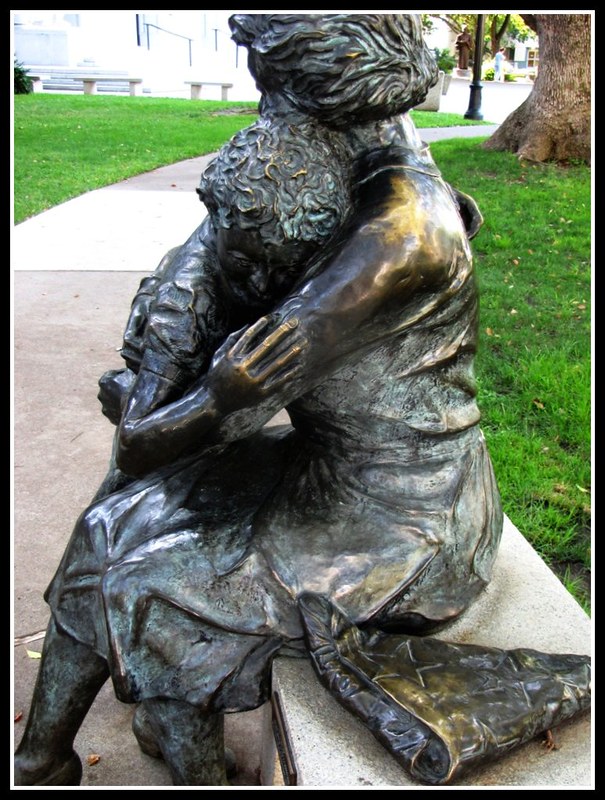
Just get out of the way!

One of the early founders of modern management theory, in the 20th century, was Peter Drucker. A widely popular and respected academic who coined such terms as the “knowledge worker”, and explored in his books and articles, how humans are organized, across business, government and non-profit entities. He was the leading edge of the massive growth of whole schools of business managers and professed experts in the world of management.

There are of course drawbacks to what has become an obsessive need to create the “perfect” manager. But Drucker forseaw also saw a bit of the future when he wrote about misguided or “over controlling managers.” In a recent article in the Wall Street Journal another author points to the fact that, “workers are most often productive when their managers leave them alone”. It was entitled: “Bosses, get out of your Employees Way”. Both the Wall Street Journal and Drucker wrote about the characteristics of managers who are not working well; too much meddling, too many meetings, and “butt covering” reports.

In the world of politics, there are countless examples of how things go wrong when the politicos and the senior bureaucrats get together, often leading to massive and costly dysfunction. It is almost always the taxpayer and those workers that are at the lower echelon who bear the brunt of their decision making.

One should look no further than the recent ongoing saga of the Surrey Police Service and the Mounties; and in particular the influence of Surrey Mayor Brenda Locke.

In the Brenda Locke/NDP fiasco in Surrey, Mayor Locke fought what seemed to be an obvious policing outcome for 18 months and wreaked havoc on any possibility of a smooth and cost effective transition. She was the ultimate hypocrite, having voted in favour originally of a municipal force, but then deciding for pure political reasons, that she was going to fight it at every step of the way. She clearly demonstrated time after time, that she had no real grasp of the logistics and the day to day running of police operations.

Most Mounties, if being honest with themselves know that the RCMP have simply lost their way, maybe temporarily, but currently they are struggling on every level. They can no longer fulfill their mandate nor their Provincial contracts with any degree of certainty. They also know that the writing is on the wall, in that the Ottawa mandarins themselves want to go to a Federal police force; they no longer want the headache brought on by Provincial contracts. It will take years but that is clearly the direction they are going. They want to be the Canadian Bureau of Investigation.

Despite all of this, Brenda Locke was supported by the upper echelon of the Surrey RCMP Detachment and the managers of the National Police Federation union in her personal fight. The senior executives in that Detachment played silly bugger, in the faint hope that their puppet Locke would do their bidding. The Executives did not want to be pushed out of their biggest detachment and the union did not want to lose a significant number of their members. They fabricated their capabilities and they obfuscated the costing formulas in an effort to convince Locke that they and the Ottawa RCMP establishment behind them were the answer to Surrey’s policing issues. Somehow, they also convinced Locke that the Police Act did not trump her authority as mayor. In the end she had to do the dance of the damned. Millions of taxpayer dollars later, the Mounties are now getting ready to leave en masse, and the inevitable transition can begin. They have become the poster child for incompetence in police management.

However, there is a clearer example of when senior managers need to get out of the way and in this example the RCMP authored it themselves. It is the recent report on the James Smith Cree Nation killings in September 2022. It is what came of their internal review of those tragic killings. Interestingly, contrary to their normal practise they decided to release it to the public. (There is no need to comment at this time on the credibility of a report where the Mounties are judging their own actions). In their summations, true to form, nothing was done improperly, but in clear nouveau government speak said that “certain areas of growth were identified”. They said there were times where it was “unclear who was in charge”, and that it became confusing at times between their “three lead commanders”. That there aircrews were sometimes “flying with little purpose”. Let’s also put aside the oxymoron of “three lead commanders” and the fact that apparently the police were flying around with no goal in mind.

The response to the killings was for the most part handled properly. I believe the members on the ground did the job, like they did in Portapique . Although it may have been mayhem at the time, the job did get done, but with a large human cost.

The senior executives of the RCMP however, seem to never learn the basic lesson that should be taken from an Nova Scotia inquiry and the report now written in Saskatchewan. That lesson is that Senior managers in policing when it comes to urgent, time-sensitive and drawn out operational circumstances need to get out of the way. I have written many times, that in these types of situations especially, one needs to flatten the organizational pyramid and get rid of these gatherings of senior executives in these “Command Centres”. Transfer the decision making to the folks on the ground. I should also point out that my thoughts on this would not be popular in the current management teachings now being constantly extolled.

There are a couple of reasons I believe this to be the case, and it may go some way in also explaining the obstinance of the senior managers to accept any change.

First, in a para-military structure, which all police departments are, decision making is predicated on the thought that the higher the rank, the greater wisdom and experience and with it comes power. Under the current system of promotion and advancement in the RCMP and all police agencies, it can be easily argued that this is now not always the case. For the last couple of decades the process of advancement has been deeply flawed. The best and the brightest are not necessarily rising to the top and experience on the job is not the highest priority. It has been replaced by executives now given more credit for the ability to speak the lingo of government, the speech of political correctness, inclusion and diversity. They spend multiple years getting to that top, constantly trained in the appropriate messaging, spending more time in boardrooms, with white boards and group-think, mission statements and community policing modelling. In many ways they have to be political, we insist on it, and we have allowed many police agencies to become organizations only reflecting their government pay masters.

Secondly, the route up the ladder in policing means you leave the front lines, you become administrators, you are involved in policies and guidelines. You are removed from the day to day issues and the speed of operations, sometimes these individuals are many years removed. It attracts a certain type of personality to these roles, it certainly doesn’t attract those that joined policing to be “operational”or work on the front lines. The organizations are now structured in such a way, that if you want to stay “operational”, you simply can not go up the ladder.

In exercising their senior manager power, they now seem to have only one solution. Their solution, seemingly like all government departments, is always the call for more resources, greater supervision and a larger bureaucratic machine. The policing world itself has undergone a massive transformation in the last 30 years; the operational pyramid has been completely turned upside down. What used to take one person, now takes three, four, or five.

It should therefore come as no surprise, that in the Saskatchewan report they have decided that in the future, in their Division Emergency Operations Centre based in Regina, that they will now add a Flight Co-ordinator, a criminal analyst, and a major crime investigator to their list of senior executives. More bodies, more needed lines of extra communication.

When you have unusual or atypical criminal circumstances, like a Portapique or James Smith Cree Nation situations, paradoxically–the police put in charge decision makers who usually have been removed from operational policing, have only a cursory knowledge of the geographic area, the police personnel involved, and the makeup of the people and resources in that community. They now come from a world where split second decision making is not of the essence. They have to be briefed, establish more communication lines, and then set up their “command structure”. It is time consuming, confusing and it is needless.

So my advice in the end remains the same. Give the people on the ground the resources that are needed. That should be your only role. Harder yet, relinquish the power, but most importantly— get the hell out of the way.

Photo courtesy of Flickr Commons by aaron_anderer -some rights Reserved

A New Year…

Welcome to 2024, and I hope the it finds you healthy and happy and full of energy to face life’s winds, in this the year of the Dragon.

I do find that you reach a certain age in life where one spends more time looking backward, rather than looking forward, but let’s be honest, there is no such thing as the good old days. With the new year now in front of us, I feel that we need to spend some time on what is to come.

The easiest prediction is that the cost of living is going up, and house prices, despite the claims of some aren’t really coming down. The cost of policing is also on the rise and will be adding to that cost of living, usually in the form of property taxes. At some point those costs are going to be the subject of debate. In terms of groceries, never fear, Mr. Singh, our Rolex wearing NDP leader has teamed up with our expensively well tanned Prime Minister and is going to go after those bandits of the check out aisles– as soon as he and Trudeau have fixed all of our teeth.

Speaking of policing costs, in this part of the world, the transition to the Surrey Police Service will once again provide many headlines as Ms. Locke does her best imitation of Don Quixote and keeps tilting at the windmills of change in that fair city. Do you remember that this all started in November of 2021? She is clearly committed to the idiocy of her argument and is now spending $500,000 for a poll and advertising to retain the RCMP– despite the recently past legislation and having been removed from the police oversight board. The poll questions are clearly skewed to give her the results she wants, and says that 46% wish to retain the RCMP, 29% want to go forward. Of course, you will see that leaves 25% unaccounted. So they changed the questions around a bit, to show that the majority want the RCMP now. It would be funny if it wasn’t so sad and desperate. It has clearly become personal.

The other counsellors in the city are being surprisingly mum on the subject, and one has to wonder if they are sitting back waiting for the next civic election to get rid of the un-glued Locke and are just using this time to plot the coup. Then there is the RCMP leadership in Surrey who seem to at least be supporting the shenanigans of Ms. Locke –and the RCMP in Ottawa who must be still trying to find Surrey on the map and are doing their best ostrich impressions of hiding their heads, hoping I guess that it will all blow away.

So the headlines and the talk will continue, as the city petition likely heads to the Supreme Court with the city arguing in part, that the Province is limiting their “freedom of expression”. Millions of dollars are going out the door with the duplication of services, not to mention the lucrative consultants and lawyers hovering on the sidelines. No one is moving the needle, and clearly nobody is worried about the cost. The individual officers are trying to make the best of this ridiculous situation. On the positive side, again remember my resolution, the Surrey Police Service with all their present hiring needs, has found the time and put a priority on hiring Ragnar, an Occupational Stress Injury dog.

In terms of sad trends, in the past year, ten officers were killed in the line of duty, mainly in the Provinces of Quebec, Alberta, Ontario and BC. One can only hope that the new year will see an easing of this alarming trend. Police involved shootings are also up; 35 in 2022, 26 in 2021 and 15 in 2020. It would seem that unstable Canadians are turning to gun violence more frequently and it would seem that the police are using deadly force to counter it, also at an ever alarming rate. It is a bit of the old chicken and egg discussion. Is it a matter of demographics, or is there something more sinister afoot? There is definitely no evidence of it changing, nor is there any evidence of people trying to even address the situation.

The homeless situation, sorry, I mean the “un-housed” situation will continue, inextricably intertwined with mental health issues, and rampant drug use. You would like to feel that enough attention is being given to it to force some level of change, but there seems to be no political authority in sight willing to face the wrath of the liberal cognoscenti and the cries of injustice that bellow forth every time someone moves a tent. The Vancouver east side will continue to be a cesspool and an embarrassment in the eyes of the world, but freer drugs is still the current liberal cry, even though it has even proven to be statistically ineffective. So people will continue to die in this Province at the rate of 7 per day, and every month there will be a wringing of political hands asking, what can we do? That too is an easy prediction.

More body cams are being given to the police now. Some will argue that this is great thing, with Vancouver PD being the latest to proclaim their commitment. The advertisers and sellers of the technology, say it will create greater “transparency” and an “increased civility”. However, we all know it began with the cries of the woke and the vocal demand for greater police “accountability”. With little doubt it will probably cut down on frivolous internal complaints, but that comes at a very great price. Winnipeg got rid of their body cams in 2017 because of the $11 million dollars to keep the program running annually. In Baltimore, the city implemented body cams in 2016 at a cost of $11.3 million, four years later in 2020, the cost had grown to $35.1 million. One should be cautious, and realize that there is a lot of money being made by companies in selling these cameras and the enormous infrastructure around it, and also be mindful of the fact that the verdict on their effectiveness has yet to be measured. (I won’t mention the New York officer in Staten Island who had his camera burst into flames while he was wearing it, leading to the recall of thousands of them– because that would be being cynical.)

It seems that in the New Year, we will continue to immerse ourselves in being victims, part of a larger traumatized society, that is always in further need of comforting. Despite all the relative prosperity of this country. If in doubt, here is one of the more recent examples, brought to us by the CBC who search the world over in pursuit of the most needy victims. Two Canadian law professors at Dalhousie University in Halifax, feel that the requirement to verify ones Indigenous status, in other words if you claim to be Indigenous for the purpose of using it as a stepping stone in furthering your academic career, that you shouldn’t have to actually prove the substance of your heritage claim. They say that “the schools proposal, the process of verifying Indigenous heritage, risks re-traumatizing staff, students, and faculty subjected to it”.

In more international news, the National Counsel of Canadian Muslims is calling on the Federal government to remove “a cap on the number of Palestinians that can seek refuge with their Canadian extended family members from the violence in the Gaza strip.” Now, that may be a group that could legitimately argued that they have been traumatized, it would also prove a perfect escape route for any fleeing members of Hamas.

Like death and taxes, an equal inevitably for the coming year is that the size of the Public Service in Canada will continue to grow. In fact it is at a “record high”, and it will cost $151 billion this year, a 31% increase in the last seven years. Coincidentally, more of these dedicated public servants have also been “investigated” for wrong-doing, in fact more than at any time since 2015. Let’s chalk that up to COVID, which is also keeping those civil servants away from a full return to the office.

The dirty money will continue to roll through Canada this year. It is now estimated to be between $46.7 billion to $54 billion, which is the equivalent of the Nova Scotia gross domestic product. According to a recent book entitled “Dirty Money” which has been authored by a group of financial investigators and academics in Canada, their conclusion is that little has changed, and Canada remains a haven for criminals. It has grown so large that it is “corroding” Canada. The FINTRAC president on the other hand, says all good in their office, and reveals that they handed over 2,085 financial disclosures to the police authorities; who apparently have done very little with it, and the information has remained “unused or un-acted upon”.

HQ and O Division of the RCMP will continue in the new year to make headlines. We are still awaiting the sentencing of Cameron Ortis, the once favoured child of former Commissioner Paulson. That was until the Americans caught wind of Mr. Ortis and his international shenanigans, and then let the Canadians know that there was a devil in their midst. He was found guilty of four counts of breaching Canada’s secret laws, in a need to know trial, and his defence counsel was flabbergasted, and will of course launch an appeal. He is facing twenty years.

HQ will continue to prove their commitment to the war on terror, and maybe gain some favourable publicity along the way. They went on full attack mode and went after and arrested a Grade 10 terrorist. A minor, that can not be named, for planning an attack on the Jewish people “by communicating instructional material related to an explosive substance”. How else can one explain the dramatic arrest which was an operational production befitting Broadway, with a perplexed Mom and Dad standing on the sidelines saying, “I don’t know w hat happened”. Clearly, they weren’t paying attention to what their son was doing in his room, and clearly the Federal Mounties treated it as though they were going after the Baader-Meinhoff gang.

O Division also recently charged one of their own. RCMP Constable Yahsif Israel Mane Monter arrested for firearm violations, human trafficking and animal cruelty (in relation to his dog breeding business). He worked previously on Project O-HELIX which was a labour trafficking case out of Hamilton Ontario and apparently drew some ideas for his own business. What happened to the days when cops were just being charged with assault, or impaired. Oh, the good old days.

The RCMP is also starting the new year, proving to be a bit of a leaking ship, either that, or they have come up with a new police operational method which includes announcing when they are going to make “arrests”. The Globe and Mail has been told of an upcoming arrest in the BC murder case of Hardeep Nijar by “no less than three sources”; who also maintain that they have been watching “the suspects” for “months”, and that they will be “laying charges in the coming weeks”. Trudeau was the first leaker, now there are three others. One has to wonder whether the leaks are being orchestrated in order to “stimulate” the suspects into some sort of culpable action? If not, then the RCMP has a serious problem. Undoubtedly there will be further announcements or arrests as the Mounties continue to watch their suspects in the new year.

My personal resolution by the way, is to be less cynical, but I will admit, that like most of my previous resolutions, it is not likely to last. We and I do need to remember that we are not living in the Gaza, or in Eastern Ukraine. Nevertheless, there was a red flag on my Weather Network app this morning– a serious warning, because Vancouver is expecting 1 cm of snow, turning to rain. I began to feel my cynicism meter already flaring.

We need to remember in this new year, even though we are continually drawn into the realm of the disenchanted, that day in and day out, there are thousands of Mounties and coppers doing a good job, or at least trying to do a good job. The media and sometimes this blog spend very little time in exulting the good that is often done quietly and with little fanfare. It is usually less interesting, less salacious, and doesn’t grab ones attention, which is the unfortunate truth of it all.

So where does that leave us for the new year. Are we hopeful, timid, apprehensive, or eager in anticipation? One presumes that it depends on your viewpoint and your circumstance. My guess is that in the end, this year will be like most years, most of us will keep plugging away at what we do, head down, while trying to ignore the craziness around us.

Happy New Year!

Photo courtesy of Doug Anderson via Flickr Commons – Some Rights Reserved

Money, Money, Money… Money everywhere

I will admit from the beginning that there is a jealous undercurrent to this story, although I am sure it is misplaced. Jealous of the current cop world is normally not where I usually find myself. I am talking about the pot of gold which can be found at the end of the Vancouver police departments rainbow. And more monies in a general sense are now being thrown into the policing circle of life than has been seen for quite some time.

The rationale varies and the rationale is wholly dependent on what side of the equation you find yourself. For the Vancouver Police Department, all is good, while on the flip side, the taxpayers of Vancouver might not be quite as charmed. The search for greater monies in the form of police salaries can sometimes cause those on the outside looking in say that those numbers are becoming excessive; especially in terms of city budgetary needs and fiscal constraints. Some would even categorize it as greedy, that there is some over-reach going on, and the justifications for it are much more tenuous. It should be noted that Plato felt that greed was a part of human nature; while Darwin in his theory of evolution felt that greed was natural and good. However despite their distinguished and historic reputations, it is unlikely that their arguments would sway many in 2023– especially those living in Vancouver.

You may not remember those days when police salaries were only in the double digits. You may forget when police salaries were never headlines, mainly because they were mid-level, average Canadian salaries. The salaries seemed in the realm of normal expectations. The average family income in 1976 as an example was $19,000 per year. My first salary in the Mounties was $13,500 in 1978. Using basic math, a cop in 1978 was therefore making about 71% of the average “family” income.

Fast forward to today and the recent headlines in the Vancouver news. The Vancouver Police Department is about to ratify a 2 year agreement which will entitle a 1st class constable (someone with at least 5 years service) a salary of $122,000. ($63.41 per hr) The average family income in Canada in 2023 is $75,452 ($39.00 per hour). Therefore, a cop working today in Vancouver will be making 161% of that average family income. In terms of other “first responders” a firefighter in Canada on average makes $83,138, 110% of the average family income. A nurse in British Columbia is $91,732, 121% of average family income. These first responder salaries it would be argued would be in line when compared with other “first responders”. When the comparison is with anyone else in public view, they are indeed eyebrow raising numbers.

In case you think an RCMP officer is now under paid, lets not forget that they too just received a large pay and retroactive increase. An RCMP officer after only three years on the job is now making a salary of $106,576, roughly 141% of that average family income.

I recently received a copy of the wage rates for the new Surrey Police Service (you know those ones battling Brenda Locke). A first class constable salary is $121,989, only slightly less than that of the new VPD raise, and if you rise to the level of Inspector with the Surrey Police Service you will be at $207,381.00. This would put one well ensconced in the top 10% of Canadian wage earners which requires a salary of at least $174,000. The median doctors salary in British Columbia is $178,810 per year.

So now you get the picture, it is in effect raining gold in the world of “first responders”. And we are not even mentioning the often gracious benefits that are also attached to some of these jobs.

The rationale provided by police spokespersons normally is two fold, that it is a thankless and dangerous job, and there is a need to sweeten the pot to attract people to the job, especially in this age of heightened public scrutiny. Ralph Kaisers of the Vancouver Police Union said that police “are finally being shown the value and support from city council…they need to be properly compensated for the work they do”. He predictably cites the “dangers of the job” and the need “to retain members” as the true drivers of this pay raise.

Let us deal with the first proposition.

There is a danger to the job, that can not be disputed. That is the primary factor when police salaries are being negotiated and has been for decades. But has that danger increased? At first blush that seems to be true. New data coming from the University of Ottawa shows that the recent 10 deaths of police officers in 8 months has not been seen since the 1960’s. But as the authors note, there are twice as many police officers working now, compared to then, therefore the overall death rate is actually lower than in the past decades. The data also shows that the leading cause of police deaths, contrary to the movies and the television, are car accidents. Justin Piche the University of Ottawa professor balks at the current claims of police officers that it is more dangerous now then in the past, and says that “…it doesn’t mean they (the Police) get to make any claims they want”. The deadliest years were 1962 and 1968 when 16 officers died in those years. Since 1962 on average there have been six and seven deaths per year while on duty. All those are tragic, and this appears insensitive when you look at cold hard figures like an actuary, but we can not dispute the numbers. From a statistical perspective, there are 70,566 police officers in Canada currently, which means as a percentage that 0.009 % of police officers are killed in the line of duty.

In Canada, union and non-union construction workers are fourth in workplace fatalities in Canada and average 20.2 deaths per 100,000 population. The top three are fishing and trapping; mining quarrying and oil wells, and logging and forestry. Policing is not even in the top 10, not even above tenth place trash and recycling collectors. Nor of course are fire personnel or ambulance attendants or nurses.

A corollary to the danger question maybe are the police busier now than then? The violent crime rate in this country according to Statistics Canada dropped dramatically from the year 2000 to 2014– then there was an upswing, from 2014 to 2021 and where it stands now is about 1/2 of what it was in 2000. Is it on the upswing, yes, is it higher than in the year 2000, no. During this time period the number of police officers in Canada have gone from 55,954 in 2000 to 70,556 in 2022, giving them a 26% increase in manpower.

It is a thankless job, but that has also been true for many many years, and in previous years there was never a need to attract people to the job so other things must have changed.

Will it help to retain members? Maybe, but that is difficult to measure. Will it attract the “cream of the crop” as described by Kash Heed, the go to analyst for CKNW and Global News? Possibly, but what makes a police officer the “cream of the crop”? There are no other jobs like it, so the prior police experience factor is the only one at play here. My guess is that you will get more officers trying to transfer from the lesser paying entities to the VPD, but whether they are the best of the best is highly debatable and definitely not a sure thing.

So what are the legitimate arguments for a pay raise for policing and in particular the VPD? It would seem that the only logical argument has been the increase in inflation. The last two years have seen 6-8% inflation rates; the VPD raise amounts to 4.5 per cent per year, for a total of 9%. Mr. Kaiser needlessly points out that “our members feel it when they go to the gas station or to the grocery store”. Hopefully he is not implying that other parts of our society don’t have that same feeling.

As an aside, of course, not everyone in society gets an inflation levelling pay raise in Canada, so the police unions with their greater societal levers can lead the way in any clawing back of earnings that have been lost to inflation. Statistically, inflation has a greater negative impact on lower income families– so the average family income which was mentioned previously, is going to be proportionally hurt by inflation much more than the higher income levels. Milton Friedman, the Nobel prize winning economist would say that inflation is ” a result of too much money…a more rapid increase in the quantity of money than an output”.

Of course the biggest immediate problem with this raise is that for the people of Vancouver it will add $30 million to the annual cost of policing in the City. Which in turn means a 2.5% increase in property taxes to cover the extra policing costs. The VPD’s 2024 budget is a net $415.9 million, $6million more than the finance team was “comfortable” with; and $42 million more than the department began operating with in 2023. The VPD is also expecting to run a $3.6 million deficit this year (They also had to throw in an extra $3.3 million for the Vancouver Fire Department). As an aside you should remember that the VPD union endorsed the current Mayor Ken Sim in his election in 2022. For his part, Sim recently put in place a “budget task force” to look into areas where savings could be found–the VPD budget is not part of that review. It is estimated that by 2028 the policing budget will be approaching $500 million.

Chief Palmer in speaking about the budget is sees it as somewhat as a fait accompli; he says “so if you go back to 1990 and you look at the trajectory its always been 20-21% (increase) which is what it is today, and what it will be in 2024, and I am sure in 2028”. In others words, there is nothing you can do about it. He says, “It costs a lot to keep Vancouver safe. Thats what it costs and people get great value for their money”.

Mr. Palmers salary by the way in 2022 was $493,932 with an additional $48,282 in allowable expenses. He is overseeing 1400 police officers. In terms of responsibility, the Prime Minister of Canada annual salary is $357,800. He is overseeing the Federal public service which now has 335,957 employees, and revenues of $457 billion. Clearly Mr. Palmer is doing very well personally and is a long way from the average worker.

The million dollar question (in keeping with the money theme), is whether or not there any saturation point? Is there some point where people begin to ask or question the ever constant growth in policing costs, which will in turn at some point force us to talk about layoffs rather than hiring? Some tough questions, despite Mr. Palmers nonchalance on the issue, are clearly just around the corner.

Photo courtesy of Bruce.Guenter via Flickr Commons – Some Rights Reserved

A Surrey post-mortem…

We have been following this issue for a long time, so when it finally reaches a possible conclusion, I find myself obligated, with some reluctance, to write about it once again. As those of you know who have been following the story, the RCMP is now effectively losing jurisdiction, in its biggest detachment in Canada. So it is news, but it has been truly tiring to watch this fiasco unfold, led by a couple of politicians in Surrey, like MacCallum and Locke, both of whom would be perfect characters for covers on Mad Magazine.

When asked recently on a local radio show in Vancouver how I felt about the NDP and Mike Farnworth’s decision as to who was going to police Surrey, and have now decided to go forward with the new Surrey Police Service, my only answer was that I felt “relieved”. It was in my opinion, a logical, fair and proper decision, when one considers all of the circumstances and disregard those speaking who clearly had an agenda. The problem was that it took too long to make that decision, and the delays affected hundreds of police officers on both sides of the argument. We won’t mention the monetary costs of these delays. Ms. Locke should have been told from the outset to go to hell, that the process to move forward with a City force was already in motion, and she with the short term memory affliction, was in the beginning part of it ,and in favour of a city police force. Since then she has been playing revenge politics for several months, in a campaign that was both misguided and misinformed, propped up no doubt by the senior management of the RCMP, who seemed to be continually willing to feed her disinformation.

So lets do a bit of an autopsy on what happened.

The biggest issue, the Y cut at an autopsy if you will, was the ability of the RCMP to actually fulfill their policing contract in terms of staffing and resourcing. Everyone who has been a Mountie in the last thirty years, if not longer, could tell you that the Mounties have been robbing Peter to pay Paul for years. There mandate and their abilities could not meet their stated goals. They are still doing it, and they can not keep up, whether in a city, in a Province or Nationally. The numbers simply don’t add up. Everyone knew this, except apparently Ms. Locke.

Ms. Locke in a statement after the announcement said that the Province decision was “disappointing, misguided and based on inaccurate assumptions”. There are currently 1500 vacancies in the Province of British Columbia, 500 are simply un-filled positions, and there are 1000 on some form of leave. Nationally the RCMP will put about 600 officers through Depot, and E Division would get a portion of them; and there were over 800 departures from the RCMP during that same time period. Please Ms. Locke, I beg you, what don’t you understand? In their response to the Province as to how the RCMP were going to fulfill their promises, I am told that their ingenious plan was to disembowel the plainclothes sections (temporarily no doubt) and put them back in uniform and on the road. I ask you Ms. Locke, how is that not the work of the little Dutch boy putting his finger in the dyke? Did you simply accept the RCMP senior management explanation without hesitation or examination?

As we continue our pathology, we get to the vital organs, the root cause of the RCMP conundrum falls to the single fundamental justification and reason that they have managed to survive in this Province. They have always had one go-to argument. They are “cheaper”. As mentioned numerous times in previous blogs, the RCMP portrayed themselves right to the end as the Walmart, not the Gucci police department. Of course, once unionization took place that became a much harder argument, and it got even harder when the union signed the recent new contract. Now, just the negotiated back pay is killing most small town policing budgets. The other counter-argument is, you always get what you pay for.

Lets delve a little deeper. The promotion and transfer policy of the RCMP does not allow for the development of its own officers, nor provide the continuity necessary for effective and expert investigations. The RCMP has a system where if you want to advance, usually you have to move to a different section, or a different detachment. Gone is any knowledge of the particular field, and the Mounties are famous for promoting in bosses who have no idea or experience in that particular field. So the Drug corporal, goes to the Fraud Section as a Sargent, the Community Policing Sargent goes to Major Crime as a Staff Sargent, now in charge of homicide investigations. The officer who has been policing Terrace, or Anahim Lake BC for the last number of years, now finds himself standing in the atrium of Surrey detachment wondering how to get to the washrooms. This is even more true in the executive ranks, Inspector and above, who flit from station to station about every two years, all because the Federal RCMP priorities are managing “people”, “diversity” and “inclusion”, not on whether or not someone knows the job. All investigations, whether it be a break-in or a homicide depend on that in-house homegrown expertise. One simply can not seed and grow expertise in the current Mountie system.

There is a single reason why the RCMP Surrey body is laying on this theoretical stainless steel gurney. The managers and executive officers of the RCMP are the root cause of their now unceremonious departure from Surrey. The uniform contingents of the RCMP, who make up the majority presence of the RCMP in Canada, have been at the very lowest priority in terms of management attention for decades. Ottawa, Ontario and Quebec may be the central head of the organization, but the head is not attached to the body. The current and past executives have been consumed and hypnotized by such things as writing “Mission statements”, self-advancement, and thus the advancing the size of the bureaucracy. The rank structure is completely determined on the number of bodies one is supervising. So if I have 25 officers under supervision, but I can grow it to 32, I will go from a Staff Sargent to an Inspector. The exams for that promotion have nothing to do with direct knowledge of the job, but claim to be testing how you “manage people.” There are no questions as to knowledge of any given job or ones that test the level of any given expertise. If one were able to examine the internal growth of rank and structure in the RCMP, Surrey Detachment with its current bloated rank structure, would be the perfect case study. When that is the driving force in any organization, suffice to say that the Peter Principle can and will be found in the nooks and crannies of every RCMP office.

Finally, there is one issue which rarely gets talked about. The RCMP has since I have been around displayed an arrogance as to their capabilities and expertise. It seems to permeate their dealings with other organizations and it often carries over into the investigational and administrative fields. Where it started, or how it originated has never been clear to me. You were not on the “job”, as the City cops used to say, in the Mounties you were a “member” implying some elite club. They seemed to interpret the Red Serge as a symbol of some level of implied superiority –and they would continuously point out they are the “national” police force, and got to hang with the Queen and hold the door for the Prime Minister. They were the self-appointed experts in all manner of policing, whether it was in the middle of Alberta, or Quebec, or Prince Edward Island, in a small northern outpost or in the city.

There is a significant push in the Ottawa cognoscenti to make the RCMP like an FBI, this too implies some level of arrogance. (the FBI has many issues as well by the way). All of this is to suggest that maybe the de-throning from Surrey will help in some ways to bring the Mounties down to earth, to re-discover that in policing it is how you perform the job, which is and should always be the measurement, not who you are or who you represent. The arrogance needs to go away.

One has to conclude by saying that I personally enjoyed a very good career in the RCMP, they treated me well. I have no complaints. I made great and continuing friendships, got to do what I wanted to do, and worked on some interesting and challenging investigations. It wasn’t the colour of the uniform that I remember the most.

But during my service, the cracks were beginning to show, we were seeing some poor results with the often ridiculous policy and administrative decisions, most times originating in a reaction to some political thrust. When faced with legitimate push back the managers and the executives did not wish to listen to the troops on the ground, in fact they would ignore them. To voice an opinion was often met with retribution, and that arrogance would creep into administrative and investigational discussions, the newly promoted Inspector knowing better than all those that had gone before them.

Change is they say the only inevitable constant, but the RCMP are one of the worst at adapting to change. The ominous and imposing multiple levels of bureaucratic nonsense stymies all attempts to reform or simplify. Quite frankly the current executives of the RCMP should now retire or resign, they have failed, and they have gloriously failed the uniform contingents which even they referred to as the “backbone” of the organization. They talked the talk, they just couldn’t bring themselves to walk the walk. They bought into and espoused a system of aggrandizement and self-promotion leaving the true core of the organization to drift in the wind. They also became political when they should have stayed neutral and silent. They spoke of polices and agreed to policies, in which they personally did not believe, such as “systemic racism”, in order to be political and continue their chance to advance. Every press conference if called to speak to a job well done, was flooded by the executives, all rushing the stage, and squeezing in to be part of the press photo. The junior officers who solved the file, or worked the file, always pushed to the background and out of sight. They long ago decided to “spin” the press rather than be informative. They even began to lie.

I believe that you are now witnessing a ground swell in the country which in a number of years most of what we now recognize in policing will be transformed, altered– some for the good, some for the bad. The golden age of the RCMP in British Columbia seems over, they are facing inevitable change. One can not celebrate, in fact it is sad to some degree, but one can only be “relieved” that the individual officers involved can now get on with it.

The autopsy of the Surrey RCMP is complete, my alma mater has met the end, the conclusion as to cause of death– is that the patient died of internal bleeding and constant executive mal-practice.

Photo provided by finalwitness courtesy of Flickr Commons – Some Rights Reserved


Cops being killed and Cops killing

If we can all tear our eyes away from the ludicrous goings on in Surrey for a moment, which is looking more and more like a Monty Python sketch. The less than Honourable Mayor Brenda Locke now waiting for the City staff to review the Provincial report– and trying to find someone with a pen to sign the non-disclosure agreement (the Province is insisting the City sign off on seeing an un-redacted report).

She has moved on to other important matters such as re-naming “Scott Rd” (a major north south corridor in Surrey) to “Jatt Avenue”. Of course this is just a blatant ass-kissing of the South Asian community city voters, who have become a vital and necessary ally in the Surrey civic elections. Why Jatt? It is because the Jatt Sikh are the ethno-religious group who are one of the dominant communities in the Punjab and of course in this area of Surrey. The now to be forgotten Colonel Scott was the person who originally built the road and for whom it was obviously named. Forget history and contribution, there are new age political fish to fry.

Meanwhile in the rest of the country, people are, and should be concerned about the increase in police officers being killed in this country. Since September 2022 a total of nine officers have been killed, an exceedingly high number. It should be noted from the outset of this narrative that all but one of those calls, which led to their deaths, were in response to mental health related incidents, while only one involved an individual out on bail.

So when stories such as these finally make it to a public forum, the experts and the politicians rise up as one, pushing each other aside to get to the microphone, all expressing their outrage, their bundle of solutions readily available for all the problems in policing. The Liberals never wanting to offend their dedicated progressive constituents, but being hounded and chased by a lot of bad publicity, needed to act. So this time the focus was on the “catch and release” program which has been operating in the Canadian criminal courts for a very long time. Bill C-48 is a quickly constructed eight page bill that could have been written on a napkin. This bill will under certain circumstances create a “reverse onus” on the defendants, so that those who have violently re-offended now need to justify to the courts their need to be released. Prior to this bill, the onus was on the Crown to argue that based on their history they should be kept in jail to await trial. Reverse onus as a legal concept has been in place for a very long time but reserved for the more serious offences such as sexual assault, or homicide.

Sounds good right? The Canadian Police Association likes it, they are calling it a “common sense” piece of legislation, in fact a “transformative” piece of legislation. All of which makes me certain that the executive of that group are a long way from the reality of the courts and the actual barriers being faced by police and prosecutors on the ground. They even were part of a joint press release with Justice Minister David Lametti– read into that what you will.

There are some gaping holes in this legislation. First of all it the Act is worded in such a way, that it must be a second “violent offence committed with a weapon”within the last five years. So if you were involved in a violent offence with a gun and convicted six years ago, one would assume that this new law would not apply. The number of cases that this reverse onus will be applied will in essence be relatively minimal. And remember, this is only reversing the “onus” to prove you are safe to be released. There are a lot of judges in this country, who are empathetic to the “victim” and less leaning to the law and order types. So this is not mandatory– they could very well let them out anyway. Secondly, since 2018 in this country the Federal government and the Courts have been told to “prioritize” bail for the “marginalized community”. Do you know who is “over-represented” in the courts and the jails of this country? This will not apply to them.

When OPP Constable Greg Pierzchala was gunned down by Indigenous male Randall McKenzie, prior to this he had been released from his very violent record because of his Indigenous background. Justice Harrison Arell released McKenzie who had a lengthy history of violence prior to killing the Constable, but he decided he must release him. Canadian Press found the audio recording of the hearing wherein the Judge says, “First Nations people are greatly over-represented in the prison system, especially in pre-trial custody”. This is reverse logic, not reverse onus.

The academics have also risen from their slumber and are spouting a number of theories as to why this is happening. Professsor Tempitape Oriola, a professor of Criminology feels that the police have brought this on themselves, in some ways, because of who the police now “represent or embody”. He draws a line from because of what they represent thus making them targets. Rick Parent, a former 30 year police officer and now an Associate Professor at Simon Fraser University, feels that maybe we should point to the “distrust in more racialized communities” and points to the fact that 21% of black people, and 22% of Indigenous people distrust the police. My guess is that 20% of those of European descent also mistrust the police.

Professor Piche of the University of Ottawa states that it is the “failure on the part of the police” and the panacea lies in bail reform. In his picture for the article he is wearing a toque which says “Build Communities not jails” which may be a bit of a hint as to where he starts his argument from.

Parts of what they say is true of course, but there is only one root cause and it is by far the greatest reason for police officers being killed, and that is mental health. This has always been the case. Nothing has changed in half a century.

By the way, this year is not a record. In 1962 there were 12 officers killed. At that time there were only 26,000 officers in all of Canada. There were 9 killed this year, but now there are 70,000 cops. So maybe it is just a matter of numbers.

The police officers that were killed then, and the ones that have been killed in the last number of months were “targeted”, “ambushed”, because someone in a state of mental breakdown can only call one group to come and be their victim. And the other troubling thing to consider that if a cop is targeted, there is little that can be done to prevent it. That is the hard and dark fact. As Professor Brown notes that what is happening is a “targeting of police officers because they are police officers”. In other words, if there is to be a motto to be remembered, for police officers it must be “there but for the grace of God go I”. All the training, the body cams, the issuing of high calibre rifles, and layers of body armour will not prevent or stop a police officer from going to the call and therefore run the risk of being gunned down. That is their job, that is what they do– and it will not stop a disturbed determined individual from killing them. Statistically, it is a rarity, but there is nothing that can be done in policing to stop this type of individual.

This was true in Moncton, this was true in Mayerthorpe and this was true in Portapique.

The roots of these mental breakdowns or what spurs a demented mind can be found in the homelessness, the drug addicted, and in the overwhelming failure of the mental health system. Those mental health issues and suicides have gone up dramatically since the pandemic, which may also be a causal link to this most recent increase in police killings. People forced into physical and mental lock-downs, loneliness, despair, and economic job loss may in fact be the precursors to mental breakdown. Domestic violence, divorce, child abandonment, and financial problems are often at the core of this societal breakdown— not the fact that they are out on bail. Then add fuel to these mental pressures with excessive alcohol, or continual drug use, and you have a potent mixture for mayhem. If you walk the cities of Toronto, Edmonton, or Vancouver you will pass by a number of persons who are close to that edge, they are just peering over into the darkness and futility.

The fact that the mental health issue is at the core, is further underlined if you examine when cops kill. You will see that in this country, cops killing civilians has also taken a significant turn.

In Canada this year 24 people have been killed by the police and over 1,000 in the U.S. Since 2000 in Canada, 143 people have been killed by the police. Two-thirds were by shootings. And in a recent study, somewhat predictably, B.C. police forces have a higher rate of killing. Three times higher than in Ontario, and 30% higher than 2nd ranked Alberta.

Now, I am not one to argue that in every case, the police did the right thing, that just wouldn’t make common sense, as there is a lot of evidence, especially in the U.S. of officers killing suspects when that option was not necessary. However, the vast majority of police incidents which lead to a deadly reaction would in fact be righteous killings; often the police officer actually waiting too long before he shoots the suspect, or not reacting quick enough to the circumstances.

More police are being killed while at the same time the police are also killing more people now. This too is primarily caused by the clash of police with mental health problems. But there may be a secondary issue also worth examining.

In this country we have chosen to arm and dress our police like Navy Seal team members. They arrive at calls as if fit to do battle. We have been forever trying to deny there is an obvious physical element to the job. Instead, we have chosen to arm all the officers with every tool to subdue. Pepper spray, batons, and tasers to name a few hanging off the officers belt. Training is now, to protect your personal space, engage from a distance, and if someone is not complying, escalate in your choice of tool.

When I first began policing it was extremely rare to hear of an officer involved shooting. It just didn’t seem to happen that much. The statistics, such as they are seem to bear this out.

In 1978 my first year in policing there were 4 police involved shootings in Canada.

1979- 4

1980 – 1

1984 – 1

1987 – 1

1988 – 7 This was the highest in the 1980’s.

Now skip ahead to 2008 which had 7 police involved killings

2009 – 5

2010 – 8

2011 – 11

2012 – 12

2013 -10

2014 – 24

2015 – 28

2016 – 14

2017- 35

2018 – 14

In any event, you get the picture. Things have clearly changed for the worse, an increase in population would be part of it, as would the increased number of cops on the street. But, how could one explain that in these current times, with the massive increase in non-lethal weapons, and the greater manpower, that the deaths by police have increased. In 1978, we had a .38 revolver, two speed-loaders, and some carried a plastic flashlight. Nothing else. Talking and physically controlling the individual were your only “alternate measures”. Nor was ERT a constant call out every time someone ran into a house. Before someone concludes that is all based on an increased in societal violence, just check out the statistics. That does not seem to be the case.

Something is amiss, and someone needs to explain it to me.

When a police officer is killed, we all feel it, and police officers feel it like an emotional hammered thud to their chest. When a suspect dies, a family somewhere also feels it. Maybe, it was a gun wielding murder suspect who was killed, but more than likely, it was a family member, one who the mental health system kept turning away, or did not have the capacity to help. If you want to lower the killings, then treatment for mental health issues is the clear and obvious key, the only real answer.

Right now though, nobody is winning and things need to change on both sides of the blue wall.

Photo courtesy of Moonjazz via Flickr Creative Commons –Some Rights Reserved

the Surrey Policing Circus

So by now you have heard the latest policing news consuming the Lower Mainland of B.C. The question: who is going to police the City of Surrey? After four years of transitioning to a new police service, the Surrey city council have decided that this would be a good time to go backwards. Re-trench, undo all the previous political decisions, fire the 390 officers that they already hired, and try to find more Mounties to go back to being policed by the men and women in Scarlet.

The “decision” was pushed to the NDP Government in Victoria to come up with a “decision”.

So now the “decision” was in.

British Columbia Minister Farnworth announced that they would recommend carrying on with the original transition to the newly formed Surrey Police Service; that in essence the Mounties are not in a position to properly re-take policing in Surrey or resume becoming what the government calls the “police of jurisdiction”. Also Mr. Farnworth and the NDP, in other words, the taxpayers of British Columbia, are willing to help defray the costs of the annual increase in costs, estimated at $30 million annually, for at least the next five years during the transition to the SPS.

Correspondingly, he also added that if the council under the guidance of uncomprehending Brenda Locke continues on her stated path of going back to the RCMP, or “reverse transitioning”, then there would be no monies forthcoming from the government. This would include the $72 million estimate that would need to be paid out to to get rid of the already hired SPS employees.

If the new money was not enough to convince Ms. Locke the government felt it necessary to add that if they choose to go back, then there would still be a number of conditions that they outlined that needed to be met. Those conditions on first viewing seem to place the Mounties in a very difficult position, especially the one where they are not allowed to steal from other detachments to reach the Surrey manpower goals.

It was a long awaited decision, one of the hardest decisions Minister Farnworth, the Attorney General for British Columbia says that he had ever undertaken, in trying to decide on who should patrol the streets of Surrey. He probably should have said the hardest “recommendation” he had to put forward, but maybe we shouldn’t pay attention to the semantics. One certainly should not be paying attention to either former Mayor McCallum, or the current Mayor Brenda Locke. Former Mayor McCallum just seems like an old crotchety senior citizen of South Surrey ranting over the picket fence. After the decision he was interviewed and spoke at great length how he never sees the Mounties at his grand kids soccer games. One would assume in his mind conclusively proving that the RCMP are not good members of the community.

Mayor Locke for her part accuses everyone of playing politics– except herself of course. She like McCallum seems at times unhinged, and we would also say with complete confidence, completely disconnected to the real conditions in the Surrey RCMP and in the RCMP in general. It may not be her fault because this blogger believes she has been continually misled by the information coming out of the RCMP.

It is sometimes forgotten that originally Ms. Locke was on the side of McCallum and ran with him. She then she had a falling out with the mayor, and overnight became revolutionized, and is now re-born as an ardent supporter of going back to the RCMP. One should not under estimate the fact that for Ms Locke this fight is personal. In fact she may be motivated solely by conquering McCallum–she is bitter, and the thought of McCallum winning the overall argument does not sit well, and may in fact be playing the biggest part in clouding her judgement.

In following the media, and the social media around this decision, seems to demonstrate that there a bit of fact checking needed.

There has been a lot of comment about the NDP, not wanting to offend too many voters and the nine parliamentary seats in the Surrey area, that what Farnworth and the NDP did in “recommending” was to effectively”kick the can down the street”. This is true, it was a recommendation not a decision; but that is the result of the sometimes vague language of the Police Act. In particular Section 2 which states that the Minister responsibilities include only that he “establish priorities, goals and objectives and goals for policing and law enforcement in British Columbia”. He can recommend, set out conditions, but not dictate, which is what they did.

Ms. Locke says the government has been disrespectful in that the Police Act states “categorically” that the choice of police is under the purview of the municipality”. Not quite true either. The Act says that the municipality of over 5,000 people must “provide police and law enforcement in accordance with this Act” (Section 3). Again the Act language is somewhat vague on this, but then again Ms. Locke has developed a recent habit of misleading statements.

There are large portions of the report redacted, which for the life of me on reading all that was provided does raise the question as to what possibly could be so sensitive that the public is not allowed to see it —especially in the context of this narrative. I have been told that Ms. Locke points to this redaction as a government cover-up, but the fact of the matter is that all the redactions were done or requested by the RCMP.

You will remember that all the parties; the RCMP, the Surrey City Council and the Surrey Police Service all provided reports/information for the Provincial government to consider. They had to be asked twice, because the first time they didn’t answer all the questions. In fact back in December they called the City report as having “contained inconsistencies, lacked supporting data and evidence”.

The City report now provided estimates to re-take policing in the city that they would only have to re-up 161 members (I am not convinced of that number and neither was the government) and that they were going to do this by three methods: recruiting back from the SPS; getting more officers from Depot (which would negate other detachment needs);,and by pulling members from other regions of BC (page 24). They even suggested that they could transfer members into the Surrey detachment for 6 months and if that still was not sufficient could resort to calling members in on overtime to fill shifts.

The government saw this as problematic. How could an agency that is 1525 (hard/soft vacancies) officers short in the Province begin to take further members from other locations they asked? Remember that this government just gave an additional $230 million to try and support the rural areas of the Province because of a lack of staffing. The government also quoted the 2019 Public Safety Canada report which stated: “demand for officers…outstrips the RCMP’s capacity to recruit and train” and “that under staffing is effecting the health and welfare of their members”.

They go on to say that Federal policing has been eroded to meet those contract demands and stated the stats that since 2010 show that contract officers increased by 17% while Federal officers decreased by 30%. They concluded by saying that they had significant concerns regarding sustainability of the program and regular member production levels.

What the most interesting take-away from all of this, it is that the RCMP has finally had to reveal its staffing inadequacy that has been in existence for probably 25 years. Every Mountie that has worked in the lower mainland for the last few decades has heard the term “do more with less” so much so that it became a standing joke at every annual assessment of spending priorities. Now the shortages have become acute, exacerbated by demographics, covid, a lack of recruitment, and a complete lack of foresight by the upper management of the RCMP and the governments of the day. The difference now is they have had to come clean with the staffing shortage numbers. They have had to show how they were going to cover off these shortages and when examined, in essence, they were going to resort to their time held tradition of robbing Peter to pay Paul.

Now the government has called them on it.

The 20th century centralized structure of the RCMP is now making people even question the “sustainability of contract policing”. This was most recently stated by the Special Committee on Reforming the Police Act, that was completed by this same BC Provincial government and released last year. It called for the re-establishment of a Provincial force, to get rid of the Mounties all together.

People need to understand and accept that the RCMP is not a stable organization right now. This is not about individual officers this is about an organization.

The RCMP is being buffeted by the winds of needed change. The inquiry at Portapique, just the most recent to say what has been said by other inquiries and other reports that came before it. The City of Surrey is a large municipality that is growing at 1,000 to 1500 people per month. It clearly needs its own dedicated police force with local control, that can act and re-act in a timely fashion. Ms. Locke, for whatever reason, is ignoring the obvious.

As a former long-standing RCMP officer it saddens me that the organization has proven that it can not adapt to big city policing, but it is what it is. There is also the theory that Ottawa once when pressed, will admit that it is really wanting to be a Federal level only Force. This is a difficult country to be all things to all people, to be a single police entity for all forms of investigational need, a massive undertaking in any circumstance. Currently the RCMP is failing miserably on the Federal side as well, and a re-structuring from the contract Provinces would go a long way in boosting up the Federal side. Whether true or not, only time will tell.

There is a long history of RCMP ineptitude in Ottawa, most of it born out of government bloat and bureaucratic aggrandizement. This is a police service which became too enamoured with themselves, enamoured with promotion and empire building, and to survive has traded in political favours, all to the detriment of the basic organizational and contractual needs. This is an Ottawa problem not a problem of individual police officers.

It is indeed ironic, that while all this mayhem and political grand-standing is going on and circling the RCMP’s largest detachment in Canada– the acting RCMP Commissioner is in England, presenting a horse and a ceremonial sword to King Charles. They just don’t get it. Similar to Trudeau in New York to talk about women’s rights and pose with Hollywood celebrity Hugh Jackman “Wolverine”, all while Ottawa is under a massive general strike.

So my advice to Ms. Locke, swallow your political pride, you are in essence surrounded on all sides, there is no way out for the RCMP; they are trapped in a system, one that will simply not allow them to fulfill their present mandate. Now not only the Surrey taxpayers are going to pay the price for these politicians, now everyone in the Province will be paying for these shenanigans. As long as this goes on there is further indirect damage being done in terms of operational policing. Morale is at an all time low on both sides, there is continuing in-fighting between the SPS members and the RCMP, some of it quite personal, continuity in files is being damaged, and the image of Surrey and its council is being tarnished with every appearance at a podium. While they decide who has the authority to go ahead, the decision is now stuck, resting somewhere in the ether, nestled between vague pages of the Police Act. The government report now estimates, even if they decide to carry on with the Surrey Police Service, another three years will be needed. A total of seven years for a transition?

Meanwhile, Brenda and Doug are politically arm-wrestling to see who will eventually be allowed to drive the clown car.

Photo Courtesy of David Blackwell vis Flickr Commons – Some Rights Reserved

Small Dutch boy needed…

There are a lot of analogies that would seem to fit the current state of bedlam in Surrey, that bastion of the Royal Canadian Mounted Police efforts in municipal policing, their veritable flagship of contract policing. Mary Mapes Dodge in her story of “Hans Brinker; or the Silver Skates” wrote about the little Dutch boy who saved his country from disaster, by plugging a finger in the dike until help arrived the next day. It seems to be a fitting description of Surrey and the RCMP– in light of the back and forth bureaucratic political maelstrom now taking place in that fair city while also reflecting the current overall state of Canada’s national police force.

Of course in this metaphorical dike there is more than a single hole, there are many, all of which are being plugged by the fingers of the likes of Assistant Commissioner Brian Edwards, Assistant Commissioner Manny Mann, and Chief Superintendent Sean Gill. Playing the Dutch Queen, is the the illustrious and apparent policing expert Brenda Locke who is of course, now the mayor of Surrey with her 28% of the popular vote versus 27.3% of the popular vote for Doug McCallum.

Her lacklustre .7% win did not deter her from giving the speech about the “people have spoken”. Brenda Locke to keep her promise is willing to pay out over $100 million of taxpayer dollars to go back to the status quo of keeping the Mounties. (Did we mention that she used to be a party supporter of McCallum when he originally made it an election issue for a separate police force). She fell out of McCallum’s favour though and then switched her position. This all seems to be more about political revenge than thought out policy. In any event it has come about that on November 29th, Locke and her new group of councillors voting 5-4, have now endorsed the “framework for a development of a plan” to undo what has been done. This was after a presentation by A/Comm Edwards to the City council wherein he talked about what a great job the Mounties are doing and will continue to do when they get rid of those nasty Surrey Police Service upstarts, which by the way are now a few hundred members strong. A “Project Team” will oversee a development of this plan, that will need to be submitted to city council by December 12, 2022– which in turn would need to be forwarded to the BC Solicitor General and the Public Safety Minister for approval. Of course new Premier Eby will have a final say, one way or another.

One must keep in mind that the transition to a City Police Service has already been approved by all three levels of government.

For the BC Police Services and the Ministers to reverse that original McCallum majority government led initiative, one would think will take some real persuasion. Locke must realize that it is a high hill to climb so she has tried to stack her Project Team by hiring Dr. Peter German (clearly someone who has the ear of Premier Eby who had hired German when he was looking into money laundering and the casinos) and Tonia Enger (a self-declared “contract policing expert”). Both of course are former RCMP officers of lengthy service, and one would have to assume that their report will now have to be supportive of a return to the RCMP, and somehow also make it seem logical. Expect to see the money issue down-played.

The RCMP and their union, the National Police Federation, have been strident and vocal supporters of Locke to oppose McCallum, the Darth Vader of Surrey politics. I have been told on good authority that at the election headquarters for Locke on the night of the vote, Edwards, Mann and Gill were there in full glory, exhorting and cheering on their new mayoral hero. So much for police being politically impartial.

Then there was the curious case of public mischief brought against the Mayor, of which he was acquitted, much to the Mountie chagrin. What was curious about the case was that McCallum made a complaint of assault, and within a few days, he himself was charged with public mischief. The whole case should never have gone forward, but that aside, there is something highly suspicious about the Mounties bringing charges against McCallum in the first place, and in such a quick turnaround. Now, with little doubt, the City will also have to pick up McCallum’s very pricey legal bills.

There is also a ground level war going on between the Mounties and those that wish to replace them. The Mountie union for their part, will also be sending a report to the government with their view of the situation. The NPF spokesman, Ryan Buhrig, made an interesting comment to the press, in that he stated that seven of the fourteen “shifts” were currently “below minimum staffing levels”. Is this to blame on the transition, or is he admitting that the RCMP is currently not able to meet the contract needs? There is little doubt that these shifts were “below minimum” long before the Surrey Police Service came into existence.

I have by now heard from uniform officers from both sides. The RCMP officers I have spoken with make no bones about the fact that they don’t like the SPS officers, and the SPS officers in turn have complained about the brutal way they have been treated. Safe to say, the situation, morale wise is not good. I heard on high authority that the government at one time seriously considered making a formal complaint to the Public Complaints commission about the actions of some of the RCMP top management in their efforts to block the SPS. Their brief consideration was that the level of obstruction amounted to a form of “corruption”. They did not follow up for obvious political reasons.

If one wants to judge what the best course of action would be, there is a clear need to step back from the infantile actions of the politicians and senior police managers. One needs to look at this from the practical viewpoint and step away from the misinformation campaigns and the biased and often ignorant rhetoric. Let’s even forget about the monies spent, the monies about to be spent, or the monies about to be lost. The most basic decision and central question is whether or not the RCMP are even still capable of municipal and contract policing.

In the rest of the country, in academic circles, and even in the Federal RCMP rarefied air of Ottawa there is a very different dialogue going on. If contract policing is the dike then the holes in the dike, the holes in the organizational structure, are becoming increasingly apparent and they are numerous. The solution that is being discussed, proffered and debated is whether or not the time has come to let the dike break and in effect let the RCMP to get out of “contract policing”.

The most recent example is in an essay by Kevin Lynch and Jim Mitchell. Lynch is a former clerk of the Privy Council Office, and is now with BMO Financial; Mitchell is an adjunct professor at Carleton University. The paper got the attention of the Globe and Mail and is adding to the further discussion of this possibility. In the paper they argue that the problems of the RCMP are large in scope and that “they are inherently structural, requiring fundamental change to re-shape”. The Mountie “jumble of accountabilities” is supported by an “organizational model that fails them” and that they are “poorly positioned to discharge their responsibilities”.

Of course this is just the latest, in 2007 the Task Force on Governance and Cultural Change in the RCMP, stated that there was a requirement for a “much higher degree of managerial competence and sophistication than that which is currently found in the RCMP”. The Bastarache report said that the “culture is toxic, misogynistic, and homophobic”. In July 2022 an all party committee of the BC Legislature was tasked with reviewing the Police Act for the Province, stated that “we need to end contract policing”. In an associated poll, 39% of the people agreed with replacing the RCMP, 38% opposed and 23% were undecided.

Further along this year we have witnessed the Portapique inquiry, which showed that the managers of H Division, at the senior levels were in-fighting with their municipal agencies. Lynch and Mitchell also believed that the Emergencies Act inquiry in the end “portrays an indecisive federal police force”. It demonstrated that the very top of the organization is fraught with miscommunication and that they have become a fully integrated “political” police force, more interested in playing the political game than the operational game. Again, none of these latest revelations are good and the tarnish is not going to wear off soon.

On a lower level, when it comes to the more basic issues and the ability to staff their contracts, I am being told that the Federal positions in British Columbia are now almost 50% vacant, while the other Provincial units are approaching 30% vacancy rates. There is a lack of recruitment and the RCMP is now having trouble enticing anyone to a career and therefore an inability to staff positions. This is not new, this organization has been failing in this regard for many many years. As a result ideas are being floated in British Columbia, Alberta and parts of Saskatchewan for leaving the RCMP contracts altogether.

The Eby government has now had to provide an additional $230 million to the RCMP to assist in “fully staffing” rural policing as part of his “Safer Communities Act Plan”. This would seem to go to the very heart of the issue of not being able to fulfill the current contract.

It is also impossible to argue that the RCMP is any “cheaper” than a municipal police force, as it is a myth that the 10% discount given to the RCMP is a game changer. This is wholly swallowed up with the extra manpower demands which come about due to Federal commitments at a cost to the municipal and provincial policing needs.

There is historic irony. The British Columbia Provincial Police were disbanded on August 15, 1950, a move that was made for two primary reasons. One, was the hope that by doing so, if they brought in the RCMP they wouldn’t unionize; and secondly, they wanted to put a better fight against Communism. It would seem that on both of those issues the fight is over.

The current structure of the RCMP is damaged, in need of severe repairs. As a retired RCMP who preferred contract and the criminal work over the Federal, it is indeed bittersweet to watch the current machinations in Surrey. It is difficult to watch the demise of the RCMP in its present form, but if you don’t think it is happening you are not watching. The organization will not disappear, but I suspect we will not recognize it 20 years from now. It was good while it lasted, but policing is evolving, the past is the past and evolution is necessary to keep up with the quickly changing times. In Surrey, there is a futile attempt underway to argue that all would be good if one were to return to the RCMP. But it is a dishonest argument.

Who knows or would even dare to guess where this group of politicians will lead us. If the government gives in to the misguided sentiment of Brenda Locke and her cohorts, the only known thing for sure that the Surrey taxpayers are going to be on the hook for a rather imposing tax bill. All to return to an organization whose time is now completely taken up in plugging the holes, trying to hold back the flood waters against structural and inevitable change.

Photo by bertknot Courtesy of Flickr Commons – Some rights Reserved

Is the World spinning Faster?

Policing issues and the stories that surround it seem to be growing exponentially, always accompanied by surrounding commentary and self-proclaimed expertise flowing from every social platform. Instagram, Reddit, Facebook and Twitter abound with the examination of the police and a professed expertise. The armchair investigators of Netflix are in full voice. In trying to understand why, I have learned that In the last few years the earths rotation has in fact been speeding up (on a normal day the earth travels at the speed of 1000 miles per hour as measured at the equator). So as I find my eyes ricocheting from headline to commission to judicial decision, blaming the earth’s rotation as being responsible is as likely an answer as any other.

In the past week to ten days we have had the start up of the Public Order Emergency Commission in Ottawa; we have learned that 469 foreign criminals are “missing” according to the CBSA; two officers were killed in answering a domestic dispute in Ontario, ambushed by a male with an AK-47; and an Ontario court Judge has ruled that if you are an Indigenous offender you are not allowed to be cross-examined as to any previous offences. So now not only do you have the Gladue decision, you know have it dictated that the Indigenous are not to be subjected to the same trial process.

Closer to home, in the Surrey civic election the old dodger with the sore foot, McCallum, has been replaced by an equally woefully inadequate Brenda Locke. In the first 48 hours, she has already painted herself into a corner, by saying she is giving the Mounties back their job in Surrey, regardless of reality and cost.

So having to choose one story over another is difficult this week. That being said, as much as I would rather ignore it, I guess we will have to go with the Public Order Emergency Commission as the lead story, which is being headed by the Honourable Judge Paul Rouleau. This Commission (we have sure had our share of them lately) has been tasked with understanding “the Government’s decision to declare a public emergency, the circumstances that led to that declaration, and the effectiveness of the measures selected by the Government to deal with the then-existing situation”. As in all Commissions of Inquiry, one needs to be reminded that none of this is to determine criminal fault or civil liability. This is all to determine the “effectiveness” of the implementation of this draconian piece of legislation.

And like all good government Commissions, this too is filled with lawyers of every stripe and denomination: there are two co-lead counsel, five senior counsel, three regional counsel, twelve just “counsel”, three senior policy advisors, seven research counsel, and two “staff”. So including the Judge, there are thirty-two counsel and that is just on the government side of the ledger. The audience at these hearings will be for the most part other lawyers and the media. With this many lawyers there is diminishing hope that the truth behind the declaration of the emergencies act will not be watered down through all these filtering lawyers.

Judge Rouleau is a native of the Ottawa area, went to the University of Ottawa and then went on to be associated with several central Canadian legal firms such as Heenan Blaikie and Cassels Brock and Blackwell. He has been a Judge since 2002 and a strong advocate for French language rights, and would have probably been a better candidate for the Supreme Court than the new Justice O’Bansawin–but let’s put that aside for now.

The good Judge will be overseeing the evidence of sixty five potential witnesses, however do not despair and give up on your regular life schedule, as it is likely that you only need to begin to pay serious attention to the last twenty or so witnesses– which include the politicians such as Trudeau and Freeland. After all, the police have already established that they did not ask for the Emergencies Act, it has also been established that there was no real intelligence indicating that there was a foreign inspired threat in the makeup of the convoy group, nor conspiracies to commit violence, which should leave the Commission with some rather obvious starting points. There is going to be a lot of dancing to be sure. Commissioner Lucki has already done the two step in public committee hearings, where she was forced to admit to not having asked for the implementation of the Emergencies Act. As a devotee to Blair and company, she needed to backtrack, and she did this by saying what a great thing it was, once they had been given these extra powers. Justin Trudeau who spoke publicly about “foreign money” was clearly lying as the intelligence community today said there was no such evidence.

One should also remember that the government is not holding this hearing because they wish to be frank and forthright to the Canadian public, it is because the law states that they have to have an inquiry within 60 days after the enactment of the Emergencies Act. This particular group of Liberals are not fans of focused scrutiny, whether it is in the House of Commons question period or in front of a Commission. They have released some Cabinet documents but have raised “confidence” issues on them; so the general public may never be shown them.

In checking out a Commission it is always helpful to find out who has been given “standing” and “funding” in terms of appearing before the Commission, which simply put, is based on who has a direct and vital interest in the proceedings. So in this case, groups such as the Criminal Lawyers Association, the Canadian Civil Liberties Association and the Ottawa Coalition of Residents and Businesses line up for standing, and of course for the government to pay for it. These three groups were in fact granted both permission and funding.

However, there was some rather unusual decisions in this regard. Take the case of Mr. Eros who applied for “standing”. Mr. Eros is a CPA and dealt with financing and accounting matters related to the Convoy Group. He was also intricately involved in the administration of the crowd-funding campaign with this same Convoy group. He was however denied standing, as the Judge ruled that he was merely a “witness”. This may be fair.

However, incredibly, the Union of British Columbia Indian Chiefs was granted “standing” and “funding” to participate in this matter. They argued that they had a substantial and “direct interest in the commission” based on its “role as an umbrella organization representing Indigenous governments” and that it plays a “critical role in governance in Canada in terms of its ensuring that other governments are held accountable for their actions”. Some of you may be surprised at their being Indigenous “governments” in Canada. However, to think that they are there to hold the other “governments” accountable is audacious to say the least, even under the current Federal Liberal love-in regime. So we now have a group who has supported its share of protests, such as the damaging of pipelines and the burning of rail lines which is now going to sit in judgement of the governments reaction to the Ottawa convoy.

The witness testimony has started and began with the bubble wrapped represented citizens of Ottawa talking about the nights of continuous air horns, the disruption of their businesses and the “occupation” of Ottawa. Terms are being bandied about such as a “siege” and a “horrific experience”. The lead plaintiff in the civil suit Zexi Li, is a data analyst, and the second witness. She was working for the government from home and her testimony was how it completely disrupted her life, a story which under cross-examination was by no means dramatic. Most of the city of Ottawa were at this time working from home.

In the last few days the Commission has now started to examine some of the government and police response, before, during and after this clearly “unprecedented” upheaval. What would you expect to find when you have three levels of government; the city, the Province of Ontario, and the Federal Government all weighing in on strategy and tactics with three different police forces, the Ontario Provincial Police, the Ottawa City Police, and the RCMP? Now consider the Ottawa mayor who liked to have confidential discussions with Trudeau, Blair, and Mendocino, but not share those discussions with the Ottawa Police Services Board who supposedly were the designated oversight to the operations. There were Provincial and Federal concerns with the OPSB itself. Then throw in the new Ottawa Police Chief who with the other police managers from the other jurisdictions could not even agree on a “command structure” for several days. Throw in a request for 1800 Ontario Provincial officers, while at the same time consider the initial lacklustre involvement of the RCMP, and then consider an inability to even develop a policing “operational plan” for over 10 days.

Needless to say it was all bureaucracy, miscalculation and the very definition of too many cooks in the kitchen. Bill Blair was suggesting to the Ottawa Chief that he consider more bylaw enforcement, even though by that time 2000 bylaw tickets had been issued. I am sure he thanked Mr. Blair profusely. Justin Trudeau was busting on Doug Ford not doing enough, while at the same time, the OPP seemed to be the best at getting extra officers to the scene. Chief Slolys then resigned. With little doubt he was about to become the scape goat in this massive cockup.

The enacting of the act seems quite clearly to have been a reaction to a discombobulated police management action brought created by a lack of foresight and intelligence gathering, combined with meddling by the usual political group which surfaces in any calamity. It was done for the singular purpose of gaining a political upper hand in the media, to show that they were doing something, and it was concocted by the Federal government and the Liberal ruling party.

The core or the fuel for this action seems to been an inherent inability on the part of the liberal left to relate to the protestors driving these big trucks. They were seen as the working class, the blue collars. This was more than a paper exercise to the protestors. They had lost jobs and the ability to feed their families, and now they were being ignored and pushed to the sidelines. They were at times crude and in your face, willing to physically push back, but their cause was the centre of their existence. This was not a philosophical theory dealing with “systemic” complaints, theirs was a cause that affected their mortgage and their ability to make a living. They were not bubble-wrapped, did not speak in plural pronouns, and did not understand or adhere to the niceties of government levels and protocols. They were not from Ottawa, they did not look like they belonged there, they were not Liberal constituents, and most troubling of all– they drove very big immovable trucks.

So when they got to Ottawa, no one would talk to them, no one even liked them, and they needed to go, at any cost. It was hurting the images of the politicians in power. And the media were willing to report it without question or due diligence.

The protestors prevailed as long as they did because they were met with an unprepared and ill-equipped police force, governed by layers and layers of Ottawa political mandarins concerned only with optics. The politicians found themselves facing, according to the Ottawa mayor’s chief of staff, a “crescendo of collapsing confidence”.

They were also scared. They did not understand and could not relate to the visceral outpourings of the protestors. Their problems were not their problems. So this “local emergency” demanded in their view, the full force of government, the suspension of their inherent rights, and the seizure of their personal financial assets– and now they will be lying to justify it.

Photo courtesy of Ross Dunn via Flickr Creative Commons – Some Rights Reserved

Start taking down the tents…

For some time now, there has been a large tent set up at 134th and 104th Ave– Surrey City hall.

The tempest under the tent is about the nascent Surrey Police Service and it brings to mind the three rings of Barnum & Bailey. Jugglers, hire wire acts, trumpeting elephants, and clown cars all featured as part of what makes up Surrey civic politics.

This show under the big top has been going on for awhile now, it was 2018 when Mayor McCallum and his Safe Surrey Coalition were voted in, under two main election promises; cancel the contract with the RCMP and secondly the further extension of the skytrain. At the end of this month, the new SPS is to actually begin patrols, in coalition with the RCMP, as this plodding along transition carries on. Many are predicting disharmony, resentment, and at the very best an awkward moment or two. 

The transition process has met with infighting, personal barbs and innuendo, even allegations of assault and intimidation have been echoing off the walls of the city council chambers. In the last few weeks it seems to have reached a crescendo of inanity and misinformation. Those of us who once policed this burgeoning municipality of five police districts were often want to say in those days “only in Surrey!” This disparate community has always seemed willing to defy the expected norms of a civil society. 

A multi-cultural community of distinct areas, a diverse populace of haves and have-nots, abject poverty and street level violence versus one acre mansions of multi-million dollar homes. Whites, south east Asians, blacks, all forming up in their distinct neighbourhoods of Cloverdale, Newton, Whalley, South Surrey, and Fleetwood. 

It should not be assumed that they are living in harmony. In the nineties we patrolled the high schools which were even then being inundated by racist fights between south east asians and caucasians, each group not allowed to enter into the school property of the other. This is to say that there is nothing singular or cohesive about Surrey and there never has been an honest discussion of the many problems which afflict it. 

It is a unique area to police and it is where an eye for an eye tooth for a tooth mentality is visceral.  Often police officers having worked in Surrey have seen it as a badge of courage having once survived the posting and then moved on. And they almost always move on. 

So who are the people in this three ring circus, all vying to drive the clown car?

On the one side is the irascible Mayor McCallum, a curmudgeon, smug, wily, and of long standing. Mr. McCallum has never liked the RCMP, and vice versa. The animosity has always been well known but never publicly stated. This uncomfortable relationship is now coming to a head as the exasperation builds on the part of the Mounties who are about to be booted out and those seeing themselves as pioneering a new police model for the city. Ironically, the people sweeping the place with a clean broom are actually hiring a bunch of ex-Mounties to lead and aid in the takeover.

On the other side is a group of disgruntled and pushed from power politicians, a new union head for the RCMP, and the media who doesn’t like McCallum who continually refuses to be party to their reporting. 

Neither side ever reach a point where the real issues could be debated. Both sides continually throwing up illogic and misstatement as their campaigns wage war, and it has reached the stage of the whole exercise being a bad punch line. 

The current opposition to the quickly advancing police service is made up primarily of three groups; the National Police Federation with self-appointed constant spokesperson Brian Sauve; the Keep the RCMP in Surrey group and those behind the highly publicized petition entitled “Surrey Police Vote”. 

These groups in turn have the political support of the likes of Linda Annis, Brenda Locke, and Jack Hundial. All three of these politicians have a particular political axe to grind. Annis, was the sole politician who survived the purge of the once in control Surrey First group started by Diane Watts. Her antipathy to McCallum has reached a very personal level. 

Brenda Locke is also a long standing Liberal, once a Provincial Cabinet Minister and MLA , she too now thwarted by a largely Provincial NDP stronghold in Surrey. Also ironically she, along with Jack Hundial got elected on the coattails and under the banner of Mayor McCallum and the Safe Surrey Coalition who proclaimed the need for a separate police service. Clearly, since then there was a falling out with the mayor and she and Mr Hundial left the civic party and became independents. 

Jack Hundial was a police officer with Surrey for 25 years. When McCallum announced the people he had picked for the tripartite transition team, Mr. Hundial found himself left out, out in the cold despite his Surrey policing background. Since that time he has been an outspoken critic of the motion to form a city force even though he, Locke, Annis, and Steven Pettigrew had all originally voted for it. 

Knowing Mr. Hundial personally, I was somewhat taken aback at this reversal and his current support of the RCMP after having had many conversations with him about the dysfunctions of the Federal Force which had nursed him and now provides him with a pension. Politics clearly does make strange bedfellows.

All the parties explain their reversal in support because of the “secrecy” they allege about the transition, and the hidden costs they believe are forthcoming. They extoll the fact that the Fed’s subsidize the Mounties to the tune of 10% each year– therefore in theory they are correct, they are likely always going to be a cheaper alternative. The transition costs they allege are skyrocketing and is a harbinger of dangerous over-spending to come. 

The current transition costs are estimated to be at $63 million, going up since 2019 when they were estimated to be $45 million. What the councillors don’t often say is that is the estimate is spread over the next five years. Surrey’s current overall budget to offer some perspective, is $1.2 billion with its 600,000 residents., and this year Surrey will be borrowing about $150 million to meet those expenses. The councillors often rant about the costs of transitioning all these officers, but usually do not mention that the vehicles, equipment and station buildings are already owned by the City of Surrey. 

The NPF has been quite vocal and has been spending the union dues of their RCMP members to fight against the transition. They often pretend it is an issue of defending their members. They bought and paid for ads, lawn signs, and polls to firm up their position. They continually quote that “84 % “ of Surrey residents have a “favourable impression” of the RCMP and that “76%” say the transition should be “halted”. 

The Surrey Safe Coalition headed by MaCallum show their own polling and say that their polls indicate people that only 6% of the Surrey residents prefer keeping the RCMP and their “cardboard cutouts”. 

How does one get such disparate polling results. Its all in the questions you ask. Neither poll from either side should be seen as anything more than political posturing. 

The NPF has clearly got a reason to fight the situation. They do not want to lose the largest RCMP detachment in Canada and they are clearly worried about these thoughts of policing independent from the Federal force as a possible trend. (Alberta has recently talked about getting rid of the RCMP—and there is a great deal of conjecture that if Surrey falls, there will be renewed consideration for a Lower Mainland Regional Police service –or some version of it). It should also be noted that the new SPS will also be unionized under CUPE. For them, this is a union fight.

So this assembled group of dissenters then added a couple more tactics to their arsenal by introducing a petition to call for a referendum in Surrey utilizing the Referendum Act which flows from Elections B.C.  Those that follow this kind of thing would shake their head a bit at this, as it is a momentous task to force a referendum; wherein one is required to obtain 10% of voter support in all the ridings throughout B.C. 

 Do the people of Castlegar, or Radium, concern themselves with the Surrey police issue? Highly unlikely one would think.

The petition went ahead in any event, entitled the Surrey Police Vote, and it was primarily fronted by the Keep the Police in Surrey group. (Interestingly, this group bragged about raising $10,000.00 for their cause but would not comment how much money came from the NPF)

Somewhere in the process, once they realized that this could never be pulled off Province wide, the group concerned itself with only going after Surrey residents on their petition. 

They enlisted Darlene Bennett to head the Committee and Eileen Mohan to be a spokesperson. Both of whom will be remembered as being victims of violence themselves. Darlene’s husband Paul was killed mistakenly in his driveway (still unsolved) and Eileen’s son was killed in the infamous Surrey 6 file. Both horrendous cases, both generating unspoken grief.

However the arguments for retaining the RCMP by these two women although emotional, lacked specifics and quite frankly make little sense. Definitely nothing that could contribute to the debate. Being a victim of crime unfortunately does not necessarily translate into knowing about policing issues. However this group felt that by exploiting their personal agonies it would draw out the petition signers. Quite frankly it was manipulative and crass.  

Nevertheless, the petitioners, in a November 15 press conference, publicly proclaimed that they “did it” and held up a sign saying they had raised 42,000 signatures, representing about 13% of the population. 

When asked why they think this would succeed, as clearly it did not meet the referendum guidelines, they prevaricate, and dubiously argue that they are asking that the Provincial government to take into consideration the results regardless of it not meeting the current criteria. They are asking that the Provincial government in effect reconsider and change their rules. 

During the search for signatories the rhetoric and nonsense escalated. The group argued that they were being harassed by Bylaw enforcement and that they were being victimized by he slow turnaround at Elections B.C. Paul Daynes of Keep the RCMP in Surrey called McCallum a “little tinpot fascist dictator”.  McCallum in turn banned seven members of the Keep the RCMP in Surrey group from the city council meetings.

Then there was “Toe Gate” on September 4th.  In the normally placid South Surrey enclave of the well off, McCallum confronted some petitioners who were using the Save On Foods parking lot as a place to rally the troops. A verbal argument ensued between one of the petition organizers, Ivan Scott, who was sitting in his car, and McCallum who was standing outside it. After going back and forth and Scott demanding McCallum resign, Scott drove off, and McCallum argued turned the car in such a way as to hit him in the hip and drive over his toe. McCallum contacted the police and made allegations of assault. 

The RCMP somewhat surprisingly, within a week then swore out a search warrant for CTV video footage of the interview of McCallum, under the auspices of a possible public mischief charge, clearly implying they did not believe McCallum. Having worked in Surrey for many years, public mischief is not usually a first step, so there is good reason to believe that this too is politically motivated. As a result, the Provincial government has had to hire a Special Prosecutor to look into it. We are still awaiting that judgement and the Keep the Police Surrey movement needless to say is hoping to see McCallum led off in handcuffs. It seems unlikely.

Where is Commissioner Lucki in all this? Should we assume she is under some sort of gag order from the Liberals? 

However, the comment about the “cardboard cutout” mounties stirred the harnessed wrath of Assistant Commissioner Brian Edwards, head of the Surrey RCMP, who called the remark a “deliberate attempt to undermine public safety”. That the tweet was “disrespectful” by “ending public confidence in policing at the current time”.  Really? 

The coalition group responded “in spite of the efforts of a bitter minority surely the indignation that he has voiced today equally applies to these groups organized efforts to de-stabilize and de-moralize our city’s incoming police force”.

And where is the Provincial NDP government in all this? Well they are busy reviewing the overall structure of the police in B.C., by examining the structure of the Police Act to: “examine systemic racism and modernize laws in alignment with UNDRIP (the U.N declaration on the Rights of Indigenous Peoples)”.  

To sum the issues up which are facing Surrey residents is in fact quite easy. Do the citizens of Surrey wish to have a more accountable police department? If so, how much are they willing to pay for it? There is no doubt among the current officers of Surrey detachment that the RCMP, in its many and varied forms is suffering—at every level. 

Would or should the cost savings mean more to Surrey residents than being subservient to Ottawa and susceptible to the vagaries of Federal policies–which seem more intent on gender identification than the property crime rates in Whalley? 

No need to worry about the officers in Surrey. They will be just fine, they will move on to other details, other detachments and other policing challenges; and Ottawa might finally get the message of growing discontent and the need to reform.

The citizens of Surrey clearly voiced their opinion once before and decided to elect McCallum and his platform.

It is clearly time to undo the tent pegs and bring down the circus tent.

Time to move on.  

Photo courtesy of Steve Parker via Flickr Creative Commons – Some rights Reserved