200 Anomalies

I have never been a conspiracy theorist. Never. I find most theories absolutely ridiculous, not to mention logistically impossible; and all require an unfathomable level of cooperation and silence. However, there is one set of circumstances which is now stretching my ability to not think something is afoot– to the point that I am beginning to wonder if there is a concerted effort, perpetrated by a relatively large group, to conceal a major truth and preserve an accepted narrative.

I am speaking of the Tk’emlups te Secwepema First Nation in Kamloops who in May of this year passed their third anniversary in the “investigation” of what they had portrayed as a massive burial site of Indigenous children; innocent child victims of the residential school system, whose deaths are all part of a master planned “genocide” of their culture and beliefs. It was a horrendous pronouncement. Over the past three years the Indigenous and their loyal proponents have tempered down their initial statements and their claims of “mass graves”. But it was those statements which caused Trudeau to take a knee, lowered the flags to half-mast for 161 days and sent the media into daily paroxysmal outraged headlines. The headlines completely designed to ignite “colonial” guilt. All the governments of Canada began stepping over each other in efforts to apologize and began bringing in policies to assuage that projected guilt. Everyone demanded a making of amends and our governments brought forward billions in funds in an effort to soothe those gaping wounds of what they declared as being the result of systemic racism.

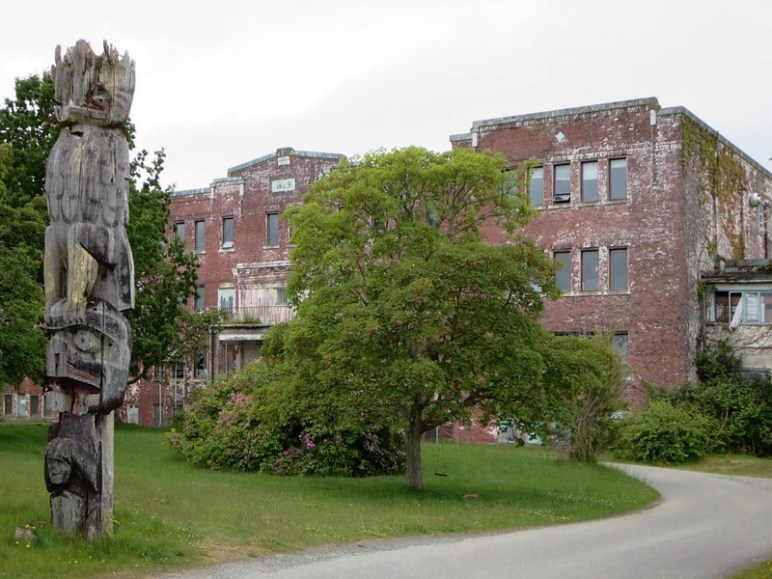
The story and the outrage began somewhat innocently, with a ground penetrating radar (GPR) survey of the grounds around the residential school in Kamloops, all part of a study by Dr. Sarah Beaulieu. The Dr. through her survey, then publicly identified 215 “anomalies” below the earth’s surface. The Kamloops band and the media enjoined everyone to believe that these “anomalies” could only be the graves of tortured, mis-treated and abused defenceless children at the hands primarily of the Catholic Church. The story echoed world wide. There were even comparisons to the Holocaust.

Three years later, most reasonable voices have walked back the language. However, there are those that hold true to the original narrative. People such as Grand Chief Stewart Phillip still portray the history of the residential schools as “deeply disturbing” and that it was all a “horrible chapter in the racist history of Canada”, and that the schools were a “brutal tool of genocide”. The Kamloops Chief Rosanne Casimir is no less inflammatory in her statements and states that anyone disagreeing or doubting some of the historical “facts” she says is merely evidence of the “systemic racism and white supremacy as foundational to Canada as the very Federal laws that ripped our children away from their families.”

The conclusive evidence of this “genocide” was believed to be in easy reach, it was just below their feet in those unmarked “graves”. So how has the evidence gathering been going you might ask after three long years. How much progress has been made in the recovery of those remains? I am being somewhat facetious, as everyone knows who follows this story– not one “grave” has been exhumed in over three years. To date the Band has spent $8 million (they will not outline or detail how that money has been spent) but clearly it has not been spent on trying to recover the physical remains– which again, are the central pieces of verifiable evidence of their case, and the single irrefutable forensic piece of the puzzle.

So what are they doing? How is the obvious first step in this type of investigation been ignored? That question is not really being answered. The Chief of course assures us that the people involved in the “investigation” are doing a “very credible job” and that “the investigation continues to be carried out in compliance with Secwepema laws, legal traditions, world views, values and protocols” and that they “…are deep in the investigative work”. She insists that it is all being done with a “multi-disciplinary” approach; using archival and documentary research and analysis, “truth telling with KIRS survivors… archaelogical and anthropological surveys, …potential DNA and other forensic methods”.

That all sounds quite sophisticated although I am at a loss to understand “world views, values and protocols” but in the end, the results of their efforts to date are still unexposed, or at least have not been made public.

Meanwhile, over these past years, a contrarian narrative is beginning to mount and some experts have become suspicious of the Indigenous claims. A number of qualified and esteemed scientists and academics are starting to press forward and their investigations are revealing some interesting albeit controversial opinions. They are being ridiculed, branded heretics and racists, for even suggesting a different story. Although simply calling people names rather that attack the findings seems too easy, it seems lazy.

Some of these counter narratives and alternate findings do warrant further examination. Even at the risk of being branded a dangerous dissenter. For instance, we have now learned that at this burial site, in 1924, a septic field was built for the school, which consisted of 2000′ of trenches, 3′ deep, lined with clay tiles and running in an east to west direction. The GPR profile of the trenches would present a similar profile to the detected anomalies, which in essence is measuring disturbances in the earth patterns. (It should also be noted that Dr. Beaulieu has not publicly produced her detailed report on the “soil disturbances”)

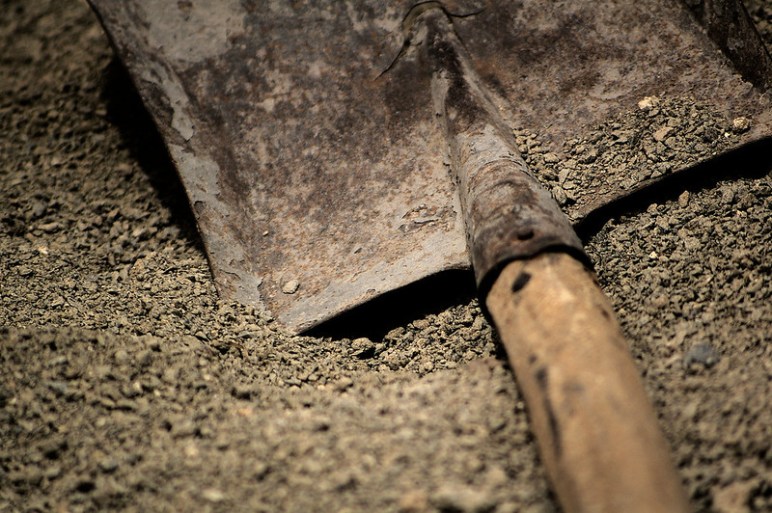
We have also learned that Dr. George Nicholas a distinguished professor from Simon Fraser University Indigenous Archaeology Program between 1991 to 2005; in conjunction with the Band, conducted a study of the area which in essence found little of particular interest. One “alleged juvenile tooth” which was found was later proven to be not a human tooth at all. In light of this program, the list of 215 anomalies had to be reduced down to 200; because they have now determined that 15 of those sightings were actually shovel marks from that previous study.

The most extensive detrimental evidence which has now come forward comes in the highly controversial book “Grave Error”. The book has been reviewed and reported in the Dorchester Review. (The Mayor of Quesnel was stripped of his budget, and barred from Committees because of his very distribution of the book –because of a complaint by the Lhtako Dene leadership).

The authors of the book gathered data from the National Centre for Truth and Reconciliation; the Library and Archives Canada; and the B.C. Archives Genealogy resources, for the period 1915 to 1964. In examining this data they found that 51 children were documented to have died during this period of time. They were able to find accounts for 49 of the 51. The cause of death was found in 35 of those cases. Seventeen had died in hospital, 8 had died on their own reserve from accidents or illness, 4 were subject of autopsies, and 7 were subject of Coroners inquests. Twenty- four were determined to have been buried on the Indian reserve cemetery and 4 on the Kamloops Reserve cemetery. This latter is the old community cemetery on the the other side of the Reserve near St Josephs church. Whether one accepts all, or any part of these numbers, one would have at least to concede that the findings do suggest that there was no ongoing effort of concealment or a hiding of these particular children’s deaths.

In addition in 1935 the Department of Indian Affairs set out procedures for the handling of deaths of students at residential schools. Upon any death there was to be an Agent present on an inquiring committee which included a doctor, and the principal of the school and that at one time the site would have had rudimentary grave markers that likely just disappeared over time. It is also now believed that the site might also contain priests and nuns who worked at the school.

So where does this leave us? When questioned about any excavation of the site in March of 2024, the Kamloops Chief will only say that it would be a “sensitive step”, and that they are still working on the “oral tellings”. Apparently they are still content to listen to decades old recounts of the things that happened at the school, stories which under normal circumstances have a tendency to to distortion, augmentation, or inaccuracy. All the while the only true indisputable evidence represented by the bodies lay beneath their feet.

Depending on how one measures the dollars being spent, this is also proving to be a very expensive “investigation”. The Band states that they have now spent $7.9 million on the investigation, but if you include periphery expenses, there is the $3.1 million for the Student Death Registry, and a total of $238.8 million for the Residential School Missing Childrens Community Support Fund, which expires in 2025.

In all fairness, there would seem to be little doubt that the schools were in fact set up to assimilate the Indigenous culture; however there is mounting evidence that this was not a conscious effort to eradicate cultures and customs. And lets face it the Catholic Church, has come under heavy scrutiny in the last number of years for the behaviours inside the Church and under the cover of religion. However, the residential schools as cultural genocide, as the Indigenous claim, seems very much open to debate. However, to date, no debate is to be allowed. No accountability for the findings and the monies being spent are being asked for or demanded.

So is this an investigation or is it a story? The popular and current narrative is definitely needed by the Indigenous to underline and stir the flames of a move to greater political power and financial independence. Is it possible that to maintain the story and its credibility that there has been a conscious decision not to excavate for fear that it would damage the story that lies at the heart of their claims? We will never know unless there is some level of accountability, or someone on the inside deems to come forward. Is it possible that no excavation may ever be done, as has already been proposed, that it simply become a memorial site? If that happens, you can be assured that this was never an investigation, nor was it ever intended to be one– that this was just a story, in fact it may have even been a fable.

Photo Courtesy of Flickr Commons and David Stanley – Some Rights Reserved

Another change in Seasons…

As we head into Fall and wind down from summer, it inevitably seems to be a time of imposed reflection. Fall traditionally signals an ending, a time of maturity and incipient decline. This Fall though there are some unusual stirrings in the political winds of Canada and to a certain extent around the world. It could prove to be a welcome breeze, especially for any person involved in policing or involved in the legal system.

Some pundits including Time magazine have called 2024 the “year of elections” . The results in many countries seem to reflect a growing conservatism amongst the democratic countries, a swing away from the socialist progressive agenda. This is fuelled in large part by the realization that there is in fact a defined need for the police, that there is room in a democratic society for enforcement of the existing laws. There is also a desire to remove the politics out of the governmental system and oversight of the legal arms of society. Unlike years past, this time, especially in Canada, the move to a more conservative ideology may be more long lasting.

Now, before those positioned on the far right of the spectrum get too excited, a possible swing to the right is in essence, in Canada, merely a move to the centre. It only seems drastic and is being portrayed as momentous merely because of the fact that the pendulum was so far left for so many years. That being said I do believe that the vast majority of Canadians would like to return to some sort of common sense middle ground. This shifting in sentiment is often hard to discern or measure, often disguised by the fact that they are such small incremental steps. However, it is becoming much clearer that the issue of law and order has once again risen to the top.

I live in Vancouver British Columbia, the wellspring of inanity, where we learn of another grotesque criminal act on a daily basis, for the most part being instigated by the homeless, the mentally disturbed and the drug addicted. The latest was another stabbing, in broad daylight and with no motive. One male stabbed to death, another male knifed and actually had his hand severed from his body. It was perpetrated by an individual who could be the poster child of the wrong headedness of our court system, another too familiar example of where the combination of mental health and criminality collides forcefully and is played out on public streets in broad daylight. All while citizens look on or stop to record it on their phones. This latest suspect male had over 60 encounters with the police, was on probation, and had a history of assault and assault causing bodily harm. His current probation conditions was termed as being “soft”.

The story fomented the usual media hype, the Mayor coming out quickly to assure everyone that this is a “safe city” –when those of us that live amongst the daily visions of unbridled mental illness and drug abuse clearly know better. The Vancouver City Police Chief Adam Palmer when sharing the podium, seemed exasperated and in his statement gave a not so subtle hint that the suspect should not have been out on the streets. The media as usual called for instant solutions to undo the years of policy mistakes, the biggest mistake being the closing of the local psychiatric hospital “Riverview” in 2012.

In the Vancouver and British Columbia political establishment the leaders are clearly taking note of the growing public discontent and it is now looming as the single most important political election issue. Along with this is that in British Columbia there has been a dramatic up-ending of the three political parties in the Province. The Liberal Party (who re-branded themselves the B.C United), they, who were the power brokers for many years in this Province, have simply given up; they have literally withdrawn from the next Provincial election scheduled for November 2024. They have surrendered the proverbial ghost and have freed their candidates to wander away into obscurity or go join the Conservative party. This leaves it a two party race, which is polling now as a neck and neck battle between the governing NDP and the Conservatives.

The upcoming election, if nothing else, will allow the voters to distinguish between two distinct policy groups, the socialists or the conservatives, and should therefore provide a more accurate glimpse of the mood of the people. The Conservatives are predictably running on a platform of law and order and a greater move to private enterprise. They are in essence saying that they want the government to get out of the way. The NDP whose party base are traditionally the victimized and marginalized groups (you pick the group), the unions, and any and all members of the “learned” left. These “progressives” have the added advantage of massive support from the current media establishment, the Indigenous, government workers and the academic institutions. The NDP are remaining true to their ideology and are sticking with policies of all people being part of, by necessity, a fulsome government oversight apparatus. It has been a long time since there has been such a clear choice for the people going to the ballot box and currently it seems be an even battle.

It is always fun at election time to watch all the candidates feel bolstered and sharing their insights on all of the evident problems and the clear solutions that lay ahead. Solutions which they did not see while in power but have now attained a greater vision when in sight of a ballot box. What is equally clear is that it is always someone else’s fault.

When talking about crime and rampant lawless behaviour, the Provincial NDP who have been in power for the last five years in British Columbia (the California of Canada for all you Canadians who live in the east) quickly point to the Federal Liberals as the problem. And to be fair, the Feds are the governing body when it comes to the Criminal Code. The offended Feds in turn point back at the Provinces because they are in charge of Health Care and the current sitting Judiciary. The Provincial leaders then rebound and point the accusing finger downward to the cities as they are responsible for enforcement. Three levels of government, all with no defined action plan in terms of the daily carnage on the streets and apparently unable to find any solutions while in power, now telling everyone they now know the way.

As we in the West look eastward, Alberta has always been Conservative and the Prairies are very similar. Doug Ford in Ontario is now trying to get a Conservative election victory prior to any Federal Election. Newfoundland is the only true vestige left of Federal Liberal supporters.

The Federal NDP and their illustrious shrill leader Jagmeet Singh dramatically announced that he is “ripping up” his prop-up agreement with the Federal Liberals; while at the same time vowing not to be rushed into any confidence vote. It would seem that he has finally realized that the Liberals are circling the drain and he either goes down with them, or finally leaves the safety of the Liberal cocoon for the less than safe seats of his own party. His ratings are below Trudeau but he is hoping his chances will improve with a continuous socialist rhetoric of corporate greed. He is hoping that someone out there actually agrees with him, but his chances of disappearing altogether is growing. The policing fraternity are hoping that the NDP policies disappear with him.

Now Trudeau himself is another story. His actions to date only raise questions for me. As he reads the latest polls and gathers his troops in Nanaimo this week, is he being driven by pure ego? Does he think he can spend his way to a rise in the polls and another minority government? His strategy for a possible re-election is singular. He will continue to try and and will have to make Polievre turn into Trump.

Polievre for his part, will continue to try and avoid any major guffaws and keep his newly coiffed hair and refined look in place. He has to walk a fine line, because he certainly is not going to get any votes from the public service or those that depend on government contracts. The same foes of the BC Conservatives are the same foes for the Federal Conservatives. Let’s face it, what are the chances that members of the CBC vote for him?

Of course there is not a strong enough wind to blow all the usual problems off the headlines and the teleprompters of our television talking heads. In terms of specific policing issues, in the next few months the Surrey RCMP and the Surrey Police Service will continue to dominate the local BC headlines with the snail like place of getting officers on the ground and the equally slow moving RCMP in getting their officers out. The Indigenous will continue to dominate headlines with further demands and true to form, just recently tore up their latest signed agreements for a natural gas pipeline with TC Energy. There is little doubt that the RCMP will once again be manning the barricades in northern B.C.

Back east I have a growing interest in the Bill Majcher case, charged as he is with foreign interference and there are some interesting parallels to the Cameron Ortis case. There is a good chance that CSIS and the RCMP INSET (Integrated National Security Teams) may look bad on this one as they continue to struggle to be a meaningful service amongst the Five Eyes. So we need to keep our own eyes on that one. Their is evidence now coming forward that Majcher was throughout several periods of time , actually working for CSIS.

In a more general sense, the Mounties in Ottawa will continue to find themselves in an environment of increasing public suspicion. They seem to be floundering in terms of leadership and in finding their true reason(s) for being. The larger overall problems have been years in the making and it will be years in the undoing. They will however, continue to do what they still do best. They will apologize somewhere. The most recent was in Nova Scotia where they apologized to the African Nova Scotians for “historic” use of street checks.

There will be the usual public government pronouncements, the Federal government employees will continue to protest having to go back to work 3 days a week and will come up with any inane excuse they can find. Housing prices will stay the same, inflation will continue to hover around 3% and mortgage rates will have little effect on the supplies of housing. The media will continue to pump us full of doomsday proclamations; headlines about droughts, floods, fires, heat, cold, or anything they decide is “record breaking”. Our traditional news sources will continue to be decimated and their managers will continue to replace long time journalists with persons who are quick on the keys to Instagram, and Substack. Ukraine seems to be in military limbo and Israel seems to heading into the same horrendous stalemate in Gaza.

However, life will go on. Get ready, get your thoughts in order and be a little hopeful, as it is never as bad as it seems. Its only an ill wind that blows nobody any good.

Photo courtesy of Jeannine St- Amour via Flickr Commons – Some Rights reserved

Just get out of the way!

One of the early founders of modern management theory, in the 20th century, was Peter Drucker. A widely popular and respected academic who coined such terms as the “knowledge worker”, and explored in his books and articles, how humans are organized, across business, government and non-profit entities. He was the leading edge of the massive growth of whole schools of business managers and professed experts in the world of management.

There are of course drawbacks to what has become an obsessive need to create the “perfect” manager. But Drucker forseaw also saw a bit of the future when he wrote about misguided or “over controlling managers.” In a recent article in the Wall Street Journal another author points to the fact that, “workers are most often productive when their managers leave them alone”. It was entitled: “Bosses, get out of your Employees Way”. Both the Wall Street Journal and Drucker wrote about the characteristics of managers who are not working well; too much meddling, too many meetings, and “butt covering” reports.

In the world of politics, there are countless examples of how things go wrong when the politicos and the senior bureaucrats get together, often leading to massive and costly dysfunction. It is almost always the taxpayer and those workers that are at the lower echelon who bear the brunt of their decision making.

One should look no further than the recent ongoing saga of the Surrey Police Service and the Mounties; and in particular the influence of Surrey Mayor Brenda Locke.

In the Brenda Locke/NDP fiasco in Surrey, Mayor Locke fought what seemed to be an obvious policing outcome for 18 months and wreaked havoc on any possibility of a smooth and cost effective transition. She was the ultimate hypocrite, having voted in favour originally of a municipal force, but then deciding for pure political reasons, that she was going to fight it at every step of the way. She clearly demonstrated time after time, that she had no real grasp of the logistics and the day to day running of police operations.

Most Mounties, if being honest with themselves know that the RCMP have simply lost their way, maybe temporarily, but currently they are struggling on every level. They can no longer fulfill their mandate nor their Provincial contracts with any degree of certainty. They also know that the writing is on the wall, in that the Ottawa mandarins themselves want to go to a Federal police force; they no longer want the headache brought on by Provincial contracts. It will take years but that is clearly the direction they are going. They want to be the Canadian Bureau of Investigation.

Despite all of this, Brenda Locke was supported by the upper echelon of the Surrey RCMP Detachment and the managers of the National Police Federation union in her personal fight. The senior executives in that Detachment played silly bugger, in the faint hope that their puppet Locke would do their bidding. The Executives did not want to be pushed out of their biggest detachment and the union did not want to lose a significant number of their members. They fabricated their capabilities and they obfuscated the costing formulas in an effort to convince Locke that they and the Ottawa RCMP establishment behind them were the answer to Surrey’s policing issues. Somehow, they also convinced Locke that the Police Act did not trump her authority as mayor. In the end she had to do the dance of the damned. Millions of taxpayer dollars later, the Mounties are now getting ready to leave en masse, and the inevitable transition can begin. They have become the poster child for incompetence in police management.

However, there is a clearer example of when senior managers need to get out of the way and in this example the RCMP authored it themselves. It is the recent report on the James Smith Cree Nation killings in September 2022. It is what came of their internal review of those tragic killings. Interestingly, contrary to their normal practise they decided to release it to the public. (There is no need to comment at this time on the credibility of a report where the Mounties are judging their own actions). In their summations, true to form, nothing was done improperly, but in clear nouveau government speak said that “certain areas of growth were identified”. They said there were times where it was “unclear who was in charge”, and that it became confusing at times between their “three lead commanders”. That there aircrews were sometimes “flying with little purpose”. Let’s also put aside the oxymoron of “three lead commanders” and the fact that apparently the police were flying around with no goal in mind.

The response to the killings was for the most part handled properly. I believe the members on the ground did the job, like they did in Portapique . Although it may have been mayhem at the time, the job did get done, but with a large human cost.

The senior executives of the RCMP however, seem to never learn the basic lesson that should be taken from an Nova Scotia inquiry and the report now written in Saskatchewan. That lesson is that Senior managers in policing when it comes to urgent, time-sensitive and drawn out operational circumstances need to get out of the way. I have written many times, that in these types of situations especially, one needs to flatten the organizational pyramid and get rid of these gatherings of senior executives in these “Command Centres”. Transfer the decision making to the folks on the ground. I should also point out that my thoughts on this would not be popular in the current management teachings now being constantly extolled.

There are a couple of reasons I believe this to be the case, and it may go some way in also explaining the obstinance of the senior managers to accept any change.

First, in a para-military structure, which all police departments are, decision making is predicated on the thought that the higher the rank, the greater wisdom and experience and with it comes power. Under the current system of promotion and advancement in the RCMP and all police agencies, it can be easily argued that this is now not always the case. For the last couple of decades the process of advancement has been deeply flawed. The best and the brightest are not necessarily rising to the top and experience on the job is not the highest priority. It has been replaced by executives now given more credit for the ability to speak the lingo of government, the speech of political correctness, inclusion and diversity. They spend multiple years getting to that top, constantly trained in the appropriate messaging, spending more time in boardrooms, with white boards and group-think, mission statements and community policing modelling. In many ways they have to be political, we insist on it, and we have allowed many police agencies to become organizations only reflecting their government pay masters.

Secondly, the route up the ladder in policing means you leave the front lines, you become administrators, you are involved in policies and guidelines. You are removed from the day to day issues and the speed of operations, sometimes these individuals are many years removed. It attracts a certain type of personality to these roles, it certainly doesn’t attract those that joined policing to be “operational”or work on the front lines. The organizations are now structured in such a way, that if you want to stay “operational”, you simply can not go up the ladder.

In exercising their senior manager power, they now seem to have only one solution. Their solution, seemingly like all government departments, is always the call for more resources, greater supervision and a larger bureaucratic machine. The policing world itself has undergone a massive transformation in the last 30 years; the operational pyramid has been completely turned upside down. What used to take one person, now takes three, four, or five.

It should therefore come as no surprise, that in the Saskatchewan report they have decided that in the future, in their Division Emergency Operations Centre based in Regina, that they will now add a Flight Co-ordinator, a criminal analyst, and a major crime investigator to their list of senior executives. More bodies, more needed lines of extra communication.

When you have unusual or atypical criminal circumstances, like a Portapique or James Smith Cree Nation situations, paradoxically–the police put in charge decision makers who usually have been removed from operational policing, have only a cursory knowledge of the geographic area, the police personnel involved, and the makeup of the people and resources in that community. They now come from a world where split second decision making is not of the essence. They have to be briefed, establish more communication lines, and then set up their “command structure”. It is time consuming, confusing and it is needless.

So my advice in the end remains the same. Give the people on the ground the resources that are needed. That should be your only role. Harder yet, relinquish the power, but most importantly— get the hell out of the way.

Photo courtesy of Flickr Commons by aaron_anderer -some rights Reserved

Ronald MacDonald wants to go to court more…

Of course the title of this blog is not referring to that icon of our childhood, the “… Happy Hamburger Clown” of Golden Arches fame; although he has had his legal issues too (he was sued civilly for promoting child obesity.) No, this is in reference to Ron MacDonald, the current head of the Independent Investigations Office (IIO) for the Province of British Columbia. This is the group, with an annual budget of about $10 million, that is mandated to “conduct investigations into police-related incidents resulting in death or serious harm to determine whether any officer may have committed an offence”. There is a general consensus growing that the group is in trouble, it is not fulfilling it’s mandate, in fact many say they are failing and failing miserably. Mr. MacDonald himself has recently been speaking out on his own frustrations.

The police could not and should not investigate themselves was the repeated slogan coming from those of the political left of centre a number of years ago. It stirred the politicians to act in September of 2012. Like most political policy, it was the result of a political reaction to a rather immature and naive understanding of police wrongdoing. The theme had been pushed forward by a vocal minority, which in turn was then given an audience by the Davies and Braidwood inquiries, which looked into the deaths of Frank Paul and Robert Dziekanski respectively.

Paul was a 48 year old Mi’kmaq who Vancouver Police officers tried to book into the “drunk” tank, but they were turned away when the on duty Sgt said that he had only just released Mr. Paul, two hours before from cells and he wasn’t going to book him again after such a short period of time. So the officers took Paul away and returned him to the downtown alley. He was clearly still intoxicated and he subsequently died of exposure and hypothermia in the alley. However, after a total of five Crown reviews of the case, all concluded that “charges were not warranted” against the Vancouver City officers involved.

Dziekanski was a more widely reported incident where police responded to a disturbance in the Vancouver Airport, when Dziekanski a Polish immigrant who had just arrived, was wandering disoriented around the terminal and then began causing a ruckus. Four officers attended and tasered him saying they felt threatened. Dziekanski died of heart failure. The four officers believed they were both justified in their actions and within the limits of their training. Some of the officers were charged, but not for the death, but for perjuring themselves during the Braidwood inquiry. Judge Braidwood at the inquiry conclusion said that the officers “didn’t intend to cause his death”.

So what prompted the birth of the IIO was a political demand, which used as it primary evidence two cases– both of which showed there was no wrong-doing on the part of the police.

Irony aside, the first IIO chief was Richard Rosenthal, who left the job early to return to the world of academia and probably did not leave the best impression. He was then succeeded by Mr. MacDonald in 2017. MacDonald came from the legal world, he was a defence counsel for 6 years, and then a Prosecutor for 17 years and had a distinguished record. All of which makes his recent comments a little more perplexing.

In short Mr. Macdonald is now making a case and has gone public with his concerns about the lack of charges being approved in the IIO cases that were presented to Crown Counsel. What prompted his comments seems to have been, once again, a political reflex to some media pressure centred around two Indigenous cases.

One case involves a 38 year old Wet’suwet’en named Jared Lowndes, who during his arrest the police had to use a taser, a police dog, and then after ramming his vehicle, he was eventually shot in a Tim Hortons parking lot. The Crown in that case concluded and stated that they were “unable to prove that officers committed any offence in relation to the incident”.

The second case involved Dale Culver, a Wet’suwet’en and Gitxsan indigenous male who during his arrest was pepper sprayed and punched when checked by police who were answering a call where it was alleged that he was “casing vehicles”. During the course of their investigation the IIO went to three different pathologists all of whom identified the primary cause of death as “tiny blood clots in lungs”, but that the blunt force trauma by the officers was a “contributing factor”. The IIO felt that the officers should have been charged based on the “contributing factor”. The Crown in their review went to a fourth pathologist, who identified the cause of death as being “cardiac arrest due to the effects of methamphetamine”. So after seven years, the officer was given an absolute discharge.

During this time, the officer’s career has been put on hold and he had been subjected to death threats. The Union of BC Indian Chiefs, who clearly feel that they have not only the right to disagree and inflame the issue, but also feel that they should be the ultimate arbiters of any criminal case involving their own, issued a statement saying: “We have a system that says when you have a gun and a badge, you can kill any Indigenous person in any town in B.C. and not go to jail”. The stupidity of the statement went un-challenged by the government.

Mr. MacDonald regardless of whether these particular cases motivated him, says the system isn’t working. He tips his political hand a bit though when he states the people have “lost faith in the system..in particular Indigenous communities.” He may have lost faith, but far be it for me to point out to a lawyer an obvious truism. The Crown has always operated on the premise of “substantial likelihood of conviction”. They have a legal need to prove a case of guilt “beyond a reasonable doubt”. Does Mr. MacDonald not see the reasonable doubt in the Culver case?

The IIO has been on shaky ground since its inception. The mandate given from the beginning was much too broad, and this was pointed out even by Rosenthal in his departure. He said at the time that it was going to cause a backlog of causes when there was no ability to “triage” the cases.

There was also a large problem in the staffing this organization. The government of the day said that the overall intention, once established, was to have all “civilian investigators”. Remember the police could not be trusted in their theoretical framework. So they limited the ability of ex-officers who could apply, especially those from B.C. If you carry this logic forward, the thought was that investigating an “officer related shooting” did not require any policing experience or knowledge of police operational structures.

There were also internal problems in the beginning, which seem to be continuing today. In 2015 there were investigations into allegations of “bullying and harassment”, allegedly due to the culture clash from hiring former police officers. During this time 17 investigators, and five non-investigative staff left the organization, only a couple of years after its inception. Flash forward to 2023 and Mr. Macdonald began speaking out and complaining of the lack of investigative resources. By then there were only 19 investigators working and 17 unfilled positions. To add to the resourcing problems, officer related shootings had increased by three times from the previous years.

The IIO in 2023 had been called in 232 cases, of which 193 led to further investigations. At the time of the article, they had 90 open investigations involving 38 deaths. In 2023, 50% of the staff were still ex-police officers and Mr MacDonald and his management staff were in turn being internally and publicly accused of bad behaviour “which created a hostile work environment… with their “belittling behaviour”.

So now in 2024 Mr. MacDonald’s has further complaints which he recently took to the air waves on the local radio station CKNW. Mr. Macdonald is now complaining about the lack of charge approval which he says is leading to a failing in “police accountability”. In the last five years, the IIO has recommended 39 cases for charge, and only 18 were approved for charge. Even more startling is the fact that since the IIO inception in 2012, only 15 cases reached the court stage, and there were 0 convictions. There was no mention of the length of time for these matters to get through the court process, which the IIO is hesitant to speak about, at least on their own official website.

If one assumes these stats to be correct, there are only a few possible answers to Mr. MacDonalds problems. One being that cases without merit are being forwarded, or the investigations being forwarded are flawed and incomplete; and simply do not meet the charge approval threshold. Or b) the process itself is not working. If it is the former, then it also may be possible that in the vast majority of cases the police are in fact innocent, and simply doing their job and doing it properly.

If it is “the process” then there are significant layers to that problem. Understaffing is clearly one of those problematic layers, as there is no possible way that you can take on every referral with such limited staff and capabilities. So you need to cut the mandate or “triage” the files more expertly as was suggested by Rosenthal.

You also need to forget the “civilianization” of the investigative team. You need to bring in ex-police officers with high levels of expertise and with significant standing amongst other current police officers. They are out there, but you need to go and find them. Building credibility is absolutely key and they have not done that since their inception. Currently the IIO is fighting the police forces, or specifically their unions on two fronts; on the access to police notes and in the area of “lethal force experts” –who are usually ex-police officers brought in to testify. They should not have to fight these fights, and better quality investigators with greater credibility will go a long way in working through those issues.

The problems within IIO are not new. They are similar to the problems which in more recent times arose from the “de-funding” era. It is a fundamental failure in common sense. The IIO mandate and their make-up is clearly flawed and has been from the beginning. One may even have to conclude that the best people to investigate the police may be the police themselves. Whether the public perception changes and the media narrative becomes less inflammatory towards the police, or whether the government understands this, is quite another matter.

Photo courtesy of Flickr Commons by David Jackmanson – Some Rights Reserved

To Dig or not to Dig…

The field of policing is rich with irony and the irony in this story will become readily apparent with the telling. The subject of this blog, besides being ironic deals with the more precise issue of when politicians feel the need to interfere with police investigations and judicial processes. It is an obvious fact that politicians have a dangerous habit of dabbling in investigations. When they undertake something they are not supposed to do, they always remember to preface their actions by extolling the virtues of an independent investigational arm, one free of influence or interference, and in compliance with the Canadian constitution.They even boldly proclaim that in no way would they be associated to any strong-arming of the police to meet any political agenda.

The Federal Liberals seem to have reached a new low in terms of maintaining a pretence of an independent investigational arm. The Emergencies Act was a recent example where the politicians not believing what they were being told by the police, in fact not even asking the police, took arbitrary actions to to rid themselves of those politically embarrassing and unruly western outsiders. They self-declared them radicals and terrorists, in essence, to bring in and legally support the Act itself.

Currently in Manitoba, at the Prairie Green landfill site just outside of Winnipeg, the Federal government, the Assembly of Manitoba Chiefs, and the relatively new NDP Provincial government led by Indigenous Premier Wab Kinew have decided that they needed to get involved in a police investigation and a court process. They are telling the Province and therefore the Police that they need to excavate the site to possibly recover two missing Indigenous women, both believed to have been murdered. It would seem like a simple ask, but of course, the facts are a little more complicated, especially from a homicide investigators perspective.

Earlier, a Federally commissioned report said that any excavation of the privately held landfill site, which contains 712 tons of asbestos, a significant health hazard, would require an examination of 60,000 tons of material to be searched and that it would cost in the area of $184 million to complete. A massive expenditure for any level of homicide investigation. The search, as indicated earlier, was to be focused and based on the possibility of the bodies of Morgan Harris and Mercedes Myran having been disposed in the landfill site by the suspect. The search was also not “guaranteed to succeed”.

Logistics aside, the most relevant factor in this discussion is that Crown counsel has already layed four charges of 1st degree murder against Jeremy Skibicki, 36, for the killing of all four women. The jury trial is in fact set to begin in April 2024. In other words, the Crown and the police are ready to proceed without it being necessary to find the two bodies. An experienced guess would be that the police and the Crown have some form of confession from Skibicki before approving and now proceeding with those charges. So the excavation of the landfill is not necessary to proceed criminally, and therefore the best argument that remains for carrying out this massive examination of the landfill site is that of giving some sort of “closure”. The Manitoba government, who have legal jurisdiction had decided that the cost and the health risks involved did not warrant excavation of the site. Of course that is not where the decision ends.

The debate to exhume the landfill site has gained significant media coverage– only and simply because this is an indigenous issue. The local Indigenous have been vocal, protesting, tying it to reconciliation, saying that the government is systemically racist, and joining it to the perpetual conversation that emanates from the Missing and Murdered Indigenous women and girls Inquiry. They have a website and two separate protest encampments set up demanding the site be excavated.

The Liberal political hacks in Ottawa, sensing opportunity, echoed their support for the Indigenous protest group, and a day after the new Premier Kinew was elected, the first Indigenous Premier, miraculously announced $740,000 for the Long Plain First Nation to do another feasibility study on possible excavation of the landfill. The Assembly of Manitoba Chiefs then teamed up with , Investigative Solutions Network (who advertise themselves as “North Americas Leading Private Security and Investigative Services firm), and a company called Maskwa an Indigenous business which specializes in training for “emergency response” and offers “training services”–and together they issued a clearly self-serving feasibility report.

They now estimate the cost to be half of what was previously suggested, that it would only take $90 million, and then in small print say that the figure could go up. This also based their estimate on the work being completed in one year, a rather unlikely scenario. Their report demands “intervention from both the Manitoba Premier’s office, and the Federal government to close gaps and bureaucratic systems to ensure “immediate funding” for an excavation of the site. Their conclusion– if the funding was not provided, that by not going ahead: that it would “risk setting precedent that would be serial killers fixated on killing First Nations women are left with an impression that not only will the bodies not be recovered, but the inaction will effectively obstruct recovery of victims”. Their reasoning is clearly flawed and clearly the authors have no idea how killers behave or seek out their victims.

The Feds when they filed their initial report stated that it would take at least 6 months to prepare and train staff before they began the excavation; cost them $1200 a day for an anthropologist, $1800 a day for elders, search technicians, and up to $3600 per day for a project director. Make no mistake, any search of this scope would be, for some, a very profitable business undertaking.

The proponents point to the successful excavation of the Pickton pig farm in Coquitlam, British Columbia as an example that they could follow. Just for the record, the farm in that case was started in February 2002 and went into November 2003, cost about $70 million, and there was a possibility that there was evidence of 49 women having been killed there. There was no asbestos at this site.

Meanwhile, on the far side of the country in Kamloops British Columbia, at the site of the Tkemlulps te Secwepemc residential school, ground zero for two years of allegations of “cultural genocide” and the site of where 215 children are allegedly buried in a “mass grave”– not one piece of earth has been moved. The site which spurred headlines around the world, where ground radar examination was heralded and duplicated in many sites around the country, the site which spurred flags at half mast for over six months, and led to the Federal government ponying up $320 million for future explorations — not one shovel has been put in the ground. So the evidence which could be laying 3′ to 6′ underfoot, and an investigation which is in the hands of the Band itself (The RCMP have embarrassingly, but at the same time brilliantly, washed their hands of the investigation) –nothing has been done to forensically examine and identify the “victims”.

To be fair, the Indigenous groups in their public pronouncements have since the allegations began, walked a long way back from the initial cries of “mass graves”, which stirred up images of murder and chummed the media. They now talk about the “physical, sexual, psychological, and emotional abuse” that was unleashed on these children. Despite some mellowing of the narrative, at the same time the Justice Minister is considering a recommendation from the Special Interlocutor Kimberly Murray. She believes there should be laws brought in, to make it a criminal offence for residential school “denialism”. She compares it once again to the deniers of the Holocaust and feels that people should be charged criminally for “downplaying what happened in the institutions”. She called denialism the last step in “genocide”.

There are many members of the Band that never want an exhumation of the site, but Chief Casimir has said that they are now beginning to do “some of the archaelogical work” some two years after the fact. It seems that it is becoming increasingly obvious that the Kamloops site is not about exhumation, nor about investigation. It is about preserving a specific and particular narrative. The site in Winnipeg is being sanctioned because it is a continuation of the narrative. If and when you forensically examine a site is clearly a political decision in this country in these two cases, not an investigative one.

I am sure you can see the irony now.

Photo courtesy of Flickr Commons –Some Rights reserved

The Killings at James Smith Cree Nation…

If one ever wanted a clear picture of the utter desperation and the scope of problems facing First Nations in this country, one only needed to follow the coroners inquest that has just finished up in Melfort, Saskatchewan which was looking into the slayings at James Smith Cree Nation.

Unfortunately, but predictably, the recommendations coming from it are more reflective of our current political progressive climate, and less about the core issues. For the most part they missed the mark. We can not possibly be surprised, being that this is the age of the “victim”, this is the age of blaming, of never look inward, of instead pointing at the “system.” Let’s be honest, the Indigenous leadership in this country have turned victimization into a professional art; one which they have effectively practised at every opportunity. Their constant themes of cause and effect are always the same, then continually repeated, and the outcome sought is always the same.

Simply put, the James Smith Cree massacre is the story of a single individual with “psychopathic traits” and an “anti-social personality disorder”, a personality sculpted by abuse and crime, exposed to alcohol at the age of 13, and not soon after, transitioning to cocaine and methamphetamine. On one particular day this violent psychopath decided that he wanted revenge for some ill-defined wrong, and was also mumbling on revenge against the “Terror Squad” (part of the extensive group of Indigenous gangs that have proliferated throughout Winnipeg and Manitoba). So on September 4, 2022 after guzzling back some liquid courage with his brother, then went on a killing rampage–starting with his own brother.

Myles Sanderson had 78 previous convictions between 2004 and 2019 and at the time of the killings was “unlawfully at large” and as an occupation was dealing cocaine on the Reserve for three months prior to the killings. Most recently he had been serving five years for assault, robbery, mischief and uttering threats. In 2021 when seeking parole, he was considered an “undue risk to society”, but later in August of that same year, was still given statutory release, having served 2/3 of his sentence.

Four months after that release he was found once again in breach, re-arrested– and then in February 2022 released again.Throughout his prison life, his get out of jail card was that he was treated as an “Indigenous offender” therefore someone that the courts have been directed to deal with differently; not like other Canadians, part of a special group who had suffered “generational trauma” and through no fault of his own was one of the over “represented” in the Criminal court system. Geraldine Arcand, an elder employed by the Saskatchewan Penitentiary testified at the inquiry, about having given him his first “healing plan”.

Myles Sanderson and his wife had moved back to James Smith for the stated purpose of dealing cocaine. Despite all these efforts at understanding and empathy and despite all the socialized efforts at reform– that night he went out and killed his brother Damien, and then stabbed 10 others to death– and in the process wounded 17 others. He leaves behind his common law spouse, Vanessa Burns and their five children. At the inquiry she testified to having suffered 14 years of domestic abuse, and having reported him 12 times for domestic violence. Her suffering wasn’t over with his death, Myles on that dark day, also killed her father during the rampage.

After the killings, Myles went and hid in the nearby woods for 3 days and 7 hours. He subsequently died in police custody, after driving into a ditch in a stolen vehicle while being checked by the police. There will be a separate inquiry later this month concerning his death, because we are just as concerned about the police behaviour during his arrest, as we are of the massacre that Mr. Sanderson had perpetrated.

So this Coroners inquest, headed by Blaine Beaven, with six jurors came up with 14 recommendations, and then the Coroner added 15 more for consideration. Can you guess at what was recommended? They quickly went to the usual blaming template, aiming at all levels of government who are within easy reach. They declared that they needed “More programming and resources for offenders”..”more collaboration” (between the various agencies)…”more resources for prisoner integration”…”changes to how the RCMP deal with wanted suspects”…and in this case there is the need to “hire more elders” for the jails.

The Saskatchewan government for the record, as is also easily predictable, is “supportive” (of the recommendations)and added that they are so on top of the needed action that “some are already being implemented”. The Saskatchewan government says it wants to see more “crime reduction teams” and the RCMP for their part says it wants “greater communication”. The National Police Federation, representing the Mountie union, want “$100 million” more dollars to fund 300 more police officers, 138 of which would be there to “supplement First Nation policing resources”. (It is currently estimated that Saskatchewan is running 10% short in staffing, and an additional 7% from “soft” vacancies such as maternity leave etc.)

Another constant theme was brought up by Chief Peter Chapman who pushed for First Nations policing, which seems to be now referenced as “self-administered policing”. Chief Burns echoed his fellow Chiefs thoughts and also talked about the need for further funding of their own policing service; a police service that would be “suitable for our people”. This was followed by the usual complaint about no support and not enough monies coming from the Federal government.

Would having their own police service stopped what happened at JSCN? Would further funding and recruiting of Indigenous officers by the RCMP as Assistant Commissioner Rhonda Blackmore suggested have stopped Myles Sanderson? Would more “elders” in the prison system, more “healing plans” stopped Myles Sanderson? Would increased programming for inmates stopped him? No, of course not, Myles Sanderson was a psychopath who on that particular day was “triggered”.

All governments in Canada, Provincial and Federal are going down the road to Indigenous policing. They all agree that the 600 First Nations in this country should all have their own police services, not to mention their own laws and outcomes.

Small town police departments in this country has been fading and dying out throughout this country for many decades now, as the size and cost of policing has grown to greater and greater proportions. Practically speaking few are left because of the financial costs alone; now roughly estimated to be about $200,000 per officer per year in terms of salary and support; without adding in the costs of the initial infrastructure that is needed. Small town and village tax bases can not support this level of expenditure, it is simply economically un-feasible. Then add in the major issues of retention, staffing and training and the prospect of having multiples of small independent forces becomes patently unreasonable.

Another serious consideration is who has and can exert political control of small departments, where the officers are policing their friends and relatives, and thus opening up of the opportunities for corruption. The sole reason for having a smaller police unit in any town or village is that it is more accountable to locals, and that it can be then “tailored”. There is no other attributable reason. There is no hiding the fact that the Indigenous want political control of the police force and simply disguise it as being more “culturally sensitive”. They also don’t have the normal financial constraints, they argue that the Feds and the Provinces just need to give it to them.

Our current crop of political leaders throughout this country apparently agree, and therefore believe a separate police force, or many separate police forces, in often isolated and uneconomic regions of this country are needed as some form of twisted reconciliation logic, and they are also o.k. with the Canadian taxpayers funding it. One needs to understand the numbers.The politicians believe that the 3,394 reserves and 600 First Nations, should all have their own policing units, or “police administrations.” That 331,000 Indigenous living on Reserves, with an individual average reserve population of 600 people, should have their own individual police force to enforce the laws in a way, that is more suitable to their culture and their community needs. The costs, the jurisdictional issues, and the very ability to function under these circumstances runs counter to current police management theory which aims at integration, specialized services and shared costs. This Indigenous model simply defies logic.

This is not to denigrate the individual officers who may be currently involved. However, the thought that a police officer, from a very small community, who will do doubt be related to many that he is to police, someone who will be subjected to the volatile politics of Band councils, will somehow be able to manage and enforce the laws in a fair and equitable way, is a difficult if not impossible task. The RCMP used to move officers every 3-5 years for the simple reason that there is a tendency to become co-opted, because familiarity breeds and leaves one open to the vagaries of community politics and can call into question one’s integrity. What could lead one to think that this proposed solution would somehow be different.

Although one can easily see all the pitfalls, the government is already far down this road, and they are not seeking the approval of Canadians. Currently there are 163 policing agreements, for 1250 Indigenous officers, representing 400 First Nations in this country. They are policing about 338,000 in terms of population, which means there is on average, one officer for every 270 people living on the Reserve. In most cities the officer per capita average that is possible is one to every 800-1200 persons.

The First Nations Chiefs of Police Association claim that the Federal and Provincial governments only provide funding of $130,000 per officer, and they want more. Currently the Federal government contributes 52% of the funding and 48% is provided by the Provinces or Territories. They argue that the funding formula is unfair and amounts to “discrimination”.

The Kahnawake Peacekeepers, who police a large area of 10,000 and who boast of everyone in their department being of First Nations descent, is considered a leading example of Indigenous policing that works. The Kahnawake are now arguing for their own dedicated “highway patrol” so that they can police the 100,000 “outsiders” that pass through their territory. They also want an increase in salaries.

In British Columbia, the BC First Nations Justice Council and the First Nations Leadership Council are involved in the reform of the British Columbia Police Act. They are asking that the RCMP be scrapped throughout the Province and there be a Provincial Force set up with “expanded Indigenous policing”. They argue that there is a need to bring about “de-colonization, anti-racism, community and accountability”. They want “jurisdictional authority and funding” to bring about “self-administered policing”. Some of their suggestions/demands is that police investigation teams be replaced by an “elder, a language speaker, a spiritual leader and one RCMP officer”.

The left-leaning Liberal appointed Supreme Court of Canada has stated that the laws of this country need to “braid together”, a combination of “Indigenous laws, Federal provisions, and international standards” that are compliant with UNDRIP (United Nations Declaration of Rights of Indigenous Persons”.

Should the average person in this country be concerned? Should the average person in this country be concerned that certain citizens have greater rights, have different laws, and now seek to transform the legal and police system in their favour? Should we not be concerned that it is also being done in quiet government conversations with no regard for costing and implementation?

The RCMP testified at the inquest that their investigation involved 548 police officers, also Municipal and Federal employees, 42 separate crime scenes, 1322 investigational tasks, 257 witness interviews and over 1000 exhibits. The theory is that in the future a hand full of officers hired to form the James Smith Cree Nation police department, armed with shiny new police vehicles, will now take over that task.

In brief, Myles Sanderson grew up and was created in a world of dizzying and utter dysfunction and all the while the community watched and protected him. Unless that world changes, there will be no stopping of people like Myles Sanderson– not even by a small local culturally sensitive police department.

Photo courtesy of R. Orville Lytle via Flickr Commons — Some Rights Reserved

A Submission from – Ian Parsons

This flows from an earlier blog where I offered this site as a potential forum for those that wish to write about any topic near and dear to them and most importantly, to open up the dialogue. The following is from Ian Parsons, a now retired former Inspector, with a long family history with the Mounties, who published a book in 2013 “No Easy Ride” about his experiences in the RCMP. The issues within the RCMP and its lack of leadership and direction has been at a sharpened point for at least a couple of decades, and therein lies the frustration. Ian Parsons book is linked here, but this submission is in essence part of the last chapter of his book. In it he argues for the RCMP to become a Federal entity, and to move away from contract policing. Not everyone will agree and one could easily argue the other side, but this viewpoint is clearly gaining favour inside and outside the RCMP.

I will also be posting a blog in the next couple of days, but in the meantime, my extended thanks to Ian.

             HEAD SMASHED IN BUFFALO JUMP

During the summer of 2008 I visited “Head Smashed In Buffalo Jump” located near Fort Macleod in southwest Alberta, a museum/monument dedicated to Canada’s first peoples and a way of life that has long since disappeared. In spite of the numbers of tourists who frequent the location, it is a spiritual place that every Canadian should see at least once.

As one peered at the cliff where millions of buffalo met their deaths after being herded, stampeded and driven, it is perhaps easier to understand how such a massive animal who dominated the prairies for centuries could have been reduced to a smattering of herds located in protected areas of western Canada today. The buffalo might even have survived had the influx of European society, white buffalo hunters and the incursion of pioneers hungry for large tracts of farmland not led to their demise.

The Indigenous tactic of approaching a large gathering of buffalo by foot and herding them toward the edge of the cliff, stampeding them at the last moment so the momentum of the herd took the animals over to their deaths was not a conservation maneuver, but a very efficient one. The women and children waited at the bottom to butcher prime animals for their choice parts.

As I mused, another icon of the Canadian west came to mind: the Royal Canadian Mounted Police. This worthy and durable organization has been a fundamental building block of my personal being. My father joined the Force in 1930 and spent 35 years policing all parts of Canada. I followed his footsteps in 1961 and served 33 years serving from Newfoundland to British Columbia,affording me a “macro” view of the RCMP in Canada My son is embarking on his RCMP career, having recently completed his recruit training in Regina. One would think my son’s future should be assured, as the demise of the RCMP should be about as likely as the disappearance of the plains Buffalo.

However the analogy between the Buffalo and the RCMP seems rather ominous when one observes the Force as a spectator. Once the buffalo were pointed in the direction of the cliff, the run was commenced. The momentum was so great that literally nothing would prevent their rush over the precipice. It occurred to me that a similar fate may be in store for the RCMP as an entity. They seem to be heading for the “cliff”. Momentum is building. They soon may be “over the edge”. This is particularly ironic, as the plains Buffalo is one of the symbols of the RCMP.

How can this happen? What is precipitating this potential tragedy? Essentially, the increased population and complexity of Canada has overwhelmed our frontier police force. Originally, the Force accepted and discharged all facets of policing in the Canadian west. No matter what the request from Ottawa, this versatile body of men, now men and women, accepted the task and usually carried it out successfully. The philosophy of the Mounted Police has always been “Never say No!”. Even if the task overburdened the troops, the job was undertaken without question and every effort was expended to meet challenges.

Such was the case when the RCMP expanded municipal responsibilities from small prairie communities to large cities after their takeover of provincial policing in BC. In the early 1950’s the Mounted Police began policing the municipality of Burnaby, British Columbia. This was the forerunner for the contracting of several other very large municipal details in the lower mainland of British Columbia. The logistics of supplying human resources for these operations were extremely taxing, and sapped the Force in many other areas. The necessary tactic of “Robbing Peter to Pay Paul” became a common policy. Many operations ran shorthanded in an effort to “Feed the Monster” consuming human resources in southern British Columbia. Administrators of the RCMP were loathe to lobby governments in power to increase resources, and attempted to deal with inadequacies internally. Amazingly, until the late seventies, payment of overtime was not a factor. Putting in 300 hour months was not unusual for field personnel during this era. RCMP members worked any required additional hours with no compensation. Often they would toil alongside municipal police who were being compensated for overtime.

As Canada’s human tapestry began the transition to multi cultural, exacerbated by population growth, more cracks and fissures began to appear. The basic para-military infrastructure did not change, and the RCMP continued to be responsible for all levels of policing from coast to coast. Provincial contracts were demanding more and more resources, as were growing municipal contracts. Our frontier police force was attempting to be all things to all people in what was becoming a very diversified country.

The sudden and welcome addition of women in policing which compelled maternity and paternity leaves,and the new policy of having to pay overtime for additional hours worked began to take its toll. An overdue bill which had gone long unpaid in the form of hours and hours expended by an exhausted body of people was looming large. Now Detachment and unit commanders were required to dole out their resources according to fiscal budgets. Work began to be priorized. More than ever before, some investigations took on more importance than others. It became evident that, in many cases, there were insufficient person/years to do the job.

During the 1960’s, trying to balance all of these mandates coupled with being responsible for Canada’s national security caused serious shortcomings. The McDonald Commission was struck. Its mandate was to examine how the RCMP was functioning at the national security level. The resulting recommendations saw the removal of Security Services from the purview of the RCMP. At no time did the Force relinquish this responsibility voluntarily. It had to be arbitrarily removed.

Today, even with the recent Brown study that recommended changes internally, there are few executives at the upper echelon of the RCMP, or any politicians who have focused on the essential problem; multijurisdictional saturation. Currently, lofty policy statements have been forthcoming from RCMP management that speaks to elevating professionalism, improving the management environment, and tasking individual members to “meet the challenge”. Daily, RCMP detachments are operating under strength. Morale is not improving, and members are feeling more and more under siege, both inwardly and outwardly.

Sadly, the Force seems headed for the “cliff”. One is also reminded of the story of the Emperor. As he rode through the streets naked, not a single member of the kingdom would comment. The problem of “Mandate Overload” is so massive and should be so obvious, yet not a single warning has been voiced. THE TIME HAS COME TO ADMIT THAT THE RCMP CAN NO LONGER ATTEMPT BE ALL THINGS TO ALL PEOPLE. The Force has reached the point that it has so many diversified and complex tasks at so many levels; the appearance of success is becoming more and more elusive. Immediate action must be taken to bring the RCMP into the 21st century. The RCMP must be extricated from Municipal Policing and Provincial Policing contracts. Provincial contracts are up for renewal in 2012. The Mounted Police must make a transition to an exclusively “federal focus” by that time. If the RCMP brings its considerable expertise to bear primarily on federal responsibilities, ASSISTING provincial and municipal police Forces on serious and interprovincial crime when called upon to do so, there may be time to prevent this noble “herd” from crashing over the cliff. Rather than being distracted by a myriad of assorted demands, the Force could target national issues such as biker gangs, terrorism, corporate and economic crime along with all the other criminal maladies at the national level.

It will be a psychological debilitating national trauma if the “RCMP Herd” is not turned around and saved from destruction. The RCMP is a Canadian icon, etched indelibly into the Canadian psyche. Canada’s leaders have a responsibility to ensure this national treasure is preserved. The Royal Canadian Mounted Police is still admired worldwide. Canada will be a smaller country without them.

Turning the herd will not be an easy task. There will be resistance at all levels…..from the municipalities, the provinces, and from within. The logistics are difficult and complex. Resistance to change will be rampant. It will take great political courage and dynamic leadership. The alternative? The loss of a Canadian Icon.

If current leaders, both inside and outside the Force do not display courage and stamina and move on these initiatives, the Royal Canadian Mounted Police will continue to be deluged with a complexity of problems from the multi levels of jurisdiction it is now futilely wrestling with. The disasters will continue. The RCMP will sadly be swallowed up by a barrage of criticism and find itself broken and dying at the bottom of the cliff.

Photo courtesy of Flickr Commons – Dry Island Buffalo Jump – Some Rights Reserved

Ian can be reached at: liparsonsposse@shaw.ca

A Murder Myth

In this age of crime podcasts and burgeoning internet sleuths, I think there may be room for a podcast or blog, whose topical subject would be all the “false” or “fictitious” information around murder cases; we could call it “Jumping to Conclusions” or “Spreading the Lie”. I was inspired to this notion this morning when I somewhat absently listened to the Simi Sara show on CKNW. Simi is the celebrated morning host for the station; who is always willing, armed with little or no knowledge I might add, to offer up solutions to fix all the wrongs in our current society. (Spoiler Alert: the solution is always more resources or more monies) She is a quick worker and can usually figure out a problem and find a solution in five minutes or less. Her investigative or journalistic “technique” is to mirror a viewpoint of her guest, a guest who always comes with an agenda, and she never feels the need to challenge or show any curiosity, she is there to agree and reinforce, on the one condition of course that it fits within the progressive acceptable dialogues.

Today’s topic on CKNW was the Highway of Tears; which was in turn entirely prompted by the finding of the body of Chesley Anita Quaw (Heron) age 29, who went missing on October 11, 2023. Chesley was an indigenous young woman who went missing from the Saik’uz First Nation, a Nation located about 85 kms west of Prince George. But the crux of the CKNW story was founded on the fact that because of where the Nation is situated, next to Highway 16, the “Highway of Tears”. And this fact alone is all the invitation that is needed for CKNW to draw a conclusion and a headline, and conflate the Indigenous narrative.

So Ms. Sara and her fellow journalists and editors at CKNW, despite having no information about the actual circumstances surrounding the death of Ms. Quaw, inferred that she must have been murdered, and that she is another victim of the “Missing and Murdered”, those that have ended along the Highway of Tears. The Highway of Tears story is an over-extended narrative which almost all news reporters have been feasting on for several years now. The Indigenous spokespeople in turn continue to fuel the narrative, after all it works in their best interests in terms of demanding a re-focusing to their plight and corollary to the need for more services and funding. So on this day, CKNW needed a guest who would talk about the “Highway of Tears” and the death of Ms. Quaw so it came about on this day that journalism was taken down another notch by Ms. Sara and her illustrious team of no fact-checking journalists. The 10 minute story was completely irresponsible, and not based on a single fact. It was shameful, and should offend anyone who relies on the news to at least bear some shred of truth and authenticity.

This was not inadvertent. Simi Sara started the show with the disclaimer that there “are no details yet”. This is an age where corroboration or confirmation is fleeting at best, although still taught in the journalism schools, it is no longer being exercised in the field. So having no details was not a deterrent to going ahead with the story, their story, one based on assumption and conjecture. They were also more than willing to comment and form a conclusion– the goal of which clearly was to resurrect the Highway of Tears narrative for dramatic affect. Her selected guest was Morgan Asoyuf, an “artist” from the Ts’msyen Eagle Clan, who was more than willing to reinforce and illustrate the CKNW investigative assumption. No need to bring on someone with at least some minimal credentials, just someone willing to be part of the act, someone that would not deterred by the lack of fact.

The show started with Simi pondering and talking about her general exasperation on having to deal with another story involving this infamous highway: “Why we are still talking about deaths on the “Highway of Tears?” She followed that up with the burning and completely inane question to her guest “Has it got any better?” (meaning one can only presume the murders on the highway) No, was the sought after answer and the guest quickly complied, and then warming to the narrative, went one step further, and added that in fact it had “gotten a lot worse”.

Simi mimicked the artist’s concern and asked her to of course elaborate. So Ms. Asoyuf went on to describe the “multiple incidents of potentially violent situations” she had encountered over these many years in driving on the highway, and then weirdly laughed when telling of the evidence that she had many times encountered “men yelling at me”. Simi was clearly dismayed and asked her how she copes with this potential violence and how she manages to fend off this always lurking danger– “how do you protect yourself?” Ms. Asoyuf then described how when she drives this remote highway, she lets friends or relatives know where she is going, and what time she is leaving. “Thats sad” replies Simi.

This moronic interview continued, with Simi asking of course as to how the community is “coping” with the finding of the body. Ms. Asoyuf is clearly now emboldened to the topic offers up her insights in these matters. She prefaces her remarks by saying that of course “as native people we are always hoping to find them alive”. She then further explains that because “these are our traditional territories” that these deaths are the “direct result of colonization” and the “targeting of indigenous women…so much racism…they think that they can kill us and get away with it”.

The interview show thankfully ends with Simi thanking the guest for her time and then attempts to sum up the devastating story we had just heard by saying, that clearly there “is no adequate safety measures” in that part of the world, and asks the audience to try and imagine a world her guest had described– one in which a woman “has to take preventative measures”. The predictable solution, by the way, was a need for “more resources” and “more funding” for “murder investigation”.

Before we go any further, here are a couple of basic facts about this particular case. Chesley Quaw was found in a wooded area “on reserve land.” Currently, there is no tie-in to the highway. Secondly, the police say that this is a Coroners case, which implies that the cause of death was not readily apparent, and the cause of death may not even be homicide. Cause of death had yet to be determined, so everything said in the media and bandied about on the social networks was nothing more than pure speculation.

This over-sized myth of murdered and missing grows and grows, by repetition, not by evidence. It is time for some context. Here are some numbers recently provided by Statistics Canada; and let us also agree that bald numbers for the most part don’t lie. They can be fudged and twisted, but they don’t lie.

These statistics are for the years 1980-2014, and during this time, there were 6,849 female homicide cases reported in Canada. Of that number 16% were indigenous women, clearly a number in greater representation to their 5% or less of the entire Canadian population. Since 1991, the number of murdered non-indigenous women has declined, while the rate of murdered Indigenous women has remained stable. Therefore, the rate of homicide for Indigenous women was almost six times higher than non-indigenous women– and in 2014 they accounted for 21% of female homicide victims. Clearly and undoubtedly there is a problem in the Indigenous community, clearly Indigenous women are getting murdered at an alarming rate. That is not a question.

The question is– is this due to colonization? Or Racism? According to the Indigenous of course it is, everything ties to colonialism. But the true answer is much more nuanced.

Between 1980 and 2014, half (53%) of the Indigenous homicides were committed by a family member, another 26% by an acquaintance– and a mere 8% by strangers. Therefore 79 % of Indigenous women were killed by a family member or a friend and acquaintance. Another interesting fact is that only 66% of those indigenous women were killed in a residence, in comparison to non-indigenous women, who were killed in a residence 88% of the time. So 17% of those indigenous women killed were killed on a street, road, or a highway, which is probably a reflection of a dangerous led lifestyle by the victim.

So the story and headline should be that Indigenous women in the vast majority of cases are being killed by their own friends and family. If Ms. Quaw is in fact a victim of homicide, the first place to look as an investigator, is to her family and friends. Not to a passing motorist on Highway 16. That is just the sad fact.

So Ms. Sara– lets do a story on the problems that infect and flourish on the reserves or Indigenous nations of this country. Take your pick on the topic. The poverty, the drug abuse, the alcoholism, the rampant birth rates, the dysfunctional families, or the ongoing in-house violence. Is the poverty the result of colonization, or is it the fact that many reserves are in un-sustainable economic regions, allowing poverty and needed government support to become a way of life? If you find poverty and drug and alcohol abuse you will undoubtedly find violence. Is ill-education the result of historic abuse or a much broader cultural and social disconnect with the 21st century? The residential schools after all were set up, however badly they performed, to address a culture and a society which was in the opinion of the politicians at the time, being left behind. Now, with guilt thrust upon us, billions upon billions of dollars are now being expended for the same reasons towards education, health and economic start ups. Is anything working? Do we need to re-examine the current concept that more money will insure success? Most importantly is there any level of personal and social responsibility in play here? Is it possible to have some introspection, or is it all the fault of the colonizers? It is easy to blame historic treatment, but surely even this argument’s validity diminishes over time.

Ms. Sara wants you to believe that Ms Quaw died because of a highway driving serial killer– there is a much greater chance she was killed or died unnaturally, because of how she lived, where she lived, and the people she was surrounded and raised by. It is time to deal with those facts and to address the underlying and dominant issues of violence and death in Indigenous society. I was offended by this story by CKNW, both as a former homicide investigator, but just as importantly as a human being wanting to find answers.

It is undeniable that we are currently in a place and time where no current government, at any level, has the courage to answer the relevant questions because of the risk of being branded as a neanderthal racist. There is no corporate entity who does not facilitate or play to the “enlightened” vocal few, there is no university willing to question rather than comply. Until there is, solutions seem unlikely, as it seems that all hard truths are only uncovered by open, fair, and honest and questioning discourse. The Report in 2019 from the National Inquiry into Missing and Murdered Indigenous Women and Girls said that the “victims” was the result of a “Canadian genocide”, that the violence occurred through “state actions and inactions rooted in colonialism and colonial ideologies”. As the years tick by, it’s becoming a weaker and weaker argument.

Maybe its time to look a little deeper, maybe its time for the Indigenous leadership to look a little inward. Maybe the answer is not just “economic reconciliation” but a reconciling and an accurate accounting of the human tragedy inside the Indigenous nations of which they are a part.

Photo courtesy of Flickr Commons via Adam Jones – Some Rights Reserved

The Political Fires of the North Shuswap…and the embers of discontent

This is a blog which is more personal than most, it is about the small village of Scotch Creek, where about 1,500 people live scattered along the edge of Shuswap lake in BC’s interior. This is personal because this is a place where I lived for five years, felt that I was home there, although I am sure I never reached the status of being a “local”. I moved away about two years ago, but still feel an ill-defined connection to those that I got to know, and I often still linger and dwell when looking over my photos of that time and place. When I lived there very few people knew of the existence of this small village, but as you probably know it has now received national attention, and the expected dedicated fevered media examination, only because for the last couple of weeks, the people there have been fighting for their lives and their property, against two raging wildfires. The Adams Lake fire and the Bush Creek East fire, which came together and within twelve hours co-joined to create a seemingly indestructible inferno, a combined fire capable of travelling 20 kms in 12 hours, and then being able to surround the community of the North Shuswap.

It was a coming together for which government and the British Columbia Wildfire Service had no answer, and one where there attention had already been diverted to the more populous fires in Kelowna. But this turned into something other than just the fires, because it was also a collision between the socialist oriented BC government and to a lesser extent the Federal government, versus a small group of independent rural residents, more libertarian, more independent, and more self-reliant than currently found in most urbanized areas of the country. The BC government could not relate. In the current political mind-set, it seems that when the duly elected feel constrained, when others are not conforming to their beliefs, then they should be treated with derision. They even resort to labelling and name-calling, and always place them in the category of the far right.

For the last number of years, the citizens of British Columbia, like many in the rest of Canada have been gladly and willingly led down the path of government being allowed to control of most of our daily lives. Theirs is a utopian society where the government knows best, it is a government that will protect us, that will feed us, house us, and all the “un-housed”, and keep us safe from the mental stressors and complexities of the real world. We are to be bubble-wrapped. And when this government mind set doesn’t find like minded individuals, or when it stumbles or fails in its goals, then the general populous demand to know why; and demand to know what the government is going to do to fix it. The government continually re-enforces these beliefs and spews a constant mantra of being “there for you”. The citizens in return are expected to never question, never provoke, and the government hides behind the opaque wall of bureaucracy. We have created a population with hands continually extended palms upward, for an infusion of the always flowing monies, to hold us over, and to make all the pain go away. Money is never an issue under this regime, Provincially or Federally.

It is at least politically successful, until one hits a pocket of the public that doesn’t like the government, a group that don’t want the government making all the rules and regulations, and still exude a stubborn pride of place. It is in many ways a throwback to earlier times. Your car breaks down, you fix it, your sewer backs up, you dig the trench to fix it, and for the most part there is nobody else around anyway. This is in essence the character of the community of Scotch Creek, they are the square pegs that the government wants to try and force into the round holes of compliance.

So as these two wildfires came together, the government body charged with fighting it is the British Columbia Wildfire Service, along with the BC Emergency Management Minister, Bowinn Ma, and she in turn is backed up by the NDP Premier David Eby. The government spin during this time is too predictable “we are here for you,” “to save you”, “to protect you” from the fires. How were they going to do that? The first order of their business plan is that they are going to get you to leave, to run from the fires, and to leave everything behind, everything you worked for, everything that is your material tie to the world. Secondly the Wildfire Service will be there to “mitigate” the disaster, which in a lot of cases is not to fight the fire, but to try and “control” it. As the Scotch Creek residents watched and physically saw the flames barreling down on them, they were told to flee, but their instinct was to fight, especially when there was no sign of the Wildfire Service, in fact the Service did not show up for a couple of days. They were un-officially abandoned.

So a pocket of individuals, about 300 people reacted instinctively, they decided they were not going to lose everything without a fight. They were local, they knew the woods, the lakes, the winds and the force of the fires coming at them. They also knew with their access to boats and the lake that they could never be fully cornered, they had a planned escape hatch. And so they did fight, with every water pump, shovel, and mechanized device that they could muster. In so doing and with an inhuman amount of energy they managed to save a number of properties, and many parts of their community. It was a formidable battle, and in the end they still lost 170 properties that were completely destroyed or heavily damaged despite their efforts.

And what was their government doing? They were on the radio and the television and pronouncing in front of anyone that would listen that it was not “safe to defy evacuation orders”, that these people were “un-trained”, that they needed to leave or they would be “arrested”. When someone pointed out that they actually couldn’t be arrested, they pointed out that they could if they strayed from their own property and tried to help a neighbouring residence. The government was fully immersed in their “process” and their Command Centres issued press release after press release how these people were endangering the lives of the firefighters, these renegades were daring to disobey their direction. The media as they always do in today’s environment, echoed the government concerns almost verbatim, feeling free to chastise those that had dared to stay and fight.

The people on the ground paid no heed. But as they fought on, they were running out of diesel and water and some other necessities to survive. Their like minded residents from across the lake gathered at the Finz restaurant and marina, and they gathered together and rallied to deliver food and goods to those in the fight by boat, driving across the smoke filled lake. What was the government response to this outright defiance? They ordered the police at the road blocks to turn back the food truck, not allow it through, which one can only assume was in an effort to try and force the residents to leave by cutting off their supply lines.

A twenty person protest fringe group showed up at the roadblock, one particular day, and the police went to the media stating that these people “intended to overwhelm the police” at their roadblock. The BCWS immediately issued a social media notice that they too were leaving, it was too dangerous for them, that these twenty “protestors”, had issued “threats of violence against these safety officers”. Interestingly the media also began referring to these protestors as part of a “convoy”.

In the end, the panic was short lived. A short time later the police rescinded their concern, and the BCWS realized they over-reacted and pulled down the media post. The RCMP then felt it necessary to speak about how their officers were “well trained and de-escalated the situation quickly.” They apparently disposed of this “massive” protest of 20 people in an hour with “no violence and no arrests.”

Meanwhile, as expected the Premier was touring the sites, focusing primarily on the voters of Kelowna and the Indigenous, photo ops of comforting those that had lost their homes and belongings; Trudeau was in Kelowna as well, but was warned about coming to the Shuswap it was reported, because of the dangerous backlash that was going on there. The Vancouver media who had sent all their resources to this “climate crisis”, now wandered the evacuation centres, trying to find someone that would cry on record about having lost everything or get video of them staring through binoculars at the distant shore to see if their house was still standing.

The people at Finz, continued to say to the authorities, whether you like it or not, we are going to get help to our friends. Ever slowly, the Wildfire Service knew they were not going to win the publicity battle, the opinion tide was turning, and if there is anything the government pays attention to is the social media –so their messaging began to morph. Ms. Ma became less strident in her pleadings to comply with the government evacuation orders, never admitting they were wrong, but that they were now going to “fold these people into our operations”. They were going to co-opt these malcontents, train them in the Wildlife Service ways, and then they could begin to allow these now fully “trained residents” into the area. The extensive training by the way in the end was for one day. So in the end they were now able to supplement the 1600 “expert” personnel which they hire each year, a third of whom are summer students with the “trained residents”.

The Wildfire Service were now also facing some hardened questions. There had been a controlled burn that some folks in the area questioned as to whether or not it had aggravated the situation. The Wildfire Service denied this possibility, and quickly countered with another media conference where the controlled burn was described as being a major “… success and saved hundreds of homes”.

One may never get to the truth of it all for quite some time. The Shuswap region lost 170 properties and 137,000 hectares burned, the Kelowna region lost 180 homes or outbuildings. One would think that there need to be some questions asked, although one should know that to question firefighters is akin to asking the Pope to become a Baptist. They are to be celebrated at all times.

To date the government according to the BC Forest Minister has spent $585 million, but not to worry, “the money is there” and they are not concerned about running out of money, “whatever it takes to protect people and property”. No one pointed out in his news conference that that there are a lot of people that may tell them that they in fact didn’t do a a very good job of saving peoples property. But why quibble and distort the popular narrative.

When you look at some basic numbers, it is fairly obvious that this is about mitigation, not about saving all. There are currently about 377 wildfires burning facing these 1600 firefighters, which amounts to about 4.2 persons per fire. Clearly they are not going to fight every fire. The question is how it is determined when and where they will fight? At least 40% of their budget goes to “contracted” aviation services, 130 helicopters and 35 fixed wing aircraft. Is contracting these services the way to go? Are helicopters with their single buckets the most efficient way of fighting the fire? Firefighting is clearly a very lucrative business for some, and when large amounts of money are being expended, maybe someone should be auditing costs and the financial controls in place.

Throughout this process, it has been continually been said that these fires were “historic”, that they were the result of “climate change”. Well that is not quite true either. According to the Fraser Institute, and an examination of the data, “the annual number of fires grew from 1959 to 1990 peaking in 1989 at just over 12,000 that year and has been trending down since.”

“From 2017 to 2021 (the most recent interval available) there were about 5500 fires per year, half the average from 1987 to 1991”. The annual area burned also “peaked 30 years ago”. The Wildfire service now bends the statistics slightly, and now contends that this year, the number of fires is “six times the 10 year average”.

So the question that needs to be asked is whether the tendency for fires to become larger and more dangerous is as some claim, something that “can be traced to our approaches in forest management”. This is not a question for the individuals actually on the ground dealing with the fires, working 12 hours shifts and sleeping in pup tents, these questions are for the leaders of our government and the bureaucratic functionaries of this service. The BC Wildfire Service at the very least need to be audited in terms of management, resources and the expenditure of funds. Do I expect it to happen? No. Remember these are fire fighters.

So as the politicians slowly work there way back to their safe urban environments, the media in tow, maybe some should also realize that maybe evacuation notices should not be the only tool in their policy belt. Maybe, just maybe, they should listen to those that still project and protect their independence. They are a minority to be sure, their numbers are dwindling, but the government needs to think as to whether coercion and ignoring their input is the best policy decision. These people are in fact reminiscent of that dreaded “colonial spirit”, reflections of that “greatest generation” which for the last number of years your governments have decided need to be criticized and humiliated and spoken to as ill-educated and unworthy. The truth is that we need more of them.

And yes, they did save my old house, and I for one are very grateful for those “untrained” firefighters.

Photo courtesy of Flickr Commons by U.S. Fish and Wildfire Service – Some Rights Reserved

The Law and Disorder in Fairy Creek

If one ever wanted to find an example of the collision of the progressive narrative with the more real world of economics and industry, especially in British Columbia, one could do no better than looking to the logging industry of this Province. There is no need to talk about the obvious and well documented economic impact logging has had for this part of the world; it has been the primary and overwhelming industrial force in terms of economic growth and prosperity. It is also highly predictable therefore that the environmental warriors, including the fringe factions of the movement in the west, would naturally gravitate to and stake their ground on Vancouver Island. The war on “The Man” fits comfortably in the granola hemp-weaving establishment of the Island, surrounded as they are by old growth timber. It makes for an interesting philosophical coming together as there is a large divide between the folks on the Island who work and live in saw dust covered Wild Ass logger pants, and those sporting tie-dye shirts and harem pants.

This story starts in 2020, when the NDP government granted timber licences to an area north east of Port Renfrew, in the Fairy Creek watershed on Vancouver Island. Since that time the eco-warriors have declared and waged war against the Teal Cedar Products Limited, a member of the Teal-Jones group. Teal Cedar employs about 450 workers, and their logging permit allows them to harvest “old growth timber”. The contract for this project was estimated by Teal to be about $20 million in value. Keep that figure in mind when we go through the costs in this log cutting eco-war.

The protests started right away, and the company complained continually about their employees being harassed and their equipment damaged. One should be mindful of the fact that most of these protests and the protestors themselves are not necessarily “peaceful”– this is not a 1960’s sit in. In fact it became and has been labelled “one of the largest acts of civil disobedience in Canadian history”.

Of course, this all led to an injunction being granted to remove the protestors in April 2021, that was needed to be enforced by the RCMP, but in particular the E division’s C-IRG (Community – Industry Reserve Group). Protests against economic development, such as pipelines and logging have become so predominant in British Columbia, that the RCMP felt the need to create a new separate section in 2017– just to deal with all the protests. This Mountie group was going to bring with it “strategic oversight…” and it would be based on the “Gold,Silver, Bronze command structures”. Anyone who reads this blog over time has come to realize, that as soon as one hear the words, strategic, and oversight, and it then gets lumped in with Gold, Silver, Bronze– one should automatically think bureaucracy and too many supervisors. The Mounties have an Egyptian love of pyramids in terms of structural organizations, and why have a single layer of supervision, when you can add a couple of more layers of oversight and decision making?

So how has it been going? To date at least 1188 individuals have been arrested, 900 for breach of a court ordered injunction, 200 with obstruction, and 12 assaults on police officers.

The activists are being fronted by an organization called the Rainforest Flying Squad. They are led by people like Kathleen Code who sums up the police action in their enforcement of the injunction as being there only to “knock the heads of peaceful protestors”.

This is never an easy situation for the police, you are being summoned to enforce the law, and you are up against a group who have no room for negotiation, in their view only a stoppage in the the logging can be tolerated. These activists for the most part, have no personal or vested responsibility in these situations, other than a hardened belief in their cause.

The Fairy Creek situation, seemingly like all things in British Columbia, is further complicated because of the Indigenous involvement and their various factions. One of the Indigenous First Nations, the Pacheedaht own three sawmills, and have a revenue-sharing agreement with the Province for a sharing of the proceeds from this particular timber contract. But there is a problem here as well, because the Indigenous groups are also divided, some welcoming the protestors, others scorning them and in their political power shared system, the elders of the Indigenous, are not in concert with the pro-logging groups of their Council.

In terms of protestor strategy, one would have thought that if one wished to protest, should be centred on the Provincial government policy and the granting of the licence in Victoria. In British Columbia of course, it is the NDP government that is in power, normally best political friends with any fringe eco viewpoint, but the fact that the protestors go after a private entity rather than camp out in Victoria is in itself interesting. The protest effort worked to a certain degree when the Province did agree during all this upheaval, to a two year deferral for the “old growth” logging component.

So after all the arrests the protest groups, wanted to challenge in any way possible the court injunction, and turned to the usual lawyers based out of Victoria who specialize in protest law. Those lawyers decided that the legal argument that they could possibly raise was that the legal “script” read to the protestors prior to them being forced to move out of the way and facing arrest if they did not do so– was flawed. They had discovered that in several cases, the RCMP read a “shortened script”. Grasping at this apparent legal straw, they wanted to argue that the protestors were therefore not given enough “actual knowledge” of what the injunction contained.

So began the King versus Emily Henderson “also known as Ryan Henderson” case.

The single bare issue is that in order for the police to establish criminal contempt, one had to establish “actual knowledge” or “wilful blindness” to the terms of the injunction. Justice Douglas Thompson of the BC Supreme Court in Nanaimo was a willing audience, and eventually held that even though the injunction itself was not ambiguous, he did agree with the protestor defence team that “the script did not provide sufficient information to fix the respondent with actual knowledge of its material terms, and there was insufficient evidence that the respondent was wilfully blind to those terms”. The Crown was with little doubt somewhat perplexed as would anybody in reading this decision, so they appealed it to the Supreme Court of Canada. The Supreme Court of Canada were not willing to get involved– and turned down the Crown appeal with no reasons given.

Admittedly it is not unusual in these days, that common sense seems a little in short supply when it comes to the law, and it quite often appears that reality seems to sometimes take a back seat to the exactitude of the written legal argument. But here we are given to believe in this legal argument that Henderson, standing facing a group of RCMP officers, who are reading them a script in the middle of the woods, which in essence was commanding them to leave– we are being asked to believe that the script was insufficient for them to understand the meaning and the intent of the injunction, and therefore the intent of the police in being there. Nobody that has ever stood in that position would believe that they did not understand why the police were there. Nobody. It is also well known that if you want to find some self-educated lawyers, find any protest group, as they are the first ones to tell you “they know the law”.

What did this legal “victory” mean or accomplish. Nothing, absolutely nothing. It just put everyone back to square one. Crown Counsel had to find the other 146 cases where the persons involved were read the same “shortened” script and drop those cases. They stated that “Those cases have been dropped because their ability to succeed was placed in doubt”. There are still 210 cases before the courts.

On Tuesday of this week, the RCMP was back at the blockades, as were the protestors. Three people were once again arrested, and one was arrested for assaulting a police officer. The RCMP says that there have been “numerous violations of persons obstructing, impeding and having interfered with forestry operations”. There also have been further reports of harassment and vandalism to the forestry workers and their equipment.

To date the RCMP has spent $18,716,969 in Fairy Creek, most of that in wages. The courts have been jammed with cases, but there is no estimate of that legal bill to date.

The C-IRG continues to bend over backwards to accommodate the “Indigenous cultural matters” and have had to go to class to learn of such things as the “handling of sacred items during protest arrests” and to make sure that they are operating “consistent with the standards and expectations set by bill C-15 and the adoption of the principles of UNDRIP (the United Nations Declaration on the Rights of Indigenous Peoples) .” That no doubt was probably a Gold Command decision.

However despite all this genuflection to the woke, the C-IRG, to add insult to injury, is now being investigated by the Civilian Review and Complaints Commission after receiving complaints from these same protestors in March 2023. They are going to look into the “activities and operations of the C-IRG and their systemic compliance with the Charter of Rights and Freedoms.” Furthermore, this same allegedly independent body the CRCC , is another example of inert bureaucracy, so they have now hired an “Indigenous based law firm” to assist them. They have hired the renowned Turtle Island Law firm. A two person law firm which was formed in 2022, who say they are going to gather testimony “in a de-colonial, Indigenized, and trauma informed manner”. Enough said. Apparently no one can see the clear conflict of interest, just as no one should now expect an unbiased reporting.

So as of today, the protests will continue, the injunction will still need to be enforced, and this time the RCMP will no doubt read the full script– and then this whole circle dance of ridiculousness will continue.

Photo Courtesy of deejayqueue via Flickr Commons – Some rights reserved