The Harm of the Online Harms Act

First there was Bill C-11, an Act to amend the Broadcasting Act in 2023, which gave the government the ability to regulate internet content, or at least some more direct oversight. It’s stated purpose was to give “Canadian broadcasting a framework to ensure online streaming services make meaningful contributions to Canadian and Indigenous content”.

Then along came Bill C-36 which offered up in a long-winded explanation of their mandated need to amend the Human Rights Act. It stated that it would be an offence to engage in “… a discriminatory practise to communicate or cause to be communicated hate speech by the means of the internet or other means of Telecommunication in a context in which the hate speech is likely to foment detestation or vilification of an individual or a group of individuals on the basis of a prohibited ground of discrimination”. One needs to remember the words detestation and vilification as they re-surface in this latest legislative manifestation which is Bill C-63. An Act to Amend the Online Harms Act.

For the purposes of this blog, we will only speak to this latest bill which has now drawn the ire and prompted warnings from many fronts, even esteemed author Margaret Atwood, who has called it “Orwellian”. She warns us that “the definitions or lack of them in the law as to what constitutes punishable speech and or thought are so vague as to invite abuse”. Michael Geist, a law professor at the University of Ottawa points to the fact that the commission which is to enforce these latest proposed rules is not “bound by any legal or technical rules of evidence”.

To understand these growing concerns you have to sort through the interminable language and legal nuances that typically run through every piece and form of government legislation and explanation. Bill C-63 is what is called an Omnibus bill, a grouping of various Act changes all rolled into one. This type of packaging should come with a warning, as it is often used as a tactic to obfuscate some of the more controversial proposals by wrapping them around other changes.

It is clear that Bill C-63 is first and foremost an online harm bill, aimed to “reduce harms caused to persons…as a result of harmful content” that comes primarily by way of social media. It is hoping to put a stop to the online bullying and harassing, often using sexual innuendo in words and pictures as a damaging weapon. The government wish to transfer responsibility to moderate or eliminate this activity, on to the purveyors of social media and to hold them “accountable with respect to their duties under the Act”. In terms of purpose, few would argue with the intent. Whether it can be accomplished through legislation is a second real question. In any event, they are going to require that social media services submit “digital safety plans to a Digital Safety Commission”, which sounds about as “Orwellian” as George Orwell imagined.

Of course, whenever government undertakes anything, it also means the growth of more bureaucracy. In this case they want a Digital Safety Commission consisting of 3-5 appointed persons on five year terms, and a Digital Ombudsman who will advocate for the “public interest”. Those working for the Commission (they are allowed to hire “any employees are necessary” )will have authorized and unrequited access to “inventories of electronic data of the operators of the social media services”.

This legislation is also bundled with some amendments to both the Criminal Code and to the Canadian Human Rights Act (CHRA). The Criminal Code will be amended to first and foremost define “hatred”. They will also “create a hate crime offence…” when that offence is “motivated by hatred based on certain factors”.

The CHRA amendments go further and make it an offence for any instance “in which the hate speech is likely to foment detestation or vilification of an individual or group of individuals on the basis of a prohibited ground of discrimination” and “content that foments hatred..” or “incites violence”. Also, alarmingly, “the Commission is not bound by any legal or technical rules of evidence, which includes the right to get a warrant to enter a dwelling house”.

Clearly, as stated previously, the nexus of this series of amendments intent is aimed at “intimate content online” and the “victimization of children”. But the problem is that it strays and has an amoeba like ability to stray into a broader definition of any “content that incites violence, extremism, or terrorism, or content that foments hatred”. So how does one define “foment” or for that matter “hatred”. The definitions are subjective and can take on different levels of seriousness. Foment can mean; to instigate, to provoke, inspire, encourage, generate, kindle, or fan the flames. Hate can also be described according to the dictionary as; loathing, dislike, resentment, aversion, or animosity.

It is the reason why most online law experts say that the Act as written due to these broad definitions, violates constitutional and privacy rights. That the social media groups if forced to comply would by necessity have to rely on artificial intelligence and algorithms to mediate their platforms, and this will by its very nature cause a “disproportionate use of censorship”. The Canadian Civil Liberties Association point to the sections which allow searches of electronic data without warrant, which would grant sweeping powers to a single government un-elected agency and could be in a position to censor strong opposition to political authorities. The Canadian Constitution Foundation focuses on the words “detestation” and “vilification” as being too broad and they believe it would widen the various grounds of discrimination. The punishment by the way for a contravention of the hate laws should one be convicted of a “hate crime” can be as much as a “life sentence” –under these Criminal Code amendments.

Interestingly, there is even a provision which allows for a peace bond to be obtained– if someone or some group were “likely to create a hate crime”. In other words there will be an ability to exercise what they call “prior restraint” under this Act. If a Judge believes that there are “reasonable grounds” to fear some “future” hate crime, that person can be sentenced to house arrest and electronic tagging. Keep in mind a peace bond needs only one person to proceed if they can convince a Judge of their concern.

When you look at the continuum of government legislative moves, including Bill C-11 and Bill C-36 you can clearly see a rather ominous pattern. They are models of government trying to grasp greater control of what we see, read, and listen to. Also troubling is that these most recent legislative attempts are well hidden, disguised in the world of good intentions, covered with the cloak of big brother. In trying to get to the motivation one wonders if this progressive Liberal government is simply overwhelmed by the need to react. To see any evidence of public outrage as a time for them to act. In this case, online harassment and the tragic cases like Amanda Todd have been receiving constant and continued attention and the government feels the need to protect us and thus gain our continuing support.

A further question is whether it is possible that in order to be seen to be proactive and in their knee jerk reactions they produce a piece of legislation without enough scrutiny as to the side effects or results of their activism? If one considers the levels of bureaucracy and the layers of legal scrutiny that act as filters before something becomes legislation it would seem unlikely that the government has just not thought it, so if government ineptitude is not the case, then the explanation becomes a lot more sinister.

John Stuart Mill, considered one of the most influential philosophers of the 19th century who wrote extensively on the history of liberalism, described the need for protection from the “tyranny of the magistrate” and the need for protection from the “tendency of society to impose its own ideas and practices as rules of conduct on those that dissent from them…” He referenced it as the “tyranny of prevailing opinion”.

It does seem clear that this Federal government has a fundamental precept that they know better, that they in their elected duty, have been entrusted to look after us; the flip side being that we can not be trusted to look after ourselves. This, they constantly argue is all for the betterment of a progressive society and therefore self-justification to extend into every aspect of our lives. This philosophy is not new, it has been going on for some time. Rules and regulations now already saturate our work places, our private lives, where we live and how we live. We can not be responsible therefore they will be responsible for us.

This most recent legislation will protect all of us from “harm”. It is a laudable goal to be sure when it comes to the targeting of children and teens by those wanting to exploit them. However, this government whether through lackadaisical legal drafting or in a conspiratorial way is trying to gain the upper hand in what is written or spoken against their agenda. Maybe this government has been emboldened by the use of the Emergencies Act, and Covid 19, where they proved that Canadians will go along with even some of the most draconian measures –if they can be convinced that it is merely to protect them, to keep them out of harms way.

And if you think it may be far fetched to think that persons could try and control speech through this particular piece of legislation, consider this; currently, there is a lawyer in Saskatchewan, Eleanore Sunchild, claiming that residential school “denialism” should be included in the Criminal Code as a criminal offence and is equivalent to Holocaust denialism and therefore a “hate crime”.

Bill C-63 for all these reasons should be considered completely unacceptable. This Federal government unwillingly or intentionally is leading us into very dangerous territory. It is hard to believe that most Canadians continue to not pay attention.

Photo courtesy of Flickr Commons by Apionid – Some Rights Reserved

Another change in Seasons…

As we head into Fall and wind down from summer, it inevitably seems to be a time of imposed reflection. Fall traditionally signals an ending, a time of maturity and incipient decline. This Fall though there are some unusual stirrings in the political winds of Canada and to a certain extent around the world. It could prove to be a welcome breeze, especially for any person involved in policing or involved in the legal system.

Some pundits including Time magazine have called 2024 the “year of elections” . The results in many countries seem to reflect a growing conservatism amongst the democratic countries, a swing away from the socialist progressive agenda. This is fuelled in large part by the realization that there is in fact a defined need for the police, that there is room in a democratic society for enforcement of the existing laws. There is also a desire to remove the politics out of the governmental system and oversight of the legal arms of society. Unlike years past, this time, especially in Canada, the move to a more conservative ideology may be more long lasting.

Now, before those positioned on the far right of the spectrum get too excited, a possible swing to the right is in essence, in Canada, merely a move to the centre. It only seems drastic and is being portrayed as momentous merely because of the fact that the pendulum was so far left for so many years. That being said I do believe that the vast majority of Canadians would like to return to some sort of common sense middle ground. This shifting in sentiment is often hard to discern or measure, often disguised by the fact that they are such small incremental steps. However, it is becoming much clearer that the issue of law and order has once again risen to the top.

I live in Vancouver British Columbia, the wellspring of inanity, where we learn of another grotesque criminal act on a daily basis, for the most part being instigated by the homeless, the mentally disturbed and the drug addicted. The latest was another stabbing, in broad daylight and with no motive. One male stabbed to death, another male knifed and actually had his hand severed from his body. It was perpetrated by an individual who could be the poster child of the wrong headedness of our court system, another too familiar example of where the combination of mental health and criminality collides forcefully and is played out on public streets in broad daylight. All while citizens look on or stop to record it on their phones. This latest suspect male had over 60 encounters with the police, was on probation, and had a history of assault and assault causing bodily harm. His current probation conditions was termed as being “soft”.

The story fomented the usual media hype, the Mayor coming out quickly to assure everyone that this is a “safe city” –when those of us that live amongst the daily visions of unbridled mental illness and drug abuse clearly know better. The Vancouver City Police Chief Adam Palmer when sharing the podium, seemed exasperated and in his statement gave a not so subtle hint that the suspect should not have been out on the streets. The media as usual called for instant solutions to undo the years of policy mistakes, the biggest mistake being the closing of the local psychiatric hospital “Riverview” in 2012.

In the Vancouver and British Columbia political establishment the leaders are clearly taking note of the growing public discontent and it is now looming as the single most important political election issue. Along with this is that in British Columbia there has been a dramatic up-ending of the three political parties in the Province. The Liberal Party (who re-branded themselves the B.C United), they, who were the power brokers for many years in this Province, have simply given up; they have literally withdrawn from the next Provincial election scheduled for November 2024. They have surrendered the proverbial ghost and have freed their candidates to wander away into obscurity or go join the Conservative party. This leaves it a two party race, which is polling now as a neck and neck battle between the governing NDP and the Conservatives.

The upcoming election, if nothing else, will allow the voters to distinguish between two distinct policy groups, the socialists or the conservatives, and should therefore provide a more accurate glimpse of the mood of the people. The Conservatives are predictably running on a platform of law and order and a greater move to private enterprise. They are in essence saying that they want the government to get out of the way. The NDP whose party base are traditionally the victimized and marginalized groups (you pick the group), the unions, and any and all members of the “learned” left. These “progressives” have the added advantage of massive support from the current media establishment, the Indigenous, government workers and the academic institutions. The NDP are remaining true to their ideology and are sticking with policies of all people being part of, by necessity, a fulsome government oversight apparatus. It has been a long time since there has been such a clear choice for the people going to the ballot box and currently it seems be an even battle.

It is always fun at election time to watch all the candidates feel bolstered and sharing their insights on all of the evident problems and the clear solutions that lay ahead. Solutions which they did not see while in power but have now attained a greater vision when in sight of a ballot box. What is equally clear is that it is always someone else’s fault.

When talking about crime and rampant lawless behaviour, the Provincial NDP who have been in power for the last five years in British Columbia (the California of Canada for all you Canadians who live in the east) quickly point to the Federal Liberals as the problem. And to be fair, the Feds are the governing body when it comes to the Criminal Code. The offended Feds in turn point back at the Provinces because they are in charge of Health Care and the current sitting Judiciary. The Provincial leaders then rebound and point the accusing finger downward to the cities as they are responsible for enforcement. Three levels of government, all with no defined action plan in terms of the daily carnage on the streets and apparently unable to find any solutions while in power, now telling everyone they now know the way.

As we in the West look eastward, Alberta has always been Conservative and the Prairies are very similar. Doug Ford in Ontario is now trying to get a Conservative election victory prior to any Federal Election. Newfoundland is the only true vestige left of Federal Liberal supporters.

The Federal NDP and their illustrious shrill leader Jagmeet Singh dramatically announced that he is “ripping up” his prop-up agreement with the Federal Liberals; while at the same time vowing not to be rushed into any confidence vote. It would seem that he has finally realized that the Liberals are circling the drain and he either goes down with them, or finally leaves the safety of the Liberal cocoon for the less than safe seats of his own party. His ratings are below Trudeau but he is hoping his chances will improve with a continuous socialist rhetoric of corporate greed. He is hoping that someone out there actually agrees with him, but his chances of disappearing altogether is growing. The policing fraternity are hoping that the NDP policies disappear with him.

Now Trudeau himself is another story. His actions to date only raise questions for me. As he reads the latest polls and gathers his troops in Nanaimo this week, is he being driven by pure ego? Does he think he can spend his way to a rise in the polls and another minority government? His strategy for a possible re-election is singular. He will continue to try and and will have to make Polievre turn into Trump.

Polievre for his part, will continue to try and avoid any major guffaws and keep his newly coiffed hair and refined look in place. He has to walk a fine line, because he certainly is not going to get any votes from the public service or those that depend on government contracts. The same foes of the BC Conservatives are the same foes for the Federal Conservatives. Let’s face it, what are the chances that members of the CBC vote for him?

Of course there is not a strong enough wind to blow all the usual problems off the headlines and the teleprompters of our television talking heads. In terms of specific policing issues, in the next few months the Surrey RCMP and the Surrey Police Service will continue to dominate the local BC headlines with the snail like place of getting officers on the ground and the equally slow moving RCMP in getting their officers out. The Indigenous will continue to dominate headlines with further demands and true to form, just recently tore up their latest signed agreements for a natural gas pipeline with TC Energy. There is little doubt that the RCMP will once again be manning the barricades in northern B.C.

Back east I have a growing interest in the Bill Majcher case, charged as he is with foreign interference and there are some interesting parallels to the Cameron Ortis case. There is a good chance that CSIS and the RCMP INSET (Integrated National Security Teams) may look bad on this one as they continue to struggle to be a meaningful service amongst the Five Eyes. So we need to keep our own eyes on that one. Their is evidence now coming forward that Majcher was throughout several periods of time , actually working for CSIS.

In a more general sense, the Mounties in Ottawa will continue to find themselves in an environment of increasing public suspicion. They seem to be floundering in terms of leadership and in finding their true reason(s) for being. The larger overall problems have been years in the making and it will be years in the undoing. They will however, continue to do what they still do best. They will apologize somewhere. The most recent was in Nova Scotia where they apologized to the African Nova Scotians for “historic” use of street checks.

There will be the usual public government pronouncements, the Federal government employees will continue to protest having to go back to work 3 days a week and will come up with any inane excuse they can find. Housing prices will stay the same, inflation will continue to hover around 3% and mortgage rates will have little effect on the supplies of housing. The media will continue to pump us full of doomsday proclamations; headlines about droughts, floods, fires, heat, cold, or anything they decide is “record breaking”. Our traditional news sources will continue to be decimated and their managers will continue to replace long time journalists with persons who are quick on the keys to Instagram, and Substack. Ukraine seems to be in military limbo and Israel seems to heading into the same horrendous stalemate in Gaza.

However, life will go on. Get ready, get your thoughts in order and be a little hopeful, as it is never as bad as it seems. Its only an ill wind that blows nobody any good.

Photo courtesy of Jeannine St- Amour via Flickr Commons – Some Rights reserved

Slavery and the Jane Finch corridor

The Federal Liberal government is going to come out shortly with their “Black justice Strategy”. It is a policy proposal very much in keeping with the justice according to race theme, that has taken root in the learned halls of Parliament and adopted by all of the various sociology policy wonks who rule from within. This particular new policy will sound very familiar, as it mirrors the ongoing policies which have been created around Indigenous preferential treatment under the law and now being incorporated into the institutions of Canada and the clubby genuflecting corporate world. Whether one agrees or disagrees, with this theory and approach, no one can deny the pattern and the thought process behind it.

In June of 2024 the Justice Steering Committee released 114 recommendations, which were designed to lay the ground work for the Liberal strategy and is a harbinger of what lays in store. The Steering Committee’s thought processes started with a review of the bare prison statistics. They learned or were apparently startled to learn, that blacks makeup 9% of Federal inmates– but represent 4% of the population. (I warned you that this was going to seem all too familiar) In other words there is an (wait for it) “over representation of black people in the criminal justice system”. They screwed up their faces and scratched their heads and pondered as to what could have possibly caused this skewing of the statistics? As they ponderously stirred their collective group think tank, spurred by coffee and tax payer finger foods, they debated and reasoned and nodded in mutual agreement then concluded that it had to be the fault of outside forces. Clearly they had been victimized. And since the Liberals have been the dominant force in Canadian Federal politics for the last few decades, the explanation had to be back-dated, to before their time in office. There had to be a historic explanation to be presented to the Black community and to the general voting public. What they came up with was admittedly a bit of a reach, something that would be hard for the public to rationalize, but the committee decided that the difficulties now being lived in the Black communities of Canada– could be attributed to “slavery and the discriminatory laws of the past”.

If you are confused, that is understandable. For the record, slavery was abolished in terms of Canada, prior to Canada’s actual inception; about 234 years ago, in and around the 1790’s. In terms of discrimination policies, the Canadian Human Rights Act outlawed discrimination in 1977 in Canada and some Provinces such as Ontario had similar legislation in 1944, as did Saskatchewan in 1947. In other words there were anti-discrimination laws in this country over five decades ago. This is not to say there never was discrimination, just that the laws of the country were purged of anything that would resemble discrimination in their application. In terms of the slavery allegation, one has to note that 60% of immigrants to this country came from other parts of the world making it very difficult to argue that there was inter-generational trauma under those types of circumstances.

There is no point in going over all of the recommendations of the Steering committee, they are as predictable as tomorrow’s sunrise, or, if one follows any of the policy and funding initiatives of this particular Liberal government. (It is estimated that since 2015 the Liberal government has already given $760 million to various Black groups and initiatives.)

Nevertheless, here is the broad outline of what they are proposing. They see two major initiatives that need to be undertaken; the forming of “decarceration targets” and secondly that there be “reparations” for “slavery”; in other words direct payments to make up for the wrong doing. To achieve these broad targets they declared that there is a need for dedicated Black courts and Black Federal departments and that there should be a Federal agency for the purpose of “championing and co-ordinating effects to advance the interests of Black people”. There should also be a a Black dedicated branch inside the Department of Justice– along with Blacks given prioritization for housing, specialized Black courts, funding for Black businesses, more Black court workers, and “early-career” lawyers. There should be “race reserved seats” for Judicial selection groups and that the courts should be made to consider race in bail decisions and in sentencing.

This steering committee also weighs in on the other crime related issues. They recommend a safe supply of drugs, the ability to revoke bail down to 2 instead of 3 reasons, and that the Youth Criminal Justice age be increased to 24 years old from 17. They even say that the victim fine surcharges that had been imposed and given to victims should be refunded; those charges having been in place since 1989. (In 2015 alone this amounted to $10 million).

Whether you feel this is a rational or an irrational policy, this government is noticeably out of step with the will of the “general public”. According to recent polls, roughly 70% of Canadians believe that the government should be run on a “colour blind” system. 80% of Canadians say offenders are getting off to easy, and 70% want more policing and tougher laws on drugs. However, it has been clear for many years now that this present government has become immune to the rising sentiments of its citizens? They believe they know better. The Prime Minister has always accepted the foundational belief of discrimination and institutional racism against Blacks in Canada, which he demonstrated as he dramatically took a knee at the radical Black Lives Matter protest on Parliament Hill. One has to wonder and question if this is true sentiment, or whether it is just reflective of their hope that by winning over the various ethnic and cultural groups, one by one, with favours and monies, that it is somehow going to keep them elected. Or is it based on a steadfast ideology of progressive statism, where they imagine a country and its systems, in what author Jamie Sarkonak of the National Post sums up as “a confederacy of racial groups”.

There is an obvious philosophical and ethical dilemma that supports these policies. If you are in favour of the creating and channeling of passages through the justice system based on ones colour of skin, one also has to recognize at a minimum, that the policy, in and of itself, is clearly a discriminatory act. The proponents argue that this is purposeful discrimination and designed merely to right the agreed wrongs of the past. We would also have to accept that slavery and past discriminatory laws are what put Blacks in often untenable circumstances. It is the same argument in the Indigenous movement; that the ripple effect of residential schools and colonialism has placed them in a position of precarious poverty, caused the continuing lack of education, the staggering birth rates, and the generations of alcohol and drug abuse.

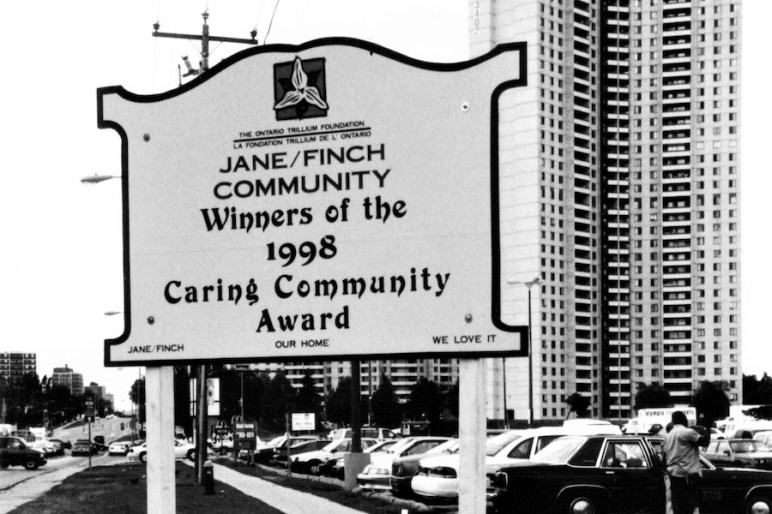
The Jane and Finch neighbourhood in Toronto has always been held up as an example of the perils facing Blacks in the city. It was the poster child for insufficient housing, rampant poverty, drugs and crime and it has gone on for years with the politicians often throwing up their hands in frustration. But ask people working or living in the hardened corridors of the Jane and Finch area in Toronto whether slavery was the root cause, their first reaction is to laugh. But, we need to accept that is exactly what the powers in government believe. It is a self-righteous and pious position, based on an academic arrogance that is being wielded and promoted by a group who feel that they just know better. To disagree or offer up an alternate explanation we are accused of being uninformed, or we are racists and insensitive to the plight of immigrants. All this while the majority of people in Canada believe and are suggesting that all Canadians should be treated equally under the law. One could safely assume that this shared belief is part of the reason that immigrants even try to come to this country.

Every immigrant group who came to this country came here or grew up here over the centuries; the Italians, the Irish, the Poles, Haitians, and the Ukrainians, all settled in their respective communities, often under very trying and impoverished circumstances. Their support came from the others that were familiar to them and had come from the same place. The evolution of their life and prosperity in Canada was brought about by a chance to further their education, to reach for jobs, to be free and have the unencumbered ability to go forward. It was not brought about by shotgunning apologies or dispensing reparation money, or brought about by demands to be treated differently then everyone else. In fact they wanted to be treated like everyone else.

The laws in this country are already there against discrimination, so if needed, enforce them. Don’t change to feed a political need or to affirm the current sociological dogma that we are all victims and that there is an ongoing and persistent institutional discrimination based on the colour of your skin. My family history in this country only goes back to the 1920’s, so I can not draw a straight line between the days of slavery three hundred years ago to my ancestry, and I suspect very few Blacks in this country, or many other Immigrant groups, can draw that straight line either.

The authors of “Struggling Well” when asked why do so many people want to be seen as victims say that it is merely a symptom of our current modern society. “It is hard to accomplish something significant, it takes years of work, dedication and sacrifice. In today’s age, a victim is recognized as being special, having achieved something. We all want that sense of achievement and being special. As a victim, you get that special attention” They sum up by saying “being a victim is an easy way out, being accomplished, despite your circumstances is tough”.

I don’t agree fully because there is in fact discrimination in the real world and some groups have different starting points than others about which they have no control, but there does seem to be a need for some hard to define toughness. A need to look inward rather than outward for the answers, as hard as that may be.

Wandering the Corridors of 73 Leikin Drive…

Should one ever be given the opportunity to wander the corridors of the Royal Canadian Mounted Police in Ottawa, it will likely lead you to begin to understand what ails the world of the scarlet tunic. As you meander the halls, you will find yourself checking the departmental name plates on the offices. As you you sit in the boardrooms, surrounded by other boardrooms and their white boards watching endless power points you will first come to understand that you are in a different universe. Your senses will be bombarded by fancied talks of “initiatives”and “strategies” as presented by departments with long and bewildering names. You will feel alone and confused and then when you are finally released from this concrete Wonderland (no later than 3:00pm of course) you will find yourself wandering amongst the quickly diminishing crowds dazed and confused; trying to find meaning in what you just witnessed.

You later learn that you would have had a better sense of what was transpiring around you in those droning conversations, if you could have just picked up a copy of the “Royal Canadian Mounted Police 2023 Departmental Results Report”. However, a warning, you will not be able to read it at one sitting and don’t read it in bed.

Inside this gilded and embossed document, you will find groups and departments that you had no idea even existed. Maybe you knew that there was the Independent Centre for Harrassment Resolution” and that it contains 74 investigators. But did you know that there was an RCMP Strategic Foresight Methodology Team, or that you were part of a team for the Canada War Crimes program? You would probably be overcome by the amount of “strategizing” going on; layer upon layer of master plans and blueprints all being developed to guide the RCMP into the promised land of law and order. As an example there is the Methamphetamine National Strategy or the Ideologically Motivated Violent Extremism Strategy. The latter is tasked with only just building a “framework for countering these types of threats”.

There is the Canada Financial Crimes Agency, the RCMP National Cybercrime Coordination Unit, the Canadian anti-fraud centre, and that they are now “developing” a Canada Financial Crimes Agency. With all this expertise it is hard to imagine how Canada has become a well known refuge for white collar criminals around the world.

What started me down this road of discovery was the unveiling of the report by the afore mentioned Strategic Foresight Methodology Team, which was tasked with determining the future policing issues over the long term. A copy of the report was obtained by Professor Matt Malone from Thompson Rivers University through a freedom of information request. This esteemed team of RCMP “strategists” based their findings and conclusions strictly on media and public information reports that are readily available; and then as only government can do, heavily redacted the report as being confidential information. This group of thinkers came up with what they believed to be the six trends in Canadian society that they felt should be brought to the attention of the upper echelon of the RCMP to guide them in policing this nation of ours.

They predicted that there is going to be “continued social and political polarization” and an “increasing mistrust of all democratic institutions”. That criminals are going to use “technology to gain power and influence”. They also believe that the weather is going to be a big policing factor (thanks Weather Network)– in that there will be “increasingly violent and even concurrent storms, drought, floods and heat waves” and that the “extreme weather crises concurrent with other crises requiring deployment of police resources”. Of course this will have a greater impact on “Indigenous communities and the Arctic, while Canada faces pressure to help countries closer to the equator”. Finally number 6 on the list was the prediction that there will be “demands for expertise in artificial intelligence, quantum computing and blockchain”.

One has no idea how many people make up this group, or how much time went into their thought processes, but one could pretty confident that a single individual scanning Apple news any given day, could have written this same report in half a day, or they could have also checked a Liberal party newsletter to obtain the same prognosis. Or better yet, asked ChatGPT to ponder the main political questions of the day.

Other reports or papers flowing from this group include, a “Feasible and sustainable model for forensic service delivery in Canada” which concludes that the RCMP and FIS could “lose very experienced staff if they chose to resign rather than move”. Other studies cited include the one titled “not everyone can do this job” which is a “qualitative inquiry into emotional labour from RCMP detachment service assistants”.

One should not be against academic study of policing and the RCMP, as it is clear some expertise in some areas is wholly needed. However, in these times of manpower shortages, increasing costs of policing, a broken police Crown relationship, un-enforceable laws, rampant drug and white collar crimes, increasing gang violence, disconnected policing functions, a loss of expertise in almost every field, and morale at abysmal levels– is this the time for studying the obvious? Is this the time to for additional frameworks or developing strategies as if the issues were un-predictable and unanticipated? Of course it isn’t, but never before has the RCMP been so firmly embedded in the machinery of the Federal government. In terms of policy, they are not unique, they are merely following and mimicking the other Federal departments. Meanwhile, the problems in this national police force go back decades and have only led to bloated bureaucracies and greater political entanglement. The bureaucracy in Ottawa needs to be broken apart, specific mandates given over to smaller investigative groups with minimized reporting structures. The RCMP, simply said, can not be all things to every person in this country with an ability to provide whatever level and type of investigation that is needed. They simply can not do it on their own and I am not sure that they even can see the vast array of policing problems outside of the cocoon of Ottawa– let alone fix them.

This corpulent body of an organization has as its greatest accomplishment–like the rest of the Federal government– they have grown the offices to non-sensical proportions and ballooned the rank structure to their obvious benefit. They have become political puppets, made to dance and wave their arms akimbo all while convincing themselves that they are still the experts in their field and the policing world needs their guidance. This is not unique to the RCMP, it runs across all Federal departments and it is mostly due to the political influence under which they have fallen and then been rewarded. The very organizational structure and existence of the RCMP is being threatened in Alberta, British Columbia and Saskatchewan and all while Nero (or in this case Commissioner Duheme) fiddles; concerned instead with things such as the “Knowledge Circle for Indigenous Inclusion’s Career Navigations Program”.

The Killings at James Smith Cree Nation…

If one ever wanted a clear picture of the utter desperation and the scope of problems facing First Nations in this country, one only needed to follow the coroners inquest that has just finished up in Melfort, Saskatchewan which was looking into the slayings at James Smith Cree Nation.

Unfortunately, but predictably, the recommendations coming from it are more reflective of our current political progressive climate, and less about the core issues. For the most part they missed the mark. We can not possibly be surprised, being that this is the age of the “victim”, this is the age of blaming, of never look inward, of instead pointing at the “system.” Let’s be honest, the Indigenous leadership in this country have turned victimization into a professional art; one which they have effectively practised at every opportunity. Their constant themes of cause and effect are always the same, then continually repeated, and the outcome sought is always the same.

Simply put, the James Smith Cree massacre is the story of a single individual with “psychopathic traits” and an “anti-social personality disorder”, a personality sculpted by abuse and crime, exposed to alcohol at the age of 13, and not soon after, transitioning to cocaine and methamphetamine. On one particular day this violent psychopath decided that he wanted revenge for some ill-defined wrong, and was also mumbling on revenge against the “Terror Squad” (part of the extensive group of Indigenous gangs that have proliferated throughout Winnipeg and Manitoba). So on September 4, 2022 after guzzling back some liquid courage with his brother, then went on a killing rampage–starting with his own brother.

Myles Sanderson had 78 previous convictions between 2004 and 2019 and at the time of the killings was “unlawfully at large” and as an occupation was dealing cocaine on the Reserve for three months prior to the killings. Most recently he had been serving five years for assault, robbery, mischief and uttering threats. In 2021 when seeking parole, he was considered an “undue risk to society”, but later in August of that same year, was still given statutory release, having served 2/3 of his sentence.

Four months after that release he was found once again in breach, re-arrested– and then in February 2022 released again.Throughout his prison life, his get out of jail card was that he was treated as an “Indigenous offender” therefore someone that the courts have been directed to deal with differently; not like other Canadians, part of a special group who had suffered “generational trauma” and through no fault of his own was one of the over “represented” in the Criminal court system. Geraldine Arcand, an elder employed by the Saskatchewan Penitentiary testified at the inquiry, about having given him his first “healing plan”.

Myles Sanderson and his wife had moved back to James Smith for the stated purpose of dealing cocaine. Despite all these efforts at understanding and empathy and despite all the socialized efforts at reform– that night he went out and killed his brother Damien, and then stabbed 10 others to death– and in the process wounded 17 others. He leaves behind his common law spouse, Vanessa Burns and their five children. At the inquiry she testified to having suffered 14 years of domestic abuse, and having reported him 12 times for domestic violence. Her suffering wasn’t over with his death, Myles on that dark day, also killed her father during the rampage.

After the killings, Myles went and hid in the nearby woods for 3 days and 7 hours. He subsequently died in police custody, after driving into a ditch in a stolen vehicle while being checked by the police. There will be a separate inquiry later this month concerning his death, because we are just as concerned about the police behaviour during his arrest, as we are of the massacre that Mr. Sanderson had perpetrated.

So this Coroners inquest, headed by Blaine Beaven, with six jurors came up with 14 recommendations, and then the Coroner added 15 more for consideration. Can you guess at what was recommended? They quickly went to the usual blaming template, aiming at all levels of government who are within easy reach. They declared that they needed “More programming and resources for offenders”..”more collaboration” (between the various agencies)…”more resources for prisoner integration”…”changes to how the RCMP deal with wanted suspects”…and in this case there is the need to “hire more elders” for the jails.

The Saskatchewan government for the record, as is also easily predictable, is “supportive” (of the recommendations)and added that they are so on top of the needed action that “some are already being implemented”. The Saskatchewan government says it wants to see more “crime reduction teams” and the RCMP for their part says it wants “greater communication”. The National Police Federation, representing the Mountie union, want “$100 million” more dollars to fund 300 more police officers, 138 of which would be there to “supplement First Nation policing resources”. (It is currently estimated that Saskatchewan is running 10% short in staffing, and an additional 7% from “soft” vacancies such as maternity leave etc.)

Another constant theme was brought up by Chief Peter Chapman who pushed for First Nations policing, which seems to be now referenced as “self-administered policing”. Chief Burns echoed his fellow Chiefs thoughts and also talked about the need for further funding of their own policing service; a police service that would be “suitable for our people”. This was followed by the usual complaint about no support and not enough monies coming from the Federal government.

Would having their own police service stopped what happened at JSCN? Would further funding and recruiting of Indigenous officers by the RCMP as Assistant Commissioner Rhonda Blackmore suggested have stopped Myles Sanderson? Would more “elders” in the prison system, more “healing plans” stopped Myles Sanderson? Would increased programming for inmates stopped him? No, of course not, Myles Sanderson was a psychopath who on that particular day was “triggered”.

All governments in Canada, Provincial and Federal are going down the road to Indigenous policing. They all agree that the 600 First Nations in this country should all have their own police services, not to mention their own laws and outcomes.

Small town police departments in this country has been fading and dying out throughout this country for many decades now, as the size and cost of policing has grown to greater and greater proportions. Practically speaking few are left because of the financial costs alone; now roughly estimated to be about $200,000 per officer per year in terms of salary and support; without adding in the costs of the initial infrastructure that is needed. Small town and village tax bases can not support this level of expenditure, it is simply economically un-feasible. Then add in the major issues of retention, staffing and training and the prospect of having multiples of small independent forces becomes patently unreasonable.

Another serious consideration is who has and can exert political control of small departments, where the officers are policing their friends and relatives, and thus opening up of the opportunities for corruption. The sole reason for having a smaller police unit in any town or village is that it is more accountable to locals, and that it can be then “tailored”. There is no other attributable reason. There is no hiding the fact that the Indigenous want political control of the police force and simply disguise it as being more “culturally sensitive”. They also don’t have the normal financial constraints, they argue that the Feds and the Provinces just need to give it to them.

Our current crop of political leaders throughout this country apparently agree, and therefore believe a separate police force, or many separate police forces, in often isolated and uneconomic regions of this country are needed as some form of twisted reconciliation logic, and they are also o.k. with the Canadian taxpayers funding it. One needs to understand the numbers.The politicians believe that the 3,394 reserves and 600 First Nations, should all have their own policing units, or “police administrations.” That 331,000 Indigenous living on Reserves, with an individual average reserve population of 600 people, should have their own individual police force to enforce the laws in a way, that is more suitable to their culture and their community needs. The costs, the jurisdictional issues, and the very ability to function under these circumstances runs counter to current police management theory which aims at integration, specialized services and shared costs. This Indigenous model simply defies logic.

This is not to denigrate the individual officers who may be currently involved. However, the thought that a police officer, from a very small community, who will do doubt be related to many that he is to police, someone who will be subjected to the volatile politics of Band councils, will somehow be able to manage and enforce the laws in a fair and equitable way, is a difficult if not impossible task. The RCMP used to move officers every 3-5 years for the simple reason that there is a tendency to become co-opted, because familiarity breeds and leaves one open to the vagaries of community politics and can call into question one’s integrity. What could lead one to think that this proposed solution would somehow be different.

Although one can easily see all the pitfalls, the government is already far down this road, and they are not seeking the approval of Canadians. Currently there are 163 policing agreements, for 1250 Indigenous officers, representing 400 First Nations in this country. They are policing about 338,000 in terms of population, which means there is on average, one officer for every 270 people living on the Reserve. In most cities the officer per capita average that is possible is one to every 800-1200 persons.

The First Nations Chiefs of Police Association claim that the Federal and Provincial governments only provide funding of $130,000 per officer, and they want more. Currently the Federal government contributes 52% of the funding and 48% is provided by the Provinces or Territories. They argue that the funding formula is unfair and amounts to “discrimination”.

The Kahnawake Peacekeepers, who police a large area of 10,000 and who boast of everyone in their department being of First Nations descent, is considered a leading example of Indigenous policing that works. The Kahnawake are now arguing for their own dedicated “highway patrol” so that they can police the 100,000 “outsiders” that pass through their territory. They also want an increase in salaries.

In British Columbia, the BC First Nations Justice Council and the First Nations Leadership Council are involved in the reform of the British Columbia Police Act. They are asking that the RCMP be scrapped throughout the Province and there be a Provincial Force set up with “expanded Indigenous policing”. They argue that there is a need to bring about “de-colonization, anti-racism, community and accountability”. They want “jurisdictional authority and funding” to bring about “self-administered policing”. Some of their suggestions/demands is that police investigation teams be replaced by an “elder, a language speaker, a spiritual leader and one RCMP officer”.

The left-leaning Liberal appointed Supreme Court of Canada has stated that the laws of this country need to “braid together”, a combination of “Indigenous laws, Federal provisions, and international standards” that are compliant with UNDRIP (United Nations Declaration of Rights of Indigenous Persons”.

Should the average person in this country be concerned? Should the average person in this country be concerned that certain citizens have greater rights, have different laws, and now seek to transform the legal and police system in their favour? Should we not be concerned that it is also being done in quiet government conversations with no regard for costing and implementation?

The RCMP testified at the inquest that their investigation involved 548 police officers, also Municipal and Federal employees, 42 separate crime scenes, 1322 investigational tasks, 257 witness interviews and over 1000 exhibits. The theory is that in the future a hand full of officers hired to form the James Smith Cree Nation police department, armed with shiny new police vehicles, will now take over that task.

In brief, Myles Sanderson grew up and was created in a world of dizzying and utter dysfunction and all the while the community watched and protected him. Unless that world changes, there will be no stopping of people like Myles Sanderson– not even by a small local culturally sensitive police department.

Photo courtesy of R. Orville Lytle via Flickr Commons — Some Rights Reserved

Some late Vindication…

It took a 74 year old long-time lawyer and Justice, having spent a lifetime in security related matters, someone with two feet clearly planted on the ground, to finally call out the Liberals and their authoritarian ways. In the past week, Federal Court Justice Richard Mosley finally righted the wrongs of the imposition of the Emergencies Act. It was roughly two years ago that the “Act” was imposed on February 14, 2022, with grand fanfare and a concerned grimace by the Prime Minister. His forever kowtowing Ministers, and his NDP cohorts, profusely nodding in vigorous agreement standing behind him. This group of progressive liberals launched an Act designed, as it names implies, for a National Emergency, and when imposed, dictated full control over the lives of its citizens and specifically their ability to protest. There should be no mistake, this was a move that was in this writer’s opinion purely political, a move meant to show strength and determination, and aimed specifically at a group that had the audacity to question, a group that did not support the governing Liberals–in other words, they were the enemy. To put it in even simpler terms, the Liberals and their ilk did not like these protestors, these anti-vaccine rednecks, who came from afar. They were not of them.

Judge Mosley declared in his ruling that the imposition was “unreasonable and infringed on protestors charter rights”. That it did not “bear the hallmarks of reasonableness–justification, transparency and intelligibility”. He confirmed in essence what many thought –there was “no national emergency”. The faithful readers of this blog will remember a blog some months ago entitled “Sledgehammer and the Peanuts” which argued these same points; that the blaring of horns, the smell of diesel, bouncy castle encampments, and the disruption of the workday for bureaucrats in Ottawa (who were working from home through all this because of COVID) did not fit the definition, no matter how broadly interpreted, of this being a national emergency and that it certainly did not need such an all encompassing and arbitrary legal hammer.

The protest and the reaction to it did show that in Ottawa, if you put too many police departments in the kitchen, the broth will in fact be spoiled. The frustration and lack of coordination by the RCMP and the Ottawa Police Service, combined with the Doug Ford non-response, bordered on farce.

Of course this ruling was a kick in the pants for those fearless crime fighters Trudeau and Freeland; they know that this is not good in terms of going into the next election. Freeland, undeterred by a lack of factual support for her argument, went immediately running to the microphone, saying in her pedantic kindergarten teacher voice, “the safety of individual Canadians was under real threat…our national security was under real threat”. Quite an explanation.

So the Liberal government immediately have said they were going to launch an appeal. Usually the governing party of the day and any governing party would be more cautious in challenging the judiciary, normally they would “take it under advisement” or would be “studying” the case. It demonstrates the level of incomprehension amongst these Liberals as to someone having challenged their decision making, a court saying to them, no, you were wrong, and in fact you breached the Charter of Rights. How dare Judge Mosley describe the decision making at the time, as only based on “speculation” and that it had led to “unreasonable search and seizure”. The Liberals, of course have not released their legal grounds for that appeal, so I am suspecting that the Justice Department is now assigned to go find those grounds.

It is good to remember that there are four grounds to impose the Emergencies Act as clearly written: a) a public welfare emergency b) a public order emergency c) an international emergency, and finally d) a war emergency. CSIS in the Act is the defining authority in terms of what constitutes a security emergency. Clearly the latter two conditions, c) and d) didn’t apply, so the Liberals will have to continue to argue that it was a public welfare or public order emergency on a national scale. It was very interesting at the time, that CSIS Director David Vigneault in front of the Rouleau Commission, in a classic case of double-speak, said that even though the circumstances “didn’t meet the definition of a threat to national security”– nevertheless he supported the government decision. So in the end he supported what turns out to be a serious breach of rights of Canadian citizens, when he didn’t feel that there were grounds to do so. Time for Vigneault to step down.

So what will be the Liberal strategy be to fight this public relations nightmare. They are going to point to two arguments, and they have already started down this road.

First and foremost, they will point to the earlier mandated government appointed Commission that was chaired by Justice Paul Rouleau. The “appointed” Commission predictably found that it was “a failure in policing and federalism”, that it was in fact a “national emergency”. This was a bit of sleight of hand. The Commission mandate was to “examine and assess the basis for the Government’s decision to declare a public emergency…appropriateness and effectiveness of the measures selected by the government”. It was was not in fact a “legal” finding. The Federal Court with Judge Mosley on the other hand was to determine the legal “threshold” having to be met for the imposition of the Act.

Rouleau interestingly also said that it was a “difficult decision” he came to and that the “factual basis” for his finding “was not overwhelming”. I guess the lesson there for everyone is to never let the facts get in the way of a good argument.

The Commission was politically tainted, it appeared to have been set up purposely to ameliorate the decisions by the government of the day. The allowed testimony was not subject to being tested in terms of any extended cross-examination. The Minister of the day, now former Justice Minister David Lametti, during his testimony even refused to reveal the legal opinion which prompted their taking of the action, arguing lawyer client privilege. It was pointed out to him that he could have waved the privilege, but he would not. Mr. Lametti, who was so traumatized during the days of the convoy, that he moved back to Montreal, in a recent interview he now of course “disagrees totally” with Judge Mosely and is “confident” that they will win an appeal.

The other argument that the Liberals will bring is the example of what was going on at the time in Coutts Alberta and the roadblock there. It led to an investigation of an extremist group who wanted to attach themselves to the protest, and they were intercepted and charged by the RCMP. This Liberal argument is also disingenuous. The investigation and charges were brought about through the Criminal Code not the Emergencies Act. The police used the existing powers to bring that investigation to a close. So as Judge Mosley points out in his decision, the “existing laws were sufficient”, to deal with the Convoy protests, that the regular laws were open to the police and could handle the situation. The protestors that were charged, Tamara Litch and Chris Barber won’t necessarily be helped by this Federal Court decision, because they were also charged under the Criminal Code, not under the Emergencies Act.

Judge Mosley also added that “economic disruption cannot form the basis of extraordinary measures”. The Liberals during this “crisis” often argued that the Windsor border blockade was disrupting trade going into the United States. Ms. Freeland trotted that argument out again at her recent press conference, again arguing that Canada’s “economic security” was threatened. Maybe, she had not read the entire decision?

It is also interesting to read the various takes of those in the Liberal support groups, who were supportive of the government measures at the time. The CBC called it a “a divisive decision” and that illustrious leader of the NDP, Jagmeet Singh now says that he only “reluctantly supported the Act”. The Ottawa citizens who formed a civil class action against the protestors, which is seeking $290 million for their Wellington Street disruption, are still saying this ruling does not hurt them. Their lawyer Paul Champ argues that their case is about “honking, its about parking on the street, not for an afternoon of protest, but for weeks”. If one ever needed convincing that the citizens of Ottawa, and the bureaucrats who are governing this country live in a hermetically sealed environment, this is the case.

The Canadian Civil Liberties Association, a group which I rarely find agreement with, but brought the case forward to the Federal Court, said that the actions of government in this case, that the imposition of these types of laws “…are dangerous to democracy”. This decision, if looked at in a broader scope, should be seen as an examination of the very tenuous nature of democracy. The solitary Judge showed us how thin that thread really is, and for that we owe him a debt of gratitude.

Photo courtesy of Michael_Swan of Flickr Commons – some Rights Reserved.

Still Swinging to the Left

I will state from the outset, that when it comes to the political spectrum, I am boringly straight down the middle. I have never considered myself on the fringe of any pendulum, never wholly to the right, never wholly to the left. Many decades ago when I studied political philosophy and was exposed to the root beliefs of Marx and Mao, Hobbes and Rousseau, I walked away probably just as personally confused as when I started, at least in terms of having formed any hardened views. After gaining many years of wisdom, or at least I think that is what life experience gives you, I seem to have only settled on the fact that I still believe in some core values: personal responsibility and accountability, privacy, and the right to free speech. Does this mean that I may be now in the wrong country?

The current Liberal government in Ottawa and the Provincial NDP in British Columbia where I live, have for the last number of years driven us towards a system that would be defined as “socialism”. Socialism is defined as “a political and economic theory of social organization which advocates that the means of production, distribution and exchange should be owned or regulated by the community as a whole”. All of our politicians, for fear of being labelled, would deny following the principles of socialism, at least in any public forum, but it is clear that they are admirers of some imagined Scandinavian styled nirvana. As they see it everyone will be protected and regulated by some form of a big, comforting, arm of government.

The current crop of Canadian politicians are going to fix housing, immigration, education, and healthcare, and while they are at it, eliminate discrimination, systemic racism, and the overall general unfairness of life. They will advocate free “safer” drugs, but insist that a single individual cigarette be labelled with the dangers of smoking in case some of missed the messaging for the last 40 years. The policing world has been led for the last number of years by sycophants who have willingly absorbed this mindset of correctness to become true champions against the horrors of inequality and the lack of inclusiveness. In order to be sanctioned by the ruling liberal elites and moved up the operational chain, they have abandoned their principles and left traditional policing values behind. They are now fully tuned to the internal goals of eliminating the enemies of the new age liberalism and willing to echo the “truth” as dictated to them.

But get outside the Canadian environ and you will find that there are developing trends in other parts of the world which are beginning to question this left liberal bias, and are now considering that maybe it has gone all gone a little too far, that maybe its time to let the pendulum swing back into some middle more normal ground. This is possibly reflecting a realization that the ridiculous aspects of the “wokeness” fringe may be driving them to political extinction.

The Canadian left power constituency want no part of any reversal of the current trend. Even with the Conservatives trouncing them in the polls, the Liberal stalwarts are doubling down on their social activism. It somewhat makes sense, all their policies are aimed at the political and demographic future voter wheelhouse. Here are a couple of recent examples.

Marc Miller, the former portfolio holder for the Indigenous, now the Minister of Immigration, Refugees and Citizenship now wants to allow people who have been “illegally working and living in Canada”, and who have no documentation, that they be allowed to automatically become Canadian citizens. This would permit anywhere from 300,000 to 600,000 additional “new” Canadians. In addition, it is he and his department that will also will be overseeing the goal of 500,000 new immigrants this year (legal immigrants). Exhibiting extreme political arrogance, Mr. Miller tells his followers that he doesn’t want Canada to become “like the countries such as France, Hungary and Germany” who are reflecting the dangerous “hard far right” and are evil in their cutting back on immigration levels. He does not want to see this type of thinking “repeated in Canada”.

In the same vein, Seamus O’Regan, Justin’s long-time cohort, now sitting as the Minister of Labour, wants to make some changes to the Employment Equity Act which already sets out a “mandated diversity scheme”. The Act currently requires that the Federal government and its contractors set hiring targets for “women, visible minorities, Indigenous, and disabled”. Mr. O’Regan now plans to add LBGT and Black people to the list of those with special “hiring privileges”. The charge is being led by McGill University law professor Adelle Blackett, who is a “critical race scholar”. They steadfastly defend this policy by saying that this is not advocating a “quota system”. They try to legally get around the obvious conclusive cries of “reverse discrimination” by saying that it is fortunate because our courts, following the Charter of Rights and Freedoms, equate “equality” to mean “substantive equality”– a matter of “equal outcome” over “equal treatment.” Only academia and bureaucrats and Federal lawyers could draw this distinction.

Meanwhile, in the United States the legal stance on DEI programs is going the other direction. The big turning point was in June of this year when the Supreme Court of the United States rejected affirmative action at colleges and universities around the country, Harvard and North Carolina specifically, declaring that the “race conscious admissions programs” at those two schools were “unlawful and sharply curtailing a policy that had long been a pillar of higher education.” The Chief Justice wrote that “both programs…unavoidably employ race in a negative manner, involve racial stereotyping, and lack meaningful end points”.

This U.S. Supreme Court ruling is now rippling downwards and resulting in the DEI programs throughout the U.S. now being put to the test. Several groups are now instituting civil action against seven different law firms for their DEI hiring practises. Why law firms? Well, they are the most risk adverse of the businesses in the U.S. If they are found to be in counter step to the current U.S. Supreme Court ruling, it is bad for business, and in turn they make their living advising the Fortune 500 companies. The plaintiff groups want to “shatter diversity fellowship programs” in these firms, which they maintain “exclude qualified white and asian students”. They are also including in those claims not just “fellowships, but hiring and recruiting retreats”.

Three of the law firms have already reversed their positions rather than duke it out in court. The plaintiffs have also demonstrated that the efforts of the last number of years with these programs has not resulted in greater black and minority representation, it still lags behind. They are also civilly pursuing particular firms where executive compensation is tied to diversity goals. So far, NASCAR, MLB, Nordstrom, and Activision Blizzard have all come under scrutiny because of their “workplace affinity groups and grants to black owned businesses”. Microsoft is now “re-examining their DEI policies” and the “explicit racist quotas and preferences in hiring, recruiting, retention, and promotion and advancement”.

Now, to be sure, we are not the United States. I am coming around to the belief that Canadians are maybe wanting a form of socialism, tax the rich, give to the poor, tell the grocery stores what they can charge, disallow AirBnb, regulate what you can say, what you can see. Maybe Canadians believe the allegations of systemic discrimination and racism. Maybe we all believe, that colour of skin or one’s gender is a greater determinant of job worthiness, and that “representation” is a better goal than academic or experience based qualifications. The strange part is that so far these enlightened programs don’t seem to help, but we Canadians are steadfast, we stay the course, disregarding the hard evidence. I guess it makes us feel better about ourselves.

Personally, I am hoping that we also begin a swing back to the middle, where rational thought and common sense seems to reside– and I am also hoping for a lot of snow in Ottawa this year– and Justin feels like going for a long walk.

Merry Xmas to you all and thanks again for reading. We will see you in the New Year.

Photo courtesy of June Marie via Flickr Commons – Some Rights reserved.

Fall Reflections…

“And all the lives we ever lived and all the lives to be are full of trees and changing leaves” – Virginia Woolf

Writers and poets have spent many words in trying to capture the essence of the coming of Autumn. As nature changes to reflect the shortening of sunlight and what Keats called “the season of mist and and mellow fruitfulness”, for me it is a time to pause, a lull in time when we all re-adjust and prepare for a return to the comfortable routines. It is a favourite time for many, these days of changing colours, when the sky seems bluer, the clearer air markedly cooler. In nature, it is also a time of decay, a coming to the natural end of life. So it seems as good as time as any to reflect on the good and the not so good which have come out of these last few months. They are subjective, in no particular order, and of no particular importance.

One of my over-riding thoughts is about our news, the constant stream, less and less from traditional media, as the digression to a reliance on social media seems to be accelerating at an alarming rate. Thus, the reliability of that watered down news should be of the utmost concern. This is not new, this trend has been going for several years and it is indeed worrisome, especially for anyone who historically has valued the role of the 5th Estate. The news now is in snippets, pieces of video, pieces of conversation, mixed in with fully partisan and fragmented opinions. Press releases are being issued, and then regurgitated through the media in tiny sound bites to a public, which has clearly become disenchanted, and that disinterest is palatable. Every story is purposely planned to begin with “unprecedented”, “historic” and “never seen before”. It is like television and radio have been swallowed up by the National Enquirer. This summer as we took in the sunshine and communed with nature, our phones were constantly being pinged and alerted; bombarded by the news of “soaring inflation”, “unprecedented wildfires”, and the “historic cost of housing”. Youtube video and Instagram posts are now spliced into to be part of the actual coverage, and often polarized opinion is dangerously assumed to be fact. This trend is only disturbing if one values a functioning democracy, and therefore the need for an informed populace. One wonders whether we, the consumers, who seem addicted to instant scrolling gratification are also the problem or have we just been trained?

As one reflects on the political waves of the last few months, there does seem to be a swinging of the left/ right pendulum. Has the leftist arc of the pendulum reached its pinnacle, and is it now moving back? For sure, the Federal Liberals are coming to realize that things are not quite as rosy for their fatuous leader as they originally thought. So, in recent days they have been frantically swinging their arms in a desperate effort to fan the flames of fear, the fear over those evil right wingers marching over the horizon to destroy all the good they have created.

Pierre Polivere, the Conservative opposition, has executed a dapper change in his haberdashery from Clark Kent to Superman, and is finally feeding with some effect on the overt stupidity of recent Liberal pronouncements. His biggest concern may be that he is peaking a little too soon, as the election is still a couple of years away.

That said it does seem like we are adopting the American version of an election in which the campaigning starts at least two years in advance. This will mean that we will be very sick and very tired of hearing from any of the politicians with their dumbed down commercials filled with statements of progress and diversity, of being “there for you”, “going forward” and “working together”. For her part Deputy Prime Minister Chrystia Freeland, who has cut some of her television cable to account for the rough financial times, will continue to stand behind Justin, and nod with vigour at every statement he makes. The flame proof Bill Blair having survived being tied to Commissioner Brenda Lucki, will try and remain hidden in his new job as Minister of National Defence. Foreign Minister Melanie Joly will continue to have her minions prepare for the unforgivable possibility of a Republican being elected in the United States; as she also “revamps” her department to make it a nice place to work. The Governor General will continue to distribute her valuable wisdom and insights to anyone who will invite her to an exotic locale, and will arrive with her twenty plus entourage in tow, but sadly will only be able to offer and provide box lunches on any future flights.

Locally, the domestic theatre of the absurd politics in Surrey continues, and Mayor Brenda Locke keeps on with her obfuscation and attempt to prolong any transition to the Surrey Police Service. Brenda it would seem simply does not want to admit defeat. Meanwhile, it is costing the Surrey taxpayers $8 million a month currently for the present state of policing, but Ms. Locke will continue to tell everyone she is concerned about future policing costs. She continues to blame the Provincial government and it would seem that most of the most recent delay is because most government workers decided to take the summer off. Apparently losing $8 million a month and getting a functioning police force in place is not enough reason to postpone anyone’s holidays.

And do you remember the campaign by the Surrey Mounties and the Mountie union, the National Police Federation, where they detailed how they were the better persons for the job, and that future staffing was not an issue? This while recently we have been watching the current Commissioner Duheme touring the rural areas of Saskatchewan, and hearing story after story from his own members on the lack of staffing and the inability to do the job. The irony is overwhelming. Duheme is even saying now that there is “a recruitment crisis” and the Mounties are now at a “cross roads” in terms of their survival in their present form. So who was lying, the present Mounties in charge in Surrey or the current Commissioner?

The Federal Mounties it seems, still have not figured it out why no one is applying for their department. They now believe that to increase recruitment, the solution will be to further lower the standards. The head of the RCMP in Saskatchewan is Rhonda Blackmore. Ms Blackmore and the brass heading the Saskatchewan RCMP have now created the Saskatchewan RCMP Indigenous Recruiting Unit; who among other things recently sponsored a three day event to recruit indigenous candidates, give them tours of Regina, and were there to “help them fill out the application forms.”

Meanwhile the Feds in RCMP Ottawa, the dreamland capital, are debating reducing the time away from the use of marihuana, before working as a police officer, down to 24 hours– from the current 28 days. By putting scientific evidence aside, there belief is that would then be able to attract those daily doobie smoking future recruits who also have an interest in crime fighting.

Here is a reflective thought. How about they try and attract future police by making the RCMP a viable and expert policing organization once again? It will take longer, it is definitely not an overnight solution, but it will work.

Unfortunately, over the last few weeks and months we continue see the baleagured and beseiged Mounties being thrown to the wolves. The most recent slap in the face was the 123 page report commissioned by the B.C. Public Safety Ministry which stated that Combined Forces Special Enforcement Unit, a group of over 440 officers with a budget of over $90 million “is neither effective in suppressing gang violence and organized crime nor is it providing the Province with an adequate return on investment”. They described it’s governance as a “tangle of organizations…” that its “funding is unstable”…and that there is a “lack of continuity”…and “high rates of turnover”. The RCMP response to this damning indictment on September 8 for this report that was issued on April 16th, was that they had not yet received a copy of the report. Can anyone imagine a private company or even a government department getting this kind of review and no one being held accountable? The head of CFSEU, RCMP Assistant Commissioner Manny Mann is saying nothing, so one can only hope that he is busy preparing his retirement papers.

Further to the RCMP in Saskatchewan, in the past few months it was also announced that they will be holding two inquiries. The first is the inquiry into the eleven individuals stabbed to death on the James Smith Cree Nation. There is little doubt that it will be comparable to the inquiry in Nova Scotia over the Portapique mass murders in terms of the eventual criticism and the conclusions that will be reached.

It was also in Saskatchewan that the Province is now forming a 70 person Marshall service to deal with property crime at the cost of $20 million, to supplant the lack of attention to rural property crime from the RCMP. It has not been a good time in Saskatchewan lately and it looks like they will be front and centre in the next few months.

So as we have reflected, have we learned? Not really. There seems to be a lot of sameness and it seems that the culprits of the past few months, will be the culprits of the next few months. The problems of the past are ongoing and will continue, the solutions proposed in the past, likely will be the solutions proposed for the future.

I wish I could offer more solace, but at least we took the time to reflect and take a deep breath.

Personally, I am looking forward to the Fall, but mainly because I love baseball– and there is nothing like October baseball.

The Political Fires of the North Shuswap…and the embers of discontent

This is a blog which is more personal than most, it is about the small village of Scotch Creek, where about 1,500 people live scattered along the edge of Shuswap lake in BC’s interior. This is personal because this is a place where I lived for five years, felt that I was home there, although I am sure I never reached the status of being a “local”. I moved away about two years ago, but still feel an ill-defined connection to those that I got to know, and I often still linger and dwell when looking over my photos of that time and place. When I lived there very few people knew of the existence of this small village, but as you probably know it has now received national attention, and the expected dedicated fevered media examination, only because for the last couple of weeks, the people there have been fighting for their lives and their property, against two raging wildfires. The Adams Lake fire and the Bush Creek East fire, which came together and within twelve hours co-joined to create a seemingly indestructible inferno, a combined fire capable of travelling 20 kms in 12 hours, and then being able to surround the community of the North Shuswap.

It was a coming together for which government and the British Columbia Wildfire Service had no answer, and one where there attention had already been diverted to the more populous fires in Kelowna. But this turned into something other than just the fires, because it was also a collision between the socialist oriented BC government and to a lesser extent the Federal government, versus a small group of independent rural residents, more libertarian, more independent, and more self-reliant than currently found in most urbanized areas of the country. The BC government could not relate. In the current political mind-set, it seems that when the duly elected feel constrained, when others are not conforming to their beliefs, then they should be treated with derision. They even resort to labelling and name-calling, and always place them in the category of the far right.

For the last number of years, the citizens of British Columbia, like many in the rest of Canada have been gladly and willingly led down the path of government being allowed to control of most of our daily lives. Theirs is a utopian society where the government knows best, it is a government that will protect us, that will feed us, house us, and all the “un-housed”, and keep us safe from the mental stressors and complexities of the real world. We are to be bubble-wrapped. And when this government mind set doesn’t find like minded individuals, or when it stumbles or fails in its goals, then the general populous demand to know why; and demand to know what the government is going to do to fix it. The government continually re-enforces these beliefs and spews a constant mantra of being “there for you”. The citizens in return are expected to never question, never provoke, and the government hides behind the opaque wall of bureaucracy. We have created a population with hands continually extended palms upward, for an infusion of the always flowing monies, to hold us over, and to make all the pain go away. Money is never an issue under this regime, Provincially or Federally.

It is at least politically successful, until one hits a pocket of the public that doesn’t like the government, a group that don’t want the government making all the rules and regulations, and still exude a stubborn pride of place. It is in many ways a throwback to earlier times. Your car breaks down, you fix it, your sewer backs up, you dig the trench to fix it, and for the most part there is nobody else around anyway. This is in essence the character of the community of Scotch Creek, they are the square pegs that the government wants to try and force into the round holes of compliance.

So as these two wildfires came together, the government body charged with fighting it is the British Columbia Wildfire Service, along with the BC Emergency Management Minister, Bowinn Ma, and she in turn is backed up by the NDP Premier David Eby. The government spin during this time is too predictable “we are here for you,” “to save you”, “to protect you” from the fires. How were they going to do that? The first order of their business plan is that they are going to get you to leave, to run from the fires, and to leave everything behind, everything you worked for, everything that is your material tie to the world. Secondly the Wildfire Service will be there to “mitigate” the disaster, which in a lot of cases is not to fight the fire, but to try and “control” it. As the Scotch Creek residents watched and physically saw the flames barreling down on them, they were told to flee, but their instinct was to fight, especially when there was no sign of the Wildfire Service, in fact the Service did not show up for a couple of days. They were un-officially abandoned.

So a pocket of individuals, about 300 people reacted instinctively, they decided they were not going to lose everything without a fight. They were local, they knew the woods, the lakes, the winds and the force of the fires coming at them. They also knew with their access to boats and the lake that they could never be fully cornered, they had a planned escape hatch. And so they did fight, with every water pump, shovel, and mechanized device that they could muster. In so doing and with an inhuman amount of energy they managed to save a number of properties, and many parts of their community. It was a formidable battle, and in the end they still lost 170 properties that were completely destroyed or heavily damaged despite their efforts.

And what was their government doing? They were on the radio and the television and pronouncing in front of anyone that would listen that it was not “safe to defy evacuation orders”, that these people were “un-trained”, that they needed to leave or they would be “arrested”. When someone pointed out that they actually couldn’t be arrested, they pointed out that they could if they strayed from their own property and tried to help a neighbouring residence. The government was fully immersed in their “process” and their Command Centres issued press release after press release how these people were endangering the lives of the firefighters, these renegades were daring to disobey their direction. The media as they always do in today’s environment, echoed the government concerns almost verbatim, feeling free to chastise those that had dared to stay and fight.

The people on the ground paid no heed. But as they fought on, they were running out of diesel and water and some other necessities to survive. Their like minded residents from across the lake gathered at the Finz restaurant and marina, and they gathered together and rallied to deliver food and goods to those in the fight by boat, driving across the smoke filled lake. What was the government response to this outright defiance? They ordered the police at the road blocks to turn back the food truck, not allow it through, which one can only assume was in an effort to try and force the residents to leave by cutting off their supply lines.

A twenty person protest fringe group showed up at the roadblock, one particular day, and the police went to the media stating that these people “intended to overwhelm the police” at their roadblock. The BCWS immediately issued a social media notice that they too were leaving, it was too dangerous for them, that these twenty “protestors”, had issued “threats of violence against these safety officers”. Interestingly the media also began referring to these protestors as part of a “convoy”.

In the end, the panic was short lived. A short time later the police rescinded their concern, and the BCWS realized they over-reacted and pulled down the media post. The RCMP then felt it necessary to speak about how their officers were “well trained and de-escalated the situation quickly.” They apparently disposed of this “massive” protest of 20 people in an hour with “no violence and no arrests.”

Meanwhile, as expected the Premier was touring the sites, focusing primarily on the voters of Kelowna and the Indigenous, photo ops of comforting those that had lost their homes and belongings; Trudeau was in Kelowna as well, but was warned about coming to the Shuswap it was reported, because of the dangerous backlash that was going on there. The Vancouver media who had sent all their resources to this “climate crisis”, now wandered the evacuation centres, trying to find someone that would cry on record about having lost everything or get video of them staring through binoculars at the distant shore to see if their house was still standing.

The people at Finz, continued to say to the authorities, whether you like it or not, we are going to get help to our friends. Ever slowly, the Wildfire Service knew they were not going to win the publicity battle, the opinion tide was turning, and if there is anything the government pays attention to is the social media –so their messaging began to morph. Ms. Ma became less strident in her pleadings to comply with the government evacuation orders, never admitting they were wrong, but that they were now going to “fold these people into our operations”. They were going to co-opt these malcontents, train them in the Wildlife Service ways, and then they could begin to allow these now fully “trained residents” into the area. The extensive training by the way in the end was for one day. So in the end they were now able to supplement the 1600 “expert” personnel which they hire each year, a third of whom are summer students with the “trained residents”.

The Wildfire Service were now also facing some hardened questions. There had been a controlled burn that some folks in the area questioned as to whether or not it had aggravated the situation. The Wildfire Service denied this possibility, and quickly countered with another media conference where the controlled burn was described as being a major “… success and saved hundreds of homes”.

One may never get to the truth of it all for quite some time. The Shuswap region lost 170 properties and 137,000 hectares burned, the Kelowna region lost 180 homes or outbuildings. One would think that there need to be some questions asked, although one should know that to question firefighters is akin to asking the Pope to become a Baptist. They are to be celebrated at all times.

To date the government according to the BC Forest Minister has spent $585 million, but not to worry, “the money is there” and they are not concerned about running out of money, “whatever it takes to protect people and property”. No one pointed out in his news conference that that there are a lot of people that may tell them that they in fact didn’t do a a very good job of saving peoples property. But why quibble and distort the popular narrative.

When you look at some basic numbers, it is fairly obvious that this is about mitigation, not about saving all. There are currently about 377 wildfires burning facing these 1600 firefighters, which amounts to about 4.2 persons per fire. Clearly they are not going to fight every fire. The question is how it is determined when and where they will fight? At least 40% of their budget goes to “contracted” aviation services, 130 helicopters and 35 fixed wing aircraft. Is contracting these services the way to go? Are helicopters with their single buckets the most efficient way of fighting the fire? Firefighting is clearly a very lucrative business for some, and when large amounts of money are being expended, maybe someone should be auditing costs and the financial controls in place.

Throughout this process, it has been continually been said that these fires were “historic”, that they were the result of “climate change”. Well that is not quite true either. According to the Fraser Institute, and an examination of the data, “the annual number of fires grew from 1959 to 1990 peaking in 1989 at just over 12,000 that year and has been trending down since.”

“From 2017 to 2021 (the most recent interval available) there were about 5500 fires per year, half the average from 1987 to 1991”. The annual area burned also “peaked 30 years ago”. The Wildfire service now bends the statistics slightly, and now contends that this year, the number of fires is “six times the 10 year average”.

So the question that needs to be asked is whether the tendency for fires to become larger and more dangerous is as some claim, something that “can be traced to our approaches in forest management”. This is not a question for the individuals actually on the ground dealing with the fires, working 12 hours shifts and sleeping in pup tents, these questions are for the leaders of our government and the bureaucratic functionaries of this service. The BC Wildfire Service at the very least need to be audited in terms of management, resources and the expenditure of funds. Do I expect it to happen? No. Remember these are fire fighters.

So as the politicians slowly work there way back to their safe urban environments, the media in tow, maybe some should also realize that maybe evacuation notices should not be the only tool in their policy belt. Maybe, just maybe, they should listen to those that still project and protect their independence. They are a minority to be sure, their numbers are dwindling, but the government needs to think as to whether coercion and ignoring their input is the best policy decision. These people are in fact reminiscent of that dreaded “colonial spirit”, reflections of that “greatest generation” which for the last number of years your governments have decided need to be criticized and humiliated and spoken to as ill-educated and unworthy. The truth is that we need more of them.

And yes, they did save my old house, and I for one are very grateful for those “untrained” firefighters.

Photo courtesy of Flickr Commons by U.S. Fish and Wildfire Service – Some Rights Reserved

“Double dipping” for China?

There has been a new case surface in the last week or two, which caught the attention of these tired old eyes. It was when the RCMP made a grand national pronouncement that they had arrested and charged an ex-Mountie; William “Bill” Majcher , with two counts under Sections 22 and 23 of the little used Security of Information Act.

The story caught my attention on a number of fronts. First, I knew of Mr. Majcher, but only in passing; secondly, the investigation was done by the Integrated National Security Enforcement Team (INSET), and it was the INSET unit in Quebec, even though it very much sounded like the offences occurred in British Columbia. That seemed a little unusual and could only mean that there were others involved and there was a trust issue. For those that needed to be reminded, INSET is the RCMP agency which is the direct liaison with CSIS (Canada’s spy agency). Therefore one must always be aware that CSIS and thus INSET often work on “political targets”, and therefore their mandate is often at the direction of the government or with the approval of government. There is little to no police independence when talking about either of those entities. So we should also keep in mind that old adage that “one mans terrorist is another mans freedom fighter.”

With this in mind, China and its alleged political interference in recent Canadian elections has been a dominant story and pre-occupation for the last few months in Canada’s mainstream media. The Liberals have been under a great deal of political fire for their handling of the information surrounding the election interference, and their lack of investigation of it. So it seemed slightly more than coincidental that this case against Majcher was brought to the forefront in terms of its timing, and the obvious question as to whether it was being done to ease the pressure on the Liberals. Adding to the suspicion, is that these cases were historical, in that they occurred sometime during the years from 2014-2019. They also had said that this particular investigation had nothing to do with the alleged election interference. INSET says that their investigation surfaced as a result of a “complaint” in 2021, and now in 2023 they were bringing forth charges.

The accused, Mr. Majcher, was a Mountie from 1985 to 2007, some twenty-two years, and “retired” from the Inspector rank from the now defunct Integrated Market and Enforcement Team (IMET); an investigative group which had been mandated to investigate criminal activity in the Vancouver stock exchange and other financial markets. I met Mr. Majcher when he was the Inspector in charge, and we met out of necessity as he was the overseeing officer for an internal investigation that I completed on a Vancouver Police Department matter. He didn’t really pay much attention to the details of my report and signed off the investigation with little to no question. My first impressions of Mr. Majcher stand out now– and have been echoed by many people who knew him during his career. He began by showing me around his rather sumptuous office down on the Vancouver harbour front, and it was impressive from any government employee perspective, with its two storey high windows and its unhindered view of the moneyed yachts. It all turned out to be part of his pitch to me to come to their section, as they were looking for an experienced team leader/primary file investigator at the time.

He was a pretty impressive salesman about the job, but he was an obvious salesman, in that stock broker, car salesman kind of way. I later found out that before joining the RCMP he had in fact been a Eurobond trader. (Eurobonds by the way were one of the first tools developed and marketed to aid in the hiding of funds offshore) He was also clearly intelligent, but his flaw may have been in believing that he was always the smartest person in the room. He was always talking, but not overly concerned with listening. I considered the job at the time because of my interest in economic crime (much cleaner than homicide), but then turned it down after researching it a bit, and learning that the section was having trouble getting their feet off the ground, due to a variety of reasons and legal complications.

As it turned out, Mr. Majcher later got himself in some hot water while with IMET, and he became the subject of an internal investigation in 2005. I was told at the time, that it had something to do with his continuing involvement in the stock market, but I never heard the full story. In the end, presumably rather than face further investigation he “retired”– the always tried and true option the Mounties go to when handling troublesome employees. The public material says that Mr. Majcher in 2006, had already moved to Hong Kong– clearly never one to let the grass grow under his feet.

Like every ex-Mountie who is looking for a double-dipping job, and populate LinkedIn, Mr. Majcher talked up his previous investigational work experience and touted himself as an extraordinary undercover officer who continually risked life and limb in pursuit of the bad guy. His resumé was clearly bloated, but Mr. Majcher in fact did do a good job as an undercover operator on a couple of investigations. In the roles he played he was always portraying “the money guy” — always the salesman. His most famous case was that of the case against Vancouver lawyer Martin Chambers in the late 1990’s. Mr. Chambers during his hey-day was a prominent Vancouver lawyer who was suspected of large scale money laundering for the Russians and the Hells Angels. During a staged video-taped meeting in Florida with Mr. Majcher playing his role of financial underworld figure, Mr. Chambers took possession of $700,000 cash, and provided offers to handle millions of dollars. Mr. Majcher was the primary undercover officer and had led Chambers to believe that he monies were coming from the Columbian cartels at the time. It was a joint FBI-RCMP sting, and it was successful, and Mr. Chambers was sentenced to 15 years and 8 months which he served in an Arkansas jail.

The Chambers case would be the case that Mr. Majcher seems to have used as his plank to build a spring-board into a position in Hong Kong. He described himself as a “risk assessment officer” for the investment banking community, and that he had moved there to “establish an international banking platform on behalf of Hong Kong merchant bank, representing a number of Chinese state owned and non-state owned enterprise clients engaged in overseas capital world activities”. Not only would he bring to the table his extensive investigational expertise, but they would be able to employ “military grade cyber technology” in the pursuit for their clients.

He later formed the company EMIDR in 2016, a “Hong Kong based cyber-security company”. In a video he described himself as “a hired gun to help either large corporations or governments to get back what is rightfully theirs”.

Now most of us can see the salesman oozing out of these marketing pronouncements. But, despite the clear aggrandizement of his capabilities and the obvious exaggeration as to what they could bring to the world of money laundering, nevertheless, Mr. Majcher was indeed tapping into or at the very least trying to tap into a potential gold mine.

And this is where it all gets rather complicated.

It gets complicated in terms of the story line, and it gets complicated in the list of characters who may be playing in the game. First and foremost, this story is about money laundering, at least on the surface. But it is also about the many layers and degrees of inherent corruption. It is a fact that mainland China has had numerous individuals remove monies from their country, contrary to their own laws, as well as ill gotten gains that were taken out of the country from illegal activities. By any measure it is estimated that they have lost billions of dollars over the last number of years. And as you guessed, there have been a few select countries which these suspect individuals have turned to in order to facilitate the laundering of those funds. One of course, high on the list, is Canada, and specifically Vancouver. (do you remember the Cullen Commission?) Another area was along the “Gold coast” of Australia and the city of Melbourne. Their were other locations of interest to these monies seeking a home and the luxury of anonymity such as New York and Chicago. Hong Kong which was a city designated as a special administrative region of China, was heavily involved in the movement of those monies wanting to escape from China, due to its geographic proximity and the lack of foreign exchange controls.

The people who have orchestrated these money movements are now considered by the Chinese government to be criminals. As a result China started two projects; Sky Net in 2015 and Project Dragon in 2019, to track down and try and get back those monies. The latter project focused on the gold coast of Australia and those funds that were being used to purchase real estate. China of course, as Majcher himself stated in an interview, needs to “walk a very fine line”, as to the perception of anyone working for a foreign government. So China smartly formed public/ private partnerships with various firms, who would assist them in tracking down individuals and finding the monies. As expected they went to those with knowledge of the host countries who advertised themselves as having “expertise” in that country along with their “investigative resources”. Enter Majcher and other similar firms, especially those firms staffed by ex-police officers. Mr. Majcher openly said during a television interview that “I have a commercial relationship with entities that are in themselves associated in some form or another with policing authorities in China”.

Of course, most of these ex police officers who have entered this private field, have little or minimal hands on experience, they are primarily being hired because of their “contacts” in policing. Mr. Majcher is not a cyber expert, smashing the keyboard, hacking the demographic data sites to find someone; he is likely just picking up the phone and calling persons in the policing world who do have that information at their finger tips, and are willing to assist them in finding people. Mr. Majcher worked for the most part in British Columbia, ergo his contacts will be in British Columbia and in particular Vancouver, this hot bed for Chinese money laundering in Canada.

Two ex-Aussi police officers, Jason McFetridge and Austin Whittaker, in the Melbourne Australia area who had a similar firm to Mr. Majcher were interviewed about how the plan to recover the funds would come about and how it would be executed. Both maintain that it was a completely legitimate pursuit to get their client’s money back. It was a simple plan, but one that bordered on extortion. They would identify the people with the apparent illicit funds, confront them, tell them they are on to them, and that they needed to sign over their properties to the ex-police officer company. They in turn would then sell the company and send the monies back to China for a fat commission. The obvious inference, should the accused not “voluntarily” sign over the money, was that there would be repercussions for their families back in China, or telling them they face jail time if they ever return to China etc.

Does China have a right to pursue criminals and money launderers? It would seem legally justifiable, but what becomes questionable is of course how they go about it. Do they have the right to have hired personnel threaten people and insinuate sinister repercussions–that strains legality. It would have to be at the very least an inference and not a direct threat. The Skynet project apparently identified over 3,000 people that the Chinese government felt had broken their laws.

It would be easy to say the Chinese are wrong, and this is a step gone too far. And of course, what if the people they are pursuing are not criminals?

Historically Canada, and in particular Vancouver, has a very murky bordering on sinister relationship with communist China.

In 2015 China tried to sign agreements with the CBSA and the RCMP to assist them in pursuing their people of interest. In the late 1990’s Lai Changxing was considered “China’s most wanted fugitive”, a man who had been implicated in several corruption scandals in China involving a large smuggling ring. He evaded arrest and settled in Vancouver, where he was arrested by Canadian authorities, went through a long extradition battle but eventually was sent back to China in 2011, where he was given a life sentence. So at one time, the Canadian government was participating in the very same thing.

There is the Meng Wanzhou matter where a high ranking member of the Chinese establishment and the Chief Financial officer for Huawei was arrested in Vancouver, on behalf of the Americans and was facing extradition. China retaliated by arresting two innocent Canadians as “spies”, Michael Spavor and Michael Kovrig. Meng eventually reached a “deferred prosecution agreement” with the Americans, the charges were dropped, and she was returned to China after having been under house arrest for close to three years. During this time she was given VIP protection to and from court by the Lions Gate Risk Management group, a group also filled with many ex-police officers who also advertise their specialities in “Money laundering and Asset tracing”. Mr. Majcher during this time admits to also being contacted by China looking for some help and monitoring of the case against Meng.

And let us not forget the matter of the ex-Mountie, Ben Chang, who during the Wanzhou hearings refused to testify about his role in the arrest of Meng Wanzhou while an RCMP officer. Since the arrest time, Mr. Chang had turned his old foreign liaison posting with the RCMP in Hong Kong into a retirement job as a senior security officer in the resort casino Galaxy Macau. His last minute refusal cast doubt on the credibility of the government lawyers who maintained that the RCMP did not share any information on Ms. Weng’s computers and mobile phones. Somewhat mysteriously, the prosecutors did not subpoena Mr. Chang. The Galaxy group as it turned out is owned by Lui Che Woo, a Hong Kong businessman who served on the standing committee of an advisory group to Bejing. Mr. Majcher it has been reported to have been at one time Mr. Chang’s supervisor.

INSET has hinted that they are looking at other officers involved in Mr. Majcher’s case. One of the names surfacing is Ken “Kim” Marsh, another ex-RCMP officer, who has written a book about his exploits entitled “Cunning Edge”. Mr. Marsh who has been named as a co-conspirator with Mr. Majcher, but not yet charged, once cooperated with Majcher on cases; and Marsh identifies himself as his “Mountie friend”. In his book Marsh talks about being “hooked up” with Russian millionaire Vladimir Antonov for a “due diligence report” that he charged Antonov $500,000 to prepare. Antonov would later be charged with embezzling “hundreds of millions of dollars from a bank in Lithuania”. Marsh is now seemingly perplexed by his naming in this most recent Majcher investigation. As he says in the introduction to his book, “he gave decades of his life to his work, all in the pursuit of bringing bad guys to justice…for his clients…and society at large”. He doesn’t mention that it was also primarily to make money.

So what are the charges specifically? Section 22 is labelled “preparatory acts” and states in essence that anyone who enters Canada,… or retains or gains access to any information… for the benefit of a foreign entity, a terrorist group, or an economic entity… and then communicates that information to them is guilty of an offence. This section refers back to Section 16, 17, 19 and 20 which get more specific as to whether the information is designed to “harm Canadian interests…or is reckless with that information”. Section 20 deals with using the information in association with a “foreign entity” to “induce, by threat, accusation, menace or violence, any person to do anything or cause anything to be done”. Section 23 is just the “conspiracy” section saying that one can not conspire to do any of the above.

So there is three elements to these offences that need to be proven. Was Majcher working for a foreign entity? Did they obtain information that was being guarded by the government, and finally did they threaten anybody or coerce anybody to take some action on behalf of the foreign entity? In terms of the press briefing by Inspector David Beaudoin they say that the charges surround “preparatory acts for the benefit of a foreign entity and conspiracy”. As stated previously, they began their investigation in the fall of 2021, and it was for the time period of 2014-2019. There are going to be some significant legal hurdles. Does the government of China have the right to pursue persons they consider thieves and money launderers? Are private investigators, indirectly working for the foreign government allowed to make inquiries as to money laundering and attempt to find those persons? America, Britain, Australia and even Canada using various investigational instruments make inquiries constantly for this same purpose. The RCMP and Canada have directly participated in doing the very same thing, but of course they will argue that they and only they are the safe-guarders of that information.

If one is interested in this kind of thing and would like a full view of the extent of the problem, I recommend the book “Moneyland” which the Economist magazine called the “book of the year”, written by British journalist Oliver Bullough. It is a deep dive into money laundering and the people behind it, including the lawyers, bankers and governments that both front face the problem and are part of the problem. The city of Vancouver is featured as a sought after refuge for the kleptocrats from China, Russia, and south Asia and he outlines the number of groups trying to track them down, often frustrated by the lack of government action on the issue. It is such a broad and expansive problem that he argues that it is under cutting the pillars of western democracy.

There is one other aspect of this story that is intriguing. That is the media coverage of this story led by journalists like Sam Cooper changes the motivation behind China. Cooper who is never shy in trumpeting his investigative journalism skills on the subject of money laundering in Vancouver. As it turns out he has admittedly conferred in the past with Kim Marsh on stories such as the Cameron Ortis story; and it would be a pretty easy assumption that he has RCMP sources feeding him information. The interesting part is that his take, and therefore the apparent take of the RCMP is that China is “not interested in getting back their money…only interested in controlling the people in the country”. In other words it is all part of a conspiracy to control the Canadian government through spies and agents.

It is an interesting postulation, but there is little to no evidence to support it. There is no doubt that China has for decades searched out persons and politicians who would speak positively about China and possibly try to influence legislation. While in Security Service in the 1980’s and early 1990’s we were already watching the Chinese operatives in Canada trying to influence politicians. The problem is one of definition. In the U.S. for example, they simply call them “lobbyists”. Here, in this country there is not even a foreign registry set up, so how concerned or worried about it is the Canadian government? In Mr. Majcher’s case, there is much more evidence that China is going after the money, they have always been aggressive industrialists, and there is an abundance of evidence that there that there is a treasure trove of ex- Mounties who are willing to set their flexible ethics aside and give them a hand.

There is politics wrapped around politics in this investigation, and the timing is highly suspicious and of major interest will be who initiated the original complaint. In this new age of ingrained disinformation and when our media seems to have an agenda, it is increasingly necessary to question sources. But, when it comes to unravelling the mysteries of China and its cultural layers, one needs to be very careful indeed. The only aspect of this story that seems to bear out consistently, is that there are apparently plenty of of ex-cops willing to help– for a fee of course.

Photo courtesy of Images Money via Flickr Commons – Some rights reserved