Another change in Seasons…

As we head into Fall and wind down from summer, it inevitably seems to be a time of imposed reflection. Fall traditionally signals an ending, a time of maturity and incipient decline. This Fall though there are some unusual stirrings in the political winds of Canada and to a certain extent around the world. It could prove to be a welcome breeze, especially for any person involved in policing or involved in the legal system.

Some pundits including Time magazine have called 2024 the “year of elections” . The results in many countries seem to reflect a growing conservatism amongst the democratic countries, a swing away from the socialist progressive agenda. This is fuelled in large part by the realization that there is in fact a defined need for the police, that there is room in a democratic society for enforcement of the existing laws. There is also a desire to remove the politics out of the governmental system and oversight of the legal arms of society. Unlike years past, this time, especially in Canada, the move to a more conservative ideology may be more long lasting.

Now, before those positioned on the far right of the spectrum get too excited, a possible swing to the right is in essence, in Canada, merely a move to the centre. It only seems drastic and is being portrayed as momentous merely because of the fact that the pendulum was so far left for so many years. That being said I do believe that the vast majority of Canadians would like to return to some sort of common sense middle ground. This shifting in sentiment is often hard to discern or measure, often disguised by the fact that they are such small incremental steps. However, it is becoming much clearer that the issue of law and order has once again risen to the top.

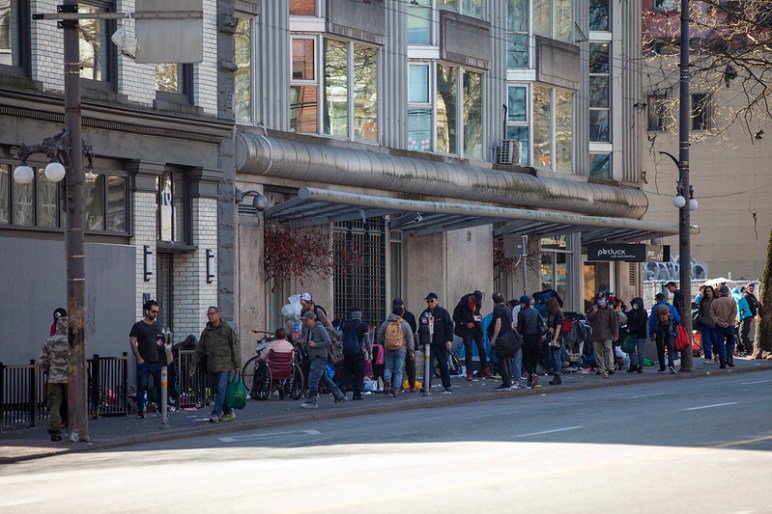
I live in Vancouver British Columbia, the wellspring of inanity, where we learn of another grotesque criminal act on a daily basis, for the most part being instigated by the homeless, the mentally disturbed and the drug addicted. The latest was another stabbing, in broad daylight and with no motive. One male stabbed to death, another male knifed and actually had his hand severed from his body. It was perpetrated by an individual who could be the poster child of the wrong headedness of our court system, another too familiar example of where the combination of mental health and criminality collides forcefully and is played out on public streets in broad daylight. All while citizens look on or stop to record it on their phones. This latest suspect male had over 60 encounters with the police, was on probation, and had a history of assault and assault causing bodily harm. His current probation conditions was termed as being “soft”.

The story fomented the usual media hype, the Mayor coming out quickly to assure everyone that this is a “safe city” –when those of us that live amongst the daily visions of unbridled mental illness and drug abuse clearly know better. The Vancouver City Police Chief Adam Palmer when sharing the podium, seemed exasperated and in his statement gave a not so subtle hint that the suspect should not have been out on the streets. The media as usual called for instant solutions to undo the years of policy mistakes, the biggest mistake being the closing of the local psychiatric hospital “Riverview” in 2012.

In the Vancouver and British Columbia political establishment the leaders are clearly taking note of the growing public discontent and it is now looming as the single most important political election issue. Along with this is that in British Columbia there has been a dramatic up-ending of the three political parties in the Province. The Liberal Party (who re-branded themselves the B.C United), they, who were the power brokers for many years in this Province, have simply given up; they have literally withdrawn from the next Provincial election scheduled for November 2024. They have surrendered the proverbial ghost and have freed their candidates to wander away into obscurity or go join the Conservative party. This leaves it a two party race, which is polling now as a neck and neck battle between the governing NDP and the Conservatives.

The upcoming election, if nothing else, will allow the voters to distinguish between two distinct policy groups, the socialists or the conservatives, and should therefore provide a more accurate glimpse of the mood of the people. The Conservatives are predictably running on a platform of law and order and a greater move to private enterprise. They are in essence saying that they want the government to get out of the way. The NDP whose party base are traditionally the victimized and marginalized groups (you pick the group), the unions, and any and all members of the “learned” left. These “progressives” have the added advantage of massive support from the current media establishment, the Indigenous, government workers and the academic institutions. The NDP are remaining true to their ideology and are sticking with policies of all people being part of, by necessity, a fulsome government oversight apparatus. It has been a long time since there has been such a clear choice for the people going to the ballot box and currently it seems be an even battle.

It is always fun at election time to watch all the candidates feel bolstered and sharing their insights on all of the evident problems and the clear solutions that lay ahead. Solutions which they did not see while in power but have now attained a greater vision when in sight of a ballot box. What is equally clear is that it is always someone else’s fault.

When talking about crime and rampant lawless behaviour, the Provincial NDP who have been in power for the last five years in British Columbia (the California of Canada for all you Canadians who live in the east) quickly point to the Federal Liberals as the problem. And to be fair, the Feds are the governing body when it comes to the Criminal Code. The offended Feds in turn point back at the Provinces because they are in charge of Health Care and the current sitting Judiciary. The Provincial leaders then rebound and point the accusing finger downward to the cities as they are responsible for enforcement. Three levels of government, all with no defined action plan in terms of the daily carnage on the streets and apparently unable to find any solutions while in power, now telling everyone they now know the way.

As we in the West look eastward, Alberta has always been Conservative and the Prairies are very similar. Doug Ford in Ontario is now trying to get a Conservative election victory prior to any Federal Election. Newfoundland is the only true vestige left of Federal Liberal supporters.

The Federal NDP and their illustrious shrill leader Jagmeet Singh dramatically announced that he is “ripping up” his prop-up agreement with the Federal Liberals; while at the same time vowing not to be rushed into any confidence vote. It would seem that he has finally realized that the Liberals are circling the drain and he either goes down with them, or finally leaves the safety of the Liberal cocoon for the less than safe seats of his own party. His ratings are below Trudeau but he is hoping his chances will improve with a continuous socialist rhetoric of corporate greed. He is hoping that someone out there actually agrees with him, but his chances of disappearing altogether is growing. The policing fraternity are hoping that the NDP policies disappear with him.

Now Trudeau himself is another story. His actions to date only raise questions for me. As he reads the latest polls and gathers his troops in Nanaimo this week, is he being driven by pure ego? Does he think he can spend his way to a rise in the polls and another minority government? His strategy for a possible re-election is singular. He will continue to try and and will have to make Polievre turn into Trump.

Polievre for his part, will continue to try and avoid any major guffaws and keep his newly coiffed hair and refined look in place. He has to walk a fine line, because he certainly is not going to get any votes from the public service or those that depend on government contracts. The same foes of the BC Conservatives are the same foes for the Federal Conservatives. Let’s face it, what are the chances that members of the CBC vote for him?

Of course there is not a strong enough wind to blow all the usual problems off the headlines and the teleprompters of our television talking heads. In terms of specific policing issues, in the next few months the Surrey RCMP and the Surrey Police Service will continue to dominate the local BC headlines with the snail like place of getting officers on the ground and the equally slow moving RCMP in getting their officers out. The Indigenous will continue to dominate headlines with further demands and true to form, just recently tore up their latest signed agreements for a natural gas pipeline with TC Energy. There is little doubt that the RCMP will once again be manning the barricades in northern B.C.

Back east I have a growing interest in the Bill Majcher case, charged as he is with foreign interference and there are some interesting parallels to the Cameron Ortis case. There is a good chance that CSIS and the RCMP INSET (Integrated National Security Teams) may look bad on this one as they continue to struggle to be a meaningful service amongst the Five Eyes. So we need to keep our own eyes on that one. Their is evidence now coming forward that Majcher was throughout several periods of time , actually working for CSIS.

In a more general sense, the Mounties in Ottawa will continue to find themselves in an environment of increasing public suspicion. They seem to be floundering in terms of leadership and in finding their true reason(s) for being. The larger overall problems have been years in the making and it will be years in the undoing. They will however, continue to do what they still do best. They will apologize somewhere. The most recent was in Nova Scotia where they apologized to the African Nova Scotians for “historic” use of street checks.

There will be the usual public government pronouncements, the Federal government employees will continue to protest having to go back to work 3 days a week and will come up with any inane excuse they can find. Housing prices will stay the same, inflation will continue to hover around 3% and mortgage rates will have little effect on the supplies of housing. The media will continue to pump us full of doomsday proclamations; headlines about droughts, floods, fires, heat, cold, or anything they decide is “record breaking”. Our traditional news sources will continue to be decimated and their managers will continue to replace long time journalists with persons who are quick on the keys to Instagram, and Substack. Ukraine seems to be in military limbo and Israel seems to heading into the same horrendous stalemate in Gaza.

However, life will go on. Get ready, get your thoughts in order and be a little hopeful, as it is never as bad as it seems. Its only an ill wind that blows nobody any good.

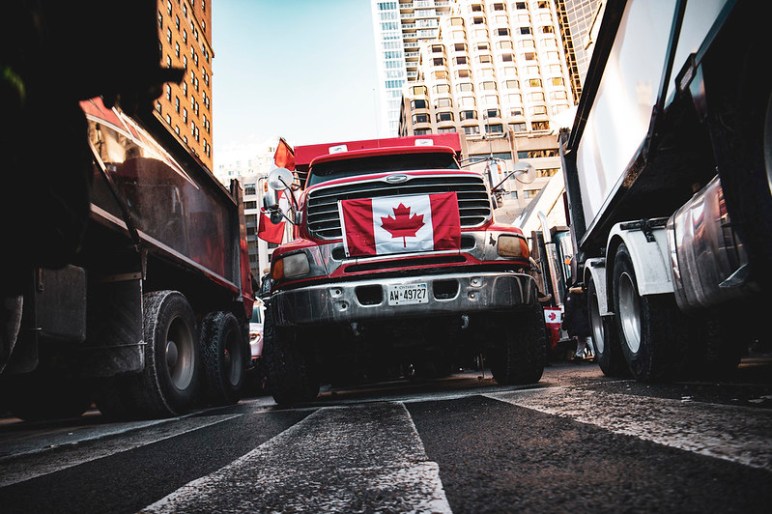
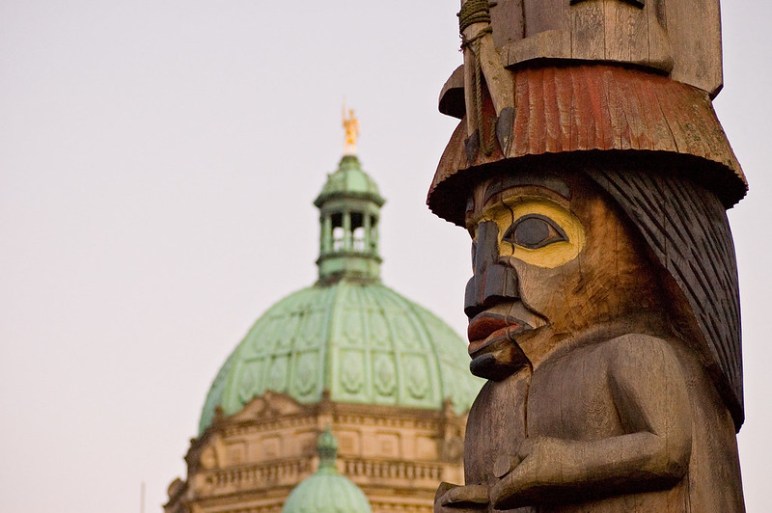
Photo courtesy of Jeannine St- Amour via Flickr Commons – Some Rights reserved
Policing under Socialism

This probably is a bit of a heavy and somewhat dry topic, when most of us are trying to enjoy these care free summer vacation months. However, politics is very much in the air right now. In my particular part of the world there is a Provincial election, and an upcoming Federal election; neither of which am I confident I am going to like the end results. In the rest of the world, there have been swings in the electorate in the United Kingdom, which has moved to the left with the Labour Party; and in France, as of today, it is a country stuck in the middle. The French government is neither right or left and nobody wants to coalesce with the other.

I will admit that over the years, the longer I pay attention, the more I lean to some level of a libertarian philosophy in my outlook, a growing belief that less government is more the ideal. My wishes are clearly out of step, as the governments in this country are already controlling almost every facet of our daily lives through rules, taxation and regulations. Their belief is grounded on the firm commitment to the fact that they know what is good for us, and that they need to protect us from our own self-interest. The Federal government, and a variety of NDP Provinces in the passing in their legislative initiatives seem hell bent on bringing their brand of socialism to the country. Interestingly, in portraying what they believe are just causes, completely turn away from the term “socialist”. Which can only be interpreted to mean that they can fool most of the people most of the time.

During the Russian Revolution in 1917 we came to distinguish between “revolutionary socialism”, or Communism and “evolutionary socialism”. In the latter category, the proponents sometimes refer to themselves as “social democrats”. Socialism as a movement in Canada is not new, history shows us that there have been many times that we Canadians have entertained and sought a socialist political remedy: the Socialist Party of Canada was in 1904, the Social Democratic Party in 1911, the Communist Party of Canada in 1921, the CCF IN 1932 and the NDP in 1961. It started with Tommy Douglas in Saskatchewan in ____ but since then there have been NDP governments in BC, Saskatchewan, Manitoba, Ontario and the Yukon.

Socialism’s corollary is that socialism by its nature necessitates a growth of government in all its forms. More rules and regulations are to be developed in an effort to help the “working class”. It is a political doctrine that at its base feels the need to criticize the existence of social, economic, and political inequality in society. Hinged to this theory is that only government of the people can effect the necessary changes to the social order. They believe that there is a need to limit the excesses of private ownership and a wish to expand public ownership. Therefore the state is responsible for planning– to eliminate those cycles of un-controlled capitalism.

Which brings me finally as to what is the role of the police in a socialist state? Are the police a reflection of the state? Should we care? Revolutionary socialists are for the most part against the police, because in their definition they are an arm of the proletariat and therefore there only to oppress the working class. Paradoxically, most revolutionary socialists agree however that no enforcement often leads to outright chaos. Just ask the people of Portland Oregon how their experiment with no policing worked out. At the other end of this continuum, on the far right, is a state run by a despot or dictator, where the police are there to serve only the needs of the people in power. The examples for both of these extremes is an extensive list.

In Canada, we are somewhere in the middle of that bell curve, but there have been times that the pendulum has swung the police dangerously close to the narrow ends of that graph. The Convoy protest in Ottawa and the imposition of the Emergency Measures Act, clearly moved the police to the despotic end; while the protests and de-funding of the police initiatives clearly moved the police to the left end.

In an interesting article about “professionalism” in policing, the authors argue that when people make “careers” out of policing, it creates an environment of police officers there to simply “carry out orders”; that they become part of the ruling class and just “reflective of the state”. But I digress.

I believe like most police officers that policing must be; professionally effective, accountable and legitimate. This serves to consolidate a democracy. The police should be there to serve society rather than the state. They have to be legitimized by the public and to be legitimate: they must adhere to the law and due process, need to be subject to controls, need to be accountable and transparent, and they must be politically neutral. It is a fine but distinct line and to walk it requires a degree of political sophistication and insight that often seems lacking in our current police leadership. Today for example, it would be hard to argue that police management is either transparent or politically neutral, which again reflects on any claims of legitimacy.

So even though political philosophy is often a topic that causes many to roll their eyes and take a nap, police organizations and their leaders need to be wholly cognizant and continually thinking about the role of government versus the role of the police. As the government encroaches on the rights of the private individual in order to give over to the general good, we need to be paying attention as an enforcer of laws as to whether you are acting for society or the state.

Should anyone doubt Canada’s creep into socialism, one only needs to look into the statements of Justin Trudeau or Chrystia Freeland. Both have made pronouncements and proposals clearly aimed at re-ordering the social order in Canada. National Day Care and National Dental care, are in the end, examples of those governments beliefs. They have recently introduced Bill 63, the Online Harms Act which some argue will give the government the ability to censor speech. They have recently imposed an increase in the capital gains tax, to have the rich pay more for the poor, as they paint themselves in the media as Robin Hood. They have brought in Bill C-!8, the Online News Act forcing Google and Meta to pay $100 million to news organizations and they determine the distribution of those monies. They subsidize the national CBC to carry their message forward. In the government of Quebec they even regulate the language that can be used in business. In BC the government has closed Provincial parks to the public, allowing access to the Indigenous only as part of their solution to injustice. Governments regulate how we eat, how we live, and where we live and we pay them exorbitant amounts of money in the form of taxes to do that for us. The private individual is always subsumed for the good of the greater good.

So as the country moves to a full socialist imperative how are the police forces going to react? Will they become agents of the state, or will they be agents of society? Since the RCMP can not fulfill their current Federal mandates, how is it possible to take on all these other enforcement issues? Are they to become Big Brother? The Federal government continues to expand, so do we continue to grow the police state? Those decisions are important and will determine the role of the police in the future, and just as importantly, how the police are perceived and accepted by the rest of society.

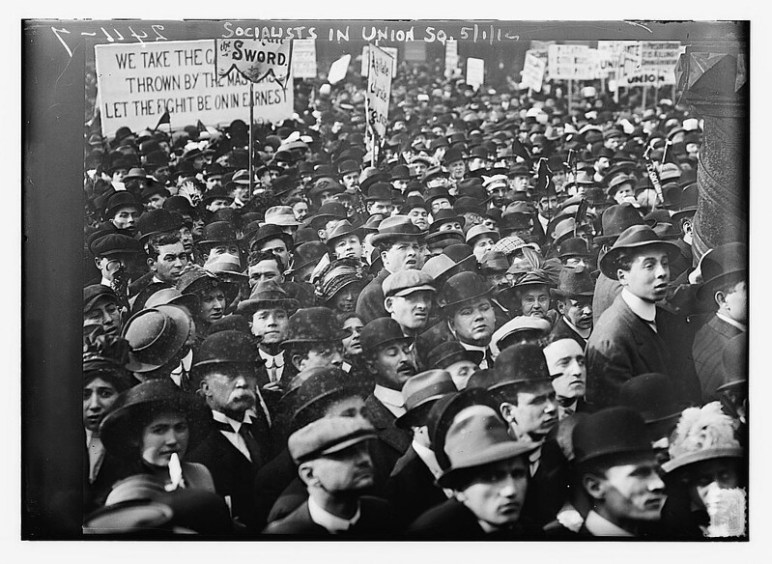
Photo courtesy of Flickr Commons – Some Rights Reserved by the U.S. Library of Congress

Some late Vindication…

It took a 74 year old long-time lawyer and Justice, having spent a lifetime in security related matters, someone with two feet clearly planted on the ground, to finally call out the Liberals and their authoritarian ways. In the past week, Federal Court Justice Richard Mosley finally righted the wrongs of the imposition of the Emergencies Act. It was roughly two years ago that the “Act” was imposed on February 14, 2022, with grand fanfare and a concerned grimace by the Prime Minister. His forever kowtowing Ministers, and his NDP cohorts, profusely nodding in vigorous agreement standing behind him. This group of progressive liberals launched an Act designed, as it names implies, for a National Emergency, and when imposed, dictated full control over the lives of its citizens and specifically their ability to protest. There should be no mistake, this was a move that was in this writer’s opinion purely political, a move meant to show strength and determination, and aimed specifically at a group that had the audacity to question, a group that did not support the governing Liberals–in other words, they were the enemy. To put it in even simpler terms, the Liberals and their ilk did not like these protestors, these anti-vaccine rednecks, who came from afar. They were not of them.

Judge Mosley declared in his ruling that the imposition was “unreasonable and infringed on protestors charter rights”. That it did not “bear the hallmarks of reasonableness–justification, transparency and intelligibility”. He confirmed in essence what many thought –there was “no national emergency”. The faithful readers of this blog will remember a blog some months ago entitled “Sledgehammer and the Peanuts” which argued these same points; that the blaring of horns, the smell of diesel, bouncy castle encampments, and the disruption of the workday for bureaucrats in Ottawa (who were working from home through all this because of COVID) did not fit the definition, no matter how broadly interpreted, of this being a national emergency and that it certainly did not need such an all encompassing and arbitrary legal hammer.

The protest and the reaction to it did show that in Ottawa, if you put too many police departments in the kitchen, the broth will in fact be spoiled. The frustration and lack of coordination by the RCMP and the Ottawa Police Service, combined with the Doug Ford non-response, bordered on farce.

Of course this ruling was a kick in the pants for those fearless crime fighters Trudeau and Freeland; they know that this is not good in terms of going into the next election. Freeland, undeterred by a lack of factual support for her argument, went immediately running to the microphone, saying in her pedantic kindergarten teacher voice, “the safety of individual Canadians was under real threat…our national security was under real threat”. Quite an explanation.

So the Liberal government immediately have said they were going to launch an appeal. Usually the governing party of the day and any governing party would be more cautious in challenging the judiciary, normally they would “take it under advisement” or would be “studying” the case. It demonstrates the level of incomprehension amongst these Liberals as to someone having challenged their decision making, a court saying to them, no, you were wrong, and in fact you breached the Charter of Rights. How dare Judge Mosley describe the decision making at the time, as only based on “speculation” and that it had led to “unreasonable search and seizure”. The Liberals, of course have not released their legal grounds for that appeal, so I am suspecting that the Justice Department is now assigned to go find those grounds.

It is good to remember that there are four grounds to impose the Emergencies Act as clearly written: a) a public welfare emergency b) a public order emergency c) an international emergency, and finally d) a war emergency. CSIS in the Act is the defining authority in terms of what constitutes a security emergency. Clearly the latter two conditions, c) and d) didn’t apply, so the Liberals will have to continue to argue that it was a public welfare or public order emergency on a national scale. It was very interesting at the time, that CSIS Director David Vigneault in front of the Rouleau Commission, in a classic case of double-speak, said that even though the circumstances “didn’t meet the definition of a threat to national security”– nevertheless he supported the government decision. So in the end he supported what turns out to be a serious breach of rights of Canadian citizens, when he didn’t feel that there were grounds to do so. Time for Vigneault to step down.

So what will be the Liberal strategy be to fight this public relations nightmare. They are going to point to two arguments, and they have already started down this road.

First and foremost, they will point to the earlier mandated government appointed Commission that was chaired by Justice Paul Rouleau. The “appointed” Commission predictably found that it was “a failure in policing and federalism”, that it was in fact a “national emergency”. This was a bit of sleight of hand. The Commission mandate was to “examine and assess the basis for the Government’s decision to declare a public emergency…appropriateness and effectiveness of the measures selected by the government”. It was was not in fact a “legal” finding. The Federal Court with Judge Mosley on the other hand was to determine the legal “threshold” having to be met for the imposition of the Act.

Rouleau interestingly also said that it was a “difficult decision” he came to and that the “factual basis” for his finding “was not overwhelming”. I guess the lesson there for everyone is to never let the facts get in the way of a good argument.

The Commission was politically tainted, it appeared to have been set up purposely to ameliorate the decisions by the government of the day. The allowed testimony was not subject to being tested in terms of any extended cross-examination. The Minister of the day, now former Justice Minister David Lametti, during his testimony even refused to reveal the legal opinion which prompted their taking of the action, arguing lawyer client privilege. It was pointed out to him that he could have waved the privilege, but he would not. Mr. Lametti, who was so traumatized during the days of the convoy, that he moved back to Montreal, in a recent interview he now of course “disagrees totally” with Judge Mosely and is “confident” that they will win an appeal.

The other argument that the Liberals will bring is the example of what was going on at the time in Coutts Alberta and the roadblock there. It led to an investigation of an extremist group who wanted to attach themselves to the protest, and they were intercepted and charged by the RCMP. This Liberal argument is also disingenuous. The investigation and charges were brought about through the Criminal Code not the Emergencies Act. The police used the existing powers to bring that investigation to a close. So as Judge Mosley points out in his decision, the “existing laws were sufficient”, to deal with the Convoy protests, that the regular laws were open to the police and could handle the situation. The protestors that were charged, Tamara Litch and Chris Barber won’t necessarily be helped by this Federal Court decision, because they were also charged under the Criminal Code, not under the Emergencies Act.

Judge Mosley also added that “economic disruption cannot form the basis of extraordinary measures”. The Liberals during this “crisis” often argued that the Windsor border blockade was disrupting trade going into the United States. Ms. Freeland trotted that argument out again at her recent press conference, again arguing that Canada’s “economic security” was threatened. Maybe, she had not read the entire decision?

It is also interesting to read the various takes of those in the Liberal support groups, who were supportive of the government measures at the time. The CBC called it a “a divisive decision” and that illustrious leader of the NDP, Jagmeet Singh now says that he only “reluctantly supported the Act”. The Ottawa citizens who formed a civil class action against the protestors, which is seeking $290 million for their Wellington Street disruption, are still saying this ruling does not hurt them. Their lawyer Paul Champ argues that their case is about “honking, its about parking on the street, not for an afternoon of protest, but for weeks”. If one ever needed convincing that the citizens of Ottawa, and the bureaucrats who are governing this country live in a hermetically sealed environment, this is the case.

The Canadian Civil Liberties Association, a group which I rarely find agreement with, but brought the case forward to the Federal Court, said that the actions of government in this case, that the imposition of these types of laws “…are dangerous to democracy”. This decision, if looked at in a broader scope, should be seen as an examination of the very tenuous nature of democracy. The solitary Judge showed us how thin that thread really is, and for that we owe him a debt of gratitude.

Photo courtesy of Michael_Swan of Flickr Commons – some Rights Reserved.

The Political Fires of the North Shuswap…and the embers of discontent

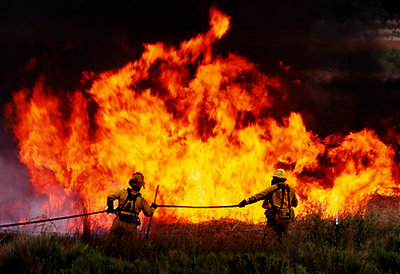
This is a blog which is more personal than most, it is about the small village of Scotch Creek, where about 1,500 people live scattered along the edge of Shuswap lake in BC’s interior. This is personal because this is a place where I lived for five years, felt that I was home there, although I am sure I never reached the status of being a “local”. I moved away about two years ago, but still feel an ill-defined connection to those that I got to know, and I often still linger and dwell when looking over my photos of that time and place. When I lived there very few people knew of the existence of this small village, but as you probably know it has now received national attention, and the expected dedicated fevered media examination, only because for the last couple of weeks, the people there have been fighting for their lives and their property, against two raging wildfires. The Adams Lake fire and the Bush Creek East fire, which came together and within twelve hours co-joined to create a seemingly indestructible inferno, a combined fire capable of travelling 20 kms in 12 hours, and then being able to surround the community of the North Shuswap.

It was a coming together for which government and the British Columbia Wildfire Service had no answer, and one where there attention had already been diverted to the more populous fires in Kelowna. But this turned into something other than just the fires, because it was also a collision between the socialist oriented BC government and to a lesser extent the Federal government, versus a small group of independent rural residents, more libertarian, more independent, and more self-reliant than currently found in most urbanized areas of the country. The BC government could not relate. In the current political mind-set, it seems that when the duly elected feel constrained, when others are not conforming to their beliefs, then they should be treated with derision. They even resort to labelling and name-calling, and always place them in the category of the far right.

For the last number of years, the citizens of British Columbia, like many in the rest of Canada have been gladly and willingly led down the path of government being allowed to control of most of our daily lives. Theirs is a utopian society where the government knows best, it is a government that will protect us, that will feed us, house us, and all the “un-housed”, and keep us safe from the mental stressors and complexities of the real world. We are to be bubble-wrapped. And when this government mind set doesn’t find like minded individuals, or when it stumbles or fails in its goals, then the general populous demand to know why; and demand to know what the government is going to do to fix it. The government continually re-enforces these beliefs and spews a constant mantra of being “there for you”. The citizens in return are expected to never question, never provoke, and the government hides behind the opaque wall of bureaucracy. We have created a population with hands continually extended palms upward, for an infusion of the always flowing monies, to hold us over, and to make all the pain go away. Money is never an issue under this regime, Provincially or Federally.

It is at least politically successful, until one hits a pocket of the public that doesn’t like the government, a group that don’t want the government making all the rules and regulations, and still exude a stubborn pride of place. It is in many ways a throwback to earlier times. Your car breaks down, you fix it, your sewer backs up, you dig the trench to fix it, and for the most part there is nobody else around anyway. This is in essence the character of the community of Scotch Creek, they are the square pegs that the government wants to try and force into the round holes of compliance.

So as these two wildfires came together, the government body charged with fighting it is the British Columbia Wildfire Service, along with the BC Emergency Management Minister, Bowinn Ma, and she in turn is backed up by the NDP Premier David Eby. The government spin during this time is too predictable “we are here for you,” “to save you”, “to protect you” from the fires. How were they going to do that? The first order of their business plan is that they are going to get you to leave, to run from the fires, and to leave everything behind, everything you worked for, everything that is your material tie to the world. Secondly the Wildfire Service will be there to “mitigate” the disaster, which in a lot of cases is not to fight the fire, but to try and “control” it. As the Scotch Creek residents watched and physically saw the flames barreling down on them, they were told to flee, but their instinct was to fight, especially when there was no sign of the Wildfire Service, in fact the Service did not show up for a couple of days. They were un-officially abandoned.

So a pocket of individuals, about 300 people reacted instinctively, they decided they were not going to lose everything without a fight. They were local, they knew the woods, the lakes, the winds and the force of the fires coming at them. They also knew with their access to boats and the lake that they could never be fully cornered, they had a planned escape hatch. And so they did fight, with every water pump, shovel, and mechanized device that they could muster. In so doing and with an inhuman amount of energy they managed to save a number of properties, and many parts of their community. It was a formidable battle, and in the end they still lost 170 properties that were completely destroyed or heavily damaged despite their efforts.

And what was their government doing? They were on the radio and the television and pronouncing in front of anyone that would listen that it was not “safe to defy evacuation orders”, that these people were “un-trained”, that they needed to leave or they would be “arrested”. When someone pointed out that they actually couldn’t be arrested, they pointed out that they could if they strayed from their own property and tried to help a neighbouring residence. The government was fully immersed in their “process” and their Command Centres issued press release after press release how these people were endangering the lives of the firefighters, these renegades were daring to disobey their direction. The media as they always do in today’s environment, echoed the government concerns almost verbatim, feeling free to chastise those that had dared to stay and fight.

The people on the ground paid no heed. But as they fought on, they were running out of diesel and water and some other necessities to survive. Their like minded residents from across the lake gathered at the Finz restaurant and marina, and they gathered together and rallied to deliver food and goods to those in the fight by boat, driving across the smoke filled lake. What was the government response to this outright defiance? They ordered the police at the road blocks to turn back the food truck, not allow it through, which one can only assume was in an effort to try and force the residents to leave by cutting off their supply lines.

A twenty person protest fringe group showed up at the roadblock, one particular day, and the police went to the media stating that these people “intended to overwhelm the police” at their roadblock. The BCWS immediately issued a social media notice that they too were leaving, it was too dangerous for them, that these twenty “protestors”, had issued “threats of violence against these safety officers”. Interestingly the media also began referring to these protestors as part of a “convoy”.

In the end, the panic was short lived. A short time later the police rescinded their concern, and the BCWS realized they over-reacted and pulled down the media post. The RCMP then felt it necessary to speak about how their officers were “well trained and de-escalated the situation quickly.” They apparently disposed of this “massive” protest of 20 people in an hour with “no violence and no arrests.”

Meanwhile, as expected the Premier was touring the sites, focusing primarily on the voters of Kelowna and the Indigenous, photo ops of comforting those that had lost their homes and belongings; Trudeau was in Kelowna as well, but was warned about coming to the Shuswap it was reported, because of the dangerous backlash that was going on there. The Vancouver media who had sent all their resources to this “climate crisis”, now wandered the evacuation centres, trying to find someone that would cry on record about having lost everything or get video of them staring through binoculars at the distant shore to see if their house was still standing.

The people at Finz, continued to say to the authorities, whether you like it or not, we are going to get help to our friends. Ever slowly, the Wildfire Service knew they were not going to win the publicity battle, the opinion tide was turning, and if there is anything the government pays attention to is the social media –so their messaging began to morph. Ms. Ma became less strident in her pleadings to comply with the government evacuation orders, never admitting they were wrong, but that they were now going to “fold these people into our operations”. They were going to co-opt these malcontents, train them in the Wildlife Service ways, and then they could begin to allow these now fully “trained residents” into the area. The extensive training by the way in the end was for one day. So in the end they were now able to supplement the 1600 “expert” personnel which they hire each year, a third of whom are summer students with the “trained residents”.

The Wildfire Service were now also facing some hardened questions. There had been a controlled burn that some folks in the area questioned as to whether or not it had aggravated the situation. The Wildfire Service denied this possibility, and quickly countered with another media conference where the controlled burn was described as being a major “… success and saved hundreds of homes”.

One may never get to the truth of it all for quite some time. The Shuswap region lost 170 properties and 137,000 hectares burned, the Kelowna region lost 180 homes or outbuildings. One would think that there need to be some questions asked, although one should know that to question firefighters is akin to asking the Pope to become a Baptist. They are to be celebrated at all times.

To date the government according to the BC Forest Minister has spent $585 million, but not to worry, “the money is there” and they are not concerned about running out of money, “whatever it takes to protect people and property”. No one pointed out in his news conference that that there are a lot of people that may tell them that they in fact didn’t do a a very good job of saving peoples property. But why quibble and distort the popular narrative.

When you look at some basic numbers, it is fairly obvious that this is about mitigation, not about saving all. There are currently about 377 wildfires burning facing these 1600 firefighters, which amounts to about 4.2 persons per fire. Clearly they are not going to fight every fire. The question is how it is determined when and where they will fight? At least 40% of their budget goes to “contracted” aviation services, 130 helicopters and 35 fixed wing aircraft. Is contracting these services the way to go? Are helicopters with their single buckets the most efficient way of fighting the fire? Firefighting is clearly a very lucrative business for some, and when large amounts of money are being expended, maybe someone should be auditing costs and the financial controls in place.

Throughout this process, it has been continually been said that these fires were “historic”, that they were the result of “climate change”. Well that is not quite true either. According to the Fraser Institute, and an examination of the data, “the annual number of fires grew from 1959 to 1990 peaking in 1989 at just over 12,000 that year and has been trending down since.”

“From 2017 to 2021 (the most recent interval available) there were about 5500 fires per year, half the average from 1987 to 1991”. The annual area burned also “peaked 30 years ago”. The Wildfire service now bends the statistics slightly, and now contends that this year, the number of fires is “six times the 10 year average”.

So the question that needs to be asked is whether the tendency for fires to become larger and more dangerous is as some claim, something that “can be traced to our approaches in forest management”. This is not a question for the individuals actually on the ground dealing with the fires, working 12 hours shifts and sleeping in pup tents, these questions are for the leaders of our government and the bureaucratic functionaries of this service. The BC Wildfire Service at the very least need to be audited in terms of management, resources and the expenditure of funds. Do I expect it to happen? No. Remember these are fire fighters.

So as the politicians slowly work there way back to their safe urban environments, the media in tow, maybe some should also realize that maybe evacuation notices should not be the only tool in their policy belt. Maybe, just maybe, they should listen to those that still project and protect their independence. They are a minority to be sure, their numbers are dwindling, but the government needs to think as to whether coercion and ignoring their input is the best policy decision. These people are in fact reminiscent of that dreaded “colonial spirit”, reflections of that “greatest generation” which for the last number of years your governments have decided need to be criticized and humiliated and spoken to as ill-educated and unworthy. The truth is that we need more of them.

And yes, they did save my old house, and I for one are very grateful for those “untrained” firefighters.

Photo courtesy of Flickr Commons by U.S. Fish and Wildfire Service – Some Rights Reserved

The Law and Disorder in Fairy Creek

If one ever wanted to find an example of the collision of the progressive narrative with the more real world of economics and industry, especially in British Columbia, one could do no better than looking to the logging industry of this Province. There is no need to talk about the obvious and well documented economic impact logging has had for this part of the world; it has been the primary and overwhelming industrial force in terms of economic growth and prosperity. It is also highly predictable therefore that the environmental warriors, including the fringe factions of the movement in the west, would naturally gravitate to and stake their ground on Vancouver Island. The war on “The Man” fits comfortably in the granola hemp-weaving establishment of the Island, surrounded as they are by old growth timber. It makes for an interesting philosophical coming together as there is a large divide between the folks on the Island who work and live in saw dust covered Wild Ass logger pants, and those sporting tie-dye shirts and harem pants.

This story starts in 2020, when the NDP government granted timber licences to an area north east of Port Renfrew, in the Fairy Creek watershed on Vancouver Island. Since that time the eco-warriors have declared and waged war against the Teal Cedar Products Limited, a member of the Teal-Jones group. Teal Cedar employs about 450 workers, and their logging permit allows them to harvest “old growth timber”. The contract for this project was estimated by Teal to be about $20 million in value. Keep that figure in mind when we go through the costs in this log cutting eco-war.

The protests started right away, and the company complained continually about their employees being harassed and their equipment damaged. One should be mindful of the fact that most of these protests and the protestors themselves are not necessarily “peaceful”– this is not a 1960’s sit in. In fact it became and has been labelled “one of the largest acts of civil disobedience in Canadian history”.

Of course, this all led to an injunction being granted to remove the protestors in April 2021, that was needed to be enforced by the RCMP, but in particular the E division’s C-IRG (Community – Industry Reserve Group). Protests against economic development, such as pipelines and logging have become so predominant in British Columbia, that the RCMP felt the need to create a new separate section in 2017– just to deal with all the protests. This Mountie group was going to bring with it “strategic oversight…” and it would be based on the “Gold,Silver, Bronze command structures”. Anyone who reads this blog over time has come to realize, that as soon as one hear the words, strategic, and oversight, and it then gets lumped in with Gold, Silver, Bronze– one should automatically think bureaucracy and too many supervisors. The Mounties have an Egyptian love of pyramids in terms of structural organizations, and why have a single layer of supervision, when you can add a couple of more layers of oversight and decision making?

So how has it been going? To date at least 1188 individuals have been arrested, 900 for breach of a court ordered injunction, 200 with obstruction, and 12 assaults on police officers.

The activists are being fronted by an organization called the Rainforest Flying Squad. They are led by people like Kathleen Code who sums up the police action in their enforcement of the injunction as being there only to “knock the heads of peaceful protestors”.

This is never an easy situation for the police, you are being summoned to enforce the law, and you are up against a group who have no room for negotiation, in their view only a stoppage in the the logging can be tolerated. These activists for the most part, have no personal or vested responsibility in these situations, other than a hardened belief in their cause.

The Fairy Creek situation, seemingly like all things in British Columbia, is further complicated because of the Indigenous involvement and their various factions. One of the Indigenous First Nations, the Pacheedaht own three sawmills, and have a revenue-sharing agreement with the Province for a sharing of the proceeds from this particular timber contract. But there is a problem here as well, because the Indigenous groups are also divided, some welcoming the protestors, others scorning them and in their political power shared system, the elders of the Indigenous, are not in concert with the pro-logging groups of their Council.

In terms of protestor strategy, one would have thought that if one wished to protest, should be centred on the Provincial government policy and the granting of the licence in Victoria. In British Columbia of course, it is the NDP government that is in power, normally best political friends with any fringe eco viewpoint, but the fact that the protestors go after a private entity rather than camp out in Victoria is in itself interesting. The protest effort worked to a certain degree when the Province did agree during all this upheaval, to a two year deferral for the “old growth” logging component.

So after all the arrests the protest groups, wanted to challenge in any way possible the court injunction, and turned to the usual lawyers based out of Victoria who specialize in protest law. Those lawyers decided that the legal argument that they could possibly raise was that the legal “script” read to the protestors prior to them being forced to move out of the way and facing arrest if they did not do so– was flawed. They had discovered that in several cases, the RCMP read a “shortened script”. Grasping at this apparent legal straw, they wanted to argue that the protestors were therefore not given enough “actual knowledge” of what the injunction contained.

So began the King versus Emily Henderson “also known as Ryan Henderson” case.

The single bare issue is that in order for the police to establish criminal contempt, one had to establish “actual knowledge” or “wilful blindness” to the terms of the injunction. Justice Douglas Thompson of the BC Supreme Court in Nanaimo was a willing audience, and eventually held that even though the injunction itself was not ambiguous, he did agree with the protestor defence team that “the script did not provide sufficient information to fix the respondent with actual knowledge of its material terms, and there was insufficient evidence that the respondent was wilfully blind to those terms”. The Crown was with little doubt somewhat perplexed as would anybody in reading this decision, so they appealed it to the Supreme Court of Canada. The Supreme Court of Canada were not willing to get involved– and turned down the Crown appeal with no reasons given.

Admittedly it is not unusual in these days, that common sense seems a little in short supply when it comes to the law, and it quite often appears that reality seems to sometimes take a back seat to the exactitude of the written legal argument. But here we are given to believe in this legal argument that Henderson, standing facing a group of RCMP officers, who are reading them a script in the middle of the woods, which in essence was commanding them to leave– we are being asked to believe that the script was insufficient for them to understand the meaning and the intent of the injunction, and therefore the intent of the police in being there. Nobody that has ever stood in that position would believe that they did not understand why the police were there. Nobody. It is also well known that if you want to find some self-educated lawyers, find any protest group, as they are the first ones to tell you “they know the law”.

What did this legal “victory” mean or accomplish. Nothing, absolutely nothing. It just put everyone back to square one. Crown Counsel had to find the other 146 cases where the persons involved were read the same “shortened” script and drop those cases. They stated that “Those cases have been dropped because their ability to succeed was placed in doubt”. There are still 210 cases before the courts.

On Tuesday of this week, the RCMP was back at the blockades, as were the protestors. Three people were once again arrested, and one was arrested for assaulting a police officer. The RCMP says that there have been “numerous violations of persons obstructing, impeding and having interfered with forestry operations”. There also have been further reports of harassment and vandalism to the forestry workers and their equipment.

To date the RCMP has spent $18,716,969 in Fairy Creek, most of that in wages. The courts have been jammed with cases, but there is no estimate of that legal bill to date.

The C-IRG continues to bend over backwards to accommodate the “Indigenous cultural matters” and have had to go to class to learn of such things as the “handling of sacred items during protest arrests” and to make sure that they are operating “consistent with the standards and expectations set by bill C-15 and the adoption of the principles of UNDRIP (the United Nations Declaration on the Rights of Indigenous Peoples) .” That no doubt was probably a Gold Command decision.

However despite all this genuflection to the woke, the C-IRG, to add insult to injury, is now being investigated by the Civilian Review and Complaints Commission after receiving complaints from these same protestors in March 2023. They are going to look into the “activities and operations of the C-IRG and their systemic compliance with the Charter of Rights and Freedoms.” Furthermore, this same allegedly independent body the CRCC , is another example of inert bureaucracy, so they have now hired an “Indigenous based law firm” to assist them. They have hired the renowned Turtle Island Law firm. A two person law firm which was formed in 2022, who say they are going to gather testimony “in a de-colonial, Indigenized, and trauma informed manner”. Enough said. Apparently no one can see the clear conflict of interest, just as no one should now expect an unbiased reporting.

So as of today, the protests will continue, the injunction will still need to be enforced, and this time the RCMP will no doubt read the full script– and then this whole circle dance of ridiculousness will continue.

Photo Courtesy of deejayqueue via Flickr Commons – Some rights reserved

A Surrey post-mortem…

We have been following this issue for a long time, so when it finally reaches a possible conclusion, I find myself obligated, with some reluctance, to write about it once again. As those of you know who have been following the story, the RCMP is now effectively losing jurisdiction, in its biggest detachment in Canada. So it is news, but it has been truly tiring to watch this fiasco unfold, led by a couple of politicians in Surrey, like MacCallum and Locke, both of whom would be perfect characters for covers on Mad Magazine.

When asked recently on a local radio show in Vancouver how I felt about the NDP and Mike Farnworth’s decision as to who was going to police Surrey, and have now decided to go forward with the new Surrey Police Service, my only answer was that I felt “relieved”. It was in my opinion, a logical, fair and proper decision, when one considers all of the circumstances and disregard those speaking who clearly had an agenda. The problem was that it took too long to make that decision, and the delays affected hundreds of police officers on both sides of the argument. We won’t mention the monetary costs of these delays. Ms. Locke should have been told from the outset to go to hell, that the process to move forward with a City force was already in motion, and she with the short term memory affliction, was in the beginning part of it ,and in favour of a city police force. Since then she has been playing revenge politics for several months, in a campaign that was both misguided and misinformed, propped up no doubt by the senior management of the RCMP, who seemed to be continually willing to feed her disinformation.

So lets do a bit of an autopsy on what happened.

The biggest issue, the Y cut at an autopsy if you will, was the ability of the RCMP to actually fulfill their policing contract in terms of staffing and resourcing. Everyone who has been a Mountie in the last thirty years, if not longer, could tell you that the Mounties have been robbing Peter to pay Paul for years. There mandate and their abilities could not meet their stated goals. They are still doing it, and they can not keep up, whether in a city, in a Province or Nationally. The numbers simply don’t add up. Everyone knew this, except apparently Ms. Locke.

Ms. Locke in a statement after the announcement said that the Province decision was “disappointing, misguided and based on inaccurate assumptions”. There are currently 1500 vacancies in the Province of British Columbia, 500 are simply un-filled positions, and there are 1000 on some form of leave. Nationally the RCMP will put about 600 officers through Depot, and E Division would get a portion of them; and there were over 800 departures from the RCMP during that same time period. Please Ms. Locke, I beg you, what don’t you understand? In their response to the Province as to how the RCMP were going to fulfill their promises, I am told that their ingenious plan was to disembowel the plainclothes sections (temporarily no doubt) and put them back in uniform and on the road. I ask you Ms. Locke, how is that not the work of the little Dutch boy putting his finger in the dyke? Did you simply accept the RCMP senior management explanation without hesitation or examination?

As we continue our pathology, we get to the vital organs, the root cause of the RCMP conundrum falls to the single fundamental justification and reason that they have managed to survive in this Province. They have always had one go-to argument. They are “cheaper”. As mentioned numerous times in previous blogs, the RCMP portrayed themselves right to the end as the Walmart, not the Gucci police department. Of course, once unionization took place that became a much harder argument, and it got even harder when the union signed the recent new contract. Now, just the negotiated back pay is killing most small town policing budgets. The other counter-argument is, you always get what you pay for.

Lets delve a little deeper. The promotion and transfer policy of the RCMP does not allow for the development of its own officers, nor provide the continuity necessary for effective and expert investigations. The RCMP has a system where if you want to advance, usually you have to move to a different section, or a different detachment. Gone is any knowledge of the particular field, and the Mounties are famous for promoting in bosses who have no idea or experience in that particular field. So the Drug corporal, goes to the Fraud Section as a Sargent, the Community Policing Sargent goes to Major Crime as a Staff Sargent, now in charge of homicide investigations. The officer who has been policing Terrace, or Anahim Lake BC for the last number of years, now finds himself standing in the atrium of Surrey detachment wondering how to get to the washrooms. This is even more true in the executive ranks, Inspector and above, who flit from station to station about every two years, all because the Federal RCMP priorities are managing “people”, “diversity” and “inclusion”, not on whether or not someone knows the job. All investigations, whether it be a break-in or a homicide depend on that in-house homegrown expertise. One simply can not seed and grow expertise in the current Mountie system.

There is a single reason why the RCMP Surrey body is laying on this theoretical stainless steel gurney. The managers and executive officers of the RCMP are the root cause of their now unceremonious departure from Surrey. The uniform contingents of the RCMP, who make up the majority presence of the RCMP in Canada, have been at the very lowest priority in terms of management attention for decades. Ottawa, Ontario and Quebec may be the central head of the organization, but the head is not attached to the body. The current and past executives have been consumed and hypnotized by such things as writing “Mission statements”, self-advancement, and thus the advancing the size of the bureaucracy. The rank structure is completely determined on the number of bodies one is supervising. So if I have 25 officers under supervision, but I can grow it to 32, I will go from a Staff Sargent to an Inspector. The exams for that promotion have nothing to do with direct knowledge of the job, but claim to be testing how you “manage people.” There are no questions as to knowledge of any given job or ones that test the level of any given expertise. If one were able to examine the internal growth of rank and structure in the RCMP, Surrey Detachment with its current bloated rank structure, would be the perfect case study. When that is the driving force in any organization, suffice to say that the Peter Principle can and will be found in the nooks and crannies of every RCMP office.

Finally, there is one issue which rarely gets talked about. The RCMP has since I have been around displayed an arrogance as to their capabilities and expertise. It seems to permeate their dealings with other organizations and it often carries over into the investigational and administrative fields. Where it started, or how it originated has never been clear to me. You were not on the “job”, as the City cops used to say, in the Mounties you were a “member” implying some elite club. They seemed to interpret the Red Serge as a symbol of some level of implied superiority –and they would continuously point out they are the “national” police force, and got to hang with the Queen and hold the door for the Prime Minister. They were the self-appointed experts in all manner of policing, whether it was in the middle of Alberta, or Quebec, or Prince Edward Island, in a small northern outpost or in the city.

There is a significant push in the Ottawa cognoscenti to make the RCMP like an FBI, this too implies some level of arrogance. (the FBI has many issues as well by the way). All of this is to suggest that maybe the de-throning from Surrey will help in some ways to bring the Mounties down to earth, to re-discover that in policing it is how you perform the job, which is and should always be the measurement, not who you are or who you represent. The arrogance needs to go away.

One has to conclude by saying that I personally enjoyed a very good career in the RCMP, they treated me well. I have no complaints. I made great and continuing friendships, got to do what I wanted to do, and worked on some interesting and challenging investigations. It wasn’t the colour of the uniform that I remember the most.

But during my service, the cracks were beginning to show, we were seeing some poor results with the often ridiculous policy and administrative decisions, most times originating in a reaction to some political thrust. When faced with legitimate push back the managers and the executives did not wish to listen to the troops on the ground, in fact they would ignore them. To voice an opinion was often met with retribution, and that arrogance would creep into administrative and investigational discussions, the newly promoted Inspector knowing better than all those that had gone before them.

Change is they say the only inevitable constant, but the RCMP are one of the worst at adapting to change. The ominous and imposing multiple levels of bureaucratic nonsense stymies all attempts to reform or simplify. Quite frankly the current executives of the RCMP should now retire or resign, they have failed, and they have gloriously failed the uniform contingents which even they referred to as the “backbone” of the organization. They talked the talk, they just couldn’t bring themselves to walk the walk. They bought into and espoused a system of aggrandizement and self-promotion leaving the true core of the organization to drift in the wind. They also became political when they should have stayed neutral and silent. They spoke of polices and agreed to policies, in which they personally did not believe, such as “systemic racism”, in order to be political and continue their chance to advance. Every press conference if called to speak to a job well done, was flooded by the executives, all rushing the stage, and squeezing in to be part of the press photo. The junior officers who solved the file, or worked the file, always pushed to the background and out of sight. They long ago decided to “spin” the press rather than be informative. They even began to lie.

I believe that you are now witnessing a ground swell in the country which in a number of years most of what we now recognize in policing will be transformed, altered– some for the good, some for the bad. The golden age of the RCMP in British Columbia seems over, they are facing inevitable change. One can not celebrate, in fact it is sad to some degree, but one can only be “relieved” that the individual officers involved can now get on with it.

The autopsy of the Surrey RCMP is complete, my alma mater has met the end, the conclusion as to cause of death– is that the patient died of internal bleeding and constant executive mal-practice.

Photo provided by finalwitness courtesy of Flickr Commons – Some Rights Reserved


Tortured children, a murdered child and an apology…

A few have accused this author, on more than a few occasions, of being somewhat cynical, hard, lacking in empathy, and for the most part, I plead guilty. It would be convenient to blame one’s past work history, where one spent many years examining and rolling around in man’s inhumanity to man. Or maybe it is a product of my British-styled stiff upper lip up-bringing, no one will really know for sure. On the other hand, I am not the most ardent supporter of lengthy prison sentences or the death penalty as a solution to crime, for the primary reason is that I do believe that often the root cause of the people filling our jails are due to their circumstances at birth and/or their dysfunctional up-bringing. In other words they are victims of circumstance rather than genetic evil.

That all being said, a recent case in Chilliwack British Columbia has raised the bile in my throat and jangled my remaining faith with the sentencing and judicial system in this country, which is now being continually smeared by the politics of virtue signalling– no matter the human cost.

This particular recent case surrounds two foster parents and two foster children; an 11 year old and an 8 year old that were technically in the custody of the BC Ministry, but being housed and looked after by as it turns out, two sadistic adults. These foster parents were being paid $2000 a month, and had their own biological children in the house as well. The case details themselves are gruesome and have been played out by the media in many forums, always with the warning that we may not want to hear or see the evidence. Suffice to say, the children were tortured, beaten, restrained, forced to eat dog food, drink their urine and made to wear diapers–and it was all captured on 400 hours of video from in-house security cameras.

These parents (and I use the term very loosely) beat the children, with broom handles, a butt of an axe, and used zip ties and duct tape to bind and restrain them over many months. They even taught and encouraged the members of their biological family to do the same to the clearly un-wanted guests. The video often captures the foster parents laughing and joking while many of these elements of torture were going on, including the beatings and the kickings. The “mother” and the “father” were equally guilty, in fact it was the “mother” who for the last time slammed the child’s head into the floor, then waited an hour before she called 911 to get medical attention for the un-responsive child. The child died a short time later, weighing 63 lbs. at death, when a normal weight would have been 110 lbs.

Both parents have now pled guilty to manslaughter and aggravated assault. In a joint submission, which mean both Crown and the defence side agree with the proposed sentence; they have asked for a 10 year sentence for manslaughter, and 6 years for aggravated assault, to be served “concurrently”. In other words, technically the pair will be eligible for parole in about 3 years.

So in this case that presiding Judge Peter R. Laprairie called an example of “severe physical and psychological abuse that was deliberate and protracted”; one where he called the parents “evil and inhumane”, and a case where the violence perpetrated on the child, eventually killed one of the foster children–all of the official courtroom participants feel that this is a judicial sentence. I was reminded of my own ugly case where two individuals tortured and killed a street sex worker over a period of 12 hours before throwing her in the Fraser River still alive. The case got dubbed in Surrey “The House of Horrors”. Both of the accused in that case in 2001 were convicted of manslaughter and given 18 years– and I was upset that considering the level of torture, that was not enough time in jail. The length of the sentence in this Chilliwack case in light of the similar but different circumstances, where the torture lasted for months and an 11 year old child was the victim, is absurd, disturbing and insulting. What level of Crown Counsel, the group who is representing the life of the child, felt that this was indeed a reasonable sentence?

To me there is nothing excusable or more horrific than the harm done to children. As author David Pelzer once wrote, “Childhood should be carefree, playing in the sun; not living a nightmare in the darkness of the soul”. How could anyone watch 16,000 video clips of abuse and nightmarish torture in this Chilliwack case and feel that 10 years was sufficient? These adult sociopaths also have their own children, and god knows what has happened to them over the years, and what kind of psychological trauma will follow them into adulthood. One can only hope that the violence they watched and participated in would not carry into their adulthood, but that would almost seem impossible.

Did I mention that the two foster kids are Indigenous and the foster parents are also Indigenous? Why would I mention that? It should not matter right? How could it be possible that this was about anything but the murder of a child? But wait, as it turns out this “progressive” NDP government never fails to stoop to the woke. In watching the media report and the subsequent statement by the Ministry I noticed that there was something amiss, something which seemed out of context. As I continued to watch the press conference, there standing behind the Minister, who was busy tap dancing around the clear and obvious negligence by her department, were several Indigenous leaders. Why were they there I wondered? Is it possible that the government was trying to turn this case of government neglect and a humans tragic gruesome death, into an Indigenous issue, one where they could score some political points? It seemed hard to believe.

This led to other thoughts. Has this had something with a publication ban being imposed? Has this had any bearing on the sentencing of these two?

That concern was answered early on, yes, the government was going to make this about the indigenous cause, and rather bizarrely link it to a death, where everyone involved was Indigenous. (The link to that conference is attached.)

Minister Mitzi Dean early in at the beginning of the conference, surrounded by Indigenous leaders who seem constantly available, started with the statement that the BC government is “committed to reconciliation…” . She spoke of the need to ameliorate the “harmful colonial practises” and to “end the epidemic” of mental health issues amongst the Indigenous, which of course were brought on by these “harmful colonial practises”.

So in this case of nightmarish horror, in this case of negligence on the part of the Ministry bordering on criminal, she feels that she should start her press conference talking about the need for “reconciliation”. Here was the BC Minister of Children and Family Development in a public forum, designed to answer to the fact that the Ministry never checked on these children for seven months, a completely inexcusable amount of time, and she was trying to cloud Ministerial neglect by the Indigenous reconciliation issue.

Predictably, she then went on to add how corrective “changes have been fully implemented” to make sure that this “tragedy” never happens again. Ms Dean, pointed out that she was a former social worker, and now admits that the “policies and procedures weren’t followed” in this case. Of course, she continually assured everyone in the audience that better practices are already being followed. Nobody was fired, and Ms. Dean clearly does not believe in that old school principal that the Minister is ultimately responsible for her department. People should have been fired. The Minister should step down, and there should be an inquest into the processes of this Chilliwack office and the government Ministry in general in dealing with child welfare issues.

When pressed on why the proper practises were not followed, Ms Dean adding insult to injury, chose to answer with a government non-response, repeatedly answering, “Well, this is a real tragedy and my deepest sympathies go out to the family and the community”.

You know as well as I that the liberal and left-leaning governments of this country are trying to promote and encourage and have financed the Indigenous taking control of, and having responsibility for their own child welfare system. By not identifying the victims or the suspected and now convicted parents, who are they protecting? Did the Indigenous heritage of the guilty parties play in the lenient sentencing? Was the lack of checking partly the result of this being an Indigenous foster family because it treads dangerously close to the political ground of Indigenous governance? In this file of massive incompetence, the governments clear intention was to bury it in the bureaucratic black hole that surrounds all family matters in this Province, and then blanket themselves with the need for reconciliation.

Since the 1980’s in this country the government has been granting greater autonomy to the Indigenous nations in terms of running their own child welfare systems. This also includes when there is a need to adopt, and all based on the necessity to ameliorate the “cultural genocide” that has been perpetrated by those “colonialists”. Currently, when a child is removed, and this is no insignificant step, the social workers must try and place the child with an extended family member, second choice being another Indigenous family, or foster parents that are Indigenous. The removal of a child is first and foremost to then insure that they are placed out of harms way. Logistically this is proving difficult considering the relative small size of some communities. The 60’s scoop and the removal of endangered children from the community was based on this primary reason, the care of the child, whether it was always applied equally or fairly can be argued. Logistically, in terms of adequate foster home placement, there may have been no other way. The fact that still over 50% of children in foster care are Indigenous shows that correcting this process or system is not going to be easy. There is also a right to ask the question. Is a child’s actual physical survival and well-being being placed after the need to fix those real or perceived colonial wrongs? Is the preservation of the culture and language now seen as a bigger priority than saving a child from abuse?

In this Chilliwack case, the politics of the Indigenous is being layered over the need to protect the welfare of the child. Everyone should be ashamed. People should lose their jobs over this, and the two psychopathic foster parents should be locked up for a considerable greater period of time to insure they are never around children again. As for the Minister of this NDP government who felt that scoring political points with the Indigenous is a greater talking point than a child’s life– you have blood on your hands. You probably weren’t a good social worker either. Stick your apologies.

As that child’s head hit the floor, as it had many times before, and his malnourished body remained lifeless, it is highly doubtful that at that time and moment this child’s last concern was about righting the colonial wrongs. He was not worried about “cultural genocide” he was in a losing battle for his life.

He therefore should be given a name, and a memorial to him should be erected in his honour, so that we remember how he died, and hopefully remind everyone what the true goal in child care is as always –to take care of the child.

An update: https://apple.news/AZ7mY7JNwQ1CVg2Z1Qmvupw

Photo courtesy of Pawsitive Comdir _N via Flickr Commons – Some Rights Reserved.

No need for a Polygraph

Well, as luck would have it, there was nothing better for me to do on a hot cloudless July summer afternoon but to tune in to the Public Safety Committee hearings in Ottawa, and be given another opportunity to listen to Bill Blair and Commissioner Lucki testify to whether there was any political interference in the investigation in Portapique Nova Scotia. Judging by their on screen looks and overall demeanour, they didn’t want to be there either.

For those that have not been following the controversy, all of it stems from Ms. Lucki demanding and getting a meeting after a press conference on April 28th, 2020, which had been conducted by the H Division group overseeing the Portapique investigation. This was held a week into the investigation of Canada’s biggest mass murder. According to C/Supt Darren Campbell of H Division, who had taken notes as most police officers do, Commissioner Lucki had been “displeased” in this meeting with the local commanders. She was upset at her H Division underlings for not releasing information about the makes and models of the guns used in the attacks; details they had decided not to release in order to safeguard the ongoing investigation. This seemed logical and in keeping with investigational protocol, since much of the gun investigational inquiries was being conducted by the Americans. To release that information as the Americans were still trying to track the gun movement, would not have pleased their American counterparts and could have hindered the investigation.

C/Supt Campbell went on to describe that Commissioner Lucki said that she had “promised” the yet undisclosed information to the “Minister” and proceeded to chastise the H Division Mounties for not understanding her political world and that this all tied to the impending gun legislation, which coincidently, the Liberals were going to announce in a few days. She wanted that information.

The question is therefore: could this belligerent and clearly pressured Commissioner, eager to score points with her Liberal masters, in particular Mr. Blair; could this be translated or legally interpreted to say that she and the Minister were interfering in an investigation?

So these proceedings and this Committee composed of Liberals, Conservatives, NDP and Bloc members were there to determine through their intrepid investigational techniques whether this constituted an interference in the investigational process by the Commissioner and the politicos.

For anyone that has not watched similar proceedings, one has to point out that these types of inquiries very much fall along party lines. In this case, the Liberal members of the Committee know they are in jeopardy and the evidence was not looking good. So the Liberal ministers on the Committee form a protective verbal V to shelter and block for Blair and Lucki. They were clearly there to try and defuse and their blatancy was at times laughable. The NDP member professed a cerebral approach and seem to be focused on what we can do better, the NDP credibility questionable at all times due to their current agreement to keep the Liberals in power for the next couple of years. So it is clearly up to the Conservatives and the Bloc to ask the tough questions, and to do so given the heavily constraining committee time rule limits.

It should be noted, that the Conservative MP from Manitoba Raquel Dancho was prepared and hard hitting and could arguably be said to have been the star of this particular show. She should be applauded for her efforts.

The huggable Minister Bill Blair started it off as the first witness. He was his usual rumpled self and as all LIberal cabinet ministers are now trained to do, answered any question with an unrelated political speech. When asked a question he began by immediately segueing into his gun legislation and his ongoing efforts to “continue to keep Canadians safety” at the top of his agenda. There were also his tried and true usual references to his being a former police chief. His Deputy Minister Rob Stewart sat dutifully beside him, quiet, never looking Blair’s way. Stewarts only contribution was that they were not solely focused on the guns, but just trying to learn the “full story of what had happened”.

Blair has been around awhile. He flatly denied speaking with Lucki “directly” or “never asked” her specifically about the guns. He says he was not in the meeting with H Division and therefore could not speak to it. The entirety of his evidence pointed to his Chief of Staff being the one orchestrating the gun legislation and trying to tie it to Portapique. The Chief of Staff was not there.

Next was the illustrious Commissioner Lucki, who is admittedly a little more poised and getting a little better at the deflect and obfuscate. But Lucki was immediately on the defensive, and obviously could not deny the notes of Campbell, but quibbled with the words “promise”, substituting “confirmed” as what she think she said.

She admitted to being “frustrated” with the flow of information coming to her, and denies that she had a particular interest in the guns that were involved in this mass killing. The question that was never asked was why would the make and model of firearms be the most pressing question in this large investigation that was still unfolding? How it was important could only be interpreted and tied to the Minister of Public Safety and National Security. He was in a few days introducing gun legislation through an order in council that was focused on the 1500 types of firearms they were going to ban. So there does not seem to be any other reason for the focus of Lucki and Blair’s department. There is no other reason for their drive to obtain this information.

On April 23nd a few days prior to the April 28th meeting, Ms Lucki had in fact been told that there would be no release of the gun information. She forwarded an email to that effect, saying that the information shouldn’t be released. This was forwarded to the “Minister” and by implication the PM’s office.

Between the 22nd and the 28th something changed in regard to the gun information. By the 28th she says she believed that the gun information was going to be released, based on her conversations with her press group, who in turn were talking to the H Division press group. It doesn’t appear like anyone in the investigation team told her that this was to be the case. A possible mis-communication? Who would believe in the current RCMP there would be such a thing?

Ms Lucki admitted to having a conversation with Bill Blair’s Chief of Staff where she was asked if the gun information was going to be released in the press conference on April 28th. She told him that it would be and no hesitancy in later that evening forwarding this information to others in the political machinery. By the time of the H Division press conference the Liberals were no doubt by now primed for this information to be released; a perfect springboard to show that the Liberals and their perspicacity when it comes to the banning of firearms. The biggest mass murder in Canada had some political points to score and maybe even a chance for a photo op with guns on full display. Ms.Lucki clearly knew this.

So the April 28th briefing was held by but there was fly in the ointment–H Division at the press conference never released the gun information.

In an email from Commissioner Lucki (that had no context) she sent to Blair’s chief of staff after the press conference said that the press conference “had not gone as expected”.

And it was after this that Commissioner Lucki called a meeting with H Division personnel.

Ms. Lucki according to her account was “frustrated” or “angry” according to the H Division people.

Ms. Lucki said she had been frustrated by the lack of information flowing to their offices in Ottawa. All of the information, not just about the guns. But about the guns, she says she was upset because she takes pride in the information she sends out and was frustrated that the information was wrong. She said she is “only a messenger”. She denied tying them to the gun legislation or Minister Blair. She did not want to argue with the notes from Campbell but that was how she remembered it.

So we had a classic case of he says, she says– except that Campbell took notes– and the Committee had not yet heard from the other officers in H Division that were up to testify next. Lucki left the meeting clearly on the ropes, the dramatic question which was about to unfold –could she survive the next witnesses? Would their loyalty to her win the day?

It is not often that this blogger gets to congratulate the senior executives in the Mounties, but I was surprised and was about to have some of my very diminished faith restored. Retired Commanding officer Lee Bergerman and Chief Superintendent Chris Leather became the next witnesses.

Mr. Leather who had been chastised many times in the press after the mass shooting, not only stood up well, but was articulate and refined, steadfast in his evidence and approach. Ms. Bergerman was succint and to the point, not mincing any of her words. Both showed courage in their convictions.

Both said that they agreed with the notes as taken by C/Supt Campbell. That they were an accurate reflection of the conversation and the tone of that conversation. They said they were taken “aback” by the conversation, “a bit stunned” and “confused” at these allegations by the Commissioner. Bergerman said that Lucki was “angry” and “knows her well enough” to say that. She confirmed as did Leather that Lucki spoke of getting “pressure from the Minister” that “she was under pressure”, and she had in fact mentioned the upcoming gun legislation.

Leather testified that it all began on April 22nd when he was asked by the Commissioner’s office to obtain a list of the guns. He said that he did forward a list, but under the direction of the shooting oversight body, SIRT, who specifically directed that this information was to stay in RCMP hands and not be disseminated. Bergerman and Leather were both asked if they would have in any event shared this information with anybody outside the investigational group. Both said they would not.

So Ms. Lucki defence is that it was all a matter of miscommunication and can give no real answer as to why she was so intent on getting the gun information to the Minster and his Chief of Staff.

The miscommunication Ms Lucki said stemmed from her in ability to get a “team” on the ground in H Division. Her reason they didn’t. Covid. The government would not allow it she said. Her reason was of course incorrect and dismissed later by Bergerman who said they could have come to H Division. There was no rule stopping someone from entering Nova Scotia if they were working during the Covid bubble.

Clearly there is some truth to the miscommunication allegation and the controversy that ensued. The myriad levels of bureaucracy that abounds through the RCMP and in particular in HQ has been well catalogued.

As has been stated many times before in this blog and by many others in the political chorus, Ms. Lucki is merely a foot soldier for the Liberal political elite, an echoing sycophant to the policies of “systemic racism”, “diversity” and “inclusion”. She has memorized the lines and been practising in front of a mirror. That is who she is, that, as she would say, it is part of her “DNA”, and that is how she was elevated to the highest RCMP office in the land. The lane one must stay in as Commissioner is a jagged and bumpy lane, and she has driven into the ditch, she doesn’t even seem to see the line.

The Committee hearings will continue and there will others coming to the committee, including Campbell and Blair’s Chief of Staff. But there is really no need for further revelations. The picture is already clear. Will there be a “fall” person? Maybe, but it is not likely to be Bill Blair. Have I mentioned he used to be the Chief of Police?

There is no doubt that Lucki is blurring the truth (some would call it lying) and she has now been caught, and not only caught, but called out on it by her own senior officers. It was as close to a revolt as one could get. Anyone with a sense of principle and a sense of what constitutes leadership would resign. She has lost her audience.

Picture provided by Marcin Wichary via Flickr Commons – Some Rights Reserved

Policing in Canada’s LaLa Land

Hitting the headlines in the past couple of weeks was the fact that the NDP led government of British Columbia released a report by the Special Committee on Reforming the Police Act , dated April 2022, entitled “Transforming Policing and Community Safety in British Columbia”.

Fairly or unfairly, most times these types of reports receive little or no attention. This report by ten MPP’s seemed to garner headlines for two primary reasons; one being that both of the current political parties produced a bi-partisan report in a rare act of consensus; the implication being that this report could therefore actually result in action. Secondly, it was news because one of its eleven recommendations was that the currently contracted RCMP should be replaced as the Provincial level police force.

It is still a government report of course, so it will likely atrophy on those always burgeoning government shelves. Especially a report with especially grand recommendations. Even In the body of this ninety-six page report they state that enactment of their recommendations will take: “many years and successive parliaments to enact”. So if you are a bettor, bet the under, as the odds of retaining the political attention of successive governments are not good.

In terms of full disclosure, few of you who on occasion read this blog would be shattered to learn that there is a belief, that this once proud organization is structurally flawed and needs to be re-built. Nothing less than a tear down– if there is to be any hope of reformative change. If that is not possible, unlikely, or more accurately never undertaken, then there is little cogent argument against having the RCMP replaced in the Province of BC or any other contracted Province.

This current proposed structural re-alignment is not the first time that this has either been proposed. So no one should be shocked by a recommendation of this kind.

What is shocking is an actual reading of this report reveals some clear and deeply flawed assertions, some mis-held perspectives and is more a reflection of “woke” in-breeding than thoughtful contemplation.

What is truly appalling is the recommendations in this report which are not being talked about. Recommendations which are aimed at totally altering the policing structure in this province to the benefit of a single favoured political group. Even though they state that the goal was to work towards “modernization and sustainability”, the flaw and subjective bias in this report is revealed quickly at the very beginning of this report.

In their words there is a need to determine the “scope of systemic racism with policing agencies” and that their study must be “consistent with the United Declarations of the Rights of Indigenous Peoples”. Their underlining principle therefore is formed around the “increasing widespread awareness of systemic racism in policing…(therefore) transformal change is required”. This is of course a perspective that those in policing circles, if brave enough, would categorically dispute. Unfortunately, police leadership in this country are proving themselves to be sheep not shepherds.

To be fair one can not accuse this committee of not spending a great deal of time listening (and tax dollars) in the pursuit of their truth. They list over four hundred and ten agencies and individuals who came before them over the course of eighteen months. Predictably, there were the usual organizations, those that seem to appear before every committee: Civil Liberties, social workers, Downtown Eastside Women’s centre with a group called “Red Women Rising”, numerous Indian bands throughout the Province, Pivot Legal Society, and even the University of Victoria Environmental Law Centre .

The police were also more than adequately represented: the RCMP, the Chiefs of Police, various Municipal police agencies, Vancouver City Police, the Pacific Training Centre, Depot Division of the RCMP, Nelson Police Department, and the list goes on. One has to wonder what these policing groups thought of the final report and whether it reflected their views in any semblance.

This smorgasbord of agencies and individuals led the committee to come up with eleven recommendations based on hearing “clear evidence of systemic racism in policing as well as the colonial structure of police services”. Ironically, they also heard that many of the Indigenous communities were both “over-policed and under served” –all in the same breath.

The “clear evidence” of systemic racism is a little more difficult to find in the report. There were muddled explanations of that evidence, such as the one by the Human Rights Commissioner who found there were “patterns of behaviour..that create and maintain the power of certain racial groups over others”. How one patterns the entire report on a presumption, without definitive evidence of the underlying premise, is manifestly frustrating.

The police agencies appearing before the Committee, with little doubt talked about things such as service delivery, oversight, accountability, and funding. There was talk of the mental health and addiction issues, and the recommendations coming from that part of the world are also highly predictable. More resources, more funding.

So what are the Eleven recommendations? They are listed here as they appear in order in the report. I paraphrase them here, in the interest of brevity.

Leading the recommendations, first and foremost, is not the creation of a Provincial Police force but:

  1. That the Indigenous have direct input into the structure and governance of police services. The Indigenous need to be involved in the drafting of a revised Police Act.

The Indigenous clearly have now garnered a special advisory relationship in all matters of government whether it be pipelines, the environment, climate change, or lumber and mining, and this now continues into policing. Special laws and special courts already exist, and now their wish is for their own police departments. Their claimed expertise seems limitless. On page 64 of the report, they go even further in that there was a need to “establish robust and well-funded Indigenous civilian police oversight bodies…in all jurisdictions”

2. The formation of a BC wide Provincial Police Force.

This is explained as now being needed primarily because of the “fragmentation” of services. The report authors also point to the needs of of consistent education and training and the sometimes jurisdictional boundaries which interfere with communication and that consistency.

3. That the Indigenous have direct input into their police “service structure and governance”.

What the authors imagine is that the Indigenous be allowed to have their own self-administered policing services as well as the full governance over those services.

This recommendation also includes a revision of the type of training and education that will be required for all police services. In effect extending programs such as “Circle of Understanding”. In anticipation of this being a successful venture they hypothesize that the Indigenous police services may be able to expand and offer up their services to other non-Indigenous neighbourhoods and jurisdictions who are in close proximity. Logistically just to be clear, in this Province there are 13 municipal departments, and 65 RCMP municipal agencies. There are 198 “distinct First Nations”. Does that mean a potential 198 new police departments? (One wonders how one points to an apparent problem of the fragmentation of police services in the province and then recommends further fragmentation.)

The Indigenous want to be involved in oversight to “observe and oversee in (all) cases involving Indigenous peoples”.

4. That there be some revision of the Mental Health Act which includes integrating Mental Health worker attendance into the 911 dispatch system. They also recommend that there be “increasing investment in social services”.

5. That there be “equitable access to high quality police…” …which is “informed by the community”. It is not real clear as to what this even means.

6. An equitable shared “funding Model”.

7. Police Education to be increased.

8. The need to collect and report “disaggregated race-based” demographics. This is interesting because for a number of years, questions directed as to race involvement in crime were in and of themselves discriminatory. The intention here is that if they gather this disaggregated evidence they will be able to prove that there is racial inequality in the enforcement of laws in this Province.

9. Civilian oversight. Not easily done but difficult to argue against and most police officials would counter by saying that there is already policing/civilian oversight.

10. Review of the Mental Health Act.

11. The establishment of an all-party standing committee on policing and community safety.

Of course this report is much more effusive under each of these categories, but you get the intended direction.

The National Police Federation are already out on the hustings, running countering media spin, no doubt apoplectic at the thought of their union representation taking a 4,000 member hit if in fact a Provincial Force was formed. They are reverting to their tried and true arguments, calling the recommendation a “little odd” and a “little premature”. After all they say they have done “waves and waves of independent research in policing in British Columbia, and consistently British Columbians have told us they were very satisfied with policing they receive from the RCMP”. Of course it is not independent research, but that may be nitpicking, but they too are missing the point. This is not about individual police officers being liked or doing a good job. This is about the structure of an Ottawa headed police force being inert and ineffectual in terms of its ability to police portions of this country.

The possibility of a Provincial replacement force, first surfaced in 1994 under Judge Wally Oppal. It has now surfaced a couple of decades later, and will likely re-re- surface again a couple of decades from now. There is little need to concern ourselves with this recommendation.

As to the other recommendations. Public Safety Minister Mike Farnworth said the government would review the report and its recommendations and consult with “community groups” and “First Nation leaders”. Apparently you as the actual police, have no input here as to the recommendations.

This report is another ridiculous and over bearing attempt by the government to genuflect to the dialogue of the enlightened, to bow to a special interest group, regardless of the actual needs of policing. It would establish a fragmented policing structure, where different laws and different levels of enforcement would create two separate classes of individuals, laws and their enforcement based on race, not on equality before the law.

This report should be buried on the very last shelf in the dingy basement of the Legislature.

.

Photo Courtesy of Flickr Commons by Stuart Butterfield – Some Rights Reserved

Decay, Disorder and Delusion

Recently, while walking in Canada’s most expensive city, in the worn 1000 block of Granville Street, I came across a middle aged man slumped; still in a standing position, balanced on an invisible fulcrum, his face pushed into the corner of a Vape store wall. Pants down passed his hips, his dirt streaked ass and genitals exposed to those walking by, all of whom were trying unsuccessfully to not look over. He was in a battle to hang on to something, immersed into a mental space few of us could imagine or would want to go. Immune to embarrassment and long past caring about anyone or anything.

I too moved on, a few paces later, coming up behind a noticeably tall girl, with dirty blonde dreadlocks, my eyes drawn to her footwear. White faux fur calf length boots, matted with the mud and small twigs of the alleyways. She shuffled beside a paunchy, unshaven, aged street tough. Although still playing the role, he had the air of someone beaten, fatigued. In this instance he was clearly the provider, able to provide her escape as he nonchalantly passed her two pills. He too was oblivious to embarrassment or any fear of getting caught.

People all living life in short instalments.

This is the Granville of old and the Granville of new. Nothing has the appearance of change in the last thirty years, while those disaffected and disenchanted are growing in numbers and pushing further outward.

Granville street is often now considered part of the infamous downtown Eastside (DTES)–just an extension off the Main and Hastings decayed and rotting epicentre. These further flung streets just purgatory to the centre hell. A neighbourhood which Wikipedia euphemistically describes as a “complex set of social issues” with a “strong community resilience”.

It is indeed a “complex” experiment if viewed from a distance through a prescribed social worker prism of generalizations and psycho/social theories. More pointedly it is an economic, political and social unmitigated disaster with no one accountable and the general public seemingly numb to the obvious.

Through the years we have been fed a continually regurgitated social theory pablum. We are over-dosing on the the do-gooders of the liberal left who are continually feeding us the pieties of helping others. This neighbourhood is a world of social workers, counsellors of very stripe, nurses, firefighters, police, doctors, housing authorities, drug experts, safe-injection sites, safe spaces, food banks, shelters, city planners, and single room occupancy hotels– part of a permanent but seemingly always crumbling infrastructure.

This city and those at the political centre are in effect promulgating an empire. An empire that caters to this underworld, but in turn is fed and nourished by the continuing misery and never-ending poverty.

These practitioners of the victim philosophy when confronted with the clear lack of progress spew forth a continual patter of under-funding and under-resourcing. They portray the “burned” out, saints in the battle and the burden they carry on society’s behalf.

Over and over again the city, provincial and federal politicians bray and echo the demands for greater funding and resources. They are the very epitome of always expecting and predicting that more of the same will yield those different results.

Depending upon who is drawing the geographical borders, the DTES is only about 7,000 people, but is often measured up to include parts of central downtown and further east. It then could total about 18,000 persons, a total of 30 blocks. Apparently the governments can not even agree on the size of the “community”. In actuality, most identify the core as about 10 city blocks.

This “community” according to Wikipedia, has an “over representation” of single males, and Indigenous and this a community overwhelmed with mental health and addiction issues.

There is a definable timeline to this ongoing deterioration.

It was during the 1980’s that the idea of this area becoming a drug haven began to develop and combined with a severe housing shortage.

In 1989 the first needle exchange began

In 1997 HIV infections entered the fray.

Between 1980 and 2002, 60 women went missing from the neighbourhood. (Pickton claimed to have killed 49 of them)

In 2003 the safe injection (they are now called “consumption” sites) sites opened.

In 2007 Vancouver Coastal Health estimated that 2,000 DTES residents “exhibit behaviours that is outside the norm”.

In 2008, the Vancouver Police Department estimated that 500 persons were “chronically mentally ill with disabling addictions, extreme behaviours, no permanent housing, and regular police contact”

Riverview hospital closed in 2012, because the government wanted to “de-institutionalize” the “mentally ill”, and with that wisdom forced many patients onto the streets.

Somewhat more currently, in 2013 a study showed that in the single room occupancy units, 95.2% had substance dependence while 74.4 % had some form of mental illness. 82% live alone and have a median age of 44 years old.

Around 2014 fentanyl began to replace heroin as the drug of choice and the amount of street deaths began to escalate.

In 2018 the area was declared a “public health emergency”.

Clearly, this litany of failure has nothing to do with an un-caring government, it is the failure of liberal policies unable to make their way out of this North American disgrace. These socially enlightened governments have purported and extolled many policies and the money has flowed accordingly. Four pillars, three pillars, task forces, committees and advisory groups have flourished.

Since 2009 it is estimated that $1.4 billion has gone into this relatively small area. That is $360 million per year, or $6.92 million per week.

At last count there are over 250 social service agencies in the DTES.

75% of the money comes from the three levels of government.

In a study done by Simon Fraser University, they found that $26.5 million of the government funding was spent on just 300 frequent offenders who were on the streets and continually embroiled in the justice system. This study further stated that there “was no evidence of improvement” and that the costs incurred per person exceeded the average per capita income in the city.

This has not been a problem where the aristocracy have pushed these people to the street, where uncaring capitalism has reigned over them. This a problem that has developed under a socialist environment and exponentially grown after successive Liberal and NDP governments. Those that forever proclaim looking after and being concerned for the common man.

Provincially the NDP ruled since 1991 beginning with Premier Harcourt and in 2001 with Glen Clark. Then along came the Liberals from 2001-2011, and now back to the NDP in 2017. The socially enlightened individuals have been in power throughout.

On the Federal side, since 1993 the Liberals have been in power except for a four year stint under Conservative Harper and we are now back to the present day Liberals under that irrepressible woke leader himself.

On the municipal side the parade of do-gooders started off with Larry Campbell, Sam Sullivan, then three terms with Gregor Robertson, and finally we have arrived at Kennedy Stewart. All of whom would proudly proclaim themselves as “progressives”.

So as we swim in this sea of social workers and broad minded politicians we are buoyed by massive amounts of money– yet, the streets stay the same. In fact they get worse.

It is an insult to reason. It is cold and lacking of any real compassion.

It calls for a truly new attempt to salvage what has been destroyed over decades. Or do we believe that this problem is insurmountable? We are in the 21st century, filled with driverless vehicles, satellite connectivity to the entire world, and have enjoyed unbridled prosperity, but this problem somehow confounds us?

Maybe let’s start with a massive forensic audit of all three levels of government.

It requires a central decision maker which excludes and ignores the three levels of government.

It needs a full assessment and culling of the 250 agencies who are now part of the system.

It needs enforcement of the Mental Health Act and it requires the authority to remove people from the street who clearly can not look after themselves. A forced drug withdrawal not a system of choices.

We should be building psychiatric hospitals rather than housing units. Definitely not housing units in the midst of the drug and criminal centres.

Is this too harsh? As one who has personally searched the streets on behalf of family friends, looking for the addicted younger sister, just to see if she is still breathing, but unable to entice her away from the diseases she was facing. Are we doing that person a favour by simply giving them a safe place to shoot up or a safe needle? Isn’t it all because we can not face the brutal truth that some may need to be forced into therapy and into hospitals?

The latest pushed policy is to provide hard drugs to the addicted free of charge thereby insuring that the drugs are safe, not fentanyl laced. Probably a good thing, but it will not clean up the streets, the tent sites, or curtail the violence. We will continue to be Canada’s safe harbour for those wounded by drugs or psychiatric disorders.

Maybe we should take those politicians that volunteer to dole out Xmas turkey dinners (with requisite photo ops) and put them in a position where they can daily view the destruction.. Let’s let them jab the needle of Narcan into the twitching chest of the addict laying in their own urine; let them attend to the sixteen year old girl beaten repeatedly, blood leaking from a broken nose and teeth, unrecognizable to anyone who knows her, whose crime was not cooperating with her block pimp. Let’s let them help hoist the body in the white body bag from the alleyway into the back of the station wagon, the stench of death indistinguishable from the nearby over-flowing Smithrites.

Over the years I have known many on the street level who have to be admired for their steadfast dedication, their ability to relate and talk to those no one else will talk to, whether manning an SRO or a needle exchange. But in small moments of honesty they will all admit that they are on a treadmill of policy and politics. This is not a problem at the ground level. This is a problem on the next level up, and the level above that.

The people in positions of authority need to be taken out of the committee meeting rooms, removed from the ever revolving academic theories in sociology 100 classrooms– their collective faces pushed into the sewage of the decrepit and disillusioned.

The madness needs to stop. It requires hard policies and a hard heart –that is if you actually care about this “community” and the people swirling around the drain.

Photo Courtesy of gotovan via Flickr Commons – Some Rights Reserved