Its Time to Move On…

I will admit to a little trepidation in composing this blog and sending the message it contains. The reason I am nervous is that I have decided that this will be my last blog under the banner of BehindtheYellowtape.ca.— that in other words, I will be closing down the web site.

This is a place which has been my writing home since 2017 and I will miss it. When I began this blog experiment I had serious doubts and questioned if I could transition from the world of policing and investigations and wander over to the left side of the brain. Could I entertain my creative side and explore the art of writing while at the same time speak to the policing issues of the day. In some ways, this site was both my therapy and my adventure. I felt the need to try and figure it out, so I took the leap.

It turns out it seemed to work out and now as I look back over these years I have written a blog roughly every two weeks; 168 blogs, totalling about 252,000 words (the equivalent of about two books). To be sure it was at times work and required a dedication and a daily time allotment. The “work” of writing was in itself mostly enjoyable and I even liked the required research that went along with it. So, I am not leaving and shutting down because of the work and the time commitment.

There are two basic reasons I am going to leave this platform; I would like the time to explore other writing possibilities and secondly I do believe that everything has a shelf life and I no longer feel that my writings have the same relevance to the topic as when it began.

This realization came gradually, as I traveled along the continuum of the work/life curve. With the passage of time, it became easier to see my growing distance away from the day to day of the police officer. Facts are facts. I have now been out of policing since November 2011 and now find myself firmly embedded in the “older” generation. The reality is that I now stand before you as a greying balding symbol of “old school” policing. The technology and the cultural changes as they advance are molding a different type of police officer; a police officer who is facing new and different challenges. The job hasn’t changed, just the way it is done. It is a proud profession and when you leave it and the retirement clock starts– at some point you need to come to the realization that your experience is not current enough to be relevant to the readers.

Of course, I could have continued to write and stick with some of the broader legal and investigative issues. However, I have already covered most of those broader issues, sometimes two and three times and at some point it tends to get repetitive. During this time I have for the most part steered clear of writing about issues such as pensions, dental plans, or veterans affairs claims, because if I am honest, those issues don’t keep my interest for very long. I have also refused to write about individual bitches and complaints forwarded to me by other officers, even though they may be of some interest. For the main reason that it is often difficult to sort out the objective truth from the subjective viewpoint in these often complicated and nuanced cases.

At the end of the day this blog has been read a couple of hundred thousand times and has even reached some readers in the far off portions of the world. Through the blog I have been able to re-connect with many distant friends some of whom I had not spoken with for decades and that has been one of the best outcomes of this whole endeavour.

There have been many that have commented on the blog and who have written to it. I have enjoyed it all. There are a core of dedicated readers and commentators who I have also enjoyed when they share their thoughts. You know who you are and I wish to thank all of you for paying attention and taking the time to read, whether you agreed or disagreed. In all those blogs and in all those years, believe it or not, there has been only four or five negative comments, which both encouraged me and made me feel that there was a silent majority for whom I was possibly giving a voice.

To be clear I am not going to stop writing. I will continue and hopefully some of it will surface on different platforms. I am also hoping that the quality of writing will continue to improve as I am very much still learning. It is indeed an art form that has a steep learning curve. I will also let you in on a bit of a secret. During the past two and a half years I have been writing a non-fiction book, which is now complete and in the process of being shlepped to a few literary agents. The hope is that it will provide an entry to the mainstream publishing world and on to someone’s bookshelf. The book is tentatively called “Ponytail” and it is the life story of Rapinder @Rob Sidhu, a member of the RCMP in Surrey and Vancouver, an officer who became infamous in his time–who ended up being a prolific drug trafficker, got caught by the Americans and served eight years in the American prison system. It was the early 2000’s when he became a real thorn in the side of the policing community of the time. For the book, I conducted over 200 hours of interviews with Rob, who has also personally contributed some of his writings for the book. It is a dark story, but one that needs to be told and will likely be of interest and be a lesson to many cops. Rob had reached out to me to write his story because he followed the blog.

I have also been working with a documentary film crew, examining the Jodi Hendrickson case, a 17 year old girl who went missing and presumed murdered in 2009. It was technically my last “murder case”. It has in turn exposed me to the world of film and film production and spurred an interest in screen-writing.

In other words, I will be o.k. and plan to stay busy.

Writing is a lonely endeavour and was often my solace in the difficult times, a place to escape, but also a place to go when feeling uplifted. I recommend the writing process to anyone, those hidden Hemingways that are out there, and maybe there is a younger version of a blog to come to speak to the issues of the day. In terms of the writing, I leave you with one last quote, this from writer Daphne Rose Kingman, “Holding on is believing there is only a past; letting go is knowing there is a future. “

Whether you are an active officer, a new recruit, or an old vet, my wish is the same, that you enjoy the best of what life has to offer in the years to come, and that you embrace all the various stages of life that are coming your way. Again, my deepest thanks.

Have a good shift.

Pete

The Gastronomic leanings of Police Officers

Philosopher Anthelme Brillat-Savarin is credited in 1826 of declaring, “Tell me what you eat and I will tell you who you are”. This has morphed slightly in these modern times to “you are what you eat”, a phrase now bandied about by every dietary consultant, gym enthusiast, protein pusher, and cross-training instructor, who are continually bombarding us with their pithy aphorisms on how to feel better and thus be a better person. If we are indeed a reflection of what we eat, or have eaten in the past, this may be a bit of a scary realization– especially for those of us in the earlier policing days, who have wolfed down the gas station hotdog, or enjoyed mountains of carbs in various forms, all doled out in the late night establishments catering to the midnight shift.

This blog is probably not for those of you who are religious in your meal consumption, you who weigh out your proteins, or create your morning shakes with your Nutribullet Pro 900. There are many police officers, old and young, who now take to social media, be it Twitter, Tik Tok, Facebook or Instagram, taking selfie poses to show off their personally cultivated abs and extraordinarily firm buttocks. Quite honestly, I don’t understand it. However, this is not yet the norm for all police officers, although this “healthy” at all costs is a growing movement in the world of the blue uniforms. The National Health Institute however, still estimates that 50% of police officers have a body mass index described as being in the “overweight range”.

Before going any further I must confess to being one of those people who now display the old age paunch and could definitely afford to lose 20 lbs. I would be much better off if I conformed to the retirement norm of 10,000 steps and replaced the peanut butter cookie with the keto nutri-bar. However that is not likely to happen–also I am a nicer person when I eat the cookie.

Throughout policing I was always conscious of my future health and the need to stay fit for the job. I was a constant gym user for all of those policing years. But, it was more maintenance than improvement as I worked shift work and was on call for many of those plus 30 years. This resulted in the consumption of mounds of pasta at late night eateries, most of which were unlikely to win any Michelin stars. According to National Health we were in those days, continuing to put ourselves in the position of “increased risk of weight gain and developing diabetes and cardiovascular” problems. In an academic explanation we were eating more “disparate meals” and we were suffering from a “displacement of the fasting/feeding cycle”. But, we didn’t spend much time worrying about it in those years and what I remember is a lot of good times, sitting with co-workers over a heart warming plate of food; admittedly, followed by many periods of indigestion and reaching for the Tums or the Pepto- Bismol.

What police officers eat is normally a result of two primary factors, availability and time of day. Those people working in remote or rural areas on a night shift are in desperate straights, often faced with a late night snack or meal from a 7-11, Circle K, a 24 hour Chevron station, or the ubiquitous Tim Hortons. (Tim Hortons by the way has an in house coffee shop located inside the classified walls of Surrey RCMP HQ- clearly a monument to bad coffee and unhealthy eating –and maybe an ode to old school policing.) Nutrition and calorie wise meals are almost non-existent in a lot of policing areas and would often be substituted by buckets of coffee and a honey crueller. In my early years, it was even more dire, as we were smokers, and there was many a long shift, where a Players Light would sustain us for 12 hours. I managed to kick the smoking habit, but not the coffee habit.

The new age police officer is much more in tune with their health. Even if they eat in an unhealthy way, they at least know they are eating poorly. They often now “prepare” their meals, lunch bags filled with nutritious small clear plastic containers with almonds, kale salads, a chicken breast and maybe a pudding cup. Don’t get me wrong, they are in all likelihood in better shape and less prone to illness– although the RCMP has unlimited sick leave and this remains a continuous problem, despite this new health awareness, there are a lot of officers calling in sick, especially on Friday and Saturday nights.

This is all to say that we seem to have lost something in our transition to the soy milk latte from the dark roast Tim’s. Is it possible that transitioning from the Salisbury steak drowning in gravy, to the pesto covered chicken breast with a salad (dressing on the side), may be altering how police are perceived and how they go about their business? Just consider the side effect of removing officers from sitting with the locals on the night shift in the local establishment. I have fond memories of Tim Hortons at 96th and King George Highway in Surrey and eating and kibitzing with the local street walkers, the ambulance attendants and the odd runaway from Surrey General Hospital. Many police officers instead are now found munching away in their vehicles, eyes fixed on their computers and cellphones for entertainment when enjoying their 10-62 (even this has apparently changed to Code 10-98).

Don’t get me wrong. I am not an advocate for obesity as a policing goal, but times are different now and I think I liked it better then. The eating habits of those bygone days seem to reflect a different attitude to the job, a type of personality more suited to the job of serving the public and being one of the members of a community. The eateries were meeting places where you became acquainted with the waiters and the cooks, where they often placed a pot of coffee in the middle of the table, and tried to entice you with the daily special. The diners and late night spots were in some ways the community policing stations of their day.

I was recently standing behind four young Vancouver City Police officers in line at the local Starbucks. All four, two women and two men looked sharp in their uniform, they were slim and looked to be in good physical shape. As they stood politely in line, people came up to them, asked them questions or made the usual “What no donuts?” remark. It made me hopeful. A few days later I was in my local Vietnamese pho shop when an older Vancouver City cop came in, and picked up an order, calling the shop owner of this cubby hole family restaurant by his first name. They shared a laugh and a nod of appreciation for the food and for the business. That also made me feel good. Although those deep fried delicious spring rolls probably were not as healthy (he should have gone for the salad rolls). It was clearly not this officers first time at the deep fried dance, as he did display more of that well-fed girth.

I liked both these groups of officers although I did not know them, but if I called the police for some form of assistance, I think I would prefer the latter, “spring roll cop”, to come to my apartment. I can’t say specifically why, maybe I just relate more to the older version. This, even though I know the first group would likely be more efficient with their words and their procedures. So was it their epicurean choices that would lead me to lean one way more than the other?

This may all be just a silly perplexing debate, of minimal importance in the overall measure of policing challenges and one for which there is no resolution, it is just merely an observation.

Maybe I am just hungry.

Photo courtesy of Andrea Clayton Vail via Flickr — Some Rights Reserved

Another change in Seasons…

As we head into Fall and wind down from summer, it inevitably seems to be a time of imposed reflection. Fall traditionally signals an ending, a time of maturity and incipient decline. This Fall though there are some unusual stirrings in the political winds of Canada and to a certain extent around the world. It could prove to be a welcome breeze, especially for any person involved in policing or involved in the legal system.

Some pundits including Time magazine have called 2024 the “year of elections” . The results in many countries seem to reflect a growing conservatism amongst the democratic countries, a swing away from the socialist progressive agenda. This is fuelled in large part by the realization that there is in fact a defined need for the police, that there is room in a democratic society for enforcement of the existing laws. There is also a desire to remove the politics out of the governmental system and oversight of the legal arms of society. Unlike years past, this time, especially in Canada, the move to a more conservative ideology may be more long lasting.

Now, before those positioned on the far right of the spectrum get too excited, a possible swing to the right is in essence, in Canada, merely a move to the centre. It only seems drastic and is being portrayed as momentous merely because of the fact that the pendulum was so far left for so many years. That being said I do believe that the vast majority of Canadians would like to return to some sort of common sense middle ground. This shifting in sentiment is often hard to discern or measure, often disguised by the fact that they are such small incremental steps. However, it is becoming much clearer that the issue of law and order has once again risen to the top.

I live in Vancouver British Columbia, the wellspring of inanity, where we learn of another grotesque criminal act on a daily basis, for the most part being instigated by the homeless, the mentally disturbed and the drug addicted. The latest was another stabbing, in broad daylight and with no motive. One male stabbed to death, another male knifed and actually had his hand severed from his body. It was perpetrated by an individual who could be the poster child of the wrong headedness of our court system, another too familiar example of where the combination of mental health and criminality collides forcefully and is played out on public streets in broad daylight. All while citizens look on or stop to record it on their phones. This latest suspect male had over 60 encounters with the police, was on probation, and had a history of assault and assault causing bodily harm. His current probation conditions was termed as being “soft”.

The story fomented the usual media hype, the Mayor coming out quickly to assure everyone that this is a “safe city” –when those of us that live amongst the daily visions of unbridled mental illness and drug abuse clearly know better. The Vancouver City Police Chief Adam Palmer when sharing the podium, seemed exasperated and in his statement gave a not so subtle hint that the suspect should not have been out on the streets. The media as usual called for instant solutions to undo the years of policy mistakes, the biggest mistake being the closing of the local psychiatric hospital “Riverview” in 2012.

In the Vancouver and British Columbia political establishment the leaders are clearly taking note of the growing public discontent and it is now looming as the single most important political election issue. Along with this is that in British Columbia there has been a dramatic up-ending of the three political parties in the Province. The Liberal Party (who re-branded themselves the B.C United), they, who were the power brokers for many years in this Province, have simply given up; they have literally withdrawn from the next Provincial election scheduled for November 2024. They have surrendered the proverbial ghost and have freed their candidates to wander away into obscurity or go join the Conservative party. This leaves it a two party race, which is polling now as a neck and neck battle between the governing NDP and the Conservatives.

The upcoming election, if nothing else, will allow the voters to distinguish between two distinct policy groups, the socialists or the conservatives, and should therefore provide a more accurate glimpse of the mood of the people. The Conservatives are predictably running on a platform of law and order and a greater move to private enterprise. They are in essence saying that they want the government to get out of the way. The NDP whose party base are traditionally the victimized and marginalized groups (you pick the group), the unions, and any and all members of the “learned” left. These “progressives” have the added advantage of massive support from the current media establishment, the Indigenous, government workers and the academic institutions. The NDP are remaining true to their ideology and are sticking with policies of all people being part of, by necessity, a fulsome government oversight apparatus. It has been a long time since there has been such a clear choice for the people going to the ballot box and currently it seems be an even battle.

It is always fun at election time to watch all the candidates feel bolstered and sharing their insights on all of the evident problems and the clear solutions that lay ahead. Solutions which they did not see while in power but have now attained a greater vision when in sight of a ballot box. What is equally clear is that it is always someone else’s fault.

When talking about crime and rampant lawless behaviour, the Provincial NDP who have been in power for the last five years in British Columbia (the California of Canada for all you Canadians who live in the east) quickly point to the Federal Liberals as the problem. And to be fair, the Feds are the governing body when it comes to the Criminal Code. The offended Feds in turn point back at the Provinces because they are in charge of Health Care and the current sitting Judiciary. The Provincial leaders then rebound and point the accusing finger downward to the cities as they are responsible for enforcement. Three levels of government, all with no defined action plan in terms of the daily carnage on the streets and apparently unable to find any solutions while in power, now telling everyone they now know the way.

As we in the West look eastward, Alberta has always been Conservative and the Prairies are very similar. Doug Ford in Ontario is now trying to get a Conservative election victory prior to any Federal Election. Newfoundland is the only true vestige left of Federal Liberal supporters.

The Federal NDP and their illustrious shrill leader Jagmeet Singh dramatically announced that he is “ripping up” his prop-up agreement with the Federal Liberals; while at the same time vowing not to be rushed into any confidence vote. It would seem that he has finally realized that the Liberals are circling the drain and he either goes down with them, or finally leaves the safety of the Liberal cocoon for the less than safe seats of his own party. His ratings are below Trudeau but he is hoping his chances will improve with a continuous socialist rhetoric of corporate greed. He is hoping that someone out there actually agrees with him, but his chances of disappearing altogether is growing. The policing fraternity are hoping that the NDP policies disappear with him.

Now Trudeau himself is another story. His actions to date only raise questions for me. As he reads the latest polls and gathers his troops in Nanaimo this week, is he being driven by pure ego? Does he think he can spend his way to a rise in the polls and another minority government? His strategy for a possible re-election is singular. He will continue to try and and will have to make Polievre turn into Trump.

Polievre for his part, will continue to try and avoid any major guffaws and keep his newly coiffed hair and refined look in place. He has to walk a fine line, because he certainly is not going to get any votes from the public service or those that depend on government contracts. The same foes of the BC Conservatives are the same foes for the Federal Conservatives. Let’s face it, what are the chances that members of the CBC vote for him?

Of course there is not a strong enough wind to blow all the usual problems off the headlines and the teleprompters of our television talking heads. In terms of specific policing issues, in the next few months the Surrey RCMP and the Surrey Police Service will continue to dominate the local BC headlines with the snail like place of getting officers on the ground and the equally slow moving RCMP in getting their officers out. The Indigenous will continue to dominate headlines with further demands and true to form, just recently tore up their latest signed agreements for a natural gas pipeline with TC Energy. There is little doubt that the RCMP will once again be manning the barricades in northern B.C.

Back east I have a growing interest in the Bill Majcher case, charged as he is with foreign interference and there are some interesting parallels to the Cameron Ortis case. There is a good chance that CSIS and the RCMP INSET (Integrated National Security Teams) may look bad on this one as they continue to struggle to be a meaningful service amongst the Five Eyes. So we need to keep our own eyes on that one. Their is evidence now coming forward that Majcher was throughout several periods of time , actually working for CSIS.

In a more general sense, the Mounties in Ottawa will continue to find themselves in an environment of increasing public suspicion. They seem to be floundering in terms of leadership and in finding their true reason(s) for being. The larger overall problems have been years in the making and it will be years in the undoing. They will however, continue to do what they still do best. They will apologize somewhere. The most recent was in Nova Scotia where they apologized to the African Nova Scotians for “historic” use of street checks.

There will be the usual public government pronouncements, the Federal government employees will continue to protest having to go back to work 3 days a week and will come up with any inane excuse they can find. Housing prices will stay the same, inflation will continue to hover around 3% and mortgage rates will have little effect on the supplies of housing. The media will continue to pump us full of doomsday proclamations; headlines about droughts, floods, fires, heat, cold, or anything they decide is “record breaking”. Our traditional news sources will continue to be decimated and their managers will continue to replace long time journalists with persons who are quick on the keys to Instagram, and Substack. Ukraine seems to be in military limbo and Israel seems to heading into the same horrendous stalemate in Gaza.

However, life will go on. Get ready, get your thoughts in order and be a little hopeful, as it is never as bad as it seems. Its only an ill wind that blows nobody any good.

Photo courtesy of Jeannine St- Amour via Flickr Commons – Some Rights reserved

Productivity in Policing?

This blog’s question is whether or not one can measure productivity in policing? It is a question that has been sporadically posed over the years, toyed with, but never really answered or explored in serious fashion. Why is that? Most police departments both in Canada and the U.S. are not measuring performance accurately. In a U.S. the National Institute of Justice study which examined 20,000 plus police departments they found that very “few are measuring performance adequately”. In Canada, most of all the measurement tools employed by the variety of police services relies on the statistically broad generalized numbers and percentages; crime reduction clearance rates, response times, number of violent crimes, and enforcement productivity– such as arrests made or tickets issued. Is this the best way to measure productivity or is it even a measurement that carries any meaning in terms of productivity?

At best these are flawed measuring tools which are largely misinterpreted or skewed in their findings. For instance, is a downturn in serious crime a measure of community concerns, when those community concerns usually revolve around other problems and other types of behaviour? Should we be focused on reported crimes when unreported crimes may be the better measurement tool? In terms of the latter, statistically, it is currently estimated that in general terms, unreported crime is three times the amount of reported crime.

Albert Einstein had a phrase, “everything that counts can’t be counted, and everything that can be counted doesn’t count”. Police use a lot of surveys and polls and they talk constantly about overall crime rates, especially when the numbers portray them in a favourable light. However, I am referring here to a stricter economic definition, which is “output per unit of input”. In 2024 as policing costs soar, as transitions and cost comparisons are being trotted out in public discussions about the RCMP moving to a city Surrey Police Service, has it not come time to start looking at the issue of productivity in a more incisive and informative way? In labour terms, productivity is what drives salaries, and traditionally that comes about as a result of technological advancements, which in turn improve productivity, and thus drive higher wages. In economic theory, “workers are paid on the value of the work they produce, industries with higher productivity will tend to have higher wages”. Wages are the representative of the amount of value created in production. Do these theories apply to the economic models of policing? Is it possible to argue that the latest atmospheric increase in police wages have been the result of increased productivity?

Maybe the broad constructs of economic labour theory do not have a direct or easy application to policing models, but when there are no meaningful evaluations of police productivity there can be no meaningful evaluations for the public in terms of cost/benefit, there can be no accountability to local governments, or adequate control for police managers. When no examination is undertaken it is as the National Institute says a problem of the “the most fundamental and serious nature”.

In terms of the lack of productivity studies, police organizations often defend themselves by stating that the broad mandate and public demand for police services means that there is no single measure of productivity in everything that the police are tasked to do. That would seem to be at least partially true. How does one measure productivity of a community policing officer, or a traffic analyst, a uniform officer on the street, or a homicide investigator? How does one compare or measure output of a Federal drug section or Intel section with a uniform officer. They perform almost completely different functions, have different outputs, even though possibly similar goals. However, it seems logical that one should be able to measure the single units separately in terms of their productivity and with some degree of accuracy.

There are two broad types of measuring tools; one that measures outcomes and one that measures process. Last night I watched from my downtown apartment the arrest of an individual on the street by the Vancouver police department. The outcome was easily measured, the individual was handcuffed and was after a fairly lengthy period of time transported to jail. The process was four police cars (including the paddy wagon) and a total of six officers involved to make the single arrest. Having been part of this “process” many times over the years past I could not think of many instances where a single arrest of an unarmed male required this level of police attendance. Has productivity increased or decreased? One would certainly not see this level of police attendance and resources at a small rural police department or RCMP detachment. While stationed in Bella Coola, only one of us would be working at any one time. Can we assume from this observation that police officers are more productive in rural less inhabited locations than in Vancouver?

In another example, many times, especially in my early years I attended serious and fatal accidents as a uniform officer in a semi-rural area of New Brunswick. I was always the one holding the dummy end of the measuring tape and taking crude triangulation notes for the two of us in attendance. Nowadays, most serious traffic accidents seem to involve at a minimum of three or four police cars, a traffic analyst, traffic control people and their vehicles, and maybe someone to fly the drone over the accident. These new measurements also now take endless hours of road closures. In talking to a traffic analyst he estimated that a fatal accident now takes a minimum of 40 hours for him/her just to process the information that has been gathered. In this accident investigation comparison, the output increased in terms of details and displays or reenactments of those measurements, but has productivity increased or decreased in terms of the individual officer? Then the final question is has the overall outcome changed?

In the world I spent a great of time in, we used to attend homicide scenes with two individuals and then you would work with forensics and the uniform officers that were in attendance. Now, homicides are attended (at least in IHIT) by a minimum of eight officers, and you still work with forensics and the local uniform contingent. If you were lucky and had prosecutable charges, the Report to Crown Counsel with a variety of attachments may have been a couple of hundred pages along with boxes of transcribed statements and enumerated exhibits, as you went to trial. Now, with the advent of technologies and digitization, especially in the audible and visual recording of events, I am told that the average homicide consists of about 5,000 pages. Again, the output or volume of materials presented has clearly increased, but at least statistically the outcome is about the same. So has productivity increased or decreased?

None of this theorizing or productivity rests solely in the policing world. It would be extremely difficult to argue that the Court system and the lawyers involved have become more productive in the last number of years. It takes a great deal longer to get into court and the trials seem endless. Even the Supreme Court of Canada in the Jordan decision said it is all taking much too long. Of course, this is also the same court that gave us Stinchcombe and the ridiculous levels of disclosure now required under the law– which in turn has made the court process the equivalent of a marathon and not a sprint. How could one possibly argue that the growth of the Federal government ranks is the result of increased productivity?

Has crime become more complicated? It is something I always hear and this is a cogent argument when it is crime that involves the complications of the internet, whether it be fraud, bullying or sexual harassment. In those cases, the process has become more complicated and the outcomes also seem to be diminishing. In the standard criminal code, statutory offence or traffic offence, the crime definition has not changed, the eventual outcome has not changed, what has changed is the processing.

If you go to the politically popular single measurement of “bang for your buck”, it would clearly be ridiculous to argue that two trained police officers, making double overtime, should be standing directing traffic at a parade barricade. Is there a better more economical way to perform this task? Is this a productive use of highly paid resources? If not, then the bigger question is why is it still being done?

This is all to say, the tools of economics should and could be used in policing. Resources need to be put to the studying of the day to day performance in policing. There is nothing to be feared if one is arguing for greater productivity and use of those resources. Now, the police use broad sometimes irrelevant outcomes as a measurement of their overall worth and effectiveness. The actual process and levels of productivity are not being watched, and if policing is like the rest of the country, productivity is trending lower. Until we do and in a transparent fashion, there are going to be more and more questions by the taxpayers as to whether one can justify police budgets and the hiring of police officers going into the future.

Photo courtesy of Arty-Arnaud from Pixabay – Some Rights Reserved

Just get out of the way!

One of the early founders of modern management theory, in the 20th century, was Peter Drucker. A widely popular and respected academic who coined such terms as the “knowledge worker”, and explored in his books and articles, how humans are organized, across business, government and non-profit entities. He was the leading edge of the massive growth of whole schools of business managers and professed experts in the world of management.

There are of course drawbacks to what has become an obsessive need to create the “perfect” manager. But Drucker forseaw also saw a bit of the future when he wrote about misguided or “over controlling managers.” In a recent article in the Wall Street Journal another author points to the fact that, “workers are most often productive when their managers leave them alone”. It was entitled: “Bosses, get out of your Employees Way”. Both the Wall Street Journal and Drucker wrote about the characteristics of managers who are not working well; too much meddling, too many meetings, and “butt covering” reports.

In the world of politics, there are countless examples of how things go wrong when the politicos and the senior bureaucrats get together, often leading to massive and costly dysfunction. It is almost always the taxpayer and those workers that are at the lower echelon who bear the brunt of their decision making.

One should look no further than the recent ongoing saga of the Surrey Police Service and the Mounties; and in particular the influence of Surrey Mayor Brenda Locke.

In the Brenda Locke/NDP fiasco in Surrey, Mayor Locke fought what seemed to be an obvious policing outcome for 18 months and wreaked havoc on any possibility of a smooth and cost effective transition. She was the ultimate hypocrite, having voted in favour originally of a municipal force, but then deciding for pure political reasons, that she was going to fight it at every step of the way. She clearly demonstrated time after time, that she had no real grasp of the logistics and the day to day running of police operations.

Most Mounties, if being honest with themselves know that the RCMP have simply lost their way, maybe temporarily, but currently they are struggling on every level. They can no longer fulfill their mandate nor their Provincial contracts with any degree of certainty. They also know that the writing is on the wall, in that the Ottawa mandarins themselves want to go to a Federal police force; they no longer want the headache brought on by Provincial contracts. It will take years but that is clearly the direction they are going. They want to be the Canadian Bureau of Investigation.

Despite all of this, Brenda Locke was supported by the upper echelon of the Surrey RCMP Detachment and the managers of the National Police Federation union in her personal fight. The senior executives in that Detachment played silly bugger, in the faint hope that their puppet Locke would do their bidding. The Executives did not want to be pushed out of their biggest detachment and the union did not want to lose a significant number of their members. They fabricated their capabilities and they obfuscated the costing formulas in an effort to convince Locke that they and the Ottawa RCMP establishment behind them were the answer to Surrey’s policing issues. Somehow, they also convinced Locke that the Police Act did not trump her authority as mayor. In the end she had to do the dance of the damned. Millions of taxpayer dollars later, the Mounties are now getting ready to leave en masse, and the inevitable transition can begin. They have become the poster child for incompetence in police management.

However, there is a clearer example of when senior managers need to get out of the way and in this example the RCMP authored it themselves. It is the recent report on the James Smith Cree Nation killings in September 2022. It is what came of their internal review of those tragic killings. Interestingly, contrary to their normal practise they decided to release it to the public. (There is no need to comment at this time on the credibility of a report where the Mounties are judging their own actions). In their summations, true to form, nothing was done improperly, but in clear nouveau government speak said that “certain areas of growth were identified”. They said there were times where it was “unclear who was in charge”, and that it became confusing at times between their “three lead commanders”. That there aircrews were sometimes “flying with little purpose”. Let’s also put aside the oxymoron of “three lead commanders” and the fact that apparently the police were flying around with no goal in mind.

The response to the killings was for the most part handled properly. I believe the members on the ground did the job, like they did in Portapique . Although it may have been mayhem at the time, the job did get done, but with a large human cost.

The senior executives of the RCMP however, seem to never learn the basic lesson that should be taken from an Nova Scotia inquiry and the report now written in Saskatchewan. That lesson is that Senior managers in policing when it comes to urgent, time-sensitive and drawn out operational circumstances need to get out of the way. I have written many times, that in these types of situations especially, one needs to flatten the organizational pyramid and get rid of these gatherings of senior executives in these “Command Centres”. Transfer the decision making to the folks on the ground. I should also point out that my thoughts on this would not be popular in the current management teachings now being constantly extolled.

There are a couple of reasons I believe this to be the case, and it may go some way in also explaining the obstinance of the senior managers to accept any change.

First, in a para-military structure, which all police departments are, decision making is predicated on the thought that the higher the rank, the greater wisdom and experience and with it comes power. Under the current system of promotion and advancement in the RCMP and all police agencies, it can be easily argued that this is now not always the case. For the last couple of decades the process of advancement has been deeply flawed. The best and the brightest are not necessarily rising to the top and experience on the job is not the highest priority. It has been replaced by executives now given more credit for the ability to speak the lingo of government, the speech of political correctness, inclusion and diversity. They spend multiple years getting to that top, constantly trained in the appropriate messaging, spending more time in boardrooms, with white boards and group-think, mission statements and community policing modelling. In many ways they have to be political, we insist on it, and we have allowed many police agencies to become organizations only reflecting their government pay masters.

Secondly, the route up the ladder in policing means you leave the front lines, you become administrators, you are involved in policies and guidelines. You are removed from the day to day issues and the speed of operations, sometimes these individuals are many years removed. It attracts a certain type of personality to these roles, it certainly doesn’t attract those that joined policing to be “operational”or work on the front lines. The organizations are now structured in such a way, that if you want to stay “operational”, you simply can not go up the ladder.

In exercising their senior manager power, they now seem to have only one solution. Their solution, seemingly like all government departments, is always the call for more resources, greater supervision and a larger bureaucratic machine. The policing world itself has undergone a massive transformation in the last 30 years; the operational pyramid has been completely turned upside down. What used to take one person, now takes three, four, or five.

It should therefore come as no surprise, that in the Saskatchewan report they have decided that in the future, in their Division Emergency Operations Centre based in Regina, that they will now add a Flight Co-ordinator, a criminal analyst, and a major crime investigator to their list of senior executives. More bodies, more needed lines of extra communication.

When you have unusual or atypical criminal circumstances, like a Portapique or James Smith Cree Nation situations, paradoxically–the police put in charge decision makers who usually have been removed from operational policing, have only a cursory knowledge of the geographic area, the police personnel involved, and the makeup of the people and resources in that community. They now come from a world where split second decision making is not of the essence. They have to be briefed, establish more communication lines, and then set up their “command structure”. It is time consuming, confusing and it is needless.

So my advice in the end remains the same. Give the people on the ground the resources that are needed. That should be your only role. Harder yet, relinquish the power, but most importantly— get the hell out of the way.

Photo courtesy of Flickr Commons by aaron_anderer -some rights Reserved

Here’s to the Women

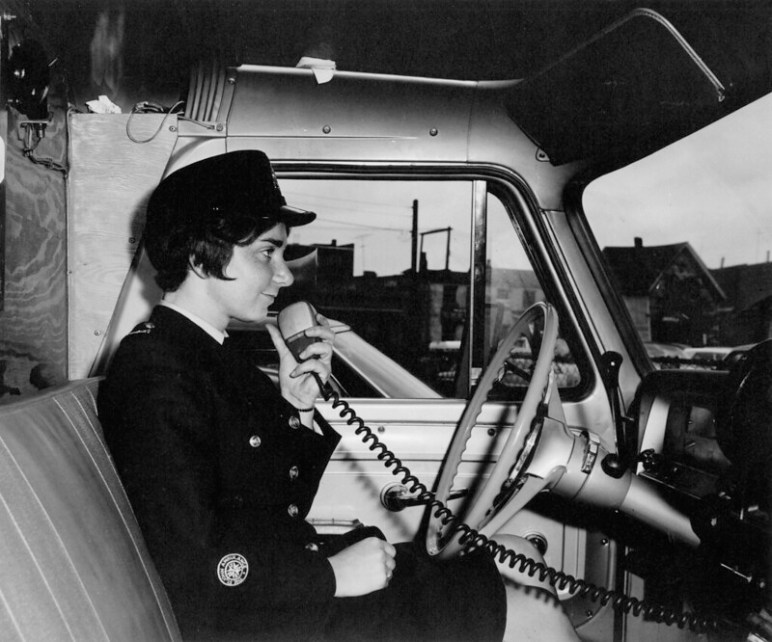
There was a small parade and ceremony in St. John’s Newfoundland the other day. An auspicious occasion as it was to mark the fiftieth anniversary of women entering the Royal Canadian Mounted Police. It was back in May 1974 when Commissioner Nadon had opened up the recruitment and application process to the women of Canada. By September 18th of that same year, Troop 17 was born, graduating on March 3rd 1975, and thus shoved themselves through the door and entered into the looming chasm which was the male policing world.

In training there were 32 of them, surrounded by 800 men recruits. The female recruits were all 19-29 years old, embarking on a novel career, but not likely thinking of any “glass ceiling”; in most cases seeing it as an adventure. In fact the term “glass ceiling” wasn’t even coined until 1978. As one of the officers said in a recent interview “they weren’t ready for us” and it is just as likely these female recruits were not ready for what they were about to encounter– both on the street, and just as importantly amongst the ranks of the male officers. They went in blind, but I am sure it did not take long for their eyes to be quickly opened.

Nowadays, the RCMP sees themselves as enlightened in these matters of discrimination and the power of women; however, in 1974 the move by the RCMP came about after having being pushed to do so by the Royal Commission on the Status of Women. They did not relent willingly. The Commission had been formed in 1967, but it still took the government a number of years to be pulled and cajoled into the age of women empowerment. They weren’t the first, the Vancouver and Toronto Police Departments had already brought women into the fold by the time Ottawa and the RCMP moved into the late 20th century.

In 1975 Captain and Tenille were singing about love keeping us together, and Jaws and One Flew Over the Cuckoo Nest were storming the box office. Prime Minister Pierre Trudeau was leading the Liberals, and Joe Clark was about to succeed Robert Stanfied for the Conservatives. Some would say it was a much simpler time, more black and white than grey. And to be totally accurate, there were female “employees” in the RCMP long before this, as they had employed “matrons” in the 1890’s for the processing of prisoners. The woman first believed to be the “first female member” of the RCMP was Dr. Francis McGill, who headed and help to establish the Forensic medicine department in Saskatchewan in 1946.

However, this group in 1975 after graduation were the front line officers and they were about to be dispersed throughout the country. It was not going to be an easy task and one could easily make the argument that the roughest part of their journey and their eventual indoctrination did not come from the street– but from their fellow officers. I was around in those early years, in 1978 I was a recruit assigned to the Newcastle New Brunswick Detachment (an area now called Miramichi City) and shortly after I arrived, the first female the detachment had ever seen, arrived as well. Newcastle was the epitome of the term rough and tumble; high unemployment and rampant poverty. It was a conservative blue collar place where a police officer could easily in the normal course of their daily duties be involved in a knock you down drag it out fight. The people who lived there were either miners, loggers or fishermen and they lived hard and played hard. It was a 23 person RCMP detachment, relatively small, but deemed large in terms of this “have-not” New Brunswick Province. The Mountie administration were initially reluctant even to send female officers to this area because of the constant environment of simmering violence. A few years later, the area would become infamous for being the home of serial killer Alan Legere .

I often have maintained and have stated categorically many times, that the toughest job in policing is to simply be a female officer. And it was in Newcastle in 1978 that I worked with “Sheila”, the first female Mountie ever to be stationed in this robust village; an above average height, slim, a quick to smile 25 year old, who immediately found herself now working with big strapping Mounties, who with little doubt, were to the right of centre socially and politically. The male officers there were quick to jump into a fight and quick to say what they meant loudly and in a clear voice. There were no niceties and they all became my friends. However, in terms of personal viewpoints, if they had done a survey in those times– almost all would have felt that women had no place in policing– and some would profess that between women being “let in” and the arriving of the Charter of Rights in 1982 it was the end of the golden age of policing. “Sheila” was from the start under an intense microscope, the subject of continual stares, in public, and even at social police functions, most pointedly by the female spouses of the other officers. She was seen as an obvious threat to domestic bliss, and she had the added burden of being attractive. Some of the spouses demanded that their husbands not be seen riding in the same patrol car with Sheila or meeting up for a work coffee break. She was assigned to the Traffic Section, because it was seen as being “safer” there. I never saw her show weakness or express exasperation; she never complained, she just kept doing her job and hoped for eventual acceptance.

When I try to analyze the root cause of the growing pains for females in those early years, it probably comes down to two simple elements. First and foremost, at that age and time, there was a clear delineation between what was the role of the male and what was the role of the female. Simply put it was a boy’s club and their treehouse and they were girls trying to climb the shaky wooden ladder to become a member of the group. In their dress Red Serge uniform, the females wore red blazers and black knee length skirts and in 1983 they gave them purses to carry their guns and handcuffs. They wore form fitting polyester blouses, with no pockets to avoid any unnecessary protuberances. They were being seen as female first, police officers second.

The second element, that flows from the first, is that policing was seen as a laborious lower level middle class job; a physical occupation, where size and weight were the primary measurements in your ability to do the job. The job back then was often simply defined as chasing “bad guys” and physically tossing them into jail. This is not to say that there isn’t a physical element to this job, there was then and there is still now. Women then and now are expected to be just as tough and willing to wander into a scrap, against someone usually bigger and stronger than them on a regular basis. But in those early years one should be reminded that there were no alternate weapons such as pepper spray, or batons, or tasers, or which came about specifically as a way to level the playing field. In those days the female officers were told to be tougher; they were punched, kicked and spit upon, and they were expected to go down fighting. They were continually being watched for signs of acquiescence or for showing female qualities. That was unfair but there are still some elements of this scrutiny even today.

There is also a female proscribed role in terms of familial and personal relationships which lingers to this day. Starting and maintaining families and households is still very much predominantly the role of the female, this while balancing a policing career in particular is a significant challenge. Throw in the sometimes still present misogynist male and night time shift work and you get some idea of how tricky it can be. Sometimes for some it has proven to be overwhelming. Female officers traditionally have not stayed in policing as long as their male counterparts, but there are few studies as to why this is happening, but clearly there are reasons for it.

For those that did manage to walk the fine line and especially to those that endured in those early years one can only show respect. Since those early days, I personally have worked with some extraordinary female officers through three decades of policing. They were hard working intuitive good investigators long before they were seen as female. Their gender was inconsequential. Many of them displayed different insights that being who they were provided them. I can’t explain it, I just saw it working.

All of this is a common saw. Since the early 20th century, women have been fighting to define their role in a male dominated society. Policing was one of the last of the true male vestiges of this 20th century. It was difficult to run at and break through those traditions. It was often an individual fight on an individual level. Those that put up that fight in those early years started that final pendulum. Today, females possibly enjoy an even greater chance of promotion and have the benefits and support networks to confront the duality of their roles. It is still hard, but all the female officers of today should be bowing in respect to the many that came before them, a time before many of the current officers were born.

I watched it from the sidelines, but I am also tipping my cap to “Sheila”.

I am sure she will smile back.

Picture courtesy of Flickr commons from the Vancouver Archives – Some Rights Reserved

Wandering the Corridors of 73 Leikin Drive…

Should one ever be given the opportunity to wander the corridors of the Royal Canadian Mounted Police in Ottawa, it will likely lead you to begin to understand what ails the world of the scarlet tunic. As you meander the halls, you will find yourself checking the departmental name plates on the offices. As you you sit in the boardrooms, surrounded by other boardrooms and their white boards watching endless power points you will first come to understand that you are in a different universe. Your senses will be bombarded by fancied talks of “initiatives”and “strategies” as presented by departments with long and bewildering names. You will feel alone and confused and then when you are finally released from this concrete Wonderland (no later than 3:00pm of course) you will find yourself wandering amongst the quickly diminishing crowds dazed and confused; trying to find meaning in what you just witnessed.

You later learn that you would have had a better sense of what was transpiring around you in those droning conversations, if you could have just picked up a copy of the “Royal Canadian Mounted Police 2023 Departmental Results Report”. However, a warning, you will not be able to read it at one sitting and don’t read it in bed.

Inside this gilded and embossed document, you will find groups and departments that you had no idea even existed. Maybe you knew that there was the Independent Centre for Harrassment Resolution” and that it contains 74 investigators. But did you know that there was an RCMP Strategic Foresight Methodology Team, or that you were part of a team for the Canada War Crimes program? You would probably be overcome by the amount of “strategizing” going on; layer upon layer of master plans and blueprints all being developed to guide the RCMP into the promised land of law and order. As an example there is the Methamphetamine National Strategy or the Ideologically Motivated Violent Extremism Strategy. The latter is tasked with only just building a “framework for countering these types of threats”.

There is the Canada Financial Crimes Agency, the RCMP National Cybercrime Coordination Unit, the Canadian anti-fraud centre, and that they are now “developing” a Canada Financial Crimes Agency. With all this expertise it is hard to imagine how Canada has become a well known refuge for white collar criminals around the world.

What started me down this road of discovery was the unveiling of the report by the afore mentioned Strategic Foresight Methodology Team, which was tasked with determining the future policing issues over the long term. A copy of the report was obtained by Professor Matt Malone from Thompson Rivers University through a freedom of information request. This esteemed team of RCMP “strategists” based their findings and conclusions strictly on media and public information reports that are readily available; and then as only government can do, heavily redacted the report as being confidential information. This group of thinkers came up with what they believed to be the six trends in Canadian society that they felt should be brought to the attention of the upper echelon of the RCMP to guide them in policing this nation of ours.

They predicted that there is going to be “continued social and political polarization” and an “increasing mistrust of all democratic institutions”. That criminals are going to use “technology to gain power and influence”. They also believe that the weather is going to be a big policing factor (thanks Weather Network)– in that there will be “increasingly violent and even concurrent storms, drought, floods and heat waves” and that the “extreme weather crises concurrent with other crises requiring deployment of police resources”. Of course this will have a greater impact on “Indigenous communities and the Arctic, while Canada faces pressure to help countries closer to the equator”. Finally number 6 on the list was the prediction that there will be “demands for expertise in artificial intelligence, quantum computing and blockchain”.

One has no idea how many people make up this group, or how much time went into their thought processes, but one could pretty confident that a single individual scanning Apple news any given day, could have written this same report in half a day, or they could have also checked a Liberal party newsletter to obtain the same prognosis. Or better yet, asked ChatGPT to ponder the main political questions of the day.

Other reports or papers flowing from this group include, a “Feasible and sustainable model for forensic service delivery in Canada” which concludes that the RCMP and FIS could “lose very experienced staff if they chose to resign rather than move”. Other studies cited include the one titled “not everyone can do this job” which is a “qualitative inquiry into emotional labour from RCMP detachment service assistants”.

One should not be against academic study of policing and the RCMP, as it is clear some expertise in some areas is wholly needed. However, in these times of manpower shortages, increasing costs of policing, a broken police Crown relationship, un-enforceable laws, rampant drug and white collar crimes, increasing gang violence, disconnected policing functions, a loss of expertise in almost every field, and morale at abysmal levels– is this the time for studying the obvious? Is this the time to for additional frameworks or developing strategies as if the issues were un-predictable and unanticipated? Of course it isn’t, but never before has the RCMP been so firmly embedded in the machinery of the Federal government. In terms of policy, they are not unique, they are merely following and mimicking the other Federal departments. Meanwhile, the problems in this national police force go back decades and have only led to bloated bureaucracies and greater political entanglement. The bureaucracy in Ottawa needs to be broken apart, specific mandates given over to smaller investigative groups with minimized reporting structures. The RCMP, simply said, can not be all things to every person in this country with an ability to provide whatever level and type of investigation that is needed. They simply can not do it on their own and I am not sure that they even can see the vast array of policing problems outside of the cocoon of Ottawa– let alone fix them.

This corpulent body of an organization has as its greatest accomplishment–like the rest of the Federal government– they have grown the offices to non-sensical proportions and ballooned the rank structure to their obvious benefit. They have become political puppets, made to dance and wave their arms akimbo all while convincing themselves that they are still the experts in their field and the policing world needs their guidance. This is not unique to the RCMP, it runs across all Federal departments and it is mostly due to the political influence under which they have fallen and then been rewarded. The very organizational structure and existence of the RCMP is being threatened in Alberta, British Columbia and Saskatchewan and all while Nero (or in this case Commissioner Duheme) fiddles; concerned instead with things such as the “Knowledge Circle for Indigenous Inclusion’s Career Navigations Program”.

Ronald MacDonald wants to go to court more…

Of course the title of this blog is not referring to that icon of our childhood, the “… Happy Hamburger Clown” of Golden Arches fame; although he has had his legal issues too (he was sued civilly for promoting child obesity.) No, this is in reference to Ron MacDonald, the current head of the Independent Investigations Office (IIO) for the Province of British Columbia. This is the group, with an annual budget of about $10 million, that is mandated to “conduct investigations into police-related incidents resulting in death or serious harm to determine whether any officer may have committed an offence”. There is a general consensus growing that the group is in trouble, it is not fulfilling it’s mandate, in fact many say they are failing and failing miserably. Mr. MacDonald himself has recently been speaking out on his own frustrations.

The police could not and should not investigate themselves was the repeated slogan coming from those of the political left of centre a number of years ago. It stirred the politicians to act in September of 2012. Like most political policy, it was the result of a political reaction to a rather immature and naive understanding of police wrongdoing. The theme had been pushed forward by a vocal minority, which in turn was then given an audience by the Davies and Braidwood inquiries, which looked into the deaths of Frank Paul and Robert Dziekanski respectively.

Paul was a 48 year old Mi’kmaq who Vancouver Police officers tried to book into the “drunk” tank, but they were turned away when the on duty Sgt said that he had only just released Mr. Paul, two hours before from cells and he wasn’t going to book him again after such a short period of time. So the officers took Paul away and returned him to the downtown alley. He was clearly still intoxicated and he subsequently died of exposure and hypothermia in the alley. However, after a total of five Crown reviews of the case, all concluded that “charges were not warranted” against the Vancouver City officers involved.

Dziekanski was a more widely reported incident where police responded to a disturbance in the Vancouver Airport, when Dziekanski a Polish immigrant who had just arrived, was wandering disoriented around the terminal and then began causing a ruckus. Four officers attended and tasered him saying they felt threatened. Dziekanski died of heart failure. The four officers believed they were both justified in their actions and within the limits of their training. Some of the officers were charged, but not for the death, but for perjuring themselves during the Braidwood inquiry. Judge Braidwood at the inquiry conclusion said that the officers “didn’t intend to cause his death”.

So what prompted the birth of the IIO was a political demand, which used as it primary evidence two cases– both of which showed there was no wrong-doing on the part of the police.

Irony aside, the first IIO chief was Richard Rosenthal, who left the job early to return to the world of academia and probably did not leave the best impression. He was then succeeded by Mr. MacDonald in 2017. MacDonald came from the legal world, he was a defence counsel for 6 years, and then a Prosecutor for 17 years and had a distinguished record. All of which makes his recent comments a little more perplexing.

In short Mr. Macdonald is now making a case and has gone public with his concerns about the lack of charges being approved in the IIO cases that were presented to Crown Counsel. What prompted his comments seems to have been, once again, a political reflex to some media pressure centred around two Indigenous cases.

One case involves a 38 year old Wet’suwet’en named Jared Lowndes, who during his arrest the police had to use a taser, a police dog, and then after ramming his vehicle, he was eventually shot in a Tim Hortons parking lot. The Crown in that case concluded and stated that they were “unable to prove that officers committed any offence in relation to the incident”.

The second case involved Dale Culver, a Wet’suwet’en and Gitxsan indigenous male who during his arrest was pepper sprayed and punched when checked by police who were answering a call where it was alleged that he was “casing vehicles”. During the course of their investigation the IIO went to three different pathologists all of whom identified the primary cause of death as “tiny blood clots in lungs”, but that the blunt force trauma by the officers was a “contributing factor”. The IIO felt that the officers should have been charged based on the “contributing factor”. The Crown in their review went to a fourth pathologist, who identified the cause of death as being “cardiac arrest due to the effects of methamphetamine”. So after seven years, the officer was given an absolute discharge.

During this time, the officer’s career has been put on hold and he had been subjected to death threats. The Union of BC Indian Chiefs, who clearly feel that they have not only the right to disagree and inflame the issue, but also feel that they should be the ultimate arbiters of any criminal case involving their own, issued a statement saying: “We have a system that says when you have a gun and a badge, you can kill any Indigenous person in any town in B.C. and not go to jail”. The stupidity of the statement went un-challenged by the government.

Mr. MacDonald regardless of whether these particular cases motivated him, says the system isn’t working. He tips his political hand a bit though when he states the people have “lost faith in the system..in particular Indigenous communities.” He may have lost faith, but far be it for me to point out to a lawyer an obvious truism. The Crown has always operated on the premise of “substantial likelihood of conviction”. They have a legal need to prove a case of guilt “beyond a reasonable doubt”. Does Mr. MacDonald not see the reasonable doubt in the Culver case?

The IIO has been on shaky ground since its inception. The mandate given from the beginning was much too broad, and this was pointed out even by Rosenthal in his departure. He said at the time that it was going to cause a backlog of causes when there was no ability to “triage” the cases.

There was also a large problem in the staffing this organization. The government of the day said that the overall intention, once established, was to have all “civilian investigators”. Remember the police could not be trusted in their theoretical framework. So they limited the ability of ex-officers who could apply, especially those from B.C. If you carry this logic forward, the thought was that investigating an “officer related shooting” did not require any policing experience or knowledge of police operational structures.

There were also internal problems in the beginning, which seem to be continuing today. In 2015 there were investigations into allegations of “bullying and harassment”, allegedly due to the culture clash from hiring former police officers. During this time 17 investigators, and five non-investigative staff left the organization, only a couple of years after its inception. Flash forward to 2023 and Mr. Macdonald began speaking out and complaining of the lack of investigative resources. By then there were only 19 investigators working and 17 unfilled positions. To add to the resourcing problems, officer related shootings had increased by three times from the previous years.

The IIO in 2023 had been called in 232 cases, of which 193 led to further investigations. At the time of the article, they had 90 open investigations involving 38 deaths. In 2023, 50% of the staff were still ex-police officers and Mr MacDonald and his management staff were in turn being internally and publicly accused of bad behaviour “which created a hostile work environment… with their “belittling behaviour”.

So now in 2024 Mr. MacDonald’s has further complaints which he recently took to the air waves on the local radio station CKNW. Mr. Macdonald is now complaining about the lack of charge approval which he says is leading to a failing in “police accountability”. In the last five years, the IIO has recommended 39 cases for charge, and only 18 were approved for charge. Even more startling is the fact that since the IIO inception in 2012, only 15 cases reached the court stage, and there were 0 convictions. There was no mention of the length of time for these matters to get through the court process, which the IIO is hesitant to speak about, at least on their own official website.

If one assumes these stats to be correct, there are only a few possible answers to Mr. MacDonalds problems. One being that cases without merit are being forwarded, or the investigations being forwarded are flawed and incomplete; and simply do not meet the charge approval threshold. Or b) the process itself is not working. If it is the former, then it also may be possible that in the vast majority of cases the police are in fact innocent, and simply doing their job and doing it properly.

If it is “the process” then there are significant layers to that problem. Understaffing is clearly one of those problematic layers, as there is no possible way that you can take on every referral with such limited staff and capabilities. So you need to cut the mandate or “triage” the files more expertly as was suggested by Rosenthal.

You also need to forget the “civilianization” of the investigative team. You need to bring in ex-police officers with high levels of expertise and with significant standing amongst other current police officers. They are out there, but you need to go and find them. Building credibility is absolutely key and they have not done that since their inception. Currently the IIO is fighting the police forces, or specifically their unions on two fronts; on the access to police notes and in the area of “lethal force experts” –who are usually ex-police officers brought in to testify. They should not have to fight these fights, and better quality investigators with greater credibility will go a long way in working through those issues.

The problems within IIO are not new. They are similar to the problems which in more recent times arose from the “de-funding” era. It is a fundamental failure in common sense. The IIO mandate and their make-up is clearly flawed and has been from the beginning. One may even have to conclude that the best people to investigate the police may be the police themselves. Whether the public perception changes and the media narrative becomes less inflammatory towards the police, or whether the government understands this, is quite another matter.

Photo courtesy of Flickr Commons by David Jackmanson – Some Rights Reserved

Productivity

One of the recent headlines in Canada originated from a speech given, in fact it was termed a “blunt” speech, by the Sr. Deputy Governor of the Bank of Canada Carolyn Rogers. The speech centred around the drop of productivity in Canada in relation to other countries, in particular the U.S. and the G7. She described the weak labour productivity in Canada and said that in fact it had reached levels that should be considered an “emergency”.

Productivity in the economy is defined traditionally and measured in economic output per hour worked. In 1984 our Canadian levels were at 88% of that of the Americans, but in 2022 we are at 71% versus the Americans and we are lower than the G7 countries with the single exception of Italy. Again, the speech was one dealing with purely economic theory– productivity down, labour costs up, prices up, and the continued growth of inflation. However, this led to the question of whether or not productivity can be measured in policing or in the wider legal system.

Can labour and its level of efficiency be measured in policing, or at least to some degree? There is labour, there is time and there is an output, even though it is not an economic output? Can it be as simple as a calculation such as number of officers up, crime up, therefore police productivity down? Public Safety Canada does not even use the term productivity. So it can probably be assumed that currently there is no measure of “productivity” in terms of individual officers, or as officers in terms of a particular unit. Public Safety Canada and other police agencies, instead use the term “performance”.

There are two major differences in productivity versus performance . Performance is both qualitative and quantitative while productivity measures the impact or output of the work done and the labour resources employed.

The Federal government indicates that there are both direct and indirect measures of “performance” in relation to policing. They say direct measures are such things as crime rates, number of arrests, fines issued, clearance rates, and calls for service response times. They say “indirect” measures include, surveys, observations of social behaviour, situational studies and independent testing. I am going to ignore the latter measurement tools, the indirect tools, because it would seem to be a much more subjective set of tools and would be a lengthy topic all on its own.

In terms of direct measurement tools, there are some units in policing which are easily measured such as calls into a dispatch centre. For instance, they measure time response in answering emergency 911 calls. In the last stats reported by E-Comm , it was on average 5 seconds or less. This despite there having been an 11% increase in calls for service. A good result, with a positive spin. On the other hand they do not measure how long a non-emergency call takes; such as reporting a break and enter, or how long that person may wait on hold under those circumstances. Nor do they give statistics on how long before an officer even attends a break and enter, in fact in the cities, they may not even attend– often telling the victim to send in the details. This is just to say, measurement tools can be flawed, in-complete or mis-leading and can often be tailored depending on your viewpoint. But the fact that there are some measurements in place in terms of performance is re-assuring.

In a different example, in September 2023 report done for Police Services concerning the CFSEU (Combined Forces Special Enforcement Unit) was obtained by a freedom of information request by the Vancouver Sun newspaper. In that report the agency came under heavy criticism. In the 123 page report it was stated that the agency “is neither effective in suppressing gang violence and organized crime nor is it providing the Province with an adequate return on investment”. A damning statement but what seemed more interesting is that they clearly undertook what must have made some cost/benefit analysis of the work being done by CFSEU– and clearly found it wanting. The report had been undertaken after a spate of murders, such as the one at Vancouver International Airport, and the shooting of Tequel Willis, who was only 14 but already a member of the Brothers Keepers. At the time and with the required concern expressed with this increase in blatant and brazen murders, they announced the launch of “Operation Spectrum”.

The review however, found that Spectrum operation “had no investigative component and only amounted to increased intelligence sharing between agencies” and that the entire project “fell short”. The report went further and said that “there are issues with CFSEU’s leadership and senior management model…and…a lack of continuity in policies and procedures”. They even added that their mandate wasn’t even clear. This is no small unit, there are 440 officers assigned to CFSEU, and they have an annual budget of about $90 million and are primarily responsible for gang activity in British Columbia. It is a large unit that according to this study were vastly under performing.

The CFSEU managers when questioned by the media weakly replied that they had not received a copy of the report. Is it possible that Police Services had this report, and were simply hanging on to it, and never felt the need to act on it? For the record the agency has been led since 2021 by A/Commissioner Manny Mann, who by default also oversees the Organized Crime Agency. One would have thought that there would have been some sort of repercussions coming from this report which was issued back in September 2023, when the questions were clearly pointing at the lack of performance, productivity and the eventual measured outcomes. As this is being written, so far nothing has been done and there has been no public accounting or explanation offered by the RCMP upper levels, who must have got a copy of the report by now.

Is this a measurement of the individual members of CFSEU? Not really, we can not draw that conclusion. Most everyone who has some insight into this unit knows that there are members of this unit who are hard-working, spending countless thankless hours and many night shifts trying to keep tabs on some of the many gangsters who run about this Province. That being said we also know that there are some members in that unit and other government units, who have their feet up, enjoy the overtime, and dream of a lucrative retirement. Let’s face it, every agency has the players of the system, the ones who are around for a free ride, the officers always being the “backup” car to keep away from the paperwork, and those that don’t simply like to leave the office.

We also know that the hard workers, the often quiet ones who toil away and make little fuss often go unrewarded. Promotion is “allegedly” based on performance, yet time and time again a great many of the laggers still find their way up the chain of command. One often is forced to the conclusion that performance is not being measured accurately or with any consistency.

Another complexity to any kind of measurement is the fact that there are many officers doing many different jobs sometimes inside the same unit, with different skill sets and different mandates and efficiencies. How do you measure a group who write warrant applications with another group that spend the majority of their time doing surveillance, or others who may be doing strictly administrative jobs.

Individually, every year every officer of the RCMP is subject to a Performance Review. It is assumed that municipal agencies have some similar process. In the RCMP the immediate supervisor outlines the good and the bad of the individual sitting before them. It is completely subjective and therefore often falls prey to individual likes or dislikes. Every supervisor also wishes to keep their charges happy, especially in this age of victims and apparent unlimited stress leaves, so inevitably these annual documents are positive. They are also rather lengthy documents and every supervisor dreads having to complete them. I have seen and heard many supervisors tell their underlings to write their own document and they will just sign it. Measuring performance in this atmosphere and style is clearly problematic and many would consider it as a form of process an abject failure, yet it has survived for decades.

Then consider the unlimited numbers of sections in the RCMP and to a lesser extent the municipal agencies, and how does one compare performance or productivity between all of the various Provinces and specialties. How does one measure the productivity or performance of someone on the Musical ride, or in Media relations, and how would you compare it with someone in uniform answering calls in Prince George or in Bella Bella or in London, Ontario. The pay structure however is uniform. All of the same rank make the same salary regardless of the unit, or the importance of that unit to the overall policing mandate. Performance or productivity does not factor in to how much one is paid. One can easily see the problem and the level of complexity. It is just as hard to find any willingness or intent to change it, or even make an attempt to measure it.

Public Safety as stated earlier, for the most part simply report on performance, they do not act or comment on those performance measures. They do direct measurements through such tools as the CSI (Crime Severity Index). If we glance at those statistics, the CSI was up 4% in 2022 the highest since 2007. Violent CSI, a different index also rose, with Robbery up 15%, Extortion up 39%, Homicide up 8% and sex assault up 3%. Non-violent CSI which applies to such crimes such as property theft is also up 4% and motor vehicle theft is up 24%.

The “volume of crime” index shows an increase of 5% to 5,668 incidents per 100,000 population. In any view, these statistics do not seem to lead one to believe that performance in policing is on the upswing, in fact it would be easier to assume that they are in fact trending negatively. However, there is no real accountability, except when for some reason a light is shone on one particular problem. In Ontario recently it is high end car thefts. An officer at a community meeting gathered some unwanted attention when he recently suggested that the public keep their keys by the front door to limit the damage from home invaders trying to steal keys. The message seemed to be, we can’t catch them so it is up to the public to limit them. Not the best statement if one were talking about trying to measure performance.

The usual answer you get when police executives face these poor numbers is to always go to the standard answer of it being due to dwindling resources, not a poor performance. In that, there is some but limited truth. In May of these same years, there were 70,566 officers, 406 more than in 2021– but still representing a 1% decrease, largely due to growth in population. Does a 1% decrease in resourcing explain the reason for what most would consider a poor performance?

This blog has always maintained that productivity and performance of units needs to be measured. In this age of sophisticated and minute data collection, one would hope that it is becoming increasingly possible and at some point there would be some attempts made to judge efficiency. It would seem key to having any viable and fully functioning organization. It also seems more necessary now than in past years to have some form of cost benefit measuring tool. There are many problems currently facing policing, but this should be considered one of the major issues, along with the need for much greater transparency. It has been plaguing policing for decades and at present, disappointingly there is no indication that they are yet willing to consider change and truly embrace the constant call for modernization.

Photo courtesy of Flickr commons by Mark Dyer – Some Rights Reserved

Amateur Sleuths, whether the Police like it or not

Curiosity is a human trait defined as a desire to learn or know something. We all have it, just some of us are blessed or cursed to have it more than others. Everyone slows and cranes their neck driving by a car accident, just for a fleeting glance of the injured or the damage. Every newscast at a crime scene will show the draped bodies on stretchers leaving the residence. All feeding the dark curiosity in all of us. There are some people with heightened curiosities, outwardly “normal” in all appearances, but consumed by the desire to know more and having the ability to question. Many have warned us about having too much of that curiosity gene. The old proverb “curiosity killed the cat” is just such a warning to those that want to ask too many questions.

There have been amateur sleuths around for centuries, persons inquiring and digging into all sorts of things, always questioning what others took for granted. We have all had at one time experienced the “nosy neighbour”. Then along came the internet monster, a multi-headed dragon with the ability to access, share and distribute information at lightning speeds, and to make everyone in the world your neighbour.

It is also well established that the police have always sought help from the public, and asked for “everyone with any information” to call. Now at every criminal event the police media types besides seeking anyone with information, now ask for anyone to provide “dash cam video”. So the police solicit all forms of information from the outside, but once received, from that point on they don’t want to share, especially any investigational detail. So the question is, have we reached a stage where that dynamic between the public and the police needs to change, or at the very least be re-considered?

In an article in LEXIPOL by Ted Bremer, he points to the growth of the amateur sleuth networks and narrows it down to a couple of incidents which he sees as the point origin for that growth; the Boston Marathon bombing, and the murder of Gabby Petito case, both American cases. He explores how amateur sleuthing in those cases, now armed with the strength of the internet, reached uncontrollable levels, and in the end turned into what he called “digital vigilantism”, and thus in turn a problem for the the police. In the Marathon case, massive amounts of photos and videos during and after the bombing were being analyzed and shared on the web site Reddit. In the Petito case, the police further spurred the public inquisitiveness by giving access to the police body cam footage. Later, the Moab City Police Department were examined for their actions on a “miniscule” level, and in the end it led to the resignation of the police chief, the entire department coming under fire, and multiple civil lawsuits.

Clearly the dangers in getting amateur sleuths involved are obvious. There are a couple of other things that need to be considered and balance the scales of concern: the internet is here to stay and the tools of this computer age are unharnessed and getting increasingly more and more sophisticated. Secondly, peoples curiosity and the need to feed it is a driving force on many societal levels. Just go look at Netflix or Crave, or the multiples of podcasts. Everyone wants to be a cop in some form or rendition and just as importantly, they don’t need to obey the rules of evidence nor are they under any form of judicial constraint.

Bremer in his article talks about the case in Idaho where four students were murdered inside a rented campus residence in November 2022. In that case one single amateur sleuth group who got involved in the Idaho case, which formed in November 2022 and by December 28, 2022 had grown to a 137,000 members. There were 10,000 posts within 30 days not to mention thousands of sub-posts. Mountains of information, some relevant, most irrelevant, swirling around the ether. In that case, it led to problems for police investigators in terms of being able to monitor and judge the reactions that came from it. In the Idaho case, almost all the information turned out to be of little or no value, in fact it led to misidentifications of suspects.

That being said, as of 2022, there have been numerous cases where the amateurs solved the crime, sometimes when the police have ignored the file or have gone down different investigational paths. The Golden State killer case is a prime example– a case that was in the end solved by forensic genealogy and DNA. Barbara Rae-Venter was a 74 year old retired patent lawyer, who also happened to have a Phd in biology. Over many months that dragged into years, Venter, and some other volunteers searched the databases of genealogical sites such as GEDMatch, and Family Tree DNA to try and find a match for the killer’s DNA. They shared their information throughout with the police, who at times provided file evidence to help them in their search. A finding of a distant fourth cousin led to the identity of Joseph James DeAngelo. He was a former police officer who eventually would plead guilty to 12 murders and having raped over 50 others during a crime spree that began in 1974 and ended with his arrest in 2018. Without the work of those volunteer sleuths, that case likely would never have been solved. DeAngelo was 74 when arrested and may have gone to the grave taking any confessional evidence with him.

In the highly acclaimed documentary “Don’t F**K with Cats: Hunting an Internet Killer”, released in 2019 on Netflix, Deanna Thompson, a data analyst for a casino in Las Vegas, and John Green in Los Angelas became obsessed with a YouTube video which showed someone, disturbingly and in graphic detail suffocating two kittens. Their persistence and obsessive work ethic led to the eventual incidental solving of the murder of a university student Jun Lin. He had been killed and dismembered by Luca Magnotta, a Canadian porn actor with a sadistic and disturbing bent. They managed to lead the police to the recovery of all the evidence in the case. (Magnotta has recently been in the news over being moved to a medium security facility in Canada).

Crystal Theobold was murdered by gang members in a case of mistaken identity. Her mother, Belinda Lane, posing on-line as someone else, managed to befriend members of the gang and learn the identity of the shooter and others that were involved. It ended on charges of 1st degree murder on the shooter, and charges against others in the gang.

There is digital media consultant Billy Jensen. Jensen uses geo-targeted ads on social media to generate potential witnesses; and now claims to have solved 10 murder cases.

Needless to say the list is now very long of cases where some of the better amateur sleuths , unhindered by the normal rules of evidence gathering, have honed their amateur abilities to a level that in many cases would be un-matched in most police investigational units. Of course, there are also many others who are uncontrolled in their frenzy, often putting forward unsubstantiated theories, or making false allegations on innocents. Their laptops and their phones are their only weapons and equally concerning also their only repositories of that evidence.

To date, the police organizations, say little, and as directed by their managers, share no investigational information. On bigger cases, they will sometimes assign persons to “monitor” the social media content. Often, the amateur sleuths are met by police attitudes bordering on arrogance and with smirks of derision. In this current time and age, in particular in our relations to the internet, that seems short-sighted. Somehow the police need to harness these sleuths, possibly bring them into the fold and maybe also in terms of sharing some information. In the previously mentioned Idaho case there were 137,000 participants, but only two administrators for the site. Would it be out of the realm of possibility to bring those administrators into the police fold, specifically for that case? There would need to be rules and regulations obviously in terms of direction and evidence gathering and retention but it could be done. Deanna Thompson, Billy Jensen, or Barbara Rae-Venter would fit and be an asset for any police investigational team.

Police investigations have to work within the constraints of a budget, and human resourcing issues. You will never be able to hire all the expertise internally, it will logically have to come from outside the police environment, even if it is on some form of contractual level. It would mean that the police need to climb down off the pedestal a bit and lose the us versus them attitude. Nobody should believe that they have somehow cornered perspective and expertise in terms of any level or type of investigation, no matter what area or field of inquiry. A dogged determination and an unbendable curiosity are invaluable and seemingly they are getting harder to find. The rules and roadblocks facing todays police officers are seemingly greater than they were any number of years ago, the police often burdened by over reaching rules and legal and managerial supervision. It has created a very noticeable and pronounced sense of futility amongst many investigators especially when trying to push cases through the system. Maybe a little contracted help from the “outsiders” would be both welcome and may in fact be needed.

Photo courtesy of Leiris202 via Flickr Commons – Some Rights Reserved