The Killings at James Smith Cree Nation…

If one ever wanted a clear picture of the utter desperation and the scope of problems facing First Nations in this country, one only needed to follow the coroners inquest that has just finished up in Melfort, Saskatchewan which was looking into the slayings at James Smith Cree Nation.

Unfortunately, but predictably, the recommendations coming from it are more reflective of our current political progressive climate, and less about the core issues. For the most part they missed the mark. We can not possibly be surprised, being that this is the age of the “victim”, this is the age of blaming, of never look inward, of instead pointing at the “system.” Let’s be honest, the Indigenous leadership in this country have turned victimization into a professional art; one which they have effectively practised at every opportunity. Their constant themes of cause and effect are always the same, then continually repeated, and the outcome sought is always the same.

Simply put, the James Smith Cree massacre is the story of a single individual with “psychopathic traits” and an “anti-social personality disorder”, a personality sculpted by abuse and crime, exposed to alcohol at the age of 13, and not soon after, transitioning to cocaine and methamphetamine. On one particular day this violent psychopath decided that he wanted revenge for some ill-defined wrong, and was also mumbling on revenge against the “Terror Squad” (part of the extensive group of Indigenous gangs that have proliferated throughout Winnipeg and Manitoba). So on September 4, 2022 after guzzling back some liquid courage with his brother, then went on a killing rampage–starting with his own brother.

Myles Sanderson had 78 previous convictions between 2004 and 2019 and at the time of the killings was “unlawfully at large” and as an occupation was dealing cocaine on the Reserve for three months prior to the killings. Most recently he had been serving five years for assault, robbery, mischief and uttering threats. In 2021 when seeking parole, he was considered an “undue risk to society”, but later in August of that same year, was still given statutory release, having served 2/3 of his sentence.

Four months after that release he was found once again in breach, re-arrested– and then in February 2022 released again.Throughout his prison life, his get out of jail card was that he was treated as an “Indigenous offender” therefore someone that the courts have been directed to deal with differently; not like other Canadians, part of a special group who had suffered “generational trauma” and through no fault of his own was one of the over “represented” in the Criminal court system. Geraldine Arcand, an elder employed by the Saskatchewan Penitentiary testified at the inquiry, about having given him his first “healing plan”.

Myles Sanderson and his wife had moved back to James Smith for the stated purpose of dealing cocaine. Despite all these efforts at understanding and empathy and despite all the socialized efforts at reform– that night he went out and killed his brother Damien, and then stabbed 10 others to death– and in the process wounded 17 others. He leaves behind his common law spouse, Vanessa Burns and their five children. At the inquiry she testified to having suffered 14 years of domestic abuse, and having reported him 12 times for domestic violence. Her suffering wasn’t over with his death, Myles on that dark day, also killed her father during the rampage.

After the killings, Myles went and hid in the nearby woods for 3 days and 7 hours. He subsequently died in police custody, after driving into a ditch in a stolen vehicle while being checked by the police. There will be a separate inquiry later this month concerning his death, because we are just as concerned about the police behaviour during his arrest, as we are of the massacre that Mr. Sanderson had perpetrated.

So this Coroners inquest, headed by Blaine Beaven, with six jurors came up with 14 recommendations, and then the Coroner added 15 more for consideration. Can you guess at what was recommended? They quickly went to the usual blaming template, aiming at all levels of government who are within easy reach. They declared that they needed “More programming and resources for offenders”..”more collaboration” (between the various agencies)…”more resources for prisoner integration”…”changes to how the RCMP deal with wanted suspects”…and in this case there is the need to “hire more elders” for the jails.

The Saskatchewan government for the record, as is also easily predictable, is “supportive” (of the recommendations)and added that they are so on top of the needed action that “some are already being implemented”. The Saskatchewan government says it wants to see more “crime reduction teams” and the RCMP for their part says it wants “greater communication”. The National Police Federation, representing the Mountie union, want “$100 million” more dollars to fund 300 more police officers, 138 of which would be there to “supplement First Nation policing resources”. (It is currently estimated that Saskatchewan is running 10% short in staffing, and an additional 7% from “soft” vacancies such as maternity leave etc.)

Another constant theme was brought up by Chief Peter Chapman who pushed for First Nations policing, which seems to be now referenced as “self-administered policing”. Chief Burns echoed his fellow Chiefs thoughts and also talked about the need for further funding of their own policing service; a police service that would be “suitable for our people”. This was followed by the usual complaint about no support and not enough monies coming from the Federal government.

Would having their own police service stopped what happened at JSCN? Would further funding and recruiting of Indigenous officers by the RCMP as Assistant Commissioner Rhonda Blackmore suggested have stopped Myles Sanderson? Would more “elders” in the prison system, more “healing plans” stopped Myles Sanderson? Would increased programming for inmates stopped him? No, of course not, Myles Sanderson was a psychopath who on that particular day was “triggered”.

All governments in Canada, Provincial and Federal are going down the road to Indigenous policing. They all agree that the 600 First Nations in this country should all have their own police services, not to mention their own laws and outcomes.

Small town police departments in this country has been fading and dying out throughout this country for many decades now, as the size and cost of policing has grown to greater and greater proportions. Practically speaking few are left because of the financial costs alone; now roughly estimated to be about $200,000 per officer per year in terms of salary and support; without adding in the costs of the initial infrastructure that is needed. Small town and village tax bases can not support this level of expenditure, it is simply economically un-feasible. Then add in the major issues of retention, staffing and training and the prospect of having multiples of small independent forces becomes patently unreasonable.

Another serious consideration is who has and can exert political control of small departments, where the officers are policing their friends and relatives, and thus opening up of the opportunities for corruption. The sole reason for having a smaller police unit in any town or village is that it is more accountable to locals, and that it can be then “tailored”. There is no other attributable reason. There is no hiding the fact that the Indigenous want political control of the police force and simply disguise it as being more “culturally sensitive”. They also don’t have the normal financial constraints, they argue that the Feds and the Provinces just need to give it to them.

Our current crop of political leaders throughout this country apparently agree, and therefore believe a separate police force, or many separate police forces, in often isolated and uneconomic regions of this country are needed as some form of twisted reconciliation logic, and they are also o.k. with the Canadian taxpayers funding it. One needs to understand the numbers.The politicians believe that the 3,394 reserves and 600 First Nations, should all have their own policing units, or “police administrations.” That 331,000 Indigenous living on Reserves, with an individual average reserve population of 600 people, should have their own individual police force to enforce the laws in a way, that is more suitable to their culture and their community needs. The costs, the jurisdictional issues, and the very ability to function under these circumstances runs counter to current police management theory which aims at integration, specialized services and shared costs. This Indigenous model simply defies logic.

This is not to denigrate the individual officers who may be currently involved. However, the thought that a police officer, from a very small community, who will do doubt be related to many that he is to police, someone who will be subjected to the volatile politics of Band councils, will somehow be able to manage and enforce the laws in a fair and equitable way, is a difficult if not impossible task. The RCMP used to move officers every 3-5 years for the simple reason that there is a tendency to become co-opted, because familiarity breeds and leaves one open to the vagaries of community politics and can call into question one’s integrity. What could lead one to think that this proposed solution would somehow be different.

Although one can easily see all the pitfalls, the government is already far down this road, and they are not seeking the approval of Canadians. Currently there are 163 policing agreements, for 1250 Indigenous officers, representing 400 First Nations in this country. They are policing about 338,000 in terms of population, which means there is on average, one officer for every 270 people living on the Reserve. In most cities the officer per capita average that is possible is one to every 800-1200 persons.

The First Nations Chiefs of Police Association claim that the Federal and Provincial governments only provide funding of $130,000 per officer, and they want more. Currently the Federal government contributes 52% of the funding and 48% is provided by the Provinces or Territories. They argue that the funding formula is unfair and amounts to “discrimination”.

The Kahnawake Peacekeepers, who police a large area of 10,000 and who boast of everyone in their department being of First Nations descent, is considered a leading example of Indigenous policing that works. The Kahnawake are now arguing for their own dedicated “highway patrol” so that they can police the 100,000 “outsiders” that pass through their territory. They also want an increase in salaries.

In British Columbia, the BC First Nations Justice Council and the First Nations Leadership Council are involved in the reform of the British Columbia Police Act. They are asking that the RCMP be scrapped throughout the Province and there be a Provincial Force set up with “expanded Indigenous policing”. They argue that there is a need to bring about “de-colonization, anti-racism, community and accountability”. They want “jurisdictional authority and funding” to bring about “self-administered policing”. Some of their suggestions/demands is that police investigation teams be replaced by an “elder, a language speaker, a spiritual leader and one RCMP officer”.

The left-leaning Liberal appointed Supreme Court of Canada has stated that the laws of this country need to “braid together”, a combination of “Indigenous laws, Federal provisions, and international standards” that are compliant with UNDRIP (United Nations Declaration of Rights of Indigenous Persons”.

Should the average person in this country be concerned? Should the average person in this country be concerned that certain citizens have greater rights, have different laws, and now seek to transform the legal and police system in their favour? Should we not be concerned that it is also being done in quiet government conversations with no regard for costing and implementation?

The RCMP testified at the inquest that their investigation involved 548 police officers, also Municipal and Federal employees, 42 separate crime scenes, 1322 investigational tasks, 257 witness interviews and over 1000 exhibits. The theory is that in the future a hand full of officers hired to form the James Smith Cree Nation police department, armed with shiny new police vehicles, will now take over that task.

In brief, Myles Sanderson grew up and was created in a world of dizzying and utter dysfunction and all the while the community watched and protected him. Unless that world changes, there will be no stopping of people like Myles Sanderson– not even by a small local culturally sensitive police department.

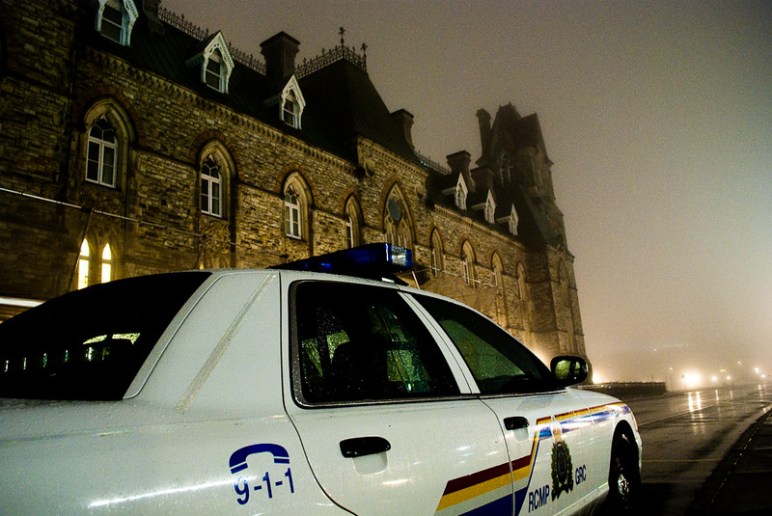
Photo courtesy of R. Orville Lytle via Flickr Commons — Some Rights Reserved

Fall Reflections…

“And all the lives we ever lived and all the lives to be are full of trees and changing leaves” – Virginia Woolf

Writers and poets have spent many words in trying to capture the essence of the coming of Autumn. As nature changes to reflect the shortening of sunlight and what Keats called “the season of mist and and mellow fruitfulness”, for me it is a time to pause, a lull in time when we all re-adjust and prepare for a return to the comfortable routines. It is a favourite time for many, these days of changing colours, when the sky seems bluer, the clearer air markedly cooler. In nature, it is also a time of decay, a coming to the natural end of life. So it seems as good as time as any to reflect on the good and the not so good which have come out of these last few months. They are subjective, in no particular order, and of no particular importance.

One of my over-riding thoughts is about our news, the constant stream, less and less from traditional media, as the digression to a reliance on social media seems to be accelerating at an alarming rate. Thus, the reliability of that watered down news should be of the utmost concern. This is not new, this trend has been going for several years and it is indeed worrisome, especially for anyone who historically has valued the role of the 5th Estate. The news now is in snippets, pieces of video, pieces of conversation, mixed in with fully partisan and fragmented opinions. Press releases are being issued, and then regurgitated through the media in tiny sound bites to a public, which has clearly become disenchanted, and that disinterest is palatable. Every story is purposely planned to begin with “unprecedented”, “historic” and “never seen before”. It is like television and radio have been swallowed up by the National Enquirer. This summer as we took in the sunshine and communed with nature, our phones were constantly being pinged and alerted; bombarded by the news of “soaring inflation”, “unprecedented wildfires”, and the “historic cost of housing”. Youtube video and Instagram posts are now spliced into to be part of the actual coverage, and often polarized opinion is dangerously assumed to be fact. This trend is only disturbing if one values a functioning democracy, and therefore the need for an informed populace. One wonders whether we, the consumers, who seem addicted to instant scrolling gratification are also the problem or have we just been trained?

As one reflects on the political waves of the last few months, there does seem to be a swinging of the left/ right pendulum. Has the leftist arc of the pendulum reached its pinnacle, and is it now moving back? For sure, the Federal Liberals are coming to realize that things are not quite as rosy for their fatuous leader as they originally thought. So, in recent days they have been frantically swinging their arms in a desperate effort to fan the flames of fear, the fear over those evil right wingers marching over the horizon to destroy all the good they have created.

Pierre Polivere, the Conservative opposition, has executed a dapper change in his haberdashery from Clark Kent to Superman, and is finally feeding with some effect on the overt stupidity of recent Liberal pronouncements. His biggest concern may be that he is peaking a little too soon, as the election is still a couple of years away.

That said it does seem like we are adopting the American version of an election in which the campaigning starts at least two years in advance. This will mean that we will be very sick and very tired of hearing from any of the politicians with their dumbed down commercials filled with statements of progress and diversity, of being “there for you”, “going forward” and “working together”. For her part Deputy Prime Minister Chrystia Freeland, who has cut some of her television cable to account for the rough financial times, will continue to stand behind Justin, and nod with vigour at every statement he makes. The flame proof Bill Blair having survived being tied to Commissioner Brenda Lucki, will try and remain hidden in his new job as Minister of National Defence. Foreign Minister Melanie Joly will continue to have her minions prepare for the unforgivable possibility of a Republican being elected in the United States; as she also “revamps” her department to make it a nice place to work. The Governor General will continue to distribute her valuable wisdom and insights to anyone who will invite her to an exotic locale, and will arrive with her twenty plus entourage in tow, but sadly will only be able to offer and provide box lunches on any future flights.

Locally, the domestic theatre of the absurd politics in Surrey continues, and Mayor Brenda Locke keeps on with her obfuscation and attempt to prolong any transition to the Surrey Police Service. Brenda it would seem simply does not want to admit defeat. Meanwhile, it is costing the Surrey taxpayers $8 million a month currently for the present state of policing, but Ms. Locke will continue to tell everyone she is concerned about future policing costs. She continues to blame the Provincial government and it would seem that most of the most recent delay is because most government workers decided to take the summer off. Apparently losing $8 million a month and getting a functioning police force in place is not enough reason to postpone anyone’s holidays.

And do you remember the campaign by the Surrey Mounties and the Mountie union, the National Police Federation, where they detailed how they were the better persons for the job, and that future staffing was not an issue? This while recently we have been watching the current Commissioner Duheme touring the rural areas of Saskatchewan, and hearing story after story from his own members on the lack of staffing and the inability to do the job. The irony is overwhelming. Duheme is even saying now that there is “a recruitment crisis” and the Mounties are now at a “cross roads” in terms of their survival in their present form. So who was lying, the present Mounties in charge in Surrey or the current Commissioner?

The Federal Mounties it seems, still have not figured it out why no one is applying for their department. They now believe that to increase recruitment, the solution will be to further lower the standards. The head of the RCMP in Saskatchewan is Rhonda Blackmore. Ms Blackmore and the brass heading the Saskatchewan RCMP have now created the Saskatchewan RCMP Indigenous Recruiting Unit; who among other things recently sponsored a three day event to recruit indigenous candidates, give them tours of Regina, and were there to “help them fill out the application forms.”

Meanwhile the Feds in RCMP Ottawa, the dreamland capital, are debating reducing the time away from the use of marihuana, before working as a police officer, down to 24 hours– from the current 28 days. By putting scientific evidence aside, there belief is that would then be able to attract those daily doobie smoking future recruits who also have an interest in crime fighting.

Here is a reflective thought. How about they try and attract future police by making the RCMP a viable and expert policing organization once again? It will take longer, it is definitely not an overnight solution, but it will work.

Unfortunately, over the last few weeks and months we continue see the baleagured and beseiged Mounties being thrown to the wolves. The most recent slap in the face was the 123 page report commissioned by the B.C. Public Safety Ministry which stated that Combined Forces Special Enforcement Unit, a group of over 440 officers with a budget of over $90 million “is neither effective in suppressing gang violence and organized crime nor is it providing the Province with an adequate return on investment”. They described it’s governance as a “tangle of organizations…” that its “funding is unstable”…and that there is a “lack of continuity”…and “high rates of turnover”. The RCMP response to this damning indictment on September 8 for this report that was issued on April 16th, was that they had not yet received a copy of the report. Can anyone imagine a private company or even a government department getting this kind of review and no one being held accountable? The head of CFSEU, RCMP Assistant Commissioner Manny Mann is saying nothing, so one can only hope that he is busy preparing his retirement papers.

Further to the RCMP in Saskatchewan, in the past few months it was also announced that they will be holding two inquiries. The first is the inquiry into the eleven individuals stabbed to death on the James Smith Cree Nation. There is little doubt that it will be comparable to the inquiry in Nova Scotia over the Portapique mass murders in terms of the eventual criticism and the conclusions that will be reached.

It was also in Saskatchewan that the Province is now forming a 70 person Marshall service to deal with property crime at the cost of $20 million, to supplant the lack of attention to rural property crime from the RCMP. It has not been a good time in Saskatchewan lately and it looks like they will be front and centre in the next few months.

So as we have reflected, have we learned? Not really. There seems to be a lot of sameness and it seems that the culprits of the past few months, will be the culprits of the next few months. The problems of the past are ongoing and will continue, the solutions proposed in the past, likely will be the solutions proposed for the future.

I wish I could offer more solace, but at least we took the time to reflect and take a deep breath.

Personally, I am looking forward to the Fall, but mainly because I love baseball– and there is nothing like October baseball.

Looking for Mr. or Mrs. Right

My mistake, I have committed another faux pas–Mr. or Mrs. is now deemed sexist. I should have entitled this blog:

“Looking for Mx (pronounced miks or muhks) Right”.

It just doesn’t have the same narrative flow.

In any event, if you in the trenches failed to notice, and you can be forgiven, Commissioner Lucki is now gone. It has been five long years, and we are once again faced with who is going to replace her. The government is moving slowly, surprise, surprise, and they haven’t really set up any search committee yet to find her replacement, even though Brenda was nice enough to give a months notice. Nevertheless it will take a few more meetings just to devise a list of board members on the search committee. This list will of course comprise of like minded Liberals or academics who fully appreciate the overall goals of the Liberal Party and Mr. Trudeau. The last time we went through this, there were a number of liberal elite persons chosen for this selection board, the likes of Frank McKenna, all who clearly needed a few more months at the trough. And after assembling this super group of intelligent and insightful people and a lengthy country wide search; the results of those expenses laden trips was that they recommended Brenda Lucki– and deemed her the most qualified of all that applied.

One can only hope that this same group is not brought together again.

Meanwhile Michael Duheme is wriggling his bottom into the leather executive chair to act as the interim commissioner. No doubt giving him some time to decide whether he should also take the time to polish up his RCMP resume, which he has already used to great effect throughout his career. So we can not rule him out.

Mr. Duheme was born in Quebec and includes on his resume–General Duties in Nova Scotia, ERT, VIP Protection, Peacekeeping Missions in Kosovo, was Director of Parliamentary Protection Service and the CO of N Division. Pretty well safe to say that Mr. Duheme is an Ottawa-centric figure. Having watched him at some Committee hearings, he was clearly better than Lucki in doing the shuffle dance, and he did somehow came out unscathed from most of the flames being thrown at the Commissioner during her troubled years. This you could view as either a positive or a negative.

Meanwhile, in the soul crushing corridors of Ottawa HQ, the cafeteria talk is abuzz with the who will be the next Commissioner question, that is if they are not still working from home. There will be jostling by the various sword carriers who will be aligning themselves with who they think that will be and how to best position themselves to be closer to the papal chair. I live a long way from Ottawa, but I still have friends that toil there, exasperated friends to be sure, but they have helped to clue me in to who the front runners are currently– and who are therefore the subject of this blog.

But before your “rapporteur” goes through this revelation for those outside of Ontario and Quebec who are not in the loop, we need to first review the obvious selection criteria that will be the primary and overriding considerations in this process.

  1. Mr. Trudeau, who declares himself a feminist, likes to have women around him in positions of authority. As a result the RCMP internally has tried to meet Mr. Trudeaus expectations with the promotion and raising up of women to the highest echelon. (they are actually now over-represented in terms of the makeup of the police employees).

2. It is equally clear that Mr. Trudeau has only two causes in his platform, and one favoured special interest group; climate change, diversity, and the Indigenous. He seems blind to the other major issues that constantly whirl around Ottawa, and obviously he is totally ignorant of policing issues, and in fact shows no real interest in them. This is the guy who never asked Lucki’s opinion in the fateful Cabinet meeting to declare the Emergencies Act.

3. Keep in mind that Trudeau, and the rest of that group do love a good public relations announcement. To announce the promotion by starting off: “The 1st _____”. Fill in the blank. First full-time woman Commissioner (Ms. Lucki), the first Indigenous, the first gay, the first transsexual, etc. We are still very much in the age of the race and gender being translated as a quality of leadership. Equity of outcome, not equality is the current practise in the Federal government.

So keeping these rules in mind, here are the current list of front-runners which I am told are being bandied about for the next Commissioner. They are not in any particular order and there is no betting money-line on FanDuel, or MGM to help parse the odds.

a) Kevin Brosseau.

This candidate has been around before. He was in the front runner list when Commissioner Lucki got the job. He is a highly educated, far and above the others on the list, and was from 2016-2019 the Deputy Commissioner for Contract and Indigenous policing. Possibly disappointed in not getting the job last time, Mr. Brosseau went on to become Assistant Deputy Minister for Safety and Security at Transport Canada, and most recently he became Deputy Minister of Fisheries and Oceans. He has a Master of laws from Harvard Law School, and is a Fulbright scholar, so intellectually no slouch. He was born in Bonnyville Alberta and is of Metis heritage but one wonders if he can make another move from gill nets to handcuffs.

b) Rhonda Blackmore

Rhonda is currently the CO of F division, who worked for 7 years in detachments such as Assiniboia, Grande Prairie, Buffalo Narrows. Then it was off to Ottawa. She went through a few departments over 9 years including being the executive officer of the Deputy Commissioner of Contract and Indigenous Policing. She was the travel officer with the Governor General, as well as stints with National Traffic Services, the National Use of Force program, and the National Operational Policy and Compliance unit. She was moved upwards through Mrs. Lucki’s reign on a continuous basis and when asks, speaks at length about her support for the troops. She is clearly an Ottawa wonk and can speak the woke language. She has been married a couple of times, but I have been told “she is married to the Force”. Upon becoming the CO of F Division she said her priority was “continuing our reconciliation efforts, with our Indigenous peoples”.

c) Raj Gill

Mr. Gill served for 29 years with the RCMP before becoming the Deputy Chief for Calgary Police Service. He was Assistant Commissioner for National Human Resources. Mr. Gill since arriving in Calgary is specializing in the area of “equity, diversion and inclusion” and developing an “anti-racism strategy” to combat the systemic racism in the Calgary Police Service. This of course doesn’t go over well with some, but it is the flavour of the day, and Mr. Gill is clearly an advocate to push that agenda forward. Mr. Gill would clearly fit the criteria of being able to announce “the 1st South Asian Commissioner of the RCMP”.

d) Nadine Huggins

Ms. Huggins is currently the RCMP Chief Human Relations Officer. Of this group, she is the only one with no previous policing experience, and is a long time public servant. She is relatively new to the Mountie group starting in 2020, but now lays claim to “People Management Modernization” and her bio brags that “under Nadine’s direction we have created and are currently driving the People Strategy… and the Vision 150 Equity and Accountability and Trust Action Plan”. You will be forgiven if you are already tuning out. Though she could be headlined as the “1st Black Commissioner of the RCMP” and quite honestly that may be her biggest positive. There are quite a few rumours that Ms. Huggins has even been known to bad mouth the RCMP in quiet aside conversations. Maybe not the best look for a future Commissioner.

e) Mike Lesage

Mr. Lesage in 2021 was named a Deputy Chief with the new Surrey Police Service (so, might be out of a job in the next few weeks) but previously was an Assistant Commissioner for the Combined Forces Special Enforcement Unit. His forte apparently though is Community Policing and will be in charge of the SPS Community Policing Bureau. Mr. Lesage I am told has two things going for him, he is Indigenous, and he is good buddies with retired Deputy Commissioner Jennifer Strachan. Quite frankly only one of those things may help him. He seems like an outside candidate at best.

So there you have it, the best the Mounties have to offer to replace Commissioner Lucki and fill her rather small shoes.

It’s also possible that there could be someone outside the realm of policing waiting in the wings. Gerald Butts? maybe?

It is understandable that if it is going to be someone from this group which we have just outlined, that they likely represent “more of the same”. They do not appear to be a group from whom radical and progressive initiatives will be forthcoming. They have all sharpened their teeth on being politically astute in terms of “diversity” and “inclusivity” and the language you must spew if you are to survive and prosper.

So, in any event, there your choices a) thru to e): or, it could be choice

f) – None of the above.

Feel free to let me know if any of the candidates have some appeal to you. I do not know any of them personally, but I am sure they are fine people. Remember though that we are not necessarily looking for a nice person.

Meanwhile, behind the RCMP curtain, the Mounties as we know them, is slowly disintegrating, brick by crumbling brick. To enter into a fight to reclaim their once national status is going to take a very strong and gifted individual. Or, they are going to be overseeing a total revamping of the current structure, and that too will take a monumental effort.

Cast your ballot. Oh sorry, I forgot, you regular members of the RCMP don’t have a vote.

Photo Courtesy of Louri Goussev via Flickr Commons – Some Rights Reserved