Another change in Seasons…

As we head into Fall and wind down from summer, it inevitably seems to be a time of imposed reflection. Fall traditionally signals an ending, a time of maturity and incipient decline. This Fall though there are some unusual stirrings in the political winds of Canada and to a certain extent around the world. It could prove to be a welcome breeze, especially for any person involved in policing or involved in the legal system.

Some pundits including Time magazine have called 2024 the “year of elections” . The results in many countries seem to reflect a growing conservatism amongst the democratic countries, a swing away from the socialist progressive agenda. This is fuelled in large part by the realization that there is in fact a defined need for the police, that there is room in a democratic society for enforcement of the existing laws. There is also a desire to remove the politics out of the governmental system and oversight of the legal arms of society. Unlike years past, this time, especially in Canada, the move to a more conservative ideology may be more long lasting.

Now, before those positioned on the far right of the spectrum get too excited, a possible swing to the right is in essence, in Canada, merely a move to the centre. It only seems drastic and is being portrayed as momentous merely because of the fact that the pendulum was so far left for so many years. That being said I do believe that the vast majority of Canadians would like to return to some sort of common sense middle ground. This shifting in sentiment is often hard to discern or measure, often disguised by the fact that they are such small incremental steps. However, it is becoming much clearer that the issue of law and order has once again risen to the top.

I live in Vancouver British Columbia, the wellspring of inanity, where we learn of another grotesque criminal act on a daily basis, for the most part being instigated by the homeless, the mentally disturbed and the drug addicted. The latest was another stabbing, in broad daylight and with no motive. One male stabbed to death, another male knifed and actually had his hand severed from his body. It was perpetrated by an individual who could be the poster child of the wrong headedness of our court system, another too familiar example of where the combination of mental health and criminality collides forcefully and is played out on public streets in broad daylight. All while citizens look on or stop to record it on their phones. This latest suspect male had over 60 encounters with the police, was on probation, and had a history of assault and assault causing bodily harm. His current probation conditions was termed as being “soft”.

The story fomented the usual media hype, the Mayor coming out quickly to assure everyone that this is a “safe city” –when those of us that live amongst the daily visions of unbridled mental illness and drug abuse clearly know better. The Vancouver City Police Chief Adam Palmer when sharing the podium, seemed exasperated and in his statement gave a not so subtle hint that the suspect should not have been out on the streets. The media as usual called for instant solutions to undo the years of policy mistakes, the biggest mistake being the closing of the local psychiatric hospital “Riverview” in 2012.

In the Vancouver and British Columbia political establishment the leaders are clearly taking note of the growing public discontent and it is now looming as the single most important political election issue. Along with this is that in British Columbia there has been a dramatic up-ending of the three political parties in the Province. The Liberal Party (who re-branded themselves the B.C United), they, who were the power brokers for many years in this Province, have simply given up; they have literally withdrawn from the next Provincial election scheduled for November 2024. They have surrendered the proverbial ghost and have freed their candidates to wander away into obscurity or go join the Conservative party. This leaves it a two party race, which is polling now as a neck and neck battle between the governing NDP and the Conservatives.

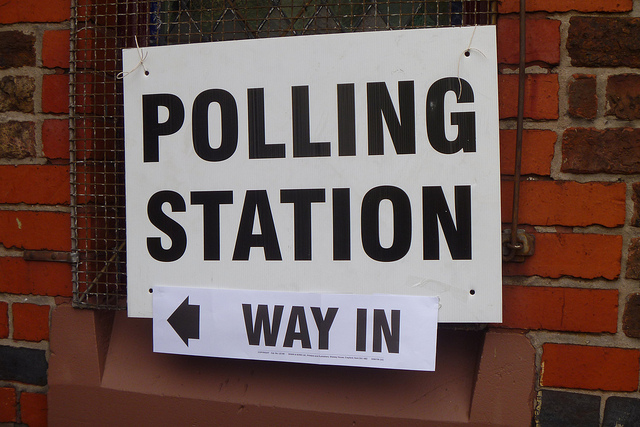
The upcoming election, if nothing else, will allow the voters to distinguish between two distinct policy groups, the socialists or the conservatives, and should therefore provide a more accurate glimpse of the mood of the people. The Conservatives are predictably running on a platform of law and order and a greater move to private enterprise. They are in essence saying that they want the government to get out of the way. The NDP whose party base are traditionally the victimized and marginalized groups (you pick the group), the unions, and any and all members of the “learned” left. These “progressives” have the added advantage of massive support from the current media establishment, the Indigenous, government workers and the academic institutions. The NDP are remaining true to their ideology and are sticking with policies of all people being part of, by necessity, a fulsome government oversight apparatus. It has been a long time since there has been such a clear choice for the people going to the ballot box and currently it seems be an even battle.

It is always fun at election time to watch all the candidates feel bolstered and sharing their insights on all of the evident problems and the clear solutions that lay ahead. Solutions which they did not see while in power but have now attained a greater vision when in sight of a ballot box. What is equally clear is that it is always someone else’s fault.

When talking about crime and rampant lawless behaviour, the Provincial NDP who have been in power for the last five years in British Columbia (the California of Canada for all you Canadians who live in the east) quickly point to the Federal Liberals as the problem. And to be fair, the Feds are the governing body when it comes to the Criminal Code. The offended Feds in turn point back at the Provinces because they are in charge of Health Care and the current sitting Judiciary. The Provincial leaders then rebound and point the accusing finger downward to the cities as they are responsible for enforcement. Three levels of government, all with no defined action plan in terms of the daily carnage on the streets and apparently unable to find any solutions while in power, now telling everyone they now know the way.

As we in the West look eastward, Alberta has always been Conservative and the Prairies are very similar. Doug Ford in Ontario is now trying to get a Conservative election victory prior to any Federal Election. Newfoundland is the only true vestige left of Federal Liberal supporters.

The Federal NDP and their illustrious shrill leader Jagmeet Singh dramatically announced that he is “ripping up” his prop-up agreement with the Federal Liberals; while at the same time vowing not to be rushed into any confidence vote. It would seem that he has finally realized that the Liberals are circling the drain and he either goes down with them, or finally leaves the safety of the Liberal cocoon for the less than safe seats of his own party. His ratings are below Trudeau but he is hoping his chances will improve with a continuous socialist rhetoric of corporate greed. He is hoping that someone out there actually agrees with him, but his chances of disappearing altogether is growing. The policing fraternity are hoping that the NDP policies disappear with him.

Now Trudeau himself is another story. His actions to date only raise questions for me. As he reads the latest polls and gathers his troops in Nanaimo this week, is he being driven by pure ego? Does he think he can spend his way to a rise in the polls and another minority government? His strategy for a possible re-election is singular. He will continue to try and and will have to make Polievre turn into Trump.

Polievre for his part, will continue to try and avoid any major guffaws and keep his newly coiffed hair and refined look in place. He has to walk a fine line, because he certainly is not going to get any votes from the public service or those that depend on government contracts. The same foes of the BC Conservatives are the same foes for the Federal Conservatives. Let’s face it, what are the chances that members of the CBC vote for him?

Of course there is not a strong enough wind to blow all the usual problems off the headlines and the teleprompters of our television talking heads. In terms of specific policing issues, in the next few months the Surrey RCMP and the Surrey Police Service will continue to dominate the local BC headlines with the snail like place of getting officers on the ground and the equally slow moving RCMP in getting their officers out. The Indigenous will continue to dominate headlines with further demands and true to form, just recently tore up their latest signed agreements for a natural gas pipeline with TC Energy. There is little doubt that the RCMP will once again be manning the barricades in northern B.C.

Back east I have a growing interest in the Bill Majcher case, charged as he is with foreign interference and there are some interesting parallels to the Cameron Ortis case. There is a good chance that CSIS and the RCMP INSET (Integrated National Security Teams) may look bad on this one as they continue to struggle to be a meaningful service amongst the Five Eyes. So we need to keep our own eyes on that one. Their is evidence now coming forward that Majcher was throughout several periods of time , actually working for CSIS.

In a more general sense, the Mounties in Ottawa will continue to find themselves in an environment of increasing public suspicion. They seem to be floundering in terms of leadership and in finding their true reason(s) for being. The larger overall problems have been years in the making and it will be years in the undoing. They will however, continue to do what they still do best. They will apologize somewhere. The most recent was in Nova Scotia where they apologized to the African Nova Scotians for “historic” use of street checks.

There will be the usual public government pronouncements, the Federal government employees will continue to protest having to go back to work 3 days a week and will come up with any inane excuse they can find. Housing prices will stay the same, inflation will continue to hover around 3% and mortgage rates will have little effect on the supplies of housing. The media will continue to pump us full of doomsday proclamations; headlines about droughts, floods, fires, heat, cold, or anything they decide is “record breaking”. Our traditional news sources will continue to be decimated and their managers will continue to replace long time journalists with persons who are quick on the keys to Instagram, and Substack. Ukraine seems to be in military limbo and Israel seems to heading into the same horrendous stalemate in Gaza.

However, life will go on. Get ready, get your thoughts in order and be a little hopeful, as it is never as bad as it seems. Its only an ill wind that blows nobody any good.

Photo courtesy of Jeannine St- Amour via Flickr Commons – Some Rights reserved
“Double dipping” for China?

There has been a new case surface in the last week or two, which caught the attention of these tired old eyes. It was when the RCMP made a grand national pronouncement that they had arrested and charged an ex-Mountie; William “Bill” Majcher , with two counts under Sections 22 and 23 of the little used Security of Information Act.

The story caught my attention on a number of fronts. First, I knew of Mr. Majcher, but only in passing; secondly, the investigation was done by the Integrated National Security Enforcement Team (INSET), and it was the INSET unit in Quebec, even though it very much sounded like the offences occurred in British Columbia. That seemed a little unusual and could only mean that there were others involved and there was a trust issue. For those that needed to be reminded, INSET is the RCMP agency which is the direct liaison with CSIS (Canada’s spy agency). Therefore one must always be aware that CSIS and thus INSET often work on “political targets”, and therefore their mandate is often at the direction of the government or with the approval of government. There is little to no police independence when talking about either of those entities. So we should also keep in mind that old adage that “one mans terrorist is another mans freedom fighter.”

With this in mind, China and its alleged political interference in recent Canadian elections has been a dominant story and pre-occupation for the last few months in Canada’s mainstream media. The Liberals have been under a great deal of political fire for their handling of the information surrounding the election interference, and their lack of investigation of it. So it seemed slightly more than coincidental that this case against Majcher was brought to the forefront in terms of its timing, and the obvious question as to whether it was being done to ease the pressure on the Liberals. Adding to the suspicion, is that these cases were historical, in that they occurred sometime during the years from 2014-2019. They also had said that this particular investigation had nothing to do with the alleged election interference. INSET says that their investigation surfaced as a result of a “complaint” in 2021, and now in 2023 they were bringing forth charges.

The accused, Mr. Majcher, was a Mountie from 1985 to 2007, some twenty-two years, and “retired” from the Inspector rank from the now defunct Integrated Market and Enforcement Team (IMET); an investigative group which had been mandated to investigate criminal activity in the Vancouver stock exchange and other financial markets. I met Mr. Majcher when he was the Inspector in charge, and we met out of necessity as he was the overseeing officer for an internal investigation that I completed on a Vancouver Police Department matter. He didn’t really pay much attention to the details of my report and signed off the investigation with little to no question. My first impressions of Mr. Majcher stand out now– and have been echoed by many people who knew him during his career. He began by showing me around his rather sumptuous office down on the Vancouver harbour front, and it was impressive from any government employee perspective, with its two storey high windows and its unhindered view of the moneyed yachts. It all turned out to be part of his pitch to me to come to their section, as they were looking for an experienced team leader/primary file investigator at the time.

He was a pretty impressive salesman about the job, but he was an obvious salesman, in that stock broker, car salesman kind of way. I later found out that before joining the RCMP he had in fact been a Eurobond trader. (Eurobonds by the way were one of the first tools developed and marketed to aid in the hiding of funds offshore) He was also clearly intelligent, but his flaw may have been in believing that he was always the smartest person in the room. He was always talking, but not overly concerned with listening. I considered the job at the time because of my interest in economic crime (much cleaner than homicide), but then turned it down after researching it a bit, and learning that the section was having trouble getting their feet off the ground, due to a variety of reasons and legal complications.

As it turned out, Mr. Majcher later got himself in some hot water while with IMET, and he became the subject of an internal investigation in 2005. I was told at the time, that it had something to do with his continuing involvement in the stock market, but I never heard the full story. In the end, presumably rather than face further investigation he “retired”– the always tried and true option the Mounties go to when handling troublesome employees. The public material says that Mr. Majcher in 2006, had already moved to Hong Kong– clearly never one to let the grass grow under his feet.

Like every ex-Mountie who is looking for a double-dipping job, and populate LinkedIn, Mr. Majcher talked up his previous investigational work experience and touted himself as an extraordinary undercover officer who continually risked life and limb in pursuit of the bad guy. His resumé was clearly bloated, but Mr. Majcher in fact did do a good job as an undercover operator on a couple of investigations. In the roles he played he was always portraying “the money guy” — always the salesman. His most famous case was that of the case against Vancouver lawyer Martin Chambers in the late 1990’s. Mr. Chambers during his hey-day was a prominent Vancouver lawyer who was suspected of large scale money laundering for the Russians and the Hells Angels. During a staged video-taped meeting in Florida with Mr. Majcher playing his role of financial underworld figure, Mr. Chambers took possession of $700,000 cash, and provided offers to handle millions of dollars. Mr. Majcher was the primary undercover officer and had led Chambers to believe that he monies were coming from the Columbian cartels at the time. It was a joint FBI-RCMP sting, and it was successful, and Mr. Chambers was sentenced to 15 years and 8 months which he served in an Arkansas jail.

The Chambers case would be the case that Mr. Majcher seems to have used as his plank to build a spring-board into a position in Hong Kong. He described himself as a “risk assessment officer” for the investment banking community, and that he had moved there to “establish an international banking platform on behalf of Hong Kong merchant bank, representing a number of Chinese state owned and non-state owned enterprise clients engaged in overseas capital world activities”. Not only would he bring to the table his extensive investigational expertise, but they would be able to employ “military grade cyber technology” in the pursuit for their clients.

He later formed the company EMIDR in 2016, a “Hong Kong based cyber-security company”. In a video he described himself as “a hired gun to help either large corporations or governments to get back what is rightfully theirs”.

Now most of us can see the salesman oozing out of these marketing pronouncements. But, despite the clear aggrandizement of his capabilities and the obvious exaggeration as to what they could bring to the world of money laundering, nevertheless, Mr. Majcher was indeed tapping into or at the very least trying to tap into a potential gold mine.

And this is where it all gets rather complicated.

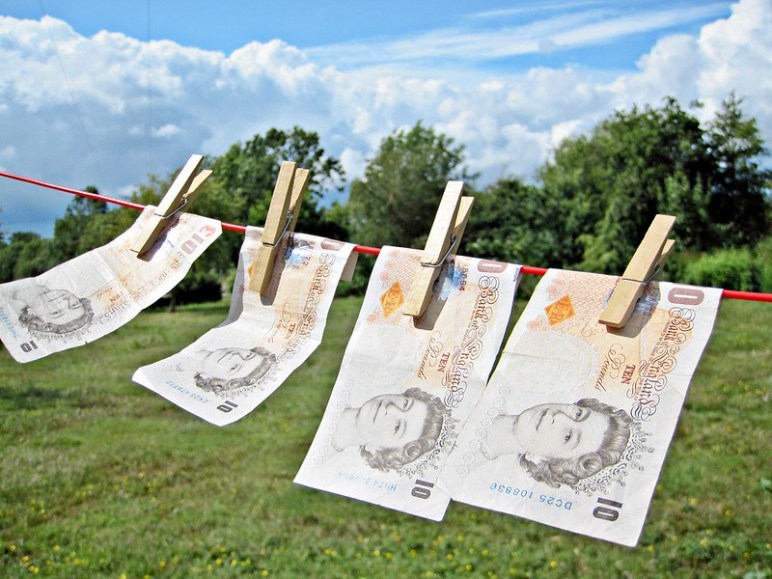
It gets complicated in terms of the story line, and it gets complicated in the list of characters who may be playing in the game. First and foremost, this story is about money laundering, at least on the surface. But it is also about the many layers and degrees of inherent corruption. It is a fact that mainland China has had numerous individuals remove monies from their country, contrary to their own laws, as well as ill gotten gains that were taken out of the country from illegal activities. By any measure it is estimated that they have lost billions of dollars over the last number of years. And as you guessed, there have been a few select countries which these suspect individuals have turned to in order to facilitate the laundering of those funds. One of course, high on the list, is Canada, and specifically Vancouver. (do you remember the Cullen Commission?) Another area was along the “Gold coast” of Australia and the city of Melbourne. Their were other locations of interest to these monies seeking a home and the luxury of anonymity such as New York and Chicago. Hong Kong which was a city designated as a special administrative region of China, was heavily involved in the movement of those monies wanting to escape from China, due to its geographic proximity and the lack of foreign exchange controls.

The people who have orchestrated these money movements are now considered by the Chinese government to be criminals. As a result China started two projects; Sky Net in 2015 and Project Dragon in 2019, to track down and try and get back those monies. The latter project focused on the gold coast of Australia and those funds that were being used to purchase real estate. China of course, as Majcher himself stated in an interview, needs to “walk a very fine line”, as to the perception of anyone working for a foreign government. So China smartly formed public/ private partnerships with various firms, who would assist them in tracking down individuals and finding the monies. As expected they went to those with knowledge of the host countries who advertised themselves as having “expertise” in that country along with their “investigative resources”. Enter Majcher and other similar firms, especially those firms staffed by ex-police officers. Mr. Majcher openly said during a television interview that “I have a commercial relationship with entities that are in themselves associated in some form or another with policing authorities in China”.

Of course, most of these ex police officers who have entered this private field, have little or minimal hands on experience, they are primarily being hired because of their “contacts” in policing. Mr. Majcher is not a cyber expert, smashing the keyboard, hacking the demographic data sites to find someone; he is likely just picking up the phone and calling persons in the policing world who do have that information at their finger tips, and are willing to assist them in finding people. Mr. Majcher worked for the most part in British Columbia, ergo his contacts will be in British Columbia and in particular Vancouver, this hot bed for Chinese money laundering in Canada.

Two ex-Aussi police officers, Jason McFetridge and Austin Whittaker, in the Melbourne Australia area who had a similar firm to Mr. Majcher were interviewed about how the plan to recover the funds would come about and how it would be executed. Both maintain that it was a completely legitimate pursuit to get their client’s money back. It was a simple plan, but one that bordered on extortion. They would identify the people with the apparent illicit funds, confront them, tell them they are on to them, and that they needed to sign over their properties to the ex-police officer company. They in turn would then sell the company and send the monies back to China for a fat commission. The obvious inference, should the accused not “voluntarily” sign over the money, was that there would be repercussions for their families back in China, or telling them they face jail time if they ever return to China etc.

Does China have a right to pursue criminals and money launderers? It would seem legally justifiable, but what becomes questionable is of course how they go about it. Do they have the right to have hired personnel threaten people and insinuate sinister repercussions–that strains legality. It would have to be at the very least an inference and not a direct threat. The Skynet project apparently identified over 3,000 people that the Chinese government felt had broken their laws.

It would be easy to say the Chinese are wrong, and this is a step gone too far. And of course, what if the people they are pursuing are not criminals?

Historically Canada, and in particular Vancouver, has a very murky bordering on sinister relationship with communist China.

In 2015 China tried to sign agreements with the CBSA and the RCMP to assist them in pursuing their people of interest. In the late 1990’s Lai Changxing was considered “China’s most wanted fugitive”, a man who had been implicated in several corruption scandals in China involving a large smuggling ring. He evaded arrest and settled in Vancouver, where he was arrested by Canadian authorities, went through a long extradition battle but eventually was sent back to China in 2011, where he was given a life sentence. So at one time, the Canadian government was participating in the very same thing.

There is the Meng Wanzhou matter where a high ranking member of the Chinese establishment and the Chief Financial officer for Huawei was arrested in Vancouver, on behalf of the Americans and was facing extradition. China retaliated by arresting two innocent Canadians as “spies”, Michael Spavor and Michael Kovrig. Meng eventually reached a “deferred prosecution agreement” with the Americans, the charges were dropped, and she was returned to China after having been under house arrest for close to three years. During this time she was given VIP protection to and from court by the Lions Gate Risk Management group, a group also filled with many ex-police officers who also advertise their specialities in “Money laundering and Asset tracing”. Mr. Majcher during this time admits to also being contacted by China looking for some help and monitoring of the case against Meng.

And let us not forget the matter of the ex-Mountie, Ben Chang, who during the Wanzhou hearings refused to testify about his role in the arrest of Meng Wanzhou while an RCMP officer. Since the arrest time, Mr. Chang had turned his old foreign liaison posting with the RCMP in Hong Kong into a retirement job as a senior security officer in the resort casino Galaxy Macau. His last minute refusal cast doubt on the credibility of the government lawyers who maintained that the RCMP did not share any information on Ms. Weng’s computers and mobile phones. Somewhat mysteriously, the prosecutors did not subpoena Mr. Chang. The Galaxy group as it turned out is owned by Lui Che Woo, a Hong Kong businessman who served on the standing committee of an advisory group to Bejing. Mr. Majcher it has been reported to have been at one time Mr. Chang’s supervisor.

INSET has hinted that they are looking at other officers involved in Mr. Majcher’s case. One of the names surfacing is Ken “Kim” Marsh, another ex-RCMP officer, who has written a book about his exploits entitled “Cunning Edge”. Mr. Marsh who has been named as a co-conspirator with Mr. Majcher, but not yet charged, once cooperated with Majcher on cases; and Marsh identifies himself as his “Mountie friend”. In his book Marsh talks about being “hooked up” with Russian millionaire Vladimir Antonov for a “due diligence report” that he charged Antonov $500,000 to prepare. Antonov would later be charged with embezzling “hundreds of millions of dollars from a bank in Lithuania”. Marsh is now seemingly perplexed by his naming in this most recent Majcher investigation. As he says in the introduction to his book, “he gave decades of his life to his work, all in the pursuit of bringing bad guys to justice…for his clients…and society at large”. He doesn’t mention that it was also primarily to make money.

So what are the charges specifically? Section 22 is labelled “preparatory acts” and states in essence that anyone who enters Canada,… or retains or gains access to any information… for the benefit of a foreign entity, a terrorist group, or an economic entity… and then communicates that information to them is guilty of an offence. This section refers back to Section 16, 17, 19 and 20 which get more specific as to whether the information is designed to “harm Canadian interests…or is reckless with that information”. Section 20 deals with using the information in association with a “foreign entity” to “induce, by threat, accusation, menace or violence, any person to do anything or cause anything to be done”. Section 23 is just the “conspiracy” section saying that one can not conspire to do any of the above.

So there is three elements to these offences that need to be proven. Was Majcher working for a foreign entity? Did they obtain information that was being guarded by the government, and finally did they threaten anybody or coerce anybody to take some action on behalf of the foreign entity? In terms of the press briefing by Inspector David Beaudoin they say that the charges surround “preparatory acts for the benefit of a foreign entity and conspiracy”. As stated previously, they began their investigation in the fall of 2021, and it was for the time period of 2014-2019. There are going to be some significant legal hurdles. Does the government of China have the right to pursue persons they consider thieves and money launderers? Are private investigators, indirectly working for the foreign government allowed to make inquiries as to money laundering and attempt to find those persons? America, Britain, Australia and even Canada using various investigational instruments make inquiries constantly for this same purpose. The RCMP and Canada have directly participated in doing the very same thing, but of course they will argue that they and only they are the safe-guarders of that information.

If one is interested in this kind of thing and would like a full view of the extent of the problem, I recommend the book “Moneyland” which the Economist magazine called the “book of the year”, written by British journalist Oliver Bullough. It is a deep dive into money laundering and the people behind it, including the lawyers, bankers and governments that both front face the problem and are part of the problem. The city of Vancouver is featured as a sought after refuge for the kleptocrats from China, Russia, and south Asia and he outlines the number of groups trying to track them down, often frustrated by the lack of government action on the issue. It is such a broad and expansive problem that he argues that it is under cutting the pillars of western democracy.

There is one other aspect of this story that is intriguing. That is the media coverage of this story led by journalists like Sam Cooper changes the motivation behind China. Cooper who is never shy in trumpeting his investigative journalism skills on the subject of money laundering in Vancouver. As it turns out he has admittedly conferred in the past with Kim Marsh on stories such as the Cameron Ortis story; and it would be a pretty easy assumption that he has RCMP sources feeding him information. The interesting part is that his take, and therefore the apparent take of the RCMP is that China is “not interested in getting back their money…only interested in controlling the people in the country”. In other words it is all part of a conspiracy to control the Canadian government through spies and agents.

It is an interesting postulation, but there is little to no evidence to support it. There is no doubt that China has for decades searched out persons and politicians who would speak positively about China and possibly try to influence legislation. While in Security Service in the 1980’s and early 1990’s we were already watching the Chinese operatives in Canada trying to influence politicians. The problem is one of definition. In the U.S. for example, they simply call them “lobbyists”. Here, in this country there is not even a foreign registry set up, so how concerned or worried about it is the Canadian government? In Mr. Majcher’s case, there is much more evidence that China is going after the money, they have always been aggressive industrialists, and there is an abundance of evidence that there that there is a treasure trove of ex- Mounties who are willing to set their flexible ethics aside and give them a hand.

There is politics wrapped around politics in this investigation, and the timing is highly suspicious and of major interest will be who initiated the original complaint. In this new age of ingrained disinformation and when our media seems to have an agenda, it is increasingly necessary to question sources. But, when it comes to unravelling the mysteries of China and its cultural layers, one needs to be very careful indeed. The only aspect of this story that seems to bear out consistently, is that there are apparently plenty of of ex-cops willing to help– for a fee of course.

Photo courtesy of Images Money via Flickr Commons – Some rights reserved

Going Gently into the Homicide Night…

On the now widely circulated dash cam footage, on a clear sunny day near the Vancouver International Airport, a black Honda Pilot flies through an intersection, a witness recording the chase excitedly exclaiming that there was a shot fired. A few seconds later, the police car slowly drifts up into the camera angle, to the same intersection, slowly coasting to a stop. A fitting metaphor to the ponderous decline of the abilities of new age policing. The gentler, kinder, softer police up against a rash of gang related homicides which are now plaguing the lower mainland of British Columbia.   

As maddening as it was to watch a police officer give up on a pursuit of these brazen suspects, who had a few seconds before, emptied a clip into Karman Grewal— no apparent inner rage on the part of the officer at having been shot at— it was even more frustrating to watch the spin of the executives of the police brass as they scramble to make the old failed attempts at gang intervention and containment look new. 

One should disregard the ridiculous often asinine media commentary of the last number of days with their simplistic pronouncements and their exclamations of how the police need to do more. The police executive are 21st century conditioned now though, to  always respond to the media inanities, no matter how futile the exercise, while at the same time only capable of trotting out the usual 20th century bromides.  

Spokesperson for the responding Integrated Homicide Team Sgt Frank Jang, in a presser at the Airport, implores those misunderstood gangsters to “Please don’t kill one another”.  In feigned disbelief he laments and states the obvious, that these incorrigibles “are putting us all in jeopardy”. 

Other police responses are equally predictable. “More visible police presence” exclaims the new CFSEU head, Assistant Commissioner Manny Mann, who explains that there are “more gangs than there were 11 years ago” . Don’t fret he says, they are going to counter with ”intelligence led policing”.  

Assistant Commissioner Dwayne McDonald, now head of Federal, Investigative Services and Organized Crime (FISOC) assures the public that the police are “working around the clock” to solve the 10 shootings since April. 

Solicitor General Mike Farnsworth had a meeting with all the LMD police executives wherein they “share their collected and unified strategies”. Assuring all that will listen, that there was an “intelligence led enforcement under way” and that they were engaged in “proactive enforcement”. This is followed by the obligatory “your safety is our number one priority”. The subsequent police press release from this meeting signed by all the Chiefs assured us that they will “not waver in our relentless pursuit to prevent, suppress and investigate”. (They should have sent that memo to the police officer in Richmond— at least the part about the relentless pursuit.) 

Over the last number of years as policing transitioned to social work, there was the singular  solution to this mess. Sociological bandages all coming from a friendlier, more understanding and diverse police departments, all playing on the theme of prevention. The need to stop these kids from entering the gangs in the first place was the stated belief. 

“Stop Now and Plan” (SNAP), “Multi-Agency School Support Team” (MAAST-Calgary), “Wraparound”, then “High Fidelity Wraparound” which was “a complex, multi-faceted intervention strategy aimed at youth crime and gang prevention”. “Youth at Risk Development” (YARD- Calgary) “Positive Attention to Youth Gangs” (PAYG), “Regina Anti-Gang Services Project” (RAGS). And in Abbotsford in 2013 the “In it Together” campaign.  

The latest academic treatise which has been making the rounds;  the Irving Spergel Comprehensive Gang Prevention Model (Dr. Spergel is from the University of Chicago). 

None of the above programs could ever be proven to be effective, so they proffer up anecdotal evidence of a young person turning the corner. It should be considered  irrelevant to the gang homicide discussion. No program ever admits defeat however, but if they do it is almost always blamed on a lack of funding or “limited police capacity”. By the way Sgt Jang is now asking parents to report on their kids which is probably not in the spirit of the afore mentioned programs. 

Other most recent solutions include the Vancouver City Police have putting out a poster with several persons they describe as being at “risk”, people you shouldn’t be around. Presumably these are aimed at people who already hang around the chain wearing Mercedes driving bad guys, directing them to run the other way and maybe call CrimeStoppers and see if you can get a reward for their efforts. One has to also wonder the criteria for selection for this recent imitation of a wild west “Wanted” poster, but you can be rest assured that the individuals chosen will see this as a medal and not a blemish on their budding Scarface careers. 

The Delta PD, for their part have recently introduced an “interdiction” team, rather than a target team. When in doubt, change the name. 

The National Police Federation in one of the silliest statements during this time, is urging the new Surrey Police Force to stop recruiting from the other departments as it is hurting in their gang fight. (This is the same NPF who has argued for the last number of months that no one is leaving the RCMP to go to this new outfit)

In 2014 CFSEU was bragging about how their hard work had led to a reduction in gang homicide. So in 2021 should we conclude that they haven’t been working as hard?  Of course not, there are a lot of hard working, albeit frustrated officers running from pillar to post, trying to patch a case together despite all the significant hurdles. 

If one wants to seriously counter some of the gang violence and I am not sure they do, then you must look at and dissect the issues that are impairing the police at this time. 

There are three parts to every homicide, gang related or not. There is the finding and arrest of the suspect;  putting the case together to get charge approval; and, finally leading it through the Courts. 

Unfortunately, while policing has been strapping on body cams to defend against all arrests being racist, these three stages have developed significant barriers to combatting gang related violence. These hurdles have been growing for a number of years in size and scope and this sorry state of affairs has been brought about by senior police managers, the Crown and the Judicial court system. 

Almost all gang related homicides are solved on two fronts. Simply put, by uniform officers working in the patrol cars— and by informants. “Intelligence led policing” would be in a very distant third place. Any significant gang arrests over the years, have been brought about by attentive policing on the street level and by gangsters turning on themselves. 

So to significantly combat the gangs, more uniform officers are needed and they need to be fully supported. They need to be engaged in pro-active checks, confident in their grounds and support of their supervisors and managers. They need to once again gain control “of the streets”  to the point where the gangsters are fearful of being checked with a gun in the car or breaching their probation and parole curfews. This has to be accompanied by a strong physical presence.The managers like to talk about “boots on the ground” however nowhere has there been a re-structuring of the organizations to insure the uniform officer contingent is the most valued, the best staffed, and where one goes to earn those promotions. 

The need for informants. This blog has written previously about the need for “rats” so there is no need to go into it deeper at this time. But the use of informants has to be both condoned and emphasized a practise which has fallen into disrepair in this social worker age. It needs to be re-instated. Funds have to be made available for agents, rewards, and re-location. Most importantly the reporting process for this has to be heavily redacted and stream lined. The RCMP is the biggest offender in this regard and have literally through bureaucratic oversight killed (pardon the pun) the use of paid informants. 

Once the culprits are arrested, you are only part way there. To state it the most simply, Crown needs to come back to the charge approval of “beyond a reasonable doubt”and away from beyond absolute doubt which they seem to have adopted in the last number of years.

This goes hand and glove with the need to address the problems of “disclosure”. In layman’s terms, disclosure is the need for full and frank exposure of all relevant investigative material to the courts and the defence. The police and the Crown have been erring on the side of caution over the last number of years interpreting relevant to mean “all” investigative material and this in combination of digital record keeping have seen files grow in size from a couple of hundred pages to averaging over five thousand pages. It has even morphed into the warrant applications where at one time they were a few pages long to now look they were written by Tolstoy. All of it is time consuming, manpower heavy, and the vast majority of the information produced of no probative value. Cases have become so heavy in terms of disclosure that they have become mired in a state of suspension, never going forward in a timely way and running headlong into the Jordan decision, which requires timely Court proceedings. 

Finally there is a BC Court system, a court system, which has still failed to recognize that the Hells Angels are a criminal organization. 

Lets face it, B.C. is Canada’s version of California, a society highly tolerant of criminal and predatory behaviour.  The billion dollar drug industry and all the violence that comes with it is virtually ignored in this part of the country and this is simply the payback. 

Drugs are the root of the gang wars, control of the turf paramount to their money and stature. The B.C. Government continues to  turn a blind eye, whether it be drugs, the laundering of monies or the street crime on the downtown Eastside. It’s the three pillar approach the social workers and the welfare infrastructure exclaims and points to as the solution.  If any of this is to change the Judges need to be governed by the protection of the public not the welfare of the suspect. In this new age of “defunding the police” this may be the most difficult wall to climb. 

As those inside the system know, the amount of change that is needed is indeed staggering, requiring all levels of government to come together and make real court tested changes. There is a need for strong and formidable police leadership. Advancement of one’s career in policing is now attached to the ability to appease, to talk the talk of diversity and inclusion not the usurping of criminal behaviour. The police executives seem content to absorb themselves in the spin to the public, promoted by keeping the public satisfied, even if it means lying to them. 

The BC government has no problem, in this time of Covid, of directing police resources and breaching the Charter rights, to check for people going camping. A rather laughable effort to stem virus transmission, but have shown no interest in a concerted effort against the gangsters who have been recently opening fire on outside dining spots. 

The officers of IHIT and other homicide agencies are spinning their wheels, albeit making a lot of money doing it, as overtime is driving file costs in the neighbourhood of half a million dollars per file. There are 400 officers in CFSEU, 100 plus officers in IHIT, now being out gunned by teenage hoodie wearing gangsters with under nourished intelligence. It’s frustrating to them and it’s frustrating to the general public.  Prof Gordon of Simon Fraser University, never one to dodge the cameras, when asked when the gangster war will ease said, “probably when they run out of targets”. 

Unfortunately, he’s probably right. 

Photo courtesy of Flickr Commons by Mika ___ Some Rights Reserved

So, how is that “Defunding” going?

We seem to be now living in a world of catchy phrases, facile answers, and overly simplistic diagnosis. We can no longer tolerate complexity. We can no longer live in the world of the grey— black and white answers are being demanded. Daring to disagree or present a counter-point can only lead to banishment. The video and sound bite world is today’s dialogue, inflamed, exaggerated– a fire hose  of outrage, discontent and victimization. We have lost the ability to reflect or to understand nuance. 

It is in this world that the trial of the Minnesota police officer Derek Chauvin is about to begin. Accused of the cold-blooded killing of George Floyd. It is in this world that todays frenzied headlines talk about an anti-Asian serial killer who targeted the massage parlours of Atlanta. 

But beneath the obvious conjecture and quick assumptions that instantly become facts there is a deeper layer. It is found in the folder of corroborated and tested information where historically you would have gone first. Once opened, you would be exposed to something completely at variance to the various assertions voiced by the indignant social warriors. 

Joe Biden is travelling to meet up with the Asian American community today, to console and pledge to fight the anti-Asian racist scourge, yet, there is literally no evidence that the killings in Atlanta were perpetrated or targeted against Asians. After 24 hours of exclaiming that this was evidence of the xenophobia in America, we are now learning that this individual was sexually twisted and fighting the demons of his religion. 

The “can’t breathe” seconds long George Floyd video that tumbled around the world and generated massive black outrage is not quite the facts that are now reluctantly being exposed. Is it pertinent that Mr. Floyd was screaming that he couldn’t breathe long before he was on the ground? Is it relevant that the subduing of Mr. Floyd was actually a taught restraint position by the Minneapolis Police Department? Is it also relevant that the autopsy showed overdose levels of drugs? It doesn’t matter in this world. The damage has been done, the points scored, the leaders of the day have proclaimed the guilt of officer Chauvin many months ago. 

Even more spine chilling is that even if the world is corrected about the circumstances; there will be no stepping back, no correction for the record, no recanting of the story as originally told.  One needs to go deep into Google search to find any actual circumstances of the Floyd incident. Even then, the inference and headlines remain the same. The City of Minneapolis who seem to have caved to the social guilt, long before trial, have now settled a civil case against the City and awarded the family $27 million. A staggering amount with highly suspicious timing.  

It was the George Floyd incident of course that sent the Black Lives Matter movement from simmering into full boil. Banners and protests filled the news screens for days on end, chants of indignation in front of every thrust microphone. No one could countenance the over-whelming injustice of it all.

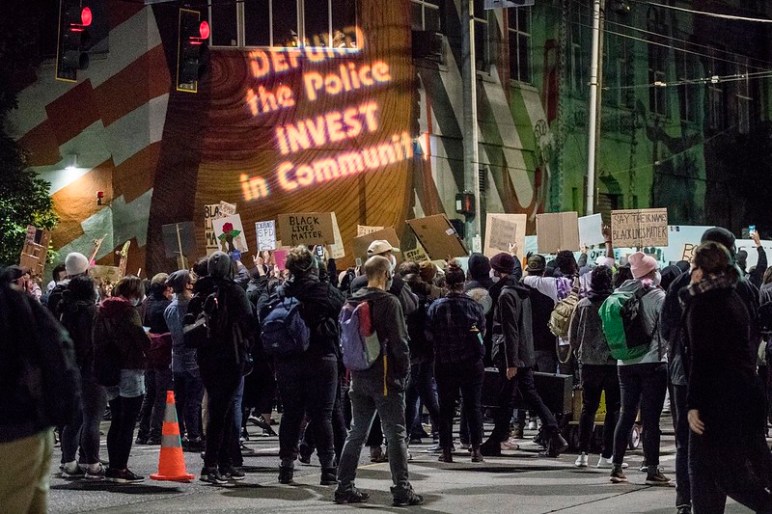
Their answer: “Defund the Police”.

These three words had all the characteristics of the perfectly designed cry of anger. It swivelled the focus of the t.v. cameras and the radio talk shows. It was short and easily shouted, obvious in its conclusions, and proposed a simplistic understandable solution. Perfect for the masses who convene on Twitter and Instagram. The police must be “broken” the argument goes, unable to cope with the societal needs of the progressives, ill equipped to recognize this new age of victims and the vulnerable. Like all the headlines of the day this was an inarguable cause.

However, once one got past the slogans and a few months went by, the purveyors of this belief have stumbled. They are unable to deal with the obvious follow up question of how? Their demands and solutions it would now seem were simplistic if not blatantly ignorant.

Nevertheless, most politicians were undeterred and once again the principles of honesty and fairness ran a distant second to the need to appease. Picture the Prime Minister on bended knee on Parliament Hill. Picture Commissioner Lucki forced to kneel with him at the alter of “systemic” racism.  

So, now that a few months have gone by, after a year of COVID ravaging any critical thought in this country, where are we with this defunding?

How is the defundthepolice.org coming along? Have they figured out what they are going to defund? Have they figured out the actual role the police play in this country and how they are going to be replaced?

A search for signs of progress for this movement in Canada is indeed sparse.

One thing that they have managed to do on their .org web site is add up the amount of monies spent on policing in this country.  It is a large number and hard to miss. In this country, policing on the municipal, provincial and Federal level amounts to $15.1 billion.  So the proponents of de-funding almost invariably point to the large amount and then simply conclude that these budgets need to be cut for the mere fact of its overall size. Too big must fail.

The thrust of their main and central policy argument is that “others” are better equipped to respond. They propose that social workers and doctors attend to calls for mental health services. They recommend civilians take over “traffic services”.

They make statements such as “police intervention into an ongoing violent crime is rare”. Domestic disputes and abusive relationships seems to be beyond their level of comprehension or life experience. It is truly a utopian future in their world of alternate policing options. 

Since these more complicated issues are proving to be difficult to countenance they have lately been transitioning their policy options to more simplistic levels. A recent favourable solution is to ask for the removal of the police from the “school” programs. Or if the laws can’t be enforced by their solution matrix then let’s decriminalize all the drug laws.

In this country, thankfully, their efforts are for the most part being completely stymied. They are running headlong into the wall of reality and they are getting an obvious headache. 

In June of 2020 even the City of Vancouver (with its left leaning city government) rejected a 1% cut to their $339 million budget. 

This same month the City of Toronto rejected a 10% cut to their $1.12 billion budget. 

In Victoria, home to those deep political thinkers the “Raging Grannies” were unable to reject the progressives completely; the city settled for a review of the “gender and ethnic component of the police force” but the police have now asked for a 1.5% budget increase.

In NDP led British Columbia, a government who never ignores a good cause, are trying to appease the left by “reviewing” the Police Act to “examine the scope of systemic racism”. Premier Horgan does admit when pushed that the defunding mantra is “a simplistic approach”.

 In Saskatchewan they are moving to more body cams for the police while in Regina, the City counsel have rejected outright any de-funding as the “crime rate is too high”. 

In Manitoba, Premier Palliser says that de-funding is a “no go”. 

In the North West Territories where normally the Indigenous cause reigns supreme, even there, the Justice Minister says that “Indigenous led justice systems” is “not practical”. 

In Montreal the mayor, Valerie Plante says that a cut in funding of $300 million “would be a big and trying conversation”. They have now voted to increase the police budget.

Halifax, no doubt under the influence of its relatively large African American community could only manage to defund its plans to buy an armoured vehicle for the police— giving the monies to the local housing authority. 

The Edmonton Police Service seems to have gone the farthest down the road to placate the disenchanted. It has cut its funding by $5.5 million per year for the next two years, amounting to a 3% budget cut from their $388.8 million dollar budget. They are forming a “four step” process which includes a “community safety and well-being task force”. The Edmonton activist Tesa Williams calls it a “slap in the face”.  

In many ways the activists in Canada are only imitating their counter parts in the United States. After all, aren’t their problems our problems? Isn’t their racism our racism, the long discrimination of African Americans and its often shameful history is our history. Of course, this isn’t true, but nevertheless what’s playing in video feeds in the U.S. now stokes the narrative of this country. So the “defunding” formula is imported in all its silliness no matter its relevance, no matter its history. 

The NYPD, led by the failing Mayor de Blasio, which policies a city of 25% African Americans has gone the furthest, slashing $1 billion from its policing budget. How have they done this? They have reduced or eliminated uniform and civilian overtime by $352 million; and they have moved the School Safety Agents out of the NYPD and moved them to the Department of Education, for another savings of $307.5 million. They have done sundry other small reductions like moving School Crossing Guards from the NYPD at a savings of $55 million. 

The LAPD who police that bastion of wokeness, Los Angelas, slashed $150 million by cutting police hiring. This hiring freeze has a more meaningful effect to be sure, as now the LAPD is at the lowest manpower it has been at in 12 years. It was proposed that the money saved would go to street paving and sidewalk repairs, but that was voted down. 

L.A. even had a plan to send crisis intervention workers to “non-violent 911 calls” but that has not passed the committee stage, no doubt hung up on the fact as to how one would ever determine that a “crisis” would not always have the potential for violence. 

So where does this all leave the police of today? Should recruiters stop going to “career days” at the local high school? Should mid career police officers look to change into carpenters and plumbers or take that on-line course on photography? Seems unlikely.

One just has to remember that everyone wants to play with the lights and siren but no one is rushing into the blood and the guts.  The activists, the politicians of every stripe, and the talking heads will no doubt continue to shriek to the converted of the injustice and the “systemic” discrimination. 

One must be patient, even though it’s not easy to ignore the absurdity. Remember that they are just toggling the sirens and staring in awe at the blue and red lights. They don’t really want to be in the position of answering the calls. As that oft quoted Mr. Einstein said, “reality is merely an illusion, albeit a very persistent one”.

Photo Courtesy of Backbone Campaign via Flickr Commons – Some Rights Reserved

The war in Strathcona…

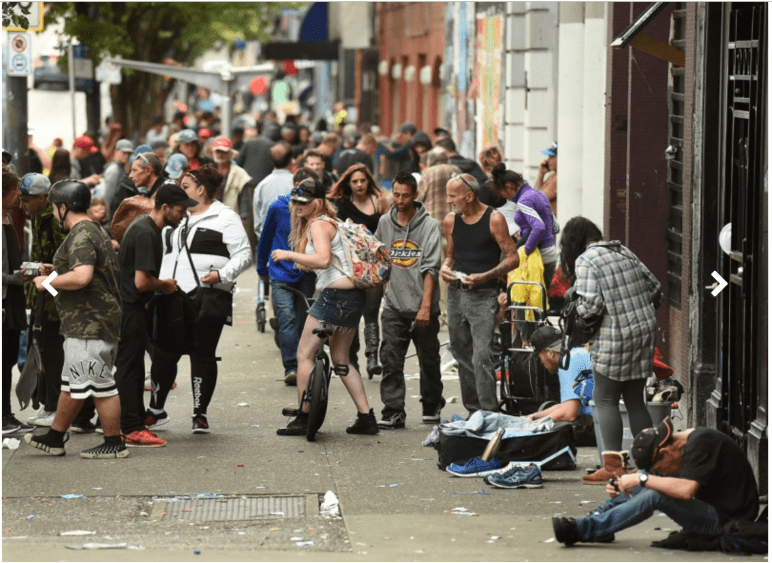
In a recent foray into the Main and Hastings corridor, an area known to this blogger for over 30 years, it was truly shocking to see the level of human desperation which continues to consume that area. What have we to show for the last decades of effort? Seemingly nothing. A whole community is under siege and burning before our very eyes. The area known as Strathcona is gradually being swallowed whole by an industrial level of drugs and the suffocating undercurrent of violence. Mental anguish and conflict layered on top of excruciating poverty.

This despite 30 years of a victim centric infrastructure which has been created, developed and now maintained by myriad levels of social workers, housing advocates, drug counsellors, medical staff, firefighters, police, sanitation workers and all those academics that like to “study” the problem. The advocates of all stripes have been continually moving in and out of these garbage strewn streets and alleyways, pausing long enough to relay their latest theory on how to correct this miasma of despair. Playing in the background, on some sort of victimization verbal loop, is the ever constant narrative of the “oppressed”, the “downtrodden” and the “unable to fend for themselves”.

It is scary place. It is depressing, but it is equally disgusting that in a country as bountiful as Canada, that this monument to everything that ails this society, stands in proud defiance.

Where has it all gone so wrong? Millions and millions of dollars expended in this apparent never-ending war on a drug fuelled mental health epidemic. It is a magnet which draws from all over the country. A bizarrely twisted tourist attraction, for all the wrong reasons. A place where even the hardened from other cities are truly taken aback at such a level of lawlessness and depravity.

Drastic and innovative action is clearly long overdue. Not innovation designed by the leftist victim advocating culture wing of our society, but by some with a modicum of common sense and where individual responsibility becomes part of the solution.

But the very first step, desperately needed and absolutely essential, is an honest managerial and expenditure review. A macro look over decades of funds and governmental decisions. A far reaching and inclusive appraisal of what has been spent and the effectiveness of those expenditures and the managers who have been overseeing the policies and processes for years.

The Washington Post recently unveiled a sweeping story sourced by thousands of pages of information which looked at the true cost of the war in Afghanistan. One can not help but be taken by the many parallels to what seems to be a similar story about the the war zone at Hastings and Main.

What the Washington Post and others found was that the war and the efforts of the Americans and the many other countries, including Canada, in Afghanistan has proven to be not just a failure, but a failure of epic proportions. It’s worth looking at their findings.

It was in 2001 that President George Bush announced the first military action in Afghanistan with the goal to disrupt terrorist operations and attack the Taliban. Today, eighteen years later, the Taliban control much of the country and are killing Afghan security force members sometimes in the hundreds per week. Even though the leadership of the Taliban moved to Pakistan, they have now expanded into Yemen, northern Africa, Somalia and Syrian.

Over $10 billion was spent on counternarcotics. Despite this, Afghanistan remains the source of over 80% of the global supply of heroin. Before the war the Afghanistan government had almost completely eradicated opium when the actual Taliban were in power. Opium production has now quadrupled.

They spent $87 billion to train Afghan military and police forces yet today no one believes that the Afghan military could support themselves. The army is continually fighting desertion and casualties making them replace over a third of their Forces every year.

War related spending has doubled the size of the Afghan economy but the current rate of unemployment is 25%. Corruption in all its forms still runs rampant.

$30 billion was spent on infrastructure and reconstruction. Most of that money has been considered “wasted”. The Inspector General documented over $15.5 billion lost to fraud and abuse between 2008 and 2017.

$500 billion on interest to finance the war spending, as all the monies have been borrowed which will take years to pay.

Over $1.4 trillion will be spent on veterans that fought in post 9/11 wars by 2059. About $350 billion has already gone to medical and disability care for veterans of the wars in Iraq and Afghanistan. They are estimating the total spending bill for the medical problems, over the next 40 years, to amount to another $1trillion.

Afghanistan remains one of the largest sources of refugees and immigrants.

What has this got to do with all of us? It demonstrates the problem when incremental spending and single narratives are accepted as gospel and when the problem is allowed to fester year after year. It demonstrates the need for a great big spotlight to be shone on this smaller version of Afghanistan. Not a study by an interest group that continually circles the DTES, but an independent study, independent of all who have been part of the thirty years of problems.

The usual self-described experts always avail themselves to the cameras and microphones, to riff or to lecture the rest of us on what they believe is the cause of the problems. They have no shortage of people to blame, but that blame seems to stop short of any introspection.

The Libby Davies or Jenny Kwans, or the Pivot Legal Society do not need to be consulted in this proposed study. Their versions are already clear and predictable. They are always pointing to some level of government not providing “more”. The money being demanded is an endless request which re-invents itself with another justification, in one form or other, for the next year.

Money clearly is the common cure all whether you are asking the firefighters or the housing advocates.

Each agency demands annual funding, taking credit for successes which go unchallenged or doesn’t seem to reflect the reality.

There have been studies and counter-studies over this continuum. The studies, like the DTES many services often operate in silos and not always in a singular approach.

Donald McPherson, is a typical example. The former drug policy co-ordinator for the city of Vancouver (who now heads another Drug Policy Coalition) talks about the 10 year plan outlined in the Vancouver Agreement in 2000. It was designed to improve housing and social welfare. He blames the collapse on the Harper government.

Mr. McPherson in this proposed future study should also be ignored.

Governments themselves have come and gone, each offering up their particular version of what is needed. Liberals and NDP equally share responsibility for these disastrous results. None of them take the time to look in the mirror.

On one side of the ledger, groups like the BC Centre for Disease Control takes credit for saving 3000 lives between April 2016 and December 2017.

On the other side of that account is that 2177 people also died in this Province during this time.

There is no shortage of positive spin.

Twenty-three operating supervised injection sites claim to have saved 230 deaths. The overall goal of these sites is to decrease “needle sharing”. Their “observational studies” dutifully report favourable results. Their evidence is that fewer people are “injecting in public”. Anybody walking down Hastings may disagree.

The annual operating cost for the injection sites alone is $ 2,948,101.

The injection sites define “saving lives” and count those that have been treated by “agonist treatment” or “opioid replacement” treatment where the people get put on a methadone program.

Meanwhile those running the Needle Exchange program say that Insite is exaggerating the numbers.

In 2017, 60,000 naloxone kits were distributed. At roughly $70 apiece that works out to about $4.2 million this year just on the kits.

Health officials claim that through their services that they have saved “hundreds of lives” but the numbers often vary according to the individual study quoted. The dearth of agreed upon results and the fact that there is a lot of self-reporting remains one of the major roadblocks to any comprehensive study.

But the fail safe fallback to any counter-argument is the oft quoted maxim that “even one life saved” means that their programs can be deemed a “success”.

On the negative side of the ledger.

Calls to Oppenheimer Park in 2019 for the Vancouver City Police have increased over 50%. Shots fired calls have increased over 800%, weapons calls have increased 300% and assaults in progress are up over 17%.

Vancouver City police estimate the policing costs for Oppenheimer park encampment are over a million dollars so far this year. That is for an encampment of about 100 people in amongst the 2700 estimated homeless in the area.

Meanwhile the BC Centre for Substance Abuse and the University of British Columbia in a recent study argued that the police need to stop policing the DTES because it leads to drug users fearing the police, intimidated, and being harassed by the police.

How did they come to this conclusion: they interviewed 72 persons in the DTES and spent 200 hours hanging around overdose prevention sites. They feel police shouldn’t be checking for drugs, or running persons for warrants and such minimal breaches of the law.

What is not answered is how do they propose that we “de-criminalize” if the people are still doing criminal acts?

In the last five years the number of break-ins to vehicles has doubled to 6538 incidents in the Strathcona area alone.

Vancouver City Police records show in 2018 there were 666 assaults and 68 robberies in the Strathcona area.

In the single month of June 2019 in this small geographic area there were 70 assaults, 106 thefts from vehicles, 11 robberies and 31 break-ins to businesses and residences.

To add insult to injury the number of homeless has increased from 2181 people last year to 2223 this year.

Like the war in Afghanistan over 18 years have now gone by since Mr. McPherson’s study in 2000.

Does anyone doubt that during this time there have been misuses of funds, fraud and corruption? Does anyone believe that governments are providing a full accounting of the costs?

Maybe, just maybe, government spending for more counsellors, housing or drugs is not the answer.

Maybe, it is unjustifiable, or maybe an alternative to a policy of more of the same is out there somewhere.

However, it is difficult to contemplate any alternative which does not include forced rehabilitation; or removal from the core (sorry Pivot Legal Society).

The only way to honestly answer is to see the entire package of funds and resources which have been expended over the many years; the layers of government action and in-action; the levels of bureaucracy; the levels of private industry and the number of social housing models which have been proposed and tried over the decades.

The results may be shocking, but nothing less than a Royal Commission level of study is needed. Just as importantly, it must all be seen by a fresh set of eyes–eyes from outside the DTES, eyes with no vested interest in the promulgation of the current norm.

The first thing is the most difficult admission, especially for those that have toiled under the most trying of circumstances with the best of intentions, is the admission that as of today, it has all been a massive failure. On a small scale, this may be our Afghanistan.

*All crime statistics are from the Vancouver City Police records, as reported by the Vancouver Courier.

Photo courtesy of Dan Toulget of the Vancouver Courier – Some Rights Reserved

The Politics of “First Responders”

In March 2017, there was a blog on this site which posed the question as to whether it was time to cut back on Fire Services, who despite a diminishing need for their services,  were in fact expanding in terms of manpower, equipment, and general presence.

The self-justifications for the fire services expansion all hinged on their incursion into medical calls, fanned by the publicity burning opioid crisis. It was the continuing perpetuation of the somewhat mythical life saver dynamic, they being the foremost and therefore indispensable “first responders” that made up the Group of Three.

What stirred this pot which highlighted the decreasing need, was the review in Ontario of the Fraser Research Report, which reviewed Fire Services in Ontario for the period of 1997-2012.  It discovered that during this time period in Ontario the number of firefighters increased by 36.3% while fires (including autos) had decreased in the same period by 41.4%.  In British Columbia in this same time period the number of firefighters had increased by 43.8%.

The hourly wages for firefighters followed suit, in Ontario, their wages went up 47.8% in this same time period, whereas price levels only increased by 34.6%.

All of this growth in both wages and infrastructure, while at the same time there has been a phenomenal decline in the need for “fire” services. There are some estimates that say as little as 5% of the fire department calls now relate to actual fires.

Clearly, this should call for most persons aware of ever dwindling municipal budgets and ever increasing tax levels, that maybe one could do away with some of the equipment, halls and personnel involved in firefighting. Although Ontario did cut back some of their services, most areas including British Columbia seem oblivious to the seemingly obvious.

So how is it that governments, municipal counsels, and the governing bodies seem to have missed this obvious decline in the need for fire services?  In searching for explanations one finds a masterful blend of self-promotion, coupled with an outright expansion of their roles outside of their intended mandate, which this blog covered previously.

Now it would seem that we need to add another component, a political component.

But we need to review how we got this new level.

With subtle flourish even the modern day lexicon has been transformed. No longer, police, fire and ambulance. Now, all are “first responders”.  Their’s is the only one group who has a vested interest as being on par with the others, both in terms of how they are viewed, how they are paid, and the significance of the role they play.

To their credit the firefighters early on figured out that they needed to expand their roles, they need to aggressively move into other mandates, areas where they were not before. In terms of mandate, of course the only place for them to go was to cross-over into the ambulance and police services.

They even made the subtle name change from Fire Department, to Fire and Rescue Services as they jumped headlong into car accidents and medical calls and they have been remarkably successful. They point out in somewhat boastful tones that they estimate 70% of their calls are now medical, as they “rescue” opioid overdoses, or respond to heart attacks. This is true, even though they do not and can not provide the same level of service as the paramedics.

Even their “rescue” capabilities, has become more specialized, now under the umbrella of “Technical rescue”.  ‘Auto extraction’, marine, or bridge rescue components are now separate tranches, in an attempt to be more expansive and all inclusive.  They have also  become, through little debate, the Hazardous Material experts.

Why? Their very employment and infrastructure survival depends on a sleight of hand, the general public needs to believe that they are the “first responders” of record. They need to convince you that they are the white hats, always there, always the first on scene. They are the life savers which we can not do without.

In B.C. there was a recent budget increase for paramedics of $31million.

The firefighters had the audacity to actually complain that it had cut into their calls for service. They justified their complaint saying that they were often first and more capable of getting to a scene “quicker”. The argument of getting there first by the way, is a constantly repeated theme. The obvious counter argument would be if there were more paramedics on the road, people more qualified, than their ability to get there first becomes moot.

The fire departments are unflagging in their efforts. Vancouver Fire Department and “Rescue Services” prior to the municipal elections were asking for an additional 21 fire personnel. They justify this of course on the need  to respond to 6200 opioid calls.

All of the above has been obvious for quite some time but what caught one’s eye during these same elections in the Lower Mainland was a somewhat new twist. It would appear that the firefighters are now honing their political voice, enhancing their political efforts, and are now becoming an active political force, a true definition of a self-interest group.

No more was this more obvious than in the City of  Burnaby, who have now elected an independent mayor, a former firefighter, Mike Hurley in an upset victory over Derek Corrigan.

Burnaby is an interesting case study.

All 281 firefighters in Burnaby belong to the International Association of Fire Fighters, Local 323.

If one visits their website, they make no mistake as to what they believe: “When it comes to Political Action, we support those that support us” – May 17, 2014.

It is equally clear from their website that the building block from which any political action will flow is the charities. Golf tournaments, city fairs, parades, and charitable balls dominate their photos and exclamations of fealty to the community.

In recent years the Burnaby firefighters came into the news on a couple of occasions, one when Burnaby firefighter Nick Elmes and a couple of others formed the Florian Knights, who met with and were sanctioned to wear their “colours” by the Hells Angels. They used to ride to work showing their “colours” before management stepped in.

Then there was Bryan Kirk, a 36 year firefighter who decided to retire after being confronted on his support of “Camp Cloud” which was the campsite put up by Indigenous protestors at the site of the Trans Mountain pipeline in Burnaby. The camp was eventually taken down, via court injunction by the Burnaby RCMP, but Kirk supported the protestors and went on record saying “I’m more inclined to put out the Olympic torch then put out a First Nation ceremonial fire”.  (Newly elected Hurley is also on record, aligning with Kirk, saying that he supports no pipeline.)

As one watched the celebrations at the Hurley election campaign, which was held at the Firefighters Public House in Burnaby, where a smiling Hurley was surrounded by Firefighters in similar styled t-shirts as they celebrated one of their own being elected. One could guess that a serious look at the monies being spent on the firefighters in a time when municipal budgets are under crises will not occur in Burnaby, at least while under the faithful guidance of Mr. Hurley.

This was not the only example.

In Langley the Langley Township Fire Department IAFF Local 4550 were out endorsing certain candidates.

In Surrey, the Surrey Firefighters endorsed Tom Gill for mayor (who lost to McCallum). Already on counsel in Surrey was the former firefighter Mike Starchuk, who was a firefighter for 32 years, and still headed up one of their Charitable foundations.

In 2014 Surrey First party raised $1.7 million in support of Linda Hepner– one of the biggest donors, if not the biggest were the Surrey Firefighters who donated $32, 564. 01.

In fairness, it should be pointed out that other “first responders” have become active in politics. Former police officers have taken roles as counsellors on various cities and townships, and one ex-RCMP member is now mayor of Pitt Meadows.

But this firefighter involvement seems different. It seems more organized, more overt, with an exposed agenda. A concerted effort to get their candidate elected.

Many will argue that they are members of the public, they too therefore have a right to get involved in the politics of the day. That is true and there are special interest groups who put forward candidates, and organize to support those candidates. But this seems somehow different.

One needs to ask, do fire, police and medical personnel hold a special role in our society? Clearly their mandates enter into our lives in different ways than other members of the general public. Are they in a position of undue influence? Do they have access to the media which is not available on a regular basis to the members of the general public?  Should or could it be perceived that there is a political component to the service provided by “first responders”? Police are held back from overt political support by a pressing need to be neutral in terms of the laws and its applications. Should medical and fire service be bound by any kind of neutrality?

It is the slippery slope of mixing politics with your role, especially one that is specifically mandated to serve the public. One should be equally alarmed at the Chiefs of Police supporting a particular party, or ambulance attendants supporting a particular pro-union politician.

One can not help but feel that the firefighter new found interest in municipal politics is also being influenced by the need to get a friendly face on the inside. One who will not question the need for greater and greater expansion, who will not look at the statistics, one who will not worry about unneeded financial expenditures. Is there a faint taint on the Burnaby election?

Maybe we need to go back to “police, fire or ambulance?” which is the first question still asked by 911 operators. Maybe the three services should be examined as separate entities, both in terms of budget and mandate, not as a single group of “first responders”. Taxpayers need to pay attention.

But hey, it’s the Xmas season, and the firefighters are busy setting up the Bright Nights Xmas Train in Stanley Park, where a portion of the proceeds goes to the BC Professional Fire Fighters Burn Fund. The media will be fawning over the children and the sponsoring firefighters on every news channel and after all who could argue with the cause. It’s brilliant and not just because of the 3,000 lights.

It used to be beefcake calendars, it’s much more subtle now, but the impression remains the same.

Photo Courtesy of  Pete at Flickr Commons – Some Rights Reserved