In need of a Churchill

There are many types of Principles. There are Principles for Life, Principles for Work and Principles for Success. The exponents of Principles vary from the Baptist preacher, to the hundreds of wannabe consultants populating Linked-In.  All preaching fundamental and quite obvious truths. There are principles of science, law, journalism and farming— but let’s deal with the fundamental building block of principles for life— that of the need to seek and speak the truth. Veracity and strength of character, in what you say and do and the willingness to sacrifice for that truth.  It is the rarest of all qualities. 

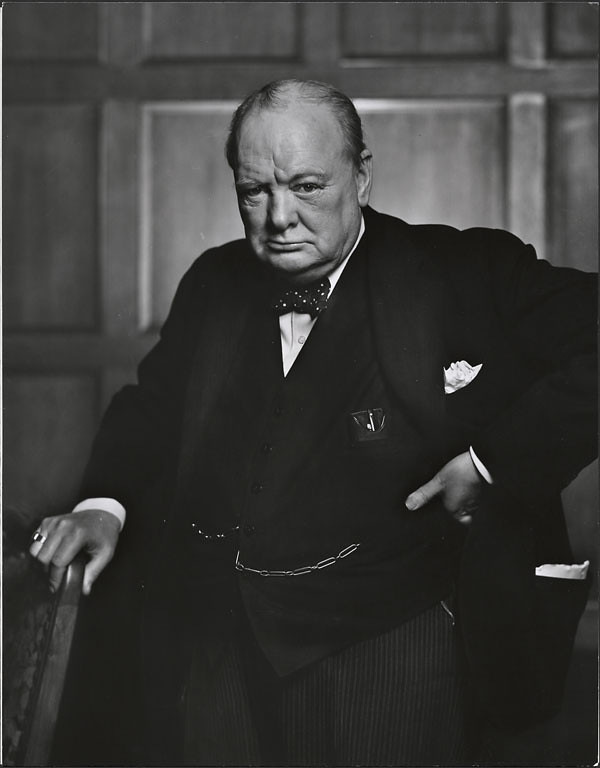
This blogger was taken down this philosophical wandering path into human principles and basic truths by a recent biography on Winston Churchill. It is an incredibly long and extensively researched book, by Andrew Roberts, a total exploration of the times in which Churchill lived and the circumstances over fifty years which led to his becoming the Prime Minister of Britain in 1939.  Appointed Prime Minister as the world was preparing for the Second World War. 

The book is not always admiring; it points to faulty decisions, obstinate views, less than charming personality traits and all the other foibles which make up every human and make us just like our neighbour.  In his long build up —as a child born into privilege, unbridled love for a less than generous father, bullied at school, a troubled relationship with his son and a sometimes unfaithful but loyal wife that all became part of his being.  This was combined with a world wide and extensive education, through travel and schooling, W.W. I, being a Prisoner of War, and shot at during the Boer War.  This mixture of circumstance and education joined with his social DNA to create the man, the man who many would argue was the saviour of Britain and the saviour of the world from Naziism and the scourge of Hitler. 

There are a few obvious characteristics which stood out to all that watched and listened every night to the BBC broadcasts during those trying times. In examining both this man and this time in history, it is impossible not to be struck or attempt a comparison to the leaders of today. Clearly, the qualities or abilities that were on full display from 1940 to 1945 are in short supply in this day and age. It is both interesting and disheartening if one considers current policing management and the general political atmosphere in Canada.

In recent days, in this country the politicians and the policing administration has been exposed. A bright harsh light is shining down on a group of leaders who seem helpless and ridiculous—hoisted on their own petard of political correctness.  Held hostage by a minority who believe that the rule of law does not apply to them. The economy stalemated by a small group of people, a radical fringe basking in their ability to cause upheaval and spout outlandish claims to the other 95% of Canada. 

There has never been a greater need for a Churchill and the qualities which seem in such short supply in February 2020.

First and foremost was a fundamental honesty. And he wielded that honesty with great relish and effect. In speaking to the masses or his political War Cabinet, even in the very darkest of times, such as the evacuation of Dunkirk, he did not underestimate, play with the numbers, or fudge the losses. He was direct and sincere in his grief. He had faith in the ability of the general public to discern truth from fiction, to tell right from wrong, and to understand dire circumstances. 

Secondly, he was a great communicator. He believed in the power of oratory, the power of inflection, nuance, and tone. He studied it, practised in front of a mirror, and when he rose in the House of Commons to speak, even the opposition (and there were many who disliked him) grew quiet in anticipation of what he was about to say. Most people do not know that Churchill was a writer, a journalist and one of the greatest historical record keepers in modern times. When out of power, he lived on his writing skills, and he wrote honestly and with endless fairness, even when speaking about those that had often opposed him. He skillfully injected humour into often seemingly humourless situations in an effort to alleviate the tension in which they were then living. 

Thirdly, he was intelligent. He studied continuously; interested in almost every vocation and profession that entered into his sphere. He was a military expert, in tactics both in the air, on the land and on the sea. He could comment on armaments, proposed one of the first tank vehicles, and could cite naval tactics going back to Lord Nelson. He predicted the Second World War and the rise of Naziism, five years before the actual event. He talked and wrote about the plight of the Jews in Germany and Eastern Europe long before it was noticed by the rest of the world. He created MI 5 and MI 6 because of his fundamental belief in the need for intelligence even when the country was not at war.  

It was intelligence based on an un-abiding intellectual curiosity, a need when in a group to speak to everyone, consider every point of view, and not avoid those with counter-views. He had no problem marching in and in front of a hostile and rambunctious crowd with little regard for his personal safety but intent in trying to argue reason over emotion. That being said he did not handle fools easily. He had no interest in the lazy and intellectually vacant. 

And finally, he was brave, tireless, indefatigable, relentless in his pursuit of in what he believed and fearless in terms of pursuing it until the end.  During the war when travelling to meetings he often carried his .45 revolver, not out of fear but out of a belief that if someone was going to try and kill him, he would only go down by taking someone with him. 

He was famous for his afternoon naps, his cigars and his enjoyment of a good drink. A sense of  life, a sense of the relatively short time we spend on earth, often working until the wee hours of the morning. While in Cabinet, he still took time to paint and to write 1500 words a day, all while the world was changing in dramatic rapidity and demands for his attention became insistent and never-ending. His decisions during the war, often involved the life and death struggles of young soldiers in the trenches, while his city was being bombed around him. 

To compare our 21st century Canadian problems to that of the past seems patently unfair, as we can not easily comprehend the world in which Churchill and many others were forced to live and endure. We can not relate to real stress. Quite naturally, we have become softer, we have entered into a time period when little things become big things where “life and death” can be portrayed in an emoji.  

Our lifestyles have grown along with our financial outlook and with our egos which are being projected into the ether, dutifully recorded by endless selfies. Twitter and Facebook allows us to share our small world problems with the rest of the world, yet paradoxically in Canada we seem to have no real knowledge of the other world.  We are immune to the wars in Syria and Afghanistan, to famine in Africa, or massacres in Rohingya. But we are often consumed whether two members of the Royal family live in Canada as if it gives us some validity as a country. The numbers of those that have contracted coronavirus are counted and published in large “War” like headlines and displayed in graphics that would be the envy of Pixar. 

But as one reviews the principles and the fundamental needs of leadership that were exemplified by Churchill, is it fair to look around and compare? Maybe not, but can we not demand that this current leadership group should have at least one quality? Can we look at Trudeau, John Horgan, Kennedy Stewart or the Commissioner of the RCMP, Perry Bellegarde of the First Nations—anyone? 

Let’s examine some of the needed principles. Honesty? Well, it has been a long time since any of us ever felt that we were not being lied to, or that we were getting the unabashed truth. When was the last time any of you sat around a police meeting room conference table and felt that there was room for honest discontent, or an opposing opinion — without the fear of being ostracized? Try to be honest in your answer.

Has not the rule of thumb to be promoted to management ranks in the RCMP or any other police force in the last number of years, been that first and foremost you must be  a “company” man or woman.  There is no room for any counter opinion or dissent. All is good, all is well is the ongoing theme for the aspirants to the top of any government institution. Preach the political platitudes and all will be well. 

Finally, are these leaders intelligent? Many are, but what is exasperating is that many have chosen to subsume that intelligence in order to advance a better career, or an increased position of power.  They are expending that intelligence on doing what plays politically. What fits the polls?  They often rose to positions of substance, by being non-committal, never getting caught in venturing an opinion, forever fearful of the negative spotlight.  They seemed to have turned that intelligence away from the honest and forthright and have adopted the belief that the truth can not be handled by the masses. Only they know the way forward, they are the elites. Free speech or even unfiltered speech no longer a founding principle for democracy. 

So where does that leave us? We have not reached the epic problems of Churchill’s time. But, we have arrived at a junction where a lack of leadership is putting us close to the precarious edge of revolt. The growth of the populist right, is being nurtured by a growing cynicism, energized by these sycophants to the liberal political ideology of appeasement at all costs. 

Yes, we are in desperate times, as we scan the horizon for a leader who exudes the qualities of a Churchill, but the landscape is indeed barren. Someone intent on speaking the truth. Willing to stand for the principles of honesty and integrity and most importantly willing to be unpopular. But convinced of their stance which is supported by experience and an extended knowledge of the situation. Someone who has a basic understanding of right and wrong.

 Chrystia Freeland, Marc Garneau, Mark Miller,  Brenda Lucki, Jagmeet Singh, Elizabeth May  and Justin Trudeau are clones; interchangeable. They are trying to propagate the belief that they and only they are the humanistic preserve of the enlightened.

Now all these issues and policies to which they marched, lock step, arms linked is now playing out on the news every night. The issues of the day are now exposing how trying to appeal to everyone, to be on both sides of the fence, will eventually lead to contradiction.  Let’s be clear. Not being on the fence, but literally trying to be on both sides of an issue.

The police have gone down this road of being inseparable from the legislative arm. No longer are they strictly the enforcers of the law, independent and impartial, they are now part of the political process, enforcing and being directed only when it meets and suits the political agenda. This slippery slope comes at great cost. The RCMP has now been tainted, painted with the brush of bias, favoured interest groups being treated differently; in this case the Liberal indigenous cause.

Police management and the politicos are clearly working together now, trying to see a way out, when neither has any vision.

The economy is now staggering under the weight of illegality, but they are currently willing to sacrifice the economy to support their policy platform to which they are inexorably tied. It is their only hope for political survival. They pray each night to the gods that the indigenous will tire of their just cause, whatever that might be as the end goal is anything but clear. Their fear of violence erupting if they adhere to the rule of law would destroy their “reconciliation” platform, and their fear is palpable. It is hard to take a stand, when your only stance is to be popular.

It is pathetic to watch and it is a long way from Churchill. 

In a famous speech Churchill said: ” Let us brace ourselves to our duties, and so bear ourselves that, if the British Empire and its Commonwealth last for a thousand years, men will still say; “This was their finest hour”.

This is not this country’s finest hour.

It was learned today that the CO of E Division RCMP Jennifer Strachan wrote to the indigenous hereditary chiefs offering to pull back from the enforcement of the blockade near Houston, B.C. as a sign of “good will”. No doubt a suggestion from some of her political bosses.

She and the others should pay head to another statement by Churchill:

“An appeaser is one who feeds the crocodile–hoping it will eat him last”

“Follow the Money”

I have a clear mental picture of on more than one occasion, sitting around a conference room table, a new homicide case fresh in hand, and debating the merits of one course of action over another. Discussions would eventually come around to one of the items that needed proving; namely, motive.

When the motive was not clear, a reliable side-kick would invariably jump up and holler: “Follow the money!” We would all laugh both because of the manner of the exclamation which had been said with such ferocity, but also because of the obvious nature of what was being proclaimed.

If you want to find crime in this country, this Province, or in your towns and cities, truer words were never spoken. You only need to “follow the money”. This would seem patently obvious to almost everyone who is paying attention. What is less obvious maybe, is whether or not in this country, we actually care. And by “we” I mean Canadians in general, and the police in particular.

Having never seen polling with regard to the views of the general population in terms of their level of concern it is hard to make some definitive statement about the views held by the country as a whole. So this is more of a question than an answer.

However, when it comes to the police the preponderance of the evidence suggests that in fact the police don’t care, or if one was more generous, have chosen to make commercial crime the lowest rung on the ladder of operational policing.

From the police officer trying to avoid the call for a “fraud cheque” or the misuse of a credit card, to the upper management of the municipal, Provincial, and Federal forces who demonstrate an innate ability to ignore the economic crime swirling around them. Their internal view seems to be that since the public is not complaining, why worry, after all it doesn’t “trend” and paper cuts do not make as good a television snippet as assaults and car crashes.

To be sure, the problem of economic crime is complicated. White collar crime in Canada like other countries includes a broad range of offences which can and do include: fraud, bribery, Ponzi schemes, insider trading, embezzlement, cyber-crime, money-laundering, identity theft and forgery.

White collar crime is itinerant, moving easily across boundaries, from city to city, Province to Province, so it becomes necessary to co-ordinate multiple agencies and their variety of investigative groups. The investigations themselves become entangled in this web of jurisdictions and interests. Each agency have different levels of priority, different levels of expertise, different Crown counsels, and different levels of financial support. Stymied in most cases by their own current policing structures.

There are many levels to this blanketing economic cloud– ranging from large national in scope cases, such as SNC-Lavalin or the Bre-X mining scandal of 1997; to the more common such as identity theft and forgery. In between are layers of administrative, political, and government fraud in the millions of dollars.

If one just considers the world of the “scam“, the number of ways the public is being fleeced is only limited to one’s imagination: on-line purchase scams, wire fraud, romance scams, employment scams, crypto-currency scams, shady contractors, and fake invoices. And if you think that these are small problems, they estimate that $19 million was taken in, just in romance scams.

The RCMP and the Financial Crime Unit according to their own web site tells us that we should rest assured as the RCMP is mandated and “contributes to the security of the Canadian economy and seeks to protect Canadians”( take note of the terminology in that they are only “seek”ing and “contributing”). 

The RCMP themselves are also quick to point out that the primary responsibility for things such as fraud, rest with other jurisdictions and they in effect often become an “assistance” agency.

The RCMP have three parts in their weak arsenal aimed at combatting this “growing” problem; the Commercial Crime Branch, the Proceeds of Crime Branch, and the aggressive sounding Financial Action Task Force.

This latter Task Force is actually a policy-making group, Canada being one of a total of 37 other countries. They are there “to set standards and promote effective implementation of legal, regulatory, and operational measures…”. They are apparently geared to “generating the necessary political will to bring about national legislative and regulatory reforms..”. One of the areas often referred to is the need to disrupt money laundering around the world. Suffice to say that in that world, they are not doing a great job in Canada at the moment.

So while this Task Force is circling the globe attending meetings, that leaves us with the Commercial Crime Branch, and the Proceeds of Crime Branch.

Commercial Crime again according to the RCMP web site maintain 27 offices throughout the country. In terms of the work being generated it seems to often mention the need to build “awareness” and develop “strategic partnerships”. This is government language code found throughout the bureaucracies for not doing much at all. They boast of their “many successful public awareness and enforcement initiatives. ” They claim to have 450 officers in those various offices and their site features a photo of a business suited offender wearing handcuffs. But, trying to find actual examples of their “enforcement initiatives” is more difficult.

In 2019 a business and accounting firm, MNP LLP released a “Fraud Aware” study where they reviewed some 200 criminal fraud cases throughout all of Canada, in Ontario, Quebec and British Columbia. BC had the highest loss levels with a total of $14.3 million. What is noteworthy in this figure, and keep in mind that we are only looking at fraud charges, is not the amount of loss, but how little that their efforts amounted to. In the recent study into money-laundering in B.C alone, regulators are now estimating that $1.7 billion went through B.C. Lottery Corporation accounts with large amounts funded by loan sharks and criminal bank drafts.

Fifteen Ponzi schemes in this country amounted to losses of $549 million. Two cases of stock manipulation by themselves amounted to $87 million in losses.

The scarier figure is that they estimate that less than 5% of the fraud was reported in this country. They also indicated that civil procedures were “often timelier and routinely more effective” than reporting the matter as a a criminal offence. This is combined with lenient sentencing in Canada, unlike China where there is a possible death penalty, or even the United States where in 2002 they passed Sarbanes-Oxley act, and punishments were increased in light of the Enron scandal.

In the above studied cases, it should be added, 70 percent of the convictions asked for restitution, but the recovery rate was a mere 29%.

Many financial and legal experts that have for decades been outraged by the lack of effort in this country to combat “white collar crime”.

Spencer Lanthier, in receiving an award as a Corporate Director of some note, said in his remarks, “this city, this Province (referring to Toronto, Ontario) this country has a reputation of being the best location to carry out white collar crime, corporate fraud in the industrialized world”.

In a report on investment fraud in 2014, the Canadian Foundation for the Advancement of Investor rights reached some damning conclusions. They alleged that little data is kept on either fraudsters or their victims, enforcement agencies were not talking to each other, and that the public’s reporting rate was “extremely low”.

The police are now often seen as leaning towards giving up and spend more time trying to get out of these cumbersome, lengthy, and tedious investigations. Some argue the laws are insufficient and the burden of proof too steep. (In Ontario, the police were reportedly telling business people who had been victimized by fraud that they should investigate it themselves and that they were not interested in any event unless the fraud was over a $1million)

You need only to scratch the surface in this country to find the seedlings of suspicion.

If there is any activity involving millions of dollars, or even billions, that is where you will find the criminal and corrupt lurking. Let’s take a few of the bigger possibilities; the marihuana industry, the construction industry, or in large pipeline and hydro projects. Let’s also glance into the government funding behind large infrastructure projects, the millions being given to the indigenous, or lotteries and gaming. It seems that if there is a pot of money there will also be those willing to stick their hands in regardless of entitlement.

And in speaking of gaming, in British Columbia, we may finally be given a chance to look into gaming in this Province and the subsequent laundering of monies. It has been a long time coming, but great hope is being put into the upcoming inquiry by Justice Cullen. This writer is hopeful, but not entirely optimistic.

Cullen has a good reputation, but one must remember that he was formerly a Regional Crown and Assistant Deputy Attorney General when the NDP was in power from 1991 to 2001 before being named Judge.

He is a friend of the NDP, so count on them going after former Liberals, but not so sure the NDP themselves or their friendly compatriots will come under any pressure. Cullen, was a prosecutor for 20 years so we will have to wait and see if he thinks there is criticism needed from the effort or lack of effort put in by the police. Nevertheless, it is one of the few inquiries in recent memory where the “white collars” may be on the run.

Peter German in an interview described money laundering as the “back office for organized crime”. Will they go there? How far will Justice Cullen dig? Only time will tell.

Another group, Transparency International reported on how financial disclosures rules in this country allow “opaque corporate and land registries”. They reviewed ownership of the top 100 residences in Vancouver with an asset value of close to a billion dollars and found that over half had “murky ownership”. Their report was titled “No Reason to Hide” and concluded that Canada has become “a destination of choice for white collar criminals”.

It is bit of an understatement to say that the enormity of the problem in Canada is staggering. We point out countries like Mexico or the Congo as countries of extreme corruption. One wonders if the only difference is that we are just a little better at keeping it under cover.

The citizens of this country seem to see “white collar” criminal acts as less than other crimes. Sociologist Edwin Sutherland, in 1939, defined “white collar crime”as a crime “committed by a person of respectability and of high social status in the course of his occupation”. Maybe our complacency comes from the fact that we see it as partially victimless and partly as smart people “outsmarting the system”. After all we still applaud the person who avoids paying their fair share of their income taxes.

In a recent report, the Conservative MP Peter Kent launched a public complaint against the RCMP for their clear lack of effort in pursuing the fact that Liberal PM Justin Trudeau had been the beneficiary of three private family trips to visit the Aga Khan, the billionaire philanthropist. Trudeau had already been found in breach of four sections of the Conflict of Interest Act, yet this was not enough to prompt a criminal inquiry apparently.

Commissioner Lucki reached new heights in obfuscation when she stated that the RCMP could not “productively pursue an investigation” (my italics).

The Aga Khan Foundation Canada by the way has received over $330 million over the years of Federal support.

Economic crime is insidious and slowly eating out the inner core of this country. The levels of distrust and the growing narrative is that every public and private entity may be corrupted, and it is causing everyone to question some of the fundamental precepts of a functioning democracy.

The U.S. is already beginning to crumble. Trump is proving to be a threat to the very foundations of the U.S. constitution, not because of what he says or what policies he enacts, but because of the the level of corruption which he is fomenting. The stink of corruption is leaking into the Department of Justice and the Federal Bureau of Investigation, and has led to misuse of Congressional funds and the firing of bureaucrats who refused to be corrupted. (In another aside, there is really no Whistleblower protection in this country)

Canada may be even in a worse position with its lack of interest. A massive wake up call is needed and enormous monies and resources are needed to be spent to correct the decades long complacency in this country.

So far, there does not appear to be any political appetite from any party to begin to address this growing pandemic which is built on a belief that we are somewhat immune, somewhat removed from corruption. We follow the plane returning Canadians from China like the press helicopter following the Bronco driven by O.J. but show little interest is what is going on right in front of us.

As this blogger writes the Ottawa Citizen is reporting on former Commissioner Bob Paulson and some questionable billing for his services. It seems that Mr. Paulson’s firm, the lofty sounding Independent Investigation and Review Services billed $116,286.95 for three months work; roughly $1933.00 per day, for him and two others to “review material”, to “develop an interview plan”, conduct interviews, and of course “parking” and “mileage.”

Was this a major significant inquiry, well no, it was to do with a City counsellor for Ottawa and his inappropriate behaviour to some employees. Normally that would type of investigation would fall to a person in the Human Resources Department.

As was said earlier, scratch the surface, and just “follow the money”.

Photo courtesy of 401(K)2012 via Flickr Commons – Some rights reserved

Collision Course

In a ruling this month by Justice Margeurite Church of the B.C. Supreme Court, it was decided that Coastal Gas Link, the company constructing the LNG pipeline from north eastern British Columbia to Kitimat British Columbia, had satisfied the requirements for an interlocutory injunction against the protestors of the natural gas pipeline.

Listen closely….can you hear the echo?

The year before in December 2018 the court had granted an interim injunction against these same protestors. That time the RCMP eventually moved in and 14 of the protestors were arrested and the encampment taken down. All of it much to the chagrin of a small sect of the Indigenous who were being supported and prompted by the usual wagon jumpers of the enlightened liberal left.

So here we are again, a year later, same issue, different court date. Ms. Church in this latest court verdict went a little further in her ruling saying –that there is evidence to suggest that the protestors had engaged in “deliberate and unlawful conduct” for the purpose of causing harm to the plaintiff and preventing it from constructing the pipeline.

Of added interest may be her comments reflecting on the general state of the laws pertaining to the Indigenous movement reflected in this particular case:
“There is a public interest in upholding the rule of law and in restraining illegal behaviour and protecting the right of the public, including the plaintiff, to access on Crown roads…the defendants may genuinely believe in their rights under indigenous law to prevent the plaintiff from entering into Dark Horse territory, but the law does not recognize any right to blockade and obstruct the plaintiff, to access on Crown roads.

In any event, another court decision, another group of lawyers, all kicking at the peripheral issues and avoiding the central dilemma of defining the role the Indigenous are to play in this country.

One would be hard pressed to imagine a more convoluted, ridiculous, and multi-layered predicament. Often mis- guided policy and vague initiatives have been all wrapped in endless litigation and court interpretation. The politically righteous argument of aboriginal rights, simmering away for the last forty years in a cauldron stirred by hundreds of lawyers. Apparently none able or overly concerned to define the central role of the Indigenous in this country. No one able to say whether the Indigenous are simply Canadians, just like everyone else, with the same rights and benefits, and subject to the laws of this country; or a “Nation” unto themselves, independent in spirit and governance, albeit financially dependent.

The popular view being force fed by the Liberal government Federally and a Provincial NDP government is that there is a 2nd “Nation” in this country. An ill-defined nation to be sure, no central authority, no common economic agenda or engine, old ways versus the new.

Non the less this “Nation” has indeed found a receptive audience in the current government and is grabbing for the ring of political acceptability and political empowerment, with ceaseless demands for increased financial resources and independence. It is demanding its own school system, its own policing and justice system, its own health care, its own social services, all to be run by a disparate range of communities.

A “nation” system made up of 634 different groups or “nations” speaking over than 50 different languages. Varied in language and cultural beliefs and spread throughout a massive geographic and often isolated area it is difficult to see a unified coherent and plausible plan.

As the years tick by this stew of government initiatives have been tendered, milked and prolonged by a legal and political community fuelled by the increasingly politically astute indigenous leadership.

Since 2000 there have been 21 cases involving indigenous rights and claims heard by the BC Supreme Court. There have been 9 cases since 1984 heard by the BC Court of Appeal, 14 cases heard by the Federal Court, and since 1970, 64 cases coming before the Supreme Court of Canada.

The result is layers of court systems all pronouncing their particular spin on what it all means. Supreme Court Constitutional decisions, common law precedents, treaties, Reserved land, “ceded” and “unceded” lands, Canadian law, Indigenous “laws”, hereditary chiefs, elected counsels, and Provincial declarations echoing United Nations Declarations.

The need for “reconciliation” spews forth at every turn, the beauty of the word “reconciliation” being is that it is infinite, there is no end. By very definition the issues can never be “reconciled.” The devil incarnate of course is “colonization”.

The movement has taken down statues, removed names from buildings, re-named Provincial and Federal Parks, and moved to ensure that any business done has to include a portion of the pie for them.

Some Indigenous are living in the most hideous squalid communities, living in poverty, poor education, no drinking water, and out of control birth rates. No hope of economic sustainment on one hand, while others are developing billion dollar city properties.

There are oil-rich Indigenous bands where the average income is $125,000 per year, and only 4% of the income comes from the Federal government, only because they are blessed by the good fortune of sitting on often barren lands but lands where there is black gold running under their feet. There are others that are almost 100% funded by the Federal government, defecating in buckets, no clean water, and no siding on their houses.

In this systemic chaos only the lawyers are winning. No one else.

It is all leading to darkening clouds and a possible storm of discontent on both sides of the two “Nations”. A low pressure system consisting of 96% of the population moving inexorably toward an Indigenous high pressure system made up of 4% of the population.

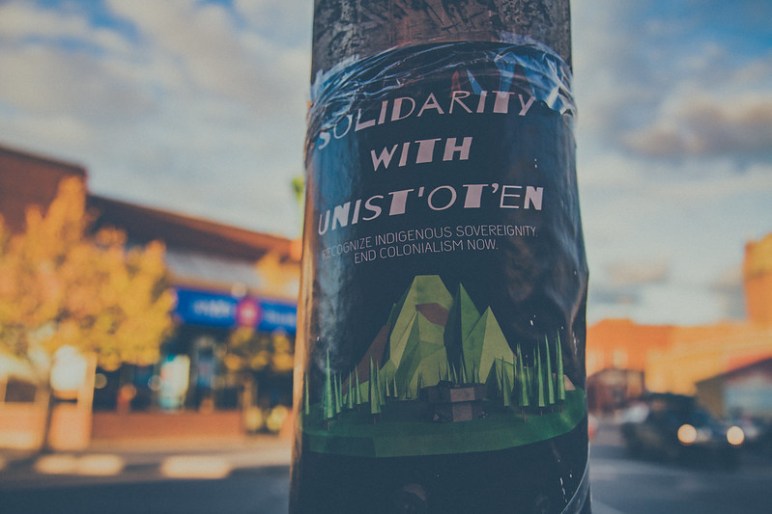
The latest example is now being played out near Houston, British Columbia. The Unist’ot’en and Wet’suwet’sen “nations” and their “hereditary chiefs” versus the rest. This latest collision to be where there is the proposed site of a natural gas pipeline to be built for a $6.6 billion by Coastal Gas Link. (The pipeline is to link to a $40 billion LNG export plant that is to be built in Kitimat, B.C.)

The NDP government of British Columbia with a straight face, state that they are both anti-pipeline and pro- pipeline. Hereditary chiefs disagree with elected counsels. Some bands are pro development seeing it as a financial windfall and the only hope out of abject poverty; others are just against it.

Last week a BC Supreme Court issued an injunction ordering that all obstacles to construction be removed. Pretty simple right?

The problem is that it was one Nation, going through their legal system, that obtained the injunction. The other Nation doesn’t recognize those laws.

Grand Chief Stewart Philip says that it is a very “complicated issue”. It’s complicated mainly because it is difficult for him to argue both for and against.

On the hereditary chief side you have reported comments like;

“It’s our territory. It’s not Canadian land. It is not the Queen’s. It’s not the RCMP’s. Its Wet’ suwet’sen land. “

The builders are “settlers on stolen land”, this is “environmental racism” all part of the “Canadian legacy of colonization”.

Immediately the BC Civil Liberties Association and the Union of BC Indian Chiefs jumped on the practised narrative, led by Grand Chief Stewart Philip who issued a statement saying: “A police exclusion zone smacks of outright racism and the colonial – era pass system sanctioned by the so-called rule of law, which our people survived for far too long”.

And in between these two nations is the politically correct RCMP. Their political masters want them to be gentle, do not offend at any cost. Their legal bosses are telling them to enforce the order and in the past, there was no hesitancy around a court ordered injunction. The Mounties traditionally and constitutionally were there to enforce the laws, not to interpret them.

But this is a different world now. This is the world of appeasement and the Mounties are going to find that they have no friends on either side.

The Mounties, god bless their souls are trying none the less, to be friends to those who can not countenance any meeting of the ways. They have asked the Indigenous protestors to meet and negotiate with the very same company that went to get the court order, the Coastal Gas Link group, who must think that they are is some sort of Twilight zone.

In the meantime the protestors have been cutting down trees and setting up their camp, while the Hereditary chiefs continue to say that the pipeline violates “Indigenous law and does not have consent”.

This is a fundamental collision. This is not going to go away.

It circles around aboriginal title which has been a decades long argument. What “title” or the “duty to confer” or “honour of the Crown” all means, with all its varied interpretations also includes such arguments as to whether treaty’s extinguished those title claims. Some even argue whether Indigenous groups in signing some of these treaties even understood them.

The countless cases which have been brought forward, have all circled around Section 35 of the Constitution Act of 1982 which proscribes to the protection of indigenous and treaty rights. Unfortunately, it didn’t define those rights, but none the less in 1995 the government began to adopt a policy of an “inherent right to self-government”, and the Penner Report to the House of Commons in 1983 spoke of this inherent right.

Adding to the legal and political confusion is the fact that the rights being claimed by the Indigenous do not come from an “external source”–they claim it is a result of Aboriginal people’s own occupation and relationship with their home territories as well as their own ongoing social structures and legal systems.

This would mean that in their view, they control and define aboriginal title.

Today, no political party, Provincial government or Federal government wants to be seen as decisive in terms of defining what these rights will be or how they would integrate with the rest of Canada in terms of self government.

The lawyers drone on in every level of courtroom. They are seemingly content in this ongoing lucrative dark hole of litigation.

The silent majority sit back and wonder where this is all leading. Is Canada prepared to have a separate entity operating within its borders, with its own laws and government, while at the same time supporting them through tax dollars. Are they prepared to let 4% determine what flows through economically to the other 96%. It seems unlikely, but there is no current political party asking that this central issue gets addressed definitively.

At some point the police are going to have to act in Houston. Every police officer involved will be left standing out in the field and roadway and it will an open hunting season for cries of violence and racism the minute they come within a few feet of the protestors.

The journalists stand by at the ready, camera rolling, salivating at the potential for filmed violence. ( the Canadian association of Journalists even jumped into the recent fray— arguing in court the fact that they were worried that the police could use the exclusion zone to prevent media from covering the RCMP enforcement of the injunction.) Maybe this is a sad conclusion but in this age of “breaking news” it is hard to dispute their intent.

None of this is new in terms of the RCMP being the potential fall guy. There have been many times in the past where the enforcement of an injunction has been violent and they have been pilloried for their abuse of power, rightly or wrongly.

The concern is that there is not a lot of confidence or recent evidence in the current RCMP management being behind their operational officers. Will they be supportive of the laws of Canada and the enforcement of those laws, or will they succumb to the un-written laws of a frenzied very vocal political “Nation”. After all it is a management group which has been genuflecting in front of the Indigenous cause in deference and in parallel with their political masters for the last several years.

We will see shortly. Time is running out in their “negotiations”.

A note to those uniform officers. Make sure those body cams are charged up and the audible is working. It may be the only friend you have in this instance.

Photo courtesy of Flickr Commons by Tony Webster

Mixing Gender Politics with Sexual Assault

It was 1970 when Kate Millett wrote the book “Sexual Politics”, a book that would go on to become one of the bibles of the still burgeoning feminist movement. Suffice to say, it has been awhile since the process of recognizing women and their equal contributions to society began in earnest and now is still leading us into the 2020’s decade. All efforts have called for a dynamic reckoning; a need to recognize the goals of “equal pay for equal work”; greater representation in the boardrooms, courtrooms, and political offices of the country. It has reached into the very core of society, demanding fundamental change in the family structure, where sharing of responsibility is absolutely necessary in forming an equal partnership.

Many argue that the “glass ceiling” is still alive and well, despite notable progress and female politicians still wear the term “feminist” as a badge of honour. In this decades long continuum of proposed and achieved change, we have reached a point in this country, where it is now political suicide to suggest or propose anything that could, even in some obscure reference, be termed to be “anti-female”.

One must applaud the majority of changes which are enabling women to assume their rightful place in society –where nothing should be allowed to block them from reaching to the highest levels in whatever chosen endeavour.

The sexual politics of this country, historically, has been multi-layered and arriving in sporadic waves, sometimes taking a step back, only to go forward again. It seems that in all generational movements, not just the women’s movement, all change is pushed, at least at the outset, by the radical fringe which then draw in the reluctant middle majority. The fringe then becomes part of the new centre.

The Gloria Steinem‘s and the Ellen Willis’ of the world are needed to pull, prod, and chastise the non-conformers. Those who cling to past practises and policies are portrayed as “dated” — out of step with the basic tenet that everyone is created equal. The right to vote was an inalienable right, but just a single step to righting centuries of illogical, often inhumane and constricted female lives.

The #MeToo Movement is the latest incarnation or wave in this pantheon of women’s rights and it has in fact served a very real purpose. Reading Ronan Farrow’s recent book, “Catch and Kill” one can not help but be moved and angered by the still prevailing winds of male domination and entitlement that blow through, in this case, the news and entertainment industry. All males should and need to be embarrassed.

The likes of Bill Cosby, Matt Lauer and Harvey Weinstein, are the more notable recent American examples, all of whom needed to be pursued, outed and prosecuted. That process has begun in the United States and to a lesser less obvious degree in Canada. One wishes that the RCMP had taken such a hardened and exposing approach to cleaning out the male locker room of the RCMP.

The fact that the RCMP was often a cesspool of male domination was difficult enough to publicly absorb, but the real stain on the RCMP may be the decision to settle the class action suit(s). Thus effectively forever silencing the various allegations; which with little doubt reached the very top of the organization. The circumstances demanded radical surgery on the organization, a cut into the heart of the organization. It would have meant lengthy and costly investigations, but in the end it would have gone a long way in exposing and cleaning up the disease.

Justice was not served by payments of hundreds of millions of dollars, justice was in fact denied or at the very least diverted.

Women were paid to keep quiet about their allegations and all men, innocent or otherwise in this once proud organization were sloppily painted with the same brush. How this determinative action was going to change the “culture” remains undefined— in fact it may be the greatest cover-up ever pulled in Canadian history.

That all being said and despite the many wrongs, one must always be vigilant to the need for fairness, always seek the truth with the goal of ultimate justice. It needs to be recognized that change, or at least legitimate and broad change, takes time. One can not rush cultural change and any change which is patently unfair only sets the movement backwards.

All of which leads to a relatively recent troubling development in the area of sexual offences. To understand the problem you need to understand the current political environment.

The #MeToo Movement has an outer fringe who often take the view that if “she” said it, it is true. They are effectively ignoring that there is a tricky balance. On the one hand one is hearing from brave women talking about the wrongs from past years and only now are women, no doubt emboldened by this movement, have had the confidence to come forward.

The other darker side of the argument is that a wrongful allegation once made, especially in this 21st rush to judgement society could condemn an innocent person to jail. The accused ostracized to the point of being unable to function– their entire lives up-ended. The truism that holds that two wrongs don’t make a right should always be firmly in sight and one must always remember that the fundamental building block of our justice system is the “presumption of innocence”.

The current Liberal government has made over reaction into an art form. No trending cause is too small –if it polls with the right audience, then it needs to be enshrined in policy, regardless of the ultimate damage or outcome. No need for informed study, if it twitters favourably it must be good.

Hence, we now have a discombobulated piece of marihuana legislation and the idea has been born that individual cities should govern the banning of firearms, according to their own city views. These ideas and subsequent legislation gain favour and the head bobbing politicians standing behind the podiums go right along, seemingly undeterred by common sense or any thoughtful opposition. Millennial appeals to voters are good, outcomes the future and someone else’s problem.

The feminist movement, even in radical form, is just one of those causes which according to all the “progressives” can not be questioned. There are other examples like the indigenous, or climate change. No need for study, no need to question, no need for expertise.

In promoting the feminist cause, in their zeal, this government has brought us such things as: a new government department formed around the previous “Status of Women” counsel; “gender-based analysis” for the Federal budget, which among its mentions is that they codified the need for “more women in senior management positions”; Bill C-65 which governed the Federal government workplace, amending the Canada Labour Code focussing on the need to remove harassment and violence from the workplace.

All of this can or may be grudgingly accepted, as it is often difficult to argue against some of the intent of these enactments, however flawed in their application some of it may be.

But where the government overstepped was in the passage of Bill C-51. This was a piece of legislation also introduced by Jody Wilson-Raybould, often a martyr of the fringe, one who had no quibble with interfering with the justice system if it involved her pet causes.

Bill C-51 is an example of the fringe demanding and finding a receptive audience among the Liberals and those #MeToo members who believe that no woman can be deceptive, or less than forthright, about anything that purports to be some form of sexual assault or harassment.

For those who have not followed this Bill (which, it should be added, passed Parliament with All Party support) deals with future conduct for the trial of those accused of sexual offences and was designed primarily to further protect the victim or the accuser.

And if you are in the group of believers in the women’s right to allege and be always believed, than you need to consider the case of Jan Gomeshi. This bill, C-51 was, many have argued, in response to the subsequent total acquittal of Mr. Gomeshi and the fringe feminist public backlash at the results.

During the trial the two primary witnesses had their credibility totally destroyed by the uncovering of emails and text messages which they sent before and after the alleged assaults and rapes. They were confronted with this direct, difficult to deny evidence, by the more than capable lawyer, Marie Heinen. She personally took a great deal of heat from the “I believe accusers” group which included politicians such as Tom Mulcair. Paradoxically, she in her role, should have been heralded as one of the true examples of someone carrying the torch for feminism.

Bill C-51 came on the heals of the Gomeshi trial which pitted the arguments for a fair trial against the argument for the protection of the accuser victim. Bill C-51 passed in December of 2018. Jody Wilson-Raybould heralded it as the “first major update in 20 years”, while others quietly called it quite simply “unconstitutional”. As the bill now begins to be applied throughout the country it seems that the courts are now recognizing it as in fact being “unconstitutional”.

The bill in effect sets up a screening feature which necessitates that all defence records; things such as texts, Facebook entries and other social media, get to be scrutinized ahead of the accuser’s testimony in admissibility hearings. This has the effect of giving an alleged victim a sneak peak at the defence evidence which could have the obvious effect of allowing the Crown, and the accuser, to tailor their evidence in anticipation of that evidence. Effectively warning them in advance of something countering their evidence. It is “reverse disclosure”.

The Saskatchewan and Alberta Superior Courts now have stated that this Act violates Section 7 of the Charter of Rights which deals with the right to make full answer and defence, and it also contravenes Section 11 (d), which assures the right to a fair trial.

The Crown, obliging its masters argues that the Act is fair and Section 1 of the Charter allows for reasonable limits that can be justified in a free society.

The defence argues that this is going to lead to “wrongful convictions”.

In Parliamentary hearings groups such as the Womens Legal Education and Action Fund argued that this was “necessary”. Were they arguing the possibility of wrongfully convicting someone was “necessary”?

There is little doubt that this Act and its provisions will wind its way to the Supreme Court of Canada. Hopefully, even those Liberal leaning Justices may find that clearly weighting a case in favour of one side over the other, is a little too much bending in this era of professed enlightenment.

After the Ghomesi case, Peter Mansbridge interviewed Marie Heinen, in an interview which Mansbridge entered clearly in support of the leftist fringe on his cue cards. An interview intended to lament and repeat the fringe feminist maxim that all women accusers are right and truthful.

Heinen was forceful and deliberate in her counter-argument. She succintley pointed out that most evidence is circumstantial and thus often goes to credibility. The credibility of all involved; the Crown, the defence, the accused, the accusers, and the police. The central point being that all evidence needs to be tested.

Everyone needs to “get a fair shake”. She points out it is what separates our justice system from that of others and it is indeed what makes this country worth defending.

As to the feminist fringe who rage about the outcomes of any acquittal, she simply states “guaranteed results is not justice”. This is one defence counsel lawyer that every police officer should listen to, along with all of those in the feminist corner. We as a society must always be aware that legitimate progress requires full and honest examination. The price is too high otherwise.

Photo courtesy of gt8073c via Flickr Commons – Some rights Reserved

Just A few seconds….

It is that time of year. A time of reflection everyone tells us and maybe it is as good a time as any, that we re-assess. A time to let the moveable feast of life slow down. To be sure, we all get too self absorbed, lapsing into a kind of funnelled vision, when thousands of thoughts pass through the days and months, constantly being sorted and willowed down leaving us with some general sense of well-being. Often, we are overtaken with thoughts of our life maybe lacking something, but what that is, is often hazy and ill-defined. Is there a singular or broad purpose to it all?

This circumspection is commonplace in the world of policing. The endless poverty driven calls for attendance, the needless violence and the shocking evidence of man’s inhumanity to man.

Additionally we find ourselves caught up in the office political micro universe; the “did you hear?’s” who got promoted, who deserves promotion, so and so called in sick again, not enough officers on the road, didn’t even get a lunch break last shift, not feeling well. Thoughts of the other half of your relationship or your children often interrupting your laughing or grousing, as you throw back another coffee or Redbull, thinking, just another eight hours to go– got to finish this report. Tired, so so tired.

The television, the internet, and the movies think they capture those feelings that you as a police officer go through every day. In that imaginary dramatic world, the universe is filled with too beautiful cops, perfect teeth all living a Peloton lifestyle. In that world torrid relationships interrupt constant calls of shootings or near death experiences, shoved into a neat package of 47 or 90 minutes.

It is a job seemingly of endless curiosity to the general public, but you know as do other officers that none of the on-screen portrayals is exact, somehow they miss the essence of it all.

There is no awareness of the moments at 3 or 4 in the morning; your car abutting up against your co-worker, the calm darkened interior of the police car, the constantly idling engine, as you share some quiet thoughts with your friend, an ear turned to the radio. Another styrofoam covered drink, dark humour, stifled yawns, in between moments of a shared intimacy brought on by the job and the darkness. Seconds, minutes, maybe hours, before the next significant work file comes your way. When it does, you naturally and unconsciously shift into a more comfortable sitting position, adjust your holster and push up against the ever strangling seat belt. Put the car in gear and pull on those lights; your senses now also being forced to re-light.

You will never be rich. You will never be wholly accepted as part of the community. You are different, but at social events people want to hear your story. You are not going to discover the genome, your reports will not ever be published and the only people who will appreciate the aches and pains as you get older will be those close to you.

Your upper managers feed you the usual pronouncements about their caring for you and to be aware of the constant dangers, the need for you to “come home at the end of the shift”. But that too is not quite real, no one could withstand that kind of mental pressure on a daily basis. Most shifts can be boring, rudimentary, reporting by constant repetition, and we fall into routines like any other worker.

But there is a difference in your job. It is this one simple thing.

The odds of you facing a life changing incident is not a remote possibility– like it is for everyone else in society.

In fact it will happen.

In some usually untimely, unpredictable moment in your life, a previously unaligned group of circumstances will collide. A set of events, a flurry of action, or in-action, will tilt your world and set your peripheral nervous system on fire. It will be a good thing, and you will never forget it.

That is actually why you do the job.

Let me give you a personal story of just such a moment in time, that even ties into the Xmas time of the season.

I had come into work at the usual 6:00 pm night shift start time, at the normally sleepy North Vancouver RCMP detachment, where I was then posted. It was July 1992, on a fairly warm summer evening. But something was different on this night.

The building was a bit too quiet inside, but you did not spend a lot of time dwelling on it, so in the dreary basement change room you go through the routine; you absent-mindedly clip your tools to your belt, load and holster your gun and head upstairs; as you have hundreds of times before, and then walked up into the small briefing room.

You were right, there is a buzz, and it quickly becomes clear as to why there is an apparent urgency to the next 12 hours. Having slept the afternoon away in preparation of this night, those of us just coming on shift had missed the abduction of a young female from a video store in the Westview area of North Vancouver. Her VW bug had also been taken.

A couple of hours after the reported abduction, two officers, Reg Cardinal and Dave Kwasnika had found the small Volkswagen in a secluded area of Deep Cove, on the road heading up to the top of Seymour mountain ski area.

As the officers got out and began to look around, they ventured a number of yards into the dense, rain-forest like bush that surrounded them on three sides. Not certain as to what they were looking for, they shuffled through the trees when a woman’s scream shattered the still forest. It echoed icily through the woods making it difficult to figure from where it was emanating.

Hearts pumping, they ventured in further, guided by the continuing cry’s for help. In a few seconds they were able to locate the girl from the video store, tied to a tree. As they began to untie her, they were taking repeated glances over their shoulders for anyone who may be lurking about, maybe even watching them from a few feet away.

As they calmed the woman, unimaginably, a second distinct cry for help was heard. They began scrambling deeper into the woods, once again following and encouraging the cries to locate her. They found a second woman.

This woman was also tied to a tree, disheveled, tired eyes staring at them or through them, in a stare that only persons responding to a trauma get to witness. It turns out she had been abducted nine days before in Vancouver from a photographic studio on Hastings St. She had been held at gunpoint, punched, and while tied and bound, had been repeatedly sexually assaulted many times a day.

The officers escorted the two bewildered women out of the woods, shivering under the officers coats and a provided blanket, and waited for backup police officers to arrive.

The manhunt was now on for the man responsible.

One of the officers, Dave Kwasnika while in the woods with the women, thought he had heard footsteps scrambling through the bush. He heard the suspect, but he could not see him. Up the mountain the sound had gone and had tried to follow until his portable radio, his only lifeline, ran out of reception and battery.

Through the next few hours, manpower poured in to the area. Helicopters armed with infrared (FLIR) hovered overhead, police dogs from Vancouver and the RCMP, and an additional forty officers answered the call. Command centers arrived at the scene, and an evacuation of the residences up Seymour Mountain began. Heavily manned and armed road blocks were established on the Mount Seymour Parkway

Then darkness began to fall.

At the time of our briefing back at the detachment, there was now a shortage of cars and of personnel. Almost all had been sent to the Mount Seymour area where the roadblocks would continue throughout the night.

A police presence was still needed to maintain the rest of the city. The shuffled resources only allowed a single car for the city and District west of Lonsdale avenue to Capilano road; an area which normally would have six vehicles covering. We needed to “partner up” that night due to the lack of cars. Young, recruit Constable John Woodlock would be partnered with me for the evening, to patrol the area which was at the the farthest west end of North Vancouver and very far away from the Mt. Seymour area.

A suspect profile had already been quickly developed by the Toronto Metro Police, the Ontario Provincial Police and most recently the Vancouver City Police. We learned that the person in the composite they passed around the briefing table was believed to be that of David Snow, who was also wanted for two murders back in Ontario. The “House Hermit” as he had been dubbed, was 6’3′, gangly, and smelled just like someone would living in the woods. He was armed with handguns and was a survivalist. He had been living in the woods, accustomed to wrapping his feces in newspaper and urinating in bottles to avoid any DNA tracing. He had been on the run from Ontario for three months.

One has to admit that when given the choice, most police officers would have preferred to be where the action was, there is nothing better than an arrest, except for maybe the pursuit. That was not to be for Cst Woodlock and myself, who were destined for a normal, but busy shift, covering the west part of the city.

We began attending call after call, with not much time to pause. Noise complaints, allegations of assault, break-ins, nuisance party calls. As normal a routine as there could be running so short staff. Except on this night there was the radio traffic from the far eastern part of the city always crackling, animated, and we would catch broken conversations from the Emergency Response Teams who would be catching readings from the FLIR devices; seemingly indications of a warm body somewhere up the mountain near them.

Cst. Woodlock and I became somewhat lulled by the constance of the radio calls. One call to another, write a report, and move on. As the night grew heavier and as the natural comfort of street lighting slowed the calls for service, we received a call for an “alarm”. Actually “there are two alarms” said the dispatcher. One coming from the local Starbucks in the Edgemont Village area, and another alarm from further up Capilano Road. This second one was coming from the Bridgehouse Restaurant which was across the road from the Capilano Suspension bridge. A tourist area to be sure, but at night would and should normally be calm.

For a reason known only to one’s imagination, I told dispatch we would take the further alarm at the restaurant, driving by where we could have turned for Edgemont village.

As we approached, the restaurant building itself sits in the back of a large, heavily wooded lot with a gravel parking lot in front, some fifty yards away from the restaurant itself. As we pulled into the empty parking lot, dispatch came on the air again. “3 B 21, you can cancel–alarm company has called back”. Typical, we thought, but still I said to John, “we might as well go take a look”. “You go around to the left, I will go around the other way”.

I started on the south side, dim yellow flashlight leading me along, a beam of light maybe twenty feet in front of me. I dutifully walked past the windows, shining on the undisturbed glass. I then rounded the corner, to a porch area and the back French doors to the restaurant. Two steps up to the wooden porch, a shake of the rear door handles, nothing–everything secure.

Off to my right and a little further in the wooded area was a lattice work shed, where the piles of extra chairs for weddings and such were stacked, the metal legs could be seen glinting back at my beam of light. It would be unalarmed in any event, I thought to myself, but, I decided to walk the forty or fifty feet, and walk around the outbuilding as well.

As I walked around to the far side of the outbuilding, a movement startled me. A dark figure moving into the edge of my beam of light about 20′ away. A male, in dark clothing was kneeling over a female body, who was on her back, naked from the waist down. The male was making a twisting motion at her head area, but the head didn’t seem normal, there was no face, no nose or eyes to be seen. He looked at me.

The rest of the story took about as long as it takes to write this line. There was no thought process, it was trained instinct that pulled my gun, it was instinct that had me running after the male as he bolted like a startled deer. I remember yelling “police”, but it was clear that he wasn’t going to respond, this was clearly a foot chase. I vaguely remember going through a large hedge behind him, the branches brushing my shoulders and legs, hearing something hit the ground, but I was closing on him. I remember us both hitting the gravelled ground, he face first, in what looked like another parking lot, and I was on top of him, struggling. I don’t remember handcuffing him, but I did.

A few seconds of me sitting astride him, breathing harder, his cuffs on behind his back and then me pulling him over to see his face. My mind was starting to clear apparently, as I asked, “Are you the one we are looking for”…”I think so” he said dully. Mr. Snow had two other guns, and a third one was found in the hedge area later.

Cst Woodlock then came running out of the same hedge from where we had just come, having heard the yelling, but having no idea where I had gone or what the hell was happening. He took it all in, but he had not seen the woman on the ground.

I told him to go back, find the woman and he quickly turned and ran back.

He went back and found 58 year old Dalia Gelineux– still on the ground unmoving.

Dalia it turns out, had been closing up the restaurant where she worked, and locking the back french doors when she had a gun placed to the back of her head by David Snow. (Snow had travelled 10 kms through the night over the top of the mountains following the Baden trail and the hydro lines, and then down to the restaurant location) He pushed her inside making her call in and cancel the impending alarm. He then took her outside and was demanding that she give him her car keys.

Dalia now knew that she was in the fight of her life, with Snow telling her that “I’m going to f**k you to death”, at times stomping on her stomach to the point that her rib cage and breast bone separated, and punching her repeatedly. She felt her dress being removed as he was binding her arms and legs.

She had a plastic bag over her head, her slip already stuffed into her mouth as a gag, and was being garrotted by a plant hanger wire. It was all then interrupted and she had been left clinging to life. She testified later that she felt that “she was in heaven” as she began to succumb to the garrotting.

Cst Woodlock, using his newly acquired utility knife, managed to cut the tightened wire from her neck and removed the bag–she was still breathing, as they loaded her into the ambulance.

Back up cars were then everywhere. I turned over Mr. Snow to another officer for transport and I spent the next hour or so time going over the scene with the Forensic Identification squad and making notes before I returned to the office.

Tired, but surely gratified, I arrived back at the office, where congratulations flowed, but when I finally got around to writing my report, the General Duty common area was somewhat abandoned by the change in shifts and quiet had set in. The only sound the usual hum coming from the neighbouring room which contained the radio and dispatch centre. The sun had now risen and the real bone aching fatigue was beginning.

As I began to see the end of the report, a call came in for me from the Emergency room at the next door Lions Gate Hospital. The doctor asked if I had been the officer at the scene, I said I was, and then he went on to explain that Dalia was having problems. In and out of comprehension, at times believing she was dying or dead, she wasn’t able to make out doctors from nurses, or distinguish the good people from the bad. Her imagination was overlapping her reality. Her brain had gone through something in that survival mode which wasn’t allowing her to come back. He thought maybe if I came over and she saw the police uniform it would help her cognition, to help bring the real world back to where it had left her.

I went over to the hospital and was introduced for the first time by the nurse to Dalia. She was laying on the gurney, her eyes flickering, going from side to side, at times clutching the rails as if hanging on to a window ledge. I had not seen her face before, as her head had been covered in plastic, she had been a body before and now she was a person.

Not knowing what to say, I leaned over close to her and said “Hi Dalia, I’m Pete, I was the cop that found you tonight”. A few seconds went by, but she seemed to re-focus, staring at my face. “Your voice, your voice” she said emphatically. “It’s your voice…your voice”. “I thought you were an angel voice”. Over the next few minutes, this new recognition seemed to calm her and she began to settle. After a period of time, she drifted off to sleep. I trudged back to the office wondering what form her dreams would take in the future.

The day was over.

My few seconds had come, but the reverberations would continue for quite some time.

Over the years, as Xmas approached there would come a Xmas card from Dalia addressed “To my angel”.

This somewhat lengthy story about a few seconds is for those of you who are getting a little mired down as the policing world, which sometimes seems out of sync, swirls about you.

This story is an example of when the world tilted for me, and a few of my fellow officers– where for a few seconds several people who up until this time were unaware of each other ended up on a physical and mental collision course, the outcomes fanning out in waves.

I see you and appreciate you– you with your head down and just doing your job.

It doesn’t matter your level of service, your rank, or the type of uniform you are wearing, if you continue, you too will face and enter into those few inexplicable and unpredictable moments in time.

And so it is to you, that I dedicate this particular blog.

And let me take these few seconds– to wish you a Merry Xmas.

Post Script: Dalia Gelineux went on to lecture on her experiences.

The two girls who fought and survived, recovered in stages, and eventually testified. (I chose to keep their names out of this blog for privacy reasons)

David Snow, psychologically assessed as a sexual sadist, was deemed a dangerous offender; was convicted of sexual assaults, forcible confinement, and convicted of the two murders in Ontario. He remains in a Federal Penitentiary.

Two documentaries, a movie and a book have been made on this case. David Snow still remains a suspect in another murder in Ontario, the case of Caroline Case whose body was found in the territory of where Snow used to live, after having been abducted from a Bloor St. gift shop..

Photo courtesy of Rina at Flickr Commons – Some Rights Reserved

The war in Strathcona…

In a recent foray into the Main and Hastings corridor, an area known to this blogger for over 30 years, it was truly shocking to see the level of human desperation which continues to consume that area. What have we to show for the last decades of effort? Seemingly nothing. A whole community is under siege and burning before our very eyes. The area known as Strathcona is gradually being swallowed whole by an industrial level of drugs and the suffocating undercurrent of violence. Mental anguish and conflict layered on top of excruciating poverty.

This despite 30 years of a victim centric infrastructure which has been created, developed and now maintained by myriad levels of social workers, housing advocates, drug counsellors, medical staff, firefighters, police, sanitation workers and all those academics that like to “study” the problem. The advocates of all stripes have been continually moving in and out of these garbage strewn streets and alleyways, pausing long enough to relay their latest theory on how to correct this miasma of despair. Playing in the background, on some sort of victimization verbal loop, is the ever constant narrative of the “oppressed”, the “downtrodden” and the “unable to fend for themselves”.

It is scary place. It is depressing, but it is equally disgusting that in a country as bountiful as Canada, that this monument to everything that ails this society, stands in proud defiance.

Where has it all gone so wrong? Millions and millions of dollars expended in this apparent never-ending war on a drug fuelled mental health epidemic. It is a magnet which draws from all over the country. A bizarrely twisted tourist attraction, for all the wrong reasons. A place where even the hardened from other cities are truly taken aback at such a level of lawlessness and depravity.

Drastic and innovative action is clearly long overdue. Not innovation designed by the leftist victim advocating culture wing of our society, but by some with a modicum of common sense and where individual responsibility becomes part of the solution.

But the very first step, desperately needed and absolutely essential, is an honest managerial and expenditure review. A macro look over decades of funds and governmental decisions. A far reaching and inclusive appraisal of what has been spent and the effectiveness of those expenditures and the managers who have been overseeing the policies and processes for years.

The Washington Post recently unveiled a sweeping story sourced by thousands of pages of information which looked at the true cost of the war in Afghanistan. One can not help but be taken by the many parallels to what seems to be a similar story about the the war zone at Hastings and Main.

What the Washington Post and others found was that the war and the efforts of the Americans and the many other countries, including Canada, in Afghanistan has proven to be not just a failure, but a failure of epic proportions. It’s worth looking at their findings.

It was in 2001 that President George Bush announced the first military action in Afghanistan with the goal to disrupt terrorist operations and attack the Taliban. Today, eighteen years later, the Taliban control much of the country and are killing Afghan security force members sometimes in the hundreds per week. Even though the leadership of the Taliban moved to Pakistan, they have now expanded into Yemen, northern Africa, Somalia and Syrian.

Over $10 billion was spent on counternarcotics. Despite this, Afghanistan remains the source of over 80% of the global supply of heroin. Before the war the Afghanistan government had almost completely eradicated opium when the actual Taliban were in power. Opium production has now quadrupled.

They spent $87 billion to train Afghan military and police forces yet today no one believes that the Afghan military could support themselves. The army is continually fighting desertion and casualties making them replace over a third of their Forces every year.

War related spending has doubled the size of the Afghan economy but the current rate of unemployment is 25%. Corruption in all its forms still runs rampant.

$30 billion was spent on infrastructure and reconstruction. Most of that money has been considered “wasted”. The Inspector General documented over $15.5 billion lost to fraud and abuse between 2008 and 2017.

$500 billion on interest to finance the war spending, as all the monies have been borrowed which will take years to pay.

Over $1.4 trillion will be spent on veterans that fought in post 9/11 wars by 2059. About $350 billion has already gone to medical and disability care for veterans of the wars in Iraq and Afghanistan. They are estimating the total spending bill for the medical problems, over the next 40 years, to amount to another $1trillion.

Afghanistan remains one of the largest sources of refugees and immigrants.

What has this got to do with all of us? It demonstrates the problem when incremental spending and single narratives are accepted as gospel and when the problem is allowed to fester year after year. It demonstrates the need for a great big spotlight to be shone on this smaller version of Afghanistan. Not a study by an interest group that continually circles the DTES, but an independent study, independent of all who have been part of the thirty years of problems.

The usual self-described experts always avail themselves to the cameras and microphones, to riff or to lecture the rest of us on what they believe is the cause of the problems. They have no shortage of people to blame, but that blame seems to stop short of any introspection.

The Libby Davies or Jenny Kwans, or the Pivot Legal Society do not need to be consulted in this proposed study. Their versions are already clear and predictable. They are always pointing to some level of government not providing “more”. The money being demanded is an endless request which re-invents itself with another justification, in one form or other, for the next year.

Money clearly is the common cure all whether you are asking the firefighters or the housing advocates.

Each agency demands annual funding, taking credit for successes which go unchallenged or doesn’t seem to reflect the reality.

There have been studies and counter-studies over this continuum. The studies, like the DTES many services often operate in silos and not always in a singular approach.

Donald McPherson, is a typical example. The former drug policy co-ordinator for the city of Vancouver (who now heads another Drug Policy Coalition) talks about the 10 year plan outlined in the Vancouver Agreement in 2000. It was designed to improve housing and social welfare. He blames the collapse on the Harper government.

Mr. McPherson in this proposed future study should also be ignored.

Governments themselves have come and gone, each offering up their particular version of what is needed. Liberals and NDP equally share responsibility for these disastrous results. None of them take the time to look in the mirror.

On one side of the ledger, groups like the BC Centre for Disease Control takes credit for saving 3000 lives between April 2016 and December 2017.

On the other side of that account is that 2177 people also died in this Province during this time.

There is no shortage of positive spin.

Twenty-three operating supervised injection sites claim to have saved 230 deaths. The overall goal of these sites is to decrease “needle sharing”. Their “observational studies” dutifully report favourable results. Their evidence is that fewer people are “injecting in public”. Anybody walking down Hastings may disagree.

The annual operating cost for the injection sites alone is $ 2,948,101.

The injection sites define “saving lives” and count those that have been treated by “agonist treatment” or “opioid replacement” treatment where the people get put on a methadone program.

Meanwhile those running the Needle Exchange program say that Insite is exaggerating the numbers.

In 2017, 60,000 naloxone kits were distributed. At roughly $70 apiece that works out to about $4.2 million this year just on the kits.

Health officials claim that through their services that they have saved “hundreds of lives” but the numbers often vary according to the individual study quoted. The dearth of agreed upon results and the fact that there is a lot of self-reporting remains one of the major roadblocks to any comprehensive study.

But the fail safe fallback to any counter-argument is the oft quoted maxim that “even one life saved” means that their programs can be deemed a “success”.

On the negative side of the ledger.

Calls to Oppenheimer Park in 2019 for the Vancouver City Police have increased over 50%. Shots fired calls have increased over 800%, weapons calls have increased 300% and assaults in progress are up over 17%.

Vancouver City police estimate the policing costs for Oppenheimer park encampment are over a million dollars so far this year. That is for an encampment of about 100 people in amongst the 2700 estimated homeless in the area.

Meanwhile the BC Centre for Substance Abuse and the University of British Columbia in a recent study argued that the police need to stop policing the DTES because it leads to drug users fearing the police, intimidated, and being harassed by the police.

How did they come to this conclusion: they interviewed 72 persons in the DTES and spent 200 hours hanging around overdose prevention sites. They feel police shouldn’t be checking for drugs, or running persons for warrants and such minimal breaches of the law.

What is not answered is how do they propose that we “de-criminalize” if the people are still doing criminal acts?

In the last five years the number of break-ins to vehicles has doubled to 6538 incidents in the Strathcona area alone.

Vancouver City Police records show in 2018 there were 666 assaults and 68 robberies in the Strathcona area.

In the single month of June 2019 in this small geographic area there were 70 assaults, 106 thefts from vehicles, 11 robberies and 31 break-ins to businesses and residences.

To add insult to injury the number of homeless has increased from 2181 people last year to 2223 this year.

Like the war in Afghanistan over 18 years have now gone by since Mr. McPherson’s study in 2000.

Does anyone doubt that during this time there have been misuses of funds, fraud and corruption? Does anyone believe that governments are providing a full accounting of the costs?

Maybe, just maybe, government spending for more counsellors, housing or drugs is not the answer.

Maybe, it is unjustifiable, or maybe an alternative to a policy of more of the same is out there somewhere.

However, it is difficult to contemplate any alternative which does not include forced rehabilitation; or removal from the core (sorry Pivot Legal Society).

The only way to honestly answer is to see the entire package of funds and resources which have been expended over the many years; the layers of government action and in-action; the levels of bureaucracy; the levels of private industry and the number of social housing models which have been proposed and tried over the decades.

The results may be shocking, but nothing less than a Royal Commission level of study is needed. Just as importantly, it must all be seen by a fresh set of eyes–eyes from outside the DTES, eyes with no vested interest in the promulgation of the current norm.

The first thing is the most difficult admission, especially for those that have toiled under the most trying of circumstances with the best of intentions, is the admission that as of today, it has all been a massive failure. On a small scale, this may be our Afghanistan.

*All crime statistics are from the Vancouver City Police records, as reported by the Vancouver Courier.

Photo courtesy of Dan Toulget of the Vancouver Courier – Some Rights Reserved

Lying…

In light of various recent events, it seems that the vagaries of lying in this 21st century seem worthy of a little exploration.

Often one thinks of lying as being a black and white issue. However, lying as everyone and everybody who has practised the art can tell you, it is inevitably shaded and nuanced. Even whether one finds un-truths offensive seems to be tempered by who is doing the lying; or what they are lying about.

We, at times, seem to be more accepting of certain types of lies. Institutional or professional lying seems too often to go unchallenged, acceptance of it becoming more the norm.

Personal lies seem less acceptable, although even the distinction between the two can get murky. Are we more content with institutional lying? We often shrug our shoulders succumbing to it being the way it is, something for which we have no power over. Whereas the more personal lie has a greater chance of offending.

At the bottom of the lying scale, (if we admit to there being a scale) are what our mothers and fathers used to call the “white” lies. A dictionary would call white lying often “trivial” or “mundane”. When one says that dinner was “lovely, when it in fact was un-edible, this is acceptable. This lie was designed to spare a persons feelings, it’s even what a decent person would do under these circumstances.

Hope Hicks, the former advisor to President Trump on media matters, admitted she told “white lies” during her course of duties. Well, of course that is not true, that was a bit of a lie. A lie about a lie if you will.

What Ms. Hicks was doing was actually in the next upper layer of lying– the lies that are being practised and utilized by our very governments.

Donald Trump lies on a daily basis, over and over again, seemingly with little negative repercussions–well at least for fifty percent of the American public. On the other hand, Richard Nixon was impeached for the single lie of denying recording conversations in the White House and using the FBI to go against his political enemies. Bill Clinton found out that lying about sex on public television, along with getting wife Hillary to swear to the lie, was less acceptable and he too was forced down that same impeachment road.

It will be interesting this week to see if the Judicial Committee in the U.S. feels that Mr. Trump leveraging of government resources for a political purpose and lying about it becomes an “impeachable offence”. Or have the times changed and are the offences of yesteryear not the same as those of today.

Our own Minister of Justice at the time, Jody Wilson-Raybould spoke about “her truth” when talking about her problems with Trudeau and his underlings. One could only translate this to mean that “my truth” may be different than “her truth”. If one believes that there is a single unassailable truth, then this kind of phrasing is difficult to even grasp and at the very least, it muddy’s the waters both in its intent and message. The specific terminology used forces the listener or reader to be attentive to the semantics.

Governmental lies from the police, whether it be the RCMP, or the Vancouver City Police or any other police department, is a little more difficult to discern. Much harder for the general public to know they are being lied to, or at the very least being misled, as the actual facts are often hidden behind the “Confidential” or “Secret” labelled files.

The “spinners” and the “strategic” media sections of the RCMP and other police departments are mandated to be the practitioners of the art of the semantic dodge. Almost inevitably, it is done from a defensive posture, designed and structured to avoid criticism, or quell further scrutiny. It quite often works. Although their repeated and practised lines often become worthless over time, made useless with their constant repetition.

How many times have you heard after the latest killing or shooting in a residential neighbourhood that the public “has no need to fear”. This was a “targeted” offence (by the way –aren’t all offences targeted?) In truth, you actually should be concerned about a shooting in your neighbourhood. There are many cases of mistaken identity shootings and there are plenty of gangland drive-by shootings which spray the neighbourhood. Gangsters indiscriminately shooting in their twisted fist fashion and doing their best Scarface imitations are in fact a real danger to the neighbourhood.

The police if pressed would justify these kinds of pronouncements as being designed to ease the neighbourhood anxiety; to make you feel that you are safe. So they would argue if honest that they are doing it for your own good.

We have been told many times over that marihuana is a benign enterprise, not one of the drugs which promote or lead to violence. Or that the legalization of marihuana will eliminate organized crime. Now that the government is in the marihuana business this lie has become the government seemingly acceptable truth. In reality hundreds have been killed over the years in the marihuana industry and even government is now admitting that they may never eliminate the criminal element.

When the police say that it is “still an active investigation”, chances are they are lying to you. It may not have a C.H. (Concluded Here) notation on the file, but in all probability, nobody is actively working on those files. They tell that to victims families on a regular basis and they get away with it– as only they know level of investigation on those protected files.

Where the institutional lying can become serious is when it turns personal for the police officers involved. It could even lead to criminal charges. Usually that happens when the accusation(s) creep into the courtrooms or some other public body of inquiry where truths surface that otherwise would have remained hidden from view.

Criminal defence counsel is always accusing the police of lying: “I put it to you officer…”. But let’s forget about that nonsensical game playing practised by those that defend the indefensible.

Instead, what we are talking about is lying when the singular motive seems or is designed to cover up; to promote or defend one’s integrity.

Lying as a police officer used to be fatal to a career. Different levels of accountability now seem to be at play, sometimes directly tied to how far one goes up the managerial ladder.

The accusation of “you’re lying” is big ugly phrase that reverberates off of those courtroom walls. So the most vulnerable to the accusation are logically, those that spend a great deal of their time in those courtrooms. Once again, the uniform officers, or the officer actively involved in criminal investigations are the most likely targets; accepted as fair game for lawyers, judges, and the media.

In the RCMP as in other police agencies, if you get past the rank of Corporal, you are much less likely to end up in that maelstrom known as the Canadian justice system, and therefore less susceptible to any threats to your credibility.

If you get to the lofty heights of Executive officers (Inspector and above in the RCMP) you have a greater chance of winning the lottery than appearing in a Provincial criminal court.

There are some current police officers, or former officers who may feel that this blogger is overstating the cases of officers lying, but consider the following:

In a Toronto Star article in 2012 titled: “Police who Lie: How Officers thwart justice with False Testimony” authors David Bruser and Jesse McLean reported on over 100 cases across Canada where perjury had surfaced as an allegation in a courtroom.

The authors of this study, found that the usual reason given for raising possible falsehoods was to change what may happen if the truth were discovered. They also discovered that the greater the stakes, the greater the chance of someone perjuring themselves. These conclusions seem obvious.

What prompted this somewhat meandering blog about lying was a recent case in Lloydminster, Alberta which is an RCMP detachment of about 34 uniform officers.

This case started with a female civilian officer of the local Detachment, who was in a managerial position, having an affair (which she initially denied) with the local RCMP dog handler. At one point there was an ugly confrontation between the dog handler’s wife and the mistress at the house of the dog handler. (You know already that this story is not destined to end well.)

The head of the Detachment at the time was Inspector Suki Manj. Manj was married to Corporal Tammy Hollingsworth, who was also working at the Lloyminster detachment. (This too is not a good thing in a relatively small detachment where conflict of interest implications are bound to surface)

Both Hollingsworth and Manj apparently were good “friends” of the now aggrieved dog handlers wife. Both also considered themselves friends with the female civilian manager.

Inspector Manj questioned the civilian member, who quickly turned on Manj and accused him of “ruining her reputation” by “asking questions”. She complained to Manj’s bosses, who promptly told Manj “to back off”, that if they were having an affair it was none of his business. Manj clearly felt that it was his business, felt that the affair was “inappropriate” and “unbecoming” and therefore justified his questioning of the involved female.

Manj was charged for the misconduct, a total of 16 allegations were brought against him for the period of 2014 to 2016. These 16 were eventually dropped to four. One of the allegations being that Manj “didn’t provide a complete and accurate account of what happened”.

His spouse Corporal Tammy Hollingsworth was also charged with multiple offenses which seemed to amount to her getting a little too involved in the matter, trying to find out details, and that she failed to be diligent in protecting her “friend” from domestic assault.

The civilian female went off on stress leave. She also participated in the sexual harassment suit that was playing out in Ottawa. When she was initially questioned by Manj she denied having an affair; something which in the end she admitted to.

Both Manj and Hollingsworth were suspended “with pay”in 2017 and eventually both were transferred back to British Columbia.

Hollingsworth ended up being cleared by in a hearing held by Kevin L. Harrison in September 2018.

Inspector Manj went before a five day tribunal in Richmond, British Columbia which was presided over by Gerry Annetts (also a former police officer). Testifying at this tribunal for upper management were Manj’s former bosses Chief Supt. Shahin Mehdizadeh and Chief Supt. Wendell Reimer.

Annetts went on to call the evidence of Mehdizadeh and Reimer as “unreliable”. In other words, he did not believe either one of them.

He then went further in talking about another RCMP witness; Staff Sgt. Sarah Nelson. He described her evidence as, “some of the most biased, leading, unreliable statements I have ever seen”. He didn’t believe her either.

Needless to say, all charges were dropped against Manj.

Cpl Hollingsworth has now launched a civil suit alleging “malicious prosecution” and has stated that she suffered “emotional and psychological harm” by her bosses. It is unsure as to whether Inspector Manj will follow suit.

The RCMP have wisely decided that now would not be the time to comment further.

Let’s summarize. An affair, led to a lie about that affair, which led to two separate public hearings, where a S/Sgt, a Superintendent and a Chief Superintendent all were accused of being “unreliable” (the nicer spin on lying).

Two officers who were both also in a bit of a conflict of interest position, have been sitting at home since 2017 gathering pay cheques, and one of those officers is now launching a civil suit for further compensation for the harm that has been caused.

The person who started all this and originally lied about the affair is also sitting at home on a managerial salary, also on stress leave.

It would probably be fair to say that the taxpayers of Lloydminster probably deserved better.

A note of caution. Maybe these officers don’t deserve these comments by the acting arbitrators, but that would in turn mean that Cpl Hollingsworth and Inspector Manj could have been lying.

It looked like all problems were about to be solved concerning this nasty lying problem when this blogger discovered that the RCMP in Ottawa have a Truth Verification Section.

Only the Federal government could come up with this title, but when we explored further, it was realized that this is for most part only the polygraph section that they are referring to– so as it turns out, even the title of this section seems to be stretching our credibility a bit.

Where does this leave us all during this time of lies, counter-lies, sanctioned lies, and our parents white lies? It is hard to be sure.

George Orwell warned us when he said, “In a time of deceit telling the truth is a revolutionary act”.

We may be in need of a revolution.

Photo courtesy of Ninian Reid via Flickr Commons – Some Rights Reserved

Hearing Drums…

“No reason to think Debra’s indigenous background played any role in police decisions in this case, it must be acknowledged that indigenous women and girls are vulnerable to stereotypes” – Justice Renee Pommerance

An example of the somewhat twisting crooked line thought process of Justice Renee Pommerance of the Ontario Superior Court, who was recently presiding over the court case of Regina versus Doering. This case was either another misconduct case brought against a police officer– another example of the police victimizing an indigenous woman–or was it a gross miscarriage of justice?

In this London Ontario court case, Justice Renee Pommerance, at the end of the trial found Constable Nicholas Doering guilty: of one count of criminal negligence causing death; and one count of failing to provide the necessities of life.

The case involved the death of 39 year old Debra Chrisjohn of the Oneida of the Thames First Nation and occurred on September 7, 2016. Her cause of death was cardiac arrest– a likely and predictable result of prolonged methamphetamine use. This happened while she was last in the custody of the Ontario Provincial Police.

Constable Doering is an officer with the London City Police, who turned over his custody of Debra Chrisjohn, to the Ontario Provincial Police and it is while in the latter’s custody that Ms. Chrisjohn eventually died.

Cst Doering, however, was the one charged. This wrinkling fact, one that doesn’t seem to flow from any normal victim timeline. In trying to uncover and assign responsibility, this alone was a significant departure from what one would normally expect and raised some questions at the logic that must have been in play.

This aside, the highlight for the television and print news attending the trial was that the victim, Chrisjohn, was an “indigenous woman”. In the current times an indigenous person as a victim is an inescapable inference for the media implying, even if not stated, that there was a possibility of overt racism and wrong-doing on the part of the police.

Justice Pommerance would in her summation find nothing racist in the actions of the police officer; but then seemingly still drew a line of guilt to the officer hinged on the fact that the victim was a drug user and this combined with being indigenous made her therefore more open to being stereotyped. It is ok to scratch your head at this point.

Maybe more telling was the fact that the indigenous were protesting and drumming outside the courtroom throughout the trial, only there one would have to assume serving to imply racism, regardless of the facts that were being outlined inside the courtroom. The continuing photo and television coverage of the case never failed to show the indigenous protests.

This should have been seen as the first sign that this trial had the potential to enter into the political social atmosphere where the whims of a few would or could override common sense.

This set of circumstances started out like many calls during the normal life and routine of uniform police officers.

Constable Doering responded, along with other police officers and three paramedics, to several calls of a woman wandering into traffic and trying to force her way into vehicles. She was described as being “agitated”, “high on drugs trying to get into her van with her and her kids..yelling profanities..throwing herself against the car” according to the one caller.

When the police arrived at the scene, the situation had escalated to the point that Ms. Chrisjohn was now being physically restrained and held down on the ground by a member of the public.

Cst Doering was the officer who eventually stepped up to take responsibility for her; arrested her, and put her in the back of the police vehicle. Checks of her legal status showed that she was also wanted on a warrant for “breach of recognizance”. The warrant was held by the Ontario Provincial Police at a nearby detachment.

At the time she was put into the vehicle she was described as being “alert” and “conscious” and was responding to the police demands, talking and moving about.

Ms. Chrisjohn at the time of the call was quickly recognized by some of the attending officers as having been taken into custody the day before. She had a history with the police and was known to be a user of methamphetamine. In fact the day before the police had also dealt with her over a suspected overdose and she had been hospitalized. The warrant was not executed at that time as the police had to wait for a medical clearance from the hospital.

At the point of this latest arrest, Ms. Chrisjohn was observed by a paramedic but only through the cruiser window, at which point they offered up the opinion that it would be pointless to try and take her vital signs in this agitated state, that her vital signs would be skewed if in fact she was on methamphetamine. Her outward appearance was consistent with the use of “meth”.

There is an interesting sidebar with regard to the three paramedics who attended. In their reports they had indicated that Constable Doering turned down their offer of examination. However, under cross-examination by the defence, it was learned that they had not actually offered their examination, and it wasn’t turned down by Cst Doering. The implication was of course that the paramedics wrote their reports to to cover their own backsides.

Because of Ms. Chrisjohn outstanding warrant, Cst Doering made arrangements to meet an OPP officer at a local Tim Horton’s to turn over the prisoner to them.

So far there is nothing unusual in this story. This scene or one like it gets played out hundreds of times throughout this country on an almost daily basis.

But it is in the next 45 minutes, during the transport of Ms. Chrisjohn; that the Justice feels the officer failed in his duties.

Ms. Chrisjohn, according to Cst. Doering, goes from being abusive and a little resistant; sitting straight up and talking, but at some point slumps over and is “moaning” and “shaking”.

It was during this same time, that Cst. Doering stops the police cruiser to insure that she has not escaped from the handcuffs, not to check on her well-being.

Constable Doering stated there was no conversation during this time, that he had the window open so it would have been difficult to talk in any event.

In his testimony Cst Doering described the victim as displaying “interludes of angry outbursts…bouts of incoherence…” and “talking about bombs in the back seat of the police car”.

Justice Pommerance in her decision states that Constable Doering did not take into account Ms. Chrisjohn’s “deteriorating condition” and did not seek the “medical” help she couldn’t obtain for herself. She felt that Constable Doering’s “inaction” was “likely” shaped by “preconceived notions he had of drug users”.

The Justice further states that “it is not clear what if any observations would have prompted him to call EHS”. This too is a bit of a confusing statement. If the Constable did not observe anything that warned him of a medical condition, why in fact would he change his opinion?

The meeting took place and the prisoner was turned over to Constable McKillop of the OPP. She frisked her and put her in her police vehicle for the final journey to the cells. She did not call for medical attention at this time, so one can only conclude there was still nothing observed which warranted an immediate medical examination. She did state that she was told by Cst. Doering that she had already been “medically cleared.”

If this is true, Cst Doering made a huge error here and should have been forthright and accurate about her medical history. It would not have changed anything, but it would not have allowed for the perception of callousness that was being portrayed by Crown in the courtroom.

In the beginning, Constable McKillop had in fact been charged as well as Doering, but those charges were later dropped by the Crown who said that there was “no reasonable prospect of conviction”. One has to assume that McKillop being told that the subject had been medically cleared was an exoneration in terms of her personal culpability.

If one takes the Crown viewpoint however, how is that McKillop is not charged? Was she not in a position to also observe the prisoner and therefore have the implied need to observe the condition of the prisoner? It seems patently illogical.

Once the OPP officer had arrived at the lock-up in Elgin, Ontario Ms. Chrisjohn was “limp” and was taken into the cells: “feet dragging as being carried toward the cell, where she is placed on the floor in the recovery position”. There is no evidence that Ms. Chrisjohn is not breathing, it is only after a couple of hours that she is observed to not be responding.

At 7:52 pm she had lost consciousness and was rushed to the hospital. She died later that evening.

Those are the pertinent details and if accurate, this verdict should scare the daylights of each and every street level police officer in Canada.

One should also be reminded that criminal negligence causing death is no small charge. Section 219 of the Criminal Code says that everyone is “criminally negligent who in doing anything, or in omitting to do anything that is his duty to do, shows wanton or reckless disregard for the lives or safety of other persons”. Of course the key words in this case and other criminal negligence cases is how one would define “wanton or reckless disregard”.

As any observer of the news or recent court decisions will attest, the indigenous card is constantly at play in many levels of jurisprudence in this country. This is true especially in each and every circumstance involving the police. We now seem to have another example of the warping of the system to fit a repetitive narrative.

There are seemingly two subjects in this country which cannot be questioned or commented upon in polite political and social circles, or reported on in any meaningful way. Immigration and the Indigenous.

Many, including this writer, historically, always had faith in the court’s courage– the last resort for standing for what was right, not what was politically expedient. Many hope that the final arbiter would judge by the facts, immune to often hysterical special interest groups.

Unfortunately, that seems to be changing, as strong and compelling evidence is mounting of political interference seeping into the court system; whether it be in the naming of judicial appointments, or in the verdicts and findings of cases that have gone to trial. Evidence of Crown offices over-stepping their reasonable expectations of a successful conviction in the interest of political expediency is also growing in parallel.

The Indigenous with their constant cries of indignation and a seemingly endless supply of monies for lawyers, seem to be the blunt leading force of this drive to their particular view of what constitutes justice.

An indigenous involved criminal case is the equivalent of chumming the waters for lawyers who have discovered a new and lucrative speciality. Government policy puts them at an operating advantage. Settlement over trial– not likely to get their hands dirty in the confines of a public courtroom has great appeal to our learned friends.

This case is another glaring example and is similar to the case in Saskatchewan involving Colten Boushie, where no less than the Indigenous Justice Minister at the time, Jody Wilson-Raybould inferred racism with the acquittal of a clearly innocent and victimized Gerald Stanley.

Throughout this trial indigenous protestors were outside the courthouse, holding vigils, drumming, and putting out the usual media talking points of “she was a human being, she had a family, she was a mother, she was a sister, she had friends”, all duly reported and mopped up by the local media. A dozen police officers also attended the trial in support, but their pictures were not taken– the few indigenous who attended were on the front page.

There were the usual persons in attendance which seem to now flock to the side of the Indigenous, the requisite lawyer always now present for the victim family. In this case it was Caitlyn Kaspers, who was a lawyer with Aboriginal legal services and was also acting as legal counsel for the family. She made some curious comments including “that the family recognized and was thankful for was that the justice consistently respected the dignity of Debra”. That the judge was “making sure that all counsel tendered evidence that was as respectful as possible, and the family noticed that”.

Justice Pommerance said that the officer had “pre-conceived notions about drug users and that Cst. Doering held fast to those notions when dealing with Ms. Chrisjohn. Rather than moulding his theory to fit the facts, he seemed to have moulded his facts to fit his theory”.

And here comes the first indication that Justice Pommerance is open to the the race card. Judge Pommerance as noted in the introduction to this blog says: “it must be acknowledged that indigenous women and girls are particularly vulnerable to stereotypes”. Ms. Chrisjohn being indigenous, was more prone to be stereotyped according to the Justice.

So Constable Doering’s offence is that he did not somehow interpret the actions of Ms. Chrisjohn in the back seat of his police vehicle as being a person in need of immediate medical attention.

First lets point out the known effects of methamphetamine.

Negative effects of crystal meth according to the Foundation for a Drug Free World state that those side effects, in the short term are: “disturbed sleep patterns, hyperactivity, nausea, delusions of power, increased aggressiveness and irritability”.

Because they push their body to artificial levels they can also experience a serious “crash” or physical or mental breakdown. The long term damage is “increased heart rate and blood pressure” which could lead to “cardiovascular collapse”

The symptoms observed by the Constable were entirely consistent with the use of crystal meth, including her slumping over and becoming lifeless. There were no signs at the time, nor would there be many that she had entered the state of a cardiac arrest.

When examined later in the cells due to her irregular breathing, they determined that she had now become at risk for cardiac arrest, was alive when they transported her, but died after arriving at the hospital.

“She had been identified as a drug user who was known to London police. This informed the officer’s interpretation of her conduct” said the Judge.

Should history, or observed behaviours not be a factor in an officers actions?

The SIU who conducted the investigation and recommended the charges against Cst. Doering and Cst. McKillop should also be viewed in a critical light.

The SIU came about as a result of race relations that had deteriorated in 1990 in Ontario. It was labelled as the “first of its kind” and was heralded as “all civilian”. (If this sounds familiar to the IIO in the Province of British Columbia– it is)

The Ford government recently stated that the legislation supporting the SIU as the “the most anti-police legislation in history”. Lengthy delays in reports, lack of police insight, and civilian investigators led to criticism as to their capabilities to see beyond the political. Suffice to say there were a lot of growing pains, which continue to this day.

Having slumped over three times during her ride with Cst Doering, he should have interpreted this behaviour to mean that she was in need of medical attention and to not do so meant that he behaved with a “wanton, reckless disregard” for her well being.

There is no evidence that even if she had been examined at the scene, or enroute, that somehow this would have saved her from cardiac arrest.

In the end, Justice Pommerance seems to have listened or was able to draw a line from the police behaviour to the indigenous cause. It seems like she was hearing the drums, there doesn’t seem to be any other possible explanation.

No one should doubt that the Liberal progressives, the same ones which are paradoxically stymying freedom of speech in this country have the political majority. Bias is being shown and bias is being reported without any kind of journalistic conscience. In this atmosphere the message is clear, that there can be no criticism of the indigenous.

Ms. Chrisjohn at the age of 39, personally and as a direct result of her lifestyle brought eleven children and three grandchildren into the world that are now motherless. Her addictions did not cause her death, that was someone else’s fault, the colonial system caused her death, or so the current narrative goes.

Race is not the sole determinant in any court case and certainly was not in this one. Justice Pommerance seemed naive of the day to day vagaries of policing, but to then tie it to race was egregious.

The courts, like police management, the Crown and the media seem to be falling down the Orwellian precipice where justice is secondary to optics and pleasing the vocal few.

To be a uniform cop in this era is indeed a dangerous job, but it is not the criminals who are the threat.

Photo Courtesy of Ashley MacKinnon via Flickr Commons – Some Rights Reserved

Citizen Paulson

The 23rd Commissioner of the RCMP has now entered into the phase of life in policing where you become redundant– back to being one with the people. Some coppers are pushed or dragged kicking and screaming into the older year phase; others just fade out, content in having reached the end worn but intact.

Of course, most doubted whether Mr. Paulson would fade out and spend his time “On Golden Pond“. Most ex-Commissioners seem to feel the need to return, to pad their already lucrative accounts, but also to catch a bit of the remaining light.

We all share some ego, some love of the limelight, no matter how brightly or dimly it lit your career. Some often get hooked on that ill- defined and elusive drug of empowerment that is part and parcel of this policing vocation. In some cases that power was dwindling by the time one leaves, for others their power was more perception than substance. Individual circumstances always fed this self-conceit.

In a recent podcast we heard in a public way from the recently retired Commissioner.

Mr Paulson is inarguably articulate, fluid in his delivery. He transitions gracefully from self-deprecation to being self-aggrandizing.

He chose to speak to an American based podcast; with an American based audience entitled: “The Oath with Chuck Rosenberg” which is a product of MSNBC.

Mr Rosenberg, the host and interviewer has an extensive and impressive legal background; formerly Chief of Staff to FBI Director Jim Comey and Counsel to FBI Director Bob Mueller among his many credits.

Mr. Paulson talked at great length about his career in the RCMP and as a result displayed some insight into his persona, whether it was intentional or not. Sometimes startling in his honesty, but in other instances he was conveniently vague.

Surprisingly and counter to my expectations, in light of Mr. Rosenberg’s legal background, this was far from a hard hitting interview–this was in fact a syrupy love-in. Mr. Rosenberg clearly was a fan of Mr. Paulson and clearly the two had met before and established some sort of relationship. He began by describing Mr. Paulson as “thoughtful”, “progressive” and an “impressive” leader. There is no point in quibbling with this description, but it was clear that Mr. Rosenberg had an American Nelson Eddy view of the Mounties.

Mr. Rosenberg allowed the free-wheeling Mr. Paulson to describe his career unencumbered, free of any questioning or challenges, failing to even come near the edges of some of the controversies which were in play during his reign. Mr. Paulson had clearly prepared and easily embarked on a lengthy running monologue, with Mr. Rosenberg only interjecting in to elaborate or explain what was being said in terms of the function and process in the RCMP.

There is nothing wrong with this type of interview of course, and Mr. Paulson clearly warmed to the style and narrative he was being handed.

The theme of this podcast as we gradually learn, was leadership; the ability to lead and what it takes to be a great leader. It became clear early, that both Mr. Rosenberg and Mr. Paulson seem to count themselves as members of this select few.

It was equally clear that Mr. Paulson and Mr. Rosenberg feel that they are now in the world of academia, philosophers rather than practitioners. Now, both safely ensconced in the ivory tower, now willing to share their intimate insider knowledge with the general masses.

It was during this theme of leadership and what had led him down the trail to eventual head of the RCMP that Mr. Paulson talked about his early life with the RCAF. His life as a “fighter pilot”, a Canadian “top gun”.

In the interest of accuracy, this blogger knew Mr. Paulson, but not extensively, and was certainly not one of his seemingly plentiful fawning inner circle. I knew him by personal and professional reputation, by observation of his manner among the police and in the face of the public.

Suffice to say that not all police officers were fans. In fact there was a distinct dichotomy between the lovers and the haters of his style and personality. The Paulson who elicited tears on the national stage when apologizing for the sexual harassment of female members was not the Paulson some of us knew or had seen in action.

One often repeated story included his days as a “fighter” pilot. Why he left was never fully explained. In this podcast he tells his version of what happened.

As it turns out Mr. Paulson got kicked out of the RCAF. Or as he terms it in the podcast “I had a bad go” in the RCAF.

In 1977, Mr. Paulson was an “instructor pilot” who even in his early assessments was accused of having a “downward flowing loyalty”; which apparently in bureaucratic speak, translates to mean that he was concerned with being one of the boys and girls, not too concerned with the organization, or the rules of that organization. He was interested in being “popular”, being their “friend” and “partying” in his own words.

His first major run in with the Air Force authorities occurred when Mr. Paulson had a student pilot, who in turn had a brother who was working at the Pitt Meadows airport control tower; a small airport east of Coquitlam, British Columbia. Mr. Paulson who was instructing on flying in high density airports at the time was in the Vancouver area and decided to stray over to Pitt Meadows– it is pertinent to note that at the time his military jet had no radio communication with civilian air traffic control.

Nevertheless, he decided to go out and do some high speed fly-bys by the small control tower in an obvious attempt to impress the brother of the student. He dived and climbed, spinning through the cloud ceiling in this impromptu air show– oblivious to the fact that he was flying directly into the civilian air path with whom he had no radio contact.

Unfortunately for him, he was observed by a civilian flight instructor who quickly took down the call sign of Mr. Paulson’s aircraft. Fortunately for the general public, there was no fatal air incident that resulted from this early Tom Cruise impression.

The Air Force was not as impressed as the air traffic controller.

He was officially “grounded” and was found guilty of a Code of Justice offence (the Air Force equivalent of a criminal act) and sent to a desk job in North Bay Ontario.

Mr. Paulson has the gift of gab and eventually talked his way once again into the airways, into a limited role of being able to fly Tudor training jets.

He hadn’t learned his lesson though, so this respite didn’t last.

There was a second incident when a warning light came on in the aircraft during one of these training sessions. Aviation protocol dictated that he land for safety purposes, but emergency landing protocol also dictated that he needed to burn off the extra fuel load prior to attempting that landing. Mr. Paulson, being smarter than everyone else including his over-ranking navigator, brought the plane in “heavy”, as they say and ended up almost using up the entire runway and over-heating the plane.

After this second incident, the RCAF sat with Mr. Paulson and told him maybe the Air Force was not to be his true vocation mainly due one assumes due to his lack of judgement and disregard for authority.

In other words he was terminated.

So, while back at school and bar tending at a shady bar for extra monies, Mr. Paulson decided to become a Mountie after meeting a “narc” doing his rounds, becoming enthralled apparently with the policing role.

While going through the application process he decided that being kicked out of the RCAF would not be the best look on his application form. When questioned further by the staffing officer as to why someone as clearly gifted as he would have left the glamour world of flying fighters, he decided to fudge the truth and just said he was “incompatible” with the Armed Forces.

Again, he got caught in the lies and was confronted.

He was told in no uncertain terms that there was no room in the RCMP for “liars”. Remember, in those earlier times applicants were often turned down for seemingly minor matters, such as less than 20/20 eyesight. So the fact that he got caught lying would and should normally have concluded his chances. But, for whatever reason, the interviewer decided to take a chance on him and he was given a “big break” and allowed in to the RCMP.

Mr. Paulson then goes into a fairly lengthy narrative of his mercurial rise to the top of the organization. He related a couple of stories– convincing a heroin addicted female into telling him about her crime spree in Chilliwack. Finishing “first in the country” on the Corporal’s exam while in Comox. He also bonded with the indigenous in Prince Rupert while investigating victims of the residential schools; which he highlighted with a story of crying while embracing an indigenous male. He was trying to make up for the “black marks on the Force” and their role when “the indigenous were ripped from their families”.

“I’m good at talking to people” he underlined.

He tells the story of driving around with his young daughter in tow during his time off, looking to pick up local criminals with warrants for their arrest, and bringing them in to face justice. This reckless behaviour, even in recounting, seemed to be only a display of his determination and drive.

He also confirms that during his rise, his mentor was Gary Bass, then the 2nd highest ranking officer in British Columbia and he became an Inspector in 2001. He was asked to become the Major Case Manager by Bass himself and tasked to go after the Hells Angels in British Columbia. He described the Hells Angels as being untouched “until his arrival”.

His personal determination in his telling of the story led to turning an agent from the Prince George biker chapter, by paying him $50,000. This was “leading edge stuff I was doing”. They were “ultimately successful” and had “several successful prosecutions” although he admitted that they “burned out the agent”.

In this re-telling of course, he is leaving out some of the background story. The project “E-Pandora”, spent $10 million investigative dollars, a total of 18 persons were charged. In the end the Hells Angels were still not declared a “criminal group” by the courts.

Mr. Paulson was promoted again by Mr. Bass, and eventually ended up going to Ottawa in 2006 where he continued to move up and ended up working under Bill Elliott, the first civilian Commissioner of the RCMP.

At that time in history there was an awful lot of talk and innuendo of a backlash against Elliott; stories came out of him having temper tantrums, of fighting with the upper established Mounties. Mr. Paulson would have been in the thick of it and casually makes reference to the Deputy Commissioner under Elliott not liking him.

In the end Mr. Paulson clearly prevailed. He came out of the melee as the new Commissioner and Elliott was sent to Interpol, the police executive equivalent of a lucrative elephant graveyard. Mr. Paulson’s role in all this, knowing his personality, would have been an interesting insight, but was not one which he decided to relate in this podcast.

So in December 2011 Prime Minister Harper appoints Mr. Paulson, despite in Mr. Paulson’s words, there was a lot of “political pressure for someone else”.

The interview only strayed into some of the touchier points during Paulson’s tenure when the topic of “sexual harassment” and the various lawsuits came up.

He admitted that the lawsuits were mounting and he described it as not being “failures of individuals” but “failure of a system”. Of course, there may be many that may take issue with this characterization.

Asked how he dealt with this, Mr. Paulson said that “I brought process to it”.

After ninety minutes and by the end of the podcast one could not help but think that this will not be the last we hear from civilian Paulson.

Apparently he is now lecturing on “leadership” and portraying himself as somewhat of an academic; similar to his old mentor Mr. Bass who now teaches at Simon Fraser University.

It is not easy to sum up Mr. Paulson and his eventual contribution to the history of the RCMP.

While in office, he tried to give the impression of being of the new dynamic, but it was simply not believable. Ultimately, the man appointed by Harper would not be able to adjust to the new progressives, the cowboy had to hand it over to the archetype of modern policing Ms. Lucki.

Nowhere in this regurgitation of the past did he talk about having to testify in Moncton over the delay in carbine rifles and the charges relating to violating the Canadian Labour Code. It was in Moncton that he testified in dramatic fashion that “I am accountable to the safety of my officers”; but then was ridiculed for denying any responsibility in the deaths of the three officers.

At no time did he mention his lack of support for civilian oversight which is now being thrust upon the RCMP.

At no time did he mention the critical report on the RCMP mental health strategy where the RCMP was decried as being “poorly funded, partially implemented, and no one measuring results”.

At no time was it mentioned that the frustration level of the uniform officers led to an uprising where some officers pulled off the yellow stripes from their uniforms.

At no time was it mentioned the stagnating level of pay, the frustration with working conditions, the inability to fill the contracted positions, and the changes to health and dental benefits.

At no time did he answer to the constant criticism of the RCMP being too secretive.

In some ways Mr. Paulson could have been rejected outright as a member of the RCMP, but in the end he rose to the very top. A somewhat remarkable story to be sure– but historians may not end up being as kind to Mr. Paulson as was Mr. Rosenberg.

Welsh poet Dylan Thomas , who in writing about death and oblivion said that one should “not go quiet into the night”. Civilian Paulson probably agrees. He even joked during the podcast that he had driven down to the local RCMP office to sign up for the Reserve program of the RCMP.

Of course, he laughed, how could one expect him to be just a Reserve officer?

A leader he may be, you can be the judge, but humility clearly is not one of his strong points.

Photo Courtesy of Luigi Mengato via Flickr Commons – Some Rights Reserved

Did the RCMP purposely aid the Liberals in the election?

On September 24 2019 Nancy Pelosi, the Speaker of the U.S. House of Representatives announced to the public that there would be an impeachment inquiry of the 45th President of the United States Donald Trump. It had all been initiated by a “whistleblower”, and for the last month there have been a half dozen witnesses paraded before the Justice Committee overseeing the “investigation”. Most of their evidence has already been corroborated by a team of investigators. Several persons including the U.S. Attorney General William Barr have been implicated.

Let’s compare the speed and efficacy of the U.S. with the Canadian ability to investigate political over-toned “investigations”.

Go back to February 2019, when former Attorneys General Peter McKay and Douglas Lewis (albeit Conservatives under Harper and Mulroney) in an open letter to the RCMP requested that the RCMP investigate “fully and fairly” allegations of obstruction on the part of Justin Trudeau and several of his inner circle. In total, five former attorneys-general also came forward, calling for this same investigation.

An official complaint which would under normal circumstances trigger a formal “investigation”. This is relevant because the RCMP from the beginning, in the odd public utterance or reference, has been glossing over the “investigation” terminology. This in itself should raise an eyebrow.

Is it that they don’t like to implicate themselves in anything for which they will be asked to be accountable? Are they reluctant to even go so far as to use the very phrase just to avoid any taint associated with the word “investigation”?

Even seven months after this initial complaint, in August, the RCMP stated in a press release that “The RCMP is examining this matter carefully with all available information and will take appropriate steps as required” according to spokesperson Chantal Payette. Examining? Carefully?

It is not often that one sees this obvious dancing on the head of a pin. An investigation being referred to as a “careful” examination. The evidence was continuing to mount that the RCMP was more than reluctant to call this an investigation. Any reason for this terminological dance could only come down to politics.

The “careful examination” wording came in spite of a separate report from the Ethics Commissioner which was issued this summer. In the report the Ethics Commissioner concluded rather emphatically that indeed the Prime Minister Justin Trudeau, had in fact violated the Conflict of Interest Act.

Ethics Commissioner Mario Dion stated in his findings that Trudeau had “improperly pressured former Justice Minister Jody Wilson-Raybould to reach a deferred prosecution agreement with SNC Lavalin”.

The Ethics commissioner’s report did not stop there. It described:” flagrant attempts to influence Wilson-Raybould…directly and through the action of his agents to circumvent, undermine and ultimately attempt to discredit the decision of the Director of Public Prosecutions”.

We also learned, maybe even more significantly, that even though the Ethics Commission produced their report, they also remarked that their investigation had in effect been hampered in gathering the testimony of nine (9) witnesses. It had effectively been blocked from gathering further evidence by the Prime Minister’s office.

Mr. Dion was damning in his criticism: “Decisions that affect my jurisdiction under the Act, by setting parameters on my ability to receive evidence should be made transparently and democratically by Parliament, not by the very same public office holders who are the subject to the regime I administer. ”

This of course created a bit of kerfuffle in those old limestone buildings and a tingling in the groin of the Conservatives. So the matter which had begun to fade from the public conscience came to life once again.

All the righteous Liberals who were implicated, pointed to the clerk of the Privy Counsel Office, Ian Shugart, as their scapegoat. They said it was out of their hands because Mr. Shugart was, conveniently, described as the ultimate guardian of “cabinet confidences”. To underline their lack of culpability, Cameron Ahmad, a spokesman for Trudeau, said that the PMO had no role in the Clerk’s decision. However, he didn’t dawdle on the fact that Trudeau could have waived that privilege.

In other words the foxes were guarding the henhouse.

Now, in a freely functioning and unencumbered police agency, whose job is to ferret out crime, you would have thought this alone would have spurred the Mounties to at least think that they needed to get moving on their separate investigation.

There are a small group of people who would be central to this “investigation” or “examination”. That would be of course, Jody Wilson-Raybould, Gerald Butts and Michael Wernick. They testified in a very public forum, to the Standing Committee on Justice and Human Rights in late February and March of 2019.

In other words the version of three of the key players, all of which would have to be instrumental in any complaint of obstruction had now exposed the details, in their respective versions of course. Or as Wilson-Raybould likes to call it “her truth”. She also later revealed that in the spring of 2019 she had already been interviewed by the RCMP.

It is indeed rare for any investigator or investigative team, to have the bulk of the statement evidence handed to them on a platter and already on the public record, which would it make it difficult to refute at some later date. The speed of this investigation and the complexity of it was greatly aided by these details, making it even more difficult for someone to argue that this was a long drawn out investigative process.

There was a bit of a slip up in this iron curtain that had been put up by the Commissioner when on September 17, 2019 Lucki during a news conference which had been called to deal with the latest embarrassment for the the RCMP. Wannabe spy, Cameron Ortis (an apparently favoured child of ex-Commissioner Bob Paulson but that may be another blog) had been found out and charged with seven counts of having contravened the Security of Information Act.

It was during this rather painful press conference that Lucki was asked– off topic –about the SNC-Lavalin investigation. The ever smiling cherub faced Lucki grew a little ashen, stumbled a bit, but came back with:

“Today we are here for the Ortis investigation so I don’t want to comment very much…but we do take all investigations seriously and investigate to the fullest”. The counter narrative to this of course would be that the RCMP doesn’t investigate fully and some of those investigations are not to be taken seriously.

Lucki however with her repost did not get her out from under the press glare. After the press conference was over, no doubt once she was back in the safe hands of the media liasion group, she discovered that she had gone off her earlier practised talking points. She had committed the sin of referring to the matter an “investigation” and not an “examination”.

That political tiger, Andrew Scheer, hiding in the Conservative weeds leaped on this quickly; tweeting immediately that his nemesis Justin was in fact “under investigation.”

The Mounties had to act quickly.

An RCMP spokesperson Cpl Caroline Duval came to the rescue of Commissioner Lucki and provided a clarification. She re-framed the words of her boss saying that her leader’s statement was just “a general statement about investigations”. She was able to say this with a straight face. For good measure she underlined the fact that “The RCMP will not comment on the SNC-Lavalin issue”.

Phew, back to calling it an “issue”, not an “investigation”. Scheer had to take back his tweet as a result of the RCMP clarification.

Since September and up to the time of this blog, the RCMP are still saying nothing. The usual “no comment”— a stance which seems to be becoming commonplace under Ms. Lucki’s reign.

In October just before the election, the Globe and Mail further revealed that the RCMP will put the investigation on “hold” pending the “election”. In the Globe story they confirmed that there was indeed an “investigation” into the SNC-Lavalin affair, and that the Mounties had been stymied, like the Ethics Commission, by the lack of witnesses or documentation that would support the allegations due to cabinet privilege.

The decision to put any investigation on “hold” pending the election is alarming.

If true, the RCMP may have crossed the line. Were they now purposefully aiding the Liberals in the election?

At this time it might be beneficial to go back in history. One must also keep in mind that Commissioner Lucki at that time was reporting to Ralph Goodale, the Minister of Public Safety.

Back in 2006, we were also in the midst of an election campaign, one which eventually would bring Harper to power. The Liberals were suffering in that the “sponsorship scandal” was tainting them; although still leading in the polls.

The RCMP Commissioner at the time was Giuliano Zaccardelli, who announced during this election period that there was a criminal investigation into an alleged leak from the Federal budget. The Liberals had decided not to tax income trusts and that information leaked out from somewhere in the Finance Department.

Commissioner Zaccardelli named Ralph Goodale in that investigation and there were calls for his resignation. Goodale was eventually cleared and an official in the Finance department was eventually charged. Many argued at the time that this allegation and investigation was a fatal blow to the Liberal campaign, who ended up losing to Harper.

The RCMP complaints commissioner of that time looked into the matter, but concluded that there was no evidence that Zaccardelli meddled in the election for political purposes. Interestingly, Zaccardelli refused to answer questions during the investigation by the complaints commission.

The parallel is obvious and a little disarming.

So what can we conclude from all this?

a) The Mounties would have had to enter into an investigation. Anytime a formal complaint is made, a file is started, a file number assigned. Whether the investigation is big or small. In this case, several individuals had made complaints, and formalized those complaints in writing. If the RCMP did not open a formal complaint, they were simply derelict in their duties. Call it an examination if you are so inclined, but there is no doubt a process was started.

b) What was being alleged is a serious offence.

The definition of Obstruction under Section 139(1) of the Criminal Code: “every one who wilfully attempts in any manner to obstruct, pervert or defeat the course of justice in a judicial proceeding, a) by indemnifying or agreeing to indemnify a security, in any way and either in whole or in part …”

This is termed an indictable offence; with a maximum 10 year sentence.

c) The investigation may have been hampered by Cabinet confidences which blocked testimony and documentation. But, is there an obligation on the RCMP to report that fact; to report that indeed the investigation had been compromised by the Privy Counsel office and that the PM did not waive those privileges? Does the public have a right to know this fact? Justin Trudeau Prime Minister Mandate Letter to Ralph Goodale in Public Safety, emphasizes the need “to set a higher bar for openness and transparency in government”. If only they chose to live by their words.

d) Has sufficient time passed to have conducted this investigation? The complaint was originally received in February 2019, so at the time of this writing nine months have gone by. This is more than sufficient time to have conducted this investigation. The case was not complicated, the numbers involved relatively small and the documentation for the most part would have been emails. The key witness Raybould-Wilson was interviewed in the “spring” and even some of the email documentation was willingly provided by some of the witnesses.

That being said HQ division operates at a pace of a snail on heroin, so it is still possible that they have not concluded their investigation, but investigations besides being competent should also be timely. The Supreme Court Jordan decision was based on this very principle. As was referred to at the beginning of this article, the U.S. may impeach the President before the Mounties can investigate a relatively simple obstruction charge.

For the investigation to still be ongoing is the equivalent of being put on hold in terms of its effect. There is only one political party that would benefit from this. The same party that appointed Lucki as the Commissioner.

It should be stated that this blogger is not convinced that Trudeau and his associate actions in this case were in fact an act of obstruction.

It’s not clear that Trudeau didn’t obstruct justice, but it’s also far from clear whether there is any reasonable expectation of conviction.

Maybe, there is no crime.

Even Wilson-Raybould testifying before the Senate committee said she did not believe that it amounted to a criminal action, but forgive this writer for not holding the legal opinion of Ms. Wilson-Raybould as the learned final authority on this matter, especially when she at the time was trying to remain a Liberal.

But we can reach one final conclusion. The RCMP, under Lucki, made a concentrated effort to both downplay the investigation, and then to withhold any results until after the election.

There is only one party that stood to benefit from nothing being said. The same Liberal party that appointed Lucki, and a Liberal party which has now been re-elected with a minority government.

Is it possible that a revelation, whether proven or not, of a criminal investigation of a Prime Minister would have dealt a fatal blow to the Liberals? Equally, is it possible that the RCMP purposefully aided the Liberals in their election?

If there is any element of this thesis which is indeed correct or is later proven to be correct, then it is a very dangerous political game the Mounties are playing, one that could and should result in the removal of the Commissioner if true.

It is a game that has no place in a democratic government.

Photo Courtesy of the RCMP Instagram Some Rights may be Reserved