Mandate

Like a 1950’s child running to meet the postman for the Sears catalogue, one wonders whether Ms.Lucki dashed to greet the postman who was delivering  her new “mandate” letter.

If you were bored, frustrated, killing time waiting for shift end, or enjoy a little masochism, then you too may have read with anticipation the Honourable Ralph Goodale’s “mandate letter” to Commissioner Lucki.

The document is surprisingly brief from the illustrious Minister of Public Safety and Emergency Preparedness. It was likely “ghost written”, by a high placed bureaucrat and screened by a legal team, nevertheless it is still revealing. With a little in-between line reading, if there were any doubts as to why Commissioner Lucki rose to the surface and became the cream of the crop in the view of that Liberal august selection committee, then this document should remove that doubt.

What is interesting is what is missing, what was not worthy of mention. If you want to believe that operational policing is the soul of the future RCMP under Commissioner Lucki, you may be wrong. If you think terrorism, cyber crime, white collar crime or child pornography are occupying the minds of the RCMP management in the endless future meetings at 73 Leikin Drive in Ottawa,  you will likely be disappointed.

The letter begins with a reference to Section 5(1) of the RCMP Act where the Commissioner of the RCMP has the “control and management of the RCMP and all matters connected to the Force”, but of course at the “direction of the Minister”. He goes on to say that “police independence underpins the rule of law and ministerial direction”,  that he will rely on the “advice and input” to “help me” establish “strategic priorities.” Blah blah blah.

All that requisite dribble aside, he then goes on to outline what Commissioner Lucki’s “role” will be. Which will be to “reinforce” and “support” the organization in its effort to modernize and reform the RCMP’s culture”

Its future “transformation”, as envisioned by that old sage Goodale will include the “health and safety of the RCMP employees”… “including from harassment and violence in the workplace”….and of course “enhancing its role in reconciliation” with “Indigenous peoples”.

All predictable of course, in light of Justin Trudeau and his cabinet recurring themes, but stark all the same in its simplicity.

The next paragraph mentions “internal and external governance structures and practises”, no doubt a reference to a future civilian administrative oversight.

Then the letter returns to clearly its main preoccupation. “You will need to prioritize that the RCMP is free from bullying, harassment, and sexual violence” and that she should prepare an extensive response to the reviews that were outlined by Sheila Fraser from the Civilian Review and Complaints Commission. She will need to “ensure that the RCMP is representative of Canada’s diverse population, including gender parity, and that women, Indigenous Peoples and minority groups are better reflected in positions of leadership”.

Mr. Goodale ends by reflecting on Commissioner Lucki’s previous posting of Training Branch in Regina, and he lauds her for her commitment to training, including “diversity, inclusion, and a respectful workplace”.

So where does this leave us? Like any change in power, whether it be in government, or in a government agency, it is helpful to look at the scope and focus of the change and try and determine who are the winners and who are the losers. Who are now in favour, and who have fallen out of flavour. Here are some predictions.

The Winners

If you are indigenous in the RCMP, or if you are even partially indigenous, or if you can claim a distant ancestry to anything resembling an indigenous group you are a clear winner.

If you are a member of the First Nations Policing Program in 2018 the Liberals have already invested $291 million in the program over the next five years. You are a winner.  This group which is overseen by this same Ministry is designed to “enhance the effectiveness of policing services in First Nation and Inuit communities.”

What “enhance” means in government speak can be anybody’s guess, but lets face it, they will likely be able to reach that goal.

If you want further proof of the constant indigenous theme, don’t stop at Ms. Lucki, look at the rest of the Senior Executive Committee of the RCMP management. Besides, a clear background tendency to the Federal policing side, you will also constantly see the theme of indigenous relations and its level of importance.

Even the more vocal and somewhat rebellious indigenous groups in Northern Manitoba are winners. Commissioner Lucki worked and resided in that area and received an Order of Merit for her “efforts to improve relations”. It doesn’t say that she did improve them, just that she made an effort of course.

The second clear winner are female officers.  With a relatively pristine record, and if you have more than 15 years of service, your odds of becoming management have become markedly greater.

This is not new. The trend for more women officers has been moving along at a high clip since the 1980’s when they first became the hiring priority.  In 2006 there were only 6% of officers were female, in 2016 that number has increased to 21%; more than a 250% increase. In 2016 as well, 13% of senior officers in policing were women.  There will need a massive advancement of female officers in the next few years to have a visible measurable impact, one which Lucki can hold up as evidence of success. Expect demands for more flexible work hours, greater considerations for pregnancy and eventual return to work accommodations.

If you self identify as a member of LGBTQ during the recruitment process or a member of any of the visible minorities, then you too should be a winner.

If you have a claim under the sexual harassment class action you will be a winner. There is little likelihood that this Liberal free-spending government will be eager to deny any claims even if some may be spurious and would normally warrant some authentication. There has been an exponential growth in claims, so expect that to continue.

The Losers

If you are a farmer or resident of the North Battleford area of Saskatchewan which enjoys the highest crime rate in Canada you are a loser, and you should not expect any improvements in policing for the next few years. You are in the way for those who will be pushing the indigenous agenda, so therefore you are politically expendable.

If you are an officer in Chase B.C. or Dauphin Manitoba, hoping beyond hope, that a replacement will be found to fill your position, you are a loser. The current staffing consensus indicates that there are not enough new people to even fill the retirement levels. Lack of manpower has been the theme for a few years, but expect this to continue as it never even gets honourable mention anymore. Clearly, they have given up on the phrase “more for less”, as its marketability has become more irritant than salve for the masses.

If you are optimistically expecting a pay raise to bring you back into contention in the police universe, you are a loser. The Federal government is clearly sitting back and waiting for the union process to get settled. Is it necessary to also point out that manpower and wages are not mentioned in the mandate letter? They haven’t quite figured out that morale, quality of life and optimism are directly linked to these issues.

Are we making too much of this mandate letter? Is this the thin edge of the knife?

The concern of course is that there has always been a curtain drawn, a line not crossed when it comes to the relationship between the police and the State. Goodale even makes reference to “police independence” in the beginning of the letter. However in real terms policing is at a crossroads. In the U.S. Donald Trump is trying to wrest control and direction of the FBI with political shenanigans only impeded by a robust 5th Estate, and an unwilling to go along attitude of the Justice Department and the FBI themselves.

Has Canada, the docile and compliant country that we are, now entered into a relationship between the police and the state which is a little too close for a properly running democracy? Have we now rolled over and woken to a new political RCMP, one wholly directed and run by the authorities?

Has that line been crossed? Is Commissioner Lucki now no different than the other Ministers who rely on the government of the day for their survival?

Maybe we are reading too much into it. Maybe the RCMP bureaucracy is so stultified that nothing will ever get done, maybe we can rely on bureaucratic incompetence to keep us safe.

But there is little doubt the RCMP is teetering, in fact it may be too late. It may have already become a fully engulfed political institution, part of government, not separated from it, no longer an ethical divide between them and the governing party of the day.

In the end the ultimate winner may be Commissioner Lucki herself.

After all, if she succeeds in pleasing her political masters in the next few years and if the Trump of the north continues to reign, who knows, maybe the Liberals will make her a Senator too; for a job well done of course, a job done as directed.

Photo Courtesy of Flickr Commons by elPadawan Some Rights Reserved


The Case of the Missing 100 Police Officers…

The RCMP in almost every field of endeavour for the last several years has been beaten up, the badge tarnished; the criticisms coming fast and furious, sometimes unfair, but more than often deserved.

They, meaning the management of the RCMP,  have been displaying a lack of operational understanding, often proving themselves to be ineffectual in times of crisis or at critical investigational junctures. This has been in combination with an embarrassing lack of leadership in terms of managing their own personnel.

The RCMP’s inability to solve crimes, their inability to bring terrorists to successful trial conclusions, their inability to defend Parliament hill,  and their inability to appreciate and anticipate sexual harassment civil suits costing hundreds of millions of dollars, have left this once proud organization, this policing icon to the world in shambles. Piece by piece it is being exposed and stomped on, while being watched over and supervised by ineffectual governments.

The current group of managers extoll the qualities of political correctness, strive at being inclusive; they are not known for principled steadfastness, successful investigations or timely intelligence gathering.

The RCMP does not operate in a vacuum. If internal ineptness is not enough they are also being hampered and hindered on several fronts, whether it is the judiciary and the Jordan rule, prosecution services hiding behind “substantial likelihood of conviction”, or a simple lack of resources and an absence of  human relations policies.

The incestuous world of RCMP upper management is now being governed by a new leader, one known apparently for her inclusiveness, and as recently announced her willingness to go along with the mandate of the Liberal government. She has effectively declared herself a follower, not a hoped for leader.

Present day officers have been suffering for years from a flawed promotional and staffing system, an unsupportive  management and an infusion of political correctness that has left this organization confused, struggling with 21st century issues, and in need of a complete re-build.

Many wonder how the RCMP has lost its way in such a profound manner?

The RCMP is being buffeted by wave after wave of 21st century standards and policies being forced upon a 20th century stultified organization. Nowhere is this more evident than at their flagship for operational policing in Canada, the Surrey detachment of the RCMP, its largest operational Detachment.

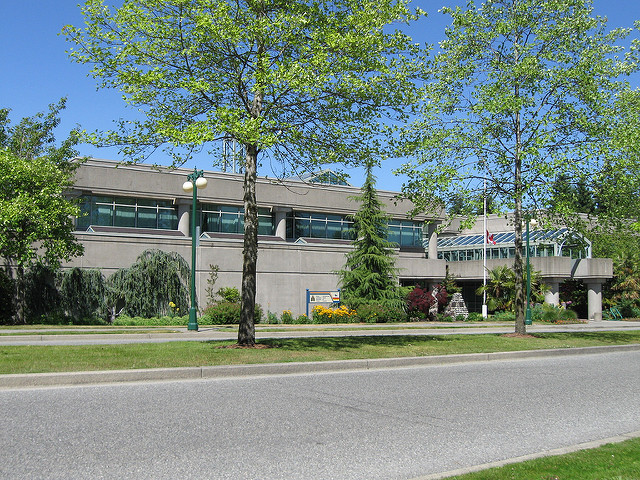
Located at 14355 57th Ave., in Surrey, British Columbia, its city sculpted flowered entrance belies a troubled organization. Behind this somewhat imposing concrete bunker style building the problems battering the RCMP play themselves out on a daily basis.

As any quantitative researcher will tell you, numbers matter, and an examination of the statistics coming out of this office are enlightening. (After a year long wait, an Access to Information request was recently received.)  Questions have been asked about the makeup of the detachment, the deployment of resources to see what could be found out from this rather secretive group. It is believed that Surrey is an example of what is going wrong within the RCMP in terms of its operational capabilities.

First: the population of Surrey has been growing.  In 2006, the population of Surrey was at 394,080; in 2016 the population was 530,443 an increase of 34% in those 10 years. So you may assume that there must have been a requisite change or increase in the number of occurrences or operational files generated by the RCMP just based on the increase in population? More people, more problems? (Most policing agencies base their requests for further manpower on the numbers, the more people the greater the need for officers, based on a police/per person ratio of anywhere from 1/600 to 1/900 for example)  However, if you look closer you will find a different story.

The actual number of  operational investigational files generated by calls for service went from 162,973 in 2006 to 185,801 in 2016.  That is only a 14% increase. How can this be explained?

One theory is that the reporting of actual crime has dropped. Businesses in Whalley for example, which have been broken into a number of times simply are not reporting them anymore, keeping the numbers at an artificial low. Difficult to measure for sure, but the anecdotal evidence is strong.

It is also possible that the makeup of the population is changing;  is Surrey becoming a wealthier suburb of Vancouver? Is the criminal element shifting further east? Also possible but not being measured as of yet.

So if the occurrences are not growing, because those numbers show an occurrence rate growing at only 1.5% per year, what about the actual types of crime: comparing the years  2006 with  2015.

                                 *2006                            2015

**Homicide                 11                                 15

Assaults                  4,909                              3464

Robbery                   670                              762

Abduction                144                                 45

Crim. Harassment   1, 708                          1,907

B &E                          4675                              3786

Theft MV                 4,769                              3,291

Total thefts             15,068                           15,262

*All Stats are from the RCMP Web sites. ** One should also note that homicides in Surrey are handled by IHIT, not resources of Surrey Detachment.

These are just a few examples listed on the RCMP Web site. What is striking is that the numbers are pretty similar even though nine years of growth have occurred. The crimes of 2006 are the crimes of 2015. Some went up, some went down, and in the totals: Criminal Code offences per population as measured in 2006 was 113.91; in 2015 that number was 97.74.

The 10 year average was down overall. So if one were to generalize, you would have to lean to the fact that the crime rate has actually decreased during this time period.

So if the investigational files generated has only grown by 14% in terms of actual calls to the police, then should we not expect to find that the Detachment has grown accordingly?  The actual detachment size has grown at a staggering rate, despite the drop in crime and a very meagre growth in investigational calls, and despite cries for more officers.

The number of personnel now working in Surrey Detachment during this time period has grown by f 41.069 % .

The annual budget for the Surrey RCMP has gone to $144,981,000.00 in 2017. This is roughly 45% of the Surrey municipal government’s overall budget.

If we examine just one of the ranks in the building, the Sargeants for instance they have gone from 29 in 2006 to 73 in 2017. In strict pay dollars that amounts to an increase in spending on Sargeants who make a salary of $102,715 (not counting overtime) from $2,978,735 in 2006 to $7,498,195 in 2017.

The number of personnel working in the Detachment in all capacities has grown from 570 in 2006 to 837 in 2017.

There is a general theory in policing, that boots on the ground matter. The “broken window” theory of policing as espoused by the New York Police Department to great effect has become an accepted belief. That if you look after the small crimes, the rest will come naturally.  In looking at the growth in Surrey detachment you would probably assume that the streets of Surrey are heavily policed. A police car and an officer on every corner.

One must bear in mind, that the face of operational policing in any detachment is the uniform personnel. They are the ones that take the calls, patrol the streets, and conduct the  majority of the investigations that are generated day to day. The RCMP management continually call it the “backbone” of the RCMP.

The RCMP does not seem to agree or go along with the “broken window theory”.  Remember the cries for help and the 100 new officers that were being promised in the wake of the murder of middle aged mom, Julie Paskall outside the Newton Wave Pool?  The Surrey RCMP decried the lack of resources but promised all would be solved by an increase of 100 officers. (a perfectly round number and one wonders what formula came up with this)

Unfortunately what they say and do is quite different. For the last number of years and possibly decades, the uniform personnel have been treated as 2nd class citizens, and the RCMP management has taken this opportunity to enhance their plain clothes establishment, increasing the numbers and increasing the promotions, growing the policing empire. Upper management at this Detachment have thoroughly bought into the theory that everyone is a specialist, policing is more sophisticated, more in need of specialized education and investigation to combat the overwhelming problems of policing. They have become more of a Federal government department, fat with oversight, fat with overtime, fat with jobs that seemingly grow more distant from the actual job needs. They have lost sight of the core job of policing a City like Surrey.

All officers start on the streets, in uniform, but after three or four year service, most of the current crop of officers believe that their career path has to mean going to a specialized unit. The demographics of the last twenty years with senior officers leaving in droves, means that officers who once stayed on the road in uniform for 12-15 years have been replaced by officers of  3 or 4 years service. And these junior officers, in this environment feel that they should be promoted earlier and be allowed to go to these specialized units much earlier. The current experience of officers on the road has decreased to a significant and marked degree. With seniority declining, the level of experienced supervision has also declined.

According to our filed Request for Information, in 2014, the total police establishment in Surrey was 703. According to the statistics provided by them,  there were 276 officers assigned to General Duty (uniform) for Surrey Detachment.

Remembering there are 4 Watches, that would mean on paper, 69 officers per watch. Unfortunately the RCMP is being misleading.

In actual fact for the years 2011 to 2017 the numbers on the Watch are actually between 40 and if being generous, 50 officers. So 20 or so officers per Watch, have been taken from the uniform side, and also seconded to specialized units. By simply moving the position numbers to the secondary units.

In 2011, when personally last in Surrey, we had difficulty sometimes putting 35 officers on the road, and were routinely calling in officers on overtime to reach the unwritten “minimum” of 35.

Nothing has changed much since 2011. Patrol officers continue to be swamped, unable to obtain meal breaks, unable to get done their 12 hour shift without an extra two hours of paperwork. They were and continue to be over-worked.

If off for prolonged sick leave, or for maternity leave, there is no replacement member put in their stead.

Meanwhile the Detachment managers have for years have been consumed by growth and the perks and enhancements that come with it. The upper echelon have come up through the plainclothes ranks and have become adept on growing departments, padding the payroll, and increasing the promotions, while on the road the uniform numbers remain virtually unchanged, sometimes at dangerous levels.

The  “plainclothes sections”, rule the ship, taking their coffee breaks, lunch breaks, and throwing in a little time for the gym.  Overtime is selective and plentiful. It is “easy street” in comparison to working in uniform.

These are the two worlds in the RCMP; both revolving in the same police universe, but seemingly unconnected. Pepper spray and tasers on one side,  the laptop on the other side. The specialists are not encumbered by a gun belt with the numerous tools of the day, never tied to a radio demanding attention and attendance. They are sometimes “affectionately” referred to as the “carpet cowboys”. It is only natural that they lose site of, and then can not relate to the uniform officer in Estevan Saskatchewan, or the officer patrolling the King George Hwy in Surrey.

In this same orbit, is the uniform officer; tied to the radio, tied to the need for answering calls for service, tied to 12 hour shifts, infinite court, and infinite reporting.

This era of specialization is a mantra, it has taken hold and this general aggrandizement of the roles and ranks of the operations is now firmly ensconced. The Federal and Provincial governments buy the propaganda put out by policing managers giving credence to the theory that if you repeat something enough times, eventually everyone will come to believe it.

So with this increase in sophistication, the argument will be that they are more successful,  it would mean more prosecutions, more success in the courts? Have  prosecutions in Surrey have increased?

In the Annual Report for the Prosecution Service in British Columbia, in  2014/15 there were 59,447 number of accused persons approved to Court in all of B.C. In 2016/17 there were 63,733, a 6% increase.

In 2014 Professor Curt Taylor Griffiths of the Criminology Department at SFU did a study and found that Surrey had the “lowest crime clearance rates” in the Lower Mainland. Also, remember that this was the time that Surrey Detachment was asking and got “100 more officers”.

So clearly all this increased specialization, this increase in manpower, this increase in all these tactical units has not led to a great increase in prosecutions.

So where are those 100 officers that was going to be a solution to all the shootings and the increased crime around Newton.?  They arrived but you can’t see them.

This disappearing magic act is easily explained.  The officers who arrived quickly became absorbed in the operational monolith.  The uniform officers already on the road took this time to apply for and get assigned to plainclothes, to be replaced by these brand new officers. So the detachment numbers increased, not the uniform officers on the road.

The numbers grew inside the building, not on the outside which was the public’s expectation.  There was no increase in the number of “boots on the ground”, which was what was being promised. The taxpayers were duped. More “carpet cowboys” were created, maybe a new Sgt position.

So in this age of declining violent crime, (in 2016 it dropped 16%, in 2017 it dropped an additional 8%) how is that this detachment continues to grow, expand its promotions, expand its core base, and add to the increasing cost of policing in Surrey? How is it that the actual police presence on the road is static, while the ability to respond for calls for service remains virtually the same over the last several years, and the experience on the road is dwindling as is the supervision?

The Surrey Detachment flagship is a reflection of the policing times we find ourselves, and a reflection of the “new” management. Specialization, talking of diversity and inclusiveness, telling the governments of the day what they want to hear.

Uniform policing in the RCMP, its very core, is dying a slow death while bureaucracy rules. Growth of the mandate, growth of the secondary roles is more glamorous, more in keeping with a certain level of sophistication. It is safer, less in the public eye, less risk for a risk averse management group.

Meanwhile day to day policing is looked down upon, where people get sent if they are in trouble. Day to day policing is un-glamorous, 12 hour shifting, working on holidays, endless report writing, Crown Prosecutions sheets prepped while dog tired, all of which will be wrapped in legal arguments to be played out in courts for days on end.

Couple an inability to deliver a core service with thousands of claims of sexual harassment, internal investigations that would make many blush, unionization on the horizon, and unbridled self-promotion and you get a sense of further impending chaos with little or no sense of an ending.  To the old observers and former participants it is futile, doomed to an awkward death.

To the few that hang on; the few that continue to work hard, continue to put the job ahead of their life and their family, they just shake their heads. They keep forging ahead, hoping that someone will care— one of these days.

As to those 100 officers that were received to solve the street policing problem in Newton; don’t look for them on the street. They haven’t actually disappeared. Go down to the detachment and peer in the windows facing 144th Street. That’s where they are, through the tinted glass.

And when you next see four police cars of baby faced officers, sitting in the Tim Hortons at 2 in the morning on Fraser Hwy, having their break of coffee and cruellers, don’t think ill of them. They are not being supported and it is probably their first break in a 12 hour shift. During their fitful sleeps between day and night shifts, sugar plum fairies are not dancing in their heads, they are dreaming of being able to one day sit behind those windows on 144th St. They want to be part of the new policing.

(In terms of full disclosureSurrey Detachment  it was this writer’s home for 10 years. It is my alma mater, and I look back with fondness of my years spent there. I worked in uniform and in plainclothes)

Photo courtesy of Flickr via Commons by FB Some Rights Reserved

Some follow-up

In recent days, Surrey has once again been hit with a string of shootings, one case of particular concern, as the victim appears to be completely innocent; a case of mistaken identity. (This is not the first case of mistaken identity in Surrey over the years as a point of fact). The media are re-acting on talk shows and on television to this latest outpouring of violence.

The RCMP management team in Surrey led by Dwayne MacDonald have provided the expected reaction.  In a rehearsed statement talking about his sadness and outrage and promising to bring the perpetrators to justice.  And in a cute deflection move, released pics of some gangsters who have been shot at recently, and telling the public to avoid hanging around them. Really? He also reiterates how the Surrey Detachment Gang Enforcement Team is “working” with CFSEU. Again, the specialized units who target these individuals over long periods of time is going to solve this, the theme being just trust us we are working hard. He assures everyone that they are “making headway” and they are “strategically targeting” the wrong doers and of course he is asking for “the community to join us in this effort”

There are rumblings developing and judging by the hits on this blog from police and politicians, some people are now seeing the problem of being of one of deployment rather than resources. Current Surrey mayor candidate Tom Gill is calling for a re-assessing the RCMP contract in terms of how the resources are deployed. There have been a call for a “beat program”.  There are even a few persons calling for a regional or city force to replace the RCMP.

The RCMP, if they do not adapt and change are going to go down. MacDonald’s platitudes despite his best intentions are tired, well-worn and of little value. Put away the talk of community “initiatives”, “strategies”, “targeting”, “community effort”, “youth initiatives” and “more resources”.  My advice, get back to the core of policing , put officers on the street. It really is not complicated.


New Commissioner a symbol of Identity politics…

When I sit around with current and former RCMP officers there is a lot of shaking of heads in terms of where the RCMP finds itself now; buried in sexual harassment cases, about to face unionization, and about to have to deal with a possible civilian oversight group.

Operational problems are around every corner, whether it be the lack of policing in rural communities, a completely failed promotion system, mounting PTSD complaints, mounting use of force issues, and the likely partitioning of the RCMP.  All major issues, all daunting to say the least.

So it was baited breath that the members of the RCMP waited an eight month screening process taken on by ten committee members. Thats right. Ten.  These ten were to oversee a selection process, all living on expenses, and I am guessing pretty substantial hourly rates to complete what must have been a more complex task than I imagined.

The Committee was headed by former Liberal Premier and Ambassador to the United States, Frank McKenna. The rest of the committee was comprised of six women and three men, and a job description mandate which included ” having to demonstrate their knowledge of Canada’s indigenous culture and a sensitivity to the issues relevant to the diversity of the Canadian population”.

You will notice a bit of a theme with the Committee members.

Devon Clunis, former Winnipeg Police Chief and the first black police chief in Canada. He was known for dealing with the race issues in Winnipeg, but retired somewhat suddenly just before a police budget came down which included tripling of the promised police budget, and an RCMP investigation into a companies billings for the building of the new police office.

Malcolm Brown , the Deputy of Public Safety who would report to Ralph Goodale.

Daniel Jean, the National Security Advisor to Justin Trudeau, who has now gained notoriety as the fellow who came up with the Indian government conspiracy theory to cover Justin Trudeau’s dinner guest Mr. Atwal. It was a ridiculous slander on the Indian government which they had to apologize for and likely the end of his high flying career. He had no previous experience in Security and Intelligence before taking this job.

Barbara Byers, with the Canadian Labour Congress who specialized in issues such as the LGBT community.

Manuelle Oudar, the CEO of Canada Workplace Standards and Health and Safety.

Marianne Ryan, former Deputy Commissioner of the RCMP in Alberta, and now the Alberta Ombudsman.

Bev Busson, former interim Commissioner of the RCMP, and the first female Commissioner of the Force

Tammy Cook-Searson the elected Chief of the Lac La Ronge First Nation.

It is not difficult to guess, once you see this list as to what the tone and tenor of the selection process would be; clearly a woman, and clearly someone with an understanding or connection to Indigenous issues, or sympathetic to the causes of diversity and inclusion.

So after nine months, lo and behold there were four in the running; three women and one man (the male no doubt thrown in there to avoid any charges of being slanted in their decisions.) Statistically women represent 21.6 of the RCMP, but in this final selected group, they made up 75% of the candidates.

The other candidates were: A/Commissioner Joanne Crampton, A/Commissioner Jennifer Strachan, and Deputy Commissioner Kevin Brouseau.

And the winner and the “absolute best” person according to Justin Trudeau was Assistant Commissioner Brenda Lucki.

Now if they knew they were going to select a female from the RCMP, then I could have saved this committee a lot of work. Just open the internal phone list and look for any female officer above the rank of Superintendent. There aren’t many. I could have come up with this list in a couple of minutes. Now, if you tell me that they must have some sort of Indigenous acceptability, a second screening would have also quickly found Ms. Lucki who received recognition for her work on aboriginal rights. In other words I could have saved them a lot of meetings and expense.

Ms. Lucki, who joined the RCMP in 1986 has had a varied 31 year career, serving in Saskatchewan, Alberta, Manitoba, Ontario and Quebec and then with the U.N in Yugoslavia. She is most recently in charge of Depot Division, the training facility, a former posting of Bev Busson as well, before she became Commissioner.

At first glance it seems impressive but there are a couple of things you need to keep in mind. Every promotion for the most part in the RCMP means that you change jobs, you have to move, regardless. So someone like Ms. Lucki, was promoted seven times in 31 years, serving in a lot of different Provinces, did not land in a place for any length of time. Take off a couple of years while with the U.N. and it measures out to a move every 3-4 years. During that time, she may have had oversight on a couple of hundred officers at any one time. She is now being asked to oversee a vast bureaucracy, over 28,000 personnel, with a budget of over $2.7 billion.

So what put Ms Lucki ahead of every once else? Her resume is almost bland and typical of all white-shirted officers within the RCMP. Constant movement in the promotion process also means that she was not in any one place for any significant period of time, therefore with little time to have any substantial impact. (Bev Busson also suffered from this dilemma leading up to her being made interim Commissioner.)

There is little which points to accomplishments within the RCMP with the exception of the Jubilee award which were given out like candy, and were internally generated.  There is repeated mention of the Governor Generals Order of Merit of the Police Forces and her role with the Indigenous. This too is an internally generated nomination, about fifteen a year get nominated by the Chiefs of Police and almost all nominees are officers as well. There is no evidence or hard factual detail as to what this entailed or what she did to deserve this recognition. These nominations are often part of the upper management Ottawa game in the RCMP of self – promotion.

There are reports that the committee approached Deputy Commissioner Butterworth-Carr who it is said turned the job down more than once.  Butterworth-Carr is a rank above Ms. Lucki and is First Nation from the Tr’ondek Huech’in Han Nation of the Yukon.  She also had the Queen and Golden Jubilee Medals, and the Order of Merit of the Police Forces for her proactive work. There are a lot of similarities with Ms. Lucki, such as her short length of service in a number of locations in the West.

The RCMP is in serious jeopardy as an organization. The problems seem stifling and the threads of the organization are being pulled and torn in every direction. This has been the result of mis-management at the upper levels over the last fifteen to twenty years. There can be no doubt about that. The question in the interview should not have been what can you do for this organization in the future, the question should have been what have you done in the past?

Upper management in the RCMP is known as the “go along to get along crowd” with never a dissenting opinion or a willingness to take a principled stand. Should they be held accountable for this mess, of course. Are they being held accountable, of course not; it is after all government. The upper management of the RCMP are for the most part a self-perpetuating incestuous group, and they should all be given pink slips along with a “thank you for your service” as they are escorted out the door. The roots of this organization are rotting, and the various limbs need pruning so they can grow again. This is not going to be easy.

Ms. Lucki as nice, as personal, and smart as she may be; she was and is part of the problem, not a part of the solution. Shockingly, the Liberals after all this went with someone inside this  same dysfunctional and management challenged organization.  Being female does not exonerate her from management actions of the past. She was part of that management.

Do we really care whether the selected candidate was male or female? Whether your skin is black, white, green, or orange is not a factor. Facing a complicated issue with civilian oversight on the horizon and the disappearance of the administrative side of the Force, one would have thought they would have been looking for someone with a strong administrative or legal background, or a hands on operational background, or at least a familiarity of unionization and all that it entails. Mr. Trudeau assured us that there were “many extraordinary candidates”.  Maybe a Masters in Business Administration, or a speciality in Labour Economics? Were there none out there? Did none apply? Was a candidate with a Bachelor of Arts the height of the academic qualifications? Even the male on the selected group of candidates has a Master of Laws from Harvard, is  Metis, but he did not have a chance.  “He” being the operative pronoun. Clearly indigenous and being a woman were the heavily weighted determinants of their choice, and merit was a very distant third or fourth.

Trudeau’s classified questionnaire must have been multiple choice, no right answer, as decisiveness is not a pre-requisite;  It must have read, Are you:

a) Female?

b) Female?

c) Indigenous? Or do you at least have friends that are Indigenous?

d) Female?

e) Do you like me and agree with everything I say?

Self-declared feminist Trudeau was using his usual clipboard check list selection process, just like his selections to Cabinet.

This country is becoming dangerously polarized, and now the politicalization of the RCMP has reached a precipitous level as well. Trudeau from the left is very similar to Trump on the right, he does not seem to recognize the problems of political interference, the danger of slanting the law and investigations to favour a special interest group.

When you Google check Ms. Lucki, you find video of her participating in the Depot “dunk tank”. Well, new Commissioner Lucki you are about to be thrown in the deep-end once again.

This time the results could have dire consequences for those on the front lines of the Royal Canadian Mounted Police and maybe the very survival of this historic institution.  In her speech she said that she is going to ask “all the right questions”. Doesn’t she know what the problems are at this stage?

What is really needed is someone with answers, someone with a vision and someone with the audacity and authority to do what is right. Rome is burning, we do not need another fiddler.

But good luck to you Ms. Lucki, and I am keeping my fingers crossed that you prove me completely wrong.

I will go back now, to my coffee klatch of the disenchanted, and we will see what they think of Mr.Trudeaus choice, whether they think she will be the next saviour of this once proud organization, and whether positive change is around the corner.

I will withhold my prediction for now, but all should be prepared to hear “diversity” and “inclusion”, as much as we hear Trudeau say “going forward” “working with our partners” and “women”. Hopefully, the two officers that awkwardly fainted during your speech did not have a premonition as to what is to come.

And to this “select committee” of advantaged bureaucrats. Please call me next time, I could have saved you a lot of time and the taxpayer a lot of money.

After all we will be meeting again in four years.

Photo Courtesy of the CBC and may be subject to copyright


Personal Story – “Heather” – Part III

It was now 0500 in the morning of the next day. So with the third or fourth coffee in hand, and we were back in the Surrey detachment main office, anticipating what was to come, somehow knowing that this office, this desk, and these walls could be my home for the foreseeable future.

Although it was distant from Cloverdale and the search areas, I also knew that this place, once daybreak arrived would begin to take on an atmosphere of its own. There is an ill-defined energy which any homicide generates in a police office. People coming and going in various stages of fatigue, an air of practised urgency, and every once in awhile it would be interrupted with sporadic shots of adrenalin due to some unexpected turn in the evidence.

This early inherent urgency, or drive, can sometimes be short-lived.  There seems to be a direct correlation between victim type and the length as to how long an investigator can keep a file moving.  In this case, a small girl was a possible homicide victim, and she was still missing, in some senses an investigators nightmare.  Twenty hour days would be the norm. There would be less bitching, more cigarettes, less week-ends off, less time with one’s own family, and pizza would be the culinary favourite.  It is not like the television shows in that it is not as emotional as some would like to portray it; it is more of a machine kicking into a higher gear, but like a marathoner, where one had to control pace, and hold focus.

This first quiet moment between Chris and I was therefore likely to be the last for awhile, just a momentary pause.

This of course was the “old days”. So this investigation done on paper.  Hand written reports, forms and notes, would become the 8″ x 10″ medium through which the investigation would take shape. Paper would be filling cardboard boxes, and those boxes would eventually take up spaces around us, giving a bit of a warehouse feel. Often Librarian skills would be more advantageous than investigative skills.

Each piece of paper being assigned a number, each piece of paper being a separate piece of information. If an officer filled in a report, and it addressed or revealed four pieces of other information, then four separate reports would then be generated, then all wold be put in four different folders pertaining to each item. Laborious? You bet. Efficient? We thought so. But of course the coming digital electronic age would make this all seem comically archaic.

For instance, if we had to  search for a single item. Well we had to remember where we had seen it, and in what folder. So, as an example, if someone mentioned a white Ford pickup, we would have to remember where we read it, and in what folder. It worked well when the file may be only a couple of hundred folders and a couple of hundred pages. It relied on a good memory and a concentrated effort.

However, when the file reached thousands of pages, as this one would, it became an exercise in re-reading, duplicated efforts, and it was often frustrating. Overlaying it all,  like Poe’s Raven, was the inherent fear of missing something key to the investigation.

As the days came and went, in amoebic fashion the paper would grow, taking on a life of its own. Everything found, every person spoken to, every news item mentioned, every tip called in would need to be read, documented and filed. It was a mind numbing process and complacency was the enemy. Any follow up was hand-written and forwarded to the individual investigators. An increase in investigators naturally led to an increase in paper, the Catch-22 of police bureaucracy. In a few short days, the investigative team would grow from two of us to over forty or fifty individual investigators, borrowing from Robbery, Serious Crime, and other sections within the detachment.

Decisions big and small, would need to be made as fast as the questions could be uttered, answered more by instinct than a layered thought process. There would be no time for routine debate, or second-guessing, hoping beyond hope that somehow we had learned something over the years that would not let us down, or cause us to overlook something in our needed haste.

And of course there was numerous calls from the general public, which led to the establishment of a “Tip Line”. My immediate boss, Sgt. Mel Trekofski, wanted to pitch in, and offered to take up the monitoring of the tip line, a thankless task at the best of times. It required “carding” each individual, call-backs to verify the information, and therefore seemingly endless conversations with persons, some good, some ridiculous.

As the file went on, over five thousand tips would eventually be received, with over forty psychic callers alone. The self-described “professional” psychics would all offer up where the body of Heather could be found. So you heard the “Woods”, the “water”, and “buried in a shallow grave”. There were many calls where they went on to say who was responsible,  and in many instances it was “the father”.  But, if not then a “white individual” who “worked with his hands.”  Some even offered to take investigators to the body, something we couldn’t ignore, but of course these did not pan out, but did extend my belief that there were a lot of “crazies” in the world. I never had a paranormal observer, if Im being kind, solve a file for me, and this wasn’t going to be the first.

The logistical jigsaw puzzle continued as we needed to address staffing issues and all the usual secondary administrative issues, at times like a Rubik’s cube, multi-dimensional, spinning on the singular axis of trying to keep the investigation on track.

As the searches ended, the neighbourhood inquiries continued in earnest, as did the forensic examination of objects which had been found. Investigators were assigned to each parent, and other investigators began criminal record checks, as well as local police record checks, on all individuals spoken with or identified as part of the investigation.

Panties, jeans, shirts, jackets, socks, sandals, some of which were in dumpsters were shown to the parents in the event that they had belonged to Heather, and if not, catalogued and maintained in any event.

Neighbourhood personalities, like “Pedophile Darcy”, surfaced through the townhouse inquiries as we began to dredge through the individuals in the Cloverdale complex, and the other people in the neighbourhood. “Darcy”, was typical of the type who surfaced. Darcy, of course, drove a white van, and in his past had been caught masturbating on a child’s  bed, and had a record of sexual assault. So he became a subject of our surveillance team, and in the end we were able to eliminate him from any involvement. There were others similar to Darcy, and each took time, each tip had to be ground out, and it took several days to eliminate Darcy and the other archetypes as they surfaced.

Checks through our VICLAS (An RCMP victim Classification software) system for this area of Cloverdale surfaced a possible fifteen individuals of interest because of their sexual predations. Each of these individuals would be located, interviewed, and reported on. Each would need to provide an alibi.

Checks of all those with criminal records for sexual assault and now free in the broader City of Surrey of which Cloverdale was just a suburb, revealed another five hundred possible “individuals of interest”. It would take years to eliminate that many so we had to narrow the search, at least in the short term, to just those that had violently offended on pre-pubescent children living in the Cloverdale area. This still gave us twenty-seven names. Investigators were assigned to each.  It may surprise some to realize that in most cases these individuals co-operated, and were expecting us. When the investigators arrived some had even already prepared their statements and had their alibis in order.

Others, of course would try an investigators patience, testing their emotional mettle, and you could not help but be pulled you down into the dark reaches of sexual perversion.  In matter of fact voices, they would describe how it couldn’t be them involved, as their method was different in terms of the suffering they would inflict in their need for sexual satisfaction. Some described why she could be alive, to be kept as a sexual play toy.  Any killing of her would have be only to get rid of the evidence, and a “waste”,  and any killing of her would be a signal that things must have gone wrong. This insight would later prove to be accurate.

A crack dealer living in the complex, who had been described by persons in the complex as coming and going in another  “white van”  became an obvious possible suspect. Once identified, he admitted to dealing drugs, and offered up his sales notations, his “crib” sheets as evidence of where he was at the time of Heather’s disappearance. No “normal” criminal he explained likes sex offenders; whether in jail or on the street and the drug dealer wanted to help.

As the investigative team grew, briefings, and de-briefings were our life-blood. Every morning at about 0630 I would brief upper Surrey detachment management, and then at 0730 I would brief the investigative group as to any developments or any change in focus. At 4:30 in the afternoon a de-briefing would be held with these same officers to learn of any highlights. In between of course there was the media to deal with; calls dealing with expenses, computer check results, surveillance assignments, tip line results, and other more sundry items.

By 6:00 pm, as things slowed a little, I would sit in front of a stack of reports, about 2′ high, and begin reading. Chris would then read the same paper after me, just to insure there were a second set of eyes. We would check for any cross references, then the paper would be filed, new follow ups drafted and assigned. Coffee was my particular drug, and stretching for the long walk to the bathroom began to be a highlight which broke up the trance like nature of our task.

Three or four hours fitful sleep a night would be our routine.  Upon returning to work, the process started again. Days drifted into nights. Nights became sunrises.

Suspects surfaced and then drifted away after examination; mounds of dirt reported as shallow graves were examined and dug out; clothes continued to be turned in; suspect vehicles were identified from having been seen in the area; and the psychics from around the world persisted on being heard, each with their own, but similar investigative theories.

Americas Most Wanted called wanting to profile the case. That in turn generated two tips that proved of no value. Europe, and parts of North America were all now paying attention.

We read, often re-read, re-shuffled, and then sometimes re-assigned.

And of course, there was the ever present media, their trucks stationed inside the complex itself,  giving nightly broadcasts and voicing the concerns of the general public. With Halloween getting near, they often regurgitated the growing parents concerns with a killer “on the loose” and asking whether they would let their children go out trick or treating.

As the investigation wore on I kept remembering how I was once told (by who I can not remember) that in every murder there are five mistakes made, its just a matter of finding out those mistakes. Simple really.

Of course every murder is different, every set of circumstances different. In this case we believed that this had been an “opportunity killing” by a stranger, and likely sexually motivated. Statistically, at least, the most difficult of all types of murders as these things go. Many remain unsolved. For instance, in 1996 only 14% of homicides were committed by a stranger. In 1976 it was only 18.4%, and in 1985 17.3%. Consistently low numbers.

If you looked further, and included the age of the victim, in a U.S. study only 3% of homicides were committed by strangers of victims under the age of 12. When a sexual related offence was the motivation, it drops even further down to 1% of the cases.

In checking with the FBI on this case, we learned that there had been only 4 or 5 of these cases in Western North America at the time of Heather’s disappearance in the year 2000.  So although abduction of a child is a parents greatest fear, it is actually an extremely unlikely event. Patterns are harder to detect, as there is insufficient historical data. A serial offence on children was almost unheard of, but of course none of the statistical data, or lack of data was of much consolation for the mother and father of Heather.

Investigative pressure does grow, from the public and from within. Maybe not at the levels of the tv drama series, but it is there. The greatest pressure is put on by the investigators themselves. At some point you begin to realize, rightly or wrongly, whether solved or unsolved, that this investigation will be attached to your name, especially in police circles. You will be perceived in a different light in the future.

A sense of pride takes over, the not wanting to be beaten. The emotions shut down, as the  constant images of the victim is too disarming, too distracting. One could not function coherently if you allowed yourself to become fixated on the depravity of it all, the senselessness of it all, the speculation as to whether Heather was alive or dead. To contemplate her alive and being held was in some ways an outcome that could be worse than death.

As a bit of an escape, a need at the very least to breathe fresh air, both Chris and I took a few hours on a Sunday to step away from the office. It was day twenty-two, and I decided to drive up the Coquihalla highway, a lonely stretch of highway in the middle of British Columbia, surrounded only by trees and rivers, just in an effort to clear the fog which had permeated my nerve endings. I stopped at the only rest stop, perched at a 3000′ elevation, three hours from Surrey. It was cold and gloomy, but I went into the darkened men’s washroom in this remote part of British Columbia. There at the urinal, staring at me was the Missing poster of Heather, eye level. I had always taken pride in my ability to disassociate from files when away from work. But clearly, this file was not going to let me do that. There could be no escape, not now anyways, so I decided to head back.

As I drove down the steep decline through the highway snow-sheds, once again I began to fruitlessly re-trace all that had been done, despite my blaring radio trying to change my obsessed thought process. I kept coming back to the fact that we needed to find one of those proverbial “mistakes”. I was not greedy, not all five, just give me one.

As I approached the Detachment in the darkening hours of the afternoon, just to check in, that I got a phone call. I needed to get back a little faster, because they think they had “found” Heather.

Photo Courtesy of Creative Commons by TrixSigio Some Rights Reserved

Personal Story – “Heather” – Part I

I received a “page”, seventeen years ago, that irritating incessant beep which kept repeating every few seconds. The message was always a phone number to call and receiving it implied by its very nature a sense of urgency. In some messages the phone number would be followed by a -911, to further underline the urgent request, which was the case in this instance.

As a member of the Serious Crime Section of Surrey RCMP Detachment, it usually meant that there had been a death, or somebody was barely hanging on, closer to death than life; and that it was likely violent, but above all else, that it was somehow “suspicious”.

It was 10:15 pm, on October 1st, 2000 when I got the page from my Sargent in charge of Serious Crime, Mel Trekofski and he in turn asked that I call to “partner” with me that night, Constable Chris Drotar, also a member of our Serious Crime Section.

Unbeknownst to us at the time, this particular page would change our lives, it would alter our perceptions of man’s inhumanity to man, and it would test our physical and mental abilities to a limit that we likely didn’t feel possible at that time. And thankfully, it would not be often repeated through the course of our careers.

We knew from the initial information that a girl had gone missing, a 10 year old girl, in fact.  Her name was Heather, and she was the daughter of Patrick Thomas who lived at the address. It was a little discomfiting to learn that she had in fact gone missing around 5:30 that afternoon. Already we would be starting with a time disadvantage, which in our world can sometimes mean the difference to success or failure.

The mother, Jodie Thomas was estranged from Patrick and lived in a different part of Surrey and would not be at the house.

Heather and her brother were at their fathers in Cloverdale,  as part of that common suburban divorce dance of shared custody. It was his week-end, but this was Sunday, and the kids were due back at Mom’s. But then things changed.

Search and Rescue had been and were still involved, along with all the neighbours who lived in the complex. Nothing of significance had been found as of yet, but the officers who were in attendance felt that “Dad” was acting strangely, and it was for that reason that we were being called; to interview Dad. The implications were obvious and unstated.

It was a typical October night, wind slighting blowing, leaves beginning to fall but not yet in full decomposition, coloured, but still clinging to the trees. We were asked to attend to Unit 26 at 17722 60th Avenue, in the usually quiet suburban area of Cloverdale, part of the not so quiet City of Surrey, B.C.

As we arrived in the dimly lit complex it was quickly noted that directly across the street was the Cloverdale Fairgrounds and the Racetrack. This was a Sunday, and on this particular day the expansive parking lot during the afternoon became a massive flea market involving hundreds of people. At the time of Heather’s disappearance there could have been thousands within a few hundred yards of the housing complex.

The wood construction of the worn town homes showed the usual green tinge along the edge and rooftops, mold that comes with incessant rains. It was an older complex, u-shaped so you could drive in a semi-circle and go out the other side.  It showed no signs of recent care, just the wear of years of  many children, a complex of about 50 units, who through its life was mostly populated with single parents and young couples starting families. Blue collar, trying to make ends meet, with a tinge of a criminal underbelly always found skirting the edges of poverty flecked neighbourhoods.

As we arrived,  it was quiet, as the people of the complex had by now retreated into their individual homes, no doubt staring out from behind partially closed kitchen venetian blinds.  Almost all had been searching for Heather around dinner time, all likely knew that she had not been located, so one can imagine the variety of explanations given to curious children as they got ready for bed that night.

As we drove up to the residence, with that usual mixture of adrenalin and apprehension, we were fearing the worst, but not quite prepared for that being the case.

The greeting uniform officers, who were unusually quiet, told us that they had searched the residence thoroughly, which is the first place to look for a child. Dad’s vehicle was parked out front, and it too had been searched with nothing found.

Inside the town home, it was like hundreds of others I had been in; some worn furniture, some new, usually a prominent t.v. and the usual evidence of active children. Right at the door, in clear view, was a knapsack, clearly a girls adorned with the usual hanging customized knick knacks which signalled that a girl owned and cherished it. It was in a position clearly in anticipation of heading out of the residence. It was clearly Heather’s and clearly untouched from hours before.

Chris and I introduced ourselves to the father, who sat in the living room, emotionless, wearing jeans and a collared shirt. Blonde, and blue eyed, of average height and build, a good looking man, he was staring straight ahead, saying little, no tears, no anger. There was little in his eyes, which is almost always the giveaway.  Nothing in his composure which indicated a reaction to  the most hellish of torments for a father. So, it was quickly apparent what the original attending officers thought was “unusual”.

I asked Dad if it was o.k. if we conducted another search of the residence, and his vehicle and he quickly and quietly agreed. He did not question why we were being this thorough. I also asked Dad if he would come to the police office, where we could take a statement, which he also readily agreed to, with no questions.

So at quarter to one in the morning, we sat in the interview room with Pat, whose demeanour remain unchanged.

Pat’s story was this.

Pat had been working on some carpentry in his residence. The two kids, Heather and her 8 year old brother Chris had asked around 4:30 to go out and play around the complex while they waited to go to their Mom’s. He said yes, but told them that they had to be back by 5:30 so that he could keep to the proscribed schedule.

Around 5 Chris came into the house, but without Heather, and Pat told him to go get his sister so that they could get ready to leave. Chris went out, could not find Heather, and came back a few minutes later saying exactly that.

Showing the usual parent frustration, Pat packed up and went out into the complex.  He began looking, talking to the various kids and parents as to whether they had seen Heather. It was learned after a short time from some of those parents, that she was last seen riding a 2- wheeled bike that she had borrowed from one of the other children.

A few minutes later, the borrowed bike was found, but no sign of Heather.  According to one witness, the bike tire was still spinning when they found it, near the front of the complex, in a parking stall on its side.

After we finished the interview around 2 in the morning, we were still just as confused as to Dad’s reaction, or more accurately, his non-reaction. Throughout he was totally co-operative, but he never mentioned the proverbial elephant in the room, which was whether we suspected him as doing something to his daughter. He just answered our questions, calmly and without hesitation.

We left the room, and dropped Pat back at the now growing Search and Rescue group on the Cloverdale Fairgrounds.  Still somewhat unsatisfied about Pat, however, we had come to one conclusion. The time-line, both drawn by the original officers, the neighbours, and our interview we felt excluded Pat from being involved. The circumstantial evidence did not leave any room or time for him to commit what would be an unthinkable act. Granted we were leaning on some years of experience and training, and trusting our judgement. Not always a comfortable feeling. And we were about to alter the scope or focus of an investigation as a result. If we were wrong, with the stakes this high, with the focus both within the police and the public that only a 10 year old girl victim can generate, it would be a decision that could haunt or taunt us for the rest of our lives.

In our opinion, we believed that Heather had disappeared, silently, although surrounded by thousands of possible witnesses.

Statistically, if this was a “stranger” abduction as we feared, the chance of Heather being alive was minimal, as too much time had passed since her disappearance. We also knew that there were only a couple of probabilities in terms of motive as to why a young girl is abducted.

If the suspect was not a family member, which was now our investigational theory, then we were now in our own personal criminal investigational nightmare. We were now looking for the needle in the haystack.

To be continued…….

Photo Courtesy of the Surrey Leader newspaper, a picture released to the public during the Search for Heather.


Personal Story #3 – “Bob”

We rushed through the darkness, eerily dark, in the only way a garbage dump could be at 2 in the morning. The lights of the police car, shone on hundreds of pairs of eyes, ground level, looking up at us.

Hundreds of rats disturbed by this single car, who had the temerity to enter into their feasting playground. A dump with rats is quite commonplace, of course, and the rats would stare normally, but the fact that I was sitting on the hood of the car as we drove, my leg wrapped around the Ford emblem in some weird safety pre-caution, poised with my trusty .38 revolver and firing randomly clearly caused them further discomfort.

The driver was my supervisor, Bob, who took great relish in circling back several times on the dirt and garbage covered dump, trying to run over them as well, as he did not want to be left out. Scaring me was not enough excitement for him. As I slid around on the hood, I could hear him laughing that barrel chested laugh, quite unsympathetic.

If the rats were hit by my bullets, in their death throes, they bounced up in the air, as if in a grisly attempt to not go down without some glory. This would also allow us to claim those that we hit. A way of keeping score.

Then it would be Bob’s turn. Bob was a better shot than I.  He always claimed that he kept track of the numbers, and that he always had more than me, and therefore I needed to buy coffee. I always believed him, why would a police officer lie.

Of course, our big game hunt only lasted a few minutes before persons living near to the dump, would call the police dispatch, saying that they are hearing gunfire nearby.  We would wait until dispatch assigned us the file, telling them we would handle it, and wait the necessary few minutes to show that we were some distance away, and then tell dispatch that when we got there, there was nothing around, and the file could be concluded. No harm done. Lesson learned.

Bob, my somewhat reluctant supervisor at this time is a 6’3″, dark curly haired fellow with a rudimentary moustache which does not reach the corner of his lips. I am being kind saying that he is 240 lbs. with a little bit of a belly. But somewhat deceptively, farmer strong, with boxer hands, and one of the only men I know who truly had no fear.

He was a practical joker, never took off his patrol jacket, even in the office, feet up, continually laughing or harassing who ever fell under his view. Smoked Players light, as did I, so of course we got along. Always clean, but always a bit scruffy, with unshone boots, and he never wore his hat, explaining that it was “just something to lose”.

He drove with one finger, easily guiding a heavy police cruiser through backroads at 160 kms if necessary, but I had no fear of his ability to keep us on the road. He could have driven at Nascar, but chose the New Brunswick rural roads instead. But, it was at those times that I did put on my seatbelt.

It was Bob that showed me that you could take mosquitos off the windshield of the cruiser with Coke.

It was Bob that showed me how to fingerprint a dead body, which is not an easy task. As rigour had set in on one body, he showed me how he could use the rigored splayed fingers, to hold your cigarette while you went about your task. Good lesson, but one I could never bring myself to fully incorporate.

It was Bob, who introduced me to the Coroner. “$25.00 Cowie” was his nickname, because for $25.00 he would pronounce anyone dead, and it was always the same cause, “heart failure”. Which when you think of it is never far from being the truth.

Bob and I had a call one time of a suicide, a depressed fellow had gassed himself in his own car, and we brought him into the morgue, his skin matched the blue colour of our police cars, and a clear sign of asphyxiation. Bob told the Coroner that we had found him in a ditch rather than in his car in the garage, and Bob had  “no idea” how he died; just to test the “heart failure” theory. He came through for us, pronouncing heart failure, but when we told him the actual details, he cursed and cursed at Bob, but changed the cause of death, to one which was more appropriate.

In another call, Bob showed me another trait.

A fellow swinging an axe like Paul Bunyon in the middle of the street had now holed himself up in his residence, and was demanding that the police attend, or he was going to kill someone. As we approached the now quiet ramshackle residence, nothing seemed out of order. I knocked on the door, when a male, clearly distraught, wrenched open the door, dressed as if he had been wrestling on the floor with some imaginary foe, saw me and quickly slammed the door again.

Again I knocked, and again he answered, but this time as he swore and slammed the door, unknowing that Bob had placed his .38 revolver in the door so it wouldn’t close, and allowed me to force the the door. Ten feet back from the door, the male glared, holding the axe with both hands over his head. I held him at gunpoint for a few seconds, and clearly the male did not have any intention of dropping the axe. It was a standoff. After a few seconds, I felt hands on my back, and gently Bob eased me to the side, so that he was the first in line, saying “if someone has to be shooting somebody, it might as well be me, you are just starting your career”. It ended peacefully and we took him into custody, where he lay crying in the back seat all the way back to the jail. No police suicide that day.

It was Bob who summed up who provided a succinct summation of police protocol when it came to officer safety, and threat assessment; “let them always throw the first punch”. Many subsequent mandatory RCMP courses on the same subject never quite captured the simplicity of Bob’s policy.  We fought a lot in that detachment, and I was never seriously hurt, but until I caught on a little better, I did get hit a few times. The more times I got hit, the quicker I seemed to learn.

Bob was clearly a street cop, but beneath the gruff exterior was a smart cop. He wrote clear, concise reports in the beautiful long hand of the day. He knew how far he could go, how far the envelope could be stretched, knew when the basis of the charge was there and could be proven. He and I would visit the local Crown on a weekly basis. Not necessarily to discuss Bob and my files, but to say hello, to let them know that there were faces behind these reports. He did it instinctively, I think unaware of how the humanizing of the process could only lead to good things in court, building a trust, and a friendship.

The question I am often ponder is whether Bob would have survived in this current age of policing. I am not so sure. Would he even get into the RCMP today? A Nova Scotia fellow with a high school education, and not fitting any current hiring priorities, it definitely would have taken a long time. And patience was not his virtue.

He lamented and threatened to quit when the Charter of Rights came in. He thought it would disadvantage the cops, the power would go to the wrong side. In his cop world, the police were trusted, but they were even-handed, their respect for higher management authority was minimal, and they had no problem saying what they thought. What was right was right. He did not look for backup, did not rely on or quote policy, common sense was his guide. He wasn’t infallible or ever wrong, but he admitted when he was. The thought of staying away from work for a sprained ankle, or a headache he would not even comprehend. He did not see colour or gender, but he was able to distinguish between right and wrong, and that was all that mattered. The general public if they had been wronged knew they were in good hands.

Bob was diagnosed with a terminal illness a number of years ago which led to him, to liquidate all his assets, getting a permanent tracheotomy, only to find out it was a misdiagnosis, and he is alive and kicking, and maybe just a little gruffer than before.

We have known and kept in touch with each other for close to 40 years now. He is part of me, and who I was as a cop. It is an interminable bond, and when we wordlessly hugged goodbye a year ago, we both knew it.  Nothing needed to be said.


An apology to my faithful but few readers

In the last few weeks there has been a lack of output from your faithful scribe, for two reasons.  The first is the inability to force myself to sit in front of a computer, which is  a human fraility, the failure to be disciplined. Instead, I have been enjoying the comforts of a warm summer; bbq’s, still and sultry nights, family members coming together, shorts and flip flops. But in my defence, I did feel a twinge of guilt.

The second reason is that about mid-August, just as I was being pulled back to the laptop, unannounced,  I was forced to undertake an investigation into the Canadian medical health care system; having being literally forced to my knees by sudden acute sciatica. A few weeks of intense pain has a way of taking away your ability to concentrate, and did not even allow me to sit in front of the afore mentioned computer. I am not looking for sympathy, just trying to justify my lack of written output.

My medical investigation so far by the way, has revealed that although better than the third world without a doubt, I have some serious questions on the costs of our system, and the eventual medical outcomes. I have concluded that you are your own best diagnostician, and the enormous monies being spent are feeding some segments but not others.  After two emergency room visits surrounded by crying babies, alcoholics, and drug addicts with their often ill-defined problems, and an ambulance ride where we discussed poor pay and our mutual dislike of firemen, I was left wondering where all the money that goes into health care. Is it really finding its way to where it is needed? But that is for another time and blog.

So now, still on crutches, and probably destined for a life style change which incorporates physiotherapy for the duration of it, I have been re-defined, and find myself in need of the succour of writing. When I first started this sometimes moving target blog I wondered if I would find enough issues which would inspire me to undertake and dedicate myself to a daily writing process.

Rest assured. That has not been the case. Quite the opposite actually as I, like you, are continuously being bombarded by “breaking news”.

There is the continual distraction of the bombastic, idiotic, and war mongering U.S. President, who can not put a grammatical sentence together. But that aside here are the few things that are of interest to me.

Hurricane Harvey in Houston happened a few weeks after BC was declaring the whole province a state of Emergency due to wildfires. Stunning photographs from Houston, while here, thousands of people evacuated under growing frustration with the process itself. Emergency planning as exercised in this Province, I think needs to be placed under a microscope. Hidden behind the “rescues” and the “hero” stories there is a need for an audit, a need for some non-emotional analysis.

In Ottawa, the Indigenous inquiry is proving to be a political disaster and at the very least, as predicted, will be an ineffectual exercise. But the Liberals push on, now making two departments in the Federal government to deal with indigenous affairs, rather than INAC.  Billions of dollars in expenditures seem to be on the horizon, apparently without a smidgen of opposition.

Also in Ottawa, Senator Mike Duffy, guilty of gouging the system legally and lacking any ethical and moral compass, he is now suing the RCMP and the Federal Government for $8 million. I suspect he is going to get a payout, due to an inferior RCMP investigation of which I have some personal knowledge, and an investigation which was wrapped in political interference.

Locally, Surrey and the surrounding areas seem to have a new drug war developing. So what else is new you ask?  Meanwhile, IHIT (Integrated Homicide and Investigation Team) at last count solving only 6 out of 36 murders this year.  I am hearing rumblings that the officers in the Unit itself, are now questioning the effectiveness of their own organization.

The daily Fentanyl news coverage has now dwindled from public view, the news agencies finally running out of variations on the theme of reporting the “crisis”.  A sense of acceptance seems to have taken hold in the general public.

The Mounties still have no Commissioner, still awaiting for a large committee of eight politicos led by ex-Premier Frank McKenna to render their decision. I wonder what that will all cost, and what direction will the new Commissioner take this organization.

And in a more comic and reflective vein, the CBC, could not make a decision on who to replace the venerable Peter Mansbridge. Instead, and I can just picture the boardroom meeting, they have chosen to not pick a singular person, but to pick four possible persons.  Why use one, when you can use four for the same job? And the genius of course, is that the four will represent the gender and ethnic groups that are now championed throughout the Federal government.

So there are just a few of the things that interest me and my wandering mind (and it may be the medication) …. I will keep you posted.

Photo courtesy of Enric Fradera via Flickr at Creative Commons 


Personal Story #2 – “Nick”

As I went up the dirt and tree lined driveway,  I became aware of people following on foot in the wake of the slow moving police car. It was forty-five minutes after midnight on a relatively warm August 15th, 1979, when I arrived at 282 Brown Road.

The call was to some vaguely described “fight” which had happened according to dispatch, at this rather broken down residence, and that someone had been “hurt badly” As I pulled up, with only my headlights leading the way, an eerie sense came over me, a sense of something not being right, of sides closing in, of my mind involuntarily narrowing its focus. A survival sense in some ways. A sense of being acutely alone even though there were clearly people gathering now,  watching my every move, which in itself was rather unexpected.

Parking in front of the small dwelling, I walked up the couple of steps to the front door.

I found out later that this was the well worn, dilapidated residence, of a male named Nick Dugay, but there were many other transients who often sought shelter here for all the usual homeless reasons.  As I walked the two steps up to the porch, the battered screen door was slightly ajar, and the inner, once white door, was open slightly, angling and pointing inside. I called out, but there was no answer coming from the darkened rooms. There was no electricity, no lights to turn on.

My shiny yellow plastic RCMP issued flashlight, provided a dim beam, but it was enough to show the first five feet inside.  On the floor in front of me, my beam caught what appeared to be a human form, in the middle of the room. Two open imploring eyes stared at me. It took a couple of seconds, as my brain tried to absorb what I was seeing. Focus and process. But the eyes didn’t seem human.

As my eyes  slowly adjusted to the darkness, and the dank room smell alerted my other senses, the form became more distinct.  In fact what I was staring at was not a pair of eyes, but two nostril holes, part of a mostly disappeared nose. I assumed the nostrils were still attached to a head but I could not even be certain of that because of the state of what was before me.  I forced myself to look away a bit, and take in the rest of the rummaged room. As my light struggled to light up the rest of the residence, the single bedroom residence had obvious red splatter everywhere. It was as if a child had got out of control finger painting. On the walls, with no design, in some haphazard, helter-skelter styled message. In every corner, and on all the dirty white wall space, literally every square foot, including the ceiling, had what I now realized was blood, in various stages of drying. Coagulated, blackened blood was pooled around and pointed to the ravaged body.

My eyes continually returned to the body as some sort of reflex. It looked like a scarecrow with its stuffing mostly removed, and weirdly disjointed, as if the legs and arms were trying to get away from the torso. There were marks on the floor like incisions. The head was virtually gone except for some brownish curly hair, and one arm looked like it had been dissected from the body.

As my breathing slowed, at least to a more manageable  pace, my eyes began to tell my head what to process. I spotted an axe near the door, somewhat propped up against the wall, quite distinguishable from the sparse furniture.

I made an effort to check the rest of the very bare residence, although the house was very small and it was unlikely that anyone else could have been in there. There was no sound other than my now bloodied footsteps as I walked through the spartanly furnished house.

Just as I finished checking the single bedroom, Constable Renaud Bourdages came through the only door, and the one that I had entered, making me jump slightly. He looked at me with an apprehensive and nervous smirk; taking in the scene which I stood in the middle of, and then in his heavy French accent, and resorting to the usual black humour of policing declared, to me, his captive audience, that “this ain’t no suicide!”

His presence and statement was reassuring, and now made me realize that I was there for a reason, everything was indeed real, and not some grotesque dream. I stepped over the body, and I passed the axe, and went outside to my police vehicle to radio for assistance.

So how did I get to this place, looking over this horrific scene?

I arrived in the area in February 1978 fresh from the RCMP Training Center in Regina. Leon Spinks had just gone 15 rounds and defeated Mohammed Ali; Ted Bundy had just been re-captured in Pensacola Florida; and Roman Polanski had just skipped bail and headed for France after pleading to having sex with a 13 year old girl.

I was freshly scrubbed and had been now schooled in the finer points of the RCMP.  Of course that wasn’t true, I wasn’t really prepared for anything other than maybe an ability to follow orders and maybe some cursory knowledge of theoretical law.

This is where for me, police theory as it existed back then, and the law would meet reality for the first time.

It was an impoverished area with layers of religion mixing with unemployment,  and lives revolving around the expansive Miramichi river and the bridges that went over it. A small society enveloped in poverty, and as is often the case, it had become a petrie dish for violence and crime.

Unemployment rates were broaching 20% throughout the Province of New Brunswick, but this Miramichi region was the poorest of the poor. The religious overtones created a perversive warp, which cannot be easily identified, but was palatable to those policing it.

David Adams Richards, a celebrated novelist and a former resident of the area, writes about an “underlying anger” which infuses the area.

Just outside Newcastle, sits the small village of Chatham Head, where I found myself this particular night.  A bailey bridge spanned the Miramichi river and connected Newcastle to Chatham Head. If Newcastle and the nearby town of Chatham seemed to be a simmering melange of the criminal elements, then the small community of Chatham Head which lay in between the two major town sites, would be one of the boiling points. It was termed at the time by the locals as “little Chicago”.

The use of fire to cover ones criminal tracks was common, and knives, and axes were often a weapon of choice. Of course, hunting rifles were prevalent whether in a corner of the house or in a rack at the back of a truck.

Liquor and drugs, the usual fallback panacea for the poor, were often acting as the motivation, or providing the courage to fight, or steal. It was a time when driving while impaired was not a stigma.

Fighting was a rite of passage both for the public and the police. Physical policing, unlike now, was a prerequisite, considered by some to be a necessary characteristic of any self-respecting officer. “Community Policing” had not been heard of or imagined. The Charter of Rights and Freedoms had not yet been passed.

So this was my environment, with its underlying community futility, and a distrust of the police that I faced in emerging from the house.

There was little I could do now with just the two of us, other than protecting the crime scene, stringing the usual yellow “Police” tape, and await for reinforcements. By now quite a few people had surrounded my police car, but they were not wanting to get any closer; almost as if they knew something further was going to happen. No one was saying anything, they just watched in silence. They seemed to be anticipating something, but what that was, certainly wasn’t obvious to me.

While standing there, I did find and spoke briefly with a man named Art Leblanc, who was part of the crowd, and as it turned out was the one who had directed me up the lane to the house.  Also there was Jean-Guy Savoie, who I later learned was the person who had called the police.

As I approached Jean-Guy and began speaking, he answered, but in hushed subdued tones, clearly not wanting to have the others hear what he was saying. This was not abnormal, and to be seen to be talking to the police, especially in Chatham Head could bring about some problems for you. So I had to bend down to hear him.

He said that a woman had called him asking for a flashlight.

More significantly, he went on to say that a teenager named “Robbie Cunningham” had told him that “someone” had “attacked him” and that he “hit back” and the guy was bleeding and ‘hurt”.

Now I happened to know Robbie Cunningham, even though I had only been policing the area for about a year. About a week before, Cpl Ben Walsh and I had picked him up for firing off a rifle in a Provincial Park, and we had transported him to the local jail.

Robbie Cunningham, was a petty thief, always in trouble, and had grown up hard as they used to say. He was only 18 years old.

As I scanned the crowd there stood Robbie Cunningham; trying to blend in it seemed, standing by his father Vince. Vince was a well known local character in his own right. Allegedly,  Vince would often employ his sons in the passed down tradition of thievery. One of the “godfathers” of Chatham Head so to speak.

“Come her Robbie” I said as I walked over to where he stood, on the other side of the yellow tape.

He stared at me and didn’t respond.

The crowd of people present seemed to fall silent. A group imposed hush, no doubt wanting to also hear what was being said by this young police officer. I could feel all eyes watching and following me as I approached Robbie.

Now,  Vince, normally is a very vocal supporter of his kids, and would have no problem under any circumstance telling the the local police to fuck off, and then would quickly transition into a lecture as to his rights. But Vince didn’t say anything.

“Robbie come here” I said a little more emphatically.

Robbie looked straight ahead, seeming to twitch a bit,  agitated, but still refusing to look toward me.

“Robbie come here” I said once again.

I got closer to him but this time, I reached out, grabbing his arm, and began to pull him towards me. I was expecting a possible full out fight as I steered him to the car but it never materialized. He feigned resistance as would a small child, but he came under the tape, and once back at the car got in the back seat. Vince maybe tellingly continued to remain quiet.

Once in the back of the car, Robbie seemed to feel free to talk. His speech was somewhat slurred, but not the common fuzziness brought about by alcohol.  He launched into a running monologue, of mostly indiscernible mutterings, incomprehensible statements not following any particular thought process. Our conversation, if one could call it that was not helped by the plexiglass shield which separated us. I opened the small window insert, and Robbie continued to go on, clearly only making sense to himself.  He was clearly distressed. But I furiously and dutifully wrote down what I could. But then, out of the ramblings, Robbie said something about an “axe”.  There was no mistake that he said it, it was clear and concise. And I had never mentioned an axe.

Staff Sargent Dale Swansburg, and Corporal Ben Walsh arrived, just as I was beginning to conclude that a coherent conversation with Robbie was out of the question, and I could no longer keep pace in any event with what he was saying.

Leaving Robbie in the car, I re-visited the scene (somewhat reluctantly I will admit) inside the house with Dale and Ben, pointing out what I could.

Dale was the head of my detachment, smoked a pipe, and reminded me of the stereotypical absent-minded professor. One time he had even set his paper money in his pocket on fire while walking around the office after sticking a too hot pipe into his pants. More importantly I looked up to him, and saw him as a mentor.

Years before, he was the primary investigator along with Greg Kalhoon who had solved the murder of two Moncton city police officers, a sensational and horrific case that had rattled the entire country. The two officers had been killed in front of each other and buried in shallow graves.

He was calm, unshakeable despite the carnage, and puffing on his ever present pipe as he surveyed the scene; like an architect or landscaper, quite unlike the rookie cop who was almost bouncing beside him.

He asked who I had in the back of the police car, and I told him Robbie Cunningham and that I thought he had something to do with it; describing the initial call, and Robbie’s blurting of the word “axe”. Dale asked that Ben Walsh and I take Robbie back to our office, and that we should try and get a statement from him, so at 1:20 in the morning we headed back to the office. This may not seem like much, but to have a senior officer with the reputation of Dale, allow me, a rookie cop, to continue to be involved in this way was a true signal of confidence, which I remember to this day.

Once back at the office, as I predicted, trying to take a statement from Robbie was an exercise in futility; Robbie at times falling out of his chair. The ramblings continued, and I continued my futile attempt to write down anything that I thought could prove significant. Clearly he was high, but he did not smell of alcohol or of marihuana. I booked him into the cells for the homicide of Nick Dugay, but I will admit the grounds to arrest and keep him were thin, based on a a single word, and his presence and mention by others at the house.

But the case continued to grow, as they sometimes do when the Gods are smiling down on you. Cst Bourdages who remembered that Robbie had a sister in the area, went to the house, and recovered Robbie’s bloody clothes which he had gotten rid of, inside their washing machine. The washing machine had not been turned on, and the clothes were in a pile on top of other dirty laundry.

The usual flow of statements obtained by other officers, placed Robbie at the scene, and one theory that had surfaced was that Robbie had stored stolen property at the residence which Dugay had pawned or sold, and an argument over the monies led to the one-sided “fight”. In the parlance of the day, Nick was a “wino” who would often let the various thieves in the area hide their property at his place, in exchange for the odd bottle of booze.

It was estimated that Nick probably lived for 60 seconds of this attack. That is hard to imagine.  This was my purest example of the inhumanity of man as he had in fact been struck by the axe a total of  87 times; as those were the number of axe marks that went through his flesh and into the floor boards of the residence. The cuts in the body made it appear that at some point the killer had tried to dissect the body, striking several times were the limbs joined, in an attempt to dismember it.  We also found burned out matches on parts of the body.

As the evidence rolled in, over the next few weeks, Dale continued to allow me to be the presenter of the case,  prepare the reports, while he discreetly looked over my shoulder. Typed reports with carbon copies, hammering away on the single Smith-Corona available to investigators. All the reports were eventually submitted to Crown Counsel Fred Ferguson.

There were two difficulties with the case. Identifying that the body which was found was in fact Nick Dugay; and putting Robbie at the scene of the homicide. The case was weak in terms of putting Robbie swinging the axe.

We were able to eventually prove it to be Nick Dugay because of an operating room staple that we could see on X-Rays, and then were able to compare it to an operation he had undergone years before.

As to the second more perplexing problem as to how we could put Mr Cunningham at the crime scene we learned of a “new” investigative technique, which was being explored by a Doctor Bastarache in the Toronto Metro Police Crime Lab.

He was experimenting with blood “spatter” and what it could tell you. He was doing this by scientifically measuring the results of throwing blood on walls, and on floors, walls and floors made of differing materials. Dr Bastarache, would become our final witness at our trial, and testified that Robbie Cunningham, judging from his bloody clothes, was either swinging the axe, or was leaning over the body while someone else was swinging the axe.

Robbie was convicted of 1st degree murder, but in 1981 had the case reduced to “manslaughter” due to his level of intoxication. His sentence was reduced to 12 years rather than the 25.

My first directly involved homicide was over with a successful conclusion. The thrill under these circumstances is hard to explain. It is a combination of relief, anxiety and exhilaration which I never have been able to match unless under these same circumstances. It is this adrenaline which is addictive. Although in after thoughts and the usual press scrum, investigators talk about the welfare of the family, and the ability to bring closure to the family, for me, and if others are honest, it was much more, it is visceral.

Like many homicides there are a lot of side-stories, but in the interest of brevity I will not go into a lot of them in great detail at this time.

The most significant one worthy of mention is that Robbie Cunningham, in his defence, and in a later book, blamed the murder on a fellow named Allan Legere. Legere was Cunningham’s criminal mentor, Legere’s runner or go to boy, for menial tasks and criminal assistance.

This was not an insignificant person to point the finger at.

Legere would become infamous. He was convicted of killing a store owner in Black River by beating him to death, along with a Scott Curtis in 1986. However, while serving time for murder, he escaped from Sheriffs during a transfer. He would go on a killing rampage while on the loose, starting 25 days after his escape, with killing Annie Flam of Chatham. Five months later, he would kill Donna and Linda Daughney, and then five weeks after that would kill Father James Smith of the Chatham Head church rectory.  He was re-captured after a 201 day manhunt and  became known as the  “Monster of the Miramichi”. He was one of the first persons convicted of murder through the use of DNA.

So Robbie, by having Legere as a criminal partner gained misplaced stature in the community.

Five years before the Dugay killing, Cunningham and Legere were two of the suspects in the still unsolved murder of Mary Beatrice Redmond,  murdered in 1974, after coming home from church.

The 56 year old woman was stabbed over 80 times on her porch, never making it inside. In the same neighbourhood as Dugay.

Could Legere  have had something to do with the planning or execution of Dugay? It is quite possible that he may have orchestrated the event, but there is no evidence that he was at the scene of the crime during the murder.

The defence counsel for Cunningham trial for the killing of Dugay, also well known for his tenacious and sometimes impolite cross-examination, was Frank McKenna. McKenna would go on to be the Premier of the Province, and is now head of a committee seeking to determine the best candidate for the job of RCMP Commissioner.

Dale Swansburg, retired, is alive and well in New Brunswick, and in the last few months I had a chance to speak with him once again, and remind him of his impression upon me. He is diagnosed with Multiple Sclerosis, but maintains a good spirit and is still as humble as he was some 40 years ago.

Ben Walsh, also retired,  is still going strong in Regina, but sadly lost his son to friendly fire while with the Canadian Forces. He will never be the same as the man who helped me on this case, but he too remains strong.

Cst Bourdages is still living in New Brunswick, having just recently retired, and having been a long serving member of the RCMP dive team; and he still speaks with the heavy warm French accent that I grew to truly appreciate.

I, on the other hand, after this case, had been instilled with a desire to do homicide investigations. This was my first where I could point to playing a meaningful role, and now I had the bug.

They had instilled in me confidence, made me believe that I could do the job. To see beyond the obvious, to look beneath the surface of the human condition. They showed me that there was a need to speak for the victim, as sometimes there was no one else who put any value on their life. It was a job that would take you to dark places, places where most people will never go.

They had shown me a team of people who wordlessly without direction came together; often with humour, a pride in their job, and with unbridled loyalty to their fellow officers. It was an environment of overwork, with each pulling its share without a negative word or comment, and then often helping the others without a need for applause. You needed to win at trial, there was no other option.

So, I did pursue this goal and would eventually be involved directly in over a couple of hundred homicides during my career. But, there is nothing like the first, and I always tried to mimic that unheralded crew who showed me the way.

Photo courtesy of the Author on a recent return to the area….the “new” bridge to Chatham Head from Newcastle over the Miramichi river..


Breaking News…well, not really, just kidding

In this story rich times of Donald Trump, where the President of the United States and POTUS politics have become a long running (about 100 days so far) sitcom, a combined version of a political Gilligans Island and a Washington DC Survivor series. Like everyone else I have tuned in daily to see if the Americans with Mr Trump as their fatuous leader have launched another tweet, then a defense of said tweet, and then the round of procrastinations that follows on the alt-right and the liberal left. Its tiring but enthralling. Now that Mr Trump has thrown bombing targets of zero resistance into the mix, there now has become an element of danger added to the fray.

The media has been reinvigorated, subscriptions are up in newspapers, such as the NY Times, and the Washington Post, and the major cable news-stations are attracting more viewers, like me. Which all leads me to my complaint.

I watched two full hours of CNN, the other night, and every story line, was preceded by the announcement by a breathless anchor, usually in a sombre voice, intoning about how the next story was ” breaking news”.  One story would be followed by another “breaking news” story.  Eventually, I had to shut it off, I could not handle this artificial exaggeration of a story, which was not “breaking”,  and sometimes would not even be considered “news” on any kind of  importance scale.

CNN of course is the worst offender in this, but it is a attention getting tactic which seems to infuse all the media, including our local media here in British Columbia. They combine this with the often heard line “and in a Global exclusive”…or in “a CTV exclusive” which in the end usually means that someone talked to them and nobody else. Whether it is newsworthy seems to be secondary to saying that it is exclusive.

Of course the papers can’t sound the alarm in this way, so the newspapers instead make the headlines bigger, in capital letters, or with exclamation marks, which forty years ago usually meant the start of a war, or in the Tabloid circles of England was reserved for the Royal watchers when another baby was born into the monarchy.

A few weeks ago, in an anticipation of another snowstorm, Global dispatched all their reporters around the LMD so that they could report on the grief and upheaval that a few inches of snow may bring. The storm did not materialize, so we were left with anchor Chris Galius describing in great detail, dressed in the pre-requisite parka, telling us of the “slushy” road conditions as if a tsunami had been barely avoided.

It caters of course to a generation with numerous sources of information, a generation that seem for the most part only interested in the headlines, maybe not so much the explanation, and can scroll through several media outlets with a quick twitch of their thumbs.  The traditional media outlets are drowning in this undertow of Twitter, Facebook and Instagram. They are in a desperate fight for every viewer and advertising dollar that another claim to a set of eyes will bring them. At some point it becomes pathetic.

Everyone is falling to this ruse, and the police media sites are in full drive trying to keep up with bringing “breaking news” to us, the apparently eagerly anticipating public. Now to be fair, the media is often pestering and pushy when dealing with the police, because they want to get the “exclusive”, and break that “breaking news” story.

So the police issue ridiculous and premature summations often are short on detail,  such as that the killing “was a targeted hit” or “there is no safety concerns for the general public”.  They are  often issuing these pronouncements after a very short period of time at the site of the incident, so in other words they don’t really know if it was a “targeted hit” or not.  A few years ago it became au courant to have someone of a higher rank there for the photo opportunity, armed with a few day media course offered to police. A nattily attired Inspector would make sure he or she was present at the scene, to be the focal point for the 30 second sound bite.  Fire chiefs and police chiefs alike are drawn in like moths to the light.

There is also a real concern of details being spoken about which could be detrimental to the case, but that concern seems to fall on deaf ears, when there is that need to speak to the public within minutes of an event. At some point this need to feed has become secondary to a possible investigative need.

Well here is a news flash for you; every murder is targeted. And if someone is shooting someone in public places, there is a concern. These trotted out phrases have little or no actual meaning to the circumstances.

By the way, do you need to be told again that the police “are seeking the public’s help”, or do you need to see another table of guns, money, and stolen goods laid out for the photo shoot to demonstrate that there were actually things seized. Is it possible that they just keep the same table, with fake guns and money on it, and then bring it out every news story? Just kidding, but it could save a lot of time and effort.

Another trend is to have a number of senior officers at every press conference, with 5-10 individuals standing behind the speaker, not saying anything, not adding anything to the conference. But clearly, trying to make some sort of impression, as to their strength and to give one a photo impression of long and complicated investigations. The  Warhol quote “everyone will be famous for fifteen minutes in the future” seems to be in full evidence as they are often jockeying for position in this media directed receiving line.

To guide this growing police media presence,  the police now call themselves media “strategists”.  (When and why did the police feel the need to have a media strategy?) The police have gone from a “strategy” of saying nothing to the media and a perfunctory “no comment”  to one where they feel that they need to control  and guide the media stories, creating a “spin” conducive to the police efforts.

The police have become more sophisticated in their approach, and are now using the media appetite for a video or grainy photograph to use to an operational advantage.

For instance, when investigating homicides or other major crimes, the police have often used video or photographs to draw the publics attention, while at the same time not really caring about the general public commentary; but behind the scenes,  concerned with drawing out or observing a suspect once it gets played in the media, hoping the reaction of any suspect may further the investigative case.

This of course is tenuous ground, fraught with cynicism, but it invariably worked. The  media sites are forever pulled in by a 10 second black and white fuzzy video without any kind of editing or wondering of its relevance.  This should make everyone pause when seeing the news, and a police bulletin, or alert, or a “breaking news story”. Approach with a modicum of caution, as it may be part of a “strategy” of the police.

So where does this leave us in this world where Facebook now is the supplier of news for 44 % of the American public and where fact checking  and “fake news” has become a growth industry.

As writer John Irving observed in a NY Times feature, “I don’t think the news has changed much over the years, only the way we report it”.  And how it is reported of course determines the level of sophistication of its readers, and their ability to discern reality from imagined, when it is being bombarded with screaming headlines, full of pizazz,  but lacking any discernible mature content.

How can we trust when it is possible that the news is being manipulated by the hackers of Russia, or Wikileaks with their clearly political agendas. Or maybe, an investigative agency closer to home who is “strategizing” the news release to orchestrate a reaction.

It leaves us in a quandary. The Canadian Journalists for Free Expression states that (in an opinion shared by many others) that Canadian’s have a right to information; which is “the raw material of expression…enables citizens to engage fully in a democracy and hold their governments to account”.  A lofty principle no doubt, but the journalists themselves and the people they work for are abandoning or have abandoned the ability to provide researched and accurate information, and are busily festooning themselves in “Breaking News” and Youtube videos. Graphics have become the news.

They should be held accountable and follow the lead of such media sites as Politico, or the Atlantic, and the Washington Post who are some of the few remaining stalwarts of accurate and well done journalism, and who have recently been brought to further life with the advent of Trump.

In Canada, the CBC and its clear political slant pervert their attempts to be fair and accurate, and the Globe and Mail tips to the right sometimes to their detriment. Locally in British Columbia, our newspapers are dying before our eyes, as they continue to downsize their journalist ranks. The ethical use of sourcing and journalistic integrity seems to be degrading. I worry about the truth being delivered, and the truth actually being read.

As to the police. Please stop with the pat phrases, stop the officers from wanting to be in the spotlight, stop worrying about presenting a diverse set of talking heads, and please stop spinning the story. Stop being breathless, or crying, or feeling the need to show empathy as if it is more important than the job you are hired to do. The public sees you as an arm of the judiciary so they want to know the facts, and how they are impacted. You don’t need to strategize, you need to be there in times of crisis as a sturdy and competent voice, unswayed by politics, unassailable in terms of the truth. Your ethics should be unquestionable and it is then, and only then, that the public will regain their trust and appreciate your efforts.


Photo: Courtesy of West Midlands Police via Flickr Commons

Police Salaries….the end of an era

During the last few months, on Facebook, Twitter, and the other sundry social media sites that are shared with friends and police officers, there is constant talk and sometimes outrage at the lack of a pay raise amongst the RCMP officers.

All of it is true, in terms of no pay raise for several years, and the fact that the Federal Liberals are now dragging their heels in terms of coming to an agreement. Statistics say that the Mounties are 72nd out of 80th in the police “universe”, which is the lowest that has been seen in recent memory. The RCMP members are thinking that an anticipated police union may lead them out of this quandary, and restore them once again to a salary befitting the “National” police force.

At one point in the 1990’s, the Federal Government of the day and the RCMP had a memorandum of understanding that stated that the RCMP would never lead in salary, but would not fall below 3 or 4th in the police universe. That was eventually ignored, and there have been many ups and downs since, in terms of salary levels, including wage freezes during times of austerity.

Currently Bill C-7 which would give the RCMP the ability to unionize is sitting in limbo, waiting for the re-introduction to Parliament. However, the RCMP members are having a hard time getting organized and now have two police political groups fighting for their support. The RCMP for their part in trying to slow this process down, will not allow the use of office computers to help in that organization.  Of course it is difficult to organize a group which has never been organized in a formal fashion, and one that is spread out across Canada. Clearly RCMP management is not going to assist their own members in this organization as the longer they delay it, the longer they avoid some difficult bargaining. The Federal Liberals equally don’t seem to be in any rush.

Meanwhile, the Feds are negotiating with a lot of the Federal public service groups, and they are telling the RCMP they have to wait their turn.

In the next decade it is anticipated that there will be drastic changes coming to the National police force, and other municipal and Provincial forces as well,  as exponential growth in these services come under increased scrutiny.

To understand the issue, one must understand the current levels of salaries and how they got to where they are today.  How does a police officer compare to the other types of employment? Where do they fit in, in comparison to the average family, or individual incomes?

Current Police salaries

Currently an RCMP officer after 3 years makes $82,108

A Vancouver City Police officer after 4 years     $83,000

A Saskatoon police officer after 5 years              $97,260

A Toronto police officer by 2018 will make        $98,450

In comparison

A lawyer who is a 1st year Associate in a firm   $63,250

An Industrial/Mechanical Engineer                     $61,944

A Mining Engineer                                                   $59,612

In 2014 according to Statistics Canada, the average “family” or combined income:

In Saskatchewan       $77,300

In Ontario                   $73,700

In British Columbia   $72,200

In Alberta                  $102,700

The Average in Canada in 2013 was $76,000

The Average individual salary in Canada is $47,914.00

The figures may seem distorted to be sure; is it possible that a police officer, with no or little education other than high school, and with a 6 month or less training period, is making, within 3 years, a salary greater than all family incomes in Canada (with the exception of Alberta). And not just a little bit more, the  “individual” RCMP officer is making a salary 12% higher than a “family” living in British Columbia.

Economists and the federal government consider middle class at its highest to be $120,000. (If you read my previous blog you would have seen that the average officer working at IHIT in the RCMP is making $154,000 per year with overtime).

In 2011, Statistics Canada said that the top 10% of Canadian society made above $80,400. In other words, currently a 1st Class constable who has 3 years experience in the RCMP, is making in the top 10% of Canadian society in terms of salary.

Of course, it will be argued by many of the profession, that their job is unique, that the dangers, responsibilities and complexities of their jobs make them worthy of these salaries. This could be a lengthy study all by itself, on what are the determinants in developing a relevant and appropriate salary; how do you measure officer safety, responsibility, etc., in order to make that calculation.

As an example, if one looks at the “danger” factor,  the most dangerous professions in Canada are not policing jobs; in fact the five most dangerous industries according to the Workmen’s Compensation Boards of Canada are, fishing and trapping, mining, logging, forestry, construction, and transportation and storage.

If safety and danger were the biggest factors, why is it that prison guards who are in positions where there safety is being threatened on a constant basis while their average salary is only $45,000 per year. Clearly there are other factors that need to be considered.

For years, the RCMP salaries have been based on a ratcheting scale, on what other police entities earn in Canada, often referred to as the “police universe”.  These other police services are unionized without a legal ability to strike, so inevitably resort to some arbitration process. Over time these arbitration processes seem to grow these salaries. Arbitrators generally favour a union over management, and in trying to establish a “fair result” usually increase the salaries at some level.  The other Agencies then determine their contract stance based on the latest won arbitration, and the ratcheting process or cycle begins.

The RCMP simply tags along for the ride. If Calgary is higher, or Edmonton, or Toronto, then the RCMP salaries go higher. All members of the public service in Canada have for years, used this ratcheting arbitration process to their benefit.

However, Governments and municipalities are now beginning to feel the pinch, and it is becoming a bigger topic amongst officials in City Halls throughout Canada.

Last week in Winnipeg, city counsel said that they need to consider reducing the number of police officers and that the union needed to be more reasonable in their demands. When contract talks fell apart the union once again applied to go to arbitration. They are seeking 3.5% to 4.0% wage hikes.

In 2005 the police budget in Winnipeg was $127 million and in 2015 is $216 million, an average annual increase of 7.5%. The police numbers from 2005 to 2015 had increased by 17%, and the police ratio to civilians increased to 1/509. Also, in this 10 year period the crime rate dropped by a staggering 40.65%.

In Toronto last week it was revealed in article in the Globe and Mail that 52% of Toronto Police Service made over $100,000.  600 more individuals joined the list in 2014 over 2013. Again there are complaints that the “leap-frogging of salaries” is a big part of the problem, along with generous overtime, and secure pensions. Again they point to the falling crime rate and state that these are  “contradictions that no city can tolerate”.

Of course, good salaries and benefits attract new employees. Canadian Business magazine ranked the job of police officer as the 16th best job in Canada sandwiched between an Aerospace engineer and an economic development director. They cite the level of salary vs level of education, and the security of the job itself. They point to pay increases of 17% from 2009 to 2015.

Workopolis listed as the top “surprising” jobs which can make over $100,000.00; teachers, police, firefighters and paramedics. So it is not just police but all first responders that have been beneficiaries of this ratcheting growth in salary dollars.

Suffice to say, for the last twenty years or so, policing as a “profession” went from a working class level job to one of high middle or upper income.

There is the argument that can be made, as in Canada, this has been a golden age for all. In Canada in all fields, saw a 135% increase in annual salaries from 1970 to 1980.

Yes, the RCMP has fallen behind in terms of the police “universe”, but in the real world universe they have been doing remarkably well for the last several decades. Politicians are starting to take notice.

We have now reached a stage where administrators of City budgets, and Provincial Ministers are beginning to look at this unimpeded growth and they are considering ways to start pushing it back. The salaries are out of line with the general public in many ways. Between 2000 and 2010 spending in the Canadian government increased by 25% but spending on police increased by 52% according to Statistics Canada. Police salary increases for the most part exceeded inflation during this time period which itself was at 29%.

The RCMP and the other agencies are going to need to develop their arguments as to how and why they deserve such lucrative compensation. This is not to say that they don’t deserve a pay raise, but they need to be prepared to articulate their job functions, especially in light of declining crime rates. Simply being a “first responder” is not enough.

Policing in general has always suffered from a lack of financial accountability, a lack of justification for what they often say is their value to society, and they need to get more sophisticated in that argument. The RCMP is already seeing government pulling or tearing at the edges over such things as severance pay.

My guess is that a union for the RCMP, if it ever comes about, will be a devastating blow to the government, in that it will inflate the policing budget, and the individual officers will be facing an up hill battle in terms of salaries and benefits negotiations, as the government struggles to control costs. Keep in mind that police salaries make up about 90% of a police budget. To control costs, salaries will have to come under audit.

Reducing the numbers of officers in the RCMP to counteract this problem, may be premature or alarmist, but it is a real possibility, and the police officers of today need to be prepared to take an active role in their future, and be prepared to conform to a changing economy as the golden era comes to a close. The once blue collar job of policing has become white collar, and caused increased expectations amongst the police themselves.

Demands for more money will attract public resentment, despite the police having a generally favourable perception in Canada, and there will be demands for greater responsibility to both justify and control those costs. Automatic increases will cease to become the norm, and even certain secondary functions police agencies have taken on during times of prosperity will be on very tenuous ground.  It is going to be a difficult time. As Warren Buffett once said “only when the tide goes out do you discover who has been swimming naked”. The value of a police officer and how much society is willing to pay will certainly be the fundamental question.

Photo Courtesy of Government of Alberta via Creative Commons at /www.flickr.com/photos/governmentofalberta/6071163974

(Signing of the 20 year RCMP contract in K Division – Alberta)

EPILOGUE: This week it was announced that the RCMP are finally getting their pay raise which is retroactive. 1.25% dating back to 2015, another 1.25% dating back to January 2016 and a 2.3% market adjustment as of April 2016. So a 4.8% increase overall. Although at first blush, in these economic times,  this would seem to be in line with other pay increases. However, when you look at it in terms of inflation, the inflation rate in 2015 was 1.13% and in 2016 1.43%,for a total in the last two years of 2.56%. So the raise going back to 2015 and 2016 does little more than reflect inflation rates. The 2.3% market adjustment number is the real gain. This is not seen as being enough to move the RCMP up into the higher echelons of the municipal agencies which many were seeking, and there is a growing protest currently underway. It will be interesting if it draws any outside public or government support in light of the arguments made in this column. I wish them luck, but cracks are beginning to show in the RCMP and there is little doubt more will beginning in the next few years.