Civilian Oversight – Optical Illusion?

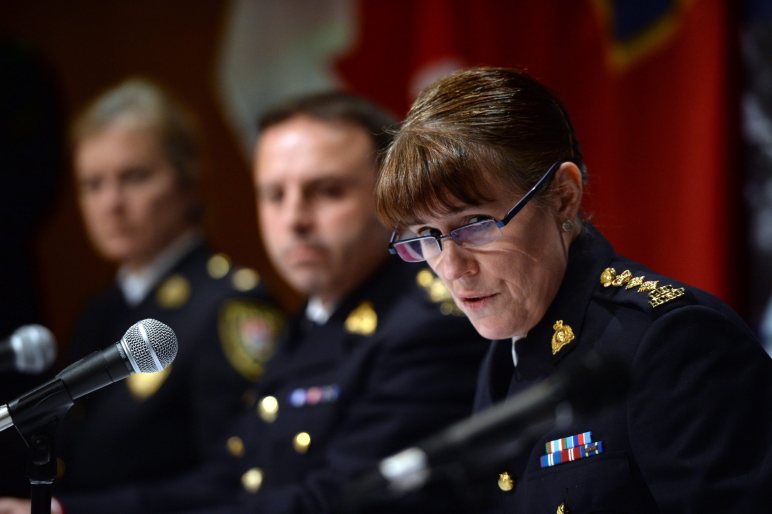
Well, it took about ten years from when RCMP management was called “horribly broken ; then a further two reports, one by Auditor General Sheila Fraser and the other by the Civilian Review and Complaints Commission calling for change in 2017–all before Ralph Goodale in January 2019 announced the formation of a 13 member civilian oversight committee to “give advice on best ways to manage and modernize the Force”.

Commissioner Lucki called the announcement in practised dramatic tones, an “unprecedented journey”, which will lead to a “healthier and more diverse police force”.

Several more months of delay followed before in June 2019 they finally named the chosen 13. The numbers are reminiscent of the last Supper and the 12 Apostles. One wonders how they arrived at this number? Who is the tie breaker and gets to play Jesus?

Religious comparisons aside, this whole political play raises the rather obvious question as to whether this is a serious effort on the part of government, or is this the latest of some pre-election pandering to the unwashed masses? Is it a band aid when many believe surgery is needed?

If one is to make a decision, one must first consider the makeup and structure of this committee.

The estimated cost for this committee is $1.56 million per year, not an unusually high amount (about $120,000 per year per committee member); especially when one considers that just a few days ago the Mounties announced their latest thumb in the sexual harassment dyke; another $100 million for civilian members or public servants harassed or hurt by those old, leering, ass grabbing Mounties of the past.

Suffice to say the RCMP is not investing a lot of money on this righting of the administrative ship.

The structure of this effort is also somewhat puzzling.

It would appear that this ‘oversight’ group is there only to give “advice”.

It is not there to re-write or reform policy, but to tell Lucki and Goodale what they would recommend. Goodale had already gone on record in that the committee will not be dealing with any operational policing matters. Goodale stated that the committee will not “have any direct role in policing operations, which will remain the purview of the independent RCMP”.

This of course raises the obvious question as to the effectiveness of a group which only gives recommendations to a politician who always has his finger in the air testing the winds of change. When pressed by a reporter as to the effectiveness of such a committee, Goodale defensively added that the Minister could issue “directives” based on recommendations coming from the Committee.

Commissioner Lucki who is about to lead the Mounties on this “unprecedented journey” said that she would meet the Committee for the first time “sometime” in “the upcoming months”.

With young Mounties jumping around trying to get into the station wagon, clearly Mother Mountie is in no hurray to get going on this trip of a lifetime. Needing to pump up the value of this exercise, she obliquely added, “their advice will provide additional, valuable perspectives to help us make decisions that support our people and the communities they serve”.

She later said that she planned on meeting with this group 3 or 4 times a year. Quarterly in other words. Now anyone who has graced the corridors of HQ, or any government department will tell you that nothing, absolutely nothing, gets done without dozens of “meetings” usually choked down between bitter thermos coffee and chicken wraps. Meetings, often to arrange other meetings– never-ending discussions which often spiral into infinity, no resolution in site.

Finally, the mandate of this current group of committee members is a mere 18 months. One would have to assume that they are then to be replaced, by another group of committee members and the process could start anew.

18 months is about time enough to order office supplies, get new business cards printed, and get some cafeteria jello in your belly.

Nothing in government gets done in 18 months; it’s a political, logistical, impossibility. It took six months for the government to decide who was going to be on the committee.

As to the members of this new committee, well first and foremost you better be on the Liberal end of the political perspective, conservatives or any other political stripe need not apply. The eventual chosen could have fallen out of any Liberal convention gathering in Ottawa– all would be waving their brightly coloured red placards with stencilled slogans crying for diversity and inclusion.

So who are the lucky thirteen, in the apparent overwhelming number of applications that were received? (the Liberals said the delays were caused by the many applicants)

The thirteeen are; Richard Dicerni, Leanne Fitch, Randy Ambrosie, Elaine Bernard, Angela Campbell, John Domm, Ghayda Hassan, Maureen Darkes, Douglas Moen, Wally Oppal, Kevin Patterson, Keith Peterson, and Emoke Szathmary.

There are a couple of eyebrow raising selections in this group, but most of the membership is quite predictable, at least in terms of their backgrounds, even if their names are not easily recognizable.

Seven men and six women. Good balance on the gender teeter-totter keeping in mind that whoever is going to play Jesus will need to be standing in the middle.

Five list themselves as academics or public servants, so the ivory tower will be looming large over the proceedings, government jargon will rain down, political niceties will be evident, Senate committee style protocols will be observed.

There is some police representation, albeit a little suspect.

From the policing world they chose a female, Leanne Fitch from that hotbed of city policing–Fredericton, New Brunswick. There are a total of 113 officers on the Force there, and Ms Fitch recently gained headlines in that city by not replacing retiring officers in a budget cutting initiative. But she is female and was named officer of the year by the Atlantic Women in Law Enforcement and the International Association of Women. Goodale could not possibly ignore the opportunity to hit so many boxes in one move.

There is also John Domm, a former Chief of Police for the Nishnawbe-Aski Police Service. At the time he was the Chief of Police they were not even a fully mandated police department which did not occur until 2018. He is also a member of the First Nations Chiefs of Police Association. Two more checks for Mr. Goodale.

Doug Moen, a lawyer and public servant helped establish the Saskatchewan Commission on First Nations and Metis Peoples and Justice Reform. Check.

Keith Peterson was a former member of the legislative assembly for Nunavut. Check.

Elaine Bernard is an academic and according to her listed resume is a “proponent of the role of unions in promoting civil society”. Actually, this could come in handy when members begin trying to figure out the union dues they will soon be paying. Check.

There is Emoke Szathmary, the former president of the University of Manitoba, an advocate for “diversity, inclusion and accessibility”. Check.

There is the head scratching appointment of Randy Abrosie, a former member of the CFL and the current commissioner of the CFL. Apparently he has “championed diversity”, which may explain his selection, but maybe he just needs to stick to making the Toronto Argonauts viable again and avoiding any talk of concussions. No check mark here.

Finally there is Wally Oppal, who I am going to proclaim as Jesus for the time being, as he miraculously walks over water into another government contract. The 79 year old Wally just does not seem to want to retire, but one has to wonder whether he represents a new, modern voice. This savant of double dipping goes on; and on, and on.

One must not get the wrong impression. All of these people are well educated, accomplished in their professional lives. They should have some good “suggestions” in areas where the senior management Mounties have proven themselves utterly of no consequence.

But there are many questioning this Committee and its ultimate effectiveness.

The always available for a quote Robert Gordon of Simon Fraser University said “I don’t think the mandate, at this point, is to undertake the significant restructuring and reform of the RCMP that is required…It’ll be settling problems that have arisen inside the house as opposed to problems that have arisen as a result of the structure of the house”.

Other questions arise. Will Mr. Goodale be still around after October 2019?

Will Commissioner Lucki turn into some sort of leadership firebrand, able to forge ahead without her political Prairie brother in arms, while relying on those Executives who now encircle her, many of whom who have contributed to this mess?

Maybe she underestimates the problems.

On May 30th, 2018 Ms. Lucki appeared before the Standing Senate Committee on National Security and Defence. Her primary testimony was about indigenous, harassment and diversity issues, which seems to be the focus in Ottawa, seemingly oblivious to the myriad more substantial issues facing the RCMP.

She ended and summed up her testimony this way: “I tell my staff, don’t ask me how to fix it because my answer is going to be “”We’re not broken””. Because we are not broken”.

“Do we need to innovate, and do we need to modernize? Absolutely…”

“We’re not broken and I am not here to fix it but we need to move forward from those past experiences, and if we don’t, shame on us. If you have a great idea of how you can help me to navigate things, don’t be shy to call me”.

Well Ms. Lucki, many believe that the RCMP is in fact kinda broken and actually we expect you to fix it.

So maybe call that Committee and maybe meet them every week, or every day, and not just in a few months; then listen to those voices who are from outside the RCMP, listen, and then have the courage to lead.

For all the rest of you out there, her phone number is 613 993-7267, because apparently she would like you to call with any ideas you may have.

(If that doesn’t work, the website tells yo how to fill out a “contact form”)

Currently, this committee in both form and structure looks like a political stop gap measure, one which garners a few headlines, speaks to the liberal left, and holds out little hope for the working officer.

So maybe Canadians should be calling 911 and not waiting for a callback from the Commissioner’s office.

Photo Courtesy of Matty Ring via Flickr Commons – Some Rights Reserved

Defending the only slightly Indefensible…

In the last few days, politicians, political pundits and radio and television personalities have been sending themselves into a tizzy, into another anti-police feeding frenzy. The water has been chummed this time by a videotape resurrected from a 2012 criminal case which captured an interview between a police officer and a 17 year old female held in an interview room in the West Kelowna RCMP detachment.

It was not dug up by intrepid reporting, Global News had the videotape sent to them. Now, the edited version has been virally shared, with Global News direly warning for those softened listeners, that it is “hard to listen to”; no doubt in an attempt to draw in more viewers as it is like saying “look away there is a car accident”.

It took hold and it has now been called “abhorrent” by our illustrious Ralph Goodale, the Minister of Public Safety, whose opinion blows in the political wind incessantly, shifting with any voter high pressure system.

My favourite Judge, Marion Buller said that the interview put on display “racist stereotypes of Indigenous women” and it rose out of the “historical tension” due to residential schools. Keep in mind that Buller finds all that ails Canada and the indigenous can be summed up in the residential schools.

Jenna Forbes of the Vancouver Aboriginal Transformative Justice Services Society was “outraged” and asked whether this type of questioning was “part of policy”.

On Simi Sara’s talk show on CKNW, which is affiliated with Global News –in her best holier than thou voice proclaimed that this was “unacceptable” and questioned whether the officer involved had been “fired” for such an atrocious breech of the public standards. Of course she was echoing and re-enforcing the prevailing wisdom spewing forth from the usual go-to for comment “experts”. Thirty second encapsulations bounced around the internet and across Canada, each indignant voice louder than the first, all calling for the head of the officer involved.

The new E Division Commanding Officer finally feeling the pressure weighed in on the video; announcing a “fulsome review”; and throwing a little pre-judgement in for good measure, “on the surface this case doesn’t appear to align with public expectations or the current standards and practises in place”.

Clearly she was making an attempt to say that was the way then, way back in 2012, but now, things are better.

In this more aware year of 2019, the RCMP , according to the Commanding Officer was now “supporting victims”, and members were being exposed to a “course recently updated”. The strategic spin doctors of the RCMP went further commenting that they were advancing “cultural competency training…trauma informed investigations and an advanced course for sexual assault investigation”.

The cultural reference was because all commentators noted in their reporting that the female victim was “indigenous”, intentionally putting a match to spark the gas line of indigenous reconciliation outrage.

Experts ran to the flame, braying about another example of the police being incapable of understanding their culture, just another example of the ill effects of colonialism.

The officer involved no doubt could not have felt more alone.

In viewing the video, nothing will get around the fact that the officer asked inappropriate questions. That is apparent and should never have happened, the questioning of whether she was “turned on by it at all” showed a glaring lack of knowledge of the nature of sexual assault.

However, if you examine the circumstances, it may be in-appropriate and completely unfair to rush to such a harsh judgement. The commentary on this subject comes from those that have never been in that interview room, let alone investigated any sexual assaults.

Some of the questions and the perceptions that arise from this videotape need to be looked at through an investigators lens.

First, this videotape did not surface as a result of a complaint coming forward from the female, or some representative of her about the investigation or the lack of charges. One should always be somewhat suspect about the release of information which may aid someone in their particular cause or pursuit.

It is the result of a civil suit, totally unrelated to the crime of sexual assault.

It is part of the evidence that surfaced as a result of an investigation into a social worker in 2012, Robert Riley Saunders. It was alleged that Saunders stole monies from some teens, including the female in the video; monies that were forwarded to them through the Ministry over a four year period totalling $40,000.00. Basically he was taking monies from vulnerable clients and putting it in his own bank account.

The female youth victim, one of a dozen, was forced, according to the civil claim, to living on the streets and into a life of drug addiction using meth, crack, cocaine, and MDMA.

On March 4, 2012 the female youth then made allegations of a sexual assault. The two defendants in the civil case, (as by now another female social worker was named as a defendant), countered, along with the girl’s foster parents, saying that the female victim was “falsifying the allegations for an excuse for using drugs”.

We also learn that this same female victim alleges that she was sexually assaulted by her grandfather earlier in life. She makes reference to it during the videotape. She says on the tape, “nobody believed me then and nobody believes me now”.

The officer responded, “I have reason to believe what happened in your past, but I do have a lot of concerns about your story here”. Earlier the officer, had said that he wants to probe “inconsistencies in her story”. No doubt some of that concern centred around the fact that the victim said she “didn’t not say no” to the alleged assailant throughout the assault. It should also be pointed out that she was making this allegation against an “acquaintance”.

This of course is possible as she said she was “scared” but some further layering of the explanation was needed.

All this is to say is that regardless of who is telling the truth in this case, what had been raised was a possible alternate story, a possibility that there was some fabrication on the part of the victim. To an investigator tasked with getting to the truth, you are now in a position where one must consider a couple of different narratives. Therefore that has to form part of your questioning of the victim. As a truth seeker any investigator can not have a tunnel version of the truth, one needs to walk the middle road, consider all possibilities.

There are some in this current political environment who believe that there is no such thing as a made up sexual allegation. This blogger is not one of them and has been involved in a number of investigations where some allegations were clearly false and were eventually proven to be in fact pure fiction. This goes counter to the #metoo movement and the left leaning liberals which constantly assert that no woman is capable of lying under these circumstances. That is just factually incorrect, regardless of how acceptable that dogma has become.

So this particular investigator, under these circumstances, has to consider that this particular female, who was living a street level existence and addicted to drugs, could possibly have an alternate reason for coming forward with this story.

One should also note that this female, in the days or months following this interview, wrote a letter of apology to the accused and the RCMP for making this sexual assault investigation.

Of course, it is now being claimed that she was “allegedly forced by her social worker to write letters of apology to the accused man and the RCMP for wasting their time”.

The female victim, now no doubt re-enforced with a lawyer and a civil claim now says that she has been “re-traumatized after watching the video”.

Again, this too could be true, but there is a great deal of evidence which this investigator could not ignore in terms of the line of questioning.

Secondly. The interview and the way it was conducted had absolutely nothing to do with this female victim being indigenous. Listen to the videotape and if anyone can find anything suggesting that this interviewer was being racist, or that some line of questioning would lead one to this conclusion, they need to step forward and point to it.

What critiques are doing is implying that the line of questioning is the result of her being indigenous, not understanding that this line of questioning would occur, and should occur if an investigator is divining the truth no matter who the witness may be. The wording of some of his questions can be criticized, the intent of his questioning should not be characterized as racist.

If a victim or witness or suspect has raised a different set of facts than that has to be explored. An investigator or an interviewer should be criticized for not exploring these and all venues, but the exploring or questioning easily leads to criticism in the techniques used by the arm chair quarterbacks.

Hopefully the police have not reached a stage in this country during an investigation when they can be told that there must be wholesale acceptance of everything being put forward. Remember, it has been said, “it is a basic truth of the human condition that everybody lies. The only variable is about what.”

There are also some questions that need to be explored about the time leading up to the conduct of this interview and of the logistics surrounding the taking of this statement.

For instance, was there someone monitoring this interview as is the usual protocol?

Was this investigator ever given instruction on interviewing techniques?

How many interviews of this ilk had he ever done? What level of supervision was given with regard to the conduct of the interview?

The RCMP management can talk about sexual assault investigator courses. But was this particular officer ever on one? Quite often those types of courses go to the specialized units, and the general duty cop is the last on the list for such specialization.

There has been a lot of questioning of why there was no female present acting on behalf or as support? One must remember that this person is a witness, a victim witness, she is not a suspect. Her story could be suspect, but she is not being treated as a victim in these circumstances, therefore there is no legal need for someone to be present.

Police also try to avoid having more than one person in a room for a witness interview, for fear of interference, or coaching. If she wanted someone there and had asked for it, it is likely that she would have had that choice if it would help her in feeling secure. But this would not be likely at the age of 17. If she had been under investigation for possible charges, then the rules would be entirely different.

So should the officer have worded his questions differently? Of course, the questions showed a lack of knowledge, not evil intent.

The ability to talk to people, to interview, is an art, learned over time and through repetition. You need to go “into the room” to get proficient. It takes years to be both a listener and a talker– especially when that person may be trying to deceive. Some say the skill is being lost in the millennial generation, dominated by the land of laptops, a growing perception that interviewing is a specialized skill that warrants specialists and special training. That is not the case, it requires a willingness to enter the interview room and run the risk of being fooled, maybe hundreds of times, and those that do should not be chastised by the 20/20 hindsights of the courts and the academics. Some would argue that it is the greatest skill needed by a police officer.

No doubt this officer will get some sort of discipline letter, but if that is the case, let’s give one to his Supervisor and on up the line.

To debase and libel this investigator as being racist is completely unfair and one would hope that it would be actionable.

And while you’re at it let’s give the likes of Marion Buller, and Jenna Forbes a ride in a police car for a couple of shifts, and let them do some interviews.

And as they enter that drab room at 2 o’clock in the morning, tired, and having to perform on camera for later court scrutiny– give them a hint…. not everybody tells the truth to the police.

Photo Courtesy of James Cridland via Flickr Commons – Some Rights Reserved

Dear Jennifer…

Ms. Strachan, let me be one of the first to welcome you back to beautiful British Columbia — the land of the highest gas prices, mountains, water, big trees, horrendous traffic, and where the Green Party has a pulse.

Being a born and raised Okanagan girl, no doubt you are feeling the geographic magnet that is B.C., and like Dorothy in Oz, you probably wanted to return– as there is no place like home. So with a click of those RCMP high-browns and the nod from Wizard Lucki you are now on your way.

It’s been awhile, over 16 years since you were in the policing world here in Lotus land and a lot of things have changed, so I feel bound by some inexplicable duty to give you at least a heads up on what to expect.

Let us first deal with the politicians in this land who you may end up spending some time with considering your new role. The Green party has locked arms with the NDP to see who can be more righteous; who can spend the most money, and clearly would have a love for any future unionized RCMP. It is a mixed political blessing though, as they are not pro-police necessarily, more in favour of groups like the Pivot Legal society, or the Elizabeth Fry Society.

The Federal world of Justin Trudeau and their policies still have an audience out here, even though they seem to be in a political free fall in the other parts of the country.

So don’t be fooled by the blooming Conservatism of the west throughout the Prairies. The right leanings of political philosophy has not seeped over the mountains, conservatism is merely a mirage in this marihuana infused land. There is more chance of Jody Emery being elected out here than a Jason Kenney.

President Bush was chasing Saddam Hussein when you left B.C.and the Americans were about to invade Iraq.

Paul Martin was the Liberal Prime Minister (probably one of the last times the budget was balanced).

Giuliano Zaccardelli was the Commissioner of the RCMP (who was impugned for irregularities in the management of the Pension and Insurance fund).

The RCMP was heralding the first female officer to be placed on an Emergency Response Team and the wave of female empowerment was in its infancy.

This unparalleled growth in female advancement is being mentioned because Commissioner Lucki decided that in announcing your move to head up E Division, she felt that she needed to underline your gender and not your curriculum vitae. It is a bit of the elephant in the room when it comes to the succession plan for E Division.

Ms. Lucki seems pretty one dimensional so far, aiming to fulfill her proscribed and dictated agenda, but in including you she makes you appear as a pawn in her Liberal sanctioned corporate strategy. It clearly drew attention to the possibility that your gender was a central characteristic that was needed for one to get this job. In the end it detracts from your resume, taints the appointment, and tends to confirm thoughts of the older guard.

For the record, I don’t believe the average RCMP officer gives a whit as to whether you are a woman, a man, or a variation of the two. Whether you are green, brown, wearing a turban, or wearing a Scottish tam means nothing in the current real world of policing. Gender does not imbue anyone with intelligence or leadership skills although it is quite clear that the two are equated in government corridors of power.

Putting all that aside, you are here to replace Butterworth-Carr, who heralded not only her femaleness, but her indigenous background, and she had zero impact. She didn’t stay long, enticed by an offer to join the politicos in Victoria. She used a quick stay on the job to springboard into the double-dipping pool, no doubt financially setting herself up for a lucrative run towards pension. It is hoped that you may still a little longer, as the wheels of government turn very slowly, the ability to have any impact takes years not weeks, so some time on the job is needed.

You will be hampered upon your arrival as senior members of the RCMP demographic bubble are leaving, the experienced baby-boomers are reaching their logistical end. Some, like Butterworth-Carr, have discovered a tunnel under the Georgia Strait which leads directly to the Provincial government coffers. The sands of time are changing, whether that is good or bad we will see, but there is little doubt it is creating a vacuum in terms of experience.

Since your departure from the West, almost the entire latter half of your career seems to have been focused on O Division and HQ.

You were the District Commander for N.E. Ontario from 2009-2012; then the Officer in Charge of Criminal Operations in Ontario (interesting in that in Ontario the RCMP is not responsible for most criminal investigations) from 2012-2016; then up the ladder once again to being the Commanding Officer of O Division from 2016-2018.

And of course what resume would be complete in this day and age without being the Officer in Charge of Operations Policy and Programs in Contract and Indigenous Policing in Ottawa. You then followed that by becoming Deputy Commissioner for “Specialized Policing Services”. A steady rise for sure but I will admit to being a little concerned about this rather central Canada version of the RCMP being the substantive part of your resume.

You probably don’t need to be reminded that there is a big gap between O and E, not just a couple of vowel spaces. The fact that you survived and thrived in this non-contract world can be either seen as a plus or a minus. You may be commended or condemned for being able to breath deeply in this rarefied air, as it is a milieu where most of us in the contracts would often feel out of place.

O Division has often been accused of riding and hiding behind the curtain of Federal statutes, where a lack of enforcement and investigational strength is a theme common to those that have worked in both areas. Enforcing such Federal statutes as the Migratory bird Act; or watching the Indigenous hustling cigarettes back and forth from the U.S; or helping illegal immigrants with their luggage; has never been considered the leading edge of police investigation know-how.

This lack of operational acuity has been the standard slam against this Province for years, whether management admits to this operational schizophrenia or not. Another example showed up in the last few days, in the Mark Norman case, serious questions are now being raised about this two year investigation in Ontario which resulted in a single charge. It has been stayed as the defence counsel seems to have been a little more thorough in their inquiries than the police officers that conducted the investigation and there are implications of political interference in the process. Further Mountie embarrassment is on the horizon.

The Force in general has not had such a smooth ride for the last couple of decades and there has been a number of serious setbacks during the time that you were part of the RCMP management power group. A growing legacy of mismanagement whether looking at the carbine issue, internal sexual harassment, and a large number of failed investigations.

Mountie salaries in relation to other agencies have tanked. Recruitment is down. Staffing levels have dwindled to lows never seen before. The Mounties are being questioned over their actions at every turn, whether it be the shooting on Parliament Hill, or the latest, the Mark Norman investigation.

I am not sure of what role you may or may not have played during this last number of years but there is no doubt you have been either a witness or a participant in some of the inane programs and policies which have left this agency in a state of major disrepair. It would be interesting to hear your take and historical role in this troubled time. Actually, it would be nice to finally hear from someone, anyone, of this management era who would admit to the errors, the wrongdoing, and try to set the record straight. Not crocodile tear apologies for things like harassment, but clear, concise explanations as to things like $100 million settlements. Maybe I am asking for too much.

The RCMP in its official bio of you points to your “passion for supporting others”. In 2014 you were given the Ontario Women in Law Enforcement award for the “Mentor of the Year Award”, and then in front of the International Association of Women Police you were also given a “Mentor of the Year Award”. Clearly a 21st century new policing virtue but who knew there was such a thing. Hard to argue with someone who wants to support you though.

You have been away from the dirt and grime of contract policing, living and breathing the filtered world of a Mountie in Ontario. Previously, you were in the corridors of subject matter experts, puffed up self-important people wandering in that dazed mind numbing bureaucracy all spouting pithy truisms at any opportunity.

You have now been freed and at a time in your career where you are un-flammable.

You are back to the heart of the RCMP Criminal operations block, where your Masters degree in “conflict analysis and management” will no doubt come in handy. You are being thrown into a logjam of a multitude of unaddressed and unattended issues, compounded by lacklustre stints of some of your predecessors.

You are about to be thrown into the wolfs lair. E Division with its constant stream of issues can eat and will eat managers up so you need to be careful.

I am hoping that this will be seen by you as a chance to speak out.

My primary recommendation is to be honest and straightforward and speak to the issues. Let’s hear what the RCMP stance will be if the Surrey RCMP get ousted; let’s hear what you are going to do about the vast understaffing that is in all corners of the Force; lets hear about gender and diversity promotions and your view of this dictated policy; lets hear about the politicization of the police force mandated role, which clearly is in full swing in Ottawa; and lets hear about upcoming unionization of the RCMP.

Even if one is able to be exposed to a truly honest appraisal of the issues and opens up the debate to real dialogue, you will have accomplished something not seen in many years in this Province.

The issues surrounding the RCMP will seem endless and at times look very bleak. The constant pablum being fed to the officers of just “you’re doing a great job” is both insulting and demeaning to their intelligence. Talking openly and honestly would be a breath of fresh air.

I am not optimistic, but I stand to be corrected, and will gladly sing the laurels of someone who walks the walk, speaks to the issues and puts on display possible solutions. It seems counter-intuitive that one needs to seek an open and honest management group from a police institution, but sadly this is now the case. It has been missing and it has caused irreparable harm.

Once that is all done, then you can go and enjoy your retirement….

I do wish you the best….

Signed:

A once faithful servant

Photo courtesy of CTV News via Google Images- Some Rights Reserved

Historical Unsolved Homicides…the value of the past…….

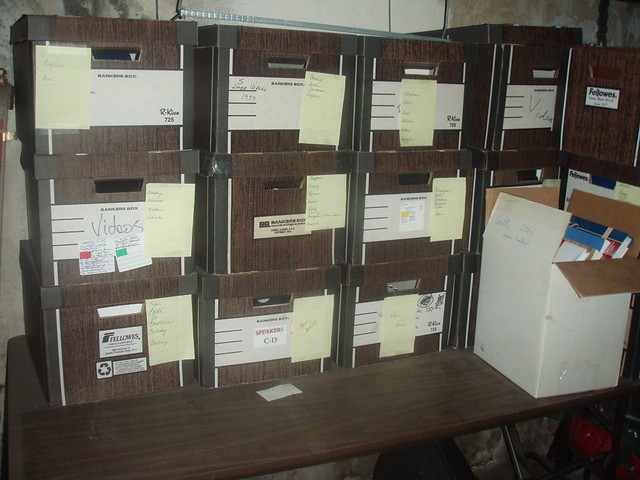
Hundreds of bankers boxes– dusty, worn and frayed at the edges, worn down by the weight of other boxes stacked on top, often damp in the corners, all lodged in inconspicuous backroom places. Out of sight and mostly out of mind, they are spread throughout this Province and the other Provinces; the responsibility of the RCMP, the OPP, the QPP and various scattered Municipal agencies. Historical mysteries sitting, undisturbed, and now in danger of being lost forever. 

Each box has scrawled on it in black marker, a number the start of which indicates the year of the file box being created; 73-1234 or 98-5678 indicating 1973 and 1998. Most will have a surname, also written on the outside of the box, underneath the number, the first indication of the box containing information on a life lived and in all likelihood a life taken abruptly away. A snapshot of a moment in time, life stories, lives abruptly ended. 

If one lifts the uniformly folded cardboard lids and peek inside one finds manila folders, each folder containing assorted government styled papers, each folder numbered, implying some form of organization. The order of importance often seems haphazard. There will be original documents, photocopies, carbon copies, compact discs, floppy discs, even blueprints and loosely bound photographs.  Each document part of a whole, each pointing to a dramatic and often gruesome ending to a life. 

Shoved into these boxes will be exhibits, exhibit reports, and boxes of 3 x 5  index cards, clues as to the relevance of the folders. Sometimes there are many of these boxes, with this same name, or number; the more numerous the boxes the more likely that this was a long case, or a more complicated case, or a case involving more than one person. The breadth and depth of the case in direct correlation to the weight and the number of  volumes. 

In police parlance these are “dormant” cases. Technically “open” or “still under investigation” as the police like to intone when asked; but they are in a deep state of slumber, never to be awoken unless something out of the ordinary occurs. Maybe a dictated annual review, which is usually sporadicly enforced, will sometimes force a reluctant officer to pull the case from the storage room, check the final pages for any “new” information and generally meander through the boxes.

Then, under most circumstances the boxes get put back, back into the darkened rooms, a single page added indicating that there has been no change in the contained information.  Some boxes may be difficult to even find.  

The paper or original information in these boxes is now being lost, inexorably beaten up by time itself and inadequate physical storage.  They all contain the most intimate of stories, real stories of people, their backgrounds, their lifestyles and their fates.  Some of the people in these boxes have prematurely met the ultimate fate, their deaths by a variety of methods only limited by the depravity and the darkness of the human spirit. Long gone to the eyes of the original investigators, but probably not forgotten. Every old investigator cognizant of the one that got away. 

They have not been solved, the killer remains free in the world, unless time and circumstances has also caught up with them as well. 

If one believes that history, or that records of the past are important,  or that every effort should be made to solve any murder, then you may be interested in this story. For this is a story of a largely ignored problem by the RCMP and other Municipal forces and the single attempt at a proposed solution, one which proved ultimately futile. 

This is a story of a need to archive and preserve police files.  It admittedly has never been fashionable to be interested in the library sciences, or the  similar but more current world of digital archiving.  It conjures up images of dusty books, microfiche and bespectacled introspective librarians, lonely figures confined to being the keepers of untold secrets. 

This is not to say that there is not public interest in unsolved homicides; one can tune into the many Netflix docs, the CBC, read Wikipedia, or the Vancouver Sun and find stories of historical murders, served up in some form of sensationalist fashion. The RCMP post pictures of historical victims and the Coroners office publicly maps out found remains cases. Unfortunately, this is mainly public fodder and a needle in the haystack in terms of trying to solve some of these cases, designed more to entice the reader or the watcher, designed for instagram investigators, not a serious study of this dark world nor a studied attempt to make a dent in the growing pile of the unsolved.   

There is an actual need for a concentrated effort to preserve, to digitize these paper files, to capture forever the information that could be lost to deterioration and neglect. 

In this Province and for most other parts of Canada, there is a relatively short historical period of time which is of primary concern. This is mainly the period from 1960 to 2003,  the dominant ages of the paper files in this relatively new country.

In general, around 2003 many police agencies slowly began to go to electronic formats, although it varies by jurisdiction. The paper format was gradually replaced, electronic data finally being made acceptable as a possible original document pushed by the quickly developing technical advancements.

It is somewhat ironic to understand that the paper age has an actual shelf life longer than the digital age, with experts estimating that paper, if properly preserved, has a life of about 50-100 years. (In our now digital storage era, the shelf life of electronic documents is only 10-20 years. Some think that since the newer material has been electronically filed it will last in perpetuity– a largely false belief.) 

However, now the paper files are of the most immediate concern. They are   reaching the end of their shelf lives, the ink is beginning to fade, the photos are beginning to deteriorate and the memories of the investigators are becoming faulty. 

The numbers of unsolved homicide files that are on “paper” in this Province are somewhat daunting. In 2016, when this blogger began to look at this issue, there were 900-1300 unsolved homicides held by the RCMP in the Province of British Columbia alone. There was another 200-300 which would be the responsibility of the Municipal Forces and there is no evidence to suggest that those Municipal agencies have been any better than the RCMP in their preservation. If one draws this issue outward, on a national basis, the situation would be magnified by 10 times. 

In British Columbia and in the Lower Mainland, since the birth of the Integrated Homicide and Investigation Team, they alone have generated at least another additional  300 “unsolved homicides”.  To be sure, those files are being captured in an electronic format, but not a format that is in a consistent with other agencies, nor are they in a position to be integrated and compared to other similar data bases. So the problem of being able to archive and preserve all information, on a fundamental basis, is growing every year. Solvency rates are also declining– further exasperating the issue. 

The police agencies are rarely asked about this archiving problem, but on that rare occasion that they are, the blame is usually placed on the constantly shifting policing priorities and jurisdictions. It simply has not been operational priority. 

Even if reviewed, there is no digitization of the file, so the only electronic reference to this file may be a name or a file number. The contents are not available to investigators without fully and physically reviewing the paper file. If an investigator feels an ongoing investigation may have some relevance to a historical file, whether it be a suspect or some other circumstance, they would need to go back and physically review the entire file, maybe on just a chance of finding some opaque reference. 

There is no cross-pollination of the information contained in those files, none of the more recent files can see or compare information on their files to older investigations.

The police agencies have a public relations mantra which is that no file is ever “closed” without it being solved. Technically they are right in their assertions, they don’t put a big “CH” (Concluded Here) on the file, but they are being totally misleading. They are trying to generate the impression that they are active and constructively reviewing and comparing these files on a regular basis. That is not true.

They are not digitizing these older files, and they are not actively investigating these files.  The only salvation for police management is that the public simply doesn’t know; the public assume wrongly, that all police files are instantly and readily available to all homicide investigators. 

There is one exception in this Province in terms of units re-investigating historical files in the RCMP. That is the Unsolved Homicide Unit of about 10-20 officers who review old files and selectively work historic files. Sounds good, but one needs to consider that each team in the group, may only take a new file every 8 months or so.

The other bit of sleight of hand is that the Unsolved Unit actually re-investigates only the “solved files”; files where a suspect has actually been already identified, but where for some reason the file was not being worked. It is hard to explain, but the fact is there are many files that have already identified suspects, but for one reason or another have been neglected. These files alone keep this unit busy and it only makes sense in terms of productivity to go for the low hanging fruit. 

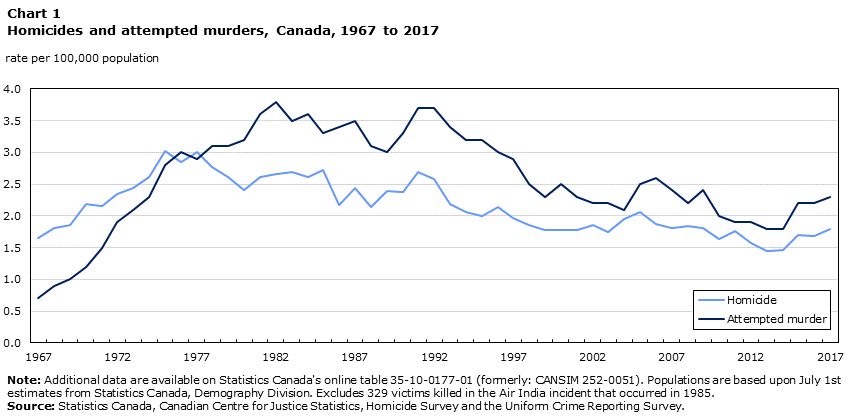
Now if you optimistically assume that this group does 3-5 files per year, you can easily do the math and see the finger in the dyke problem here.  There is no way to catch up or even make a dent in the pile. It is not for lack of effort by this relatively small unit, it is just a matter of numbers. 


https://www150.statcan.gc.ca/n1/pub/85-002-x/2018001/article/54980-eng.htm

The preservation of historic information is finally being recognized in various forms throughout the rest of society as various organizations are striving to cope with this growing issue.

Interestingly, some locations are actually using police inspired methods to try and solve their respective archiving problems.

At Harvard University they are in the process of trying to develop an operating system for capturing their paper and digital archives using workflow modelled after “police forensic standards”. The idea is to “create, authenticate, unimpeachable source data….” at a standard that would make the archive “suitable as evidence in a criminal trial”. Now, if capturing hundreds of homicide investigations seems to be a difficult task, Harvard is attempting to go back 375 years of history.

The problems they are encountering are similar to the police issues; files with floppy discs, zip drives, tapes, and cassettes. So they are not only capturing the information, they are also preserving the techniques that are needed to retrieve that data.

In California, in a former San Francisco Church, Brewster Kahle continues with the goal he started with in the 1990’s, which was to curate and create an “Internet Archive”. His lofty goal? To save all the world’s information.

Even to the pessimist he has been quite successful: 435 billion web pages have been preserved, 7 million books, 2.1 million audio recordings, and 1.8 million videos have been preserved and digitized, and now accessible to the Public. This archive draws 2-3 million visitors daily.

This is to say that although the archiving and digitizing of police homicide files seems both time consuming and manpower intensive, it is doable. It pales in comparison to these more ambitious projects and one would think that the goal of preserving these investigations and their contents dealing with the most heinous of crimes should be a laudable goal. But so far neither the police, or their respective government administrations, feel that is part of their duty or responsibility.

Which leads me to the more personal and subjective 2nd half of this story.

For two years, the writer of this blog, along with a couple of associates joined with the School of Criminology at Simon Fraser University, the Institute of Canadian Urban Research Studies (ICURS) and the School of Applied Science in a proposal on a non-profit basis to digitally archive these old historic homicide files.

It was supported by many people including the former RCMP head of E Division, a former VP and CIO for BC Hydro, the Dean of the school of Applied Science, and the School of Criminology at SFU.

Without going into all the details, the business plan outlined the logistics of locating files and moving them to a secure facility where the paper files would be reviewed, scanned, and converted to a digital format, one that would eventually be shared by all those participating. The reviewing would be done by PHD students in combination with the departments of Applied Science. SFU was motivated by being able to have access to a vast database for research purposes and the hands on review would give students ideas for that research.

There were many hurdles to overcome, as one would guess; security clearances, privacy issues, physical security issues, evidence chains, research controls and results, database construction, expert and standards of review, personnel, exhibit issues, and photo issues.

This is just to name a few of the problems, but over a two year period, these questions were for the most part answered and a proposal was put forward to the RCMP and the Vancouver City Police.

Initially the RCMP expressed interest, each meeting leading to a few more questions on how the operation will be housed and how it will work. Budget issues often came up (we estimated that it would take a financial commitment of 1/2 of 1% of the RCMP E Division Policing budget) The biggest concern of course, was the RCMP turning over, at least temporarily, unsolved homicide investigations to an outside party, even though they would have the appropriate security clearances. At one time they even proposed the possibility of giving up space inside their HQ at Green Timbers to get around this continuity issue.

The possible expandability of this proposal was obvious. Other Municipal agencies, other Provinces, and in a utopia, a database of all unsolved homicide files in the country. One could also bring in the solved files, as they too could have links to other investigations and be of great value.

Of course all the information would be owned by the agencies themselves, and throughout there would be oversight by those same police agencies.

“Digital 229” was the Project name and it was a non-profit enterprise. No one involved was paid during this two year period, all the extra effort was put in on a volunteer basis.

So what happened?

It was a surprise to some, but not a surprise to others who felt all along that the RCMP would have a difficult time ever climbing out of the proverbial operational “box”, the inability to go against the way it was always done.

There is no clear answer as to why the idea died. In the end, we were not given a reason which made any sense. It was un-ceremonious to say the least, as we only heard through the grapevine that negotiations had been terminated; nobody made any direct contact with any of the parties involved.

After many attempted phone connections to re-ignite the business plan, an Inspector (who had not ever been involved in the process) wrote to us and gave up an excuse over needing “sole source funding”, which had also been previously addressed, as the reason of not going forward.

Was this the real reason? We don’t think so. It was clear this officer was directed to kill the project at the direction of some higher ups and to come up with some justification for it.

At one of the original meetings with the heads of the E Division RCMP one officer said he had one question. “What if you guys uncover a number of files that need further investigation?” In other words, if this process we proposed actually assisted in solving some files or pointing to possible suspects, where would they find the resources to re-investigate them?

I’ll admit to being slightly dumbfounded, the question seemed to indicate that the police were concerned about the actual solving of homicides. This was a through the looking-glass moment, a parallel reality where the police were actually more concerned about political administrative repercussions more than the actual solving of cases.

But, so ended an extensive effort to address the unsolved homicides in this Province.

It was and is disappointing of course. What we clearly lacked was a political incentive, one fired up by government.

A few years ago in 2010, the National Inquiry into Missing and Indigenous Women was announced. Their mandate in particular was to dig into the police handling of these Indigenous files. Sources tell me that E Division quickly found a number of officers to travel the Province and review all of these files, clearly in the hope that there would be no problems uncovered.

Of course, they reviewed all these files and then wrote a report, but we have been told they were not converted to digital files.

The RCMP had no problem funding these specific reviews nor in finding the personnel to conduct the inquiries.

So while you routinely watch Netflix, or tune in to CBC True Detective, and assume the mantel of being the next Columbo, one should realize there is a far better way of actually impacting this problem. Less dramatic for sure, but truly effective.

They are currently ignoring the history and one knows what happens when you ignore history.

So the files sit in the boxes, languishing in the file rooms, all in need of a boring librarian. We can see them and touch them, they are contained, but they are hidden from view. The veil of secrecy enshrouds them, protecting them from public scrutiny.

It would seem that at the very least it is owed to the families who have been touched in the most profound way possible. We need to preserve their stories. And maybe, just maybe, give them actual hope. A concentrated and earnest academic effort is needed to make this possible.

As to the suspects, the criminals who killed and remain unaccountable–maybe it’s time for that slogan from history to be resurrected, you know the one, the one where the Mounties “always get their man”.

After all, the past causes the present and so the future.

Photo courtesy of the kirbster via Flickr Commons – Some rights reserved

Alas, the Emperor has no Clothes…

In British Columbia, or E Division (just for this blog we will let the E stand for Emperor) there has been one area of investigation where the RCMP has been woefully inadequate, for at least a couple of decades, whether one wants to measure it statistically or in terms of impactful effort.

In the last couple of weeks, that weakness has been revealed and underscored once again, this time by the NDP government and former RCMP Peter German, in a report on money laundering, a significant sub-set in the general category of financial crime.

Inside the police community it has been well known for quite some time, that the RCMP has ignored “white collar crime”, both in term of the allocation of funds or personnel. An often quoted inside joke amongst members in talking about job transfers, was throughout their career how they had ducked and avoided being assigned to the the “fraud” section. A small reflection perhaps, but this attitude of avoiding the financial investigative groups in terms of a possible career, is not a phenomena of the last couple of years.

The growth of internet crime in the 1990’s has thrown fuel on to this constantly burning flame and left Canada with a reputation of being a safe harbour for the financial criminal. This type of crime has often been portrayed as the “victimless” crime, after all the only ones being hurt were those cold-hearted bastions of industry– the banks. The police held this view for the longest time, equally guilty of looking the other way, the problem not worthy of serious examination or study. Even today, in terms of “strategic priorities” you will find it listed fifth, right after “youth” and the “indigenous”.

This lack of a concentrated effort has now been exposed once again, this time spurred on by a new found public and media interest who have taken to conflating money laundering with inflated real estate prices. Of course, there are many fundamental economic issues causing high prices in Vancouver but the one that seems to grate on the middle affluent is the thought of illegal monies from mainland China driving up the price in real estate or on luxury cars. Of course, there are also direct links to drug dealing and therefore the opioid crisis, the other hot button issue. The monies have been traveling through the only pipeline they seem to be able to build in this Province, the one of elastic bound $20 dollar bills pushed through the conduits provided by the casinos.

In the lastest instalment BC Attorney General David Eby called a press conference to discuss a finding of Peter German in his 2nd report on the subject in this Province. Eby claimed to have been so shocked by an early edition of these latest findings that he felt it necessary to go to the public now, not waiting for the entire 2nd report.

So what was the shocking revelation for the NDP?

Well, Peter German being the intrepid former RCMP officer that he was, decided to ask how many officers were actually on the job in terms of investigating money laundering?

The answer: Zero.

Now, one would think that this information would have been known before this time, as it seems like an obvious avenue of inquiry, even for us lesser informed. At the beginning of this inquiry it would have seemed logical to search out who the investigative experts were in the field? Apparently not.

The original answer of course was not zero.

We would not be able to identify the RCMP involvement, if they did not, at the very least try to cover or fudge the actual numbers, hoping of course that there was only the one question; no follow up, no probing allowed.

The RCMP answer to German was that there was 26 “positions” .

German knows the code of when the answer is “positions” and knew enough to then ask, well how many were actually filling those 26 positions?

Answer 11.

German decided to dig further and asked of those 11 how many were actually on the job?

Answer 5.

And those 5 that were actually showing up to work, he persisted, what were they doing?

Well, long pause, they are just packaging and referring all files to the Provincial Civil Forfeiture group.

Thus the secret was out of the bag. Afterword, if you had listened closely and put your ear to the ground outside Green Timbers, you would have heard the sound of bodies scrambling in and out of conference rooms, frantic terse phone calls, the bumping together of the police and political brains entrusted with these matters — stumbling and mumbling on how could they justify such an apparent illustration of lack of operational effort.

Even for those adroit at media manipulation in the “Strategic Communications unit” must have been struggling, proposing spins that at the very least would have been difficult to say with a straight face.

Bill Blair (who had apparently been warned by Eby and given an early copy of the report) started off by admitting that indeed there had been “significant cuts” in some of the Federal units. Then his political survival senses kicked in, and the Liberal godfather of pot began his spin: “We have made very significant announcement in Budget 2019, restoring the RCMP capacity and making significant new investments in intelligence gathering and furthering steps that will facilitate investigation and the prosecution of money laundering offences”. So in translation this means; yup, we haven’t been doing anything so far, but look out now, we are coming with guns blazing.

Assistant Commissioner Kevin Hackett who is becoming remarkably proficient with this kind of yarn spinning, no doubt through un-wanted practise, came up with a buzz worthy comment calling the report and the findings only a “snapshot in time”. If it was indeed a snapshot it must have been taken on a Polaroid One Step.

But like Blair, Hackett when prompted feels the need to beef up his response. He said that the report “didn’t capture all personnel who are involved in cases where money laundering is a component”. He goes on to say that there are over 40 prioritized “projects” underway, and guess what, they found out that “8 of them involve money laundering.” One wonders what standard may be in play here. For instance, a drug dealer being investigated who has a house or a car, could be referred to as being a possible “money laundering” case, using this criteria.

We should also point out that it would be somewhat negligent to not understand a bit of Peter German’s former history with the RCMP. Just six years ago, German was a high ranking officer in the RCMP, the Deputy Commissioner in fact, and as such was at one time technically overseeing financial investigations throughout Canada. He was in charge during the time of the Integrated Marketing Enforcement Teams. Remember them? They were “equipped to respond swiftly to major capital market fraud”. It was by any measure a total flop with three cases brought to court during their first nine years in existence. In essence these positions have been now rolled into the BC Securities Commission, but the RCMP still have a difficult time in providing an adequate minor level of trained officers.

In his 31 years with the RCMP, German did use his time wisely, earning an MA in Public Policy and a Phd in Law from the University of London. He apparently transitioned into an expert in the area of money laundering, wrote a book on it in fact. So someone at the 2nd highest rank in the RCMP (and was rumoured to be in contention for the Commissioner ) and was responsible for areas such as money laundering, did not make a dent in this problem or more importantly did not at least become vocal about the issue while in a policing position. But now, retired and running his own consulting business he has been hired to write a report on the problem of money laundering and throw dirt at the Mounties for their lack of effort. This is not to day say that this makes his report of little value, Mr. German is a well respected learned fellow, so quite the contrary, but one has to appreciate the irony.

Those of course are just the Federal job positions. What has the Province been doing? Well the Liberals being the party in power for most of this time in question have many questions that need to be answered, and the NDP is for the most part still able to feign ignorance.

Ex-RCMP and whistle blower Joe Schalk was the Senior Director of Investigations for BC’s Gaming and Enforcement Branch and was reporting this issue for many years, as early as 2012.

This branch at the time reported to the B.C. Lottery Corporation who would have received many of the reports issued pointing out the problem. They apparently didn’t like the attention it was getting and inevitably the relationship between the two groups began to deteriorate.

In April 2014, the Ministry of Finance conducted a review of BCLC and concluded that the two groups had become dysfunctional and “adversarial”. They recommended a full review of the entire Corporation. Meanwhile, in 2014 Schalk was fired for his efforts, a victim of the old management game very prevalent in this Province, that if you don’t like the message shoot the messenger.

Even with this kind of attention and concern, BCLC, according to German, was still accepting government awards for their exemplary performance.

Schalk was finally exonerated in German’s report for “nailing the issue” and continues to speak openly about the issue, even calling for a full public inquiry. The NDP are still holding back on such an inquiry, no doubt worried that if they let “it” hit the proverbial fan, how much is going to blow back on them.

As said earlier, this is all just one component of a much larger problem in this Province and in this country which has taken root and many can share in the blame; besides the police, Federal and Provincial governments, Crown Counsel offices.

In a recent poll, 36% of Canadian organizations say they have been victimized by white collar crime.

There is the fallacy that most of this crime is too sophisticated to detect, when in fact 61 % of that crime is done by a perpetrator inside the organization. The cost for this; 1 in 10 organizational victims are in excess of $5 million.

According to Criminal Intelligence Service Canada, organized financial crime, including debit and credit card fraud, totals over $5 billion per year. That works out to a cost of roughly $600 per family in Canada.

Canada has produced some famous fraudsters in the past; Harold Ballard the now deceased but former owner of the Toronto Maple Leafs, who was convicted of 47 counts of tax evasion, Alan Eagleson the hockey agent, and Conrad Black who in 2007 was convicted of using $60 million in company funds. Mr. Black, now apparently reformed, writes a column for the National Post.

Among the 35 member countries of the OECD (Organization for Economic Cooperation and Development) bid rigging, cartels, and collusion are estimated to add 20% in costs to any government procurement initiative around the world.

Suffice to say, it is fair comment that there are some financial crime issues in Canada, not just British Columbia.

The RCMP web sites are misleading and have not been updated if one was ever trying to untangle and look behind this bureaucratic veil of secrecy. There are still references to IPOC (Integrated Proceeds of Crime) who on their site point to successes in 2006 and 2009. They are references to IMET (Integrated Market Enforcement Team) which have virtually disappeared, many members re-assigned, some others melding into the BC Securities Commission. IPOC was reviewed back in 2010 by Public Safety Canada and described their operations being severely impacted by “partners leaving…vacancy…staff turnovers..and recruitment issues..are all contributing to less than optimal performance” . It wasn’t working even then.

The RCMP still list having 27 Commercial Crime Sections across the country. They don’t really.

Re-organization in the RCMP has become a dogma, which has been combining and mutating with aggressive promotions and the push to specialization. It has been in full swing over the last number of years and German even makes reference to 2013 as being one of the recent turning points in this current system.

To understand the depth of the problem, one has to understand the depth of the re-organization, and the vast number of personnel involved.

There are four groups of agencies involved with the potential to be involved in money laundering and other associated financial crimes. The RCMP, CFSEU-BC, OCABC, and JIGIT. (Never doubt for a moment the policing ability to come up with acronyms- JIGIT being a personal favourite)

The RCMP has a Federal group named the Federal Serious and Organized Crime Unit (FSOC). It is in this group that you will find a series of Teams and officers (a team usually being about eight). It was about 2013 that various separate departments, drug sections, commercial crime sections etc. got rolled under this Federally controlled apparatus. Operational direction and the assigning of priorities began coming from Ottawa, national priorities were going to outweigh local or Provincial authorities.

Two of the teams in this FSOC deal now with Financial crimes and supposedly have some expertise in the money laundering field. Of course this is the group that German was told had 26 positions, but there were only 5 actually working, and those 5 were simply bundling up investigations and passing the information to BC Civil Forfeiture (yes, another group).

Sources estimate that there is about a 30% vacancy rate Canada wide in the Federal positions being overseen by Ottawa, and this staffing problem is clearly causing major disruptions in any consistent effort in any of these specialized fields.

Besides FSOC and the RCMP, then there is the CSFEU-BC (Combined Forces Special Enforcement unit) whose primary mandate is gangs and gang activity. In addition there is OCABC (Organized Crime Agency of BC), a Provincial organization which is the new iteration of the old CLEU (Combined Law Enforcement Unit). Confused yet.

Wait, there is still JIGIT which is the Joint Illegal Gaming Investigation Team. This was formed in April 2016 and consists of 36 police officers and over 200 civilian personnel. They claim to have 8 active investigations. At first glance, no matter what file/member ratio you may employ, this seems pretty light.

CSFEU-BC and OCA-BC are both managed by a Deputy Commissioner of the RCMP; in this case, Mr. Hackett. So you can see why he feels the need to defend. In his defence he very cleverly talks about the investigations inside CFSEU (40 ongoing investigations) thus avoiding outing the Feds.

The Senior Management team has representatives from all of the agencies, OCA, RCMP and CFSEU.

CFSEU and OCABC has over 400 officers and civilians.

When you consider the number of personnel involved in all these groups combined, it would seem difficult to argue that the number of officers is insufficient.

What may be the crux of the problem, what the issue at its core may be more simple at least in broad terms.

The RCMP has a now ingrained inability to be forthright; the inability to say things were tried and didn’t work, the inability to speak to their political masters and say there is not enough resources to be all things to all people. The no job too small or “doing more with less” is a never ending conundrum that leads nowhere.

Like all government groups, failure is not and can not be an admitted option. Everything is always a success, no matter how dismal the effort or how big the lie. Honesty about their lack or strength of effort has been side-lined and obfuscation is the media tool.

They just can not bring themselves to admit that they can not do it all. They are no longer capable of being a one stop shop on the Federal or Provincial level. When you combine this with low priority being given to financial crime, with the concurrent need for highly specialized academic personnel, what results is a smorgasbord of uncoordinated piece meal investigational files on all levels. Any substantial efforts are being frustrated from the very start and often met with failure. (You will note that we haven’t mentioned the most recent abject recent failure in the Silver International Investments case, which deserves attention on its own)

Throw in governments always in flux who are continually altering the political priorities, a dis-connected Ottawa, insufficient funding in both the needed technology and personnel and a recalcitrant justice system and you end up with zero prosecutions.

The same number now apparently working on money laundering.

Christine Duhaime, an financial crime and money laundering specialist with Duhaime Law said “It’s pretty serious, it’s saying there is no oversight and no real enforcement in this area for the whole province–it’s a little bit crazy”.

A telling snapshot for sure, let’s hope that someone, sometime, takes a look at the issue with a little longer lens.

Photo via Flickr Commons by Andrew Kuchling – Some Rights Reserved

Show me the Money…

A rumour was recently heard that the RCMP may be in line to get a 12% pay raise; but before everyone jumps for joy and goes out and buys the new F150, or puts up that downpayment on the east end fixer upper, all of which you have been putting off for the past seven frozen years– there was a bit of a caveat in that rumour. There was no term or length mentioned, nor was it thought to be retroactive. So if 12% seems great, imagine it spread over the next five years and it loses some of its lustre.

A needed pay raise seems to be on the lips of almost all officers in the RCMP. Meanwhile they wait. The yet to be certified National Police Federation (NPF) state that in terms of their priorities, an interim pay agreement is the first order of business should they reach the goal of certification.

The NPF are currently in a holding pattern, much to the dismay of many RCMP members. They are being held in abeyance by those upstart C Division members, otherwise known as the QMPMA, who are challenging bill C-7, which allows for the unionization of the RCMP, but it only allows for a single representative union. The votes are in throughout the country, but the results are not being revealed until such time as the challenge launched by the QMPMA has been reviewed by the Federal Public Sector Labour Relations and Employment Board (FPSLREB)

The Quebec members are challenging the constitutionality of Bill C-7, in particular where the Act calls for a single police voice. Though the Board can not change or amend Bill C-7, they can decide whether the law infringes on Quebec members Charter rights. The hearing is currently scheduled for March 26-27, and a ruling should be given within the week, or so they promise.

Clearly the NPF does not want a ruling in favourof the QMPMA and its 800 members; it argues and wants to represent Canadian RCMP officers as a whole, not a sum of many parts.

The QMPMA for its part and partially in response says it is being unfairly scapegoated for these further delays. It has argued in the past and continues to argue that there should indeed be one union representing Canadian Mounties, but feel that Quebec, because of its cultural and language differences, should have a strong position or seat at the executive table. They say there are “geographical, functional, administrative, and linguistic characteristics” which make them unique.

To reflect their distinct nature, for instance in the proposed seven member Executive counsel, they believe that there should be a guaranteed Vice-President position coming from or guaranteed to the QMPMA . The problem is arguably two-fold; only 4.4% of the RCMP works in Quebec so the mere numbers do not demand such over representation and secondly; it is the question as to whether cultural and linguistic differences are measurable in terms of police work. Many would say that the police role in a union or bargaining unit, should be relatively blind to cultural differences, thereby making it a moot argument.

Whether one believes that a special seat should be reserved for Quebec members is a political issue, it is not an argument that is impactful in terms of the economics of labour. The members will need to decide, but in the meantime this issue seems to be destined to be played out further for at least the short term. If the Board rules in the favour of the QMPMA, one could only think that this would force some serious coming together on the part of the NPF to try and resolve the issue, rather than force further delays.

Politics aside, there is little argument over what constitutes the primary issue in the short term, everyone seemingly is banging the same drum of necessity for “a pay increase”. They reflexively point to the current seven year freeze on the RCMP salaries as the obvious and primary justification for a pay raise. The freeze has meant they have fallen behind the other police forces which form their universe.

The RCMP salary structure over the years has always relied on the police “universe” which is made up of other municipal and Provincial agencies who negotiated their own separate pay increments. The Mounties simply attached themselves to these groups and watch as the “ratcheting” effect forces the Federal government to try and keep the RCMP officers in the same general range– an apple to apple comparison they argue. Just as clearly, the RCMP management has been woefully inadequate in their ability to keep up, as there are current claims that the membership is now 65th out of 80 police agencies. Implicit in this argument of course is that the RCMP by its very nature should at least be in the top ten.

Is this an opportunity to address some of the glaring problems of the salary structure?

Every officer in the RCMP are viewed as being the same, doing the same job, interchangeable. Therefore one raise, one salary fits all. It falls from this logic that everyone in the RCMP is equal in value, therefore, the pay should be exactly the same across the board.

Clearly this automatic pushing up of salaries has stalled in the past 7 years, but it is equally clear that there are some who are studying this ratchet effect, and questioning the viability of continuing with this same model. It naturally leads to the discussions as to whether police officers are becoming unaffordable.

Will the discount coupons that municipalities in this country get by using cheaper Mountie labour be removed by unionization? Will political control of the police service in their community be more viable if they are paying the full bill when the discount disappears as a result of increased salaries.

This one size fits all in terms of pay raises has pointed to some recurrent issues over the years which have never been dealt with in any substantive way. The single pay structure has created holes in the system, impediments that have negatively impacted such things as recruitment and retainment.

For many years there has been internal and eternal debates across the country. Does an RCMP officer stationed in New Brunswick deserve the same pay as an officer working in Surrey? Does an officer working in uniform on the streets deserve the same salary as an officer working in an administrative function?

Is it time that the RCMP gives some consideration to the clearly obvious, that all jobs in the RCMP are not the same, and all officers are not working in the same location.

If one looks at some agreed upon factors for employment classification programs which lead to a determination of a salary, in most jobs and in most circumstances, they can be summed up in nine categories:

  1. geographic location
  2. Industry – what industry are you in? are you a lawyer working for a large firm, or are you a public prosecutor
  3. Education
  4. Experience
  5. Performance Reports
  6. Whether or not your’e a boss- Supervision
  7. Associations and Certifications
  8. Hazardous Working Conditions
  9. Shift Differentials

What is interesting in reviewing these categories is that the one size fits all argument of the RCMP does not fit into most of these factors. Geographic location, industry, education, performance reports, associations or certifications have no bearing on the actual salary determination in RCMP negotiations with Treasury Board. Five of the nine factors that should be considered are not in the RCMP model.

The disconnect is the most obvious when one considers the geographic factor. There is no allowance for where you live in the calculation(with the obvious exception for isolated posts). An officer can pay $300,000 for a house in the Maritimes where in Vancouver the average house price is $1.2 million. When there is a requirement to work and live in the area you are policing, how can this still not be a factor.

A New Jersey police officer makes about $70,000 per year, whereas an officer in Wyoming makes about $40,000.00 per year. Almost the entire difference is due to the geographic component.

The average Toronto police officer makes $98,000 and more than half of those officers make over $100,000. This partly comes from the labour argument of having to live in an expensive city. Burnaby or Richmond RCMP officers can easily make this same argument, but it is not quite as simple if you are in fact working in Weyburn, Saskatchewan.

Going down the factor list. Education is at a bare minimum to get into the RCMP, let alone a consideration in determining ultimate salaries. There is no accounting for graduate degrees or specialized courses of study when factoring in how much money someone should earn.

Experience is not a factor, the only pay raise that is expected is one where one is promoted, where one would be taking on supervisor duties. There is no value given to someone being on the job for a length of time. A twelve year member makes the same amount of money as the three year member. Somewhat ludicrous when one considers the amount of “learning on the job” that is experienced and is especially particular to police work.

How well you do the job is not really a salary issue either. Yes, there are performance requirements in terms of bare minimum, but the officer doing a great job is not rewarded through any kind of salary renumeration. There is no structure in place to measure or implement such a scheme.

There are a couple of factors that do apply currently. There are in fact shift differentials in place, and everyone points to the hazardous nature of the job.

One should be cautious about the hazardous nature of the job in arguing it as a primary factor. It is not as cut and dry as imagined by the general public. Statistically policing is not the most dangerous job, in fact it is not even in the top ten. The QMPMA argue in their web page writings, that their officers are on the “front line” implying a greater need for consideration. Are they on the front line in a non-contract Province?

Statistically the most dangerous policing job may in fact be highway patrol, or an officer working in a rural area, far from backup.

So is it possible in this age of data and data scientists that some form of algorithm could calculate some base salary which is consistent with the specific job, in a a specific location, or take into account some specialized training or experience. Could it be loaded in such a way that measurements could be made of the level of hazard to a specific job, that there would be greater compensation for those working in uniform interacting with the public everyday? Could those calculations make it more palatable to be working in shift work, in uniform, in an expensive city? Could this be beneficial in keeping officers on the road? Possibly.

In a discussion of RCMP salaries and the expectations of a pay raise, one would be remiss if one did not examine the current salary figures, especially in comparison to the general public. Consider the following:

The average police officer in the U.S. makes $54,462 as of January 1, 2019. Now, this is U.S dollars, so let’s add another 25% to take into account the American dollar. That would be an additional $13,615,50 for a total salary of $68,057.50.

The RCMP fresh from Depot Mountie makes $53,144 and at the end of 36 months is making $86,110.

The average RCMP officer makes $94,081.

To be in the top 10% of compensation for all employments in this country you need to be above $93,000. So the vast majority of police officers in this country, and in particular the RCMP are already making in the top ten percentile. If one is going to argue financial need, it is tentative ground. The highest paid public servants are currently, police, fire and ambulance workers.

When one considers all these factors and arguments, is there any expectation that this is anything more than food for thought?

No.

It seems unlikely that any union in its early stages could venture down the road of changing the current salary structure and in fact there may be no current capability to undertake a more complicated formula. And, everyone knows RCMP management is not exactly a troupe given to improvisation. And, if you listen closely you can hear the howls of dismay even on reading these suggestions, as there is normally not much sympathy in the East for the members on the West Coast. A brother and sisterhood maybe, but when it comes to money most Mounties have historically been quite insular.

If one is reading the tea leaves, in terms of where the Mounties are headed both in salary and in terms of the structure of the whole organization, one also can not discount the recent developments; the emphasis on Federal over Provincial policing; Surrey the largest Canadian RCMP detachment going to a Municipal force; the removal of the administrative role for the RCMP; an advisory Board to begin exerting its influence over change in the RCMP; and a growing concern amongst the public and the politicians as to the ratcheting of police salaries.

This also may be for nought as the other rumour being heard out of Ottawa is that the RCMP may be aiming to get out of contract policing altogether. Throwing uniform policing back to the Provinces, and heading for an FBI styled RCMP. Commissioner Lucki to be the next Herbert Hoover?

Either way it is clear that any new union is going to have its hands full in the next few years and hopefully it will not end up spending its time just re-arranging the deck chairs on a sinking ship.

It is difficult to imagine Mounties arm in arm, bullhorn at the ready screaming “Workers of the world unite”! And it may be a little premature to picture the red serge marching in lockstep to the Communist Manifesto, as imagined by Karl Marx and Frederick Engels.

Maybe Bob Dylan summed it up the best.

Photo courtesy of Flickr Creative Commons and “Images Money” with Some Rights Reserved.

Jumping Ship….

If you have been keeping track you may have noted that some significant officers of the Executive rank of the RCMP have decided that now is a good time to get out of Dodge. Maybe most noteworthy is Kevin Brosseau the Deputy Commissioner, who was in the running for the Commissioners job; and a couple of months ago another Deputy Commissioner, Joanne Crampton, announced her retirement. She too had been in the running for the job of Commissioner. So both have announced their departure after they were jumped over in terms of rank, by the eventual winner of the Commissioner sweepstakes by Goodale friend Ms. Lucki. In Ottawa, where the Peter Principle seems to run freely and where nepotism is of second nature, one would have to assume that both saw the writing on the wall, that the ultimate brass ring was now officially out of reach.

Meanwhile, out on the West Coast, another darling of the political identity movement, Deputy Commissioner Brenda Butterworth-Carr has also announced her retirement as head of E Divsion. She too was rumoured to be in the running for the Commissioners job and according to some reports was in effect the front runner. Many speculated that the person who was once trumpeted by the Vancouver Sun as a “trail-blazing First Nations leader” saw the grass growing greener on the other side of the political fence, time to put the resume to monetary use.

It is not unusual of course for people to depart, especially when most have a furtive eye on lucrative second jobs, and ex Mounties seem to have a knack for not wanting to retire, and often have ambitions of joining Canada’s 10% economic elite.

To accomplish this they seem to have developed the ability, like “Bumblebee”, to morph into jobs where their lack of expertise does not hinder their aspirations. There are many examples, such as Bill Blair who mysteriously found a new calling in the marihuana industry as a preamble to launching a political career with the Liberals; Julian Fantino, former Chief of the Toronto Police Service who once called the legalizing of marihuana equivalent to the legalizing of murder; and a former West Vancouver Police Chief, the illustrious Kash Heed, who never saw a camera he didn’t like, or a podium he didn’t want to stand on, has also been advising the marihuana industry for years.

Ms. Butterworth-Carr not letting any grass grow under her feet, has joined the ranks of the disaffected and announced her new 2nd job as the incoming Deputy Minister and Director of Police Services for the Province in Victoria; replacing Clayton Pecknold. Needless to say, she has raised a few eyebrows, and concerns about this possible conflict of interest.

Ms Butterworth-Carr was not in her current role as the titular head of the RCMP in British Columbia very long, only have taken the job with great fanfare in March 2017. So she has been in her current top post for two years, maybe long enough to get a cup of coffee at the in-house Green Timbers Tim Hortons, but clearly not enough time to undertake any initiatives of significance.

Her CV is replete with First Nations references and the requisite buzz phrases: “strategic planning” “coaching” “mentoring” and the always suspect assignments of community policing, employee safety and crime prevention. It is therefore fair to question her qualifications for the job as deputy minister where she will be “superintending” policing in the Province, “establishing Provincial Policy standards” and “inspecting and reporting on the quality of police services”, amongst and including the municipal police agencies.

Between her anticipated pension and her new salary, an educated guess will put her pension and salary income over $300,000.00. Clearly she will be joining the select few with a combined salary as much as the Chief of Vancouver City Police and far in excess of any other police chief in the Lower Mainland.

But qualifications and exorbitant compensation aside, what is more curious is both the timing and obvious conflict of interest in this appointment.

During her brief tenure, she saw the City of Surrey vote to pronounce that they are going to go to a Municipal force, a major move which must have sent some shock waves even to the often seemingly disconnected Ottawa RCMP establishment.

As Professor Rob Gordon of Simon Fraser University has said this move by Butterworth-Carr has left him “astounded by the bravado with which they have gone ahead and done this”. What he is referencing is that the City of Surrey must submit a plan to the Province to leave the RCMP, which will need the approval of Mike Farnworth the current Minister of Public Safety and Solicitor General. An advisor to this application will be none other than Butterworth-Carr in her new role, the former RCMP spokesperson and defender of the Surrey RCMP.

To be fair, Butterworth-Carr has never said she disagreed with the people of Surrey a possible indication that she is at least politically savvy enough to avoid the obvious pitfalls. However, since the election in Surrey, she has clearly been directed or taken her own initiative to show and demonstrate how the RCMP, in her opinion is doing an exemplary job in Surrey.

There was evidence of this public defence during a bizarre interview with Global news.  She along with Assistant Commissioner Eric Stubbs and Assistant Commissioner Kevin Hackett presented themselves saying they wanted to speak to the Forces “successes and challenges”. So on December 17, 2018 the three sat, looking uncomfortable, to clearly try and curtail the buzz over the election in Surrey and all the negative news which has been circling the RCMP over the last several months.

They clearly were not prepared despite this interview being by their request. When asked what were the big successes in 2018 Ms. Butterworth-Carr pointed to the “technological advancement” of the RCMP; that they were “piloting digital evidence” and “advancing interactions with Crown”.

If that wasn’t head scratching enough, they promised they were going to be more “tenacious with the social media environment” and they were going to “get out in front of news stories”. They said that the RCMP needs a “progressive culture” and that they were working at improving the “workplace culture”.

Of course the Global news anchor recognizes government nonsense patter when she hears it, so she then asked about the Lemaitre inquiry. Ms. Butterworth-Carr said that she was not in “a position to respond to that”. There was no follow up question, so it was never asked why the head of the RCMP for the entire Province would not be in a position to respond to this issue. The RCMP have been perfecting for many years the old dodge and hide but this defied normal logic.

When asked about the Surrey election and the move to go to a municipal police force she said that it would be up to her Federal and Political masters (she of course did not mention that she was heading over to be one of the politicos -a fact that at the time of the interview must have been known to her)

She did say that the RCMP is “delivering an exceptional service”, which she also had mirrored in an internal memo to her RCMP brothers and sisters saying that there had been “great work done by the RCMP”.

Near the end of the interview, as if he had been jabbed under the table, Mr. Hackett then jumped in to this fragmented interview, with the observation that in travelling the Province with Mr. Stubbs they had noted that there was a lot of “positivity out there”.

So there you have it, the three top Mounties in the Province and their take on the current political and criminal climate in British Columbia. Is there any wonder this group is in trouble or that Ms. Butterworth-Carr is bailing out? With their promises to meet with Crown more often and maybe sending their files in PDF rather than on discs, the RCMP officers watching this display must have felt positively giddy about the future.

It was a glaring example of the total lack of leadership in the RCMP. From top to bottom there is a shortage of principled, dynamic, and informed leadership. Maintaining the status quo, doing the same thing over and over again and but expecting different results and expecting the general membership to fall in line, is in fact the sign of insanity,

The system is such that the commissioned officers of the RCMP need to comply with and be part of an accepted creed of conformity to government and political needs, and they literally spend hundreds of hours playing the system, learning the new terminologies, and gaming the new political identities.

But just once, you would hope that someone arrives at a higher level, with some vision of the future, with some solutions to the pressing problems, and with some ability to communicate that vision. Just once, you would like to see some of them stay around long enough to enact that commitment. Just once, you would like to see someone turn down the rolls of money being wafted tantalizingly under their noses because of their inflated sometimes conjured resumes, and instead hang around long enough to have some success.

This group needs to spend less time on LinkedIn, more time on honesty and integrity, and less time echoing their political masters. In the wise words of Sir Winston Churchill, “kites rise highest against the wind, not with it”.

Leaders become leaders when they step forward and only when they are accepted by their followers. The RCMP is in desperate need of a leader unencumbered or enamoured by trappings or future benefits.

In terms of Ms. Butterworth-Carr and the announcement of her new job, the management of the RCMP and the NDP lead government will likely put on their blinders once again ignoring the obvious conflict and maybe a little jealous of her financial windfall. The police rank and file will resignedly shrug their shoulders, give a ‘told you so’ smirk, and carry on, as there is no other choice.

Potter Stewart, a former associate justice of the U.S. Supreme Court said, that “ethics is the difference between what you have the right to do, and what is right to do”. Sadly, there seems to be no one in the upper echelons of the RCMP or in the current B.C. government that seems to understand that distinction.

Photo Courtesy of DVIDSHUB via Flickr Commons – Some Rights Reserved

Want to be a Terrorist? Call the RCMP help line..

In the last couple of months, the RCMP and its multiple investigative arms have been dealt several kicks to its institutional gut. They have had three major cases stayed in the last couple of months; one involved money laundering, another drug smuggling, and the third was a case of domestic terrorism. They say time heals and thanks to our speedy court system, all of these cases have had some years pass, making us forget the RCMP management bouquets of self-congratulations and the blowing of trumpets at the time of the original arrests. All three of these cases deserve scrutiny and demand some explanations, however the novelty of the terrorist case may be the most interesting and the most concerning.

The RCMP foray into the case of domestic terrorism involved the two now infamous “targets”; John Nuttall and Amanda Korody. A startled public expressed shock and consternation, as for some reason most Canadians still believe they are immune to this kind of thing, while the media tried to outdo each other with terrorism hyperbole.

A trial and the appeal courts five years later however found something quite different. After the initial trial the presiding judge basically overruled the jury, and announced that the two had been entrapped and entered a stay of proceedings on all charges. A couple of more years later, the Appeals court agreed with Judge Catherine Bruce, that this was a “clear case of police manufactured crime…”. That the police “did not disrupt an ongoing criminal plan” as had been advertised, in fact the police conduct of this file was a “travesty of justice”. Harsh words, even for a court system which is never reluctant to put the police on trial.

It is too easy to just say that the police “screwed up” in this incidence. One needs to dig down, sift through some layers of bureaucracy and investigational mandates, to begin to understand where this case went wrong and to begin to understand who should be accountable.

One has to start with the “targets”. Who were these terrorists, Nuttall and Korody? Well, their most notable feature may be the fact that they were two heroine addicts on the methadone program; they did not have their own residence living with Nuttall’s grandmother in a basement suite. They were on financial assistance, spent hours watching endless videos, and, rarely left the house. But somewhere in this sad, desperate, and often mindless existence, Mr Nuttall and Ms Korody decided to convert to Islam. Why? That will be left to the psychiatrists, but in hindsight their religion choice was probably the most significant factor. They likely would have gone unnoticed if they had turned to a different God.

It was 2013, the year of the Boston Marathon bombing by the Tsarnaev brothers. Islamic terrorism around the world was front and centre, both in the news and in the minds of the Ottawa Federal authorities. It would be a year later when a lone gunmen known in B.C. circles as “Muslim Mike” would attack the Parliament buildings in Ottawa. The political climate and the police were on edge. And it was the beginning of this mis-guided investigation.

There was a political environment fermenting in Ottawa, bubbling over with a need to thwart any budding terrorism. A need for the RCMP to prove itself to the world of our contribution to the righteous fight against terrorism. Instead, this investigation would turn out to be a shining example of institutional investigational “tunnel vision”, susceptible to over reaction and seeing ghosts where none existed.

It is also a story of how once the police machine is grinding along it is very difficult to reverse or stop the process, often rolling over any contrary narrative, or any human rights in the process. It is a difficult to explain, a mindset of how everything undertaken must be a success, there was no other option.

Compounding this clouded vision was a lack of supervision, a lack of understanding of the law, and two factions in the RCMP who were at odds with each other on how to proceed.

Clearly he was a violent person, but there are many of them that come across the police blotter, so what made him different than the others. How did this common criminal step over the threshold into terrorism?

In July 2012, the first mention of Nuttall showing some signs of his new prescription for life occurred when a female accidentally overheard a conversation on the street. Mr. Nuttall was on a cellphone, talking or yelling, about “blowing up” Islamic countries and making references to the “afterlife”. The female contacted the police, who attended and spoke with her to verify what she heard. When they spoke with her they noted that she was intoxicated.

A few months later another individual, who the courts call M.C. met Mr. Nuttall at a mosque. The recently converted Nuttall spoke of having killed a Jewish woman (which was later determined to be false); and he wanted help travelling to Afghanistan to take part in a violent jihad. Mr Nuttall was banned from several mosques because of his aberrant behaviour and the individual M.C. expressed concern for Nuttall’s mental health.

There should be no doubt that Nuttall was violent: convictions for robbery, kidnapping, aggravated assault and at least two incidents of domestic violence against his girlfriend/spouse Amanda Korody. All the files referred to his mental instability and behavioural issues.

In normal times, under normal circumstances, Mr Nuttall would have continued to be a proverbial flag in police computers a notation on his police file should he pop up in terms of any investigation or complaint. He seemed more of a subject for the Mental Health Act, seeming to always exhibit behaviour consistent with mental instability. In this case, if he was indeed a wannabe terrorist, he had no problem announcing to the world or anyone that would listen, that he was one, or at least wanted to become one.

An overheard phone call by itself does not warrant too much further action, but then along comes the Canadian Security and Intelligence Service (CSIS), who sends a letter to the Integrated National Security Enforcement Team (INSET) stating that Nuttall was a “potential threat to national security”. It was a “tip”, there was no source of the information given, and there were no actionable details.

A couple of months after this, CSIS sends another letter, updating their information to INSET; upping the ante as it were, now declaring that Nuttall had tried to purchase or had bought potassium nitrate. A chemical that can be used in the creation of explosives. This report too was unconfirmed at the time and in the end never corroborated.

So armed with this rather limited and unbacked information, INSET launches into an investigation. They conduct surveillance on Nuttall and Korody, and quickly learn that they are quite boring, never leave the house, and appear to have no life outside the walls of their house.

Yet, despite the negative findings, and despite it being uncorroborated information, this investigative group decides somewhat surprisingly that they will enter into an expensive undercover investigation, a technique usually used when in possession of much harder information. No terrorist activities had been uncovered, they had little more than one individual, Mr Nuttall, who may have been qualified for examination under the mental health act to justify this next step.

There was no evidence that Mr Nuttall was involved with a terrorist group, but to give the benefit of doubt, the police in this instance presumably must have felt there was enough there to warrant some form of “infiltration”.

There were three investigational groups that became directly involved. The respective mandates and the nuanced differences was where this file left them susceptible to mistakes.

CSIS is an intelligence agency that deals only in intelligence, it does not go to court, its investigations do not face scrutiny or examination in any public forum. It does not want to be exposed to any public light, out of necessity they argue.

CSIS was formed in the early 1980’s when the MacDonald Commission took Security Service away from the RCMP and formed this alternate agency (the primary reason, ironically considering this case, being that the Commission felt that the RCMP lacked the political sophistication to investigate groups such as the FLQ at the time).

The effectiveness of CSIS and its contributions to our national security, are up for conjecture and debate, as no one is fully versed on what they are doing; short of the cabinet committee on security and intelligence. Therefore, the public will likely remain in the dark, now and into the future. It can be argued that there is an investigational necessity to secrecy in the world of intelligence, but the fact that there never will be a shining light on their operational effectiveness, also makes for a convenient and easy hiding place, and is fully reliant on the public trust of Ottawa and its politicians.

With this mandate and with this structure at CSIS, when they receive or are exposed to information which is of a criminal nature, they are mandate bound to turn it over to the police for further investigation, which in this case is INSET. When CSIS makes the decision to turn over this or any criminal information, in some ways their interest in the case fades, as does their willingness and ability to cooperate.

INSET is the Federally directed group within the RCMP, with sections in the various Provinces including British Columbia. For a number of years it has been an innocuous group, hardly heard from, with a reputation of a good place to spend your retirement years, a sleepy hollow, an arm who often liked to hide behind the nomenclature of “national security” if ever questioned. As a result INSET is rarely heard or seen in the public eye.

However, over the last few years it has enjoyed a renewal, brought on by greater Ottawa Federal interest, a large increase in their manpower resources and budget, and this section began to catch the eye of Major Crime investigators who wanted a little quieter lifestyle. As an example, two of the three INSET investigators who formed the investigative group in this Nuttall case came from Major Crime backgrounds. One other thing should be noted and may be a key to understanding what went wrong, is that these major crime investigators brought with them some major crime investigative techniques; which often included undercover operations. That was their experience, it was part of their toolbox.

The third group of significance who may have played the most significant role in this investigation was the “Undercover Shop”. A relatively small section, which developed about 30 years ago. It was a group specifically designed to get close to the criminal element by being one of them, becoming entrusted by them, with the ultimate goal of obtaining confessions or uncovering criminal ties. It enjoys a somewhat misplaced allure not often found in other investigational teams.

As the years have moved on they have become more exposed through the courts, the techniques often on full display, the methods studied in criminology courses. They even talk about it on their own public website. If you were listening to talk radio today you would have heard their techniques being the subject of talk radio. Any technique that is exposed to such a great degree, is less effective and possibly dangerous.

Over they years the Undercover Unit developed tried and true “scenarios”; staged one act plays with police officers pretending to be part of the criminal element, designed to further their credibility with the target; all hopefully leading to a point where the target fills the need to inform “Mr. Big” about his previous criminality. Ultimately the target wants to please, to gain approval of the actor playing Mr. Big and the acceptance and protection of the fake criminal group. In some cases, these scenarios drag on, and there can be over over fifty such “scenarios” or more, but in this Nuttall case, there were only twenty-eight, which may also be a flag of either wanting the file to end, or one borne of a hurried desperation to reach the goal.

In the late 1990’s the U.C. unit became heavily involved with Major Crime teams and began to deal almost exclusively with homicide cases. since 2008 they have been involved in some 350 cases in which 95% have resulted in conviction.) These were cases where murders had been committed, the suspect had been identified by major crime investigators, and the goal of the undercover operation was to get a “confession” to the crime, often to corroborate and verify the circumstantial evidence in the case. It was an important role to play, but it was not up to this group to conduct the investigation.

The Undercover Unit’s exposure in the courts over the last ten years has led many investigators, lawyers, and academics to question whether their techniques are becoming fragile; that these techniques only work on the feeble minded, the un-connected, the neophytes of the criminal world. The unit was becoming less successful with more exposure, and several times have been called out by their “targets” as being the police. They do not talk about the cases that went wrong, nor should you ever hear about them, at least in theory.

So these two factions came together, INSET and the U.C. group, no doubt with the approval of upper management in both B.C. and in Ottawa and a decision was made that an undercover operation would be undertaken. Even though there had been no offence committed, by Nuttall or Korody, and maybe just as notable even though there was no confession being sought. This was by its very design somewhat of a fishing trip, characteristic in some ways of any “infiltration”.

The U.C. group was about to undertake an operation with no goal other than the infiltration of these two abhorrent but sad individuals, but began using a technique that was geared to obtaining specific results, a confession, a “Mr. Big”. The nature of the scenarios were a combination of a need to infiltrate, but they also began using techniques aimed at ending at a Mr. Big. This seems somewhat counter-intuitive from any investigators standpoint and could lead to confusion in the goals if nothing else. How does one aim for a confession if there is no crime? The very setup and the road they were going down was pre-destined to lead to claims of entrapment. They needed to create the crime and push the two targets toward it, the building blocks to an argument of being entrapped.

One should also point out that these types of operations can easily get into the millions of dollars in terms of cost, but there was no municipal or provincial budget oversight–INSET and the U.C. group were playing with Federal monies. (It is interesting to note that with this new found interest in terrorist files in Ottawa, INSET’s budget went from $717,000 in 2003 and in 2013, the year of this case, it was at $22.9 million.)

So the Undercover Operation began. The “hook” or “bump” into Nuttall by the undercover operators was tried and true, the old “would you help me look for my sister” line to act as a public introduction. Nuttall fell hook line and sinker, which in some ways should also have been a red flag, a warning signal as to Nuttall’s mental capacity and competence. He eventually became so enamoured with the operator that he even declared his love for him.

Without going into all the scenarios that were employed, suffice to say that Nuttall throughout: talked of extravagant plans, made ridiculous demands, was unable to focus, could not carry out the simplest of tasks. He went from wanting to kill civilians, to wanting to kill soldiers, from wanting to blow up a nuclear submarine, to blowing up a passenger ferry but not wanting to kill children or innocents. He wanted to blow up the “train” to Victoria, so was quite disappointed to find there was no train that went to Victoria.

He went from wanting to build rockets, and getting access to sniper rifles, to eventually settling for the building of pressure cooker bombs just like the Boston bombers. This more controllable goal was pushed at the suggestion and direction of the Undercover group.

The U.C. “shop” continued to focus on getting Nuttall to write down his plans, no doubt believing that it would be corroboration of his intent and capabilities. Nuttall claimed to have those plans on his laptop, then discovered to not having plans, to being asked to write down plans, and then not being able to physically complete them.

His goals went from freeing Omar Khadr, to forcing the American army out of Afghanistan, to having all the prisoners released from Guantanamo. He was “in training” when he was playing “paintball”. His goals, dreams, needs and plans changed daily. He could not carry out a common grocery list even when directed by the UC operator.

So it was borne out of necessity that the Undercover group began to direct him. (It should be noted that the primary undercover operator despite all of the above, testified that he did not believe that Nuttall was “incapable”).

Once the police begin to direct, all the police personnel involved should have been aware that they were no longer toying with “entrapment” they were now within its grasp. And as early as May 2013 some opinion inside the U.C. shop began to talk about the fact that they were exerting too much influence through the primary undercover operator. One of the investigative team Sargents argued that Nuttall and Korody did not represent a “risk”. Sources say that this Sargent ended up leaving the investigative team, turning over the running of the file to someone with more intensity to push this file.

So it carried on, with Nuttall carrying on his delusional path. At one point he even breaks down crying because he can not write out a plan as he had been directed. He fears the wrath of the undercover operator because he couldn’t do what he was told, even on one occaisson bringing a “marble gun” for protection. After finally settling with a plan, albeit unwritten, to blow up the Parliament buildings in Victoria.

Nuttall insists on videotaping a “recce” to check out the target area discreetly. He is promptly seen talking to police, tourist guides, and using his own name, clearly not having learned the lesson that he should be somewhat covert.

Nuttall emerges from this mayhem, with an agreement with the undercover team to build pressure cooker bombs, just like the Boston brothers. The undercover team manages to control this process, to the point that they were able to make them inert and give them back to Nuttall, so they could be buried in the bushes outside the Victoria Legislature buildings. (They also forget to get the appropriate warrant to give the “bombs” back to Nuttall with a minute trace of C4 and the courts pointed out that the RCMP had in fact broken the law)

Nuttall gets cold feet as the moment nears, to the point of asking for a “spiritual advisor”, and refers to dying like a “martyr”. Graciously, he says he would bequeath his paint gun to the undercover operator for future training purposes.

In the end of this farcical operation, they are allowed to bury the bombs in the “bushes”, and then went and sat in a hotel room waiting for the news to report their feat. Of course, they were bitterly disappointed when the news did not erupt.

With little trouble they were then arrested.

Equally surprising in this tale of misdeeds is that at the end of it all, the police managed to convince the Crown to lay charges.

And then, after the stay of proceedings placed by the trial Judge, The Crown had the audacity to appeal it, spending more tax dollars on clearly a fruitless mission. The Crown, argued in its appeal, that the two suspects were “completely responsible for crafting and carrying out the plan…and the RCMP operation was not manipulative”. It must have been hard keeping a straight face in their applications. There may have been mistakes made by the trial Judge in terms of some of the more legal issues, but no one could possibly argue that this was not entrapment.

The trial judge, Justice Catherine Bruce rightly said that the undercover operator “actually propelled Nuttall to a more extreme view”. She said the RCMP “instigated and skillfully engineered the very terrorist act committed by the defendants”. The RCMP “induced the commission of an offence..without reasonable suspicion or while acting mala fides”. One can forgive the odd Mountie from not understanding “entrapment”, but how do a group of lawyers not understand it.

So where does this leave us. After millions of dollars spent in lawyers and police operations and the errors in judgement will there be repercussions? Obviously not, this is government, this is the infallible RCMP, after all they are not holding anyone responsible for hundreds of millions of dollars in sexual harassment claims.

It should raise questions, not just confined to the individual officers, but to the upper echelons, the supervisors who read and approved of these actions. We have a multi-layered and dysfunctional RCMP in terms of investigational mandates and recognition as to what constitutes a security threat. Sources are telling me that there is another three year long operation, which has also fallen under the same spell as Nuttall. That is trying to find suspects where none exist.

All of this is amplified by an Ottawa which has a severe disconnect with those officers on the ground who are conducting the investigations.

Miscommunication and understanding was compounded by a dogmatic and unbendable and unimaginative Undercover group who continue to use outdated techniques, not being able to recognize that the circumstances should not have been addressed by another “Mr Big”.

It was hurt by an intransigent investigative team, who seemed incapable of understanding entrapment, who just let the machine grind forward. One does not believe for a minute that the officers involved were ill-intentioned. They were struggling inside some vague criminal laws, were lacking sound guidance from Crown along the way and needed a fuller appreciation of the level of sophistication needed to prove an act of terrorism.

There is a monumental lack of understanding that a terrorist act is a political act. There is a 120 year old saying that “One man’s terrorist is another’s freedom fighter”. Nuttall and Korody were neither.

Was Mr. Nuttall and Ms Korody dangerous individuals? To be sure. There are lots of dangerous people out there, just read Twitter.

There is a layered dysfunction in the RCMP. It is an organization consumed by gender and identity politics while a tornado of police needs and demands circle. Always trying to be the one fits all agency, all things to everyone. Doing everything, but not anything well. Whether it be white collar crime, child or internet crime, it never admits its failure, nor do they admit that they have been pulled in every direction while the government ignores or exacerbates chronic manpower and resource issues. They have grown or have been stretched too far, now too big to succeed. Only strong leadership and an honest appraisal of the capabilities and needs of this organization will pull it out of this flat spin.

*All the quotes in this story can be found from the judgement itself listed here:  2018 BCCA 479.

**Also, in terms of full disclosure, the author has had experience in major crime cases, and specifically in major crime cases, where an undercover operation which used the Mr. Big was employed. Some were successful, some were not. The author also was a member of Security Service which then became CSIS.

Photo courtesy of Google Pics- Some Rights Reserved

A Christmas at the end of the road…

As the late admired journalist David Carr said when asked about his journey from crack cocaine addict to NY Times reporter, he explained that indeed he had led a “textured life”. It resonated with me, in that my life has not been a straight line, maybe not even a crooked or jagged line. There has been no A to B followed by C; no real planning, no career to wife, house, children and the apparent ultimate goal of mortgage free retirement.  

It was just one of these unconventional, somewhat twisted career moves that led me to an isolated rain soaked valley, one which literally sat at the “end of the road”.  Comfortably nestled in isolation, pushed up amongst the coastal mountains lies the village of Bella Coola, my third posting in what was then a still young career. I was going there from living and working in downtown Toronto; within 48 hours transitioning from a surveillance assignment on Yonge St., only to find myself standing in front of the nondescript police detachment on MacKenzie St. in Bella Coola, British Columbia.

If you should choose to drive there, turn directly west on Hwy 20 from Williams Lake and begin your drive, across the sparse Chilcotin plateau, periodic marshy lakes interrupted by seemingly never ending patches of cedar and spruce. You will gradually enter a new, sometimes forgotten world, winding through sparsely settled Alexis Creek, Riske Creek, and Anahim Lake. A still wild land, untouched, ignored for the most part by the rest of the Province.

After 4 or 5 hours, the Coastal Mountains begin to frame the horizon and you think that you must be near the end when the asphalt abruptly turns to dirt. Most are usually not prepared for this final phase, one where you begin to descend into the Valley. You are now on the “Hill”

This “Hill” (in any other place it is a Mountain) is a sometimes one-lane dirt road, descending 4020′ over 19 kms, with road grades of 15-18%, nicknamed, inadvertently tongue in cheek, as the “Freedom Road”. Denied government funding local citizens in 1952 took it upon themselves to complete this highway connection, one that government engineers said was impossible. Stubbornly, armed with brashness and bulldozers these rugged individuals pushed it through on their own and “freedom” and access was gained to the rest of the world, or at least that small part of the world which allowed an exit from their isolation.   

So it was that in 1984, I found myself standing in front of the brick, flat-roofed square detachment, a townsite surrounded on three sides by mountains, the sides of the valley about a mile away. Cloud cover, I learned was never far away, often hovering at 1000 feet. A box designed by nature, unable to see too far up, or too far to the sides. The rain feeds the dense forest, its foliage of hanging mosses and green carpeted limbs make it almost impenetrable.

Tourism now seems to be supplanting the days of logging and commercial fishing which were the original economic engines, and Norwegian settlers from Minnesota, began living side by side with the Nuxalk First Nation.

The centre of town, is about 300 yards long, with the central road dividing the Reserve from the “white” side. There is a Co-op grocery store, Kopas’ General Store, and the hotel restaurant which was then the Cedar Inn.

The Reserve is three or four rows of sub-standard housing, ill-fitting doors, a variety of window coverings, from flags to plastic bags. Dogs running in groups, lazily stirring in driveways or yards if provoked.

Few are making a living “off the land”, struggling teenagers fully aware of life on the outside, consumed much like their city counter parts with all that is playing on large screen t.v.’s. Everything that they want achingly out of reach.

There are no jobs to speak of, generations of welfare and isolation further further quelling any chance or desire for economic freedom; other than the usual small town government employment. In re-visiting a couple of years ago, depressingly, nothing has changed, although the police now live in a rather large conspicuous yellow modern styled building. An ignoble and incongruous bus shelter, now sits on the main drag, and appears to be the only other new addition in 30 years.

It was here my two year “isolated post” began.

And It was here, in these surroundings, that I found myself that first Xmas Day in 1984. Alone for the holidays as the other three officers like most of the residents of Bella Coola, had left town for the holidays. Besides being the only cop in town, the only breathalyzer operator, the sworn in sheriff for civil action, I was the holder of the keys for the local garage should a tourist run out of gas during the holidays. 

The rain pelted down, bouncing off the pavement, and as I looked out the front detachment window, there was not a sole in sight, not even a passing vehicle. Clearly, those that were around, were now content to surround themselves with family in their respective houses as it neared Xmas dinner hour. It was getting dark at 2 in the afternoon and the sides of the valley had already begun to close in. I stood there in my ball cap, uniform shirt, and jeans held up by a holster pondering how to pass the time. 

A Xmas tree, which I had proudly felled myself days before, was laying on the back porch, yet to be brought into the house. There seemed to be no point in bringing it in, especially when I had just discovered that there were no decorations to speak of anyway. With the greenish shag carpet in the living room, and no decorations, it would have looked ridiculously more like a tree having grown up through the floor. It stayed on the porch.

Xmas dinner had not been planned for either, the local restaurant was closed, the only day in the year which received this honour. Not wanting to be alone with thoughts of Xmas’s from the past, I decided that I would take a patrol of the townsite and the area further up the Valley; more out of boredom than diligence. I backed the police car out of the carport, put on the defogger and the windshield wipers on full force and began the usual rounds.

A few lights shone in the houses on the Reserve, but the rest of the town site had become ghostly, little signs of life, the odd and sparse string of Xmas lights blinking at the Co-op and the Liquor Store entrance ways, their closed signs stating the obvious hanging in the doorways. I decided to head up the highway, up towards Hagensborg.

Hagensborg is just a small collection of houses, a small convenience store, a bar and a faded yellow clapboarded bowling alley.

As I drove slowly by, I could clearly see a light on in the bowling alley, near the front of the building, which served as the coffee shop and catered to the bowlers. I couldn’t be sure but this seemed out of the norm having driven by on the single road highway many times. It had been vacant in previous years, but I had heard that some people had recently bought it, and trying to make a go of it. The rumour was that a “homosexual” couple were escaping Vancouver and the burgeoning AIDS epidemic, escaping to nature, escaping to where the disease would not find them. Why else would someone who was “homosexual” move to Bella Coola, at least that was the local scuttle butt. Bored, and having lots of time on my hands, I thought I should rattle the door handles, just to make sure it was ok.

The rain was incessant, stinging the bridge of my nose, as I climbed out of the security of the police car, and went up to shake the front door, not really expecting an answer.

The door suddenly opened and a middle aged man, with a slight paunch, dressed in khakis and a flannel shirt framed the doorway. “Hello officer” and I was hit with the smell of roasting food and the warmth of the insides flowing out. “Hey, come on in, come in” gesturing and opening the door further.

A couple of steps in as I was muttering something about not wanting to disturb them, that a second man appeared coming out from deeper inside the cafe. A similar aged man, a dress shirt over jeans, short perfectly groomed hair, smiling broadly, and with a pair of clearly used oven mitts on both hands.

I began to explain again that I was checking on the property, when I felt myself being swept up by the effusiveness of the two. Without waiting for an answer, they told me to have a chair, directing me by the arm, to have some dinner with them. “After all…” they had cooked a goose and had more than enough to go around, the deliciously browned bird sitting prominently on the counter, proof of their apparent predicament and the need for company. They both talked at the same time, resisting seemed futile, despite my “not wanting to impose”.

So I sat as minutes became hours, and I listened. They talked about their previous life in the city, why they came to Bella Coola, what they loved about the place, what they hated, their backgrounds, the bowling alley being a dream of owning their own business, Xmas, and plans for New Years. Their voices seemed as one, and as I sat, I was enveloped and drawn into their kindness. It was an atmosphere usually reserved for long friendships.

I ate sweet dark goose meat, mashed potatoes, gravy, stuffing, vegetables, sitting near the picture glass window, the heat inside causing condensation to form on the single large window, the rain noisily pelting the glass, the abandoned dark bowling lanes off to my left, the police car once in a while shimmering in the flickering light a few yards away in the darkened outside world. How did I get here, how did I come to be sitting in this pinpoint of light and time, at the end of the road, eating what I remember as one of the best meals I had ever eaten, eating with two people who were strangers 30 minutes before. One of those jagged turns in the road.

And 34 years later, I still remember those two gentlemen. I don’t remember their names, but I remember them. I picture the scene that night as if it were yesterday.

They didn’t last long in Bella Coola, maybe another year or two, and then they were gone like they came in; without a word or anyone expressing surprise that they had left.

Every Xmas I think of them, who are probably in their 80’s by now. I do hope and believe that they survived. I picture them sitting down for another Xmas dinner, happily reminiscing about the year or two they spent in Bella Coola; remembering the year they had that “young” Mountie in for Xmas dinner, the Mountie who had taken the time to check on them.

Merry Xmas and a Safe New Year to you all, and thanks for reading.

Photo courtesy of Google Pics…an actual picture of the Hill..some Rights Reserved.

Surrey Election 2018- is it the beginning of the end of the RCMP as we know it?

On October 20th, the electorate of Surrey said that they are fed up with the RCMP.  With the number of shootings seemingly unstoppable, followed by the usual explanations formulated by practised media spin units,  saying it was a “targeted” homicide, and the “public has nothing to fear”, it seems to have reached a breaking point. Yellow police line tape seems to stretch for miles and dominate the weekend news in Surrey. There are the innocents who have died in Newton, businesses and people who don’t even bother to report crime anymore in Whalley and Guildford,  and they seem to have finally reached the end. It has been a long time coming.

In the past, the 10% discount for the RCMP seems to have silenced the critics who complained of less officers on the street, a growing and expansive police budget, and increases in property crime and drive by shootings. Maybe this is no longer true.

The RCMP has been part of the City of Surrey since 1951 when fifteen constables began patrolling the town which became a city in 1993. It  has been growing at remarkable speeds ever since, with a population now exceeding over 500,00 and the detachment in seeming lockstep, has grown to over eight hundred officers. It is the flagship detachment of the Royal Canadian Mounted Police, their largest detachment in Canada, and that flagship is now sinking under its own weight.

Now, a party led by the irascible, tempestuous and often incomprehensible Doug MacCallum has re-swept into power at the age of 73; running on a singular party theme of safety in the streets.

His newly founded party is a one issue group, calling itself the Safe Surrey Coalition. Counsellors who have swept into office with him, including ex-RCMP police officer Jack Hundial, also have identified themselves as singular in their focus, and that focus is to get rid of the RCMP. In their view and clearly in the view of the electorate the RCMP has failed the people of Surrey.

MacCallum is a colourful character, never an admirer of the RCMP, who was last in power in 2005. MacCallum was removed from power originally in 2005 by Diane Watts, and then followed by her appointed successor Linda Hepner. Both were clear fans of the RCMP, buying into the agenda of the RCMP and sprinkling every press conference with plaudits and statements of the excellent job the RCMP was doing.

But the scepticism has been brewing under the surface for years. Many police officers have openly expressed the opinion that the RCMP can not keep up with the times, including this writer; that it is governed and directed by the highly political Ottawa, an Ottawa and Federal Liberal government which has long since lost the confidence of the public, at least in terms of policing.

A police force which seems to be embroiled in internal unrest, whether it be sexual harassment, or poor wages. Wrapping themselves in the flags of diversity and inclusion, seemingly oblivious and unable to relate to the citizens of Surrey where the bullets continued to richochet around the community police stations.

This is an RCMP which seems to have grown into and become an ineffective agency.  Ridiculously low solve rates, officers constantly complaining about low wages and poor working conditions, insufficient manpower, and a parade of weak leadership at the top of the detachment have been fuelling this slide.

A top management level interested in keeping Ottawa happy,  interested in career advancement and promotion while expanding a bloated and inefficient plainclothes sections, all the while seemingly oblivious to countering the day in and day out criminal activity for which Surrey has always been infamous.

Their only response to the crime, to the death of innocents was that they needed more officers. From Bill Fordy to Dwayne McDonald, always the same, they need more. During Hepner’s time as mayor she claimed to have added 134 officers, but it was never enough.

It was a tried and true chant while at the same time there were several re-organizations of the detachment, each seeming to add further and further layers to the detachment bureaucracy, and a clear bloating of the numbers of officers in specialized sections to the obvious detriment of officers on the “road”.

No one questioned the inside shenanigans at the detachment. At the time of the last municipal election a few days ago, McDonald was again scheduled to request further officers. (It should be pointed out that from 2014-2017 Mr. McDonald was the officer in charge of IHIT, which grew from 48 officers to 110 individuals and a collapsing solvency rate hovering around 20% )

In the last number of years, you would hear words like “progressive”, “community first”, “engaging our youth”; innocuous silly platitudes, all designed to fudge over detailed analysis of what was going on both inside and outside the detachment.

Over the years the RCMP has hidden behind those detachment walls, never allowing outside examination of management to any degree. Annual Performance Plans have been tailored to speak in generalities, no deep dives into the statistics, little of substance or real meaning. An annual exercise in bureaucratic concealment, far from the eyes of the public.

So the citizens of Surrey are now going to begin an exercise to exorcise themselves from the red tunic, and for many that served in this community over the past number of years, it will indeed be sad. But it is inevitable.

The RCMP management of the last twenty years have been oblivious, unable to speak the truth either for political reasons or because they were “going along to get along”. Somewhere the vision was blinded, lost to political expediency, somewhere there has been the disappearance of the goals to “uphold the law and provide quality service”  (RCMP Mission Statement.)  They focused on the writing of the Mission statement and selling it, as opposed to the actual performing of the Mission statement.

They began to develop “strategic media units” to create the spin. Honesty became blurred.

None of this is to say that any upcoming Municipal police force will be a bed of roses. It will be more expensive for sure and political control will be local. Not Ottawa, but political none the less.

Most officers currently policing Surrey will likely switch over to any new agency, grown tired of the RCMP, no longer concerned about being a member of a National police force and not overly concerned with the history of boots and breeches. They are the millenials after all — careers, work life balance and wages are their new loyalties.

There is good work being done at the Surrey RCMP. There are good people working long and difficult hours. There are good investigations which have been successful and most of these people would likely join and be part of any new Municipal agency, lost to the RCMP for good.

The singular and most obvious problem was that the operational policing structure, the traditional pyramid where the solid base was the uniform on the street was turned upside down. It became a top heavy bureaucracy infatuated with promotion and specialization, forgetting that everything starts on the streets. They lost sight of the fact that policing principles, its basics, has not changed for decades. It is a government agency which should never have lost track of what was important, where the expertise and productivity actually come from, those formative years in policing.

Seniority, supervision, and continuity took a back seat to what was perceived and sold as being more sophisticated. Everyone became an expert. This combined with demographic issues has led to the average service of the RCMP on the road in General Duty in Surrey to be 1.8 years. (This according to sources, as the RCMP will not admit to the public that this is the case).

If MacCallum succeeds in removing the RCMP then the RCMP nationally will be affected. It would be an admission that they are incapable of city policing, an admission which  would be a loss of face.

For the people of Surrey who are demanding change, their only hope is that it is successful and the Mounties get the proverbial boot.

To date the Mounties have not re-acted to the election. Maybe, they don’t care. Maybe, they want it to come about as it may lead them toward a possible goal of an FBI style RCMP. Maybe, there will be a domino effect and regional policing will once again come to the fore. Further time will tell.

To the officers that came and went from Surrey Detachment, part of their policing heritage will be altered, and as the “white shirts” toddle off to their better than average pensions, they should at least consider apologizing for their inability to adapt, for being caught up in playing the government political game, for not taking principled stands and  for being dishonest in terms of accountability.

Like the battered and bruised boxer answering the bell after 8 rounds; the RCMP question is whether they can make it to the final round, still answering the bell, arms up trying to avoid head shots, muttering about being cheaper, in an effort to keep from being knocked out. As Roberto Duran said when fighting Sugar Ray Leonard and famously declared “no mas”;  there indeed may be “no more” fight left in the RCMP.

Photo Courtesy of Douglas Miller via Flickr Commons – Some Rights Reserved